Hood design-Week 2
Aim: To design the Hood Outer Panel, Inner Panel, and the necessary reinforcements and write a detailed report about the Hood Design which includes a detailed explanation of the hood and its components.
Theory:
>Hood: The hood (American English) or bonnet (Commonwealth English) is the hinged cover over the engine of motor vehicles. Hoods can open to allow access to the engine compartment or trunk (boot in Commonwealth English) on rear-engine and some mid-engine vehicles) for maintenance and repair.
>Hoods are typically made out of the same material as the rest of the bodywork. This may include steel, aluminum, fiberglass or carbon fiber. However, some aftermarket companies produce replacements for steel hoods in fiberglass or carbon fibre to make the vehicle lighter.
>To design the hood we are using a top-down approach i.e.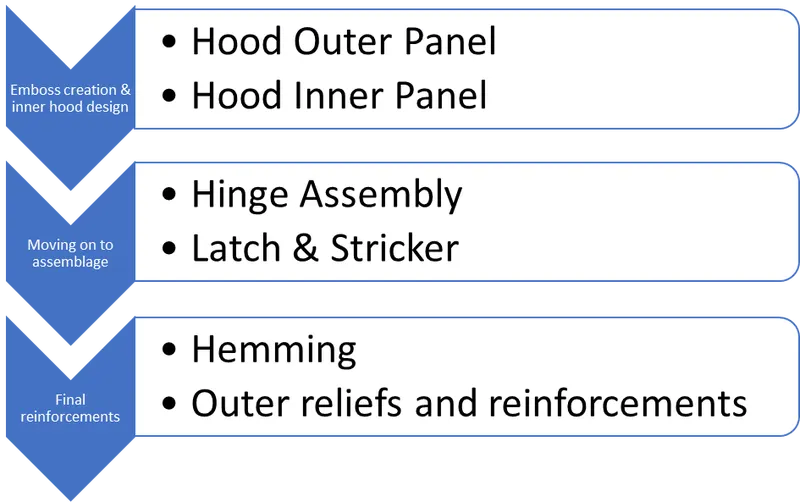
#1.Prior considerations for designing the hood:-
> Wraparound Distance (WAD): The shortest line of the lines that connect the reference plane with any point on the vehicle, which passes through the vehicle's front and front upper surface within the vertical plane that includes the vehicle's fore-aft axis.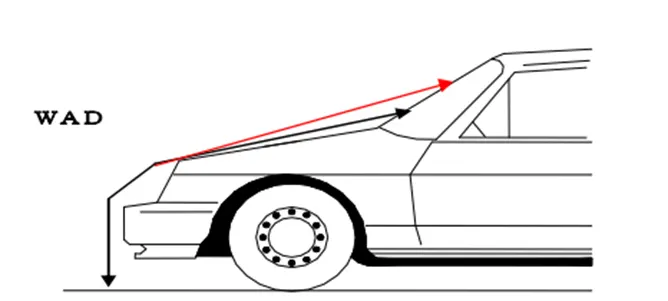
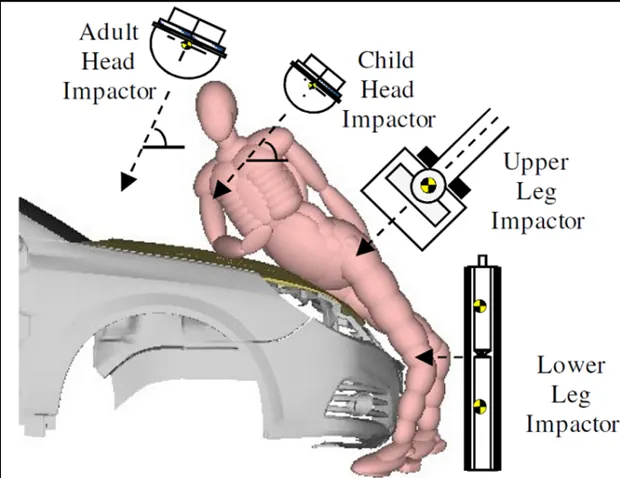
>HIC (Head Injury Criterion): A numbered value that indicates the degree of damage inflicted on a head impactor.
> NVH: It stands for Noise, Vibration and Harshness, and is basically a measure of how much unpleasant aural and tactile feedback the car delivers as it is driven.
NVH plays an important role in car design. The noise and vibration produced by the car should be minimized.
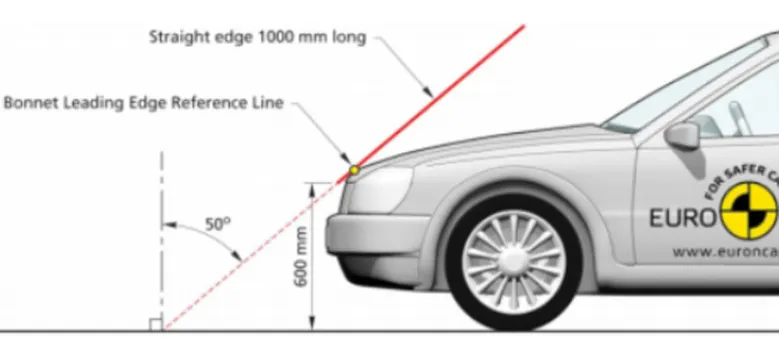
> Side and front relief angles: -
#2. Hood Basic Components: -
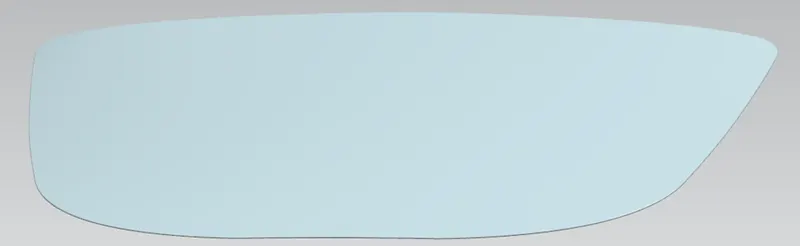
1. Hood outer panel: - The outermost part, tangible to the consumer.
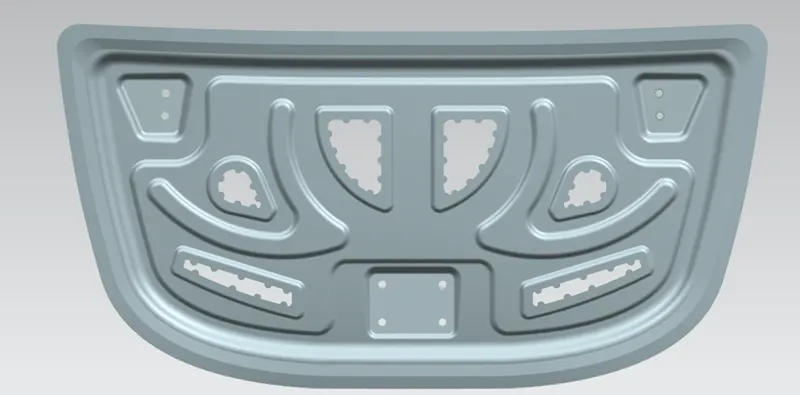
2. Hood Inner Panel: The inner panel in which various design considerations were taken in account and embosses are created for mainly 3 purposes: -
> Pedestrian Safety.
> Dissipation of incoming air frictional force.
> Dissipation f forces created during the moment of collision
3. Hinges: The component by which the hood is attached with the main car body.
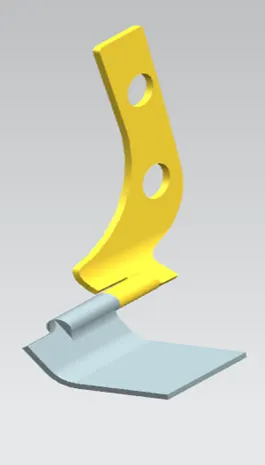
4. Latch: The component with which the hood’s locking mechanism takes place with the striker.
#3. Hood Design Aspect:-
> Hood Thickness Information
- Outer Panel Thickness = 0.75mm
- Inner Panel Thickness = 0.75mm
- Reinforcement Thickness = 1.5mm
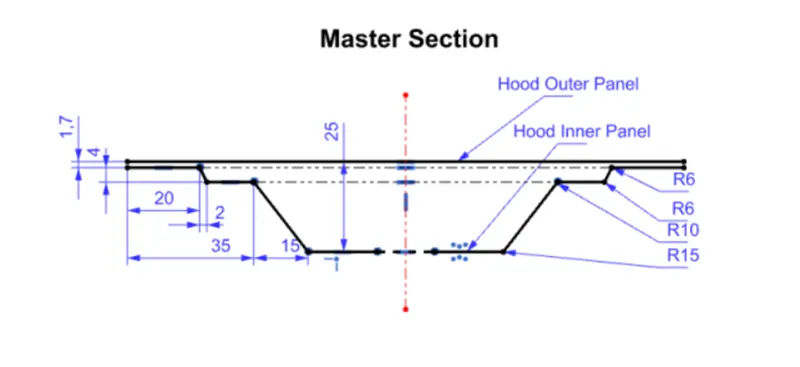
The Master Section: This depicts the specification of the flanges and embosses to be made on the inner hood panel.
- Software Used: NX CAD.
Major Steps were taken in Designing the hood: -
- We first open an assembly in the NX CAD software and then import the outer panel provided within the project and using the wave geometry linker draw out the outer panel geometry, keeping the main body as intact in a feature group.
- We then proceed with making the flanges as per the master section and using the offset command, followed by the face and edge fillets (4~6mm) as per required.
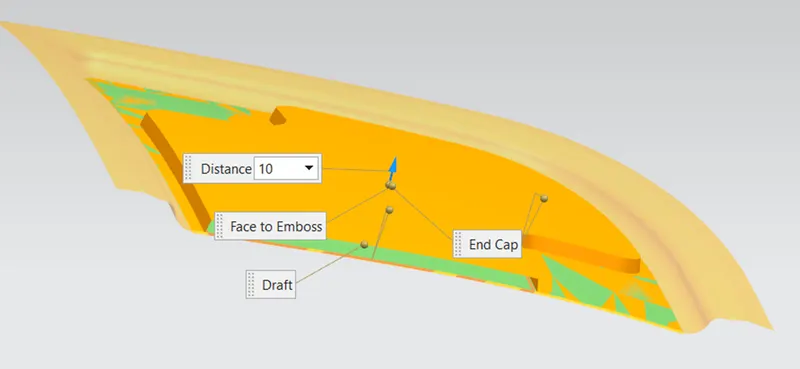
- Now in order to make the bottom draft we use the offset curve on face and draw out the boundary geometry and later use the law extension and corner command.
- We then proceed to make the primary emboss in order to dissipate the incoming force on the hood while moving.
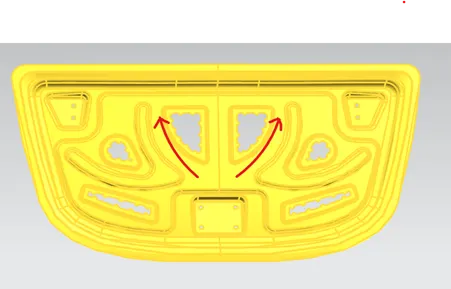
- Now we move on to make further embosses on the inner panel for its functionality and remove all the sharp edges with edge and face blends (4~6 mm radius).
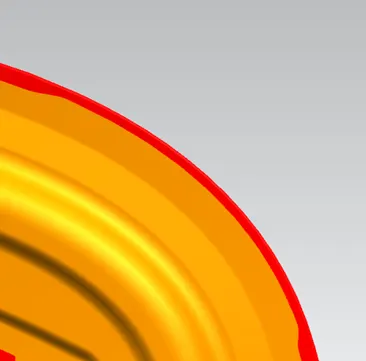
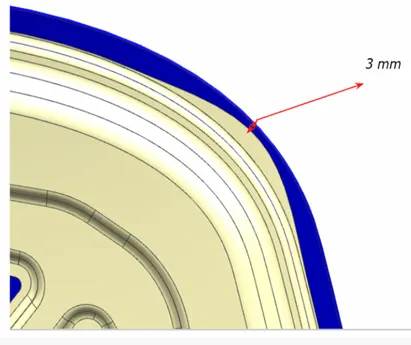
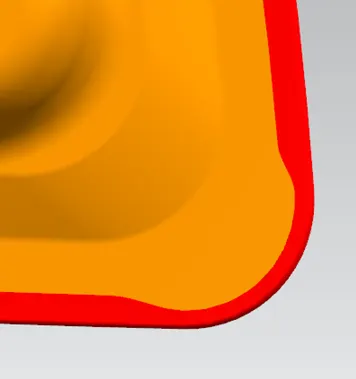
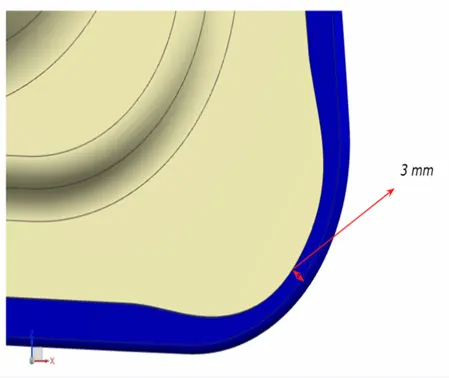
# Reliefs provided in the design:-
- The Front relief is provided as follows: -
- The rear relief is provided as follows: -
# Hemming Data:-
Specifications used:-
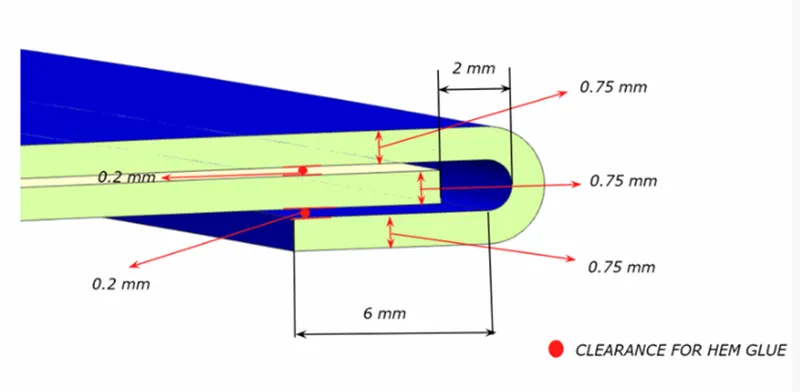
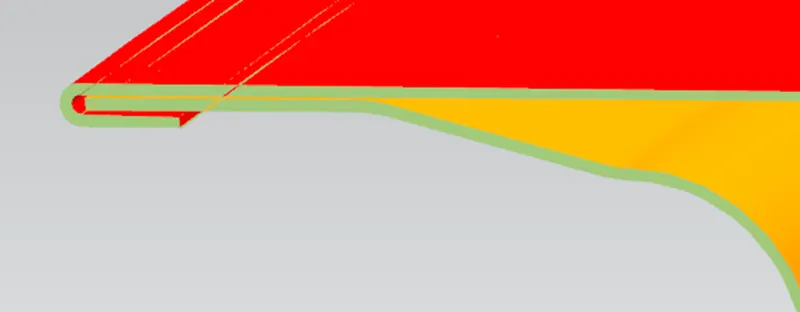
> Purpose of Hemming:
- Hemming is a forming operation in which the edges of the sheet are folded or folded over another part in order to achieve a tight fit.
- Hemming operations are used to connect parts together, improve the appearance of a part, and reinforce part edges
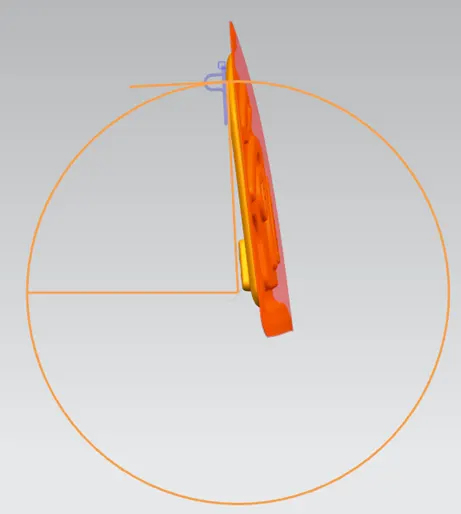
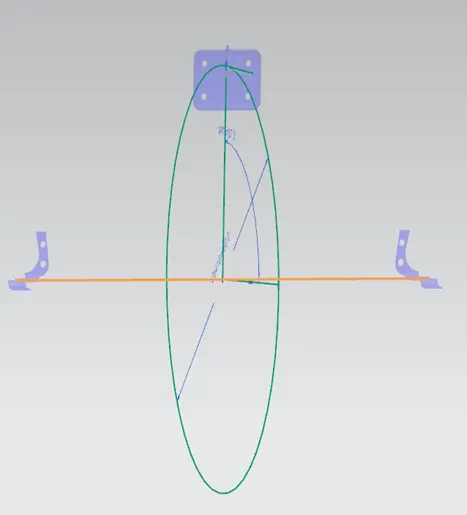
#Trajectory Circle:-
>For perfect bending and closure of the hood within the given space without any interfering components and clashing between the components, it is necessary that the latch is placed at a point that lies at the line which is perpendicular to the center of the common axis shared by the hinges.
Kindly refer to the below image for further clarification:-
#Mastic Data:-
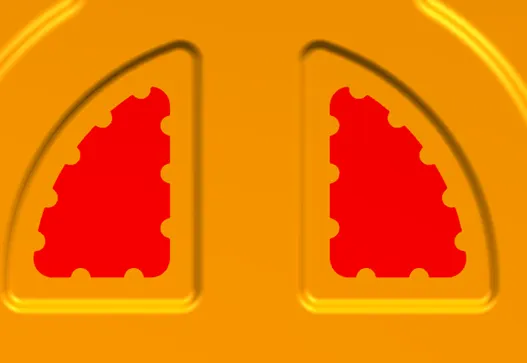
> Mastic is commonly used in between the inner and outer panel of the hood as an adhesive and sealant. It is a popular choice where one surface needs to be adhered to another in a durable bond, or where the area needs to be protected.
> Mastic are used because of its water-resistant, temperature-resistant and UV-resistant properties. It is also capable of resisting corrosion which makes it suitable for use with metals used in manufacturing of hood.
Below is an image depicting the mastic points given in the internal panel of the hood:-
#4.Manufacturing techniques and Material Usage:-
>Common Material usage:
Car hoods are constructed from steel and sometimes from aluminium. Aftermarket car hoods may be constructed from various other materials, including carbon fibre, fiberglass, or dry carbon
> Manufacturing Techniques used for making the hood of the cars include:-
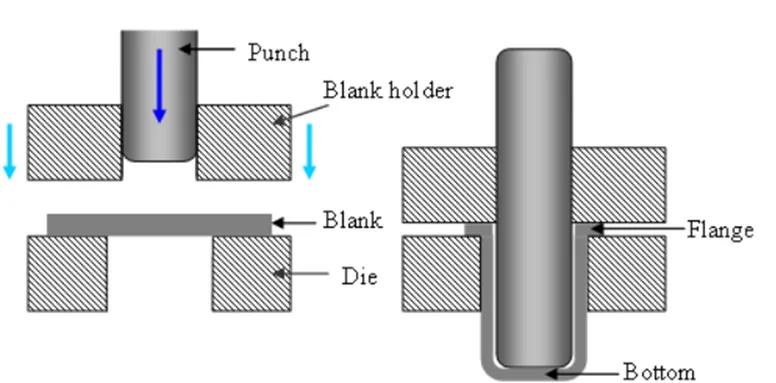
Deep Drawing: It is a sheet metal forming process in which a sheet metal blank is radially drawn into a forming die by the mechanical action of a punch.
The process is considered "deep" drawing when the depth of the drawn part exceeds its diameter.
Often a taper is provided at the edge in order to remove the tool with ease.
Grinding: For surface finishing and removing surface irregularities.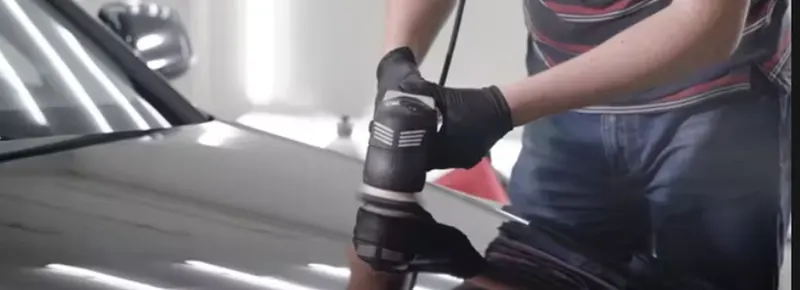
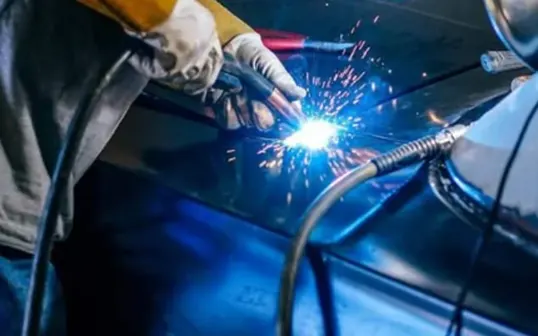
Welding:
Polishing and waxing:-