Hood design
HOOD DESIGN
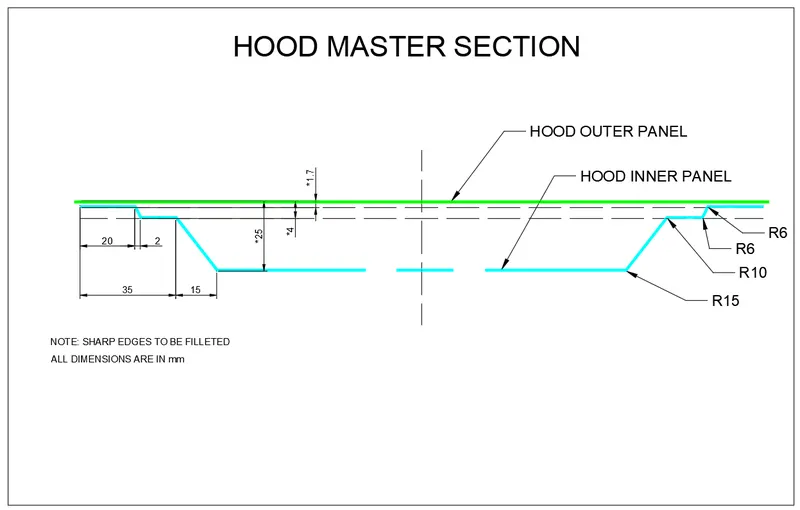
AIM:To Design Hood Outer Panel, Inner Panel and the necessary reinforcements by following the Master Section mentioned with the Design parameters.
INTODUCTION:The Hood is an opening body panel of a vehicle,that covers the Engine components. It is also known as Bonnet.The Hood consists of two panels,the outer panel and the inner panel.The outer panel functions as the metal cover while the inner panel provides strength.The Hood protects the engine components,passengers sitting isnside the vehicle and the pedestrain in the event of any accidents.
HOOD STAY: It is a device used for supporting the hood when it is in open position. The hood stay is provided for opening to serve as for inspecting th engine,for making any repairs,changing of oils etc..There arre two types of hood stay
- 1. Support rod:It is just a rod used for supporting the hood in an open position.The support rod should be installed such that the right hand side of the battery position inorder to avoid the interference.THe maximum bend pint of the support rod should be less than 35mm.
- Gas stay:It is a device fro supporting the hood when it is openend by means of an actuator which is activated by gas.The cylinder outer diameter of the gas stay should be 18mmm in dia and the rod outer diameter should be 8mm in dia.
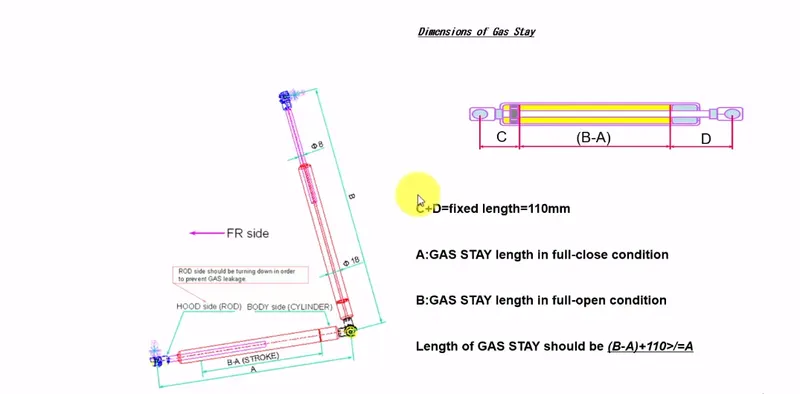
where B:Gas stsay length in full open condition.
A:Gas stay length in full close condition.
110:Length of gas stay fixed area.
Data to be used for design of HOOD ASSEMBLY:
Hood Thickness Information
- Outer Panel Thickness = 0.75mm
- Inner Panel Thickness = 0.75mm
- Reinforcement Thickness = 1.5mm
The main components of the hood assembly are:
- Hood outer panel
- Hood inner panel
- Hinge assembly
- Latch & Striker system
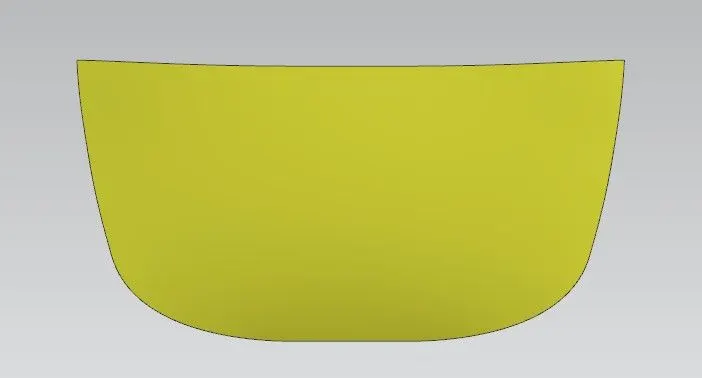
Hood outer panel:The hood outer panell is given by the CLass A designers.It is considered as a closure sheet metal component. It is a surface model which is aesthically good.It functions as a metal cover that covers the inner panel,engine compartment.THe outer panel is the very week part that cannot capable of handling the force during impact.So to increase the strength it is attched to the inner panel.THe outer panel and the inner panel are joined by using hemming process.
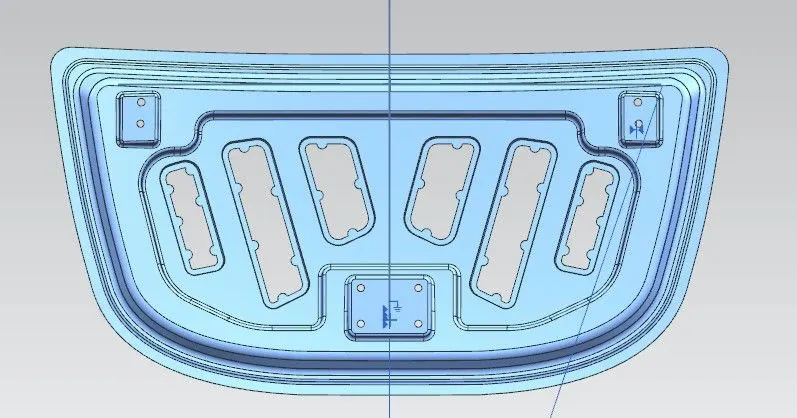
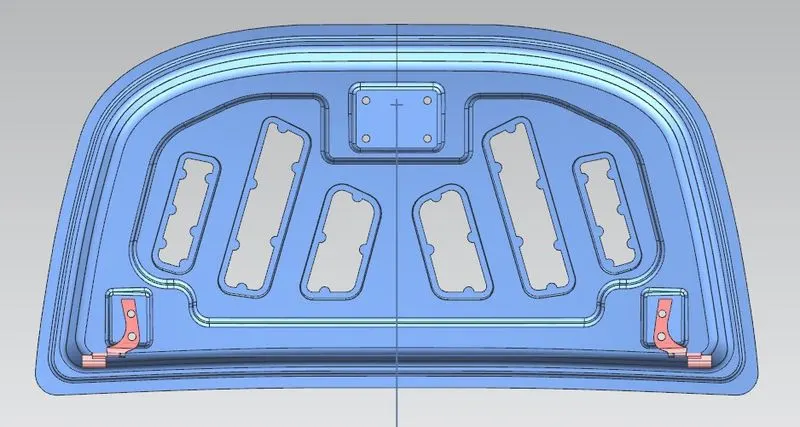
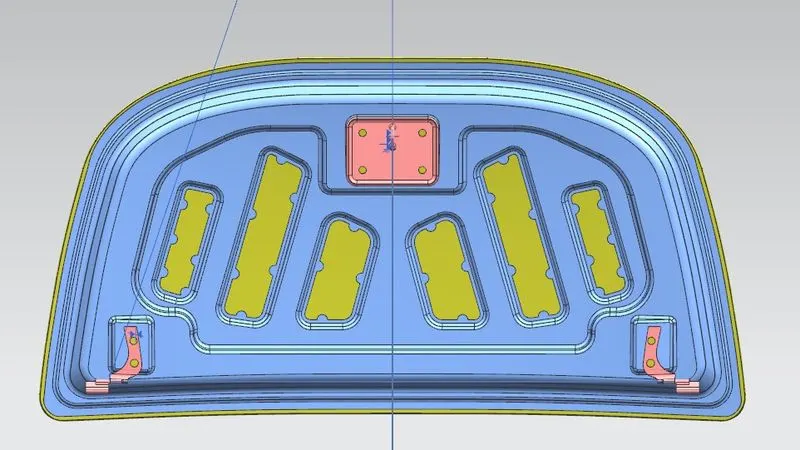
Hood inner panel:By using th eouter panel we are going to create the inner panel using the master section as the reference.The inner panel is general cannot be visible but it gives the strength to the outer panel.In other words we can say that the hood inner panel is the engineering feature for the outer panel.For th ehood inner panel we need to create embosses for mastic seals,latch and striker position and for the hinge assembly.
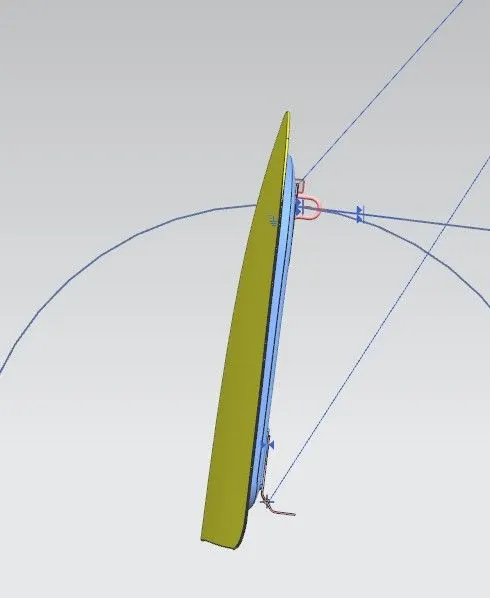
Hinge assembly:Hinge is a mechanical bearing that connects the two solid objects,allowing only a limited angle of rotation between them nad restricting all other degrees of freedom.It has only one degree of freedom that is the fixed axis of rotation.It is used for opening and closing of the hood.
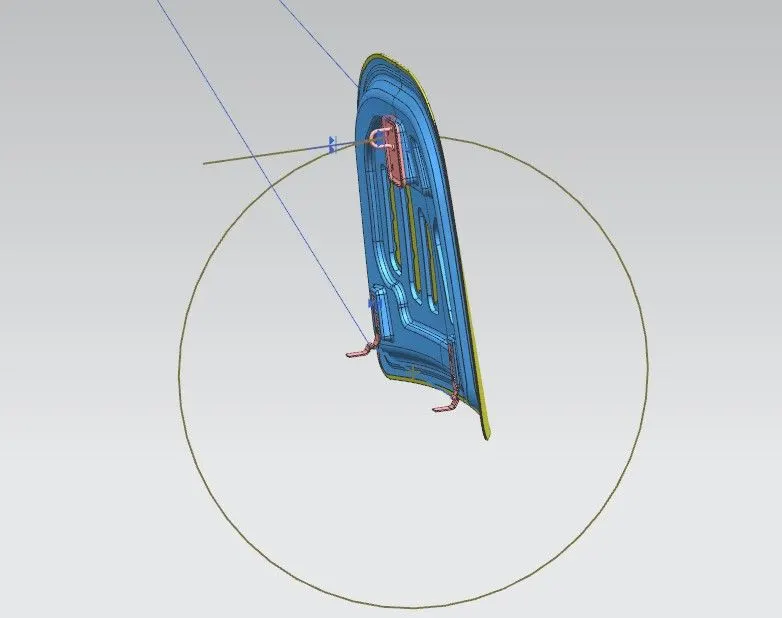
Latch Trajectory:It is the Trajectory on which the movement of the hood opening and closing are dependent.THis circular trajectory is drawn using the hinge axis point.For proper mating condition, the tip of the striker should be tangential to the latch trajectory.After that the striker can be given constriants w.r.t to the tagential and the daturm plane.The striker follows the latch trajectory.
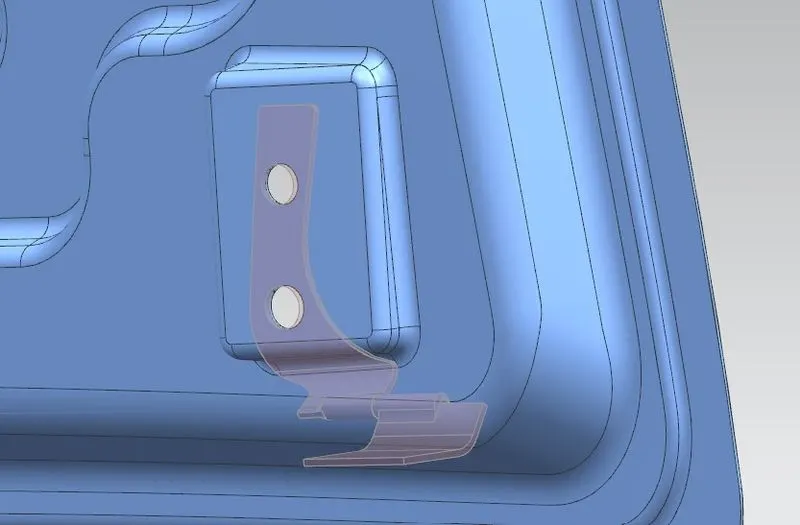
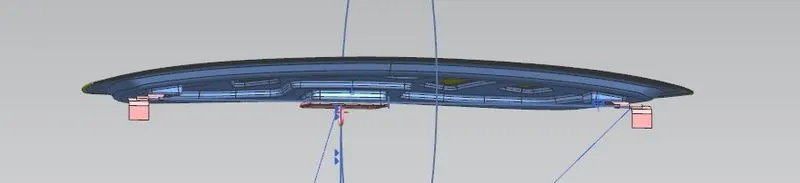
Reinforcements:Usually reinforcements are provided mainly in hinge assmbly area,latch&stricker region.The reinforcements gives additional strength to the inner panel where the hinge assmbly,latch &striker assembly are placed by adding additional material over those regions.
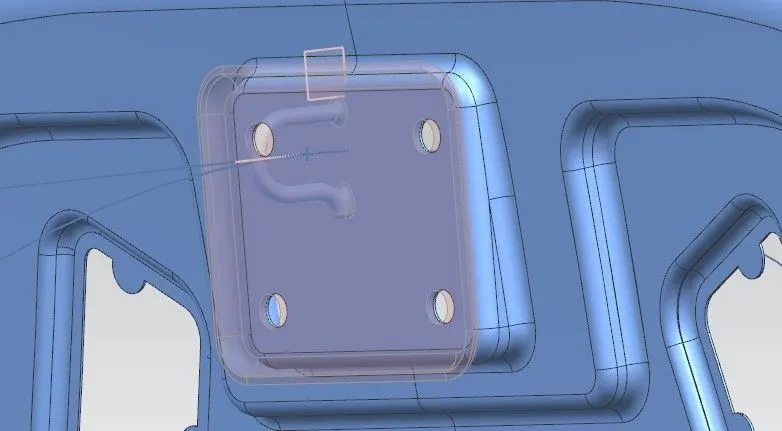
Mastic Data:Mastic sealants are used between the hood outer and the inner panel.THese mastic sealants are used as a joining technique for outer and inner panel since we cant use other joining methods like welding,rievting as they damage the aesthicness of the component,we go for mastic sealants.The mastic covers an area of 80mm it has helps in good NVH.The data is provided for the mastic sealants at which they are placed.
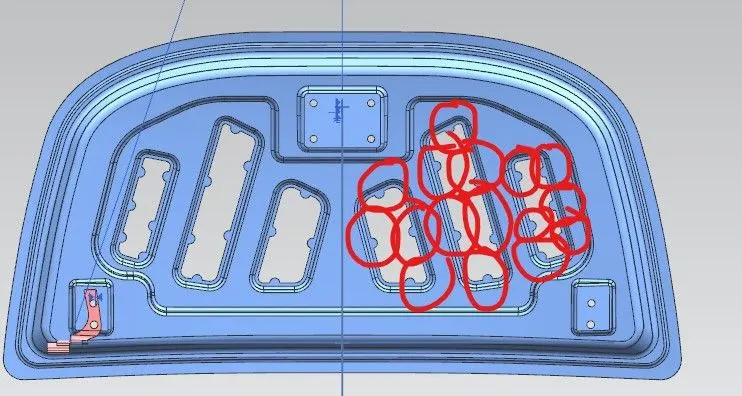
Emboss Definitions:Generally the hood is known as a crumble zome,It cannot be made as a rigid body ,so it need to be designed in a such way that in any impact or collision,the force is to be distributed outside the hood.Embosses are provided to increase the strength of the inner panel. Shape of embosses also determines the direction of collision force distribution.
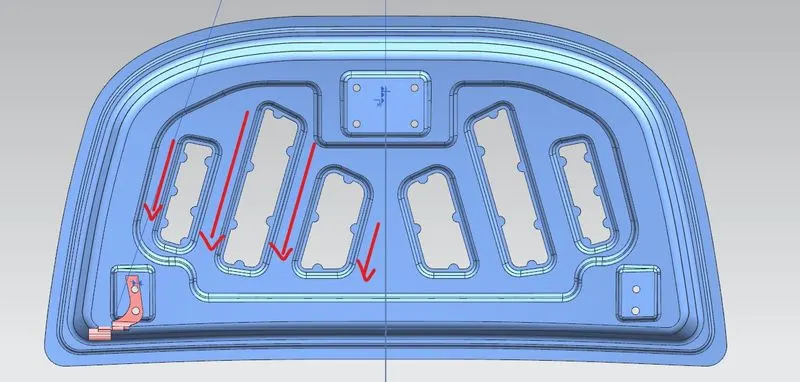
Manufacturing process:
Deep-Drawing:Deep drawing is one of the most widely used processes in sheet metal forming.It involves the use of metal dies to form blank sheets of metal into a desired shape. Specifically, if the depth of the item created is equal to or greater than its radius, then the metal forming process can be called as deep drawing.Thus it is also a shape trnsformation process with matrail retention.
Starting with a metal blank, the disc of metal cut from a larger sheet is pushed into a cavity around a die, which begins the deep drawn process of drawing the blank into the desired shape. This is completed in gradual steps to ensure an even distribution of the metal across the final shape, which is important for preserving the integrity and strength of the finalised deep-drawn component.
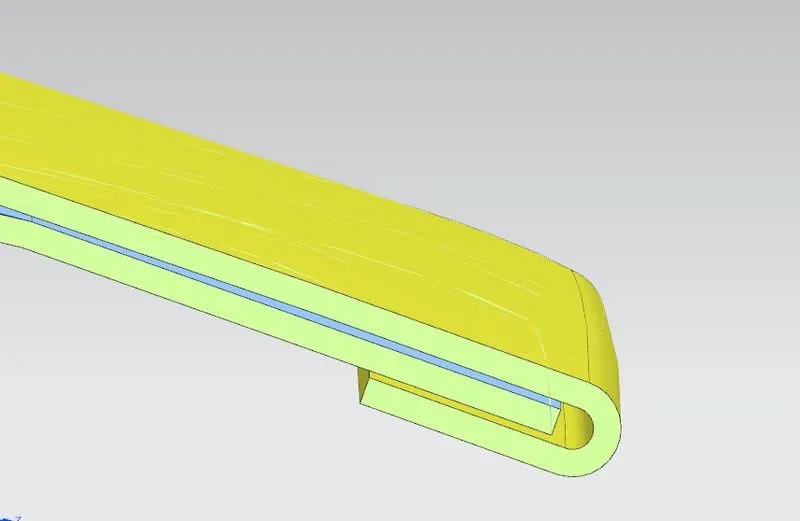
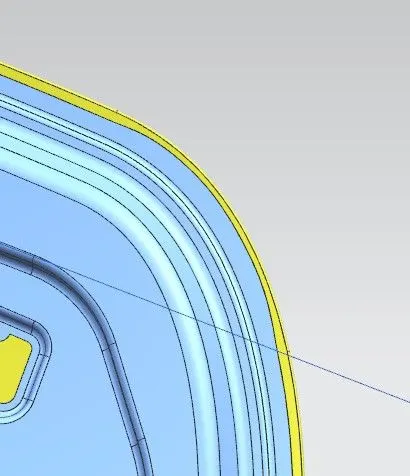
Hemming:Hemming is a metal working process in which a sheet metall is rolled over onto itself,to create a roundeed,safe edges.This increases the strength of the hemmed edge.The process of hemming is done in two stages,at firrst it crates a acute blend using acute tooling followed by a falttening of a return flange using a flattening die.A minimum clearance is to provide between the inner and the outer panel.
THe hemming process can be of two ways
1.Die hemming
2.Roller hemming
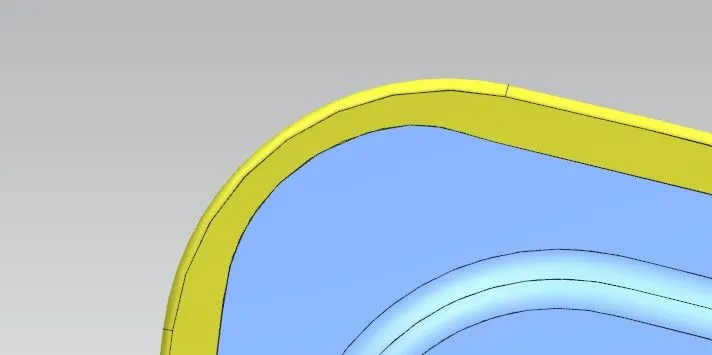
For this hood desgin we are going with the roller hemming process.A roller is rolled over the edges to fotm the process so to make or roll the roller perfectly we are givinf a relief of 3mm at the corner edges soto rool the area clearly without any issuses.
 /
/