Design of backdoor
DESIGN OF BACKDOOR
AIM:
By using the provided styling surface to come up with a back door design,and using appropriate design methodologies and to provide the necessary reinforcements and embosses.
INTRODUCTION:
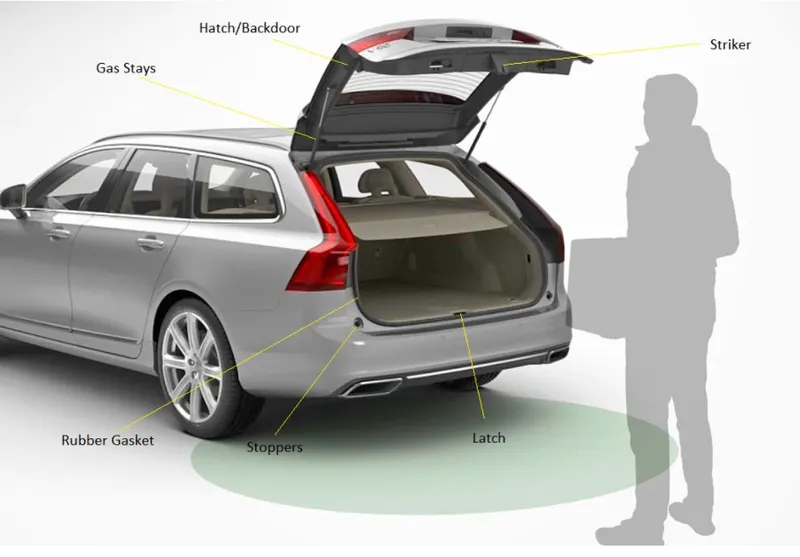
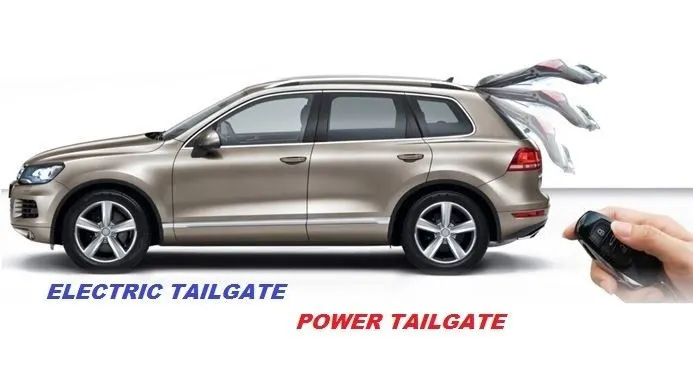
Backdoor is the part of a vehicle which is located at the rear side of a car.The back door, sometimes referred to as the "Tailgate","Back entrance". It can be opened upwards, downwards & sideways to give access to the luggage space or even for seating also.In most of the vehicles, these backdoors are operated with the help of the gas stay which in turn reduces the effort required to lift the door. Some of the premimum cars are having powered backdoor which in turn, driven by an electric motor. This kind of system is also called a powered trunk lid system.
TYPES OF BACKDOOR:
TOP MOUNTED DOOR:
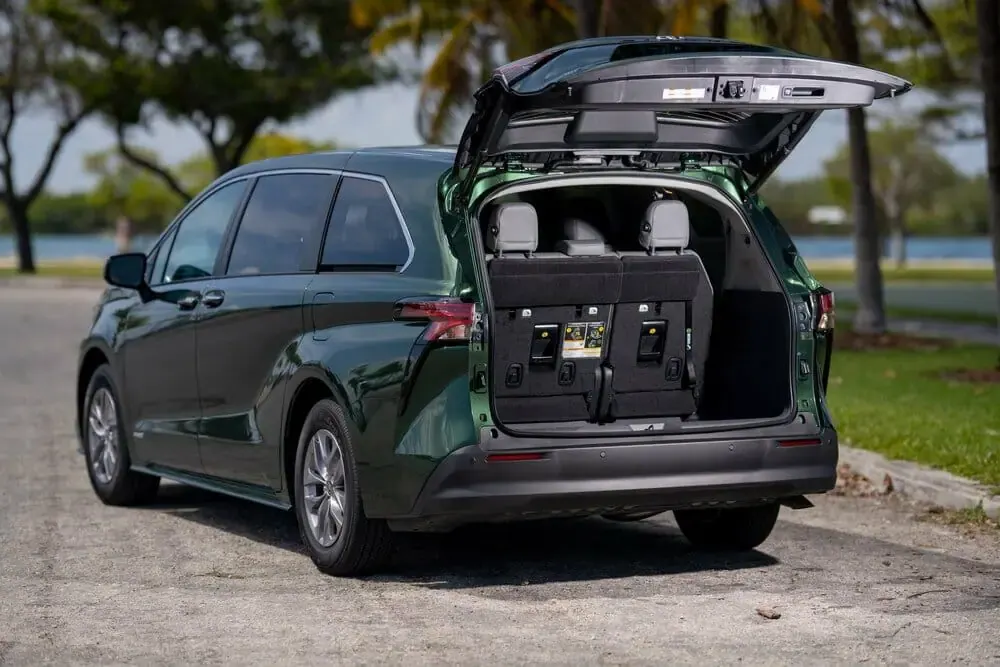
This type of Mounted back door is used in a station wagon, pickup trunk and some of the spot's utility vehicles. Today's modern veehicles uses top mounted backdoor system which are both supported by a gas stay and by a power motor. These top mounted tailgates provide greater rear visibility when compared to the side mounted or backdoor which have center pillars in it.
SIDE MOUNTED DOOR:
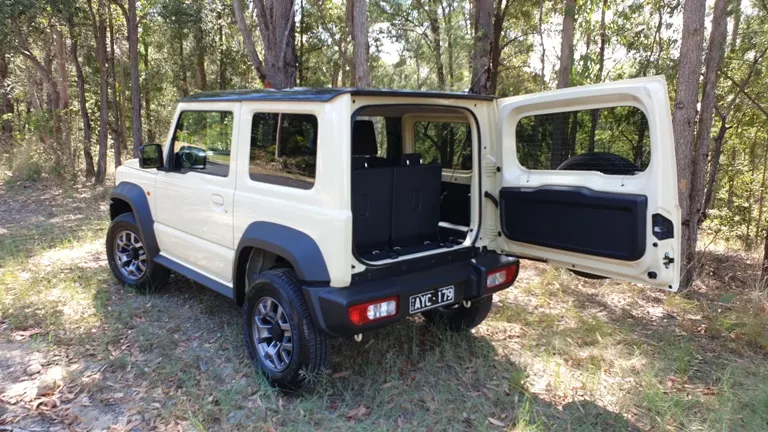
These side mounted doors are used in the van type MPVs, SUVs, pickup truck vehicles. These doors are a lot easier when compared to the top mounted doors. These doors are generally smaller in size and can be easily accessed. These doors are more convenient for the goods handlers for long pipe and lengthy components where one door is kept open. These doors are also save accidental head impacts. It is a lot easier to load and unload items in the side mounted doors.
TYPES OF SUPPORT ROD BASED ON WORKING MECHANISM:
GAS STAY:
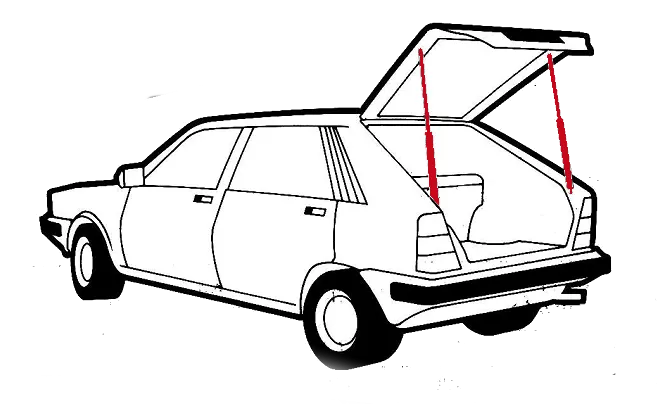
Gas Stay type backdoor or tailgate is the most commonly used tailgate mechanism from lower segment car to luxury car segment. The ideal components of tailgate consist of a hinge, door, gas stay and some rubber beadings for sealing of door.
POWERED LIFT SYSTEM:
Power trunk lift system is the other opening mechanism which will automatically open's and closes of the trunk and release of the latch by the touch of a bottom. Powered trunk Lift system consists of a power latch, anti pinch switch, PTG assly, PTG main switch. When the switch is pressed in the compartment or outside, the power latch releases the latch and the entire backdoor is opened. This anti pinch switch is located in order to avoid accidental hand insertion during the operation of the door.
DESIGN CONSIDERATIONS TO BE CONSIDERED:
- Rear Visibility criteria.
- Rear Crash regulations & requirements.
- Boot Space.
- Gap & Flushness requirements.
- Strength of the backdoor.
- Sealing & its functions.
SELECTION OF MATERIAL:
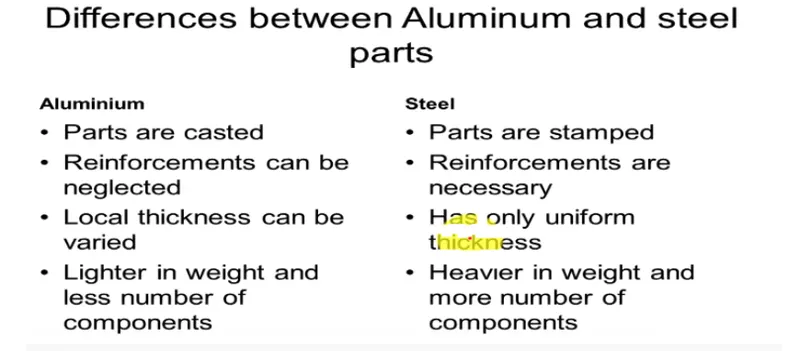
The common materials used are Steel & Aluminum. The density of Steel is higher than Aluminum thus adding more weight to the door.Previosly all the vehicles are using steel as the material but now a day aluminum is being used widely.Since the weight of the vehicle decreases by using light weight material aluminum the performance of the car increases.
we can reduce the no.of the parts manufacturing by using aluminium material thus the weight being decreased as well as the cost also.
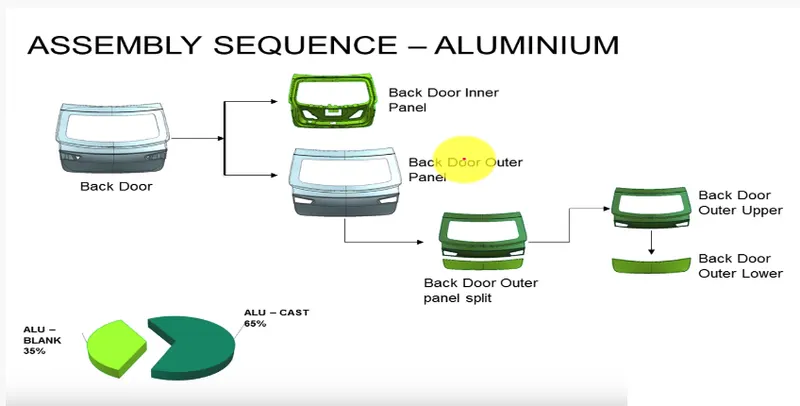
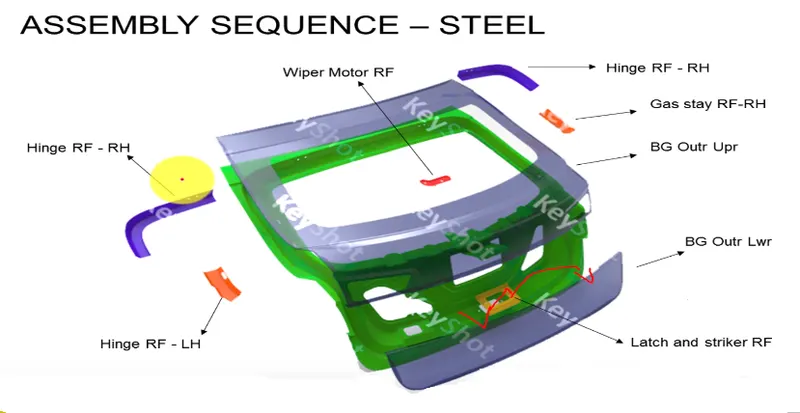
when compared to aluminum the cost of steel is low but the manufacturing parts are increasing and the weight also increases thus the performnace of the cra decreases
The below image shows the difference blw the aluminium and steel.
MANUFACTURING PROCESSES:
As we know that backdoor is a BIW component that is basically manufactured using a metal forming process. There are different types of metal forming processes that are used for manufacturing automotive parts they are stamping,punching, bending,piercing forming,etc.
Deep drawing:
Deep drawing is one of the most widely used processes in sheet metal forming process in which a cup ,cans or box like structures can be obtained.The blank is placed between the die and the holder and then deformed by the punch.THe punch pushes the sheet metal into the die and the blank finally obtaines the shape of the die. The metal plate is fixed between the die and the holder before processing begins, this prevents the formation of undesired deformations such as wrinkles.
Deep drawing changes sheet metal into the curved parts or create curved parts with smaller diameter from already curved details. Often a series of deep draws are done to achieve the final shape.
Blanking:
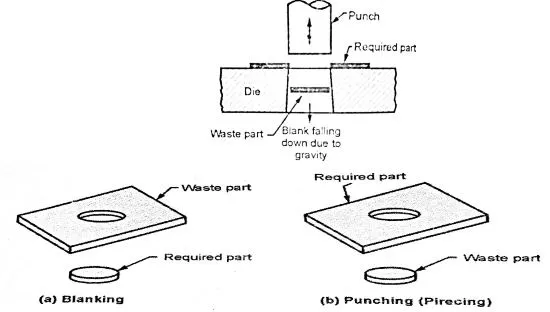
Blanking is a sheet metal cutting operation in which a flat blank is created by feeding a coil of sheet metal into a press and die. In this process the blank is punched out ,from large metal sheet. Blank is the required product of the operation and the metal left behind is considered to be as a waste.
Piercing:
It is also a sheet metal cutting operation & similar to blanking only the main difference is that, the hole is the required product and the material punched out from the hole is considered as a waste.In other words piercing is the combination of cutting and forming operations.
JOINING OPERATIONS:
Hemming:
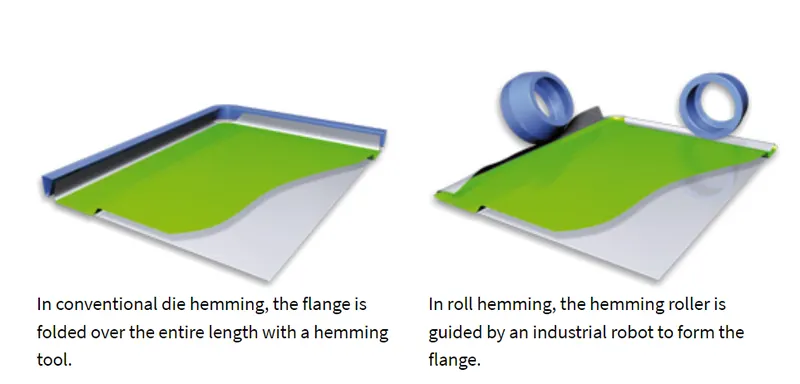
Hemming is a forming or joining operation in which the edges of the sheet are folded or folded over another part in order to achieve a tight fit. Normally hemming operations are used to connect parts together, to improve the appearance of a part and to reinforce part edges.
There are two types of hemming operations:
- Conventional die hemming
- Roll hemming
Mastic selants:
Matics selantsare a type of adhesive fluid which is used to join the outer panel and the inner panel with out damaging the aesthetic look of the component.mastics are porvided where other joining proceses cannot be used.on suffiecient temperature mastics expand 80 m diametrically and longitudinally upto 5mm.
Spot welding:
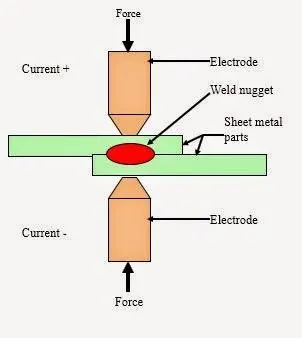
Spot welding is the simplest form of resistance welding process in which the overlapping sheets are held blw two copper electrodes.A subsequent joint is formed under pressure at the interface where heat is generated by the resistance offered by the current flow and after attaing the weld temperature,which is just suffiecent to melt the joint interface.
PARTS OF THE BACKDOOR:
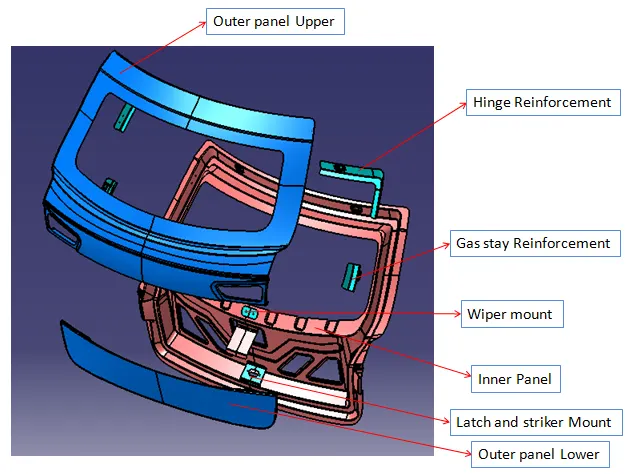
The backdoor assembly consists of
- Outer Panel
- Inner Panel
- Hinge Reniforcement.
- Gas Stay Reniforcement.
- Wiper Motor Reniforcement.
- Latch and Striker Reniforcement.
DESIGN METHODOLOGY:
|
Repairing the given styling syrfaces
|
| Designing the Inner panel |
|
Creation of Reinforcements
|
| Modifying the outer panel |
| Hemming |
OUTER PANEL:
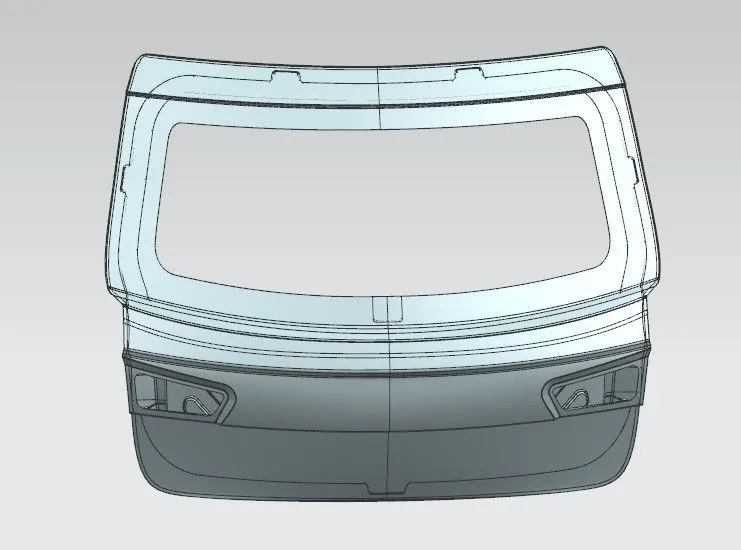
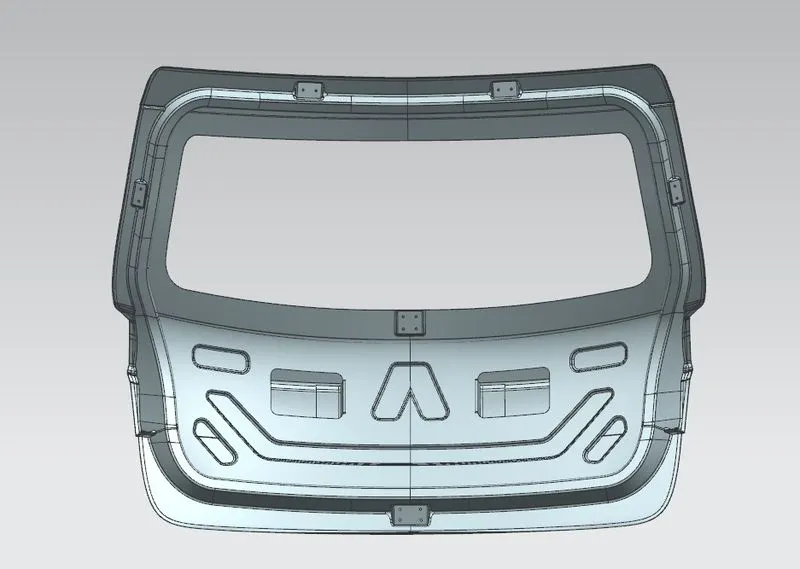
The given stylish surface need to be modified since therre is discontinuity over the surface.The outer panel consiste of two parts the outer upper & the outer lower panel.Once the surface is modified we can work on creating the inner panel.
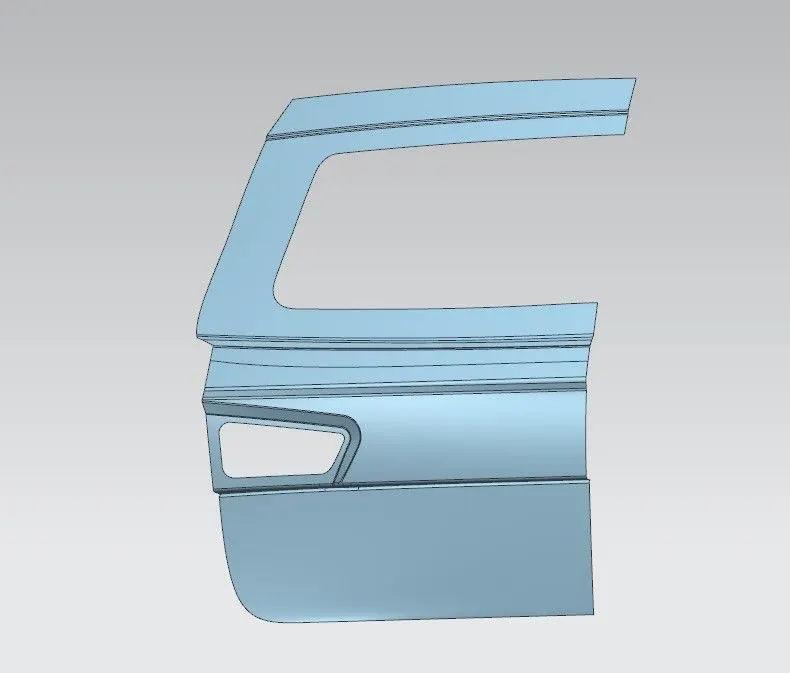
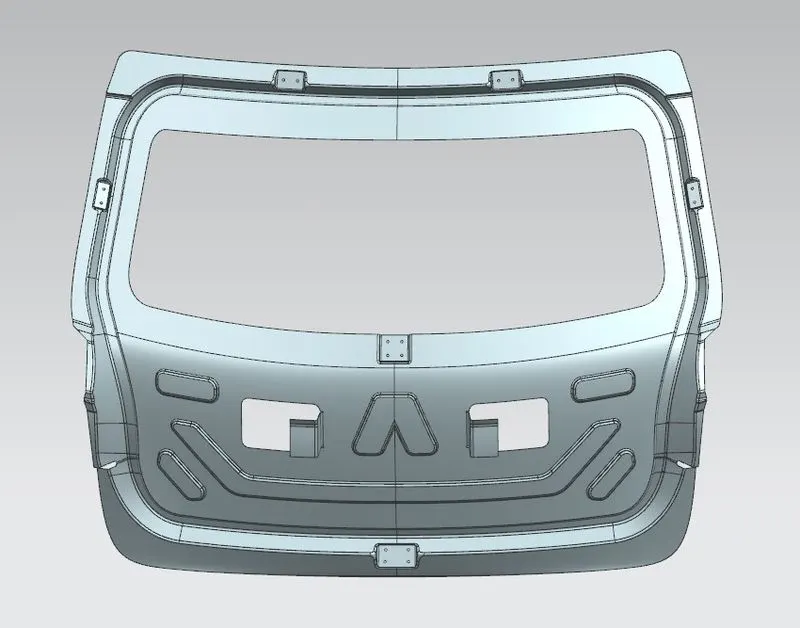
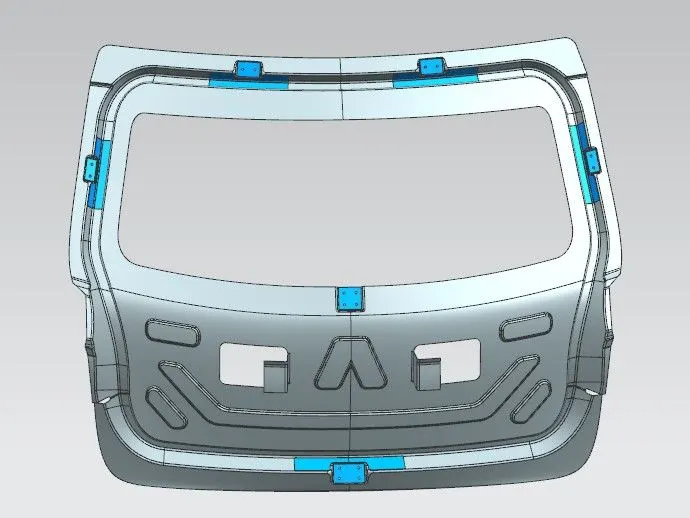
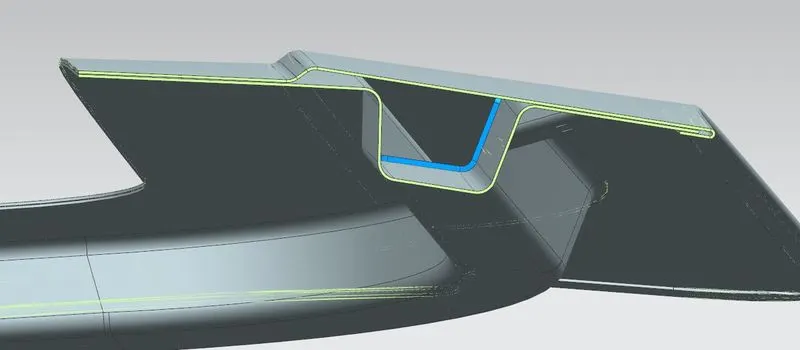
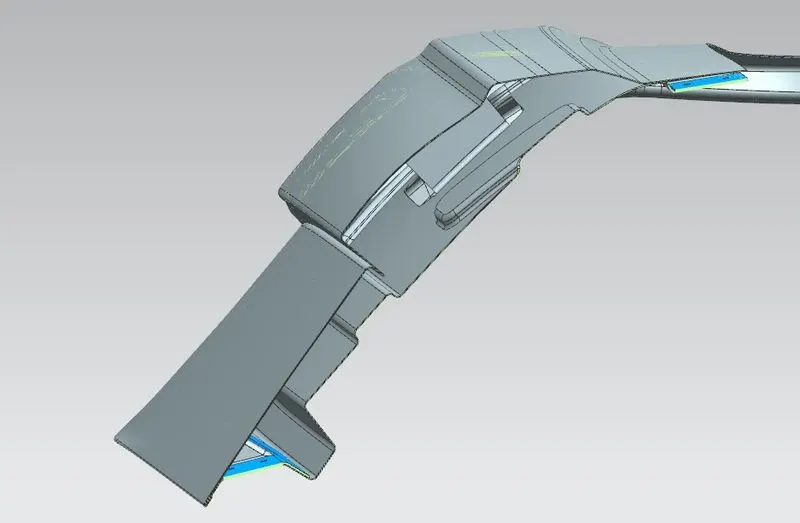
For creating the inner panel,the outer panel is to be offseted by some distance according to the design considerations.Then we need to create the tooling direction.After that the sealing flange is to created,it is the surface which allows the backdoor to sit on the body of a car.It is provided for air & wind tight made of rubbery structure.Later the embosses are to be created for provideed additional strength at that area.
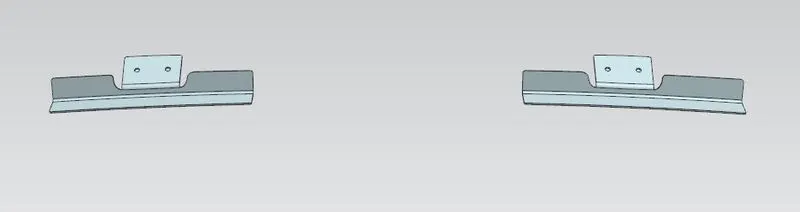
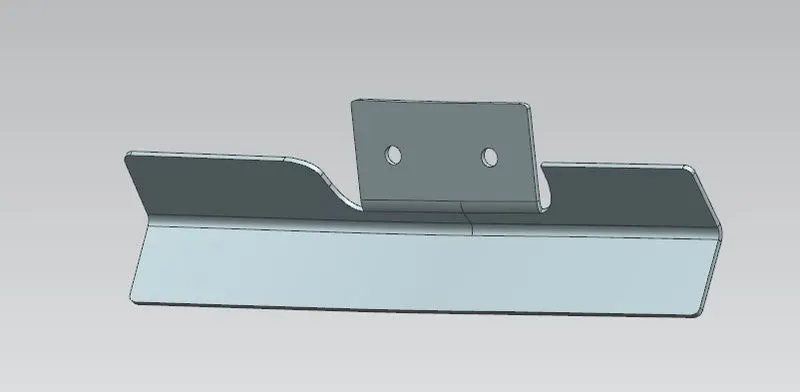
We need to embosses for hinge,gas stay,wiper motor & latch and striker reinforcements to withstand the load acting on it.Another purpose of the emboss design is to distribute impact force towards hinges and latch assembly which are reinforced and can absorb them.Once all the embosses and reinforcements are provided we need to mirror the whole assembly.
Inner Panel:
Hinge Reniforcement:
Gas Stay Reniforcement:
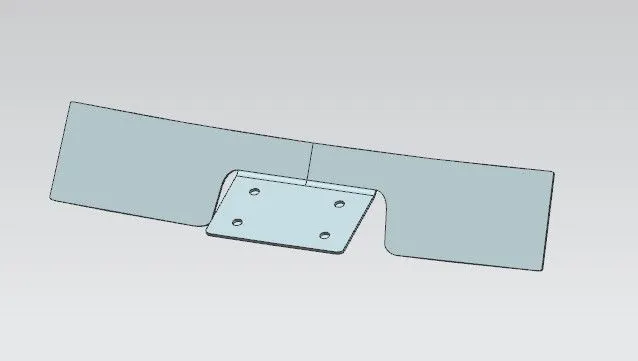
Wiper Motor Reniforcement:
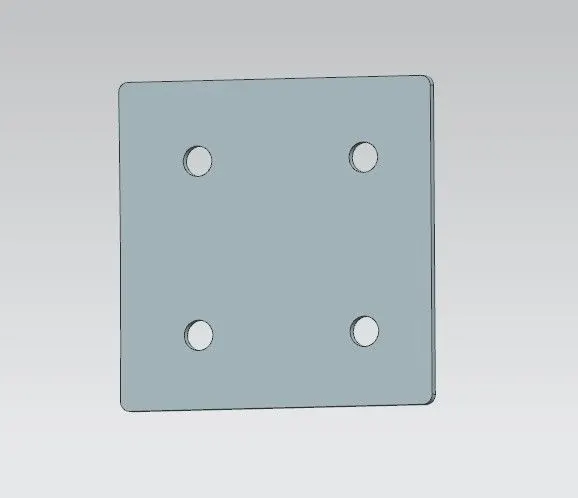
Latch and Striker Reniforcement:
BACKDOOR ASSEMBLY:
DRAFT ANALYSIS:
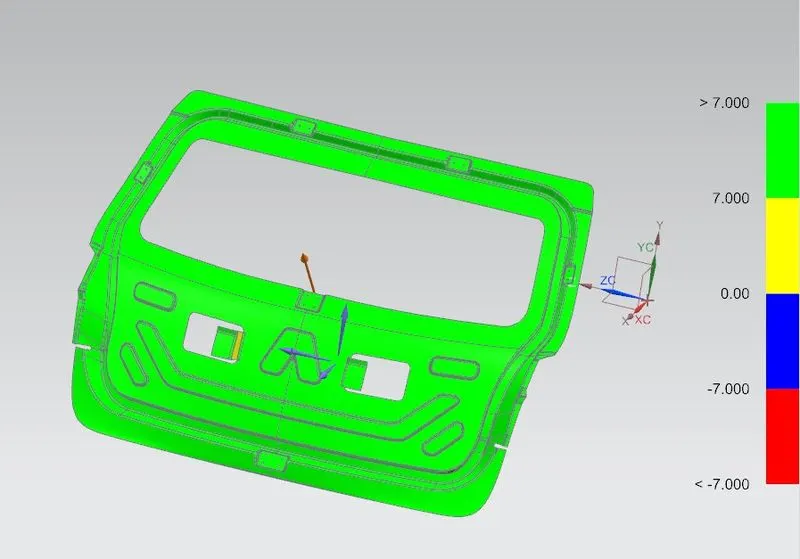
Draft analysis is done by taking the toooling direction as the reference vector.As per the design considerations, we need to provide a minimum draft angle of 7 deg expected to ease the ejection of the part without any damage.We need to take the tooling direction as our vector for clearing the draft anlysis.
CONCLUSION:
The backdoor outer and inner panel were designed with the help of the styling surface provided along the tooling direction by following the design considerations.