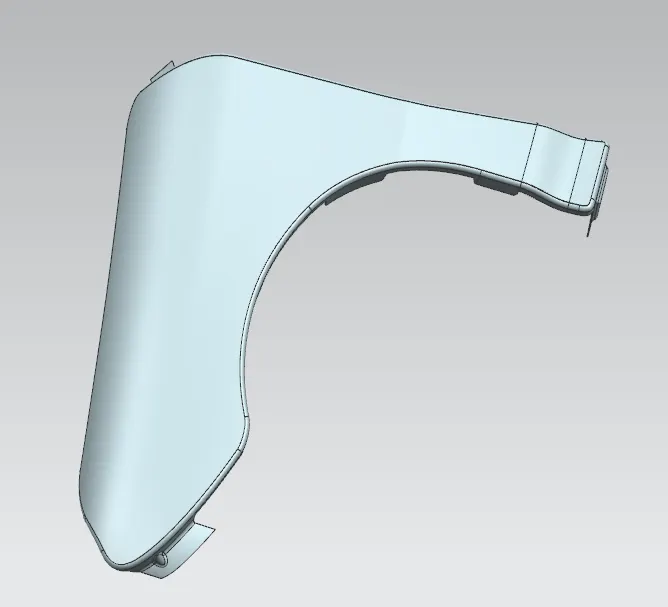
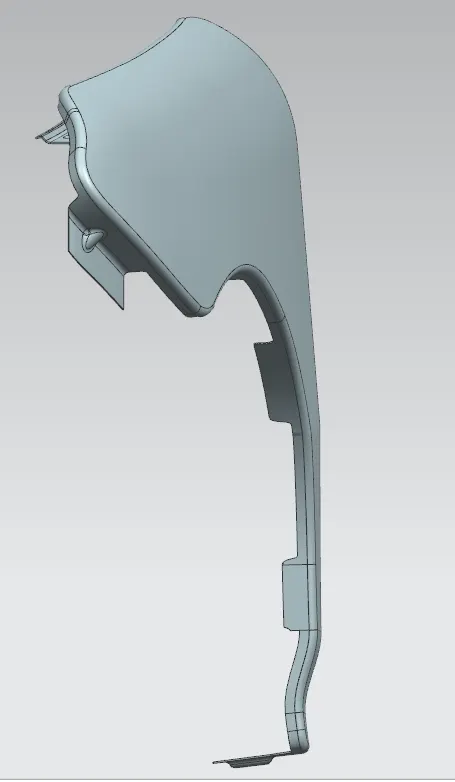
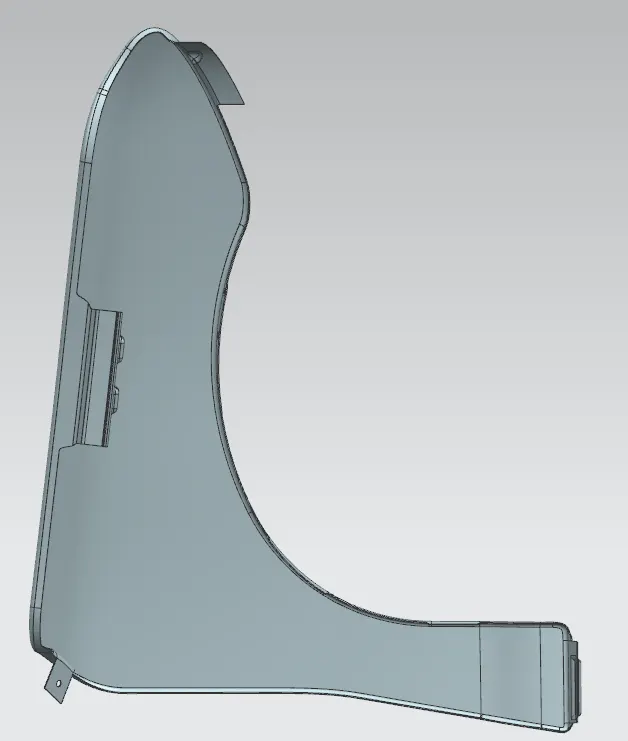
Fender Design Challenge
Aim :
To design fender according to automotive standards .
Solution
irst we will be talking about fender in car :
Fender is the American English term for the part of an automobile, motorcycle or other vehicle body that frames a wheel well (the fender underside). ... In British English, the fender is called the wing (this may refer to either the front or rear fenders.
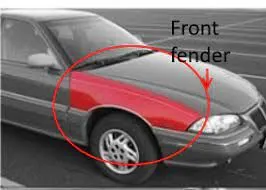
The purpose of a fender is pretty simple. Its purpose is to keep mud, rocks, and other road debris from being thrown around by the tires. In other words, the fender is a housing for the wheels that keeps road debris contained. If there was nothing covering the wheels, all kinds of debris would be kicked up by the rotating tires.
Types of Bumper :
Half Bumper Type :
This is mostly used as we are able to save a lot of material as we are saving blank size and are able to create possibly two or more fenders .Also we are decreasing the amount of steel and hence we are increasing the performance .
The fender is mounted around the following areas :
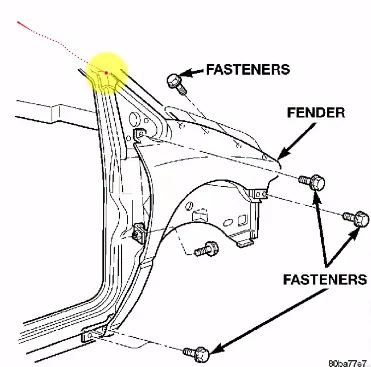
Body
A pillar
Cowl
Sill
Drip Area
Design Consideration for Fender :
Now while designing the fender we have to make sure that the amount of distance of the rear fender is 200 mm from the cow region where the wiper auxiliaries are installed so that there no hinderance while for the front fender there should be distance of 150 mm from the headlamp so that again there is no hinderance .
Now the master section rule for the mounting is given as follows :
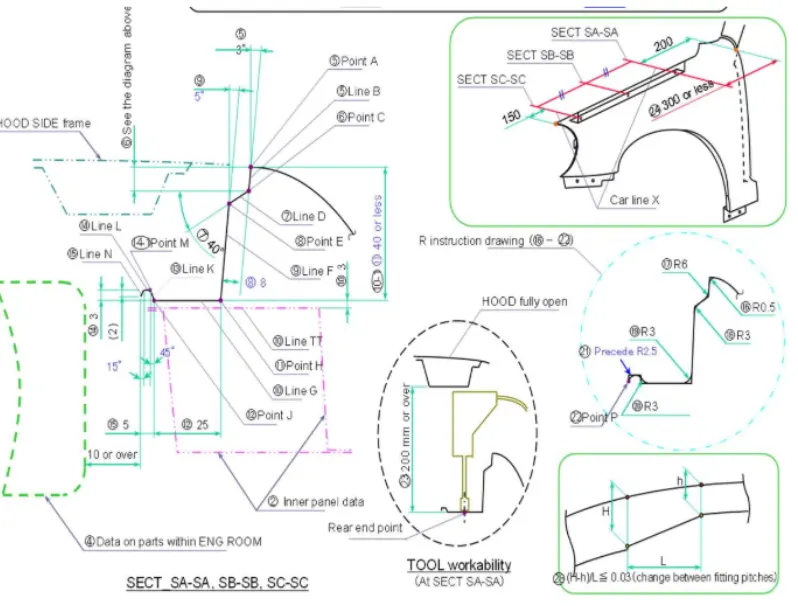
For tooling purpose we have made sure that an opening of 3 degrees is kept between the hood and the fender so that the tool can easily move about .This opening is kept for 9 mm and later on another 3 degree opening is given as shown above .
After that further dimensions are given so that the fastners are not visible.The minimum distance between the fender drip area and the engine room should be 10 mm
The distance between the side reference line which falls on the fender to the end point should be maximum distance of 47.5 mm.If it is higher or lesser , the styling will have to be changed to accommodate the distance.
Now we will discuss the wheel arch area :
The wheel arch regulation is given by :
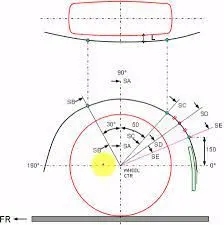
Now according to the japanese standards
the distance between the tire and fender should be atleast 5 mm for all the projections of 30 and 50 degree.
Now according to the european standards
the distance between the tire and fender should be atleast 10 mm for all the projections of 30 and 50 degree.
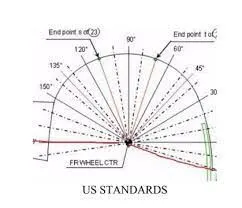
Now according to the US standards
the distance between the tire and fender should be atleast 10 mm for all the projections of -120 and 0 degree.
Now we will design a fender according to the following rules :
Rule 1 : The distance between headlight outer most point to the start of the drip area should be 150 mm while the end of the drip area should be minimum 200 mm as shown above .
Rule 2 : The distance between the hood opening and bottom most part of the drip should be 200 mm so that the tooling can be done as shown .
Rule 3 : A flay area should be present at the bottom of the drip area as shown with few extrusions as shown for strengthening puroposes as shown .
Rule 4 : The minimum distance between the engine hood and drip area should be 10 mm as shown .
Rule 5 : The minimum distance between the side reference line point and the end point of the fender should be 50 mm.
Now we will design as shown below :
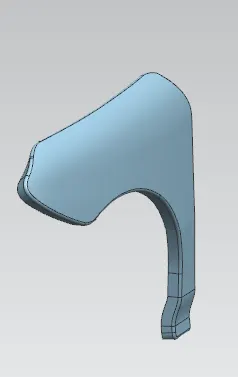
Using offset on face we get the following :
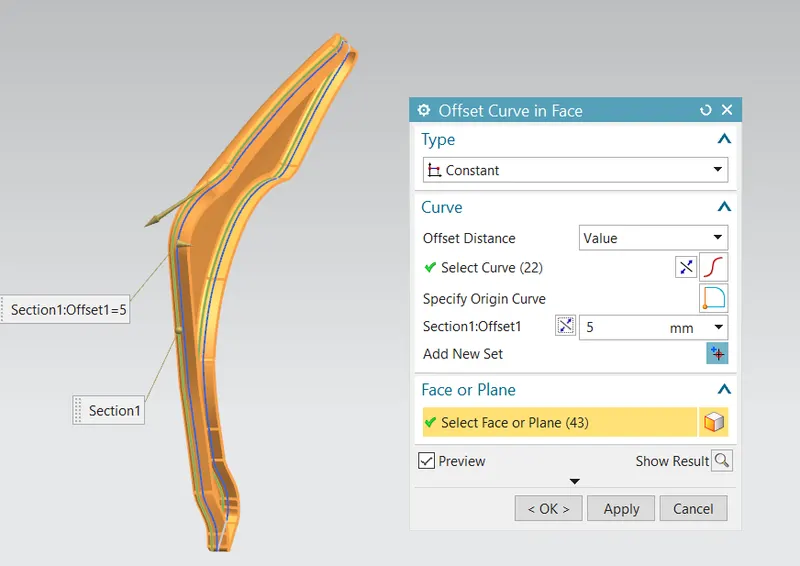
Using trim sheet we have made the following :
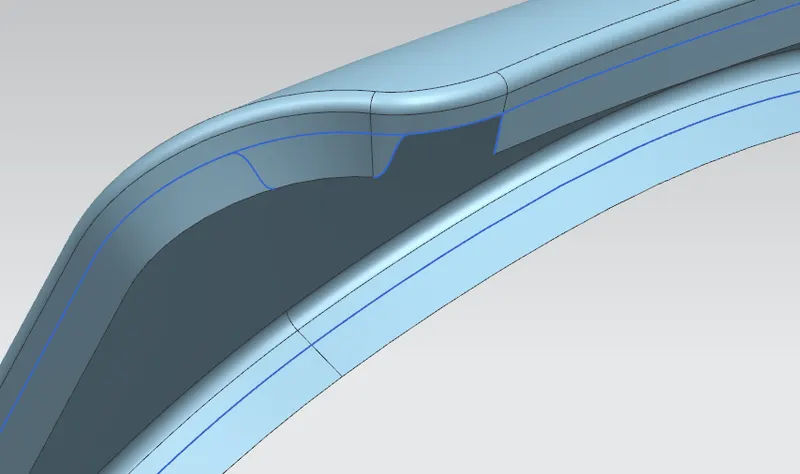
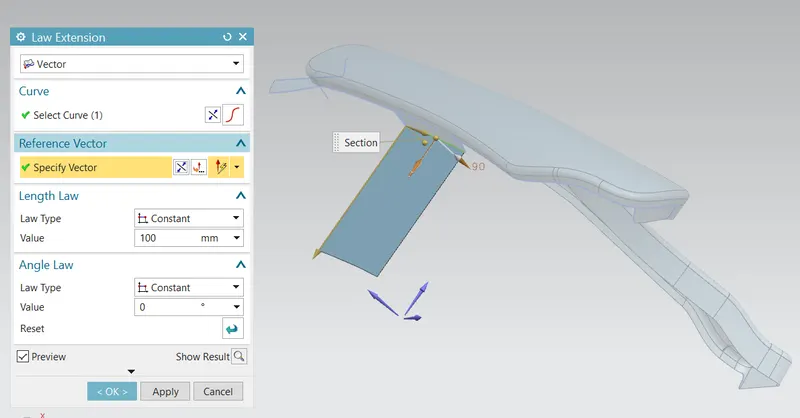
Now we will use law extension as shown below and trim it :
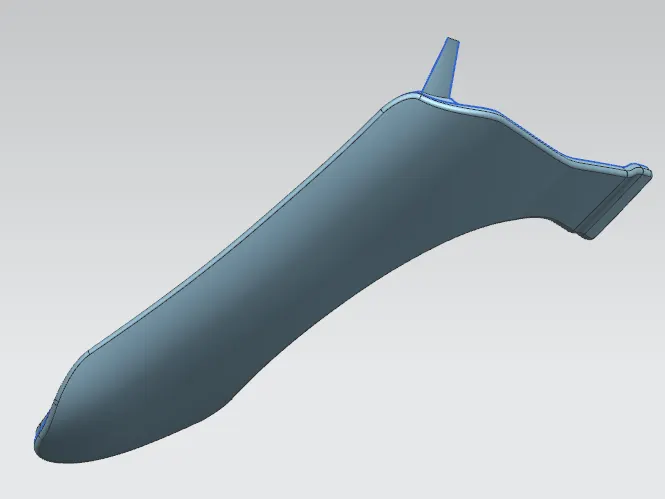
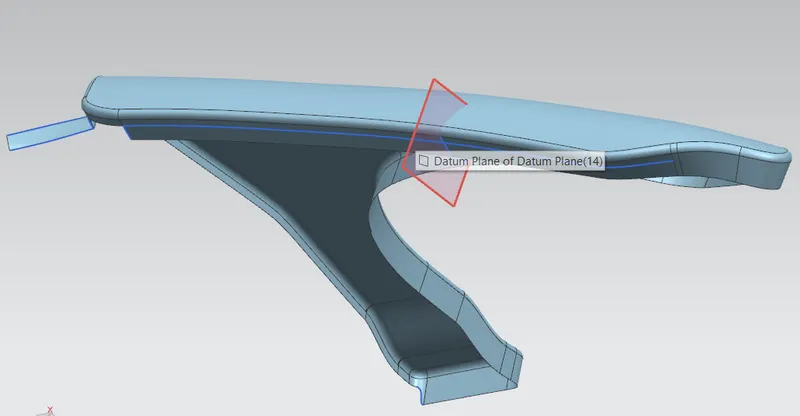
Using create plane and intersection curve we have got the intersection curve as shown below :
Using Law Extension we get the following :
After taking reference from the master section from above we get the following :
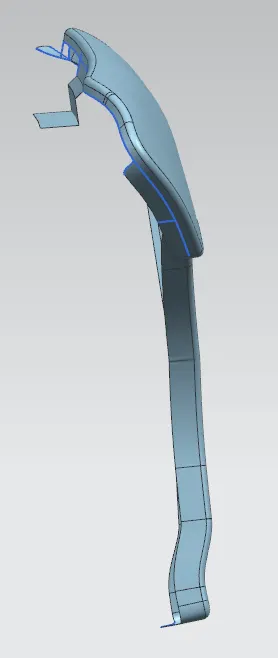
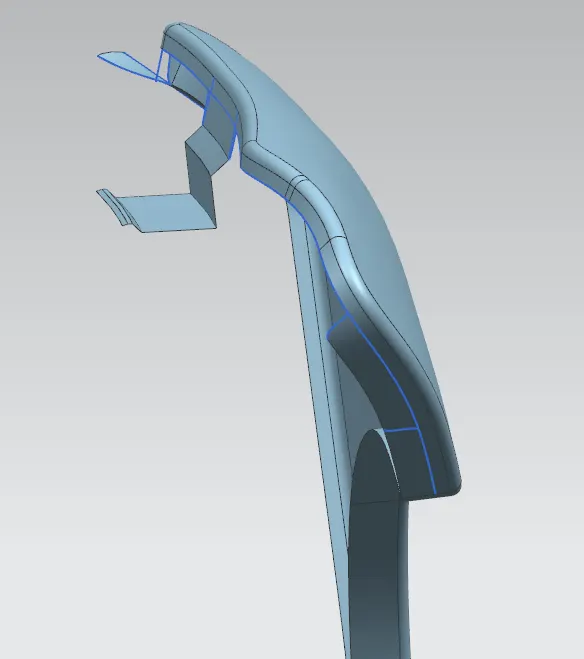
After applying fillets we get :
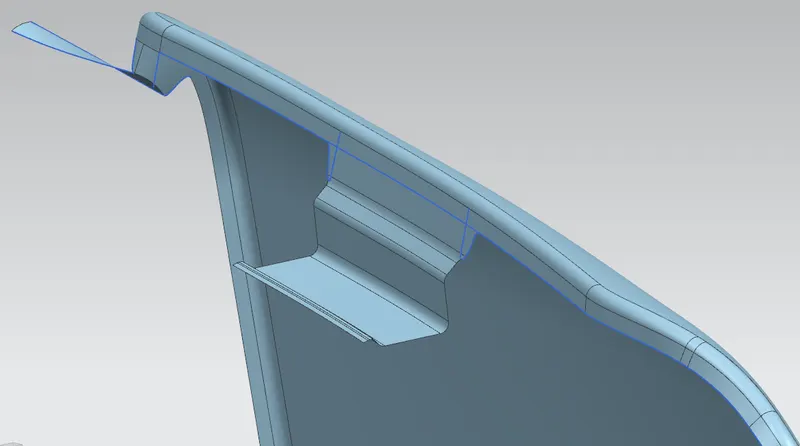
Now we have created an embossment as shown below for the mounting :
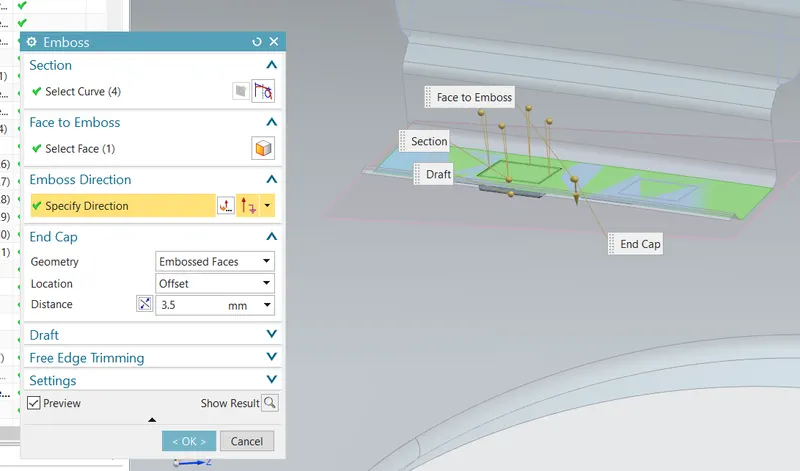
Now we have created mounting holes as shown below :
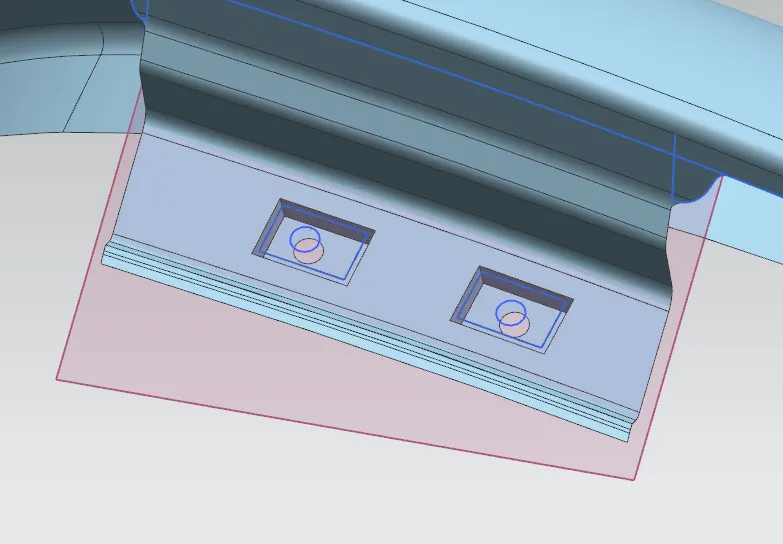
We have added embossment as shown below :
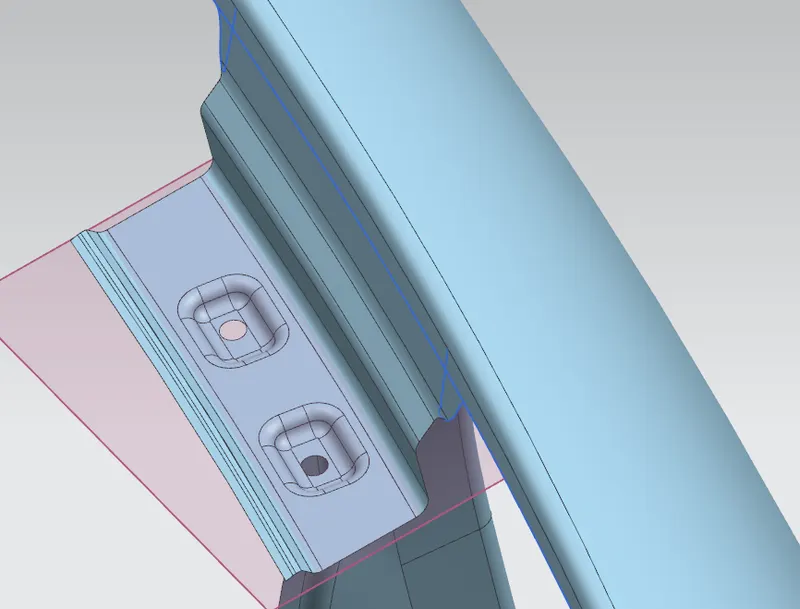
We have created a relief as shown below :
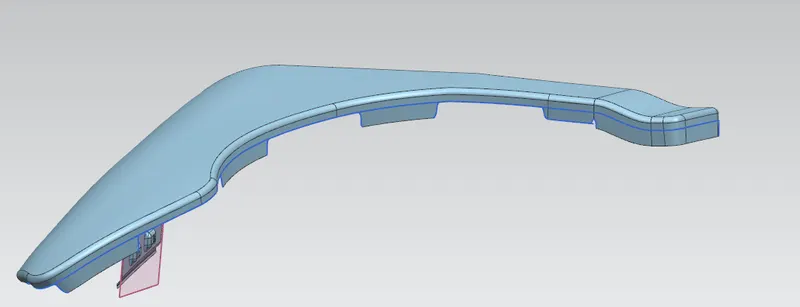
We have created another embossment as shown below :
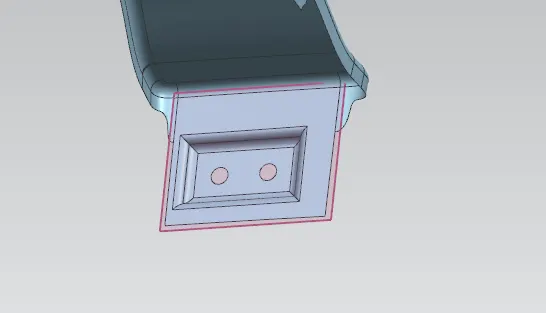
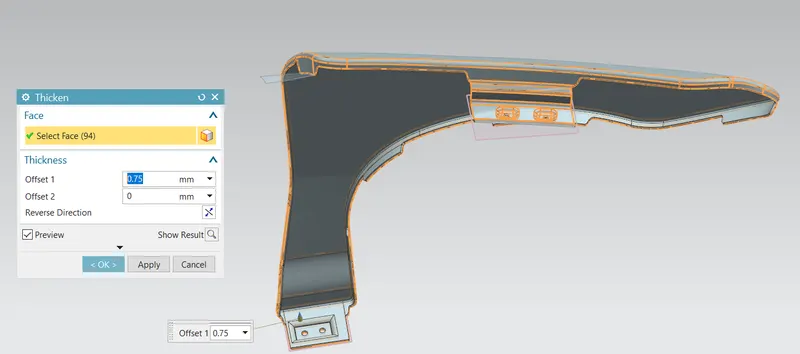
Now we will thicken the body as shown :
Now we will apply fillets to the sharp corners as shown below :
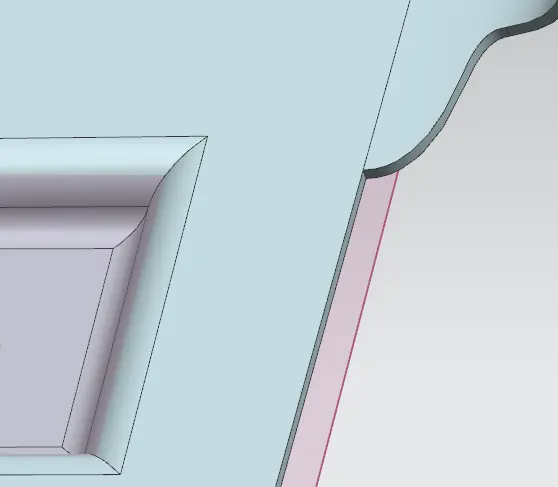
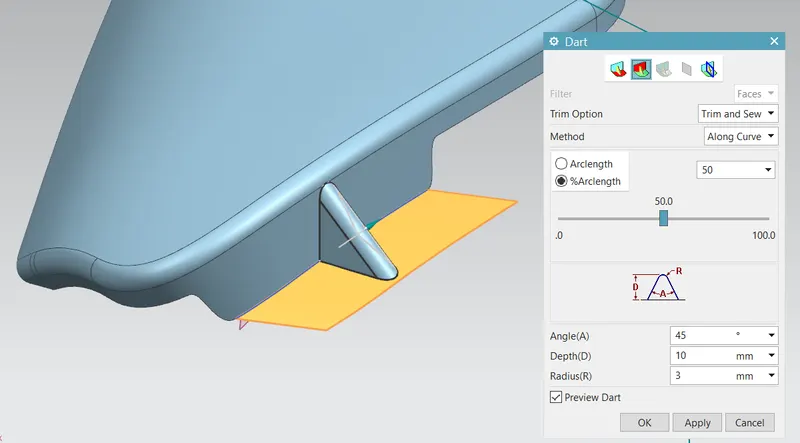
Now we will create a dart as shown :
Conclusion
Hence we have designed the fender according to industry standards as mentioned .