Week-7 Head Impact
Aim :
The report should contain the following,
- The impact simulation of a simple head impact with the Rigid wall.
- The impact simulation of the Headform provided with the Rigid wall with the Stress / Strain plots and acceleration plot.
- The impact simulation of the head form with the Hood with the Stress / Strain plots and acceleration plot. For the hood, you can use Aluminium.
- The Stress / Strain plot from the Rigidwall simulation should be compared with the Stress / Strain plot from the Hood Simulation and there should be a detailed explanation if there is any difference in the plots.
Solution :
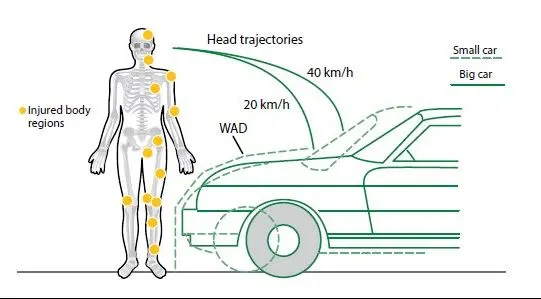
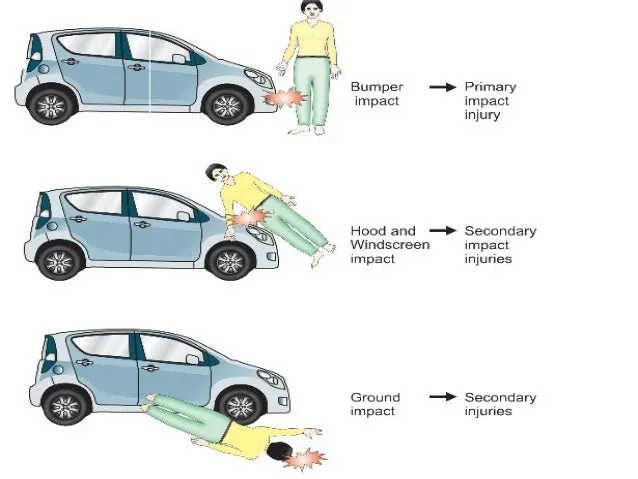
Pedestrian protection CAE is a part of vehicle safety engineering from a crash perspective. In pedestrian protection, we look for imparting minimum injury to head, upper leg (thigh), and lower leg (including knee) in case of an accident with a human subject. These tests are usually done at a lower velocity from 20-40 kmph as accidents tend to result in more severe circumstances above these velocities and braking in case of an accident often results in collision at low velocities.
The following parts are affected during a pedestrainian crash :
Head Injury Criteria :
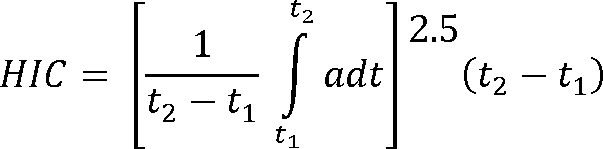
The head injury criterion (HIC) is a measure of the likelihood of head injury arising from an impact. The HIC can be used to assess safety related to vehicles, personal protective gear, and sport equipment.
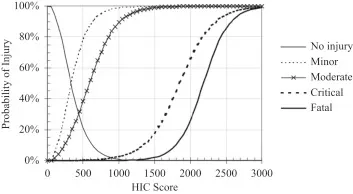
Higher the value of HIC , higher is the probability of getting a high level of head injury. There are certain levels of injuries as shown below :
At HIC = 650 , it means that we will get the following :
90 % probability that we will get level 1 injuries
55 % probability that we will get level 2 injuries
20 % probability that we will get level 3 injuries
5 % probability that we will get level 4 injuries
Severity Index : In this method, a severity value was obtained for each crash location based on number of people died, number of people severely injured, and number of people who got minor injuries and so on. Thus Accident Severity Index (ASI) can be defined as a dimensionless value indicating the hazardousness of a spot in the road.
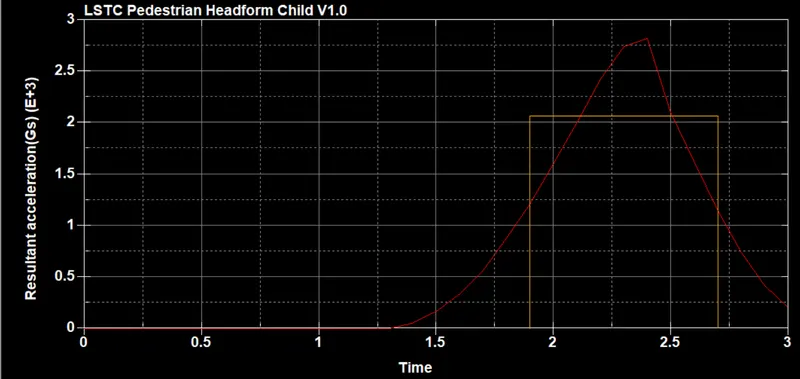
The HIC is calculated between 36 ms as is has been observed that below 3 ms as well as above 36 ms , the impact of injury is very less.
We will take help of the cards for our crash simulation :
1. Include
This is used for including other files into a single file .
2.Include Transform
This is used for transforming a component via angle or translation
Case 1 :
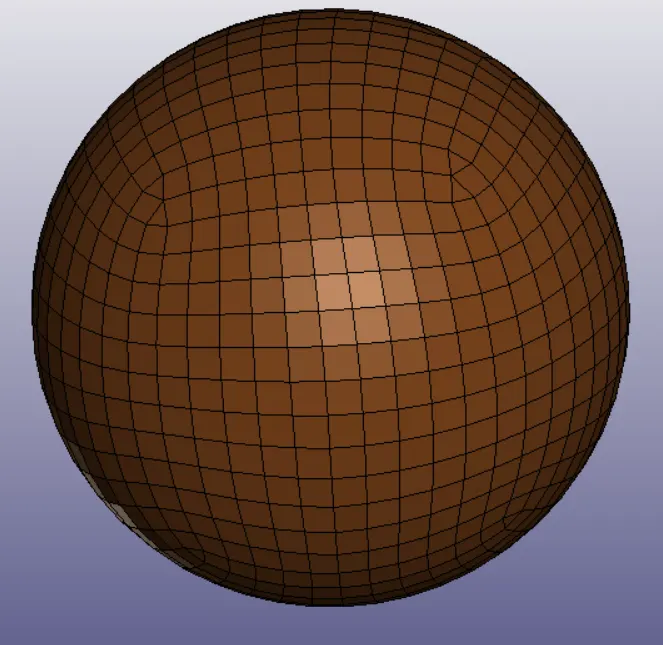
Now we will be performing a head crash simulation on simple head as shown below :
Now we will define the rigid wall for this head :
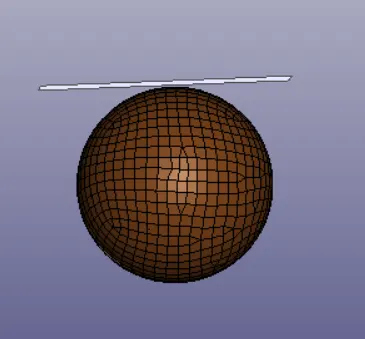
After applying the keywords we get the following :
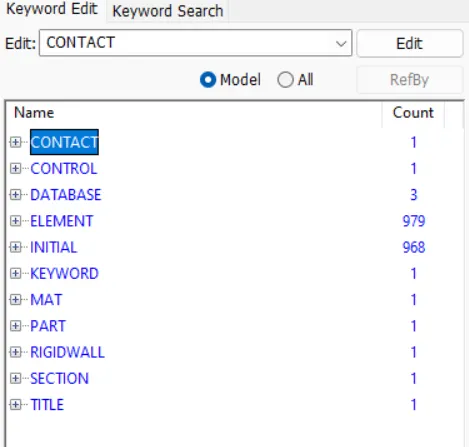
We get the following :
Case 2 :
We will use the include transformation card in this case .In this case we will use it so that the head is transformed and rotated at an angle of 45 degrees .These changes can be done with the help of include tranform or define transform.
First we created the define transformation card as shown below :
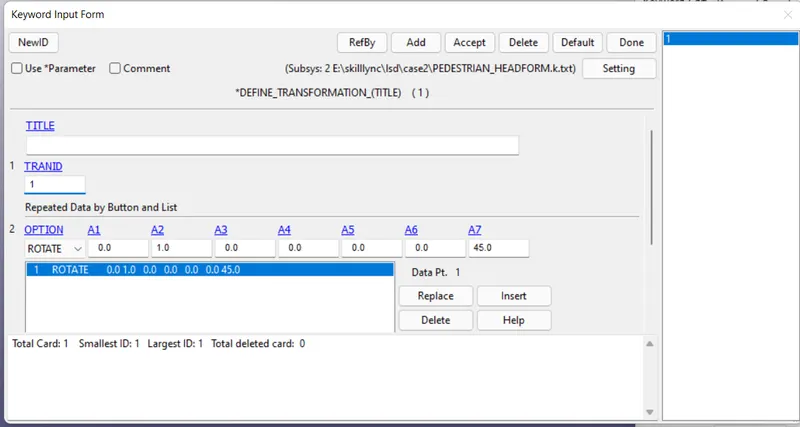
Since we are rotating about y axis we insert 1 and rotate by 45 degrees and give the transid 1 .
Later we use the include transformation card as shown below :
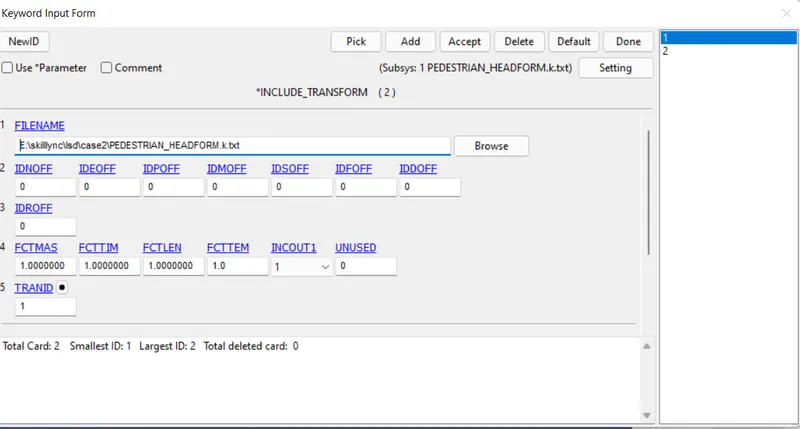
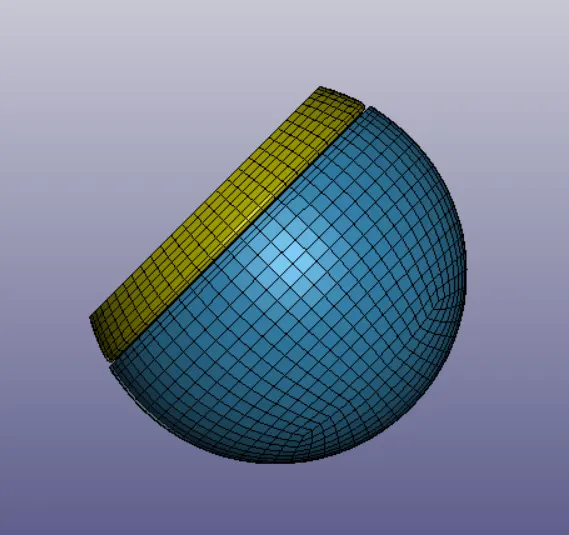
We have include the file that has to be transformed and the transid 1 that was used in define transform and we get the following transformation as shown below :
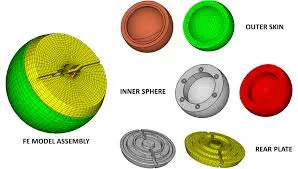
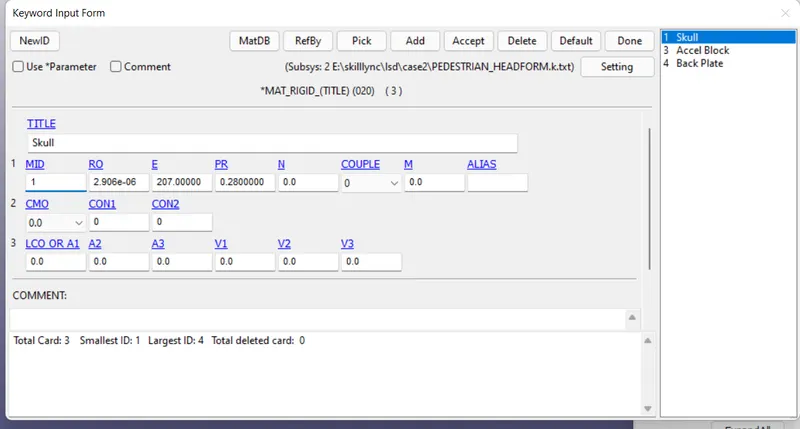
Now we will define the material for the various parts as shown below :
For the skull , acceleration block as well as the plate we will be using the Mat_020_Rigid material as shown below :
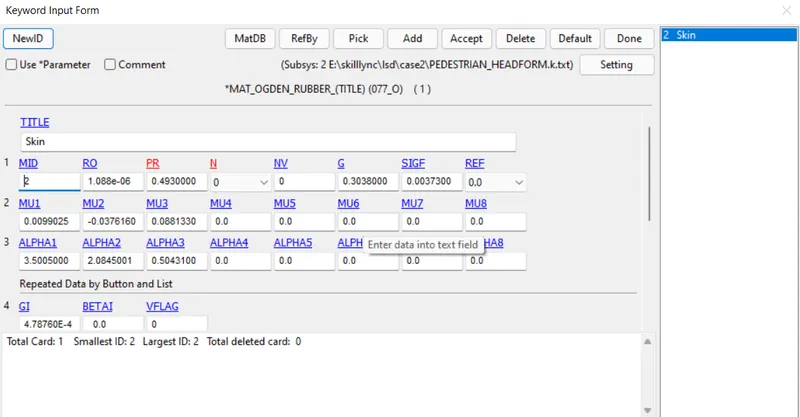
For the skin we will use the Mat_Ogden card as it is a hyperelastic material :
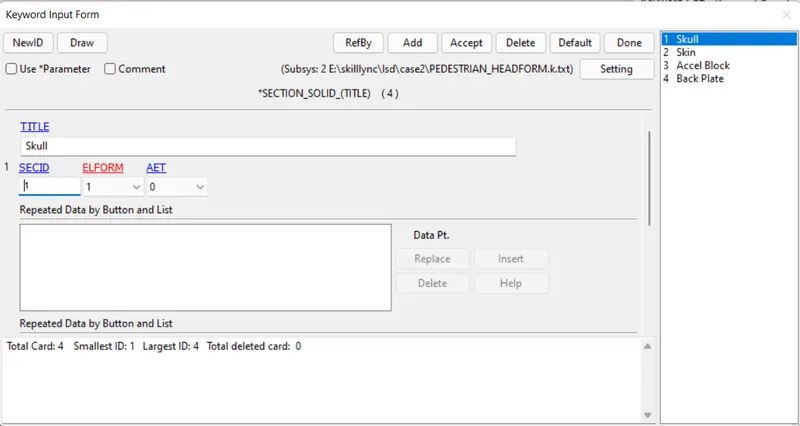
Now we will create sections as shown below :
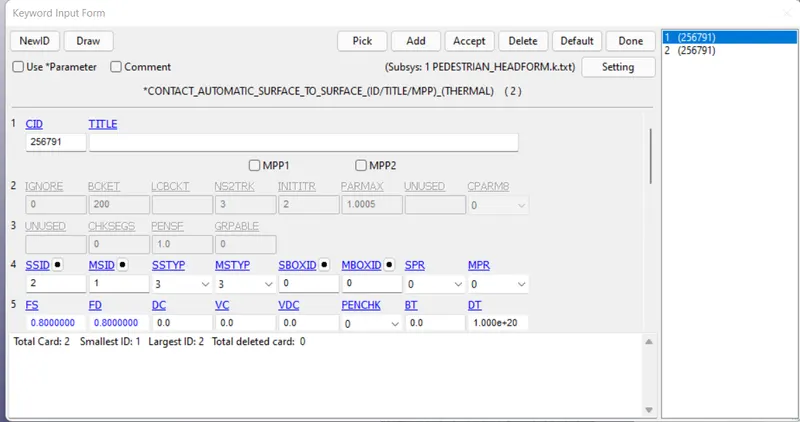
Now we will create the contact card as shown below :
Now we will provide the intial velocity to the model as shown below :
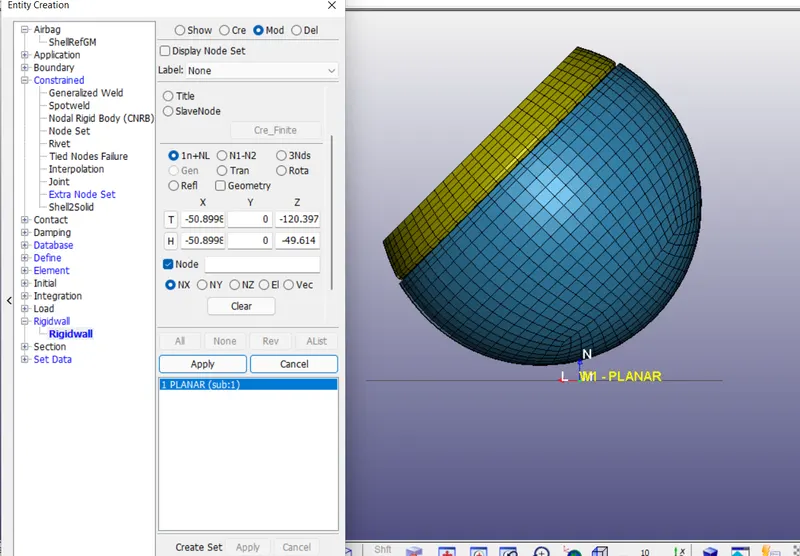
Now we will add the following cards :
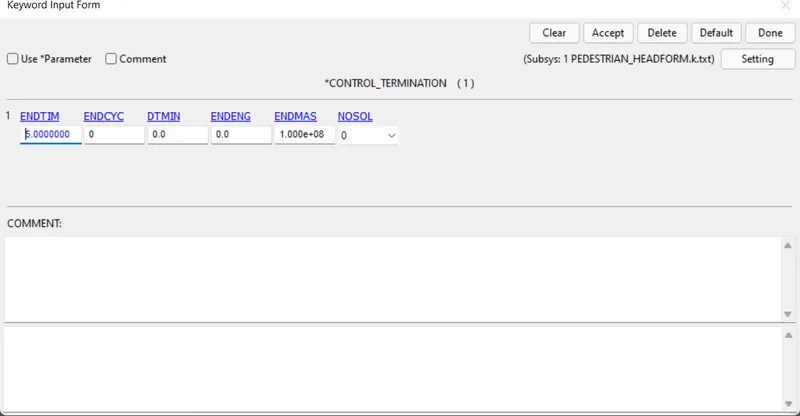
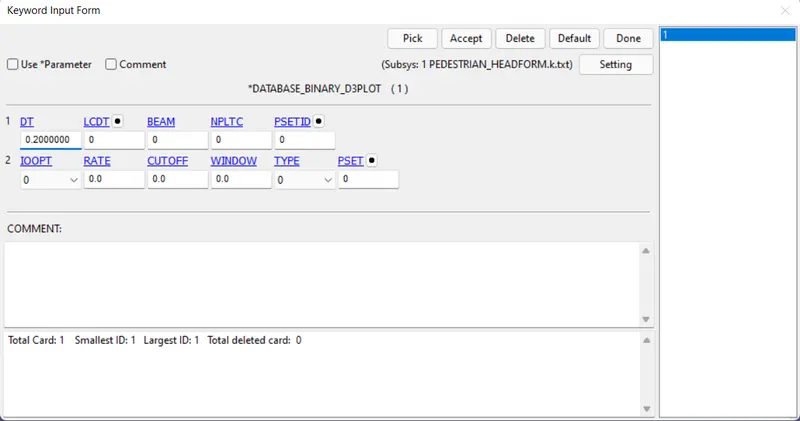
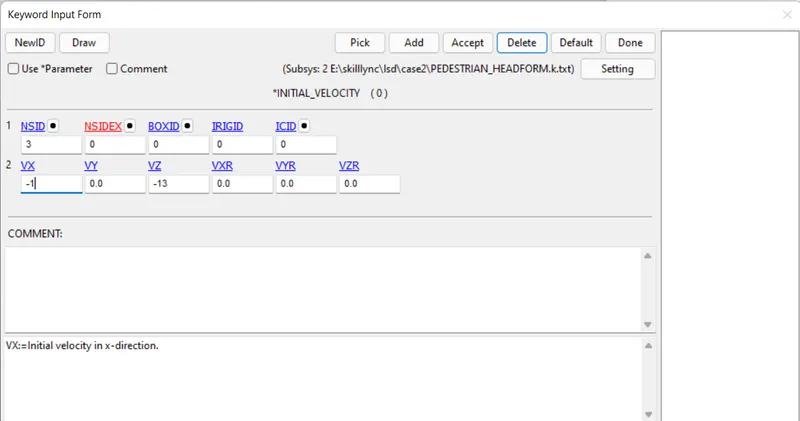
Now we will run the simulation and get the following :
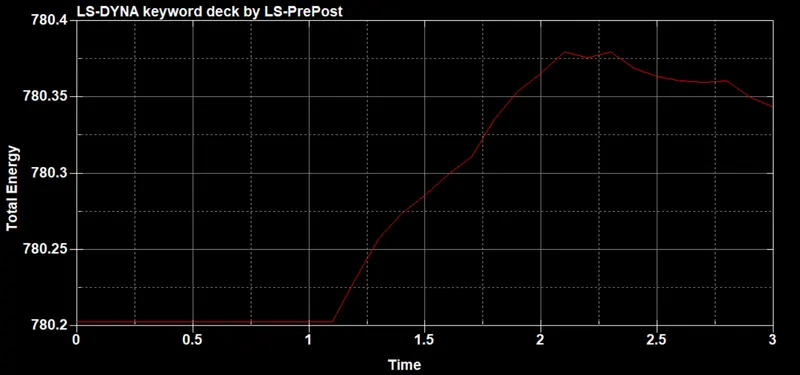
We get the following graphs :
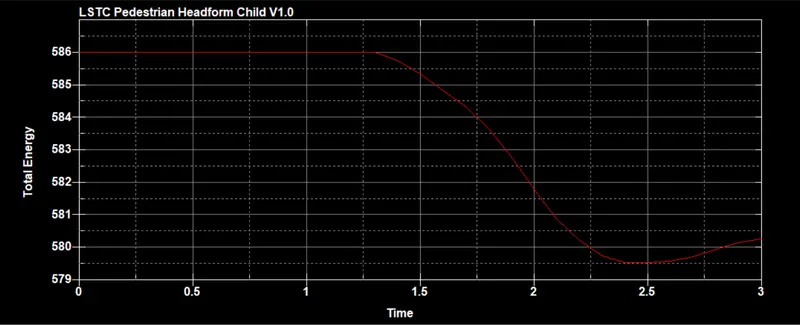
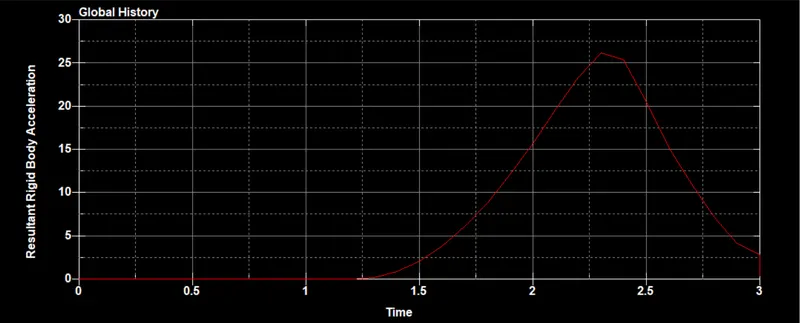
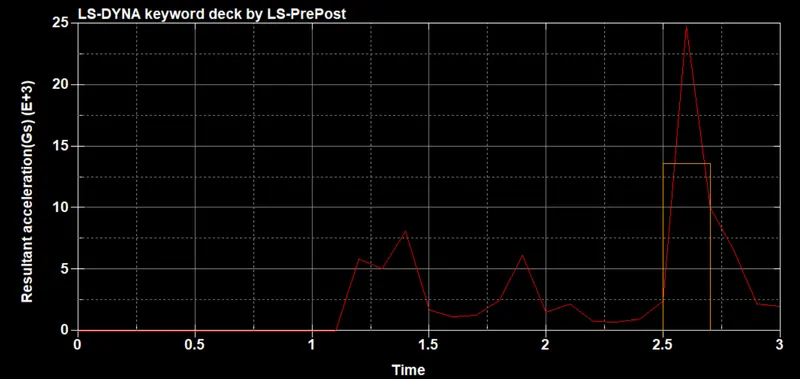
We get the hic criteria along with the acceleration plot as shown below :
Case 3 : Pedestrain Headform crash with Hood :
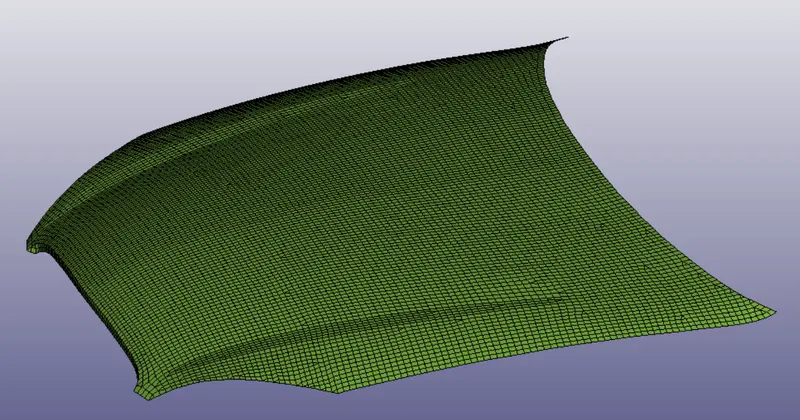
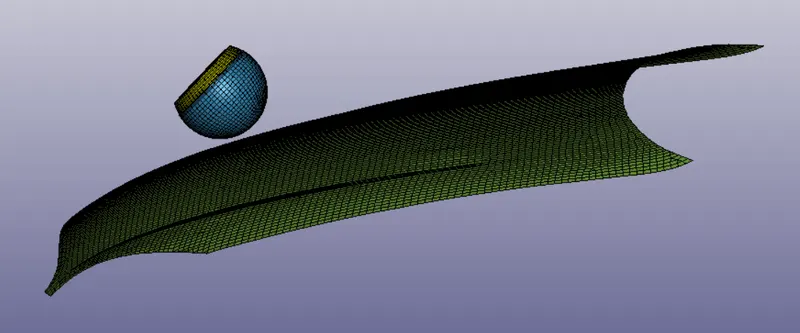
Using the include transform and define transform we import the pedestrain headform inclined at an angle of 45 degrees as shown below :
The material and section cards will be the same for the pedestrain headform
We will be defining the shell section for the hood as shown below :
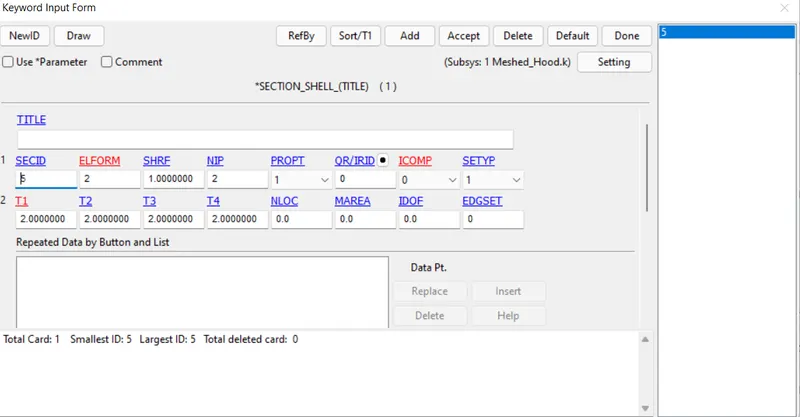
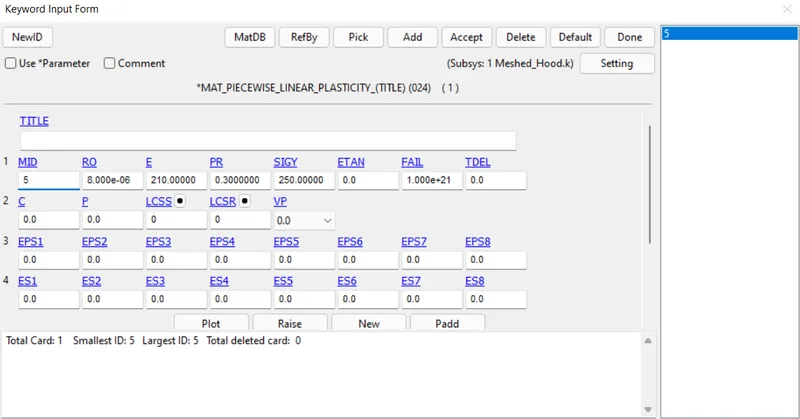
We have assgined the following material to the hood as shown below :
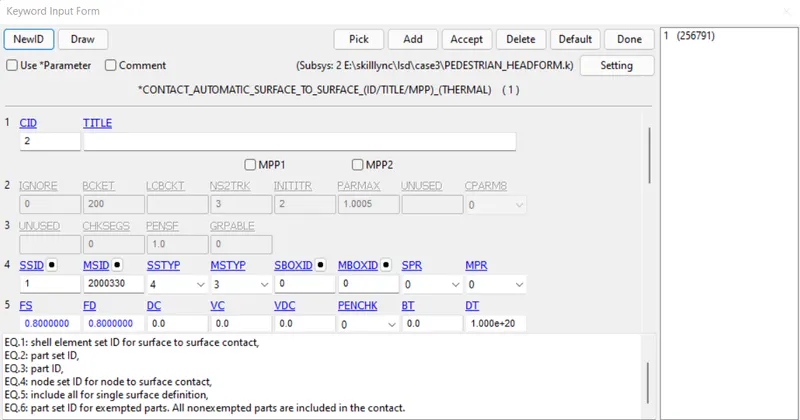
Now we will assign the contact card between the hood and the headform with the hood being the master and the headform being the slave :
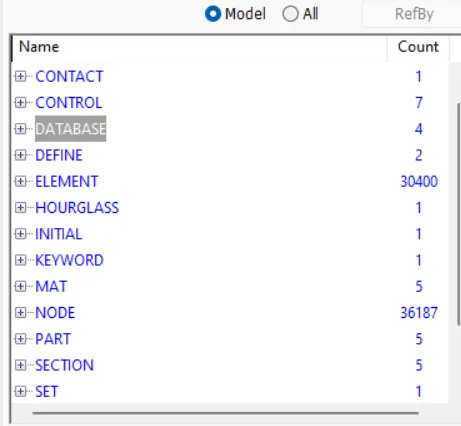
We have applied the following cards :
After simulating we get the following :
We get the following results :
Conclusion
Therefore we have simulated all three cases and found out the HIC 36 graph.