Week 3 Sheet metal Bending challenge
SHEET METAL BENDING
OBJECTIVES
In this challenges Sheet metal bending is to be performed for 3 different materials mentioned below. Variation of certain settings is also to be performed and your conclusions are to be added to the report
Run the analysis for the material :
Case 1:Aluminium Alloy 1199( mentioned in the course video),Copper Alloy NL and Magnesium Alloy NL. Find out the Equivalent stress, Equivalent elastic strain and Total Deformation in Y direction and compare the results for the three materials.
Case 2:With the material as Aluminium Alloy, change the friction coefficient to 0.19 and run the analysis as mentioned in Case 1. Compare the results with that in case 1.
Case 3: Refine the mesh on the plate such that it doesn't cross the academic limit. With Aluminium alloy as material, run the analysis as in Case 1 and compare the results.
PROCEDURE
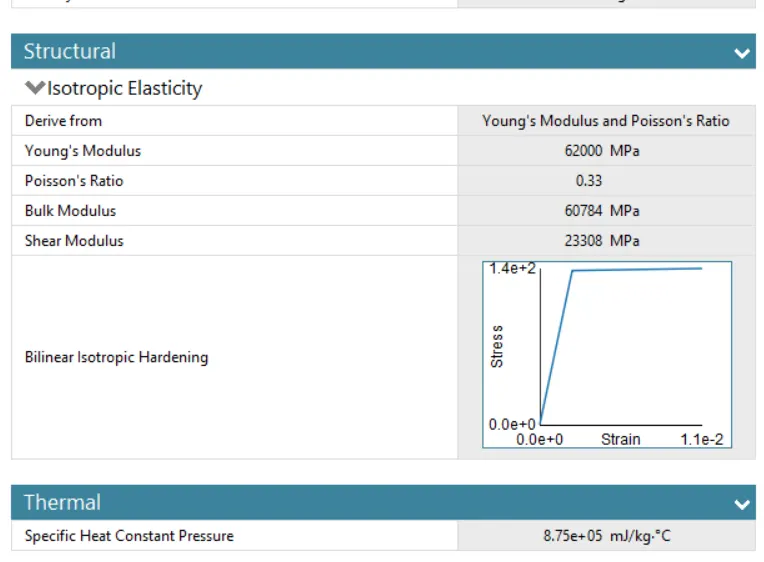
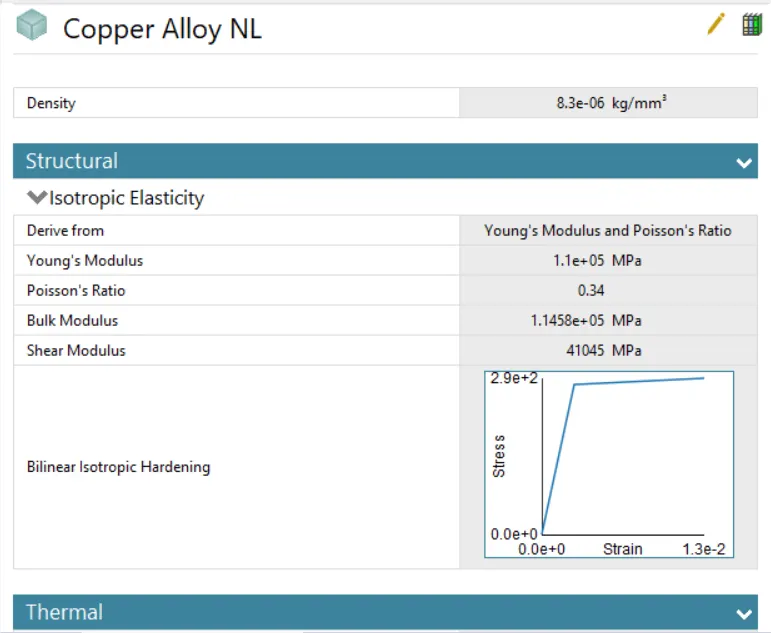
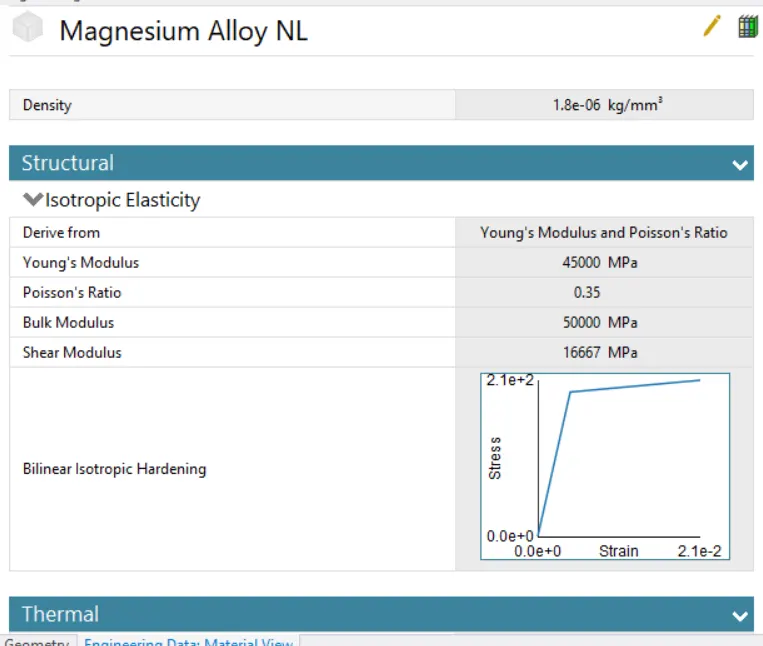
- First, we have to input the engineering materials with required properties or else by creating with required properties.
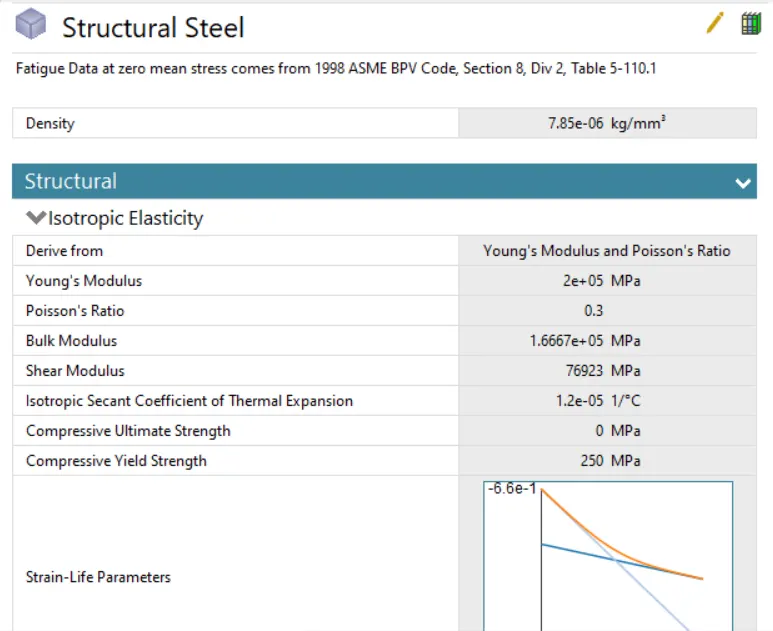
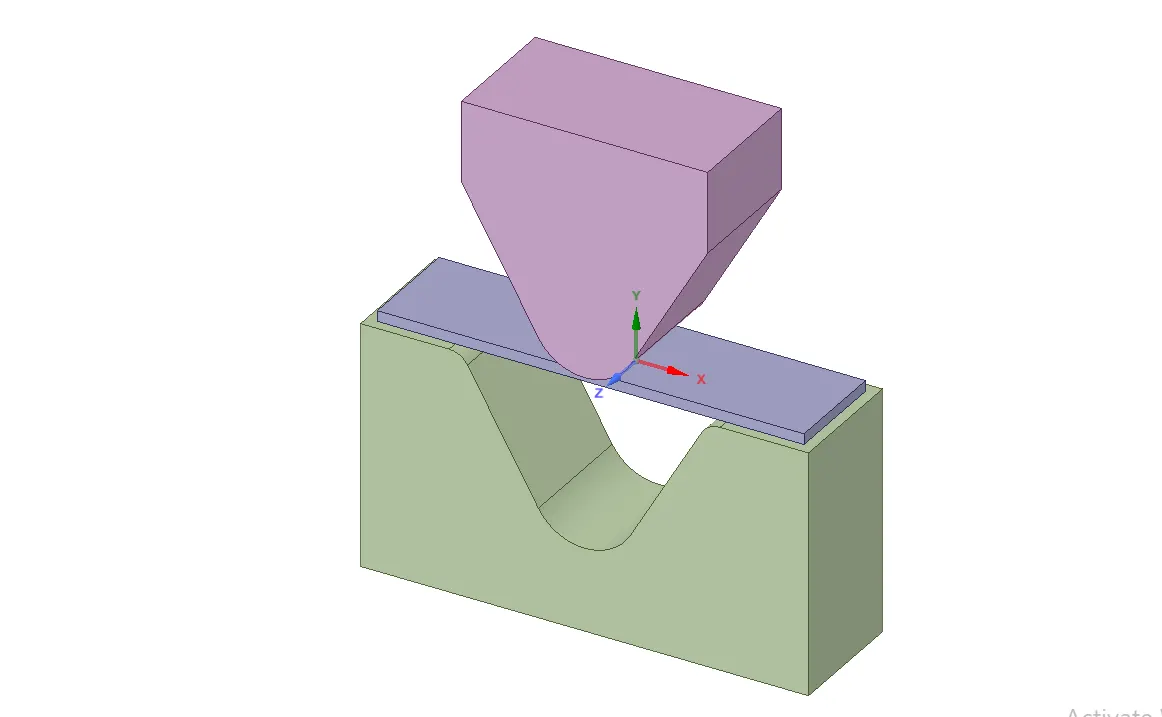
- Then we have to import our model into ansys, import the model and open it in space claim so that ansys will read it.
- Then assign required connections in this assignment we will use frictional contact between the components.
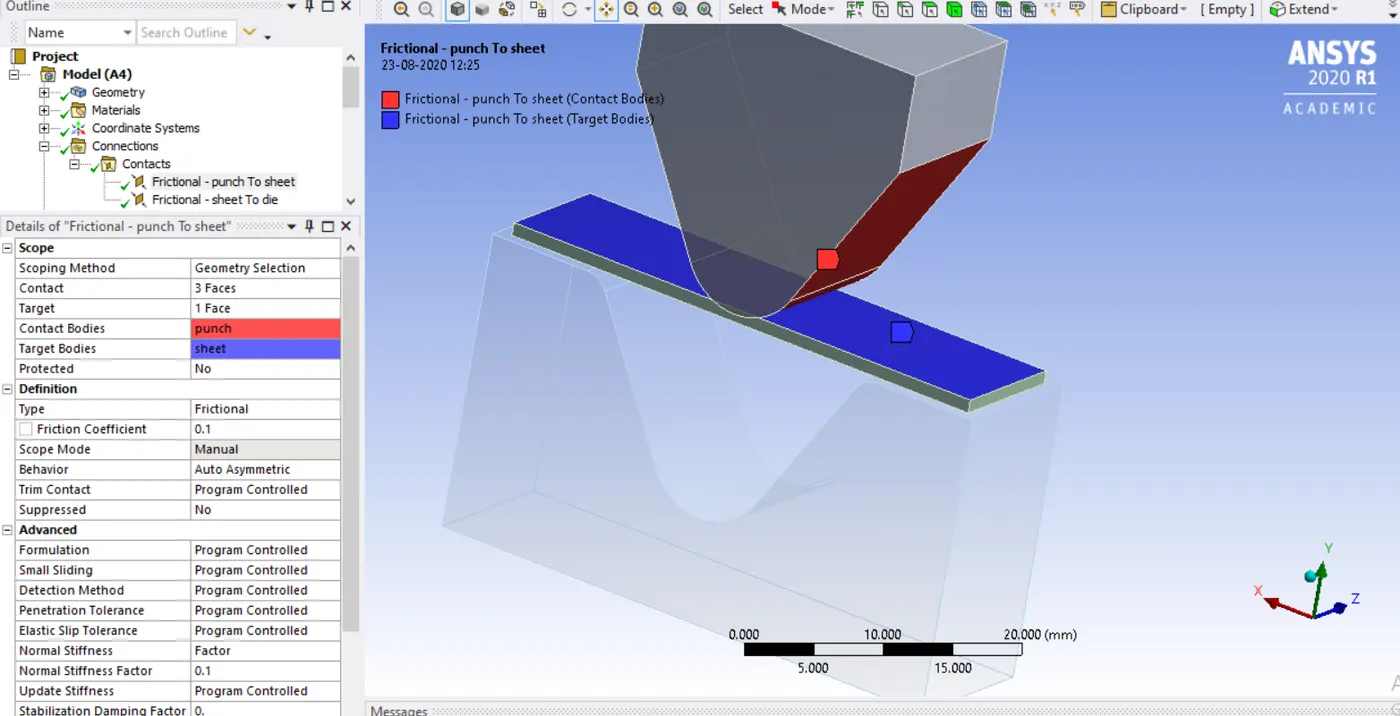
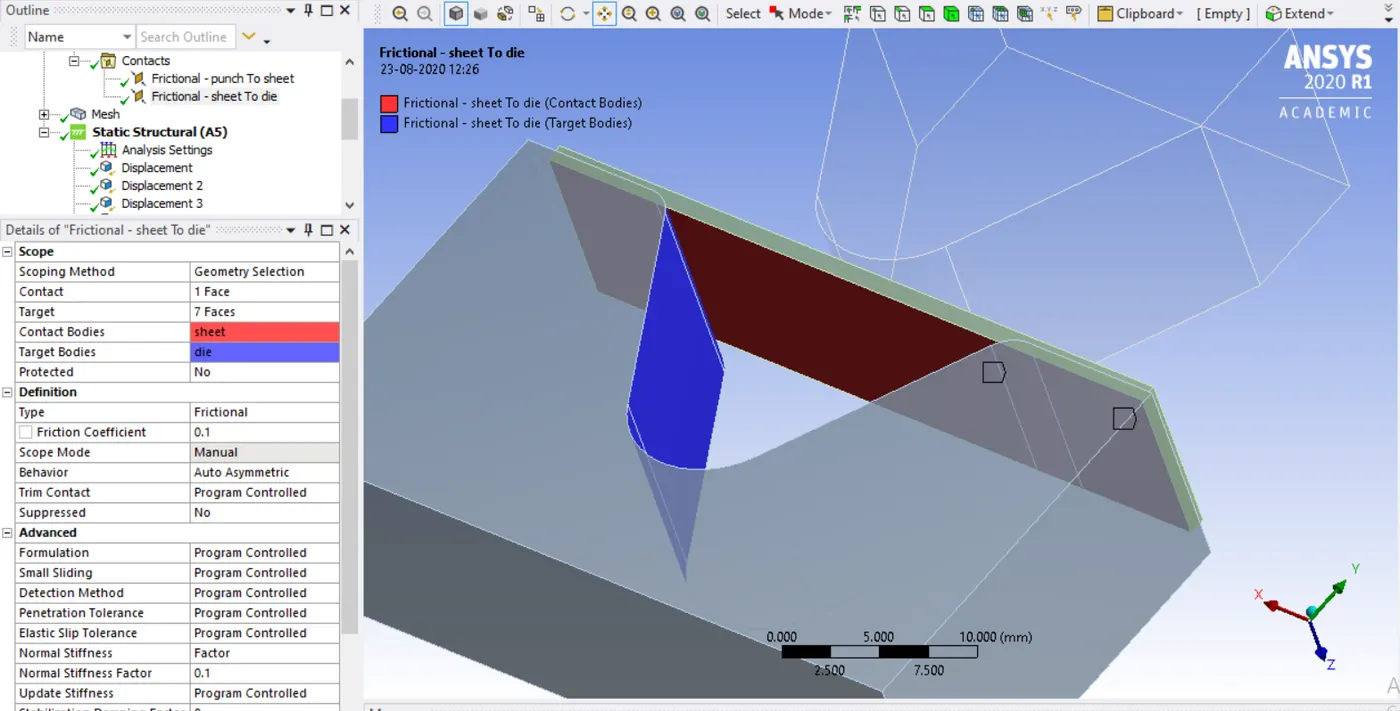
- Then mesh the component with required mesh size in this assignment we will use
- Mesh – 4mm
- Sizing – 1mm tetrahedrone
- Nodes – 22708
- Elements – 7318
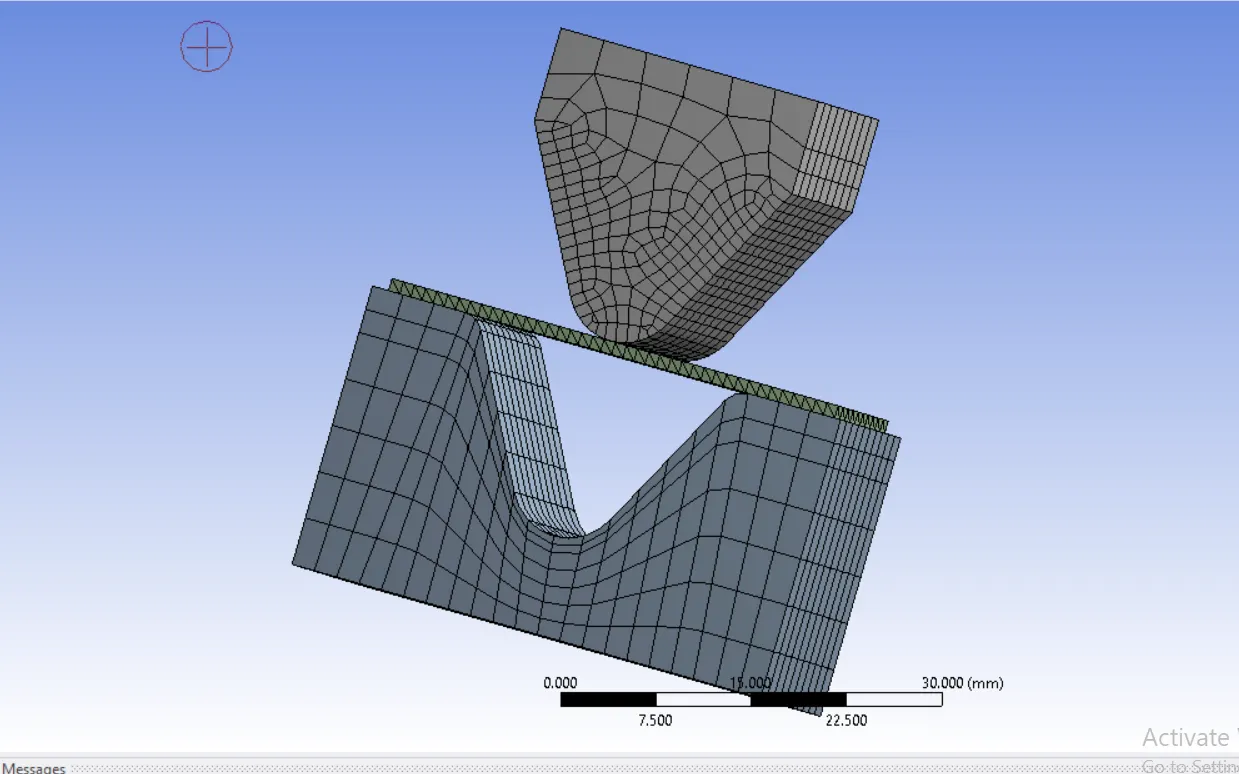
- Analysis setting
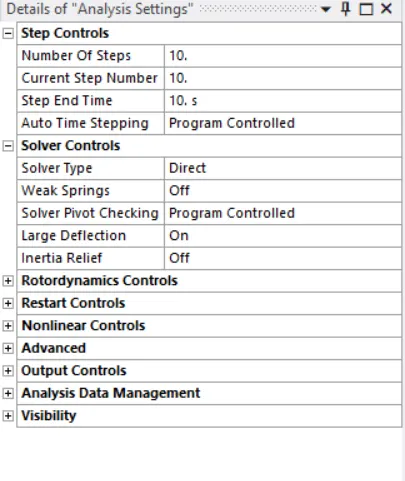
- Then give the required solution parameters then solve .
CASE1: Aluminium Alloy 1199( mentioned in the course video),Copper Alloy NL and Magnesium Alloy NL. Find out the Equivalent stress, Equivalent elastic strain and Total Deformation in Y direction and compare the results for the three materials.
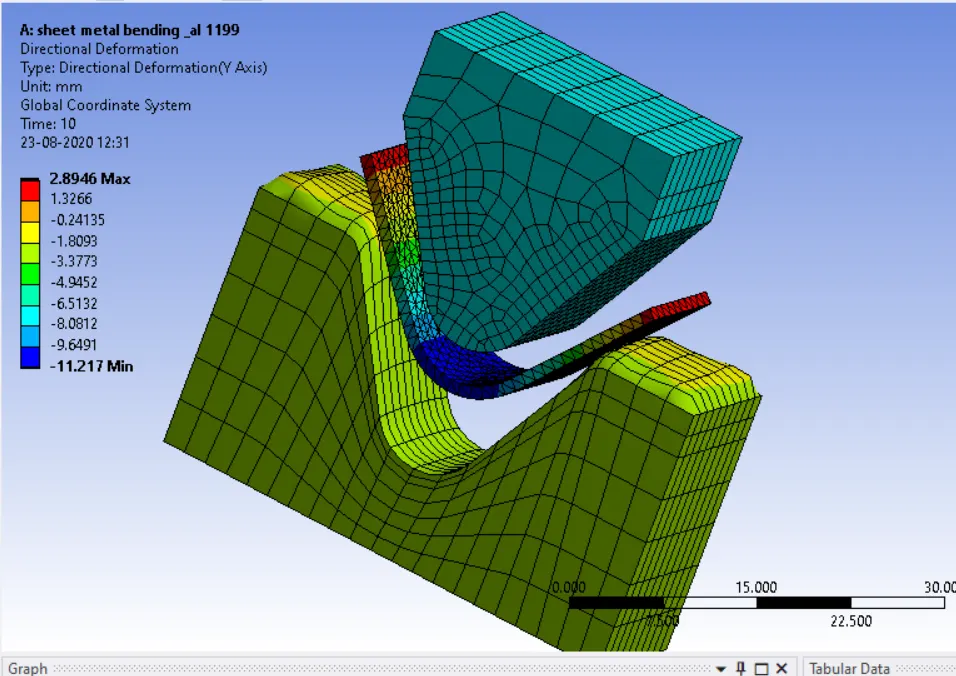
Aluminium Alloy 1199
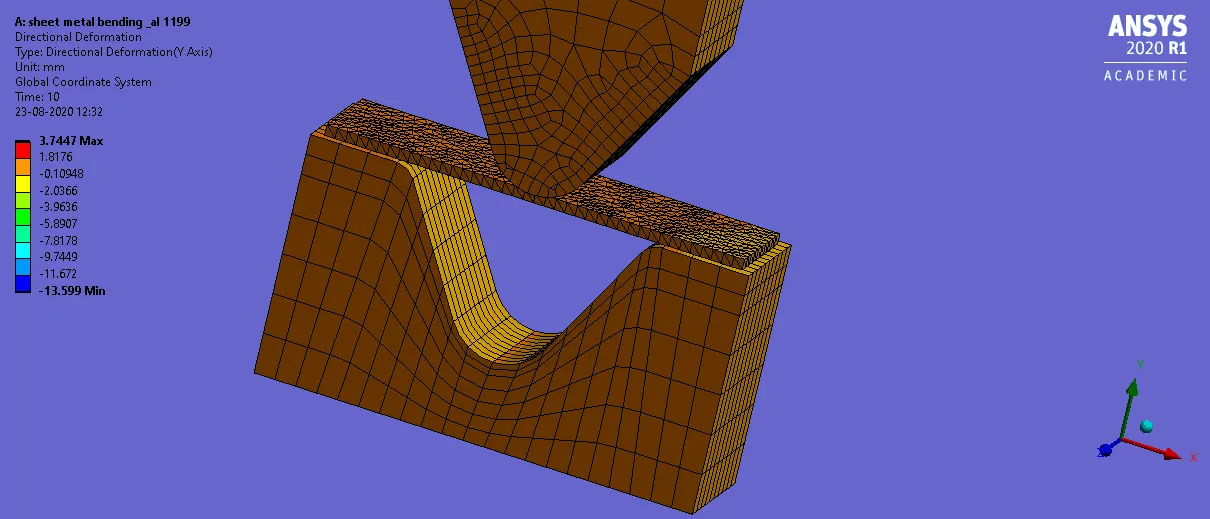
Directional deformation at Y- Axis
Equivalent stress
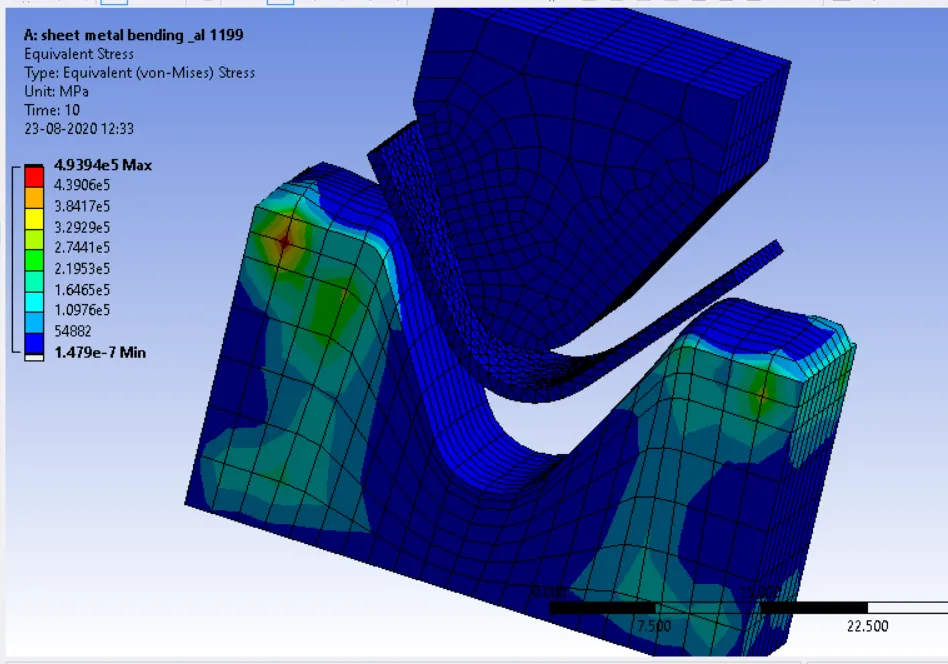
Equivalent stress at plate
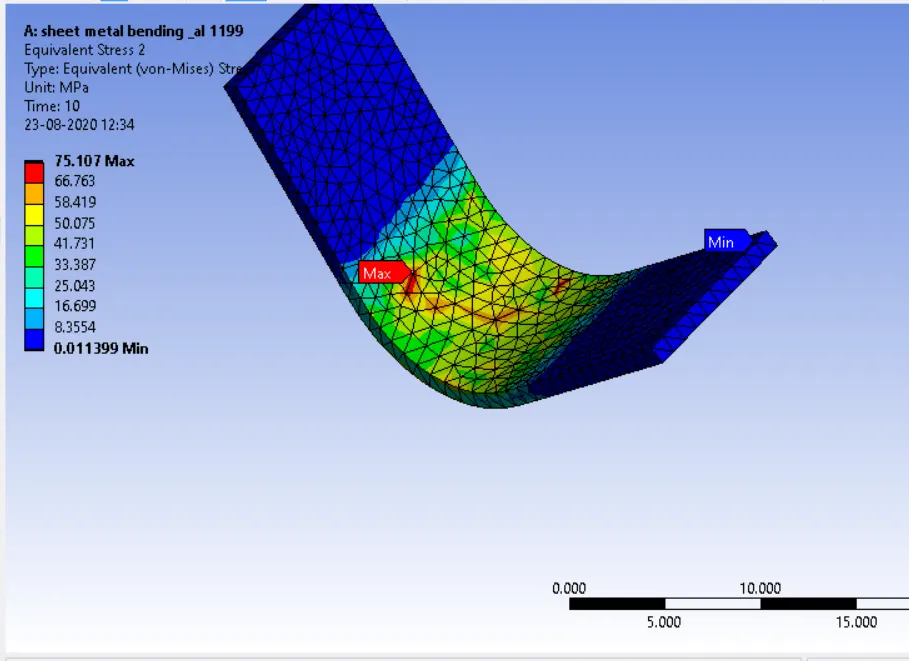
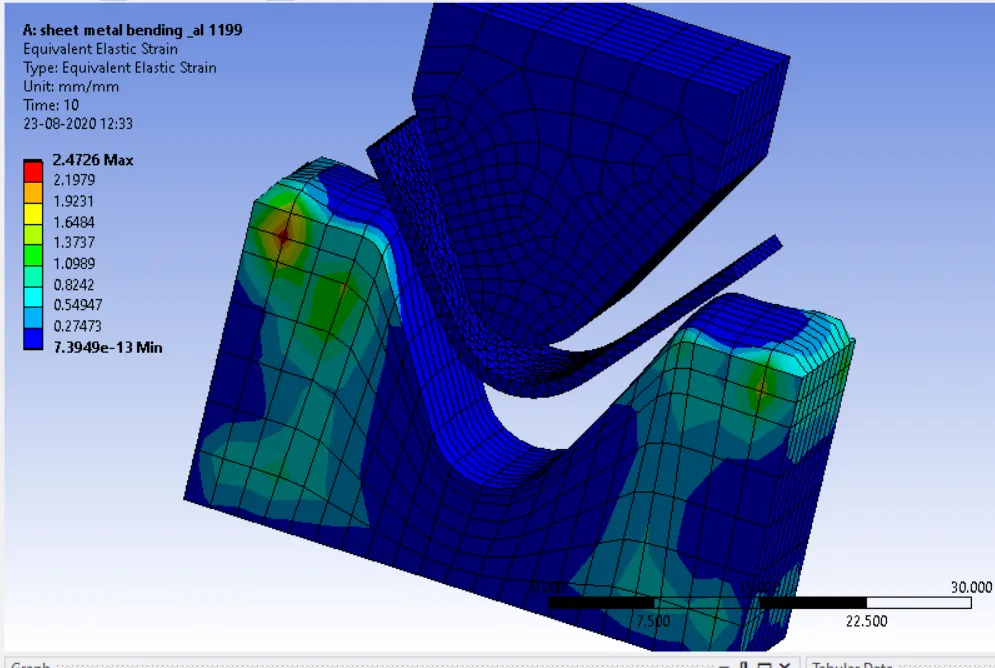
Equivalent elastic strain
Copper Alloy NL
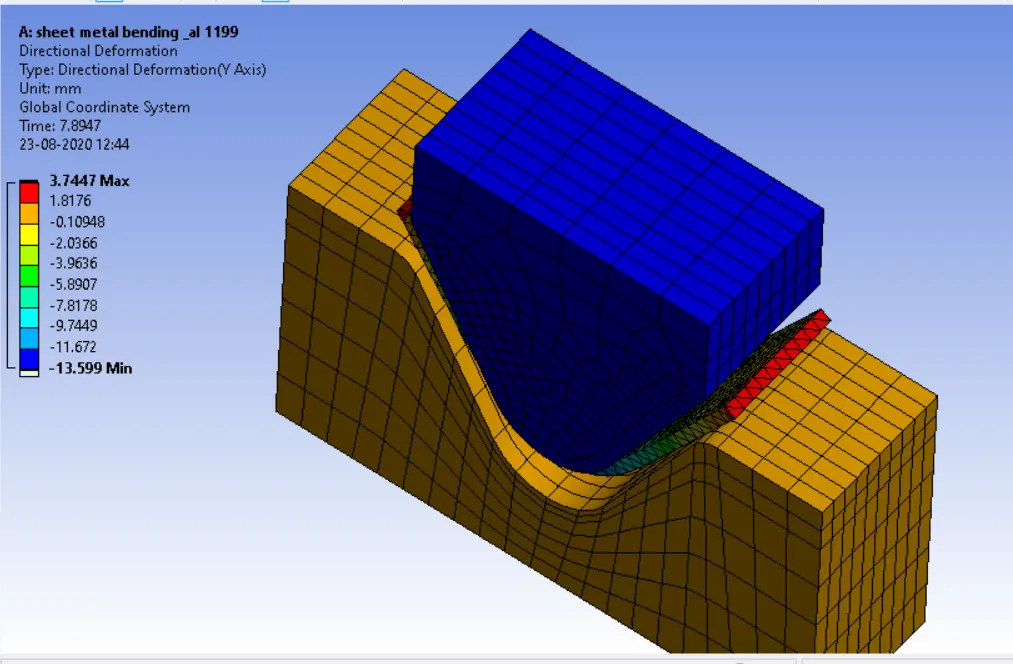
Directional deformation at Y- Axis
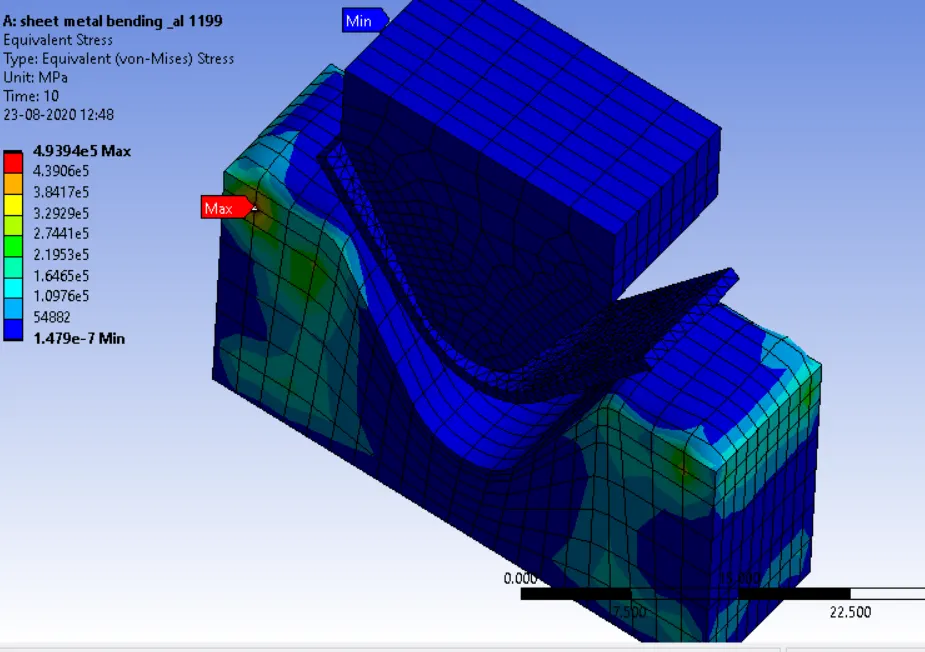
Equivalent stress
Equivalent stress at plate
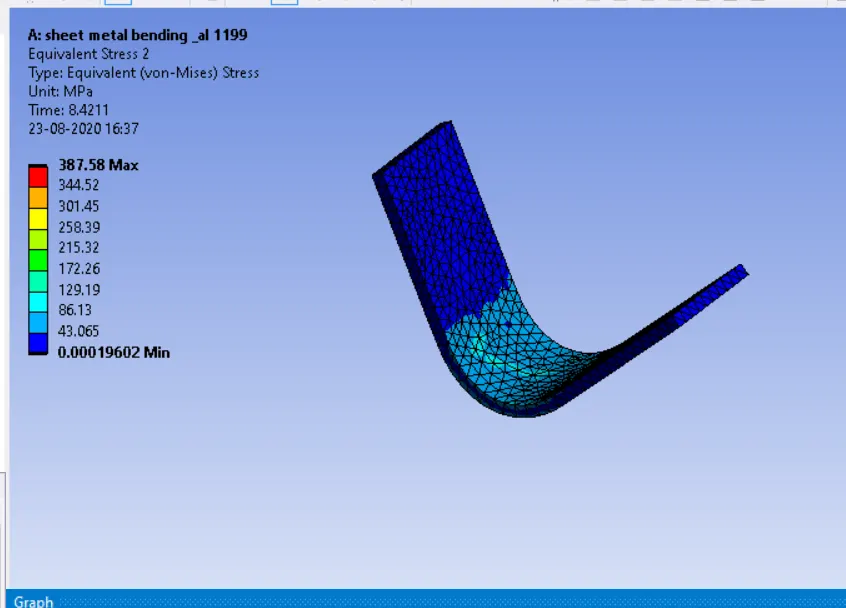
Equivalent elastic strain
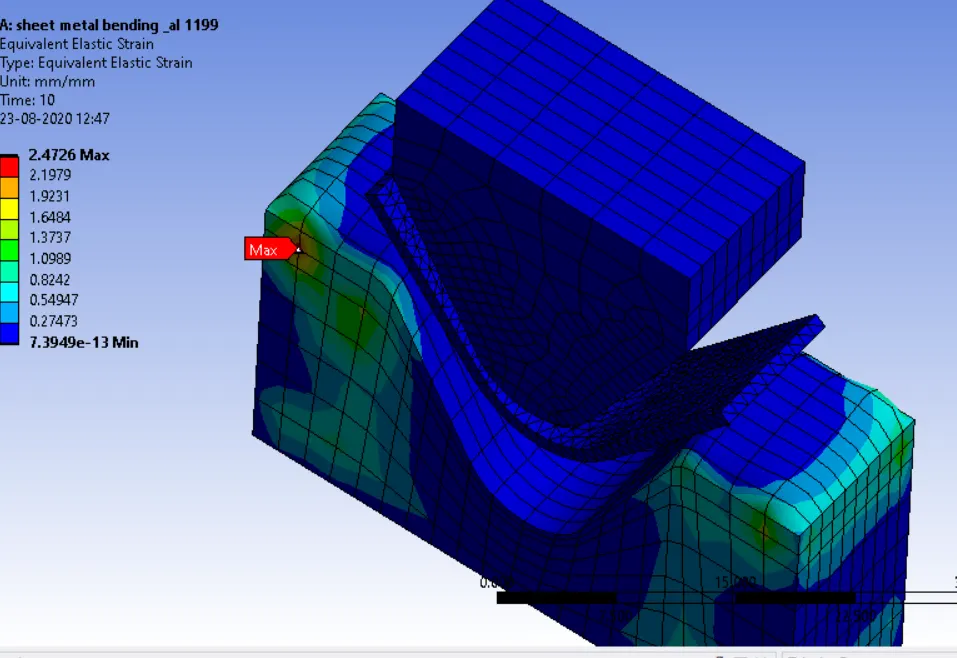
Magnesium Alloy NL
Directional deformation at Y- Axis
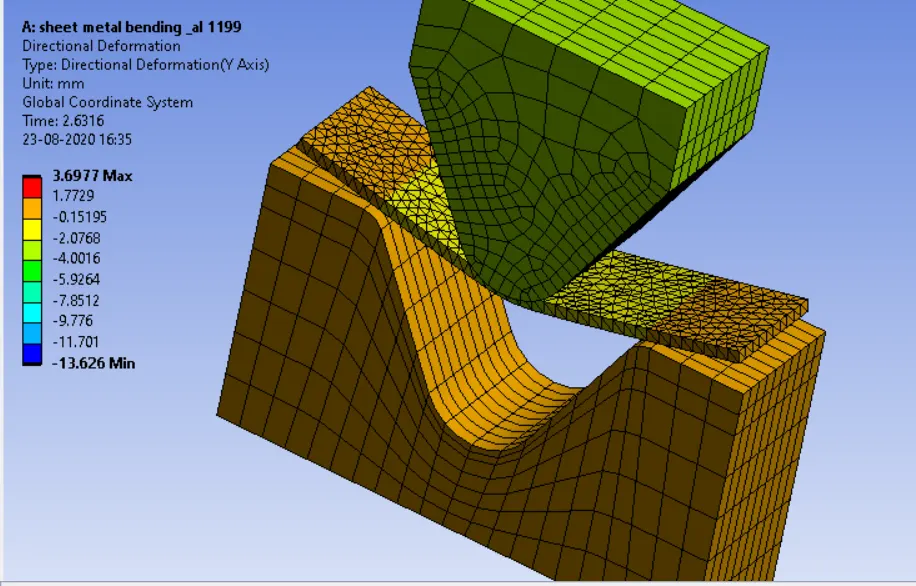
Equivalent stress
Equivalent stress at plate
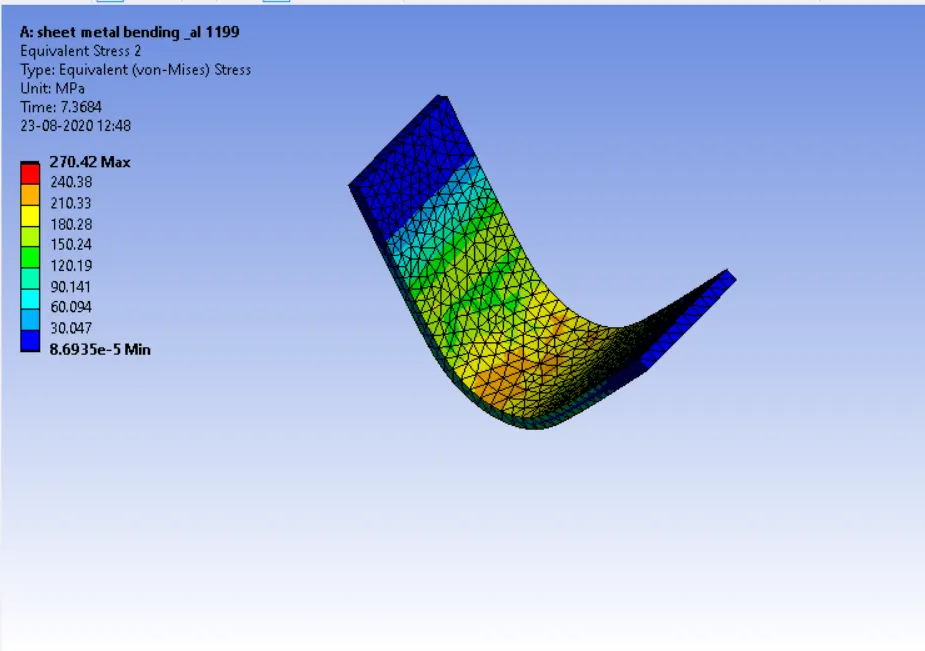
Equivalent elastic strain
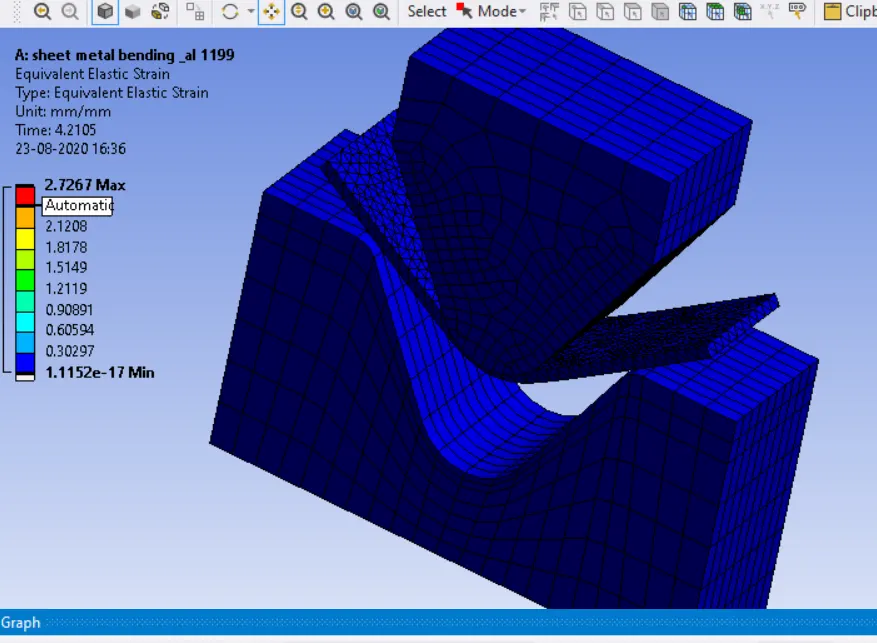
Result
| Deformation at Y-axis (mm) | Equivalent strain | stress on plate (MPa) | |
| Aluminium 1199 |
3.684 |
2.8319 |
191.3 |
| Magnesium NL | 3.74 | 2.472 | 270.432 |
| Copper NL | 3.697 | 2.7267 | 387.58 |
copper has more ductility than other materials hence the stress is more in copper.
Magnesium has more deformation on Y-Axis
while elastic strain aluminium has maximum strain.
Case 2: With the material as Aluminium Alloy, change the friction coefficient to 0.19 and run the analysis as mentioned in Case 1. Compare the results with that in case 1.
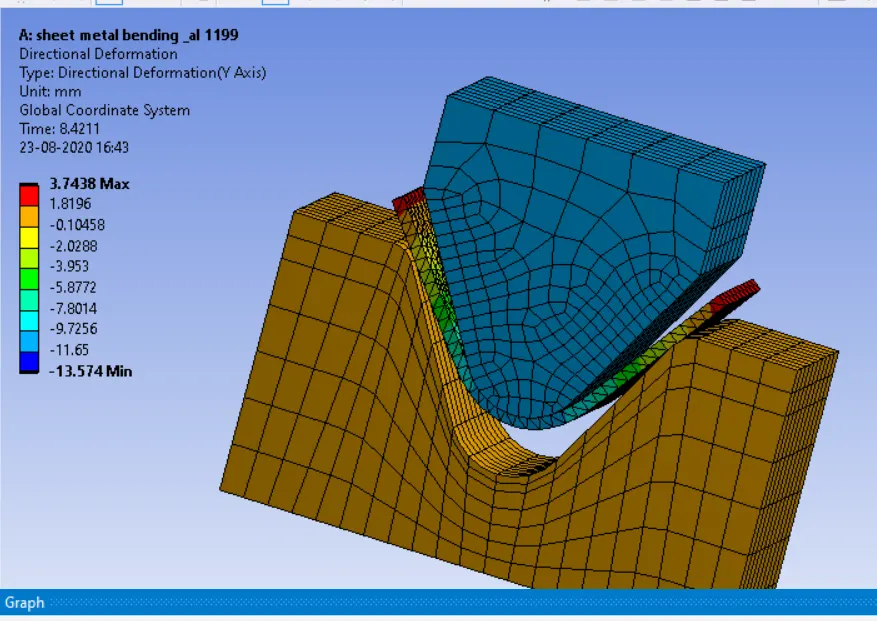
Directional deformation at Y- Axis
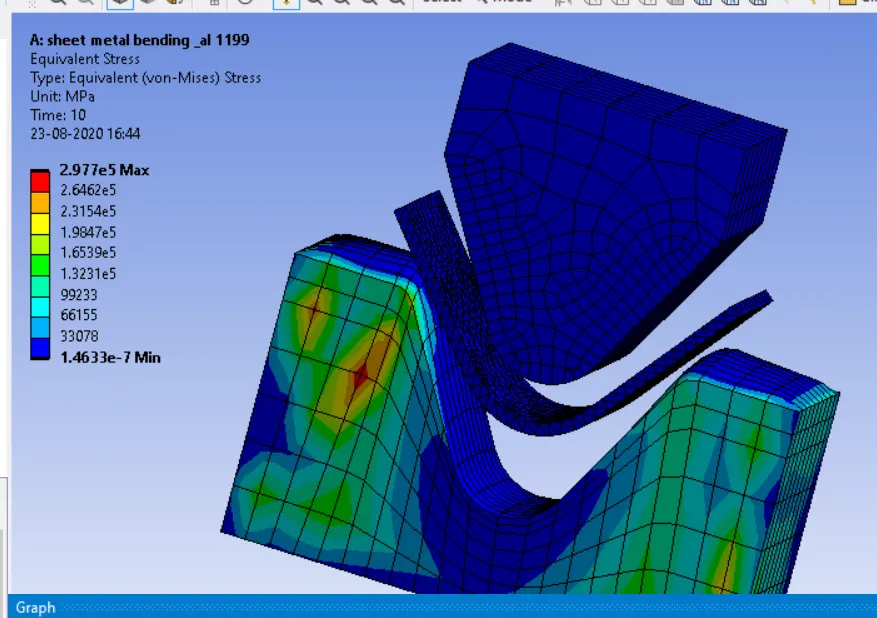
Equivalent stress
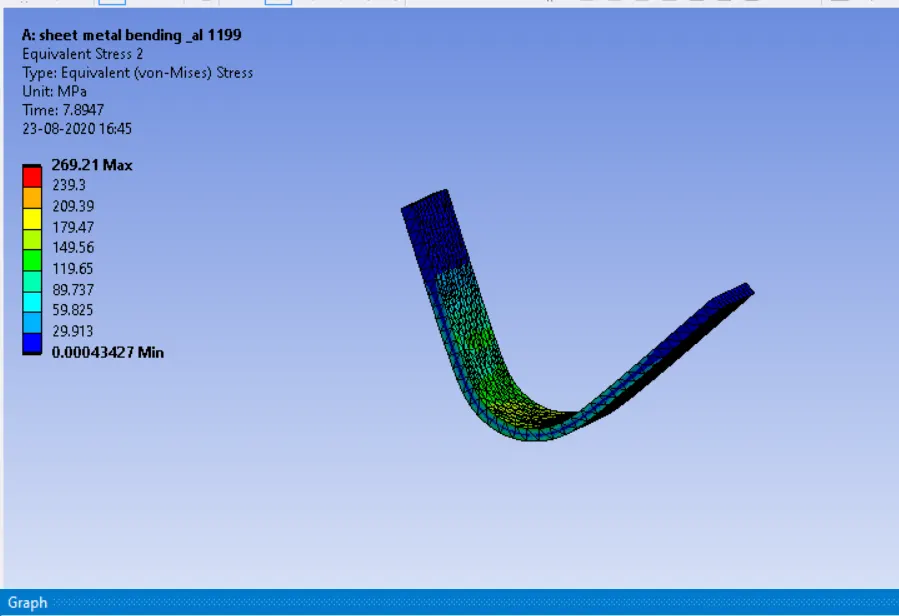
Equivalent stress at plate
Equivalent elastic strain
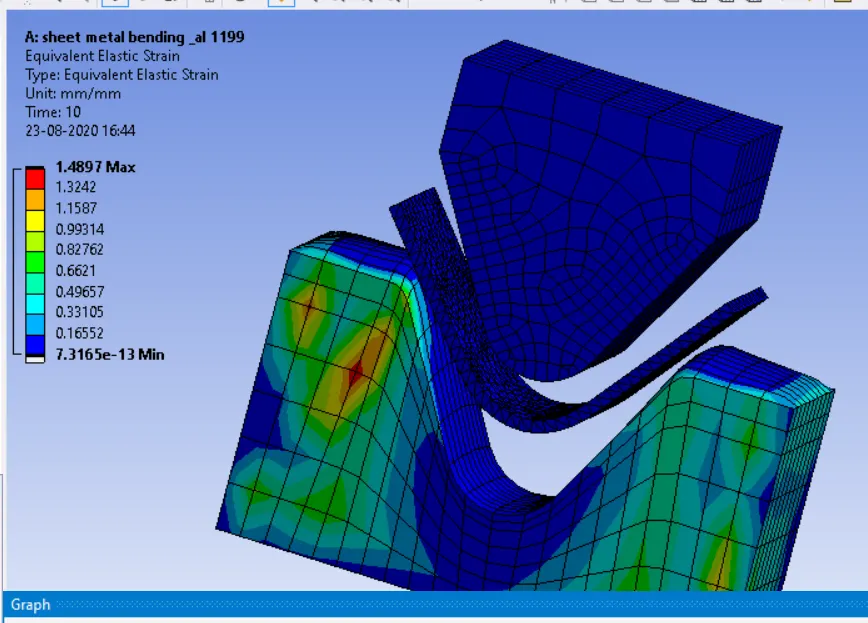
Result
| Deformation at Y-axis (mm) | Equivalent strain | stress on plate (MPa) | |
| Aluminium 1199 |
3.684 |
2.8319 |
191.3 |
| Case 2 | 3.743 | 1.487 | 269.21 |
While increasing the frictional coefficinet to 0.19 the elastic strain reduces.
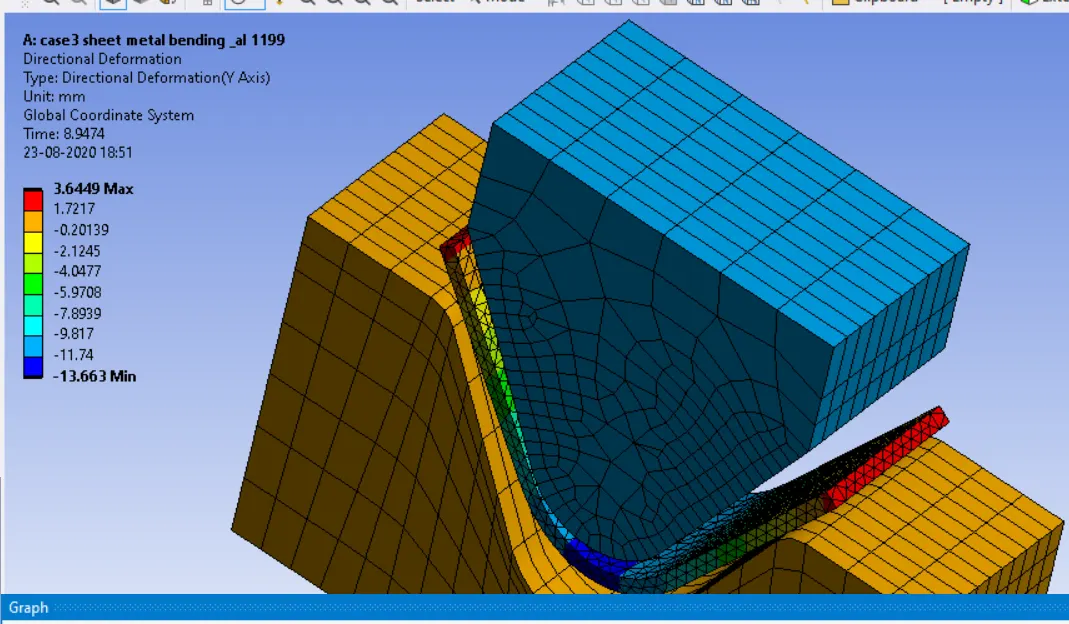
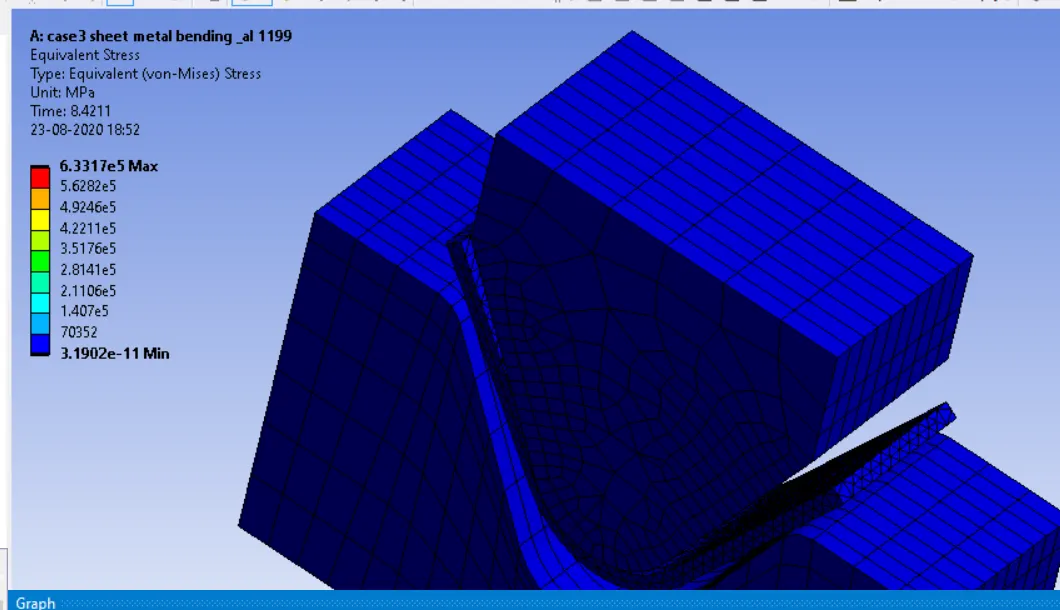
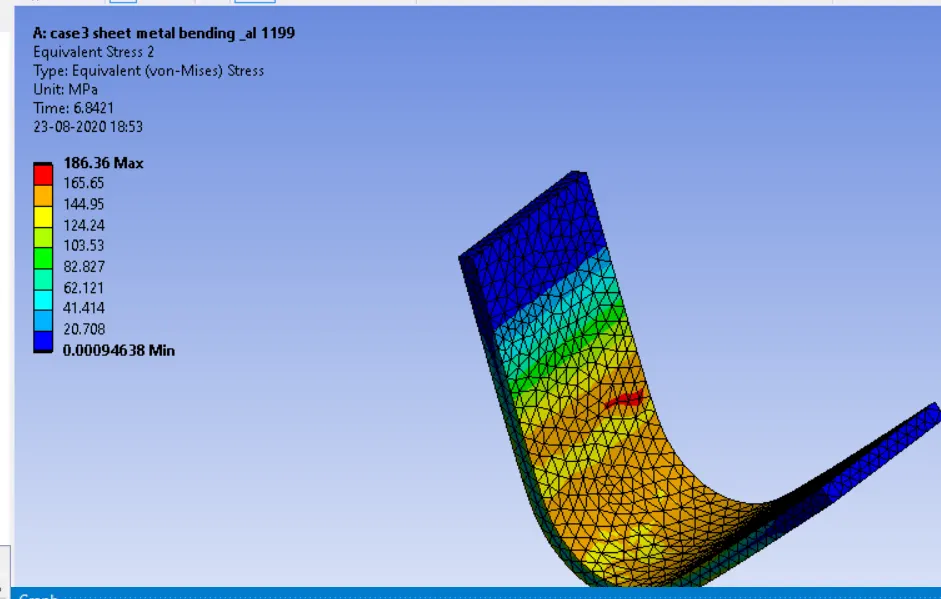
Case 3: Refine the mesh on the plate such that it doesn't cross the academic limit. With Aluminium alloy as material, run the analysis as in Case 1 and compare the results.
- Mesh – 4mm
- Sizing – 0.9mm tetrahedrone
- Nodes – 28424
- Elements – 9868
Directional deformation at Y- Axis
Equivalent stress
Equivalent stress at plate
Equivalent elastic strain
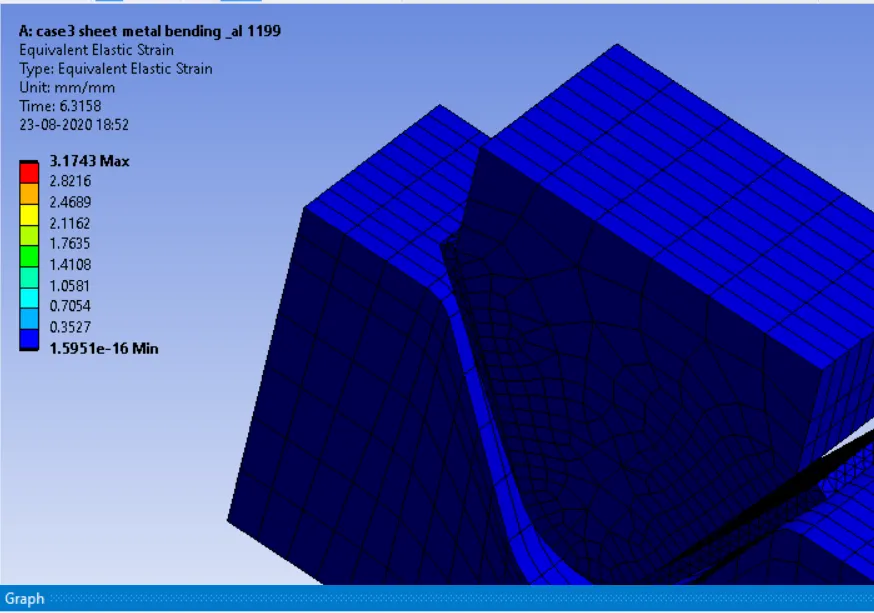
Result
| Deformation at Y-axis (mm) | Equivalent strain | stress on plate (MPa) | |
| Aluminium 1199 |
3.684 |
2.8319 |
191.3 |
| Case 2 | 3.644 | 3.17 | 186.36 |
While reducing the mesh size the result will be more accurate but the computational time will be more.
CONCLUSION
Finally the bending of sheet metal is performed with different case sinarior and result is solved.