Bird Strike - Project - 2
BIRD STRIKE ON AERO ENGINE TURBINE IN LS-DYNA
OBJECTIVES
In this project, we have to do a classic nonlinear transient dynamics problem similar to a car crash and mobile drop. While accurate modeling of the problem requires advanced techniques such as SPH, this problem can be solved using a generic explicit solver. Here is the information required to model the phenomenon.
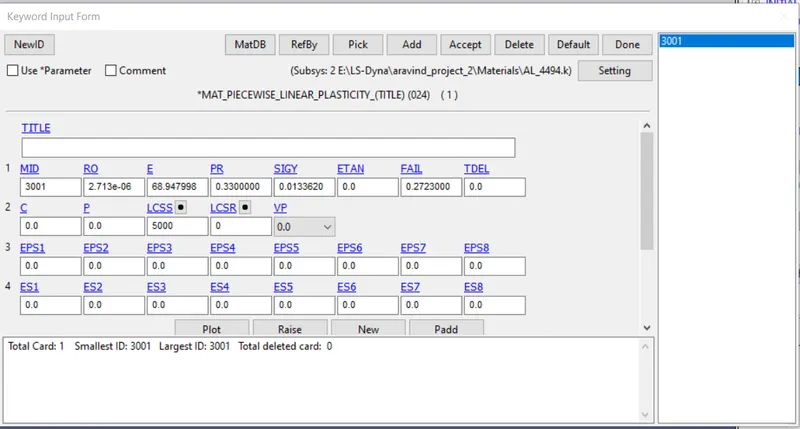
The blades should rotate at a constant velocity but the casing should remain stationary. The cylindrical bird model should travel along its own axis and hit the blades. Use elastic material for the bird(2000MPa) and the casing(200GPa). The material model for the blades is attached. The velocity of the engine blades and the birds can be chosen so that blade failure can be seen within a short span of time.
PROCEDURE
- First, we have to separate the part in the file into different folders.
- Then renumber the node and elements required id as given in the question.
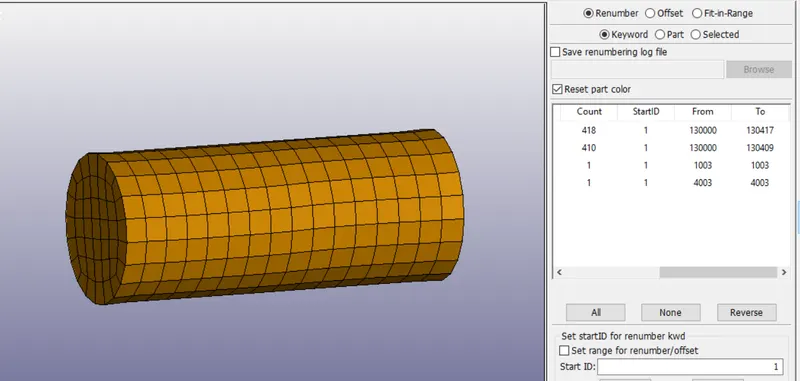
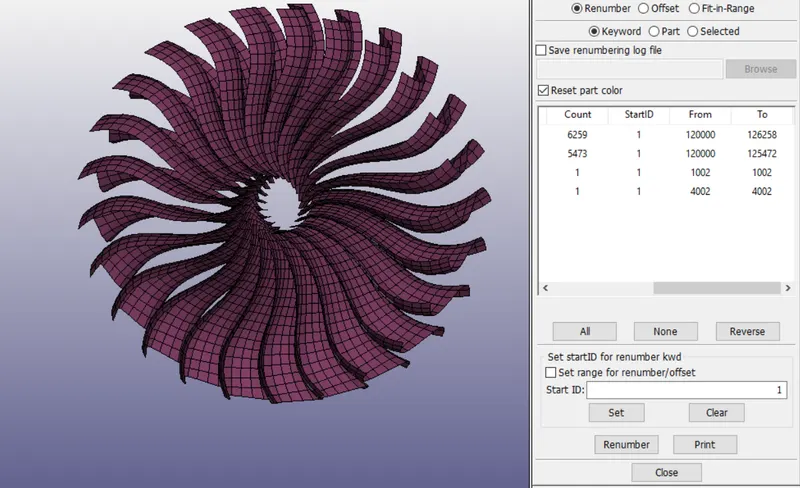
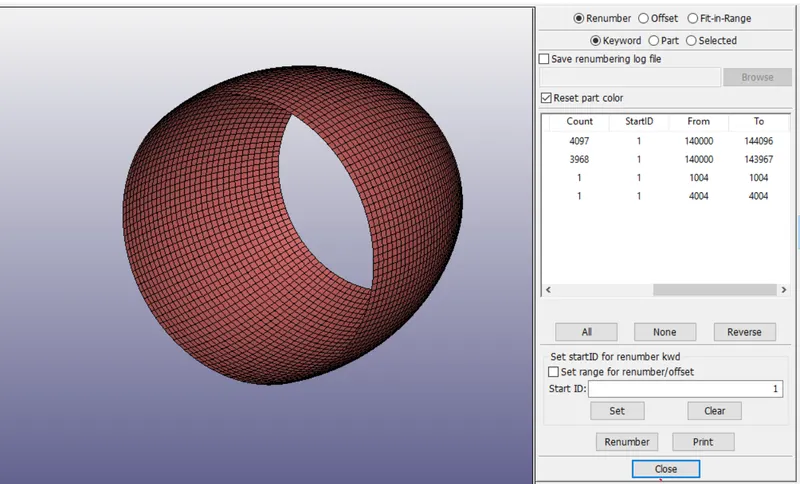
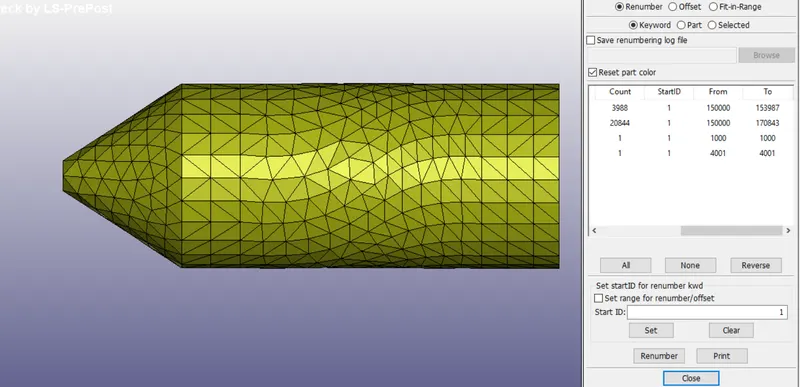
- Then the material files are kept in a separate folder as call the file in the main file, let us keep the unit as kg-mm-ms.
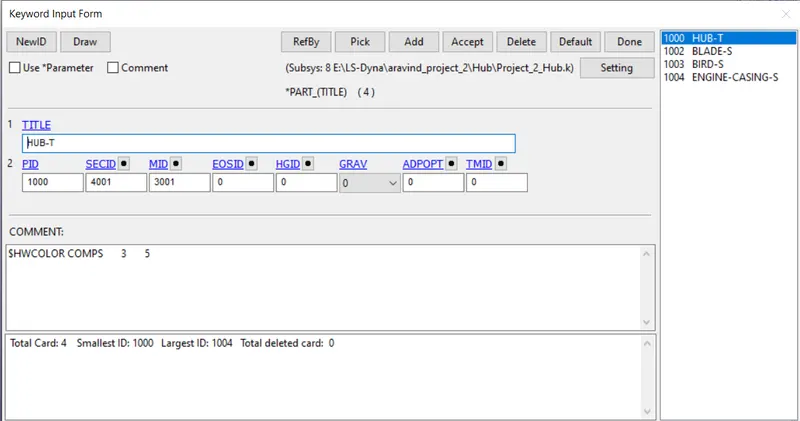
- Elastic material 001 for bird and housing. MAT 024 AL-4494 material for blade and hub.
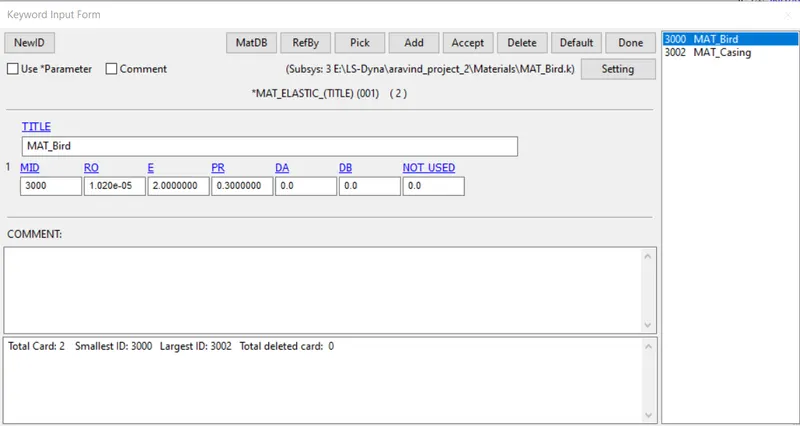
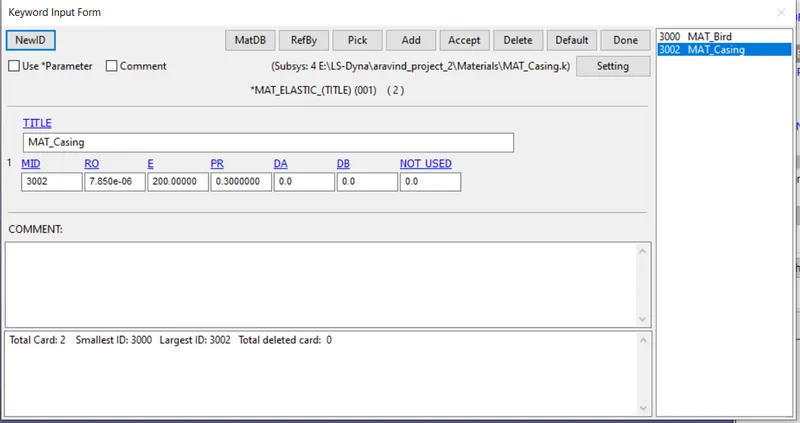
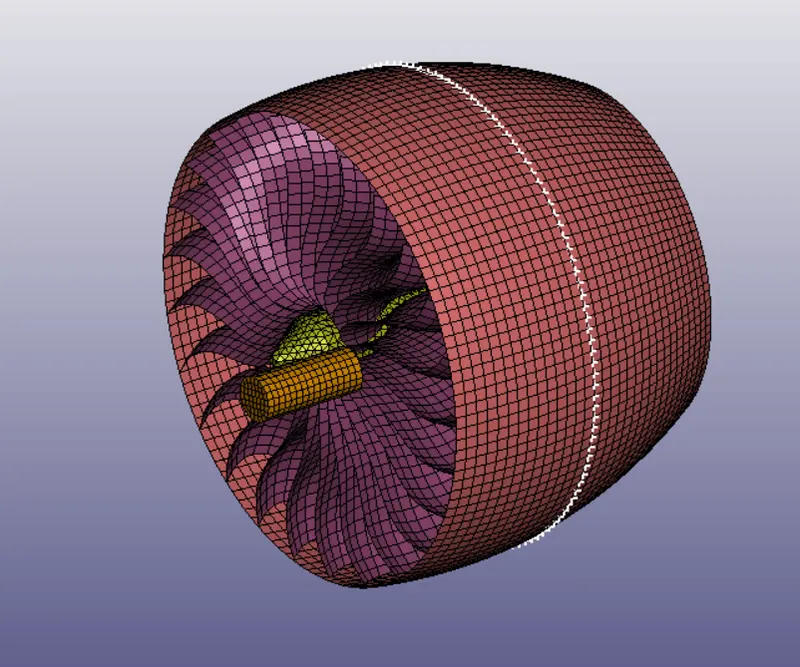
- There are four parts in this project turbine blade, Engine housing, Engine hub, and bird generally birds are defined as SPH but for this project, we use the shell.
- Create shell section for the blade, housing, and bird with ELFORM as 2, and for the hub, the solid section is created with ELFORN as 4.
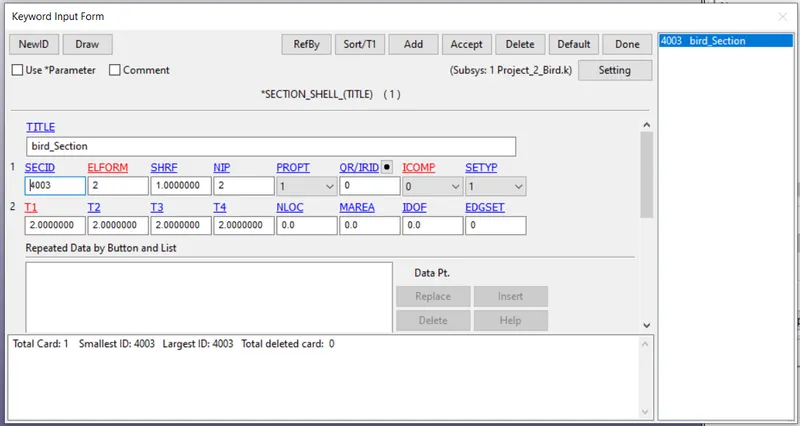
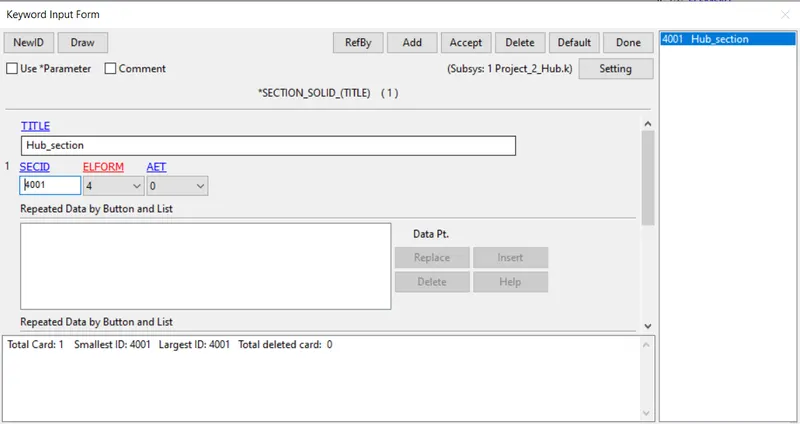
- Then open a new folder create a new .k file for the main file.
- Include all the files from the other folder so that the parts are in the same files.
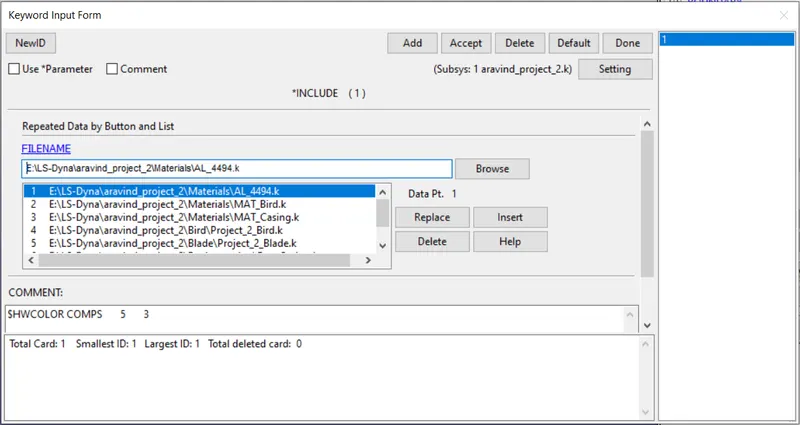
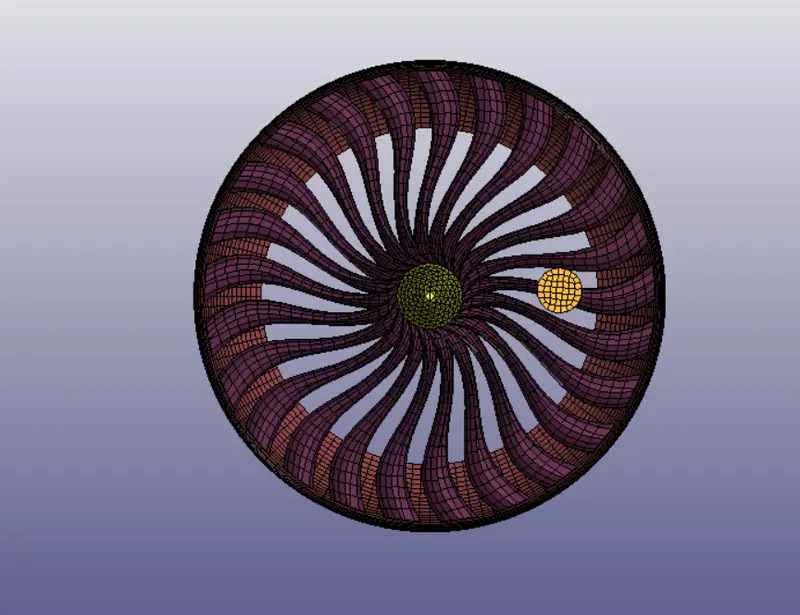
- Then assign the material and section according to the PART included in the file.
- Then create SPC to constrain the Engine housing in all the directions by model – create entities – boundary condition – SPC.
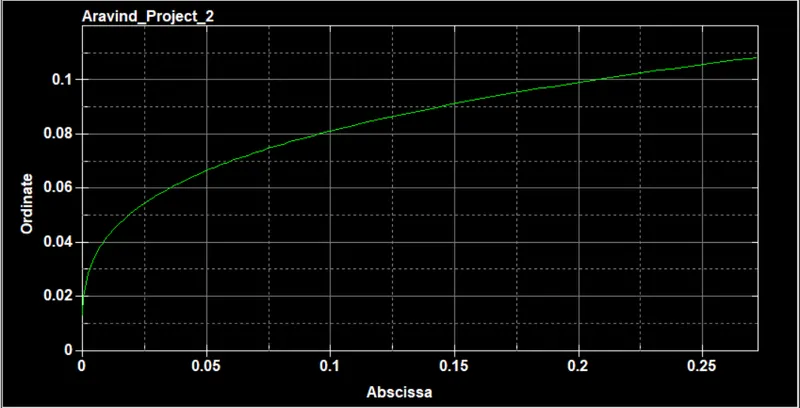
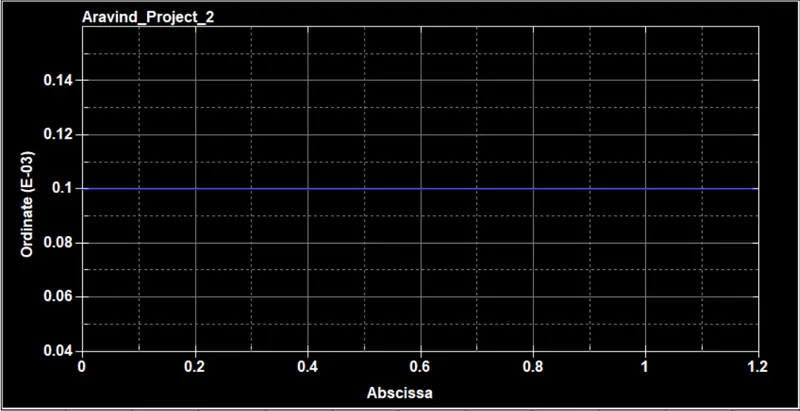
- Then define the curve for the control time step. The stress-strain curve is already defined in the AL-4494 material file.
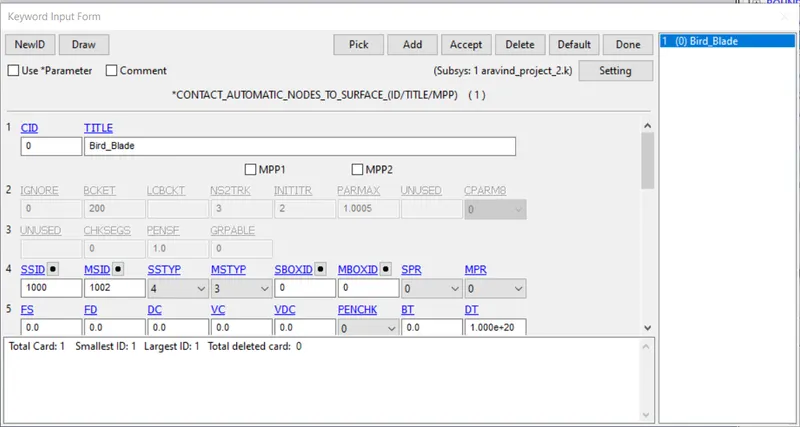
- Then create contact between the parts
- AUTOMATIC_NODES_TO_SURFACE - contact between bird and blade.
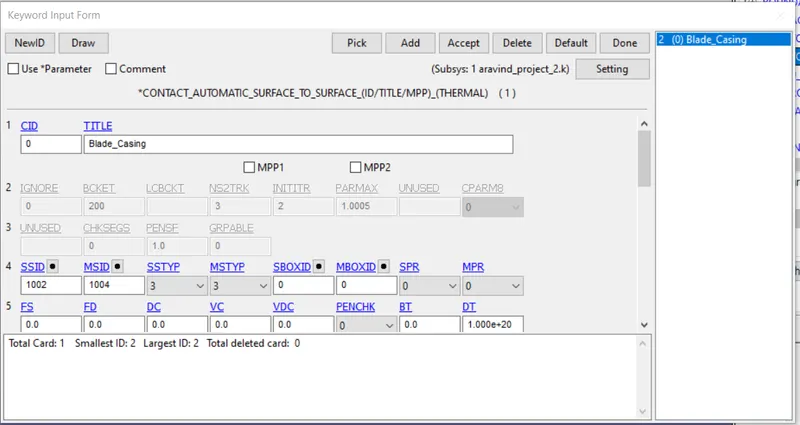
- AUTOMATIC_SURFACE_TO_SURFACE - contact between casing and blade.
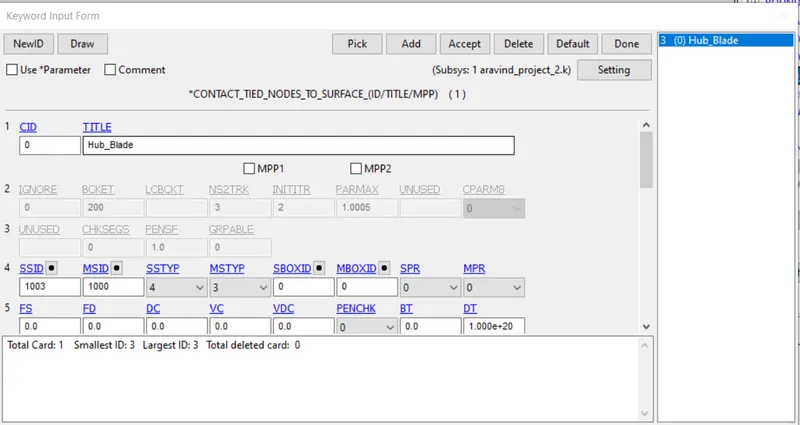
- TIED_NODES_TO_SURFACE - contact between hub and blade.
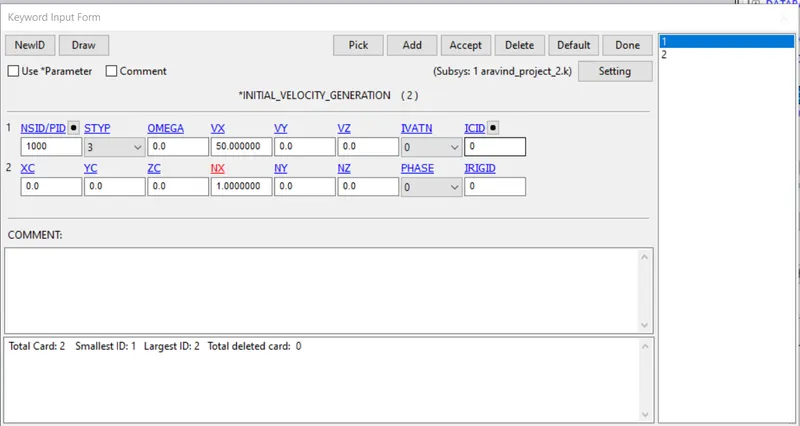
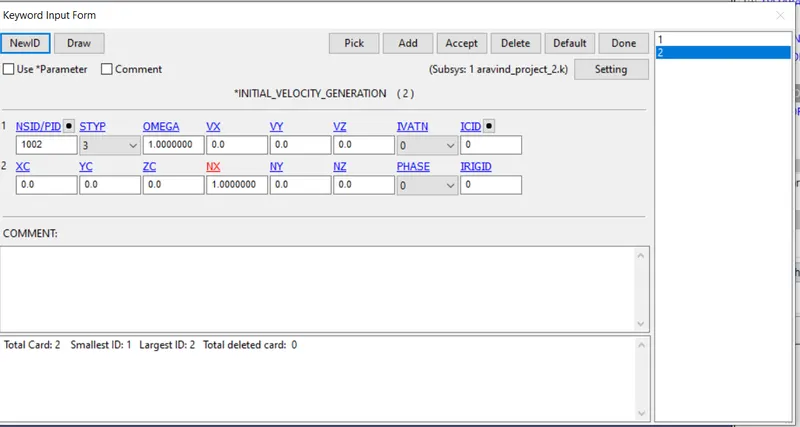
- Then create initial velocity generation for bird and hub-blade. The bird is assumed to travel around 50mm/ms and the Hun-Blade is rotating around 1rad/ms.
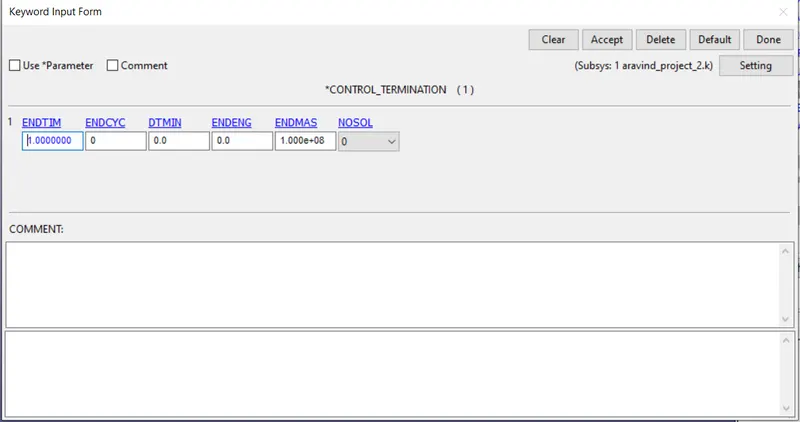
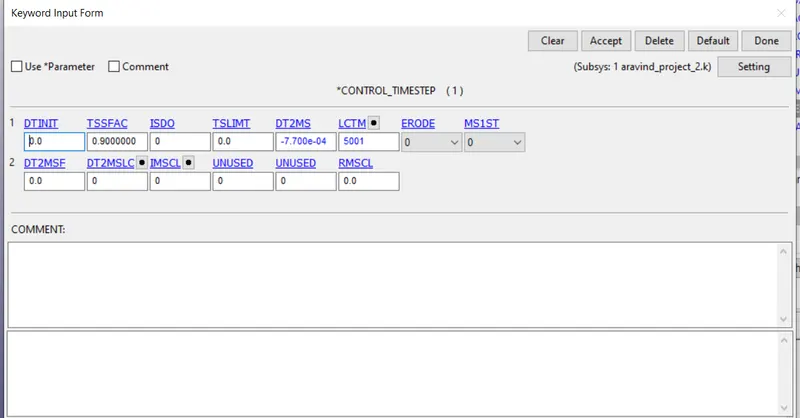
- Then in the control keyword give the termination time as 1ms, in the control timestep keyword assign the curve we define for it, and to control hourglass energies energy, and hourglass cars are used.
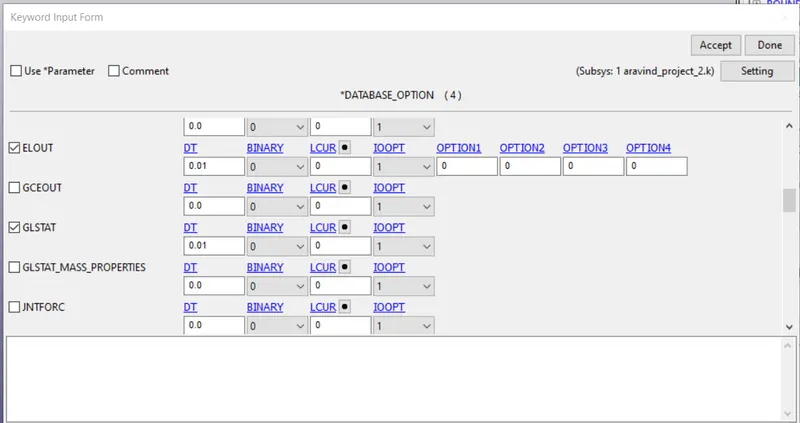
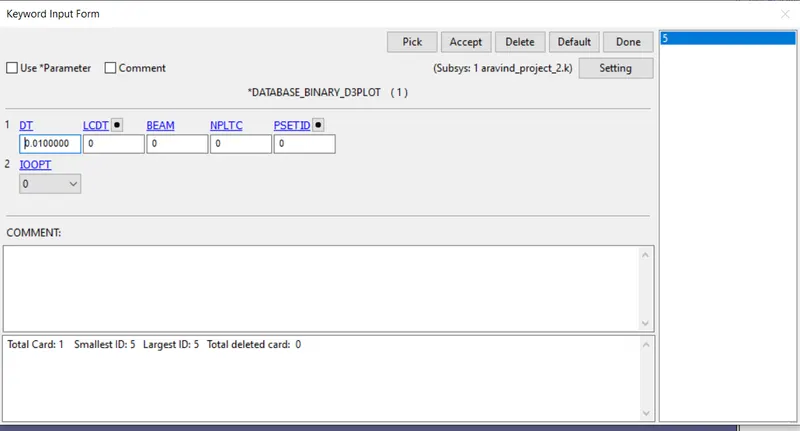
- Then in the database keyword, we call d3plost and ASCII file at 0.01 DT.
DEBUGGING
- Without tied node to surface contact the blade flu off from the hub.
- Then without contact between blade and casing, the blade gets penetrated after failing.
- Initial velocity and initial velocity generation cards cannot be assigned simultaneously it shows an error.
- while working with multi include file check the setting option in the cards where the location should be stored.
MASS SCALING
Mass scaling is done in trial and error methods it is found that TSSFAC is 0.9 and DT2MS is -7.7e-4 is perfect with 8% mass added and the time is reduced to 24 min.
SIMULATION
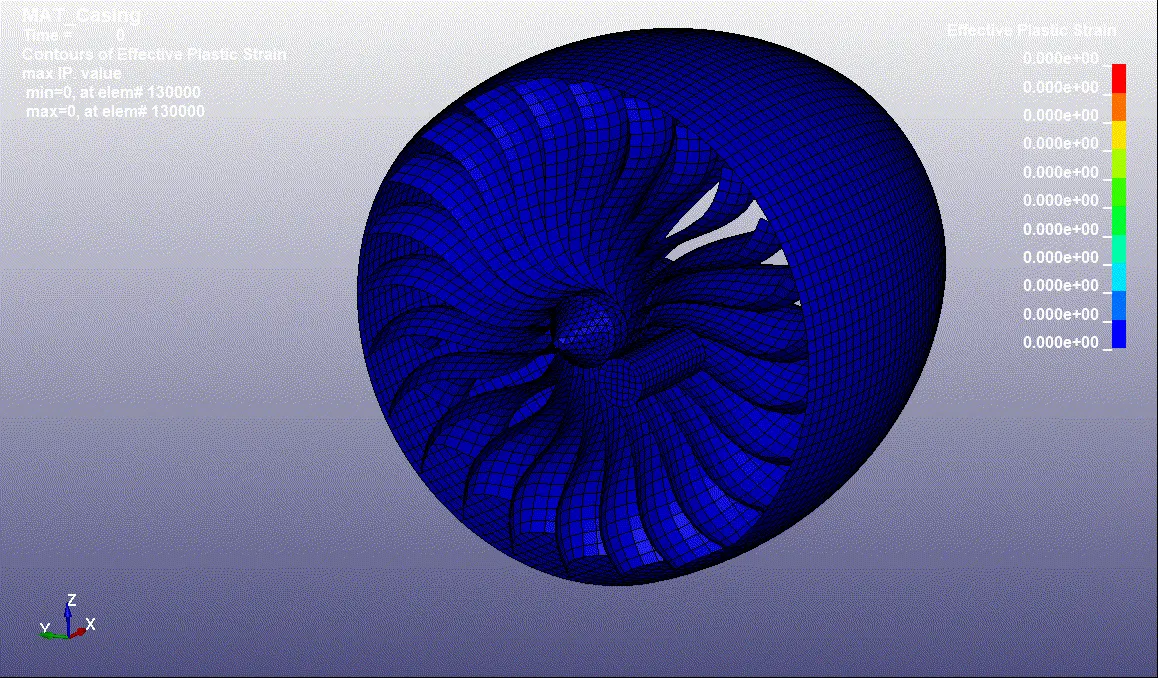
CONCLUSION
Thus the bird strike on an aero turbine is simulated using the bird as shell elements for further improvement for industrial standard SPH for the bird will be done. As the result, the deformation of the blade is shown above is similar to the practical scenario.