ADVISOR Tool
AIM
Understanding ADVISOR Tool
OBJECTIVE-1`to` EV_defaults_in file, if cargo mass is 500 kg with all other default conditions, can the vehicle travel for 45 km with FTP drive cycle? Conclude your observations.
OBJECTIVE-2`to`In the above case, try changing the battery capacity and repeat the simulation.
OBJECTIVE-3`to`Perform gradeability test with PRIUS_Jpn_defaults_in fie. Compare your results in table and conclude.
PRE-REQUISITES
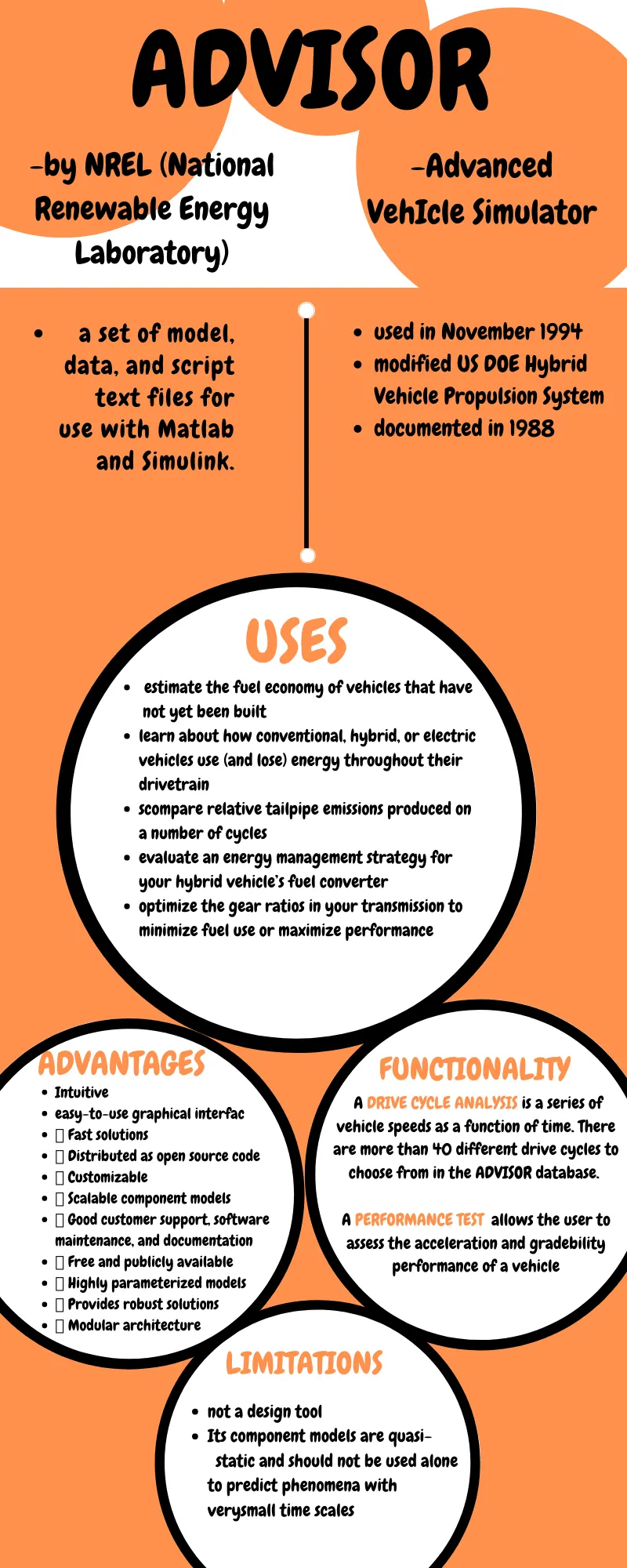
When it came? Advanced Vehicle Simulator (ADVISOR) was first developed in November 1994 at the National Renewable Energy Laboratory. It was designed as an analysis tool to assist the
US Department of Energy (DOE) in developing technologies for hybrid electric vehicles (HEV) through the Hybrid Electric Vehicle Propulsion System contracts with Ford,
General Motors, and DaimlerChrysler. Its primary role is to highlight the system-level interactions of hybrid and electric vehicle components and their impacts on the vehicle performance and fuel economy.
OBJECTIVE-1
EV_defaults_in file, if cargo mass is 500 kg with all other default conditions, can the vehicle travel for 45 km with FTP drive cycle? Conclude your observations.
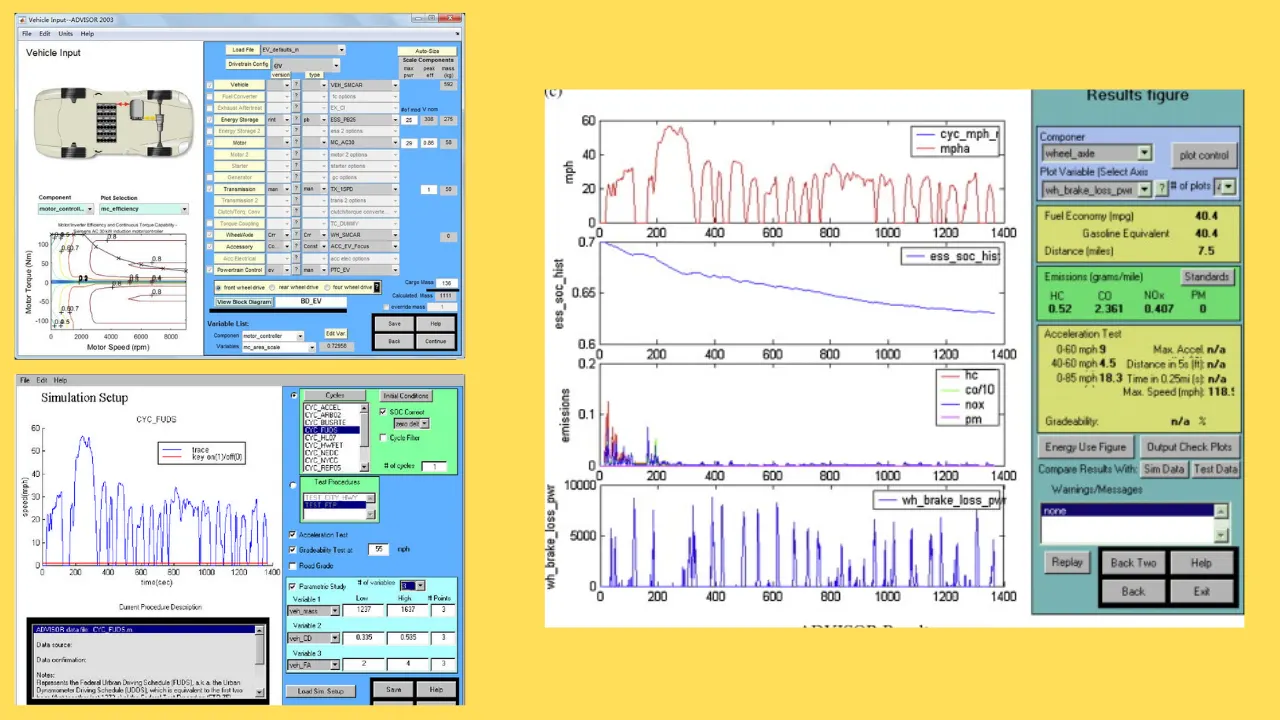
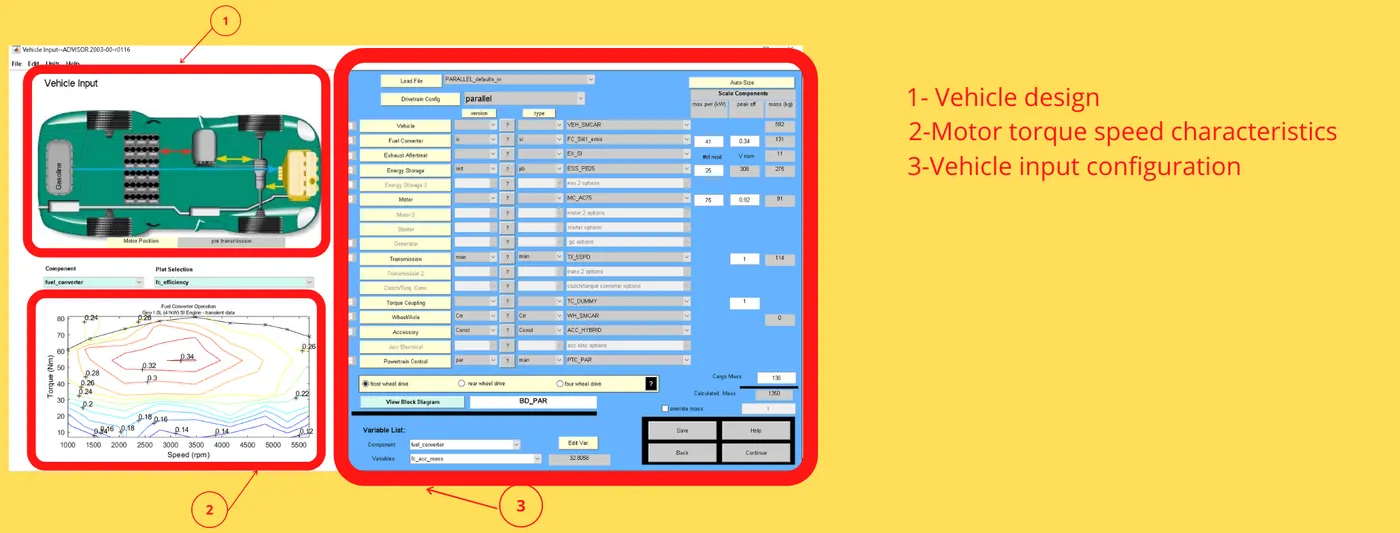
- Here in the MATLAB command window, "advisor" is typed. Then we get a new dialogue box for ADVISOR tool, followed by start option is pressed. Then we get a new window as shown below.
For Cycle-1
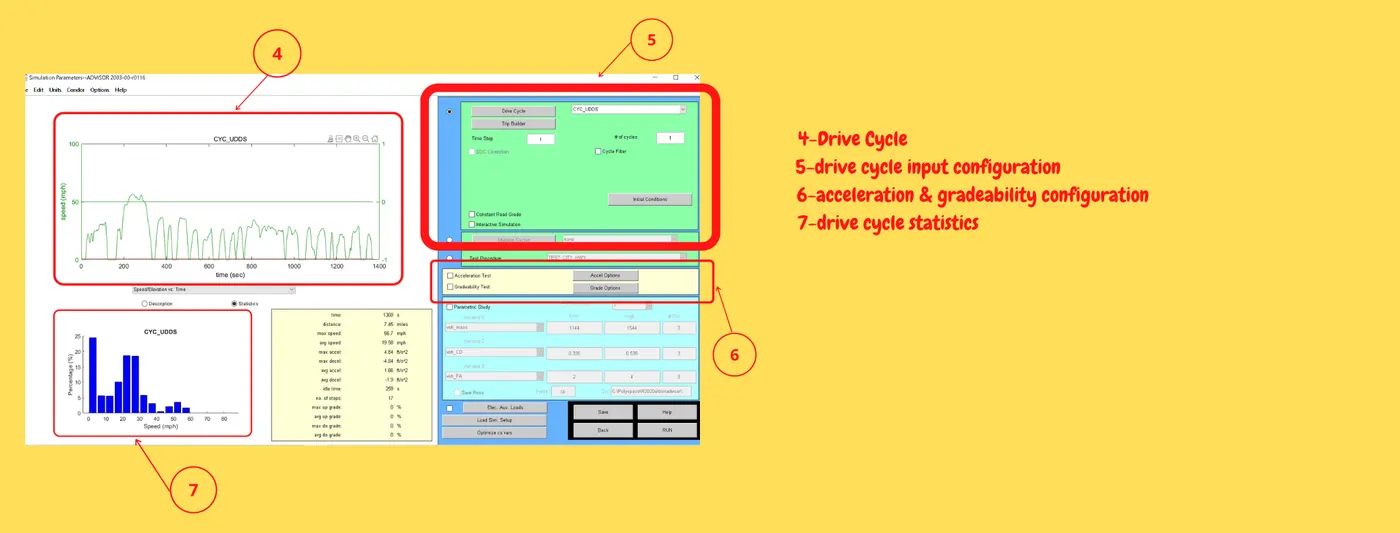
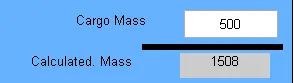
- Then the the vehicle load file is changed from PARALLEL_default_in to EV_defaults_in file. Followed by the vehicle cargo mass is changed to 500Kg. Then continue and RUN button is pressed for running the simulations and the output is shown as below:-

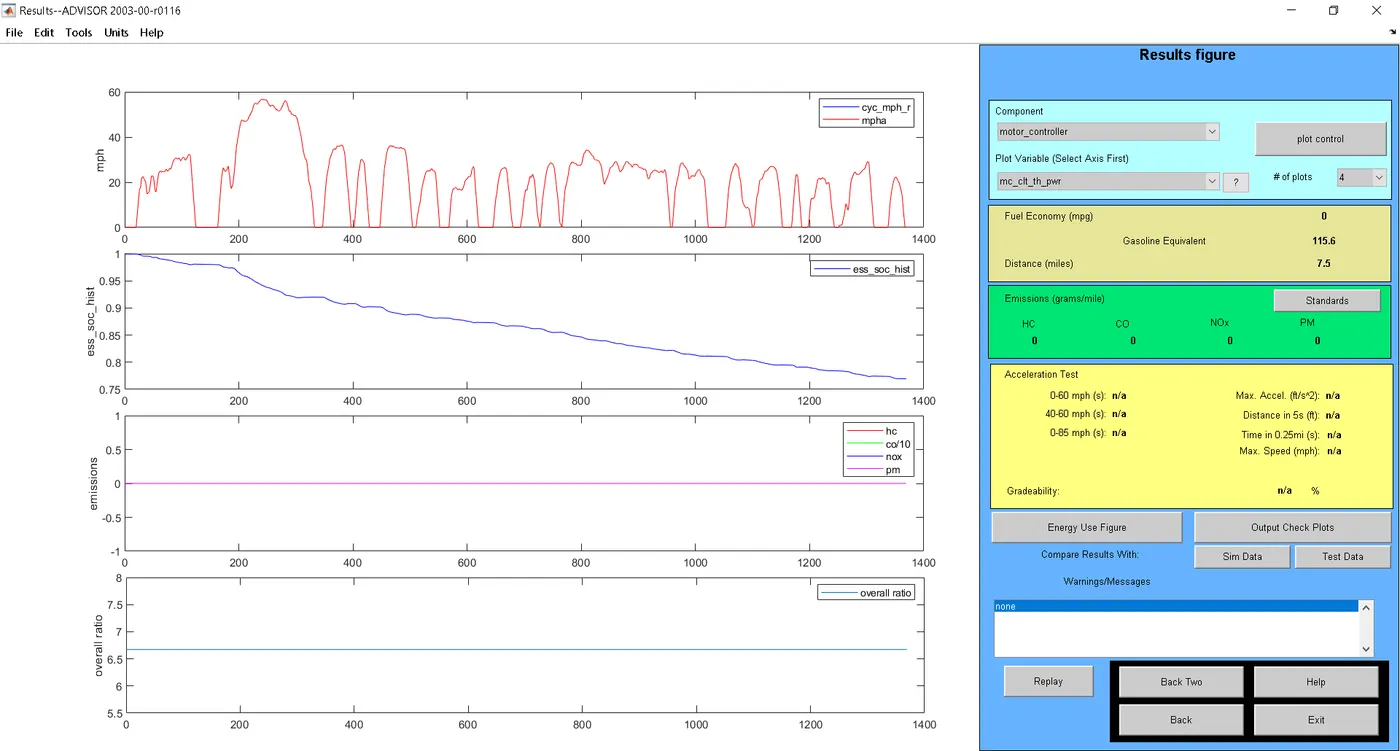
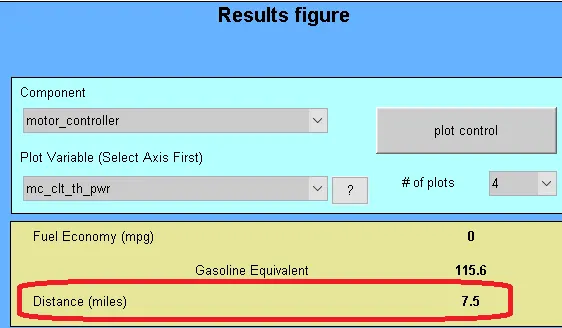
- Here the distance travelled by the vehicle is calculated by the tool using its algorithm and it is shown as below:-
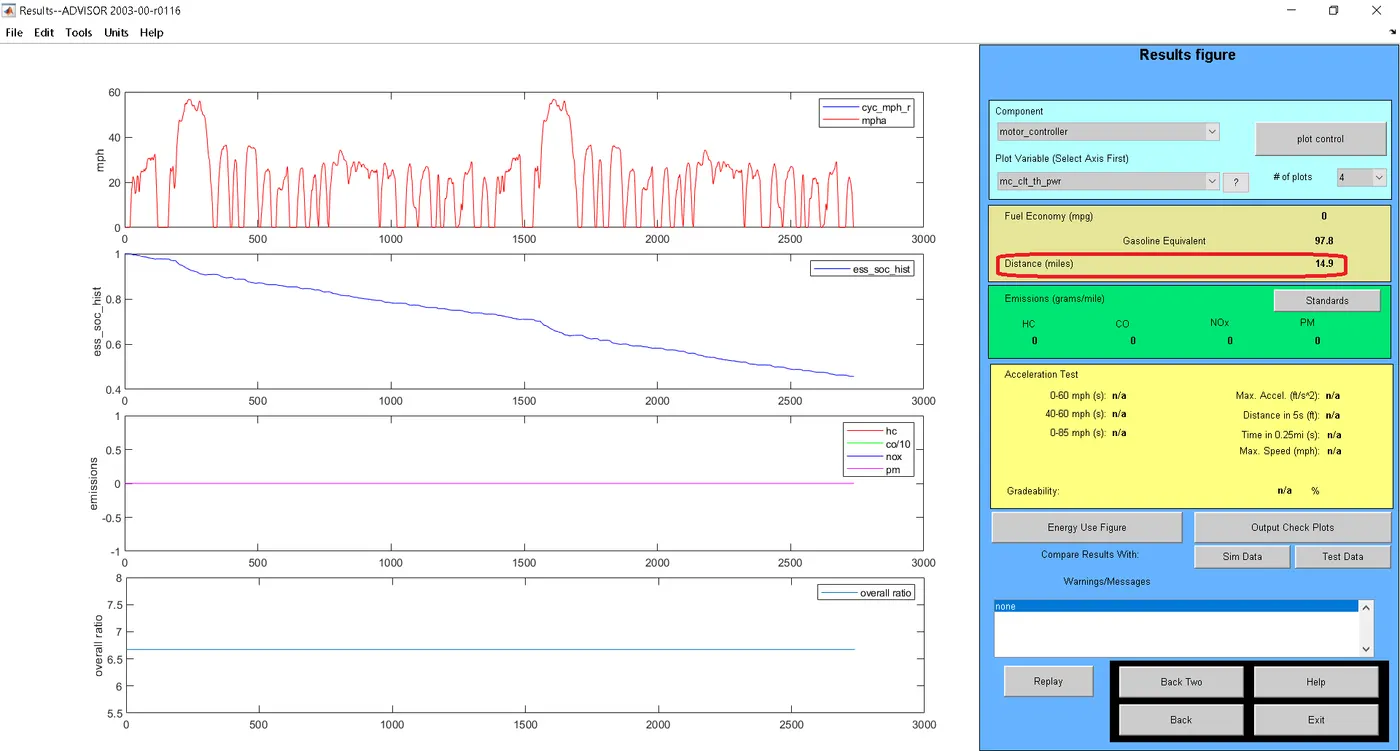
For Cycle-2
Now the drive cycle is run for 2 cycles, keeping the mass and all other parametres same. The vehicle travelled for 14.9Km.
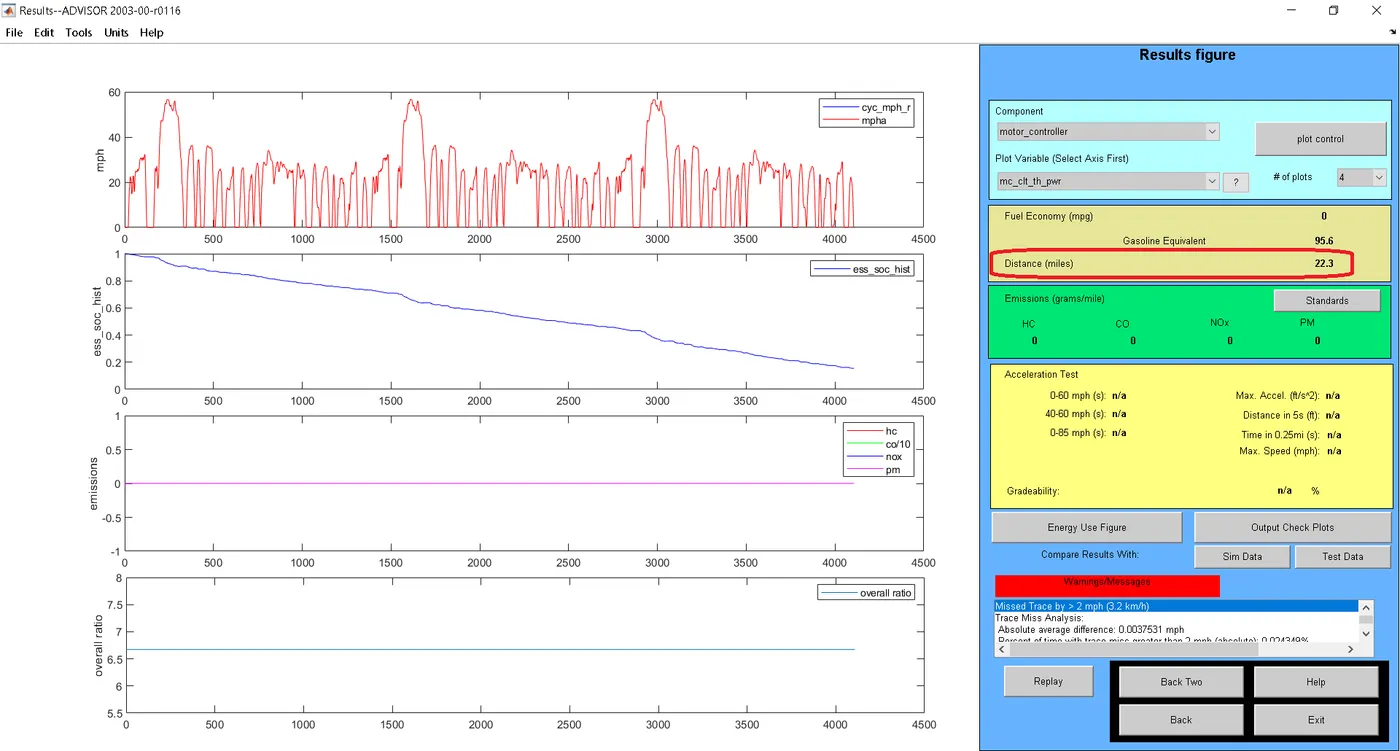
For Cycle-3
Now the drive cycle is run for 3 cycles, keeping the mass and all other parametres same. The vehicle travelled for 22.3Km.
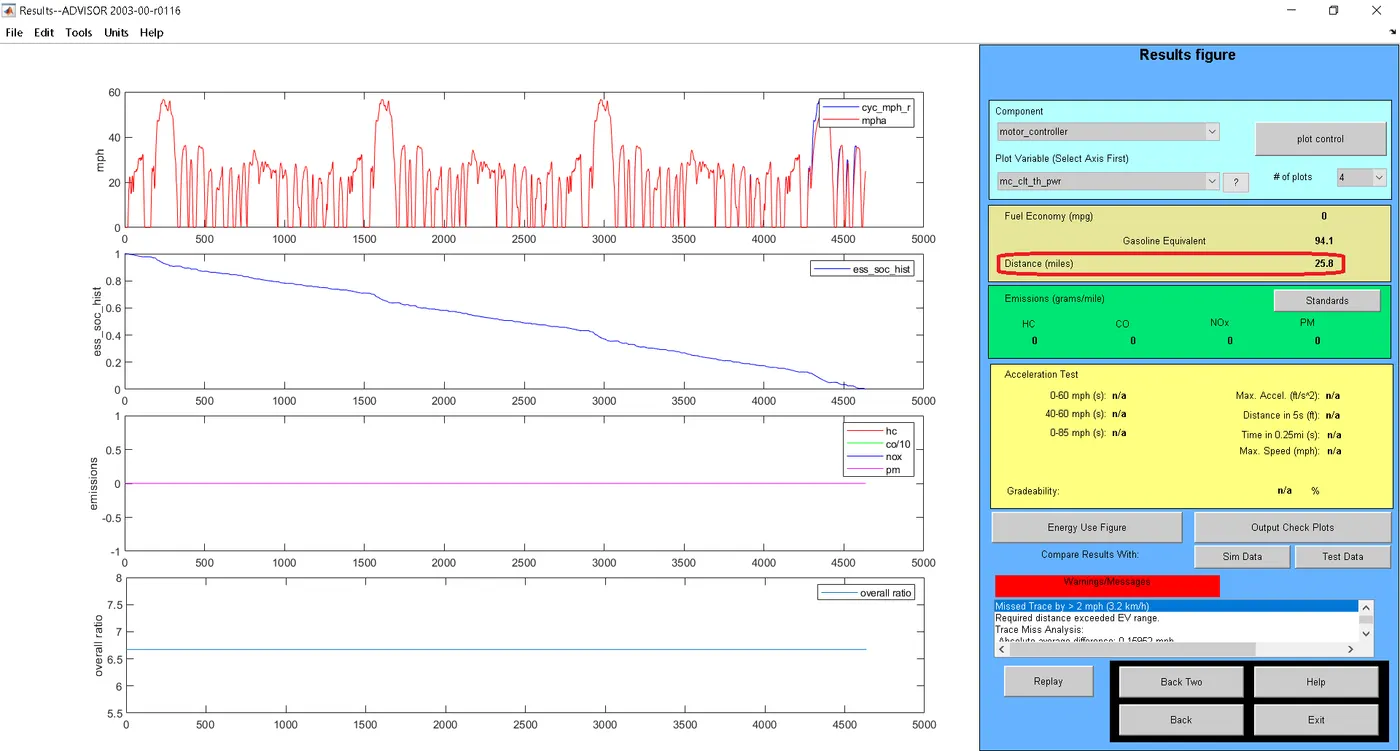
For Cycle-4
Now the drive cycle is run for 4 cycles, keeping the mass and all other parametres same. The vehicle travelled for 25.8Km.
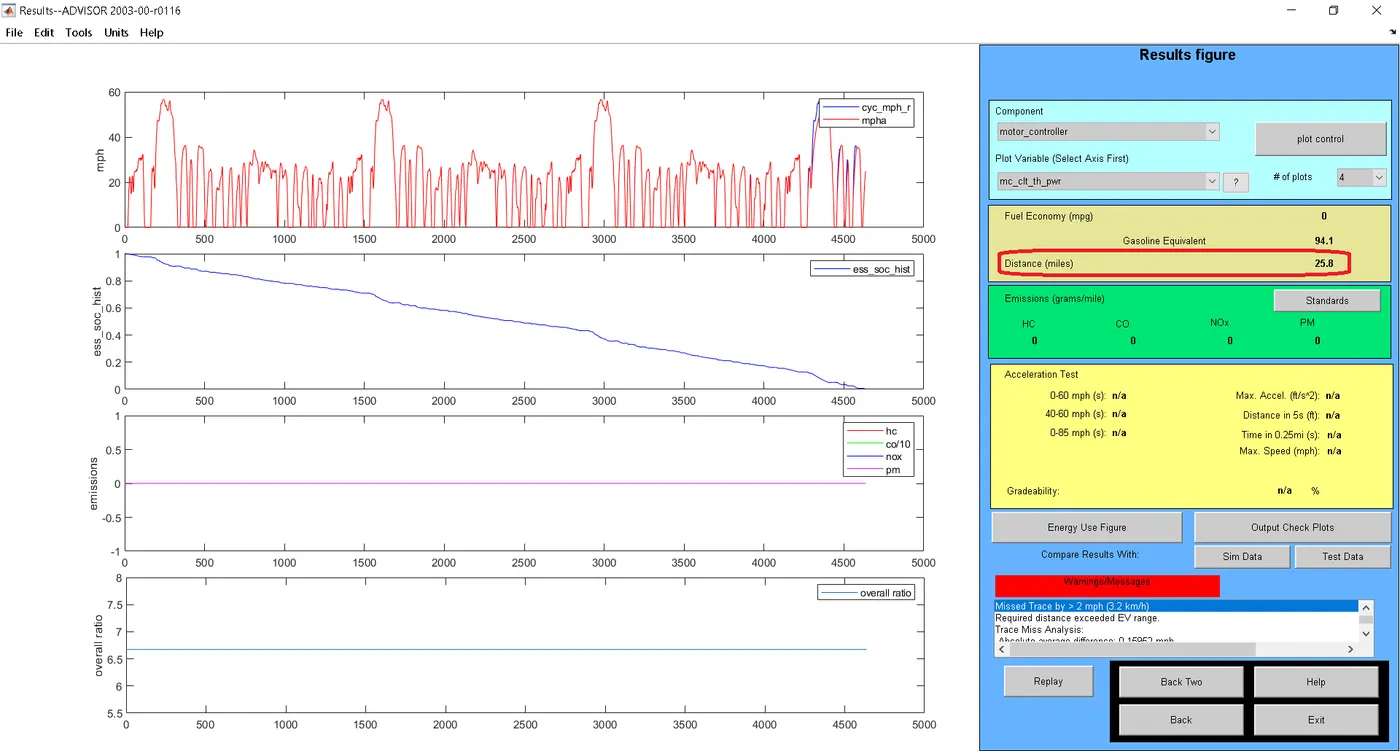
For Cycle-5
Now the drive cycle is run for 5 cycles, keeping the mass and all other parametres same. The vehicle travelled for 25.8Km, which is same as that of the cycle-4. It means that without increasing the motor power or battery capacity the vehicle won"t move more than this distance.
RESULT:-
- The vehicle cannot attain 45Km with the same battery and motor charcteristics and 500Kg of payload. It has to increase the above said value if 45Km has to be achieved.
- The aximum distance the vehicle can achieve is from cycle-4 (ie. 25.8Km). After that the vehicle battery is drained out.
- The vehicle won't achieve 45Km with UDDS drive cycle without changing the battery capacity.
OBJECTIVE-2
In the above case, try changing the battery capacity and repeat the simulation.
- Suppose the vehicle's battery capacity is increased from 25KW to 50KW and the no of cycles is increased to 6.
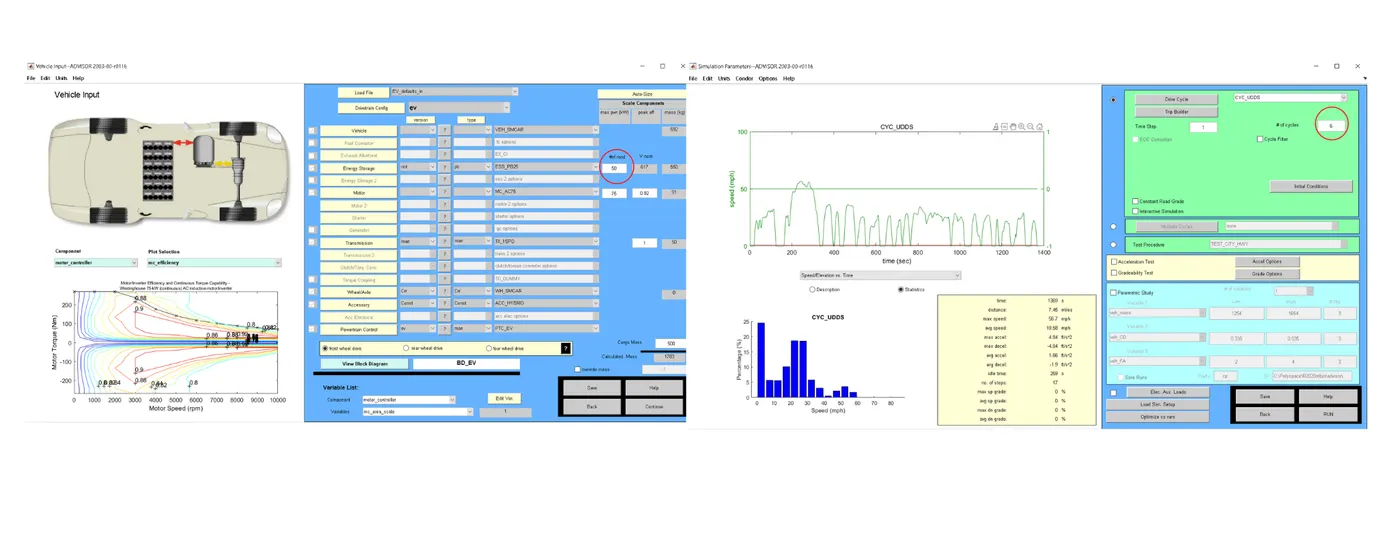
OUTPUT:-
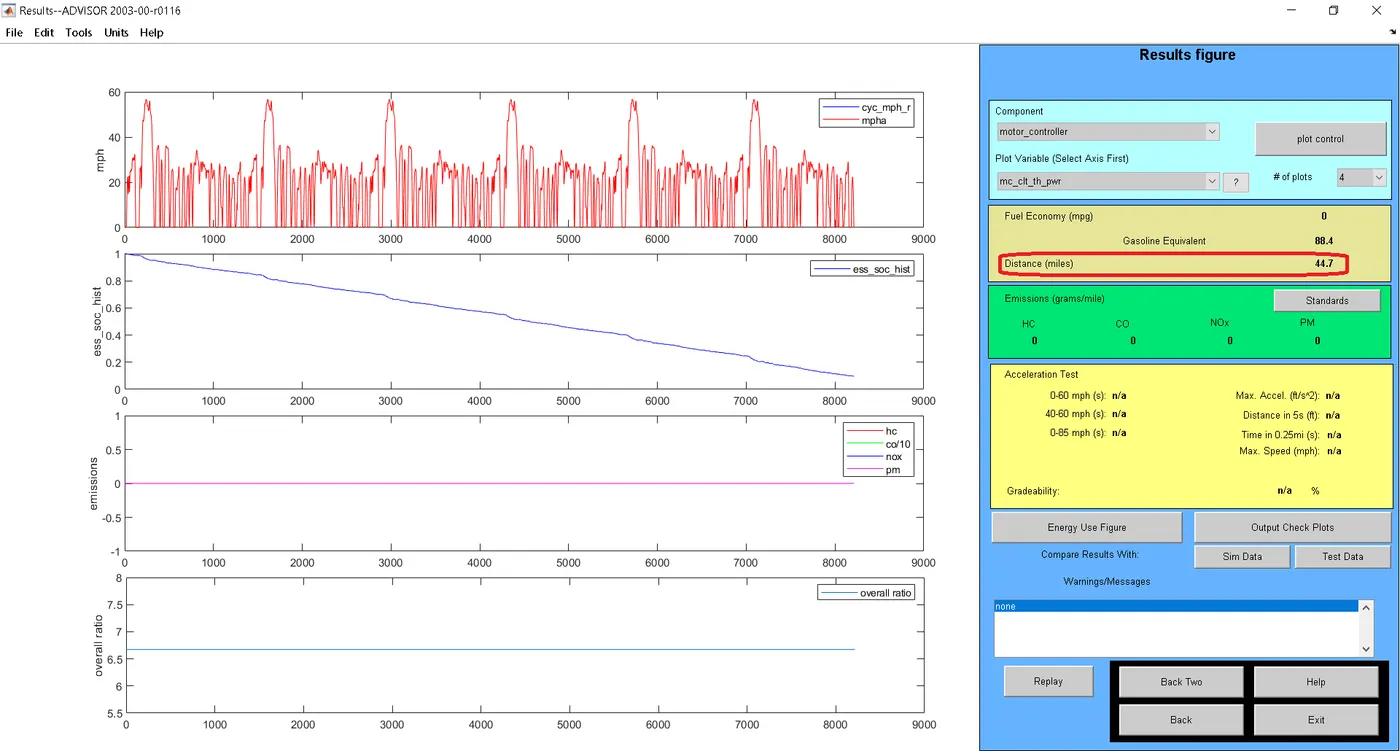
RESULT:-
- The result we got is that the vehicle travels 44.7km which can be approximated to 45km.
OBJECTIVE-3
Perform gradeability test with PRIUS_Jpn_defaults_in fie. Compare your results in table and conclude.
PRIUS JAPAN MODEL
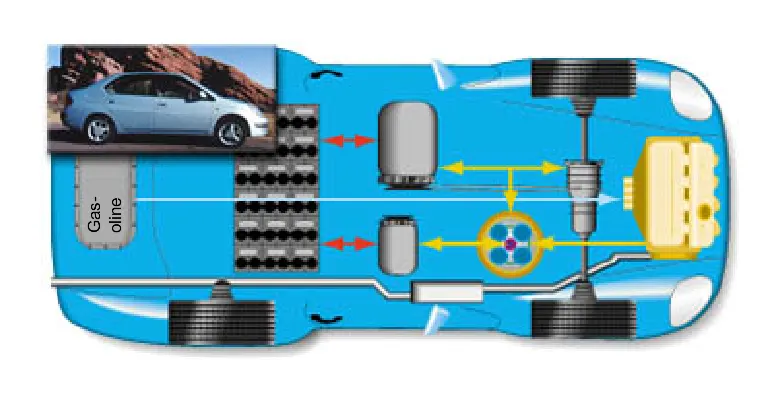
ADVISOR TOOL LAYOUT FOR PRIUS JAPAN MODEL:-
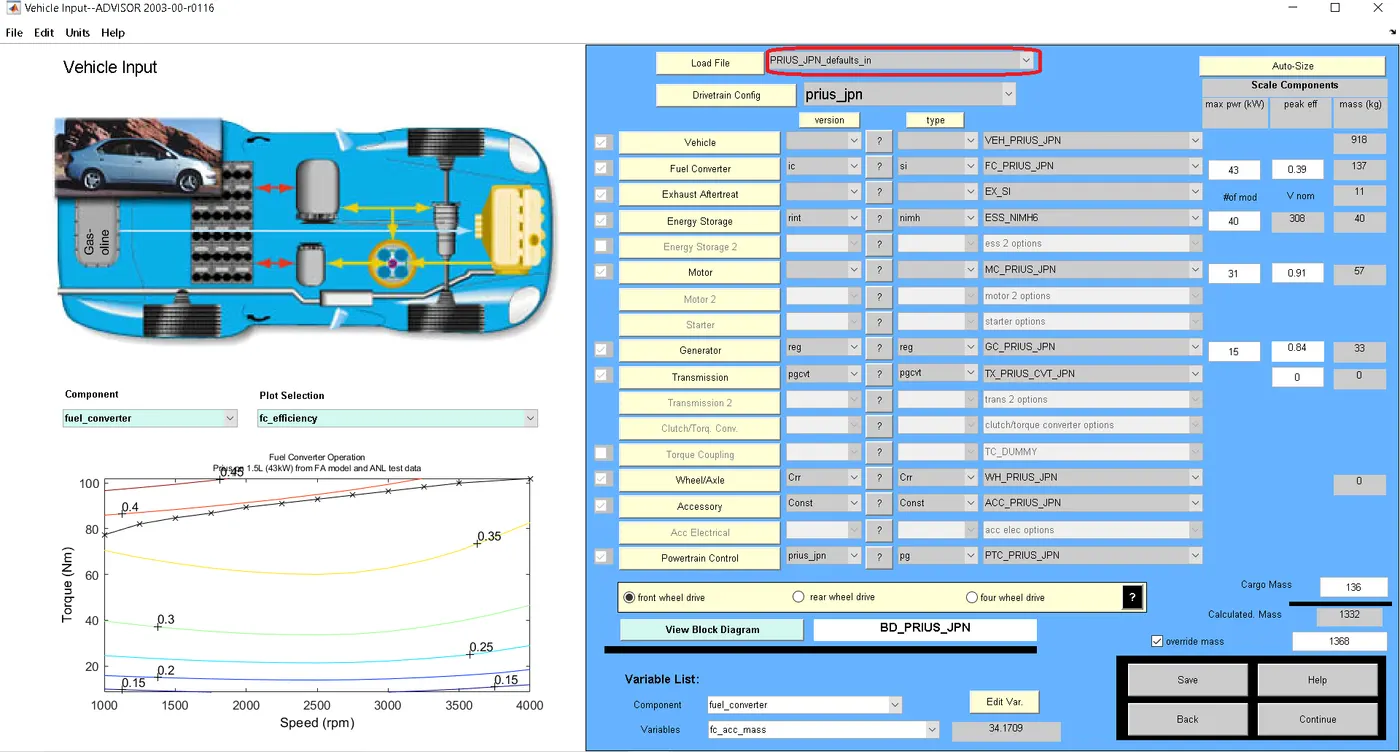
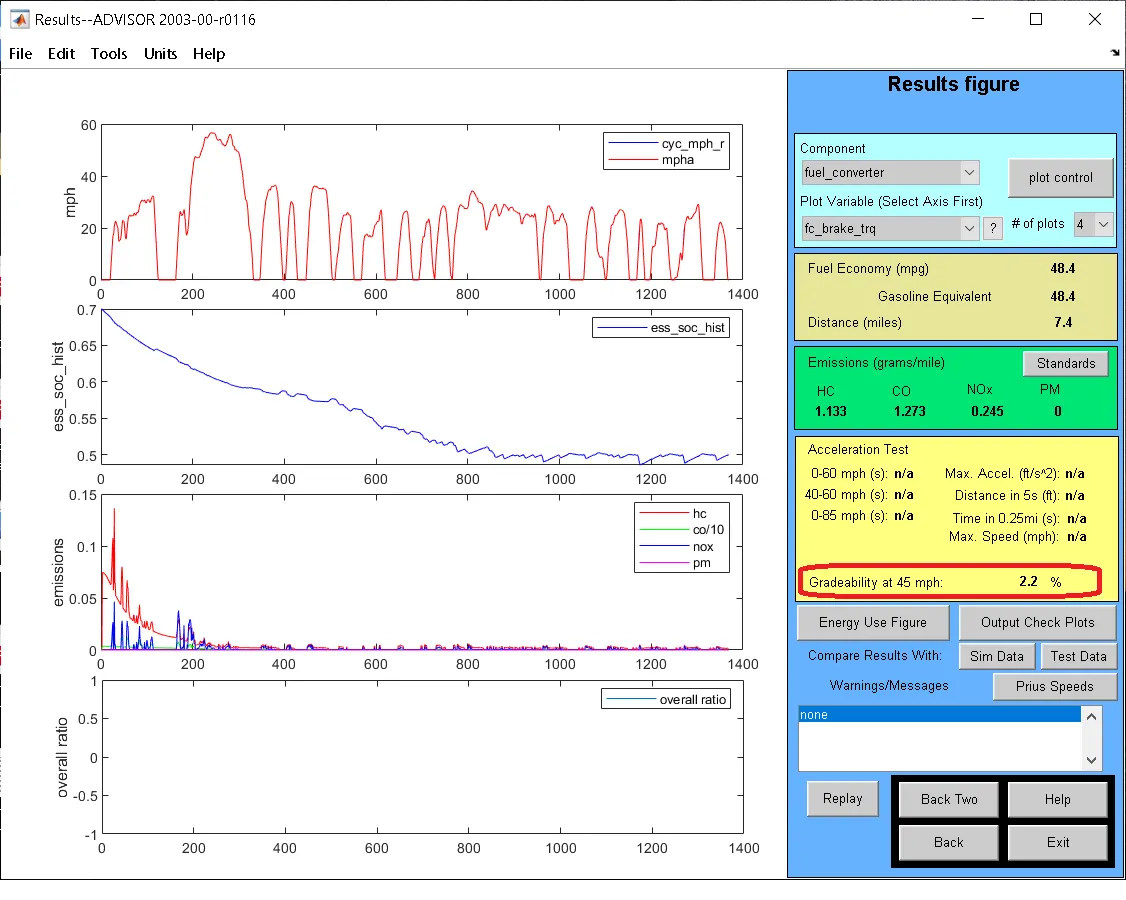
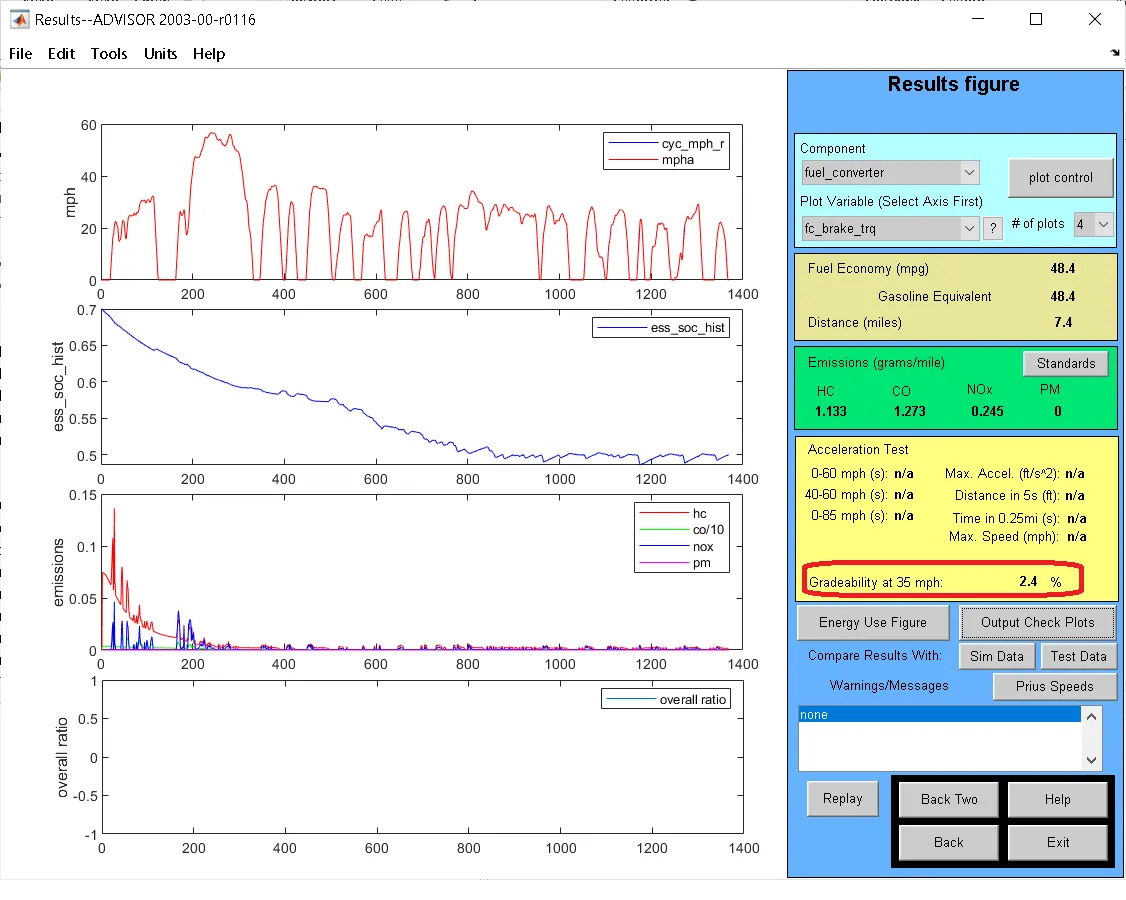
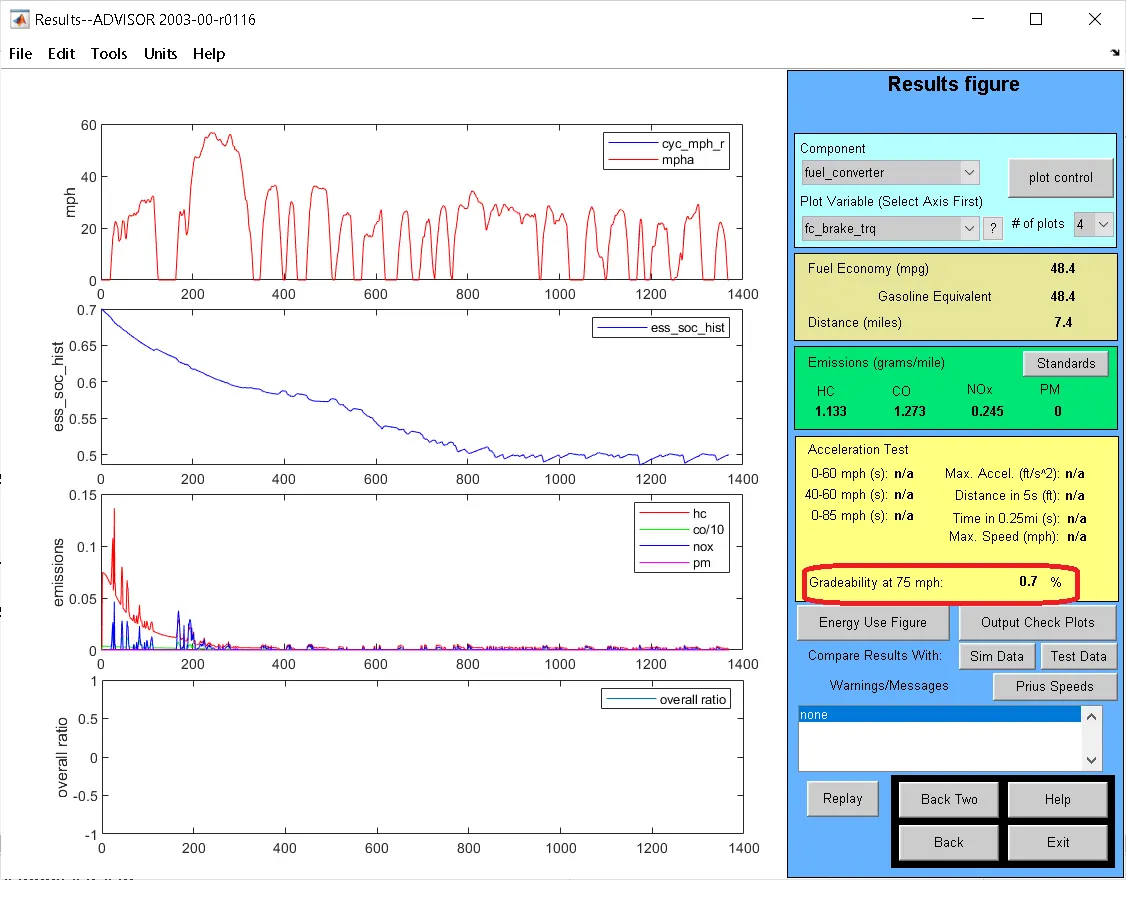
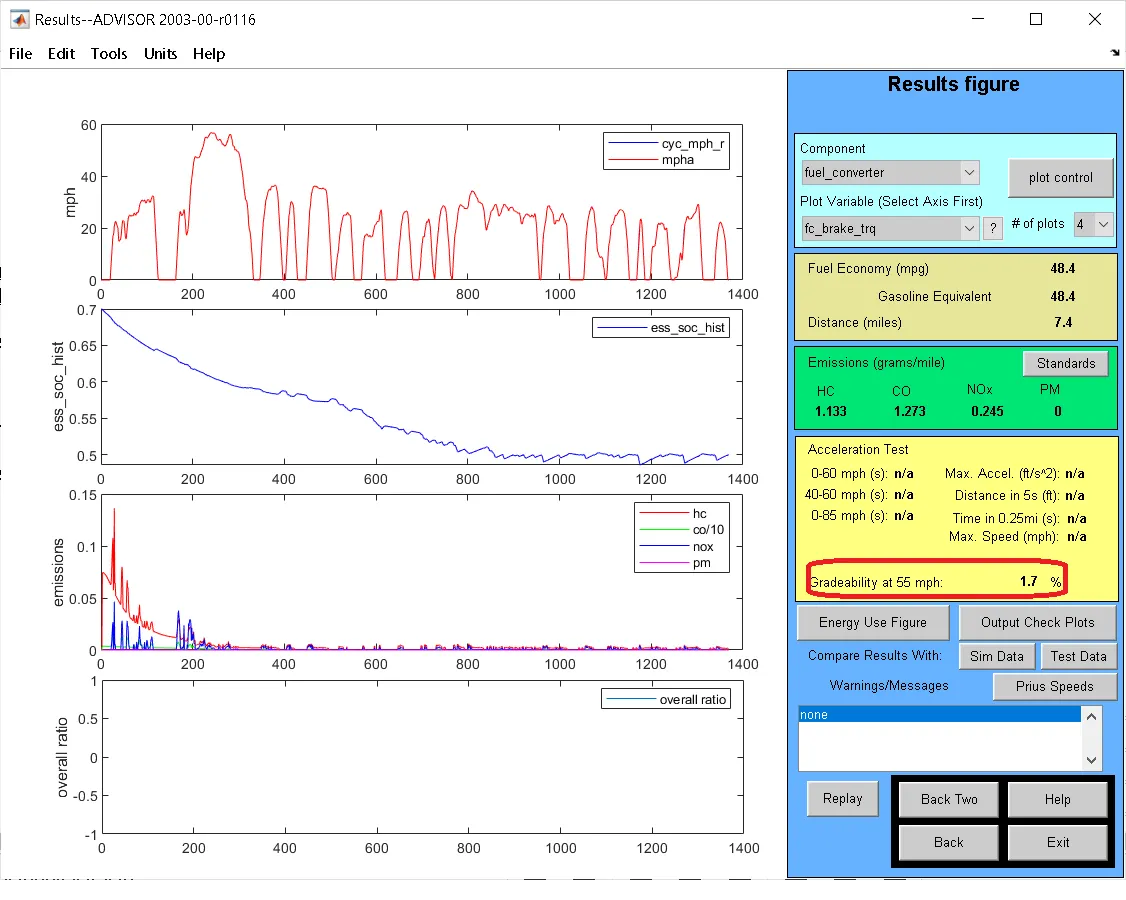
- The gradeability test is conducted by ticking the gradeability test option in the 2nd GUI of ADVISOR tool. We will conduct the gradeability test by changing the velocity values,
| VALUES | OUTPUT |
|
Dfault values Velocity = 55mph duration=10sec energy storage is disbled mass=1368kg |
|
|
speed=45mph duration=10sec energy storage is disbled mass=1368kg |
 |
|
speed=35mph duration=10sec energy storage is disbled mass=1368kg |
 |
|
speed=65mph duration=10sec energy storage is disbled mass=1368kg |
|
|
speed=75mph duration=10sec energy storage is disbled mass=1368kg |
 |
RESULT
We see that as the velocity decreases the gradeability increases and decreases on increasing the velocity. This is because the slope of the road has to be travelled by the vehicle and if the slope increases the vehicle requires more power to run the terrain. In that case the vehicle must run in low gear (ie. 1st or 2nd gear) so that more power is obtained and the speed will be less and vice versa for high gears.
REFERENCE