week-11 Joint creation and Demonstration
OBJECTIVE:
- To create revolute, spherical, cylindrical and translational joints for LS-DYNA using Ls-PrePost.
- To demonstrate spherical, revolute, cylindrical, and translational joints between two rigid bodies and two deformable bodies.
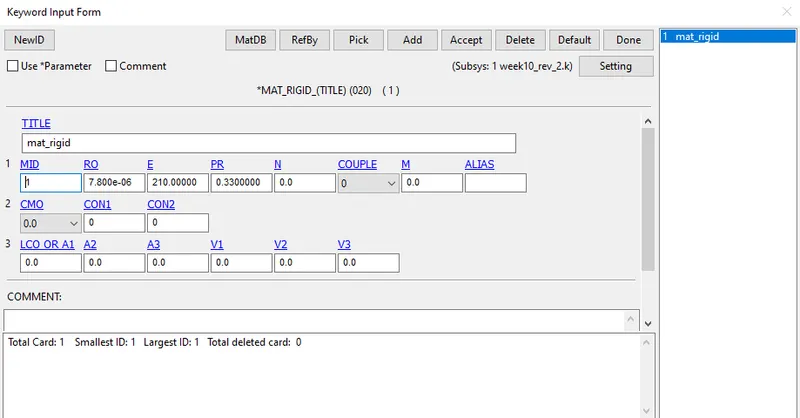
RIGID BODY MATERIALS CARD:
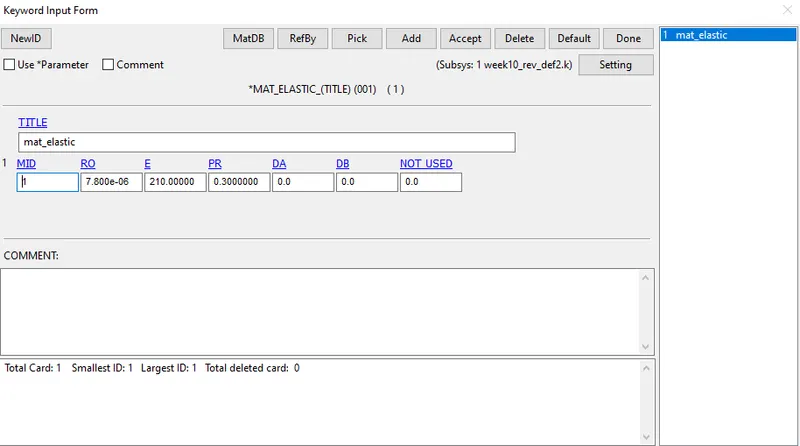
DEFORMABLE BODY MATERIALS CARD:
CASE 1: REVOLUTE JOINT-RIGID BODY
REVOLUTE JOINT DEFINITION IN LS-DYNA:
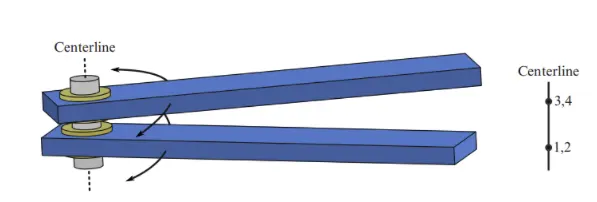
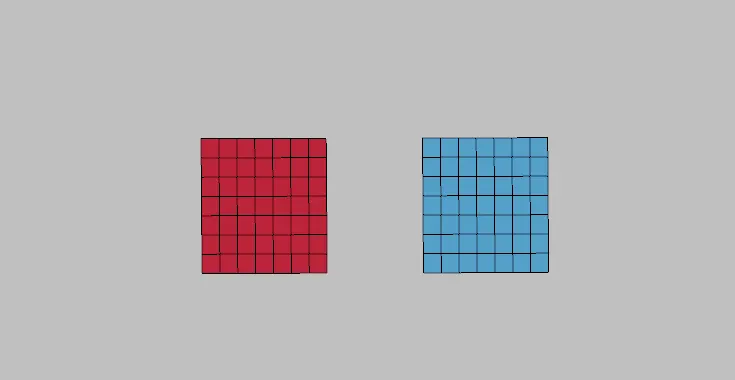
Two parts are created using shell elements to demonstrate the revolute joint in ls-dyna.
BOUNDARY PRESCRIBED MOTION SET CARD:
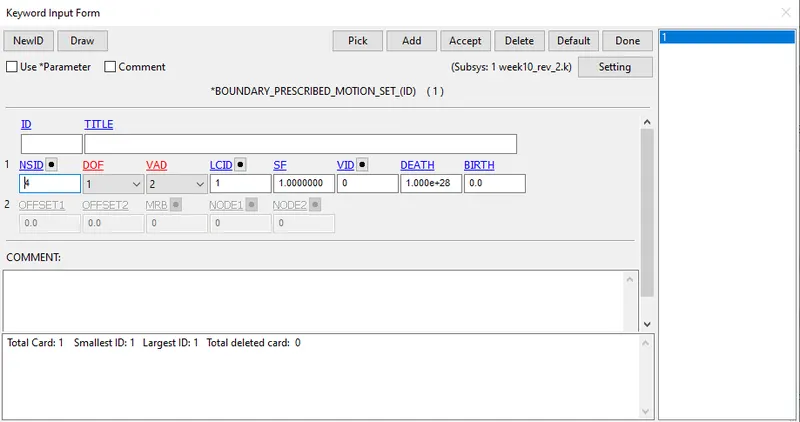
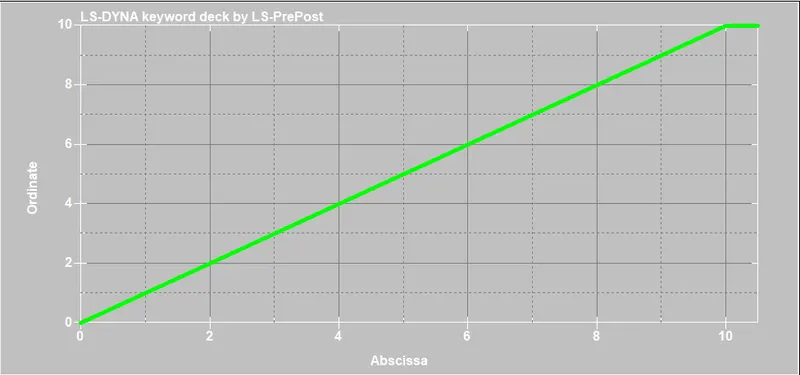
The displacement is given to the nodes of part 2 along x-direction using a displacement curve.
Part 1 is kept fixed.
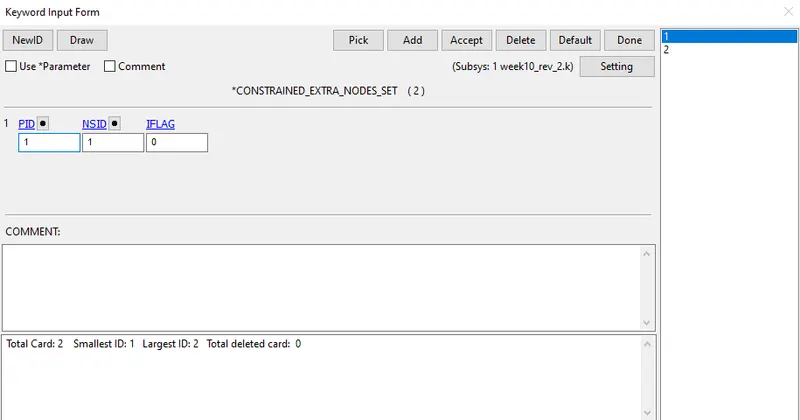
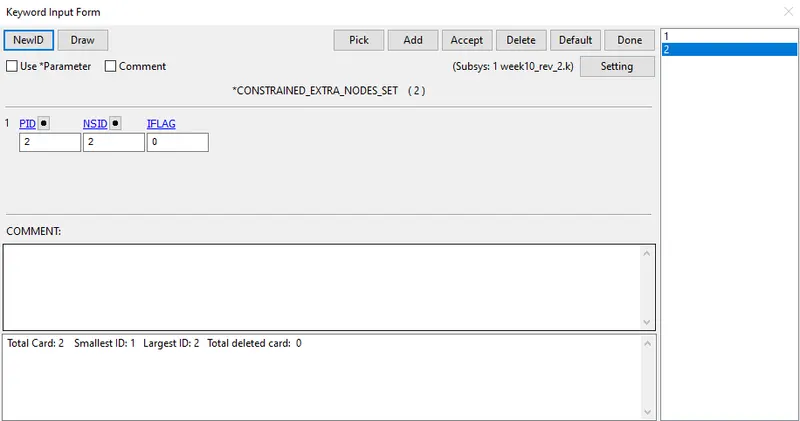
Four extra nodes were created and assigned to the parts using *CONSTRAINED_EXTRA_NODE_SET CARD:
CONSTRAINED JOINT REVOLUTE CARD:
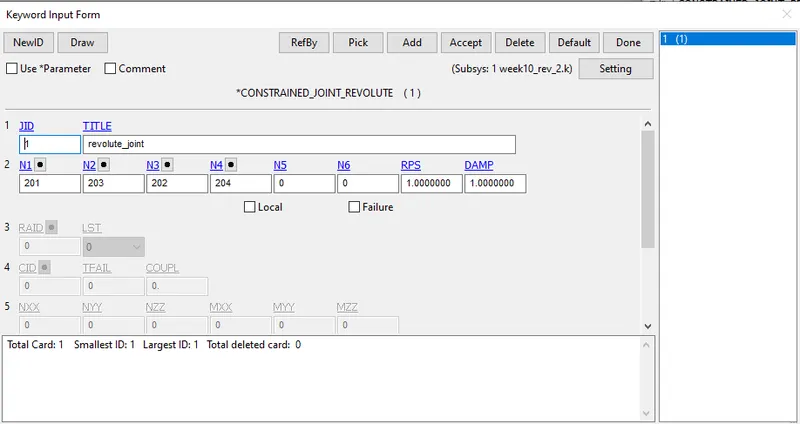
Nodes 201 and 202 belongs to part 1. Nodes 203 and 204 belongs to part 2. Nodes 201 and 203 are coincident. Nodes 202 and 204 are also coincident.
RESULTS:
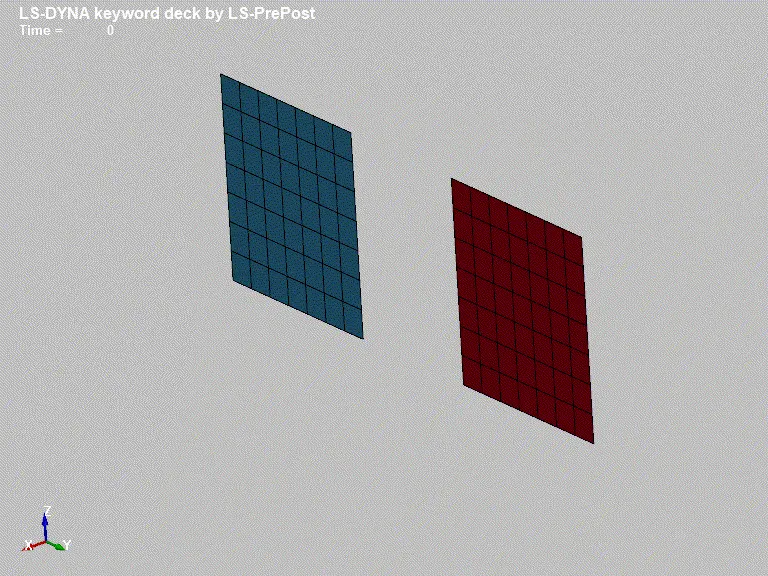
CASE 2: REVOLUTE JOINT-DEFORMABLE BODY:
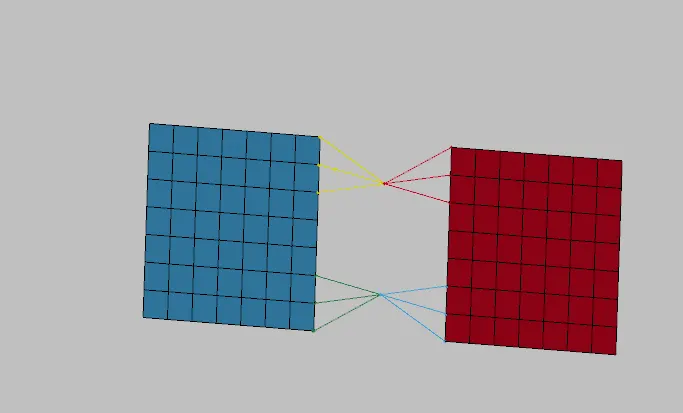
Here instead of CONSTRAINED EXTRA NODE SETS, we use constrained nodal rigid body option to constrain the nodes.
RESULTS:
CASE 3: CYLINDRICAL JOINT-RIGID BODY:
CYLINDRICAL JOINT DEFINITION IN LS-DYNA:
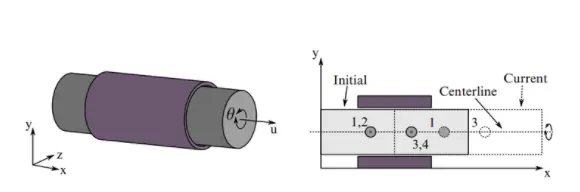
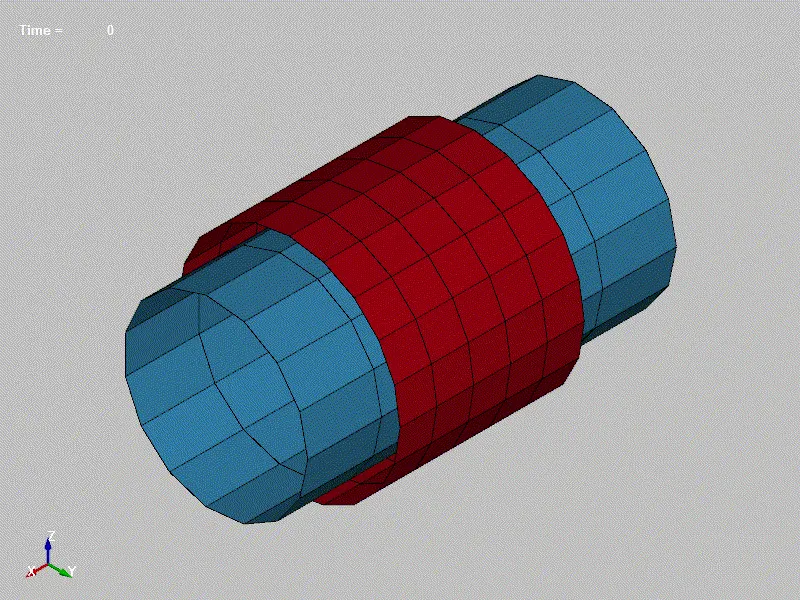
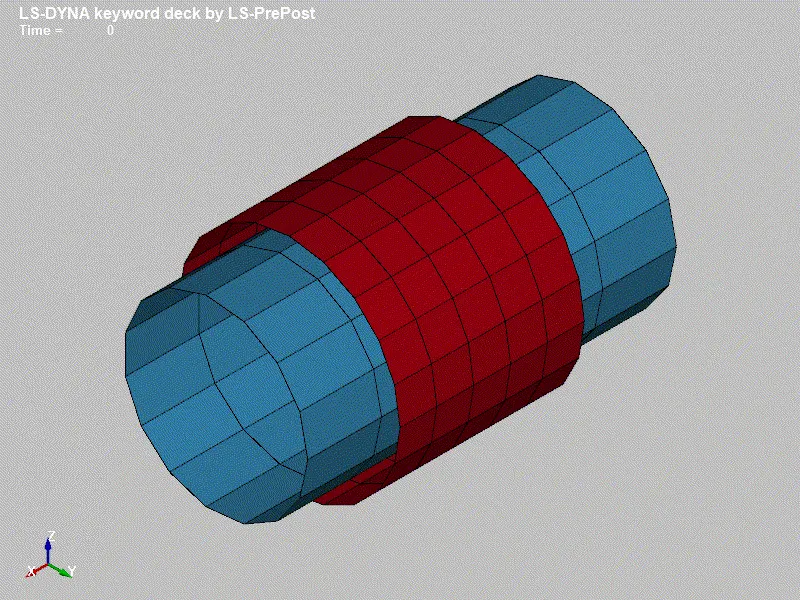
Two parts are created using shell elements to demonstrate the cylindrical joint in ls-dyna.
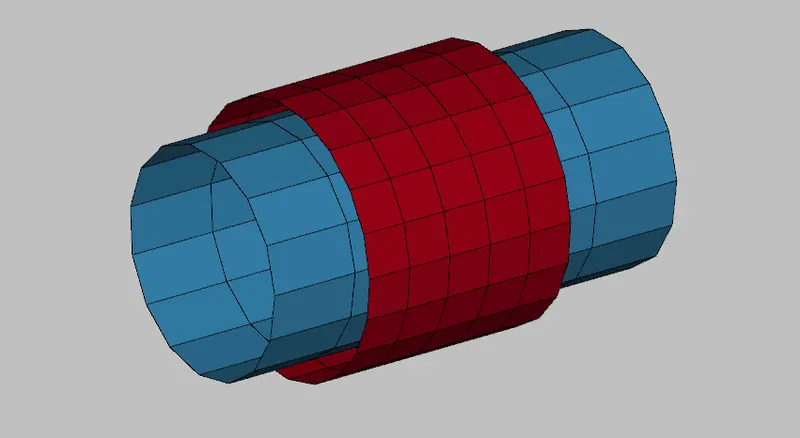
Part 1 is kept fixed.
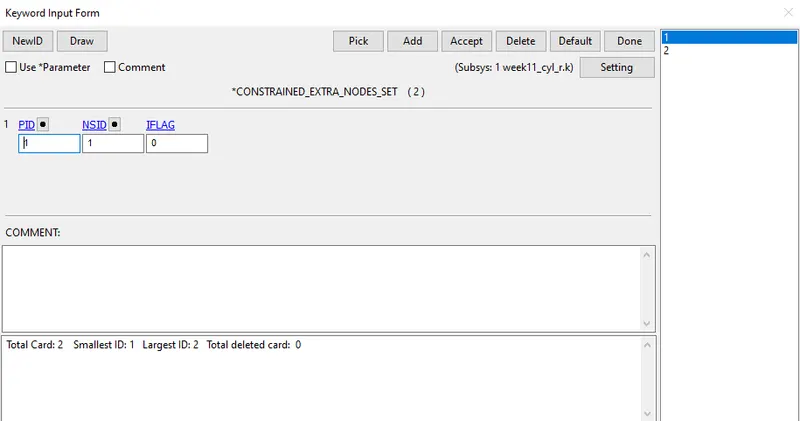
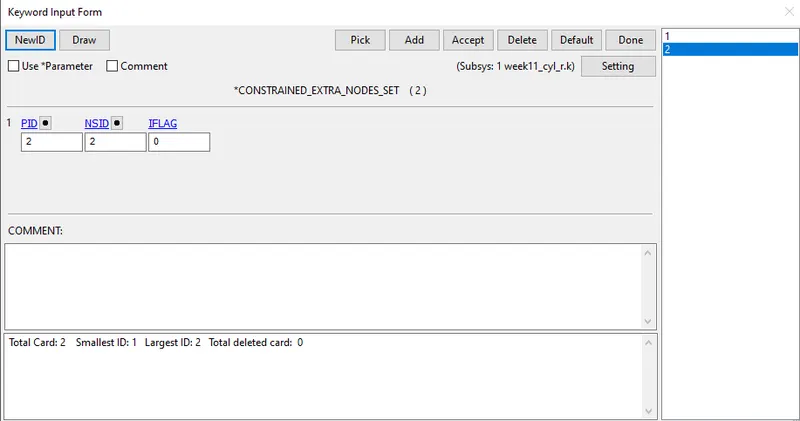
Four extra nodes were created and assigned to the parts using *CONSTRAINED_EXTRA_NODE_SET CARD:
CONSTRAINED JOINT CYLINDRICAL CARD:
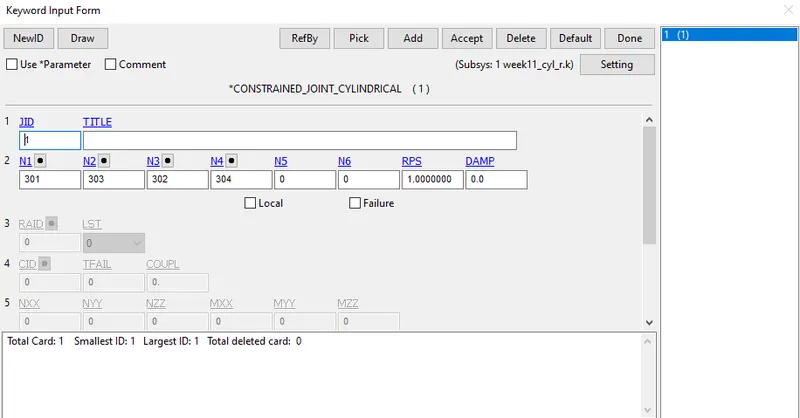
Nodes 301 and 302 belongs to part 1. Nodes 303 and 304 belongs to part 2. Nodes 301 and 303 are coincident. Nodes 302 and 304 are also coincident.
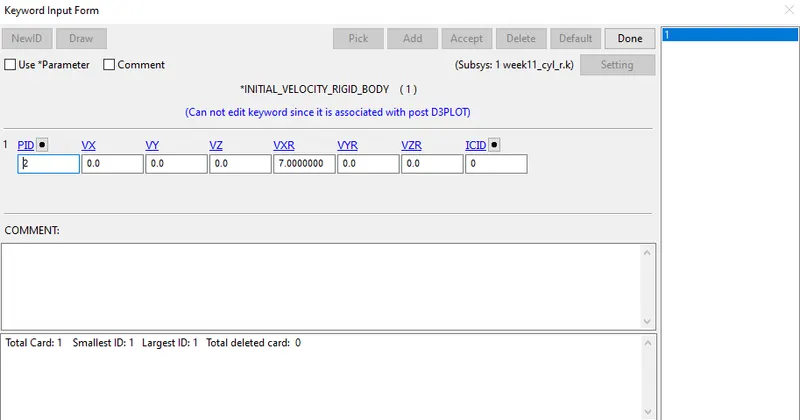
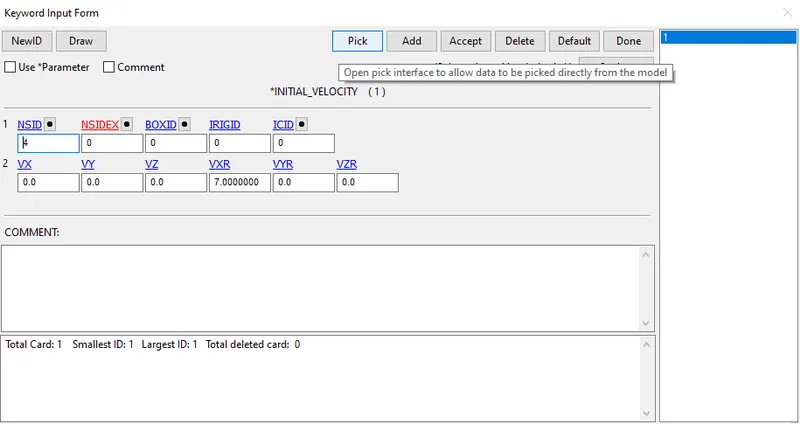
INITIAL VELOCITY DEFINED:
RESULTS:
CASE 4: CYLINDRICAL JOINT-DEFORMABLE BODY:
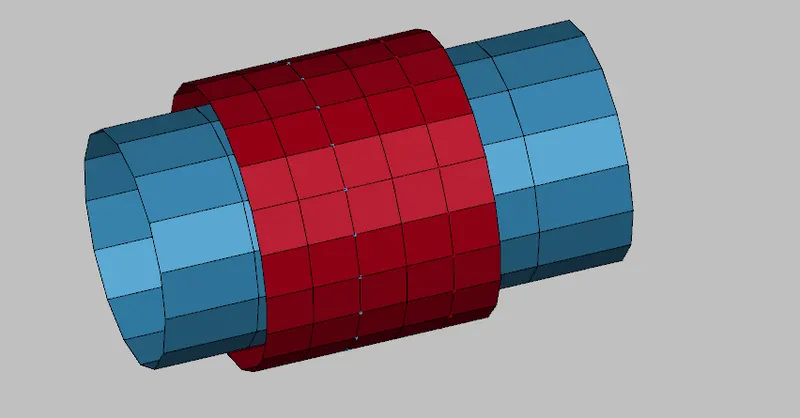
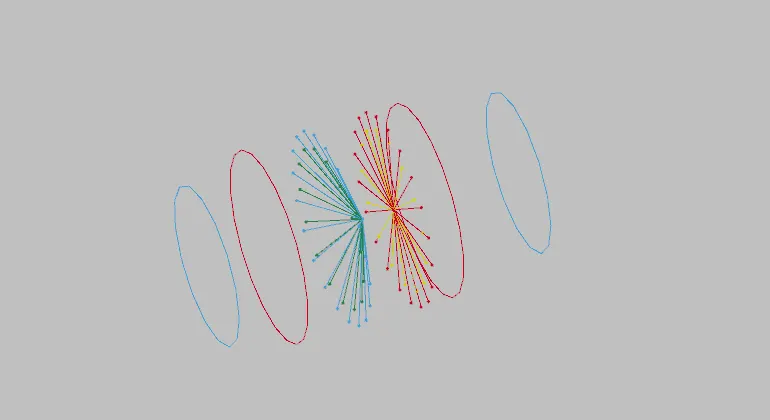
Similarly, instead of CONSTRAINED EXTRA NODE SETS, we use the constrained nodal rigid body option to constrain the nodes.
INITIAL VELOCITY DEFINED:
RESULTS:
CASE 5: SPHERICAL JOINT-RIGID BODY:
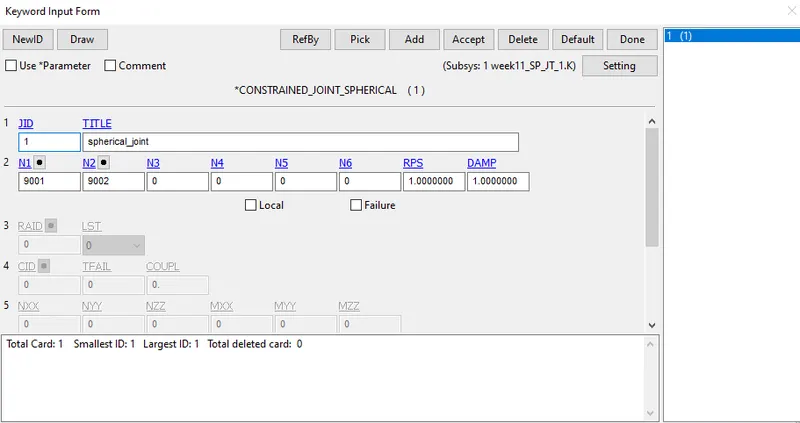
SPHERICAL JOINT DEFINITION IN LS-DYNA:
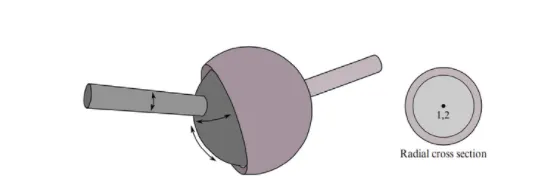
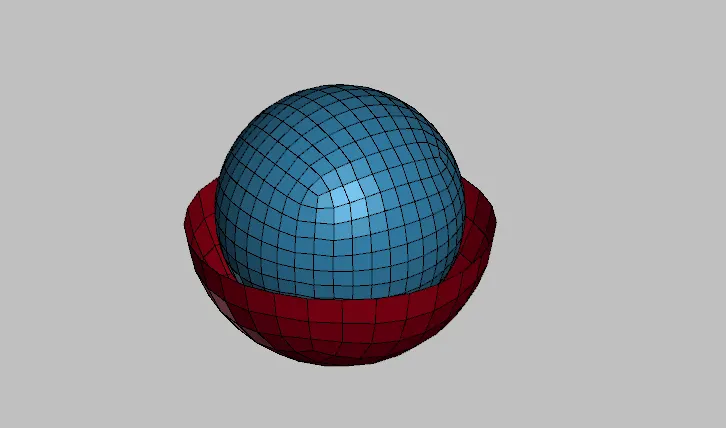
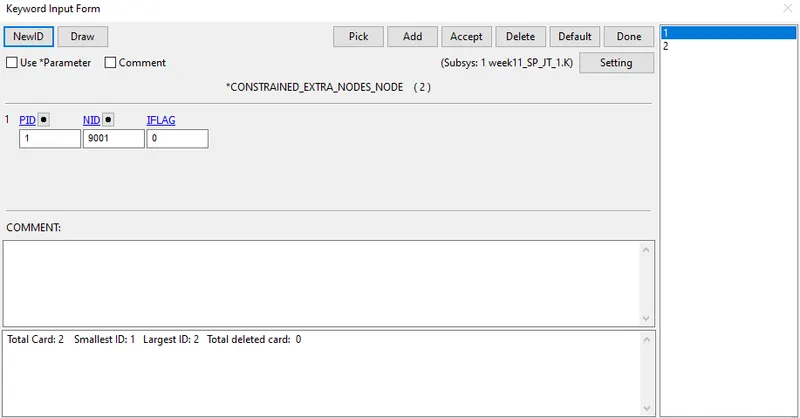
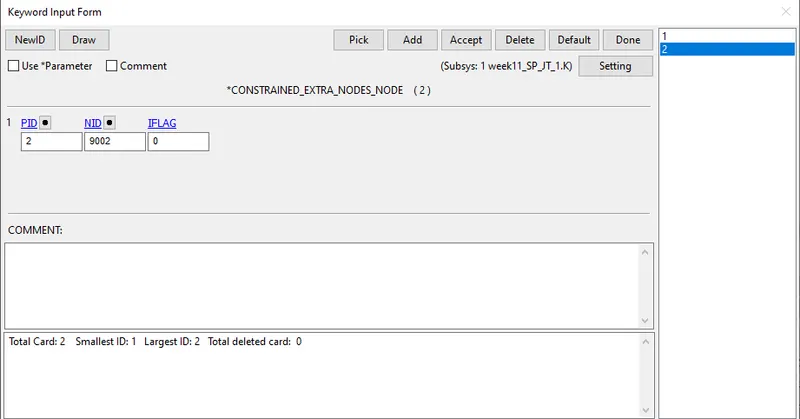
Here, we only need two nodes to create the joint.
Node 9001 belongs to part 1 and 9002 belongs to part 2. They are coincident.
CONSTRAINED EXTRA NODES NODE:
CONSTRAINED JOINT SPHERICAL CARD:
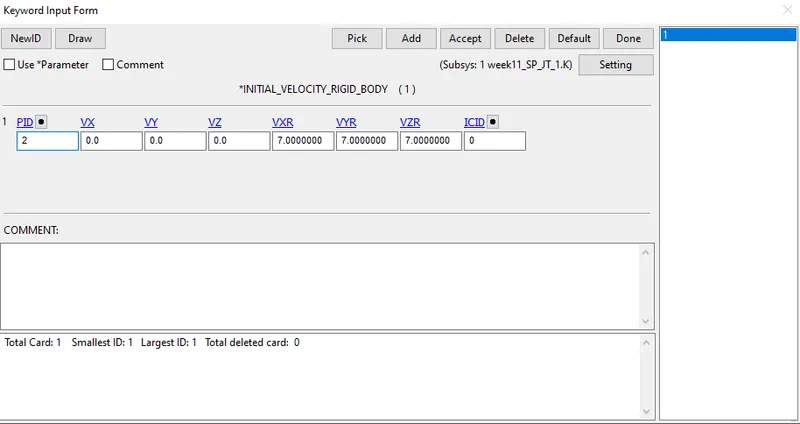
INITIAL VELOCITY CARD:
RESULTS:
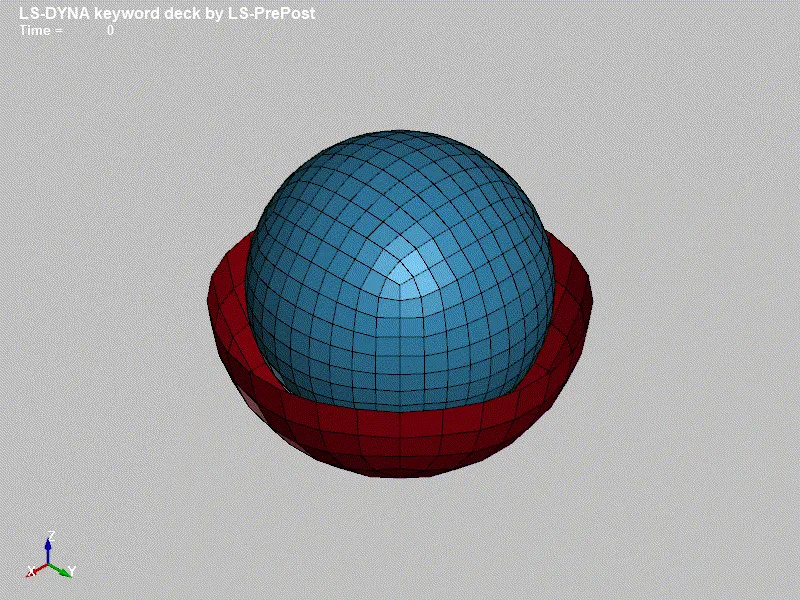
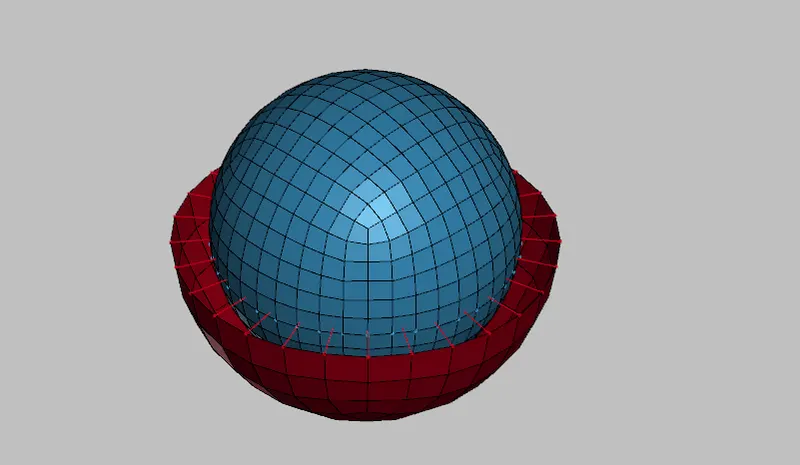
CASE 6: SPHERICAL JOINT-DEFORMABLE BODY:
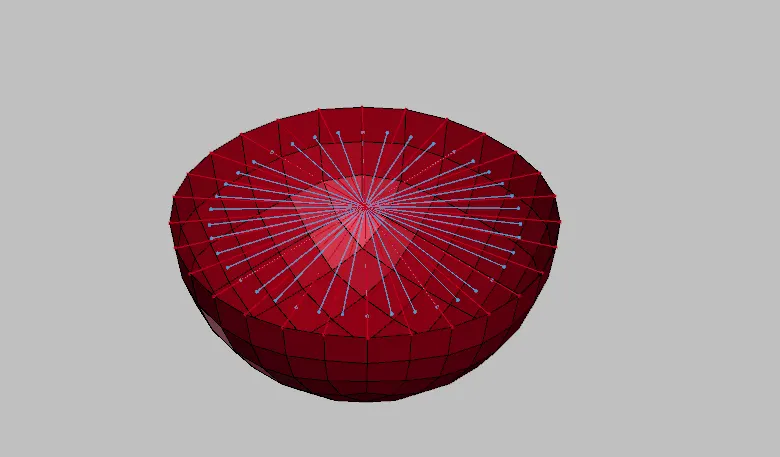
Similarly, instead of CONSTRAINED EXTRA NODE SETS, we use the constrained nodal rigid body option to constrain the nodes.
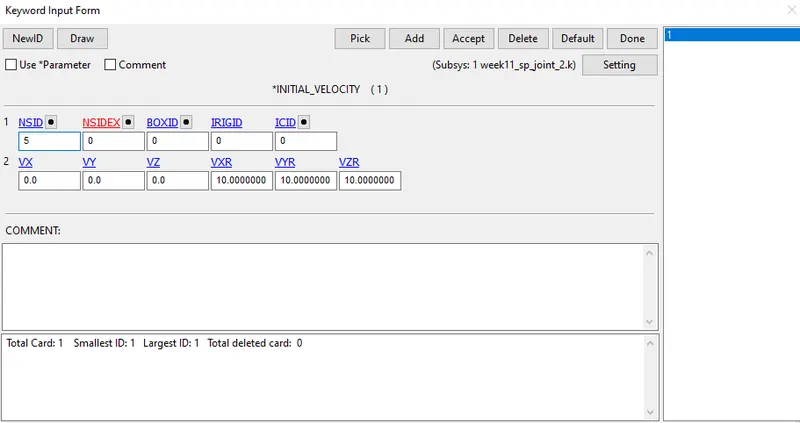
INITIAL VELOCITY CARD:
RESULTS:
CASE 7: TRANSLATIONAL JOINT-RIGID BODY:
TRANSLATIONAL JOINT DEFINITION IN LS-DYNA:
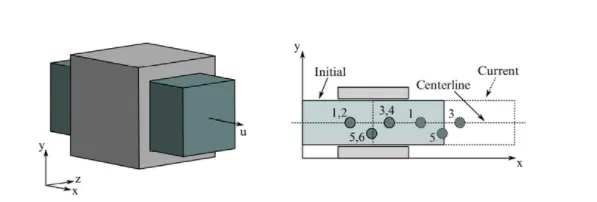
Translational joints are similar to cylindrical joints, but with two more nodes to constrain the rotation.
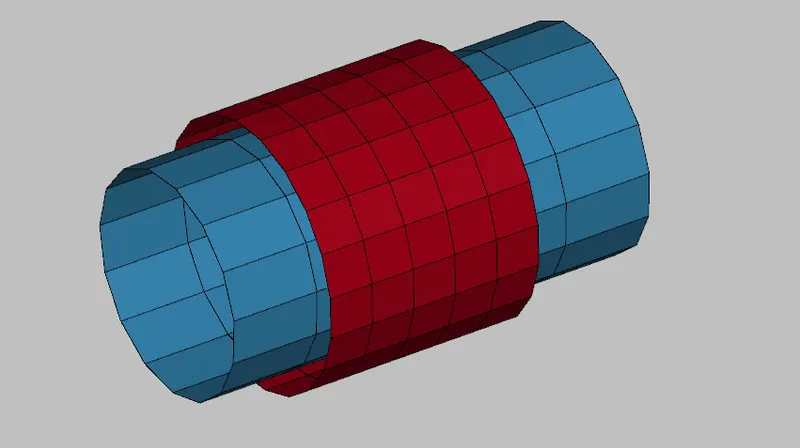
Nodes 301, 302 and 305 belongs to part 1. Nodes 303, 304 and 306 belongs to part 2. Nodes 301 and 303 are coincident. Nodes 302 and 304 are also coincident. Nodes 305 and 306 are also coincident.
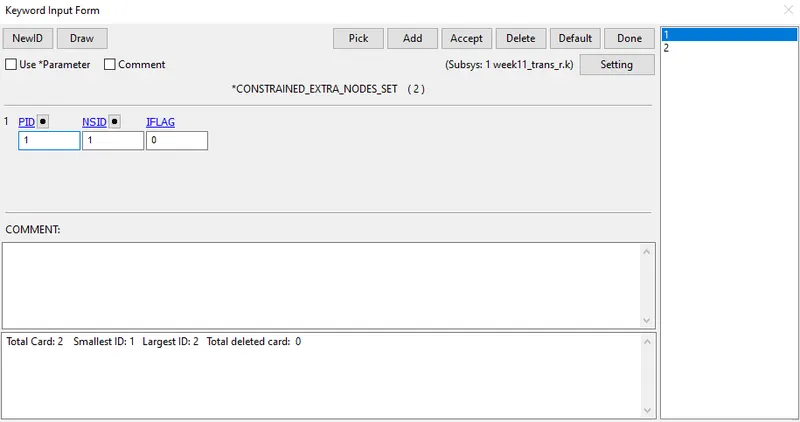
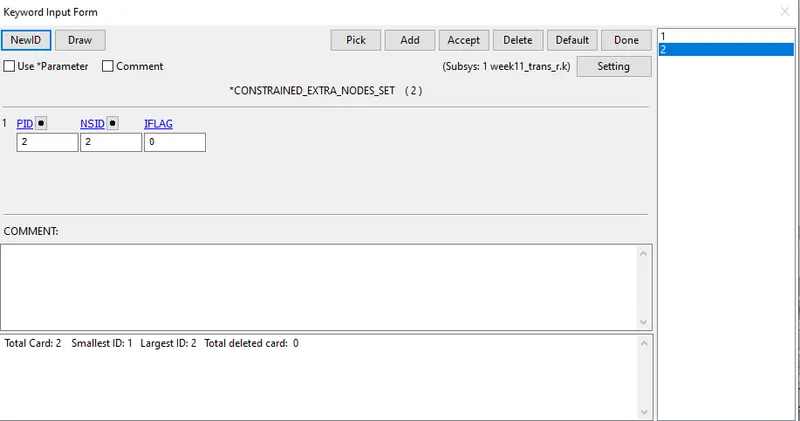
CONSTRAINED EXTRA NODES SET CARD:
CONSTRAINED JOINTS TRANSLATIONAL CARD: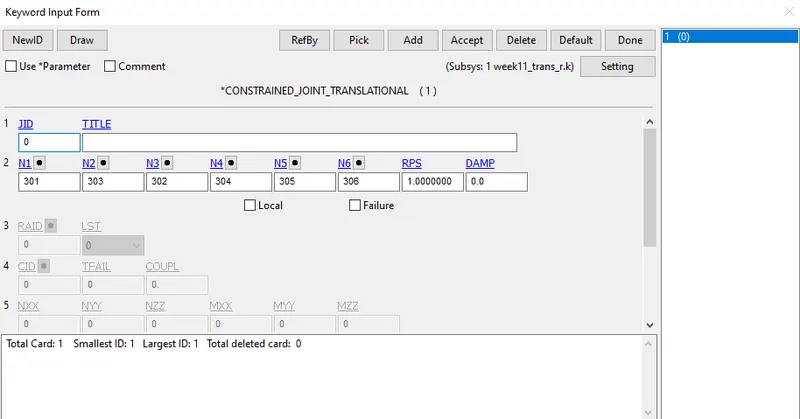
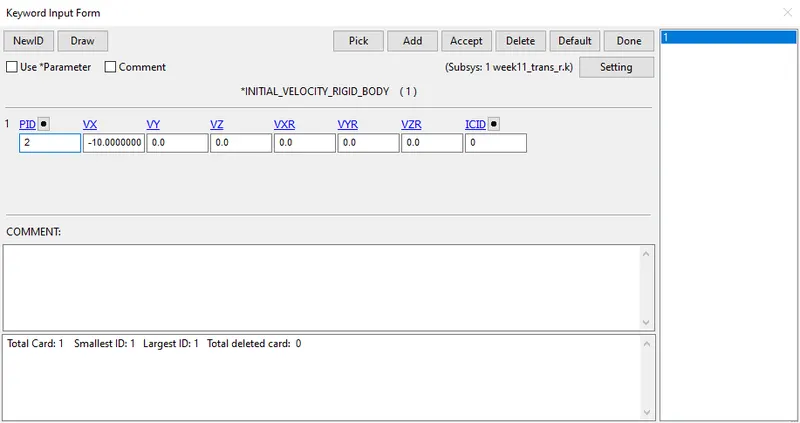
INITIAL VELOCITY:
RESULT:
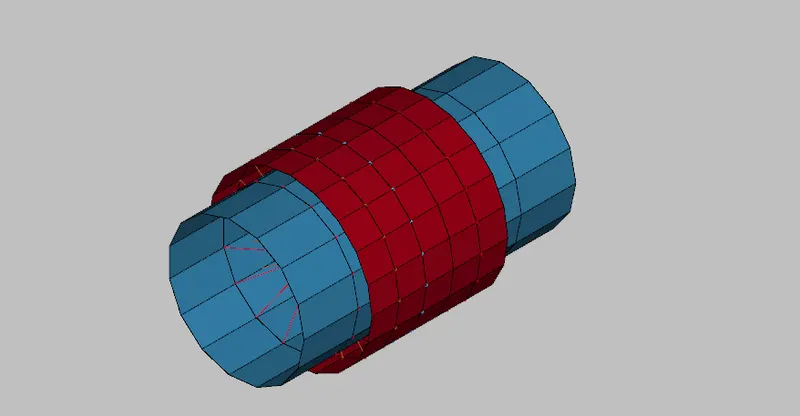
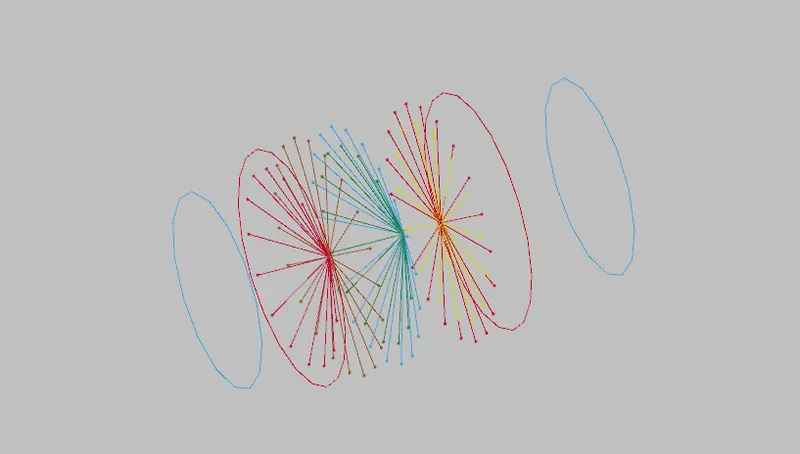
CASE 8:TRANSLATIONAL JOINT-DEFORMABLE BODY:
Similarly, instead of CONSTRAINED EXTRA NODE SETS, we use the constrained nodal rigid body option to constrain the nodes.
INITIAL VELOCITY:
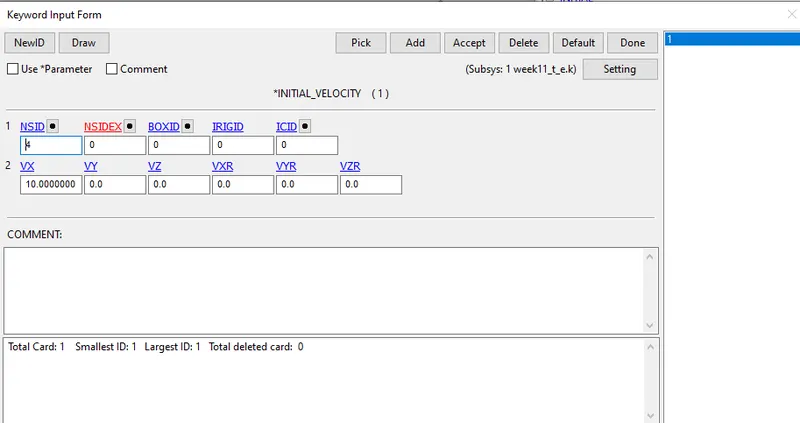
RESULT:
CONCLUSION:
- Created and demonstrated revolute, cylindrical, spherical and translational joints in Ls-Dyna for rigid and deformable bodies.