PREPROCESSING THE DASHBOARD SUB PARTS FOR STRUCTURAL ANALYSIS USING ANSA
PREPROCESSING THE DASHBOARD SUB PARTS FOR STRUCTURAL ANALYSIS USING ANSA
OBJECTIVE:
- To clean up the geometrical errors in the dashboard sub-part model.
- To generate mid-surface.
- To mesh the model under the required quality criteria.
- To assign thickness to the model.
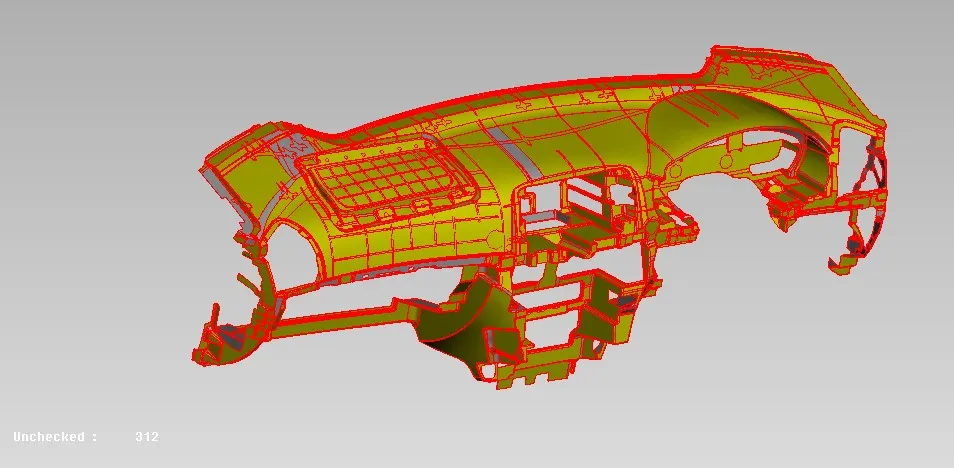
GIVEN MODEL OF THE DASHBOARD SUB-PART:
QUALITY CRITERIA:
|
S.No |
Quality Criteria |
Value |
|
1 |
Target/Average length |
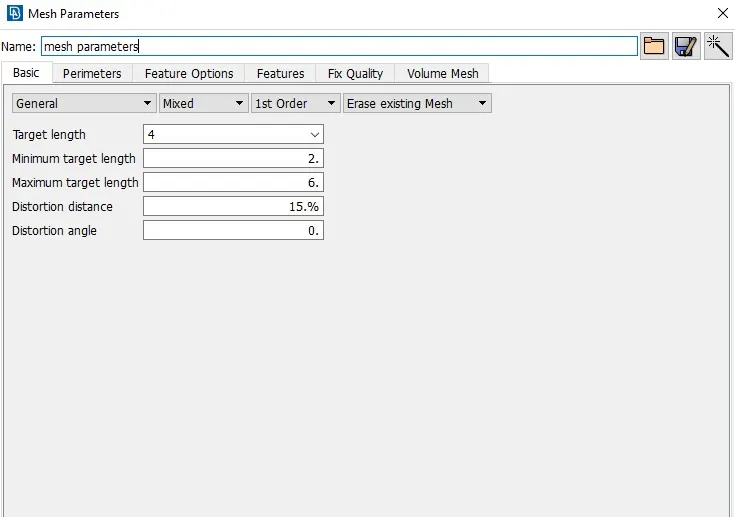
4 |
|
2 |
Minimum Length |
2 |
|
3 |
Maximum Length |
6 |
|
4 |
Aspect |
3 |
|
5 |
Warpage |
15 |
|
6 |
Skewness |
45 |
|
7 |
Jacobian |
0.7 |
|
8 |
Minimum Quad Angle |
45 |
|
9 |
Maximum Quad Angle |
135 |
|
10 |
Minimum Tria Angle |
30 |
|
11 |
Maximum Tria Angle |
120 |
|
10 |
Tria Percentage |
15 |
PROCEDURE:
1. GEOMETRY CLEAN-UP:
- Import the CAD model in ANSA.
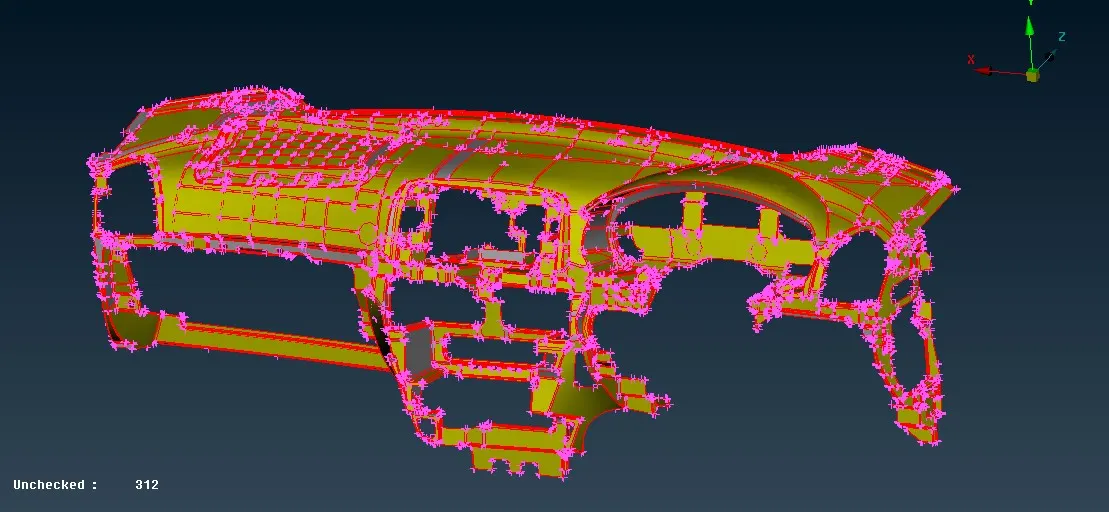
- The length option in the mesh tab is used to refine the geometry by changing the perimeter and macro length of the model.
- The target length is 4mm. So enter a value of 4mm as perimeter and macro length.
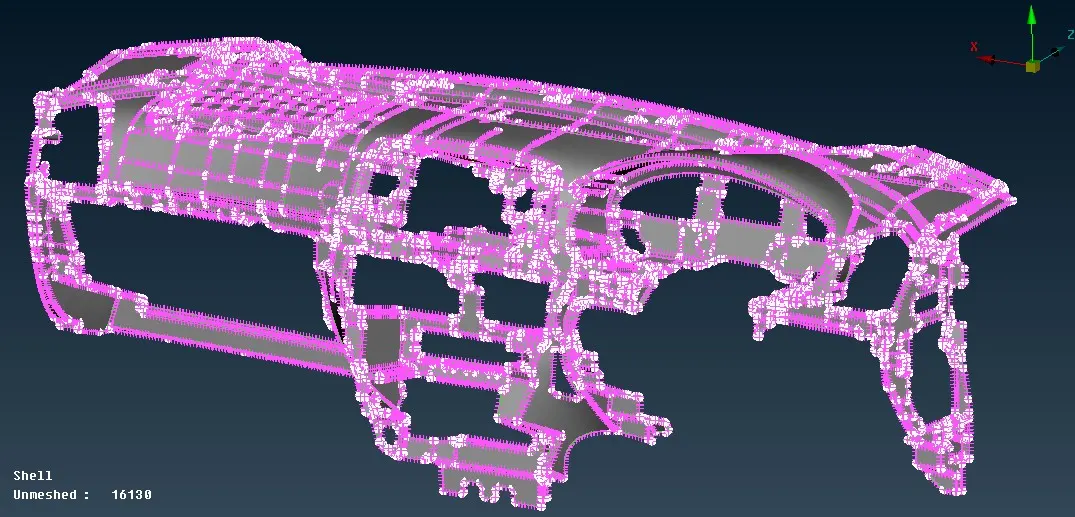
- Use the topo option to connect the surfaces together.
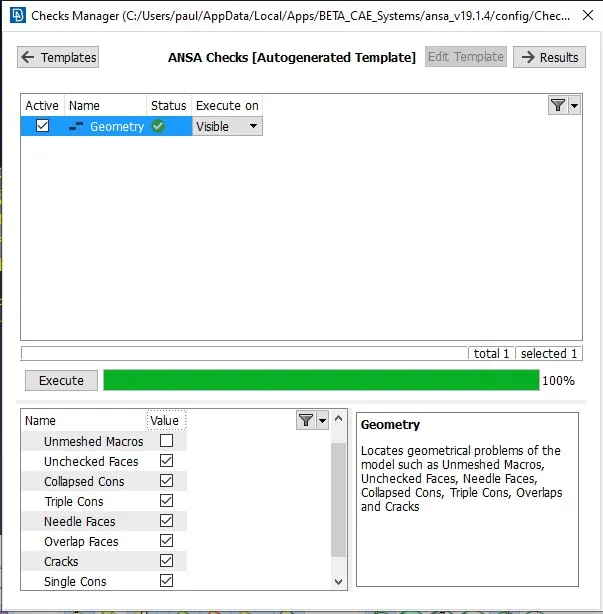
- Check for the geometrical errors using the checks manager. Clean up the geometrical errors using the auto-fix option. Use manual clean-up for other geometrical errors which cannot be auto-fixed.
- Likewise, remove all the geometrical errors and verify that all the errors are cleaned up.
2. MID-SURFACE GENERATION:
- Correct the orientation of the model.
- Measure the thickness of the model at different locations.
- The Dashboard model is lengthy and has thin-walled parts. So creating a mid-surface shell model is favourable.
- Reasons to use mid-surface shell mesh are:
- The accuracy of the end result can be way off with solid mesh elements.
- The solid mesh approach, which needs 3 to 4 elements across the thickness, results in a huge amount of elements and long running times.
- Meshing nasty geometry with solid mesh elements needs preparation too.
- Post-processing of a huge number of solid element simulations takes ages.
- The shell mesh approach creates a fast-running accurate simulation.
- The model is too complex for the automatic mid-surface generation.
- Generate the mid surface manually using the offset and middle commands.
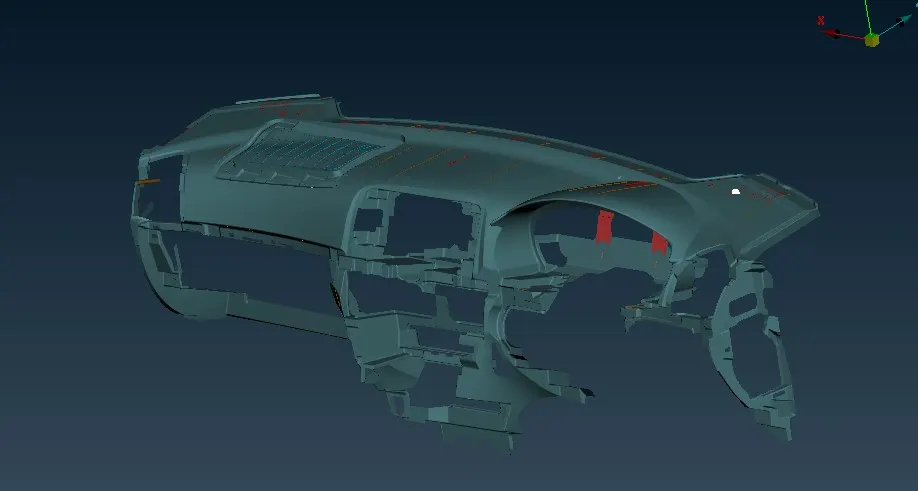
- Create different PIDs and locked views to handle the required views of the model.
- Assign thickness in the PIDs created.
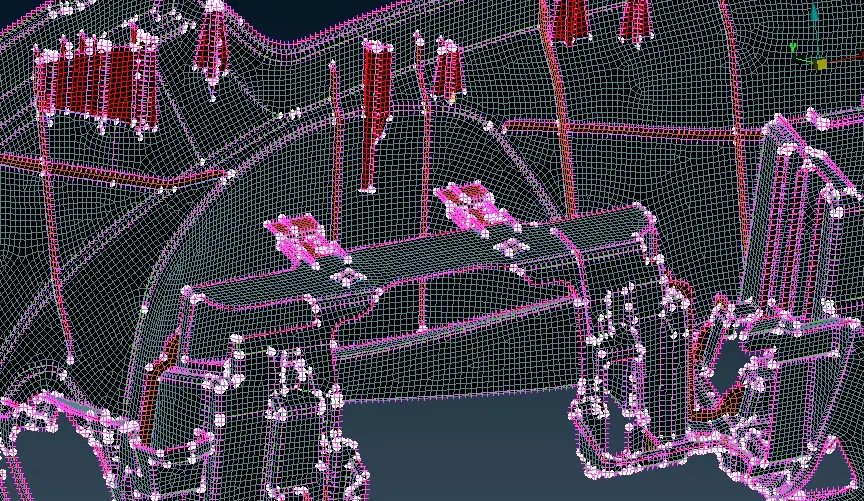
- Connect the geometrical features like fillets, ribs and other projections in the model using the extend, intersect, topo and paste options.
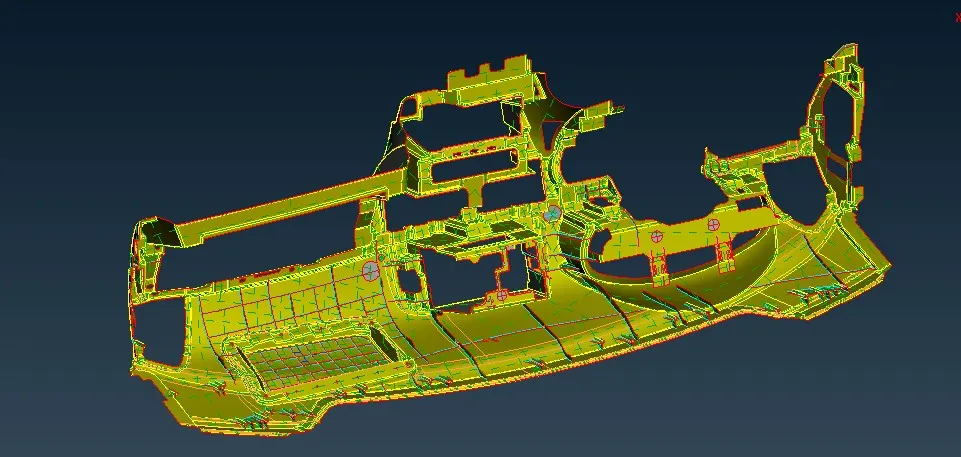
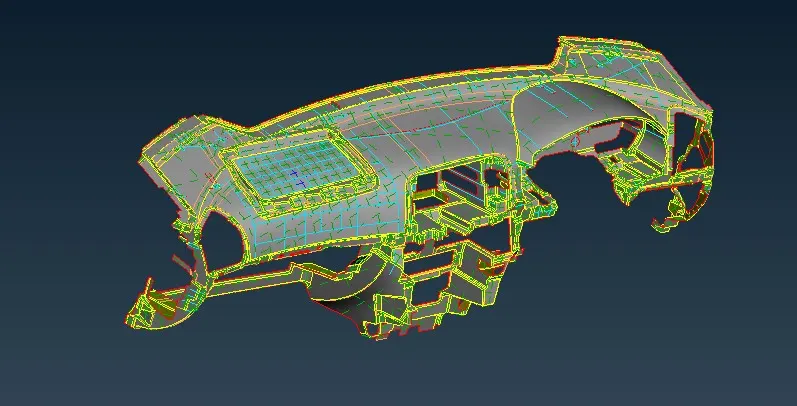
- Clean-up the geometrical errors in the mid surface created.
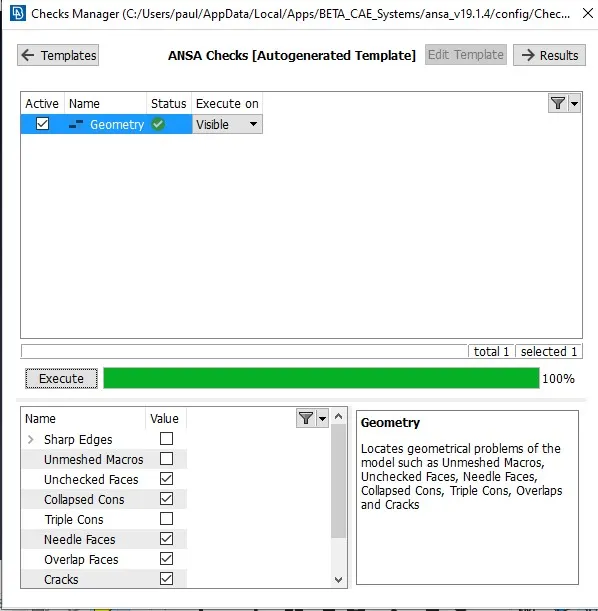
- Switch to the PID Views.
- The ribs and fillets are captured in a way to satisfy the quality criteria.
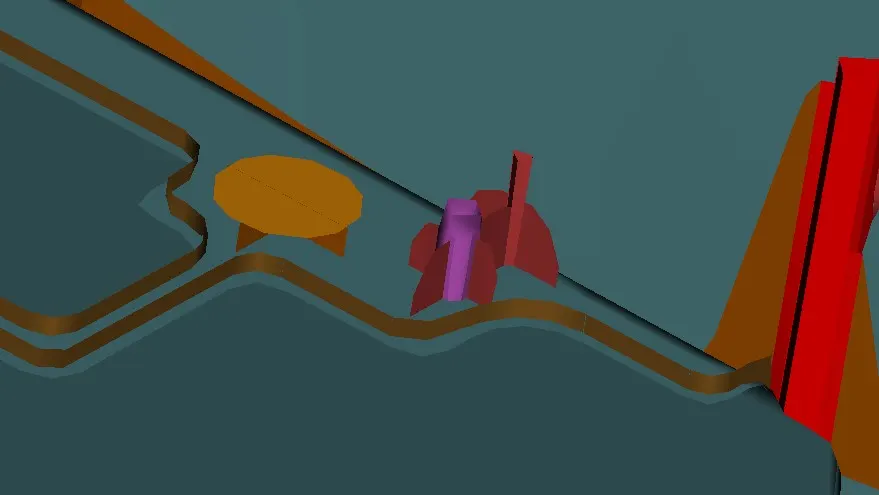
- Use the copy option to copy the ribs and projections wherever required.
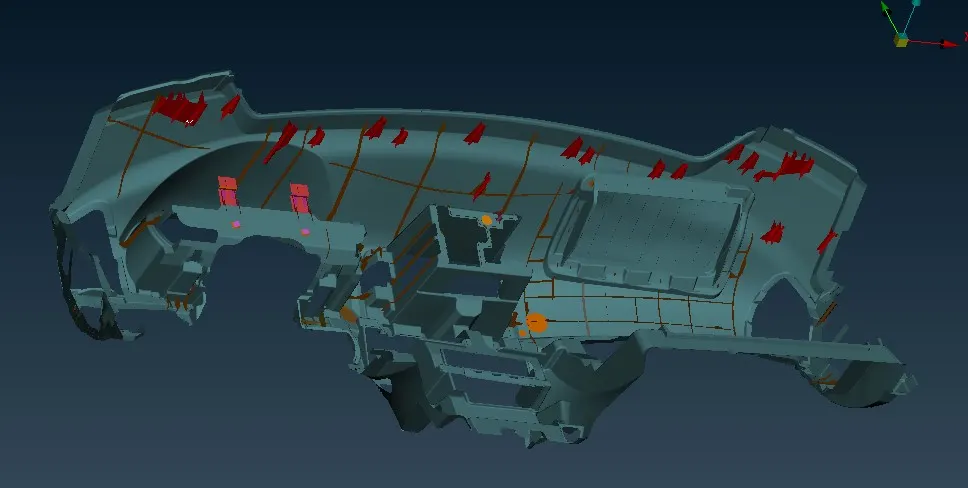
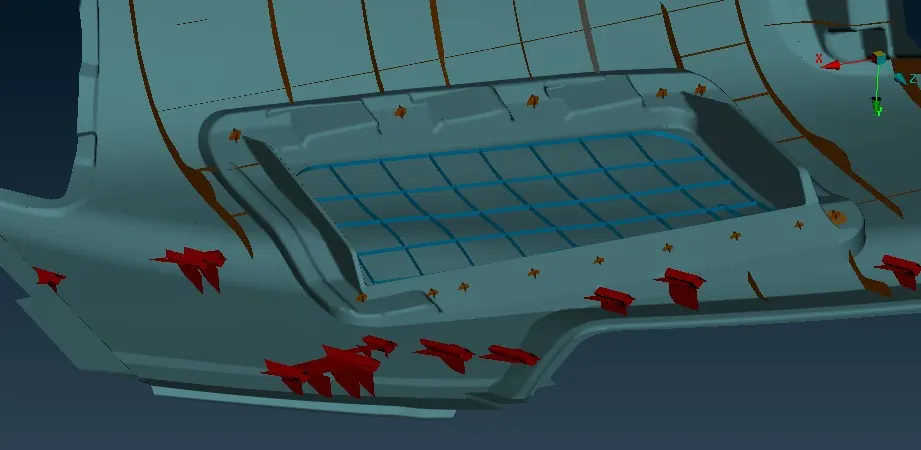
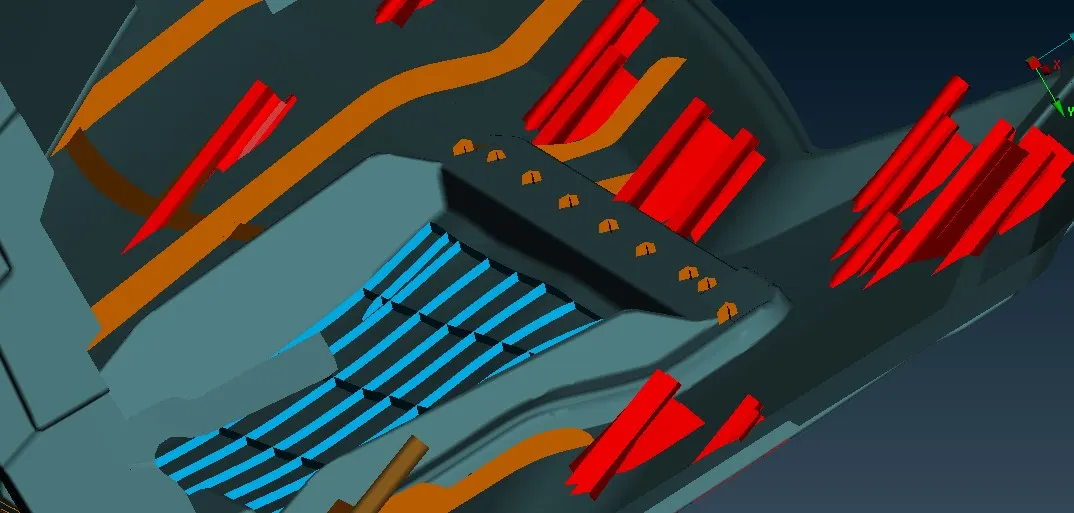
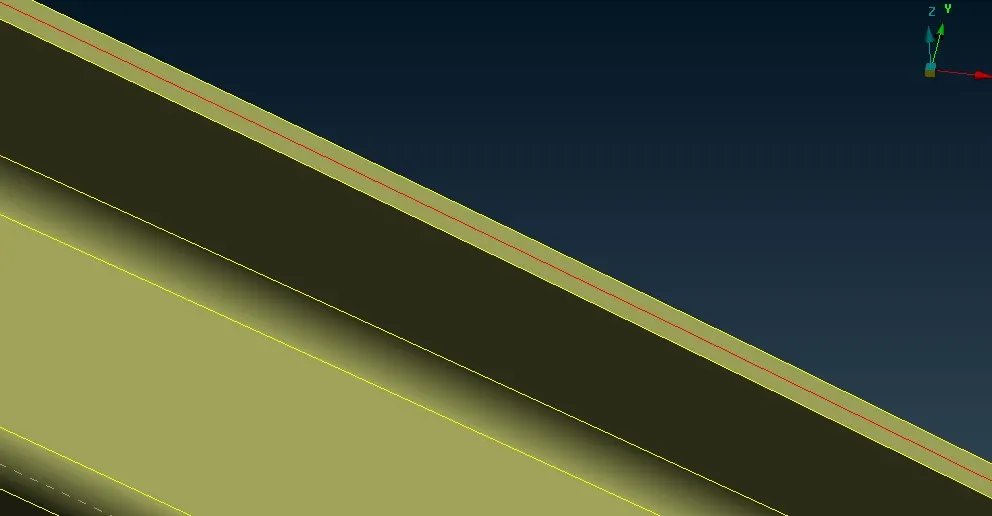
- Compare the mid surface created with the original model and check for any miss alignment or missing surfaces.
3. QUALITY CRITERIA:
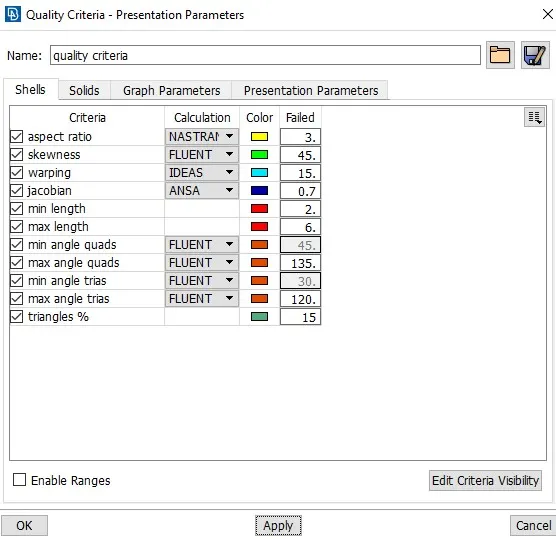
- Assign the required quality criteria and mesh parameters.
4. MESH GENERATION:
- The dashboard model is too large and has lots of small ribs and projections with a different thickness which needs a lot of time for surface by surface clean up and meshing.
- The batch mesh method can be used to clean up and generate mesh on the model automatically as per the quality criteria.
- This is an ideal tool for cleaning up the geometry for the target length specified. This can save a lot of time.
- After applying this method, the mesh generated can be erased if found to be unsatisfactory.
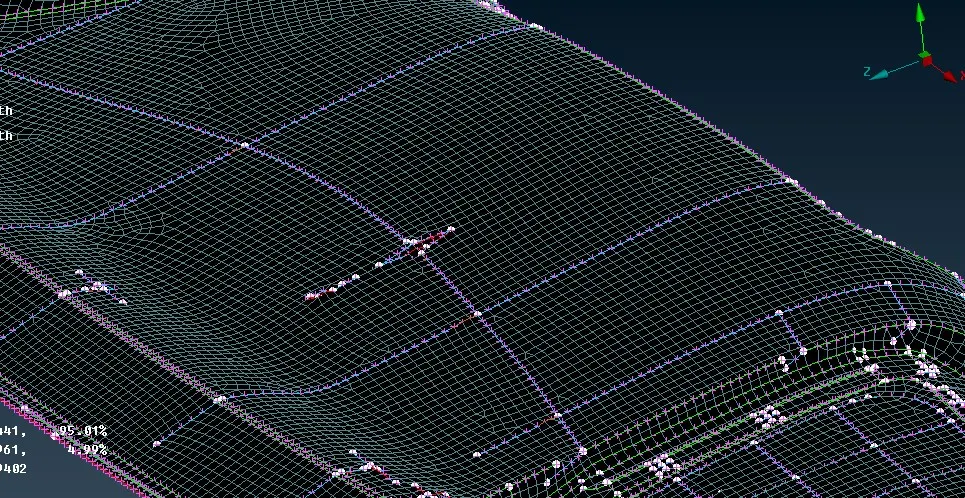
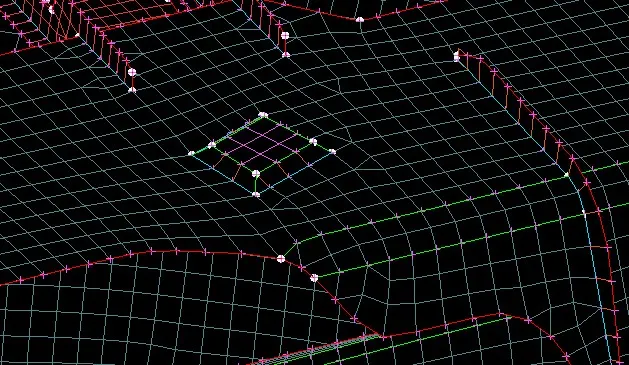
- Mesh the model using the best, spot mesh and free mesh generation tools.
- Use the reconstruct option to improve the element quality.
- Use the smooth option to improve the mesh flow.
- Use the PIDs and the locked views to switch between surfaces.
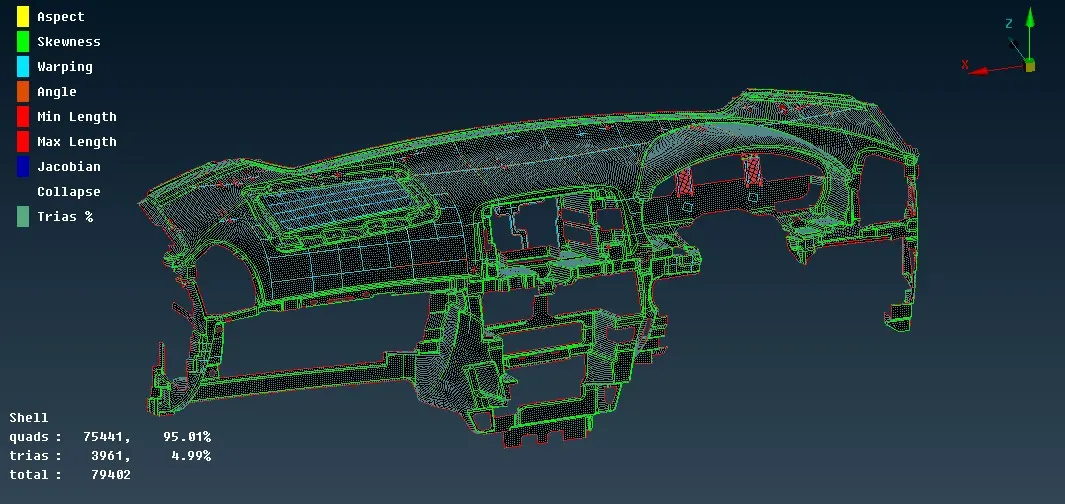
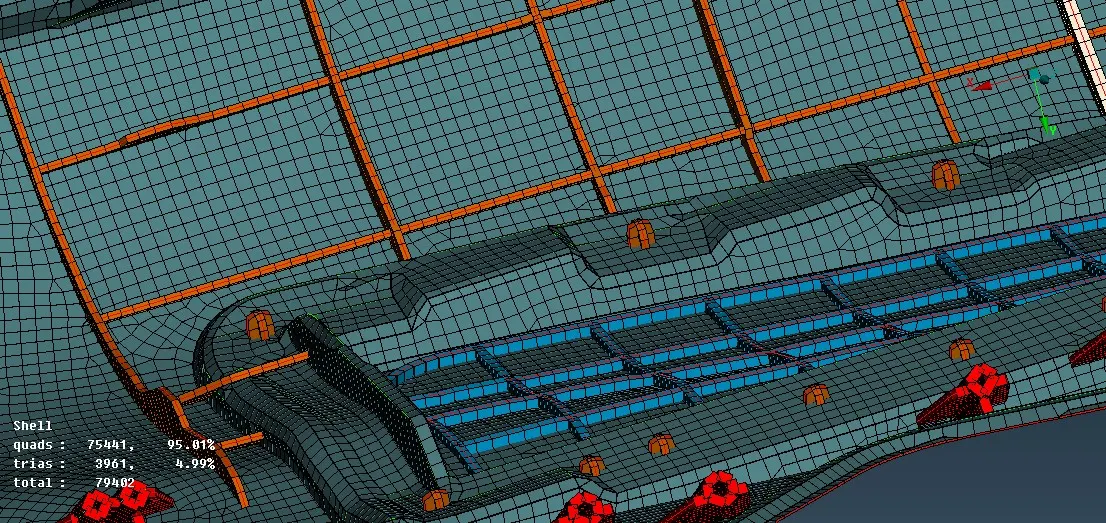
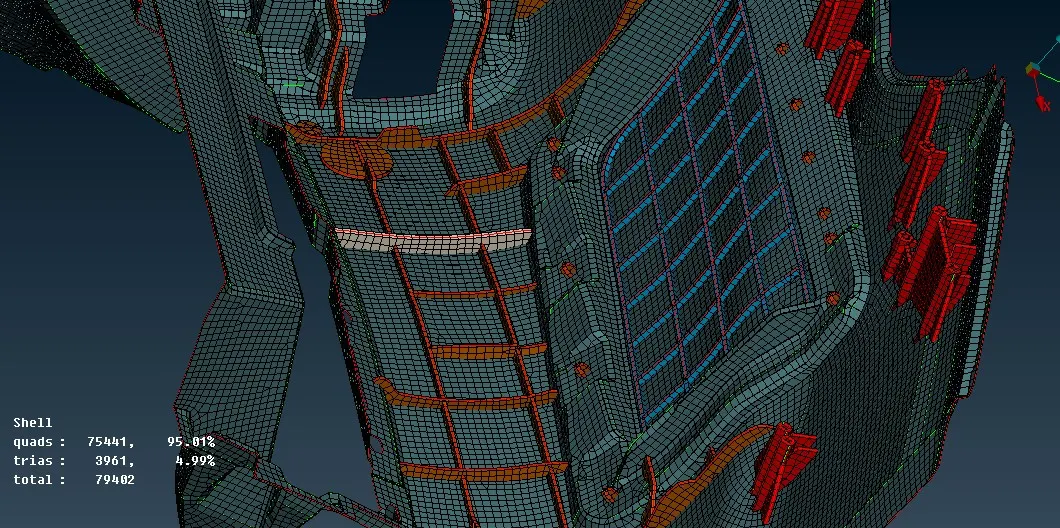
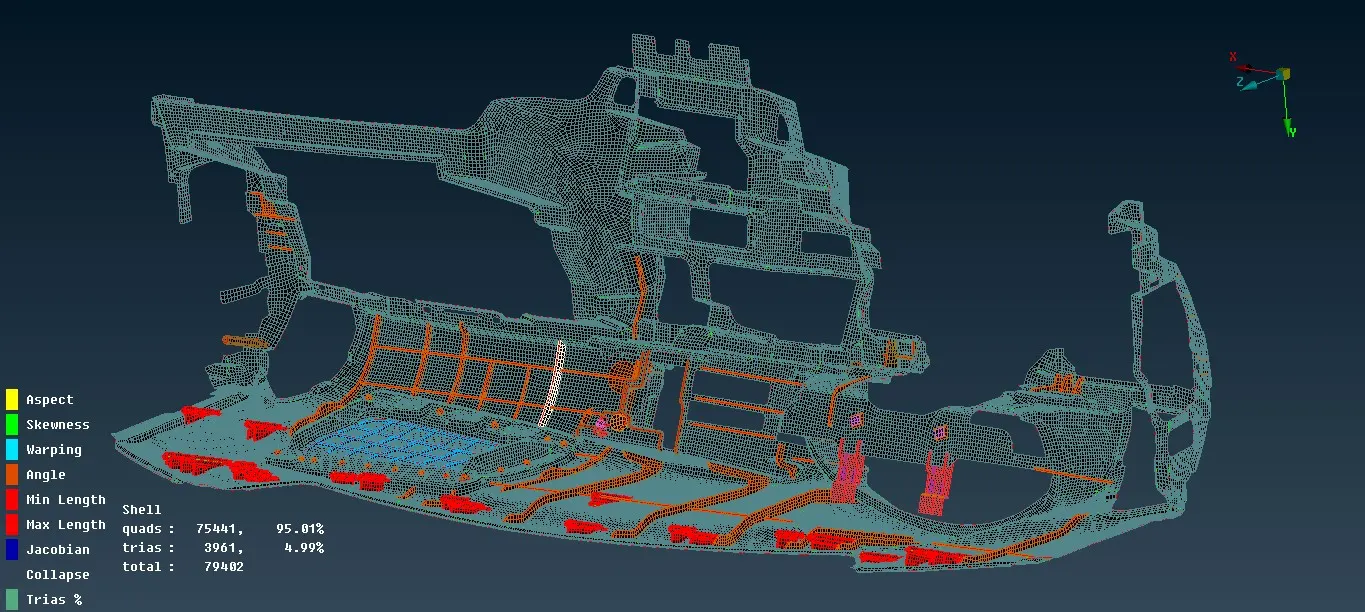
- The model is meshed using quad and tria shell elements.
- Meshing the ribs and other features:
5. DRAWING SHELLS AS SOLIDS:
Link to the model: https://drive.google.com/file/d/1FMdn9uNnIB9ThnDUKJ4KGpoCLFb5Ur3N/view?usp=sharing
CONCLUSION:
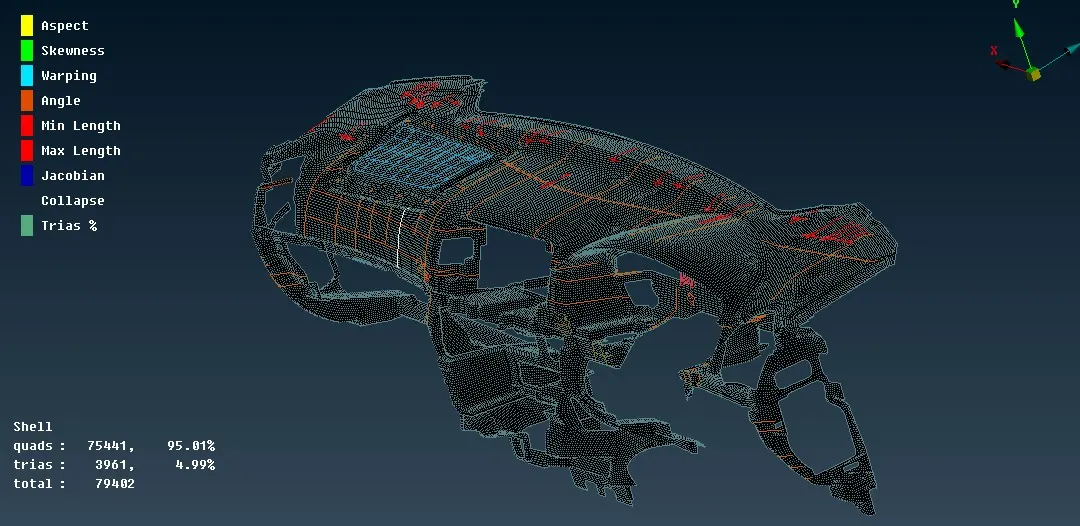
- The dashboard sub-part model has been meshed successfully as per the required quality criteria.
- The mesh flow has been maintained.
- The tria element concentration is strictly restricted under 5%.
- There are 79402 shell elements in the model out of which 3961 elements are tria elements.