Mixing efficiency
Aim: To perform steady-state simulations for both short & long Tee at hot inlet temperature 360C & the Cold inlet 190C and comparing mixing effectiveness Using the k-epsilon and k-omega SST turbulence models.
Case 1 (short mixing tee at Momentum ratio of 2)
Geometry: (short mixing tee)
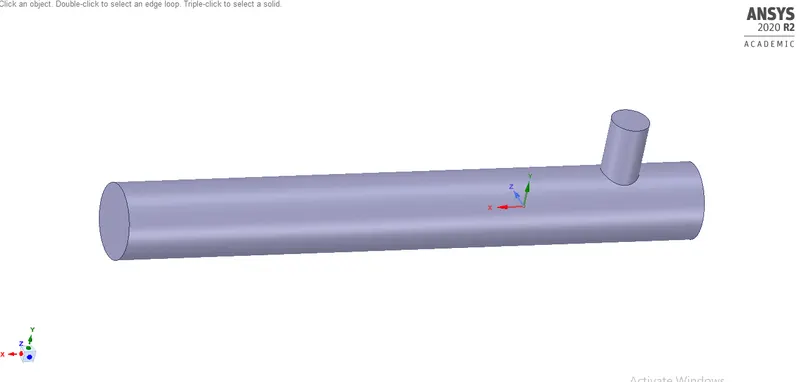
Named selections of short tee:
1.Hot inlet
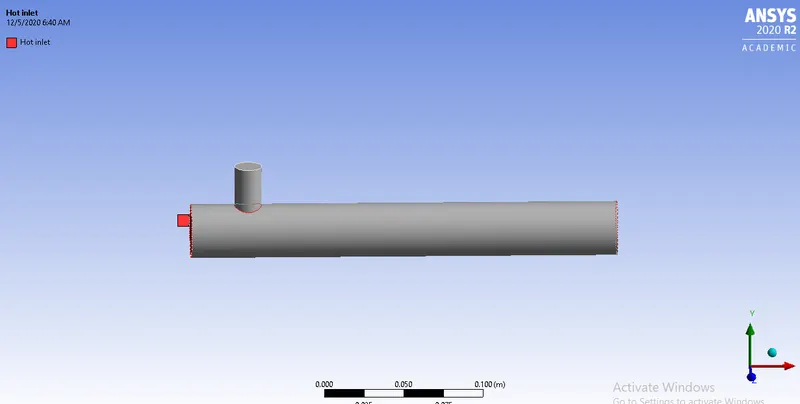
2.Cold inlet
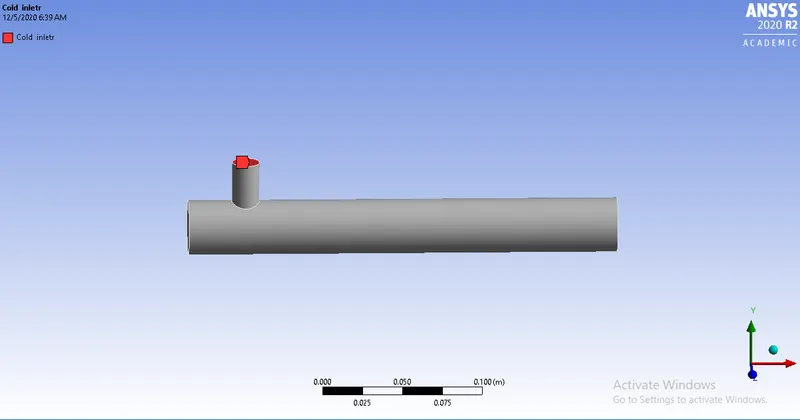
3.Hotoutlet
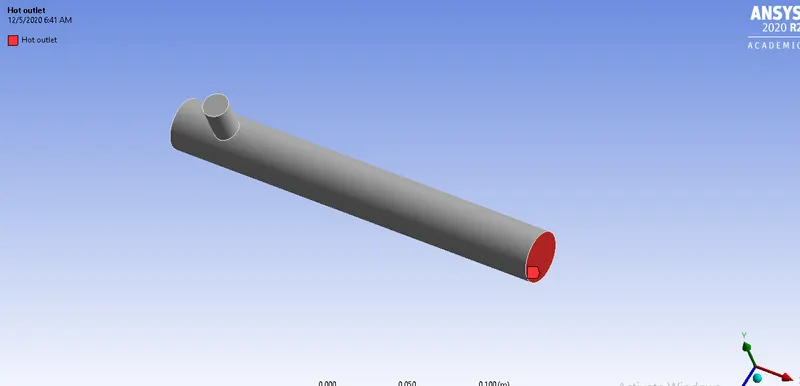
Wall:
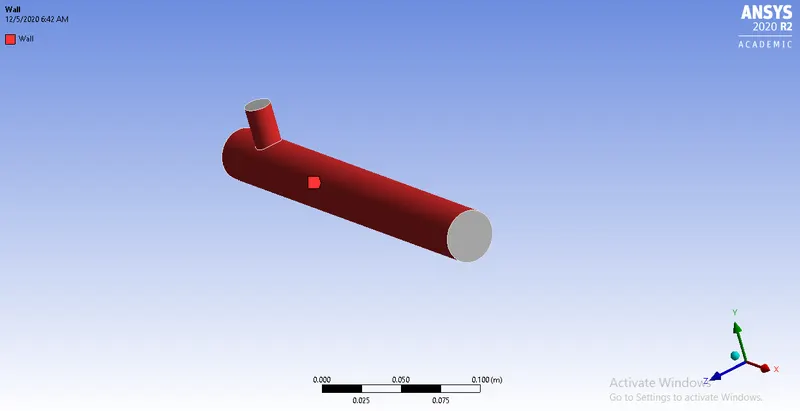
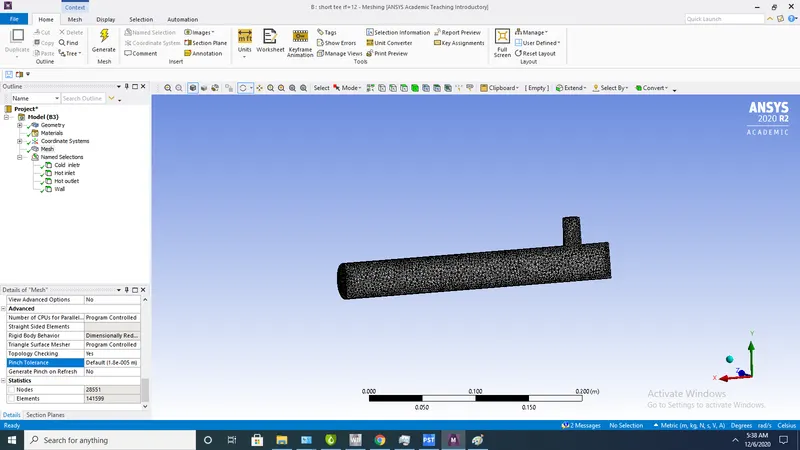
Meshing:
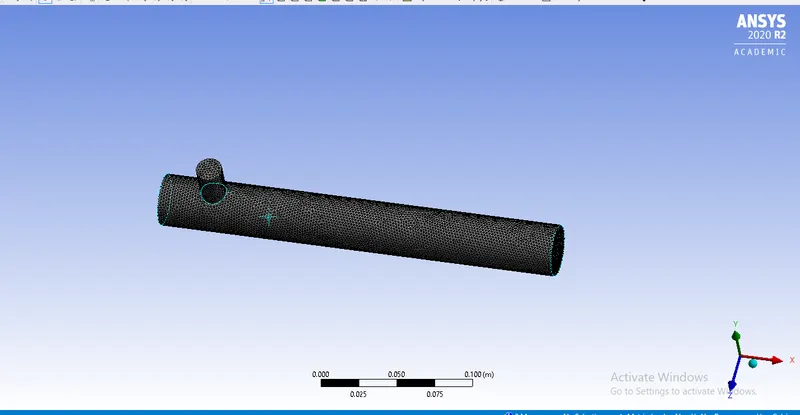
Section plane:
Quality of mesh:
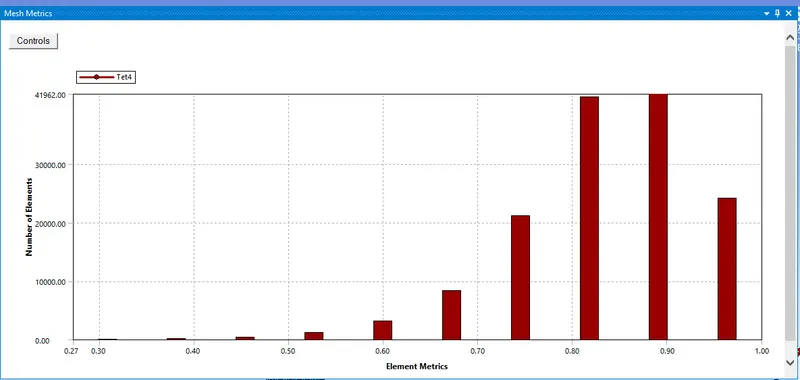
Element size: 0.002
Nodes: 28551
Elements: 141599
Setup:
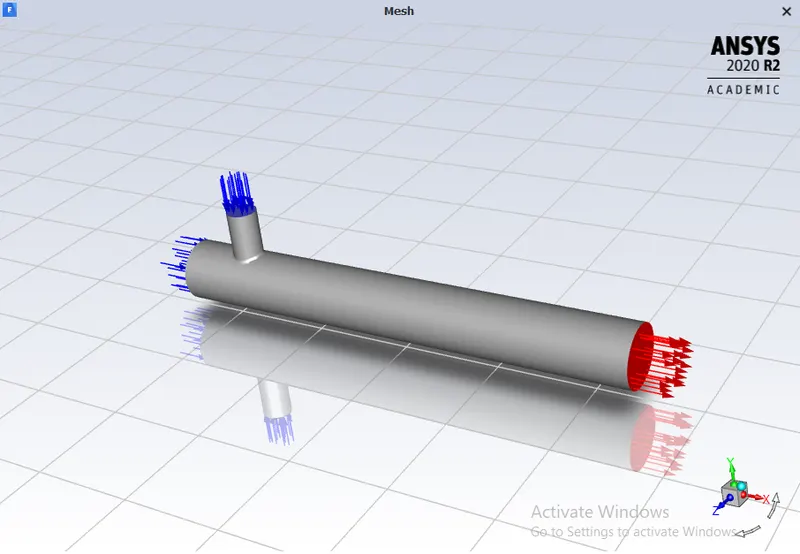
General
Check Mesh Quality
Solver : pressure based
Velocity Formulation : Absolute
Time : Steady
Models:
Energy on
viscous-K-epsilon-Realizble-Standard wall
Materials:
Fluid: Air
Solid: Aluminium
Cellzone conditions:
Fluid: Air
Boundary conditions:
- hot inlet velocity of 3m/s.
- Momentum ratio= coldinlet velocity/Hotinlet velocity (Taken Momentum ratio =2)
- cold inlet velocity=6m/s.
- hot inlet temperature 360C
- Cold inlet 190C
- hot outlet Temperature =30.260C (Caliculated using Tmixture formula)
Report profiles:
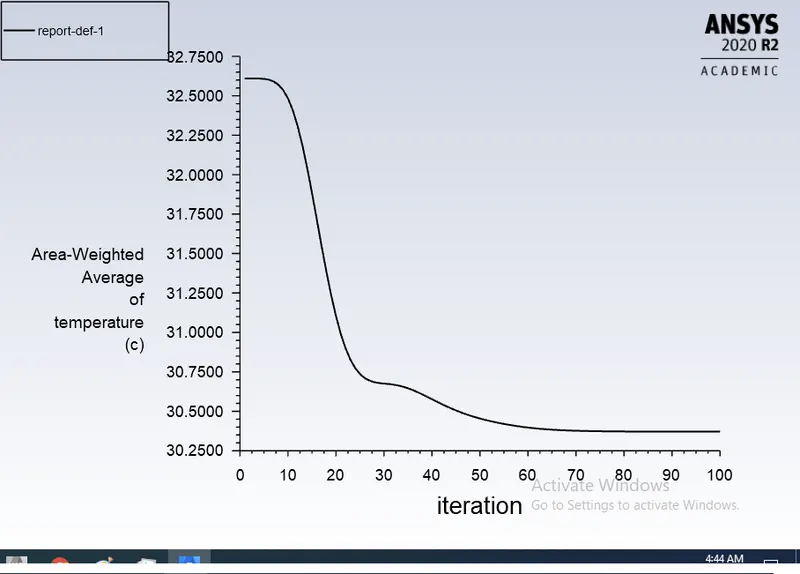
Average weighted temperature
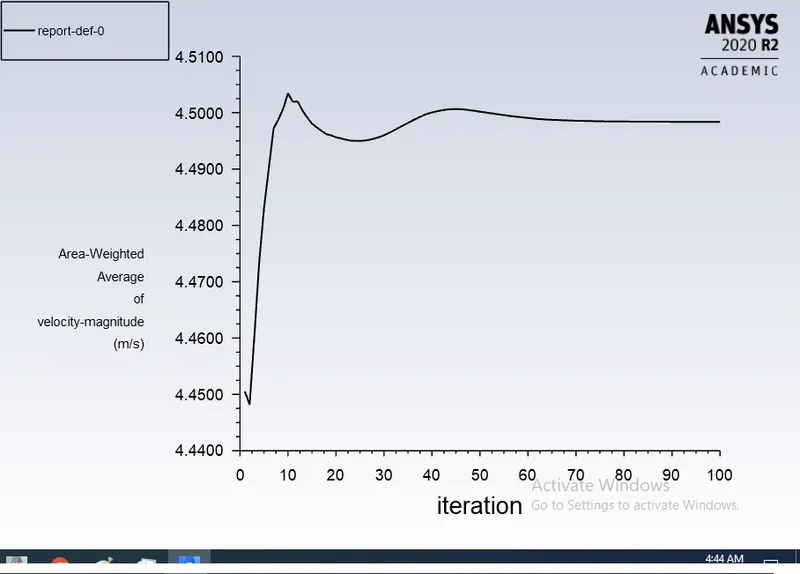
Average weighted velocity
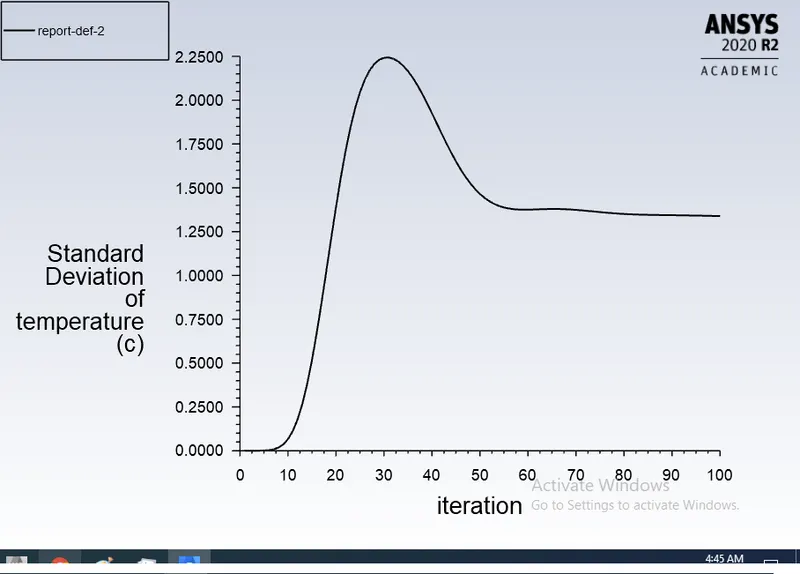
standard deviation temperature
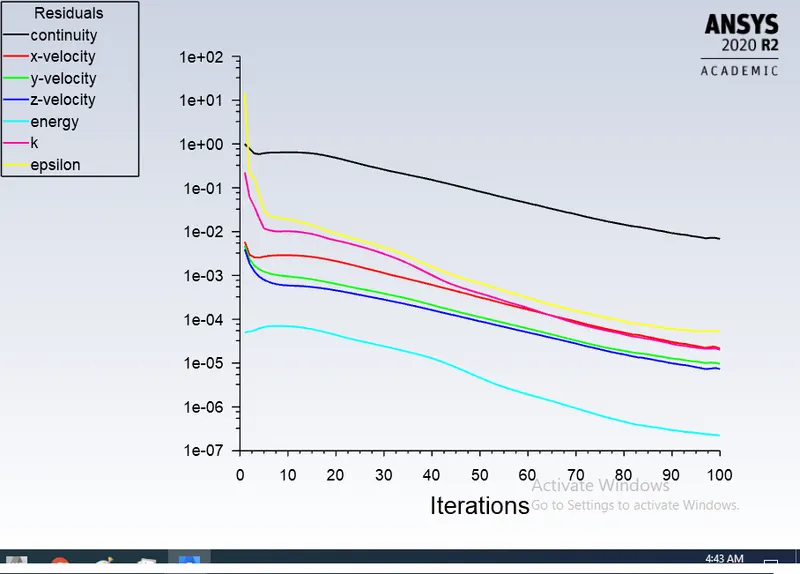
scaled residuals
Solution intialization:
Hybrid intialization
Run caliculations:
no of iterations =100
Average weighted temperature:
Average weighted velocity:
standard deviation temperature:
scaled residuals:
Results:
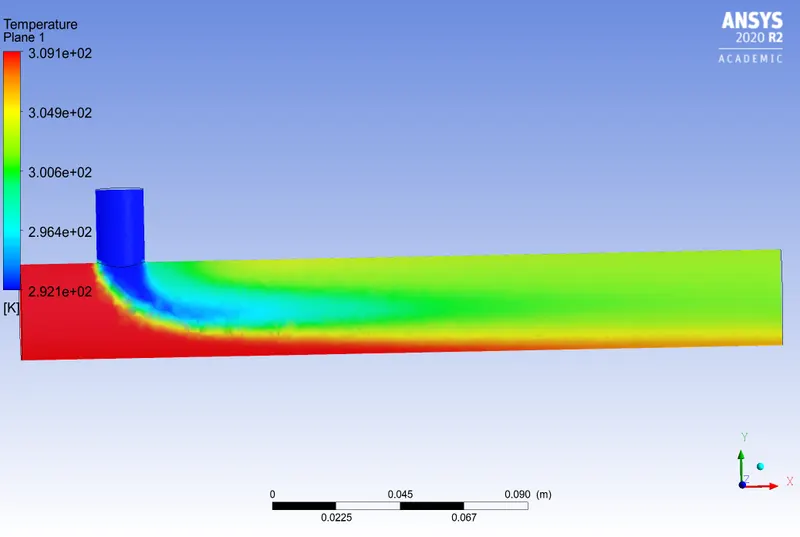
Contours of temperature:
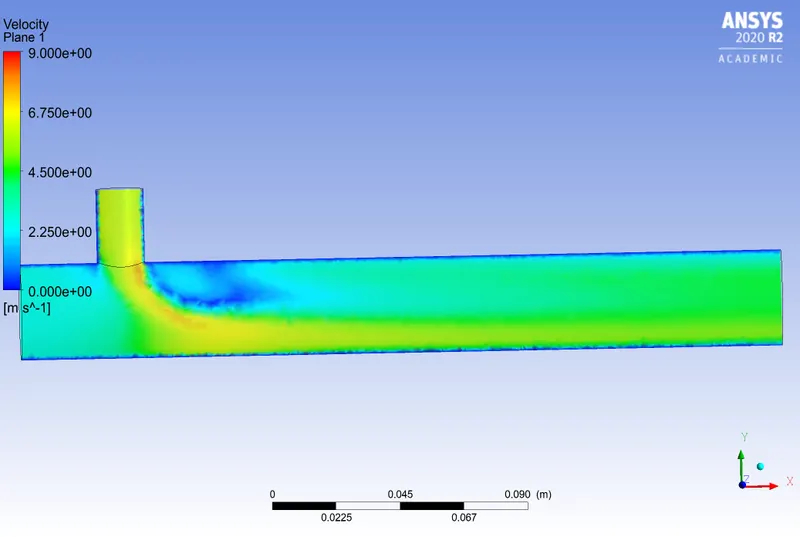
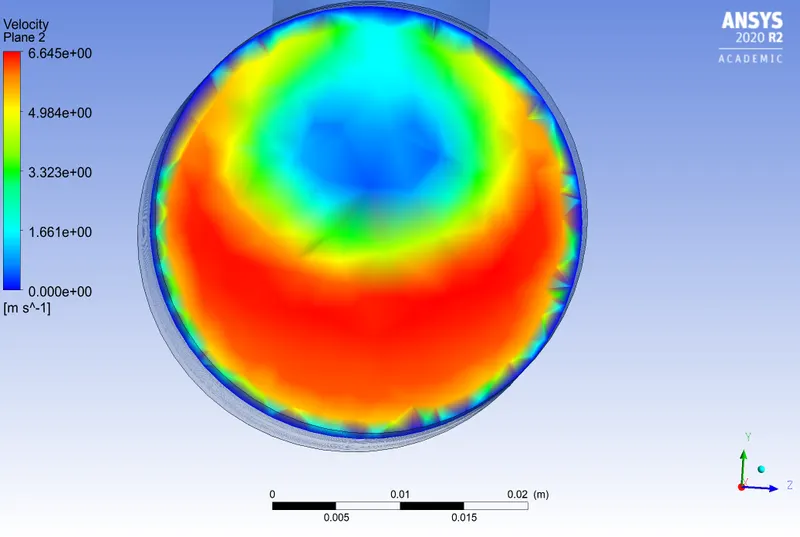
Contours of Velocity:
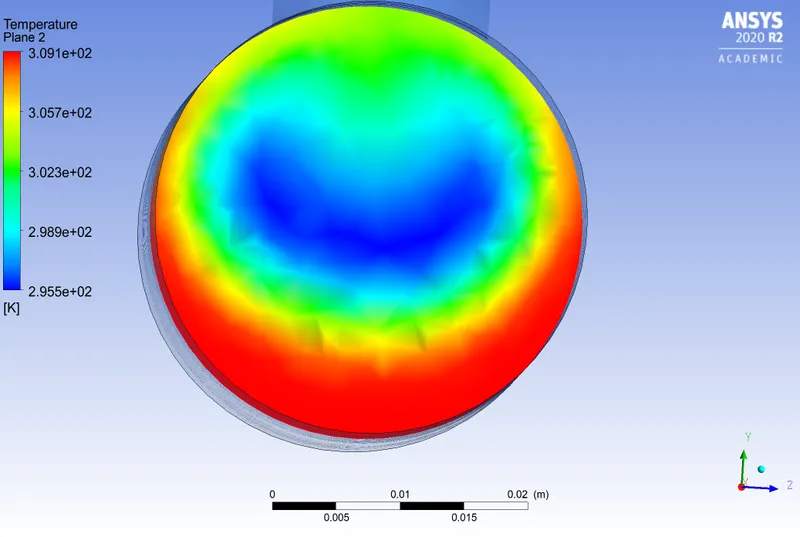
Contours of Temperature across length:
Contours of Velocity across length:
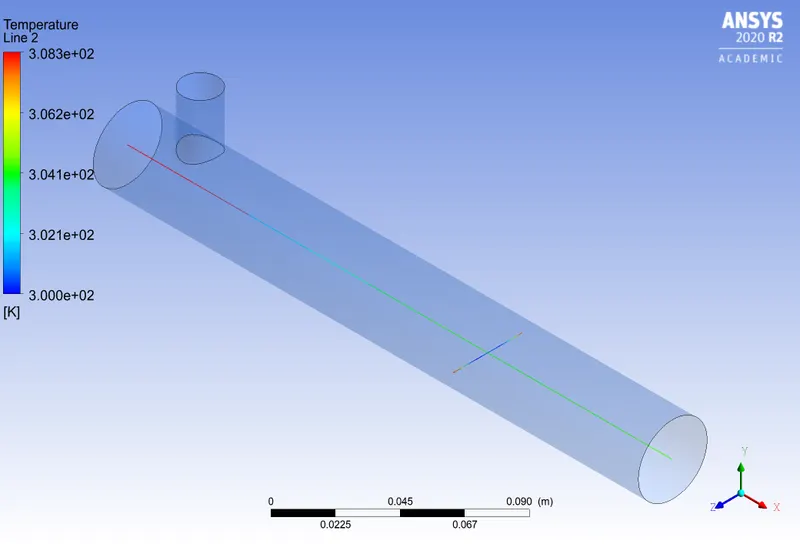
Line plot Temperature:
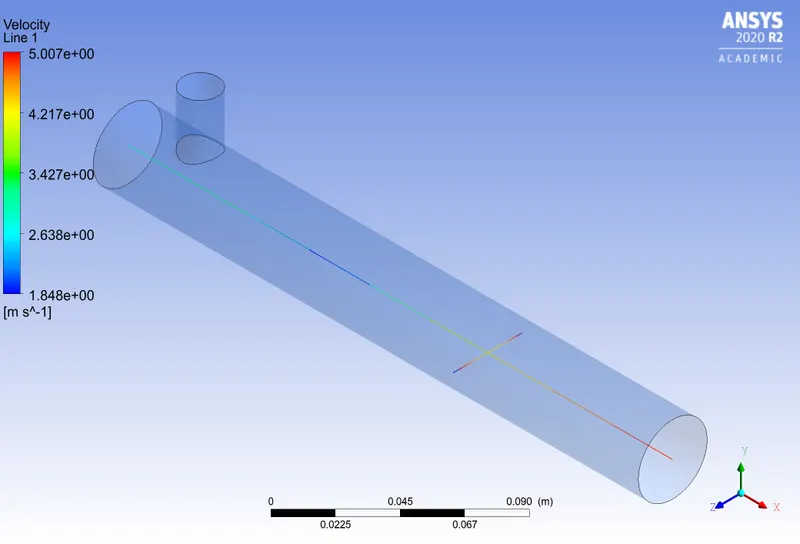
Line plot Velocity:
Case 1 (short mixing tee at Momentum ratio of 4)
Geometry and meshing for short tee is same except change in boundary conditions
setup:
General
Check Mesh Quality
Solver : pressure based
Velocity Formulation : Absolute
Time : Steady
Models:
Energy on
viscous-K-epsilon-Realizble-Standard wall
Materials:
Fluid: Air
Solid: Aluminium
Cellzone conditions:
Fluid: Air
Boundary conditions:
- hot inlet velocity of 3m/s.
- Momentum ratio= coldinlet velocity/Hotinlet velocity (Taken Momentum ratio =4)
- cold inlet velocity=12m/s.
- hot inlet temperature 360C
- Cold inlet 190C
- hot outlet Temperature =26.780C (Caliculated using Tmixture formula)
Report profiles:
Average weighted temperature
Average weighted velocity
standard deviation temperature
scaled residuals
Solution intialization:
Hybrid intialization
Run caliculations:
no of iterations =100
Average weighted temperature:
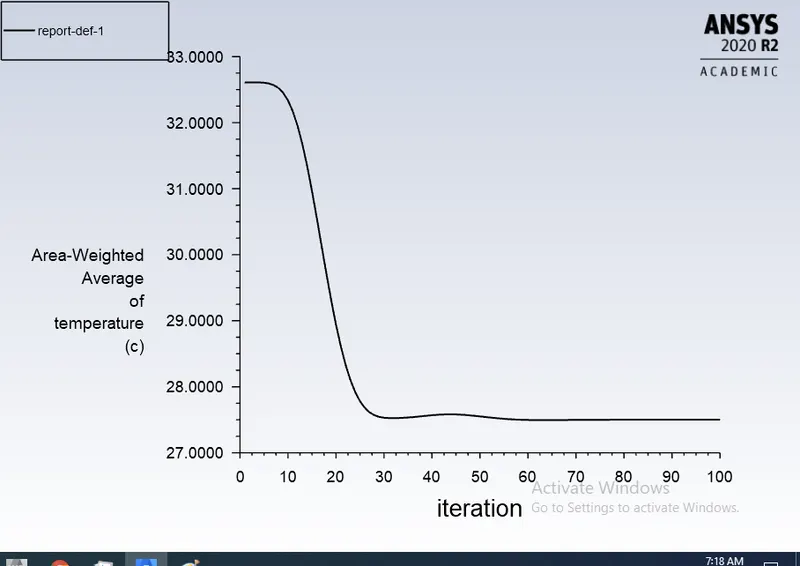
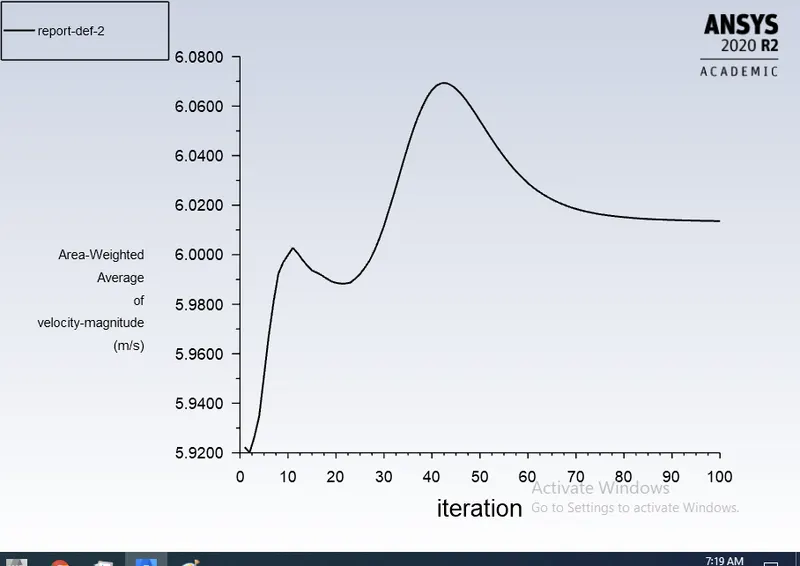
Average weighted velocity:
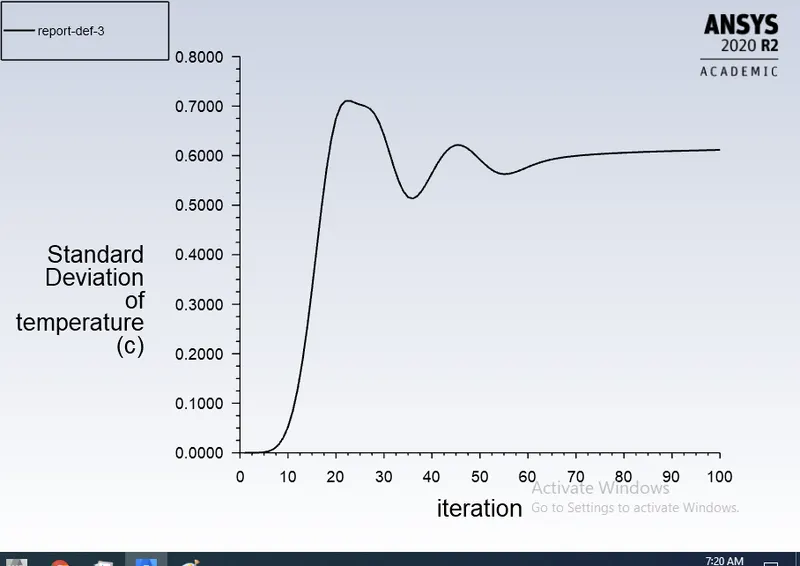
standard deviation temperature:
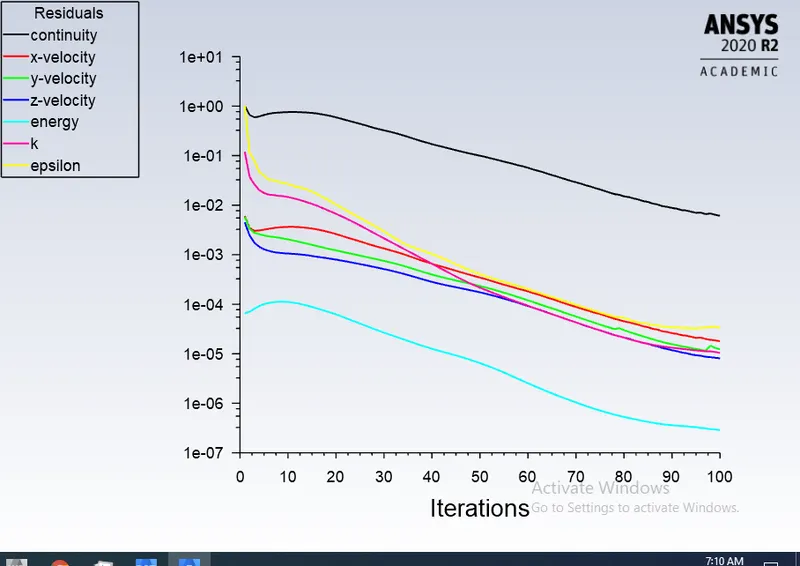
scaled residuals:
Results:
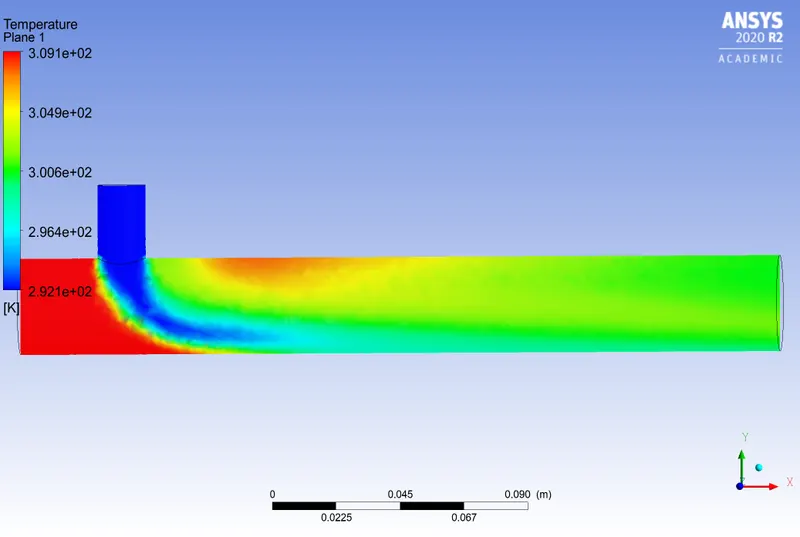
Contours of temperature:
Contours of velocity:
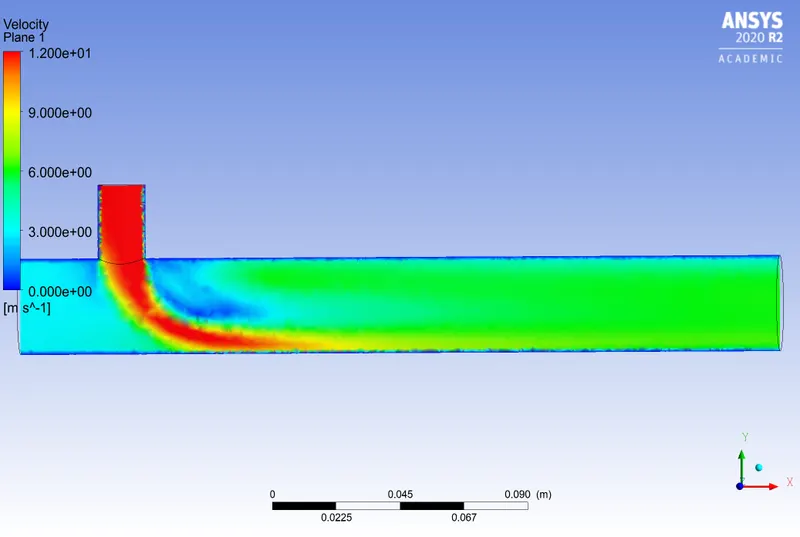
Contours of Temperature across length:
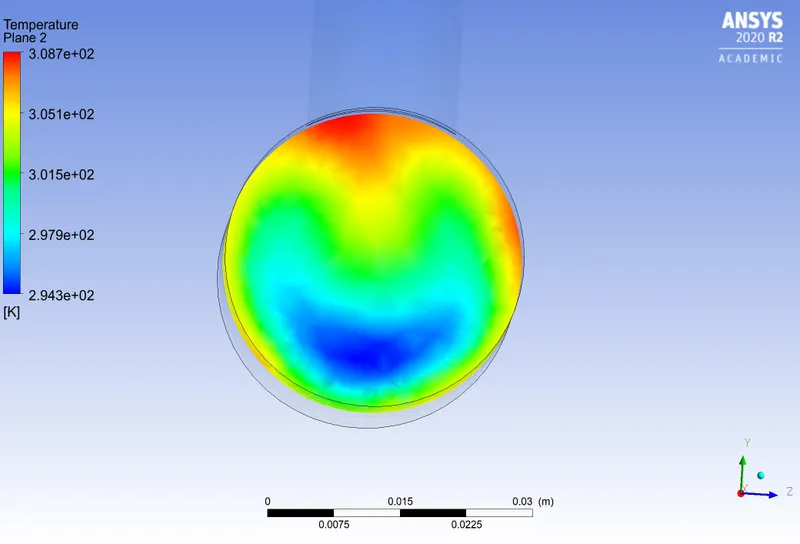
Contours of Velocity across length:
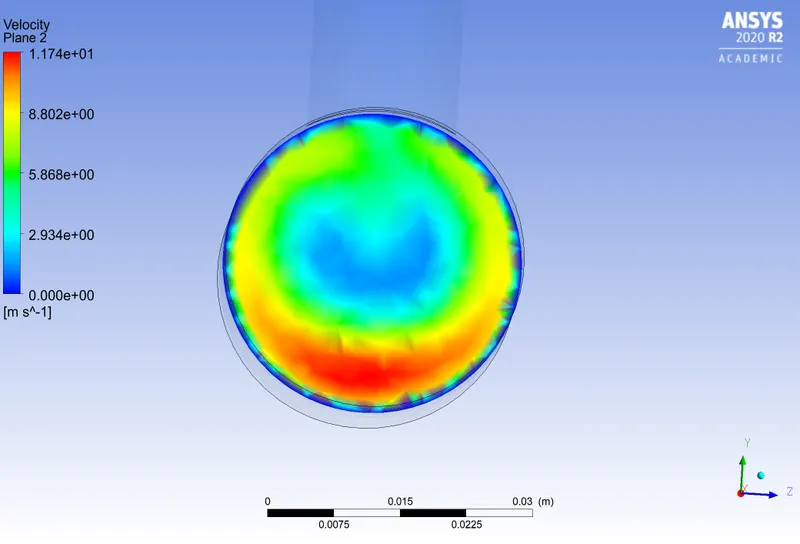
Line plot of Temperature:
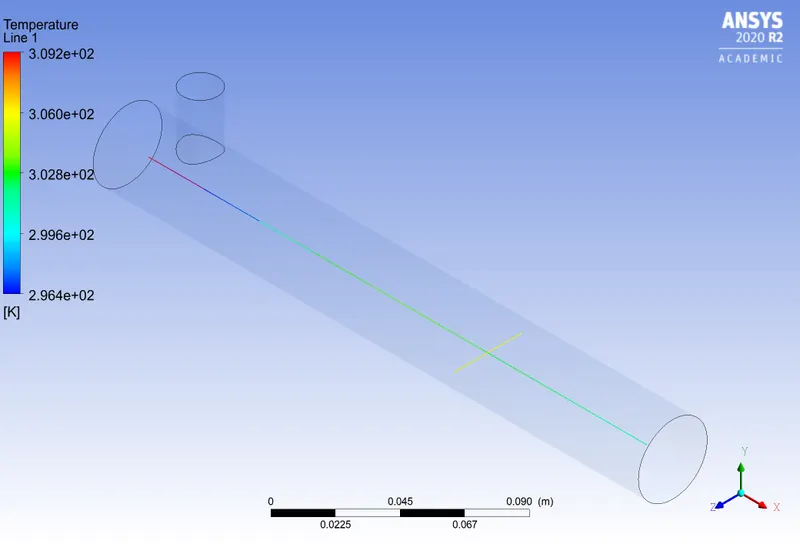
Line plot of Velocity:
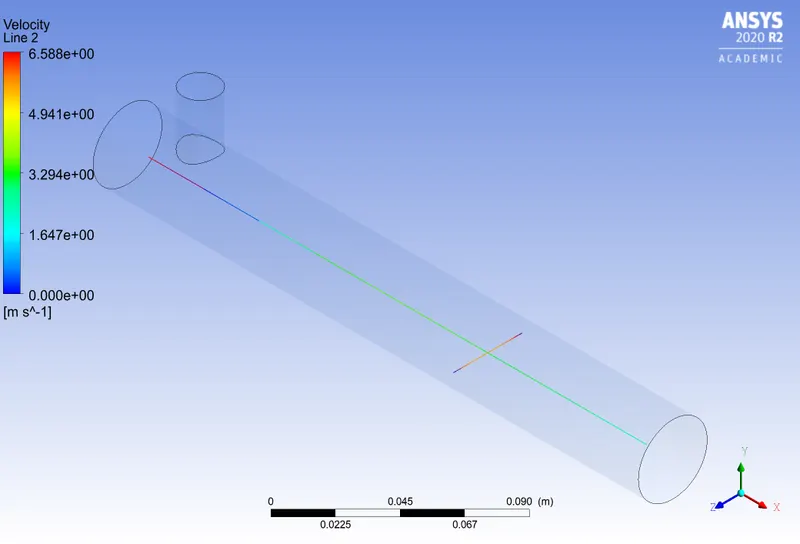
Case 2 (Long mixing tee at Momentum ratio of 2)
Geometry: (Long mixing tee)
Meshing:
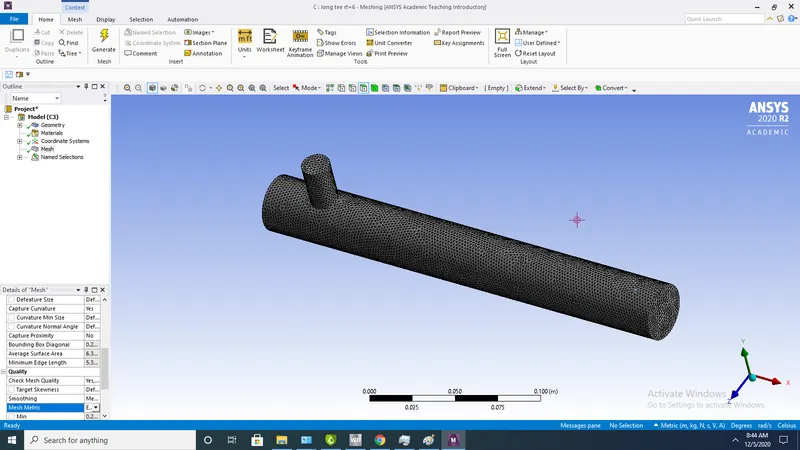
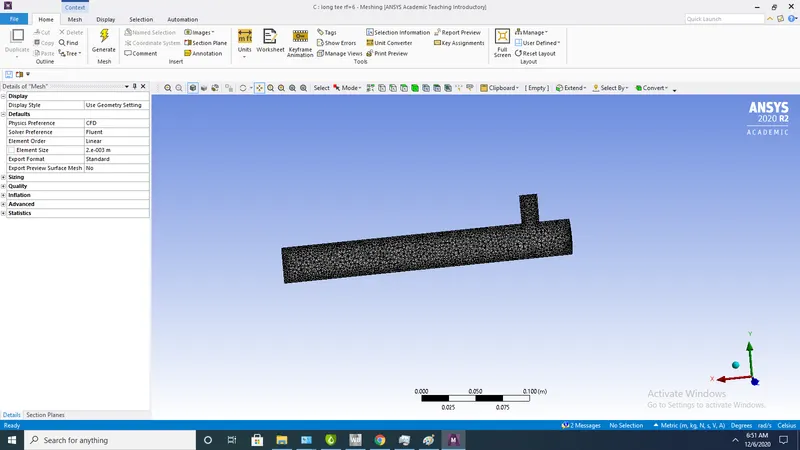
Section plane:
Quality of mesh:
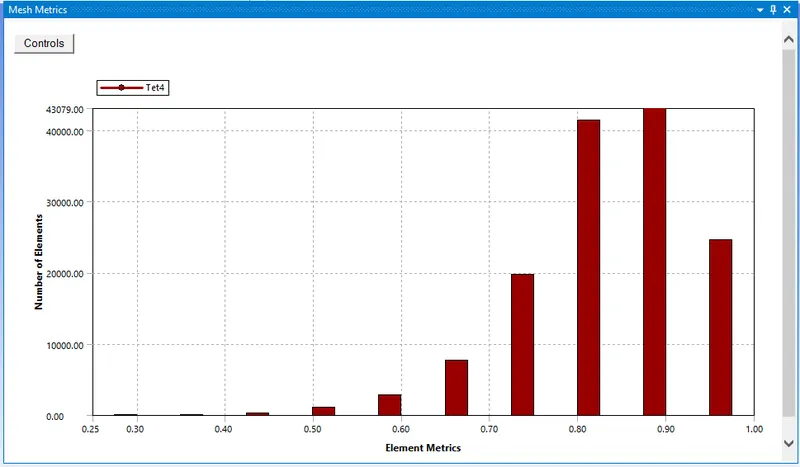
Element size: 0.002
Nodes: 28372
Elements: 140525
Setup:
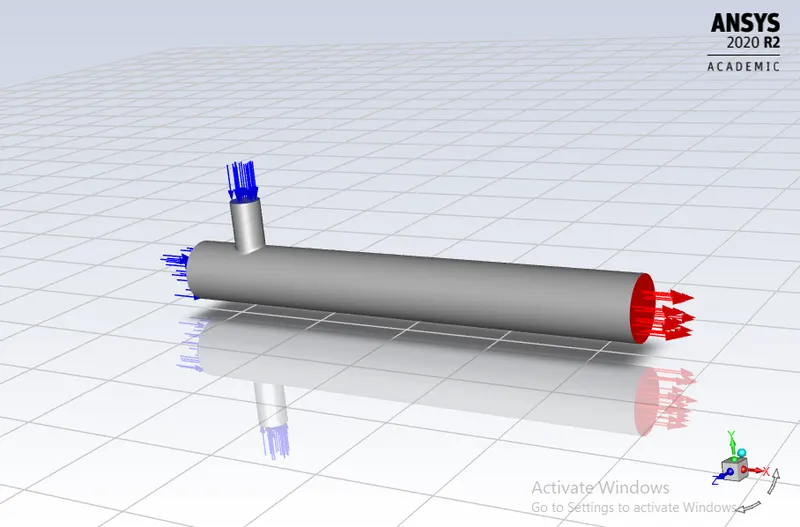
General
Check Mesh Quality
Solver : pressure based
Velocity Formulation : Absolute
Time : Steady
Models:
Energy on
viscous-K-epsilon-Realizble-Standard wall
Materials:
Fluid: Air
Solid: Aluminium
Cellzone conditions:
Fluid: Air
Boundary conditions:
- hot inlet velocity of 3m/s.
- Momentum ratio= coldinlet velocity/Hotinlet velocity (Taken Momentum ratio =2)
- cold inlet velocity=6m/s.
- hot inlet temperature 360C
- Cold inlet 190C
- hot outlet Temperature =31.560C (Caliculated using Tmixture formula)
Report profiles:
Average weighted temperature
Average weighted velocity
standard deviation temperature
scaled residuals
Solution intialization:
Hybrid intialization
Run caliculations:
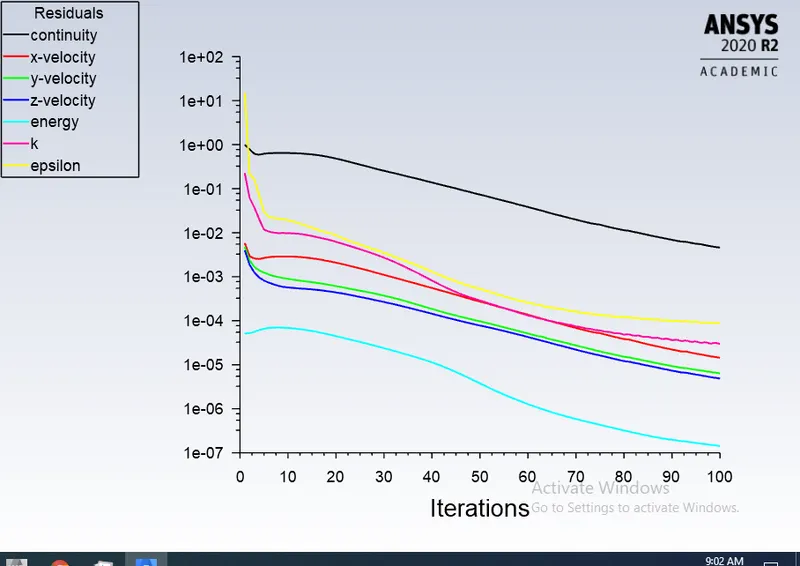
no of iterations =100
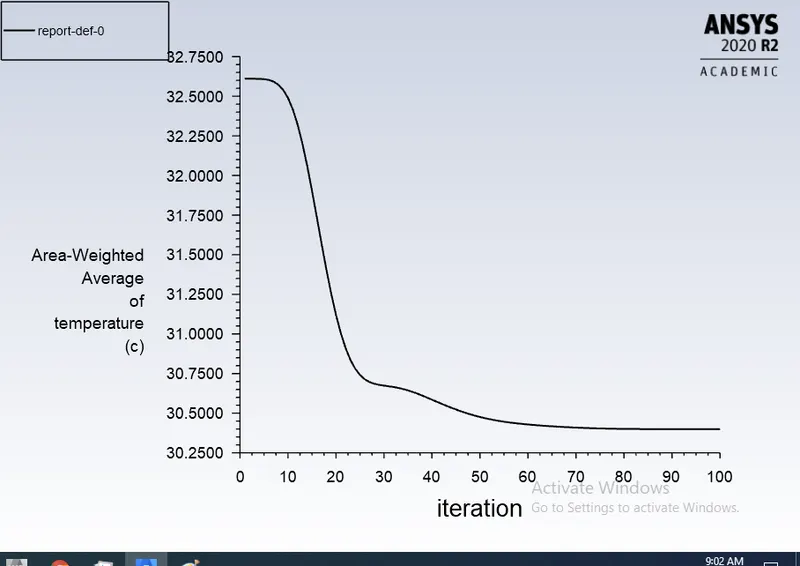
Average weighted temperature:
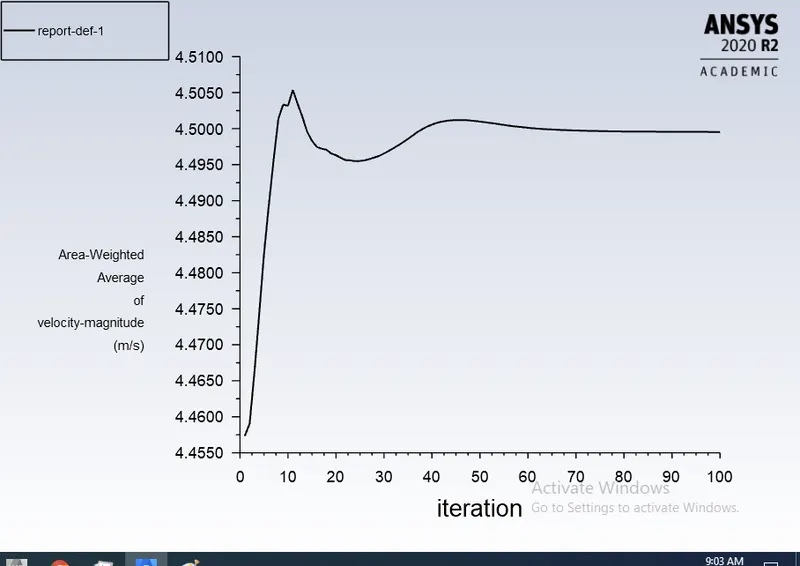
Average weighted velocity:
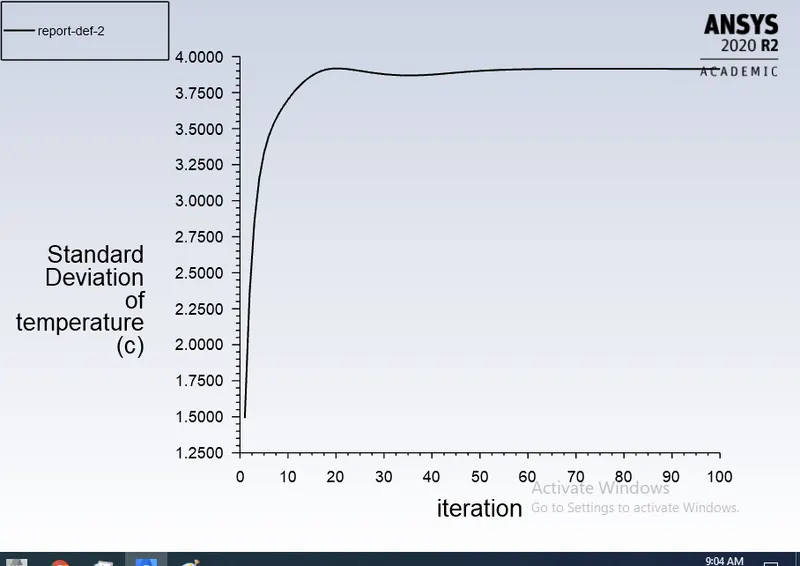
Standard deviation:
Scaled residuals:
Results:
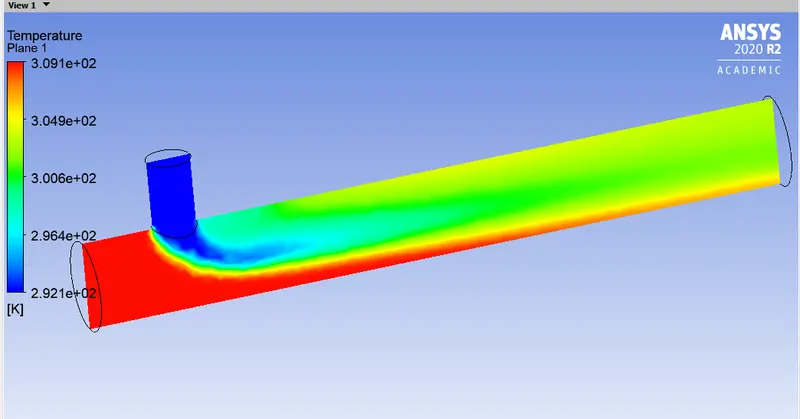
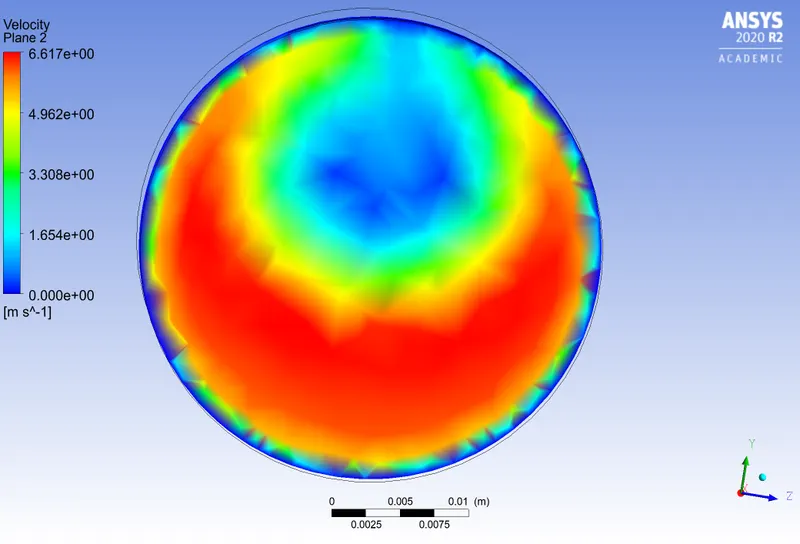
Contours of temperature:
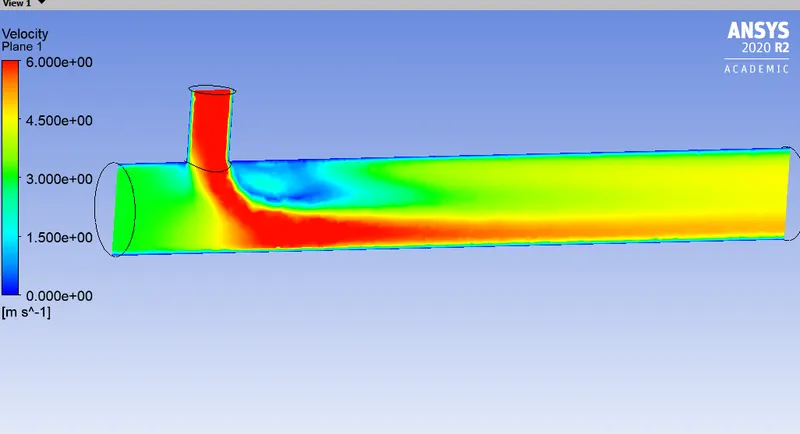
Contours of velocity:
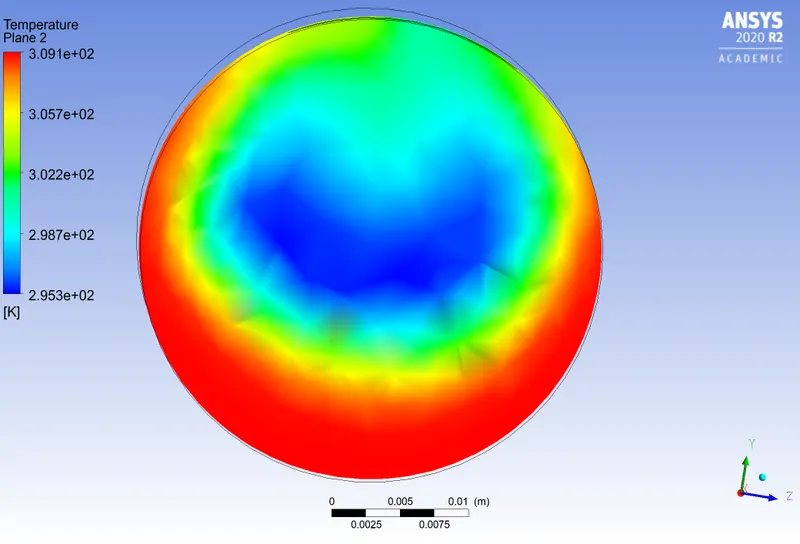
Contours of temperature across length:
Contours of Velocity across length:
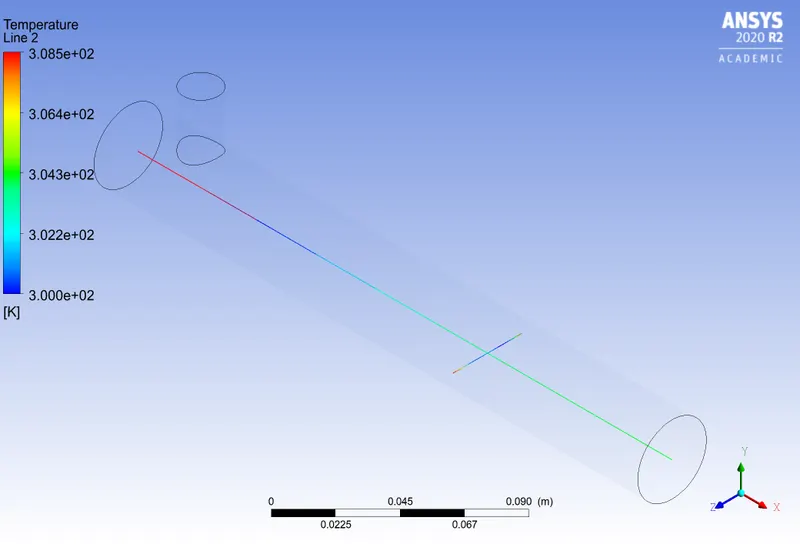
Line plot of Temperature:
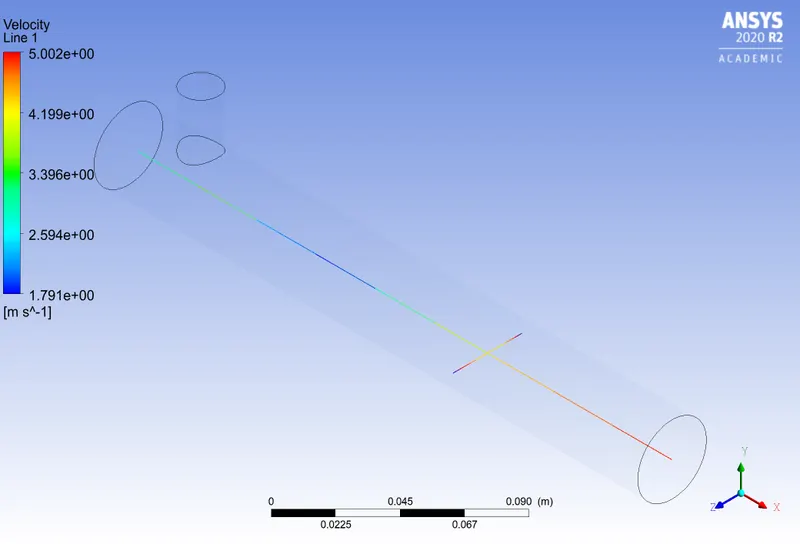
Line plot of velocity:
Case 2 (Long mixing tee at Momentum ratio of 4)
Geometry and meshing for long tee is same except change in boundary conditions
setup:
General
Check Mesh Quality
Solver : pressure based
Velocity Formulation : Absolute
Time : Steady
Models:
Energy on
viscous-K-epsilon-Realizble-Standard wall
Materials:
Fluid: Air
Solid: Aluminium
Cellzone conditions:
Fluid: Air
Boundary conditions:
- hot inlet velocity of 3m/s.
- Momentum ratio= coldinlet velocity/Hotinlet velocity (Taken Momentum ratio =4)
- cold inlet velocity=12m/s.
- hot inlet temperature 360C
- Cold inlet 190C
- hot outlet Temperature =28.850C (Caliculated using Tmixture formula)
Report profiles:
Average weighted temperature
Average weighted velocity
standard deviation temperature
scaled residuals
Solution intialization:
Hybrid intialization
Run caliculations:
no of iterations =100
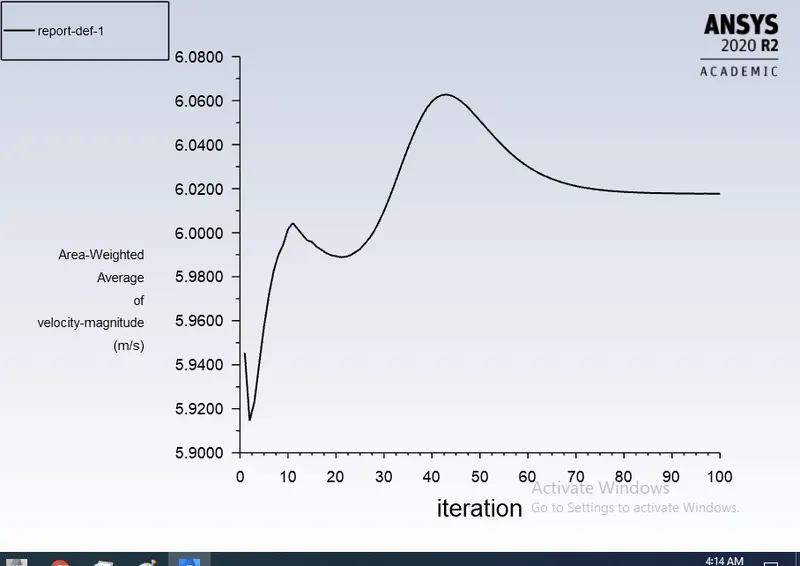
Average weighted temperature:
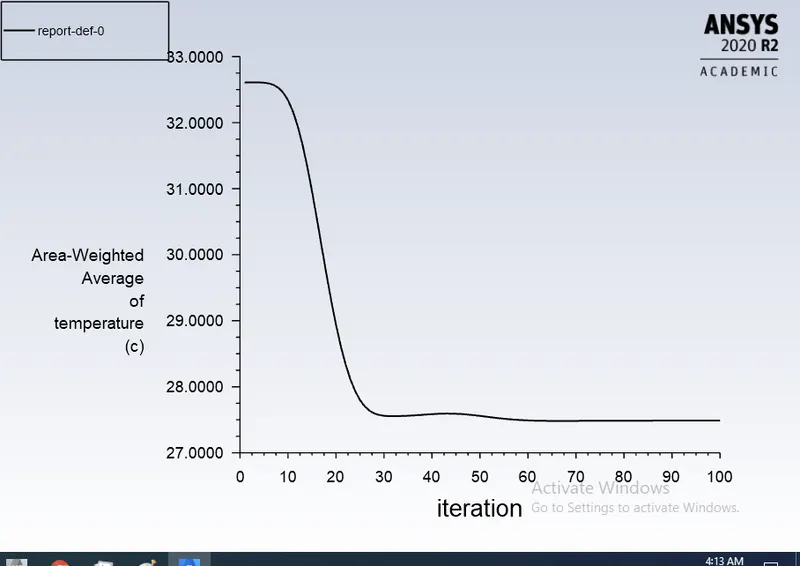
Average weighted velocity:
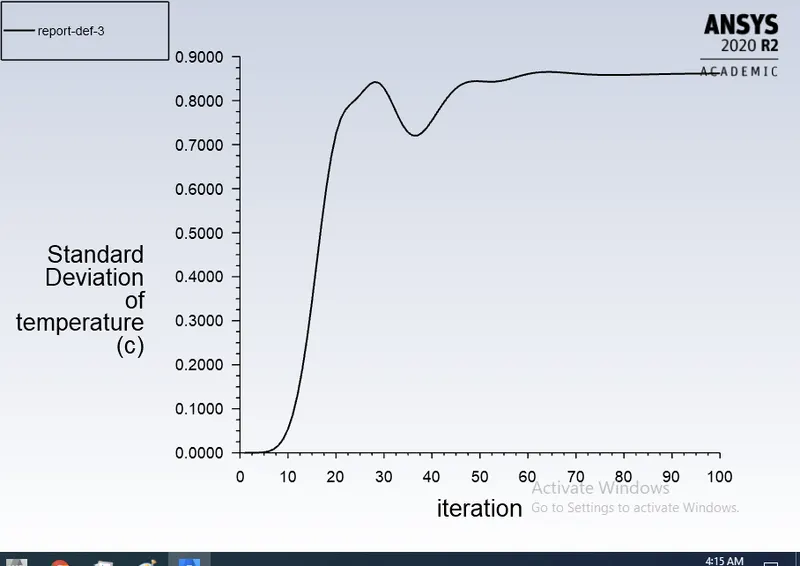
Standard deviation:
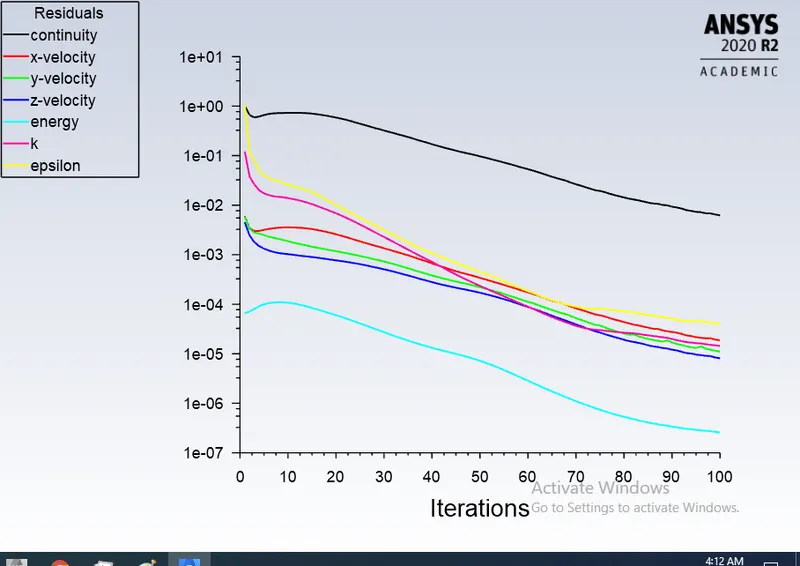
Scaled residuals:
Results:
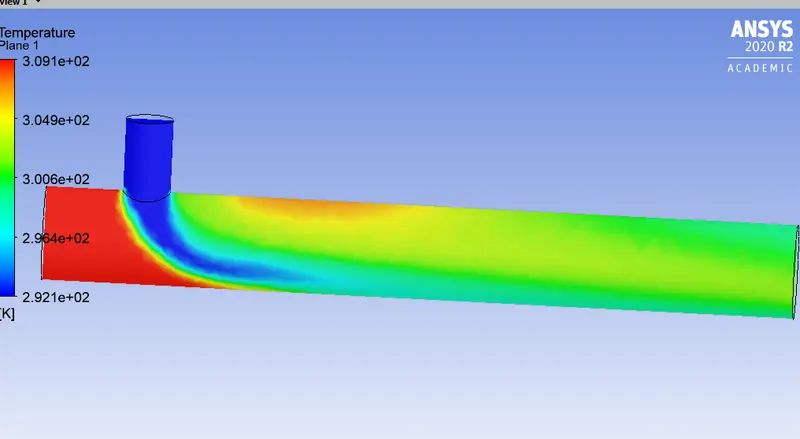
Contours of temperature:
Contours of velocity:
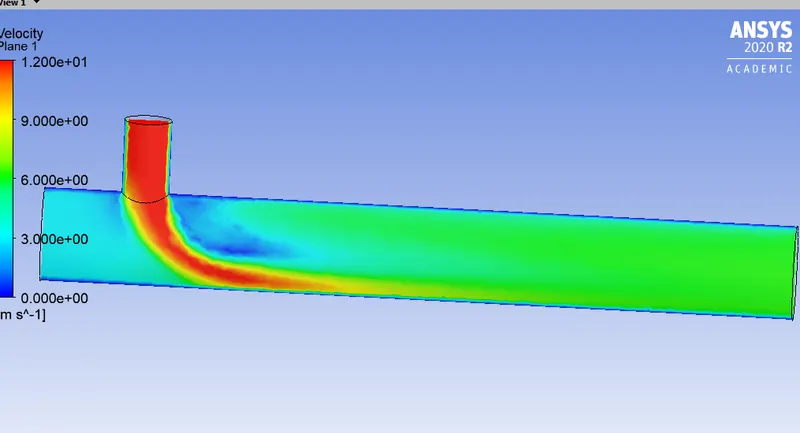
Contours of temperature across length:
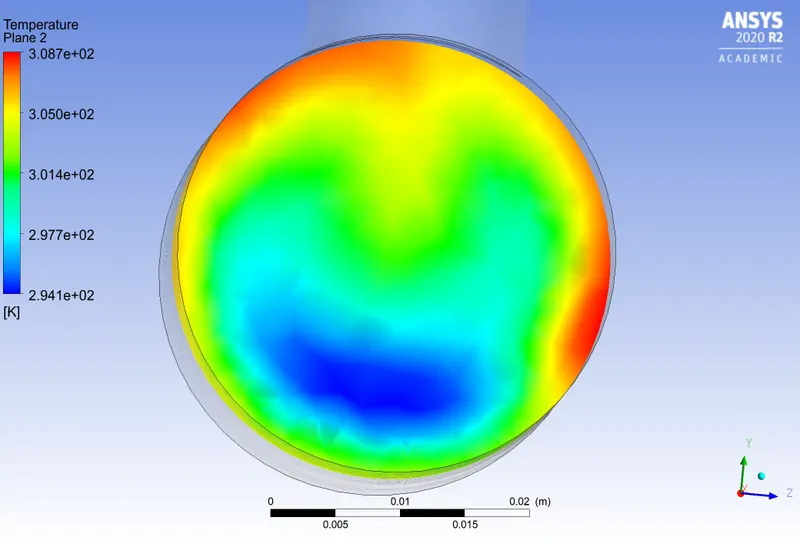
Contours of Velocity across length:
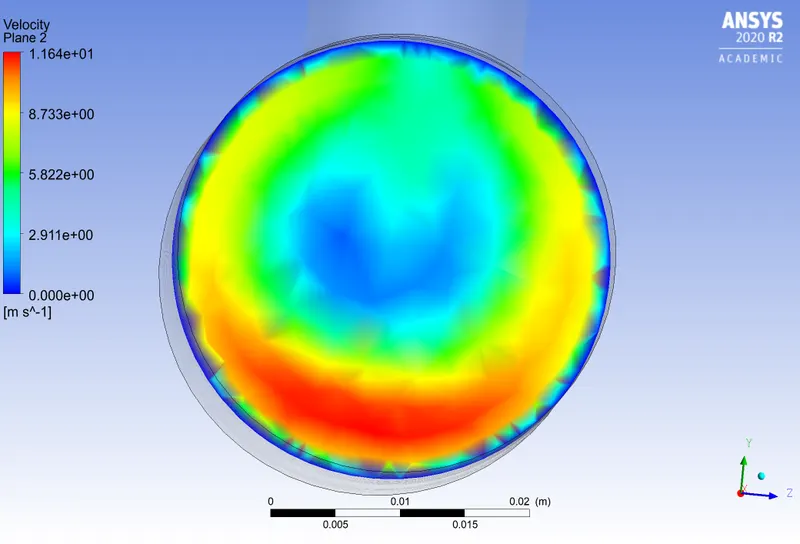
Line plot of temperature:
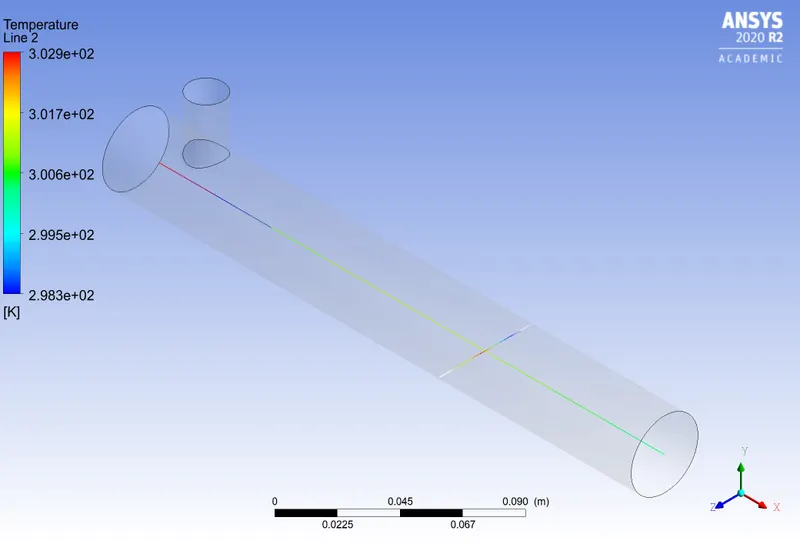
ine plot of velocity:
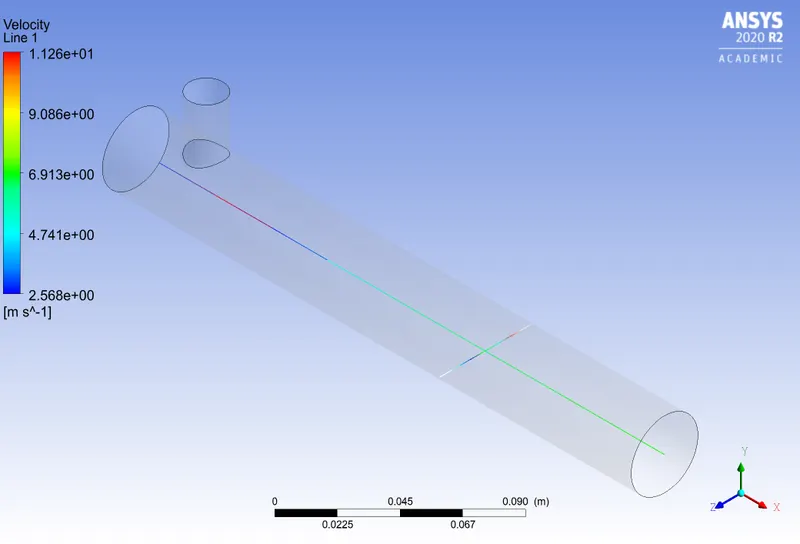
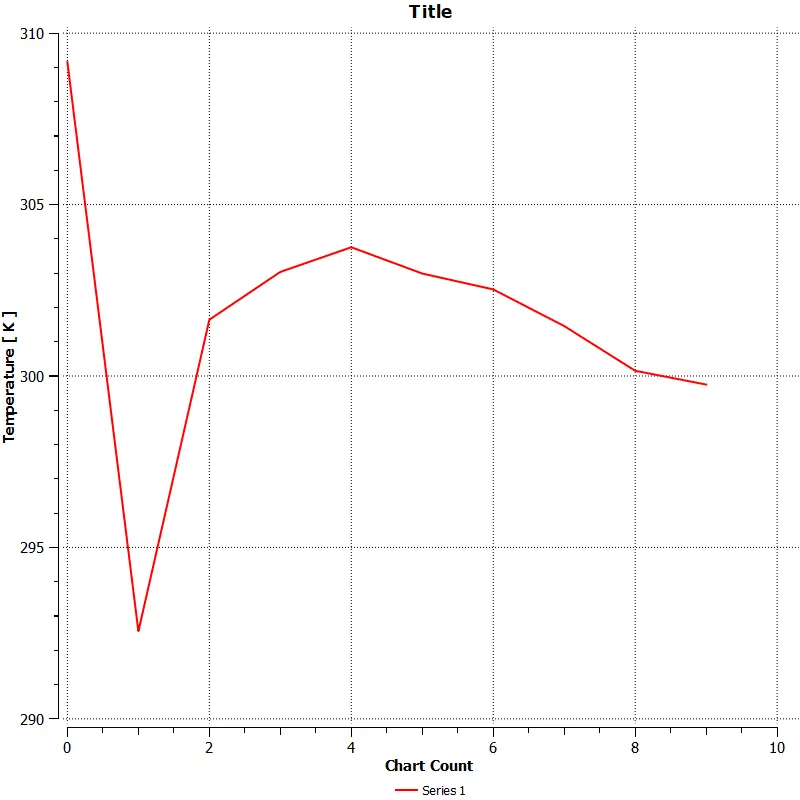
Charts for long Tee /Short tee along line=4:
Tempareture chart
Velocity chart: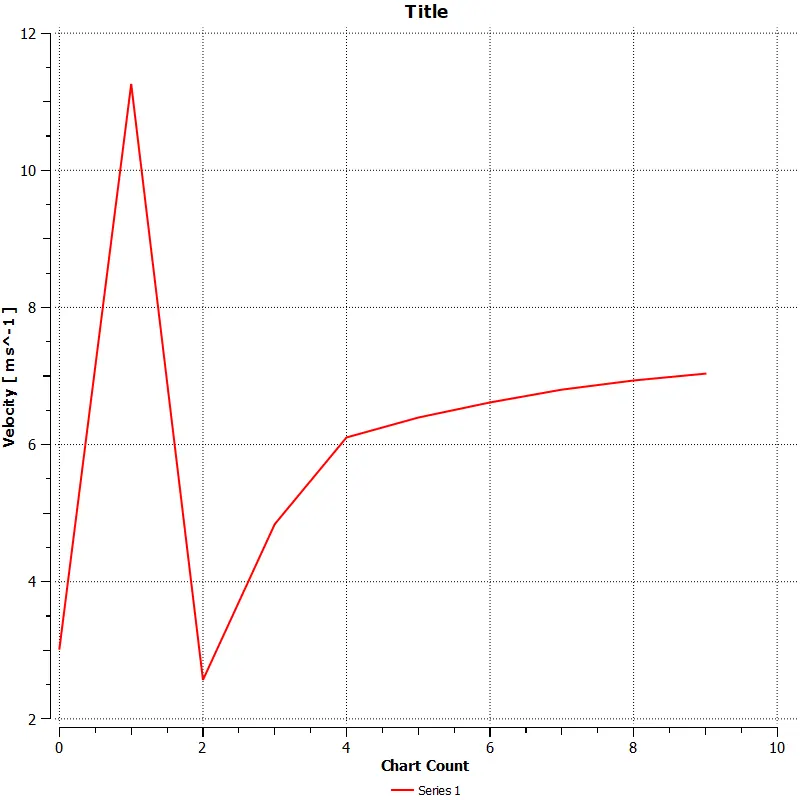
Pressure Chart:
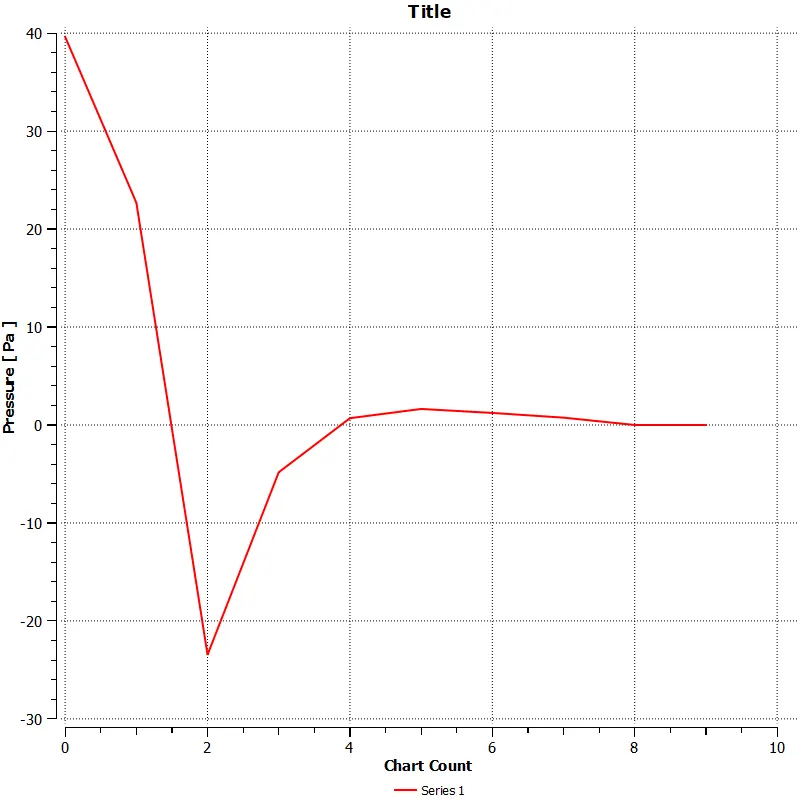
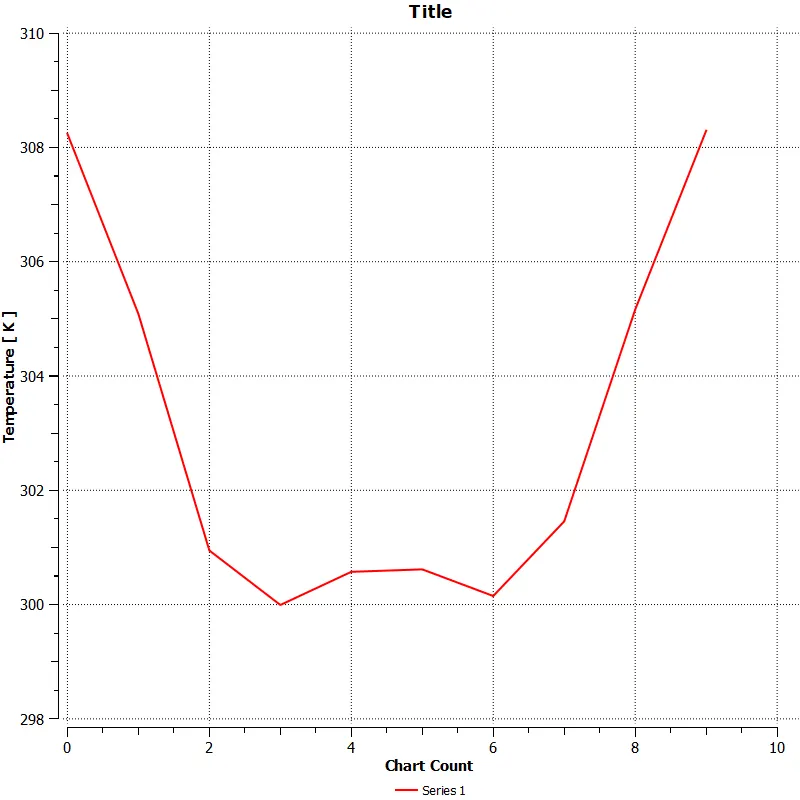
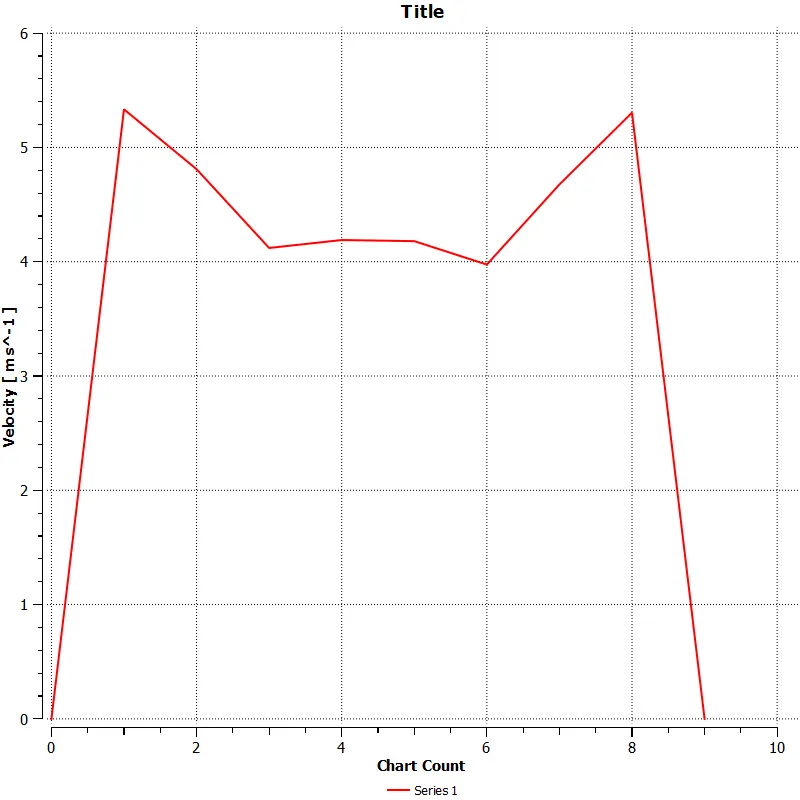
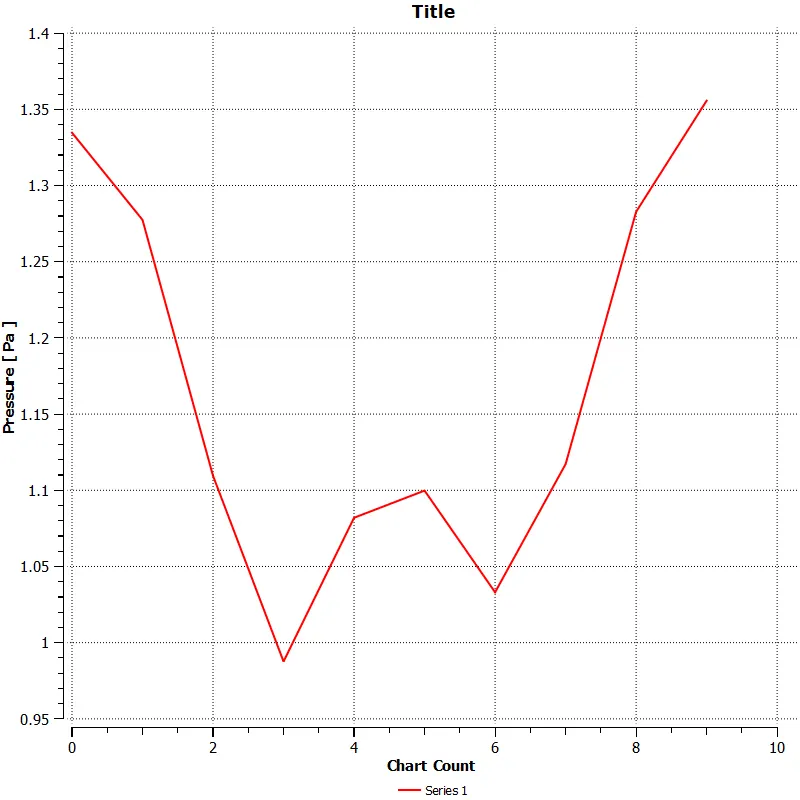
Charts for long Tee /Short tee across line:
Tempareture chart:
Velocity chart:
Pressure chart:
Grid dependence test:
For short tee at momentum ratio=2
|
Grid size (mm) |
T actual(C^o) |
T numerical(C^o) |
|
4 |
30.32 |
30.295 |
|
3 |
30.32 |
30.328 |
|
2 |
30.32 |
30.37 |
|
Case type |
Turbulence model |
Cell Count |
Iterations for convergence |
T(outlet temperature) |
|
Short Tee (Momentum Ratio=2) |
K-epsilon-Realizable-Standard wall function |
141599 |
100 |
29.897 |
|
Short Tee (Momentum Ratio=4) |
K-epsilon-Realizable-Standard wall function |
141599 |
100 |
26.667 |
|
Long Tee (Momentum Ratio=2) |
K-epsilon-Realizable-Standard wall function |
140525 |
100 |
30.234 |
|
Long Tee (Momentum Ratio=4) |
K-epsilon-Realizable-Standard wall function |
140525 |
100 |
27.023 |
Convergence criterion:
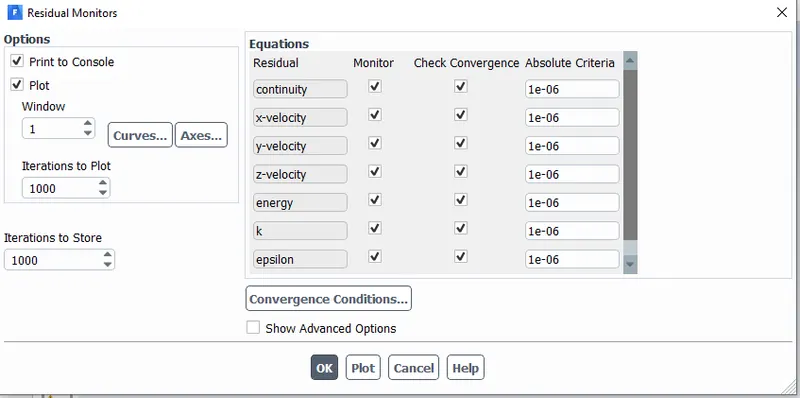
Residual levels of 1E-4 are considerd lossely converged for 1E-5 are considerd well converged for1E-6 are considerd Tightly converged. in this simulation for converging faster residuals are taken 1E-6. so converging happend at 100 iterations.
| Turbulence model |
Case type |
Iterations for convergence | Avergae outlet temperature(C) |
|
K-omega-Standard wall function |
Short Tee (Momentum Ratio=2) |
130 |
30.566 |
| K-omega-Standard wall function | Short Tee (Momentum Ratio=4) | 130 |
27.89 |
|
K-omega-Standard wall function |
Long Tee (Momentum Ratio=2) |
130 |
30.578 |
| K-omega-Standard wall function | Long Tee (Momentum Ratio=4) | 130 |
27.892 |
1)Exit temperature of short Tee=30.32 (0C)
2)Exit temperature of longer Tee=27.48 (0C)
3)Mixing efficiency is more in longer Tee duct compared to shorter Tee duct Because of outlet temperature at exit of pipe is low in longer tee (27.48 (0C)) compared to shorter Tee (30.32 (0C))
4) Proper mixing of fluids taking place in longer duct compared to shorter duct
5) no of iterations required fork-omega is more compares k-epsilon
6)k- epsilon model predicts well far from the boundaries (wall) and k- omega model predicts well near wall.
7) k-omega turbulence model is capable of solving parameters very close to boundawally / wall region.
8) in this tee junction k-omega sst gives much accurate result because it is nearer t0 wall