Steady Vs Unsteady flow over a cylinder
Objective : To Simulate the flow over a cylinder in steady and unsteady state. and to explian the phenomenon of Karman vortex street.
Introduction:
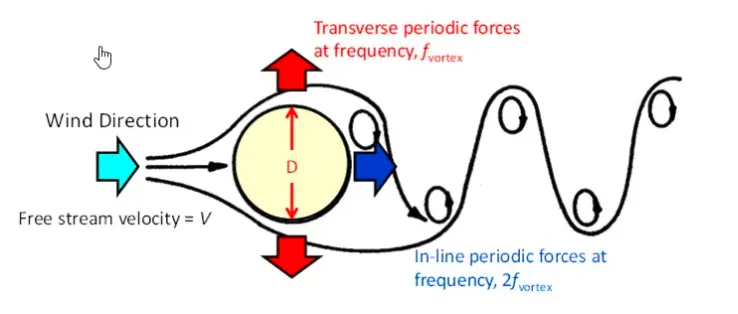
1)vortex shedding is an oscillating flow takes place when a fluid flows past a bluff body.
2)A bluff body can be defined as a body that as a result of its shape separated an flow over a substantial part of its surface.
3)An important feature of a bluff body flow is that there is a very strong interaction between the viscous and inviscid region.
4)In this flow vortices are created at the back of the body and detach periodically from either side of the body forming a Karman vortex street.
5)The fluid flow past the object creates alternating low-pressure vortices on the downstream side of the object. The object will tend to move toward the low-pressure zone.
Vortex shadding:
Strouhal number:
1) Strouhal number is the dimensionless number related to frequency at which vortex shedding takes place for an infinite cylinder

Where f is the vortex shedding frequency (s-1)
D is diameter of the cylinder (m)
V is the flow velocity (m s-1).
2) The Strouhal number depends on the Reynolds number.
3)For steady state Strouhal number has no significance
Reynolds number:
1)Reynolds number is the dimensionless number given as ratio of inertia force to viscous force
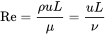
Where u is the free stream velocity (m/s)
L is Charcterstic length of the cylinder (m)
V is the Kinematic viscocity (m^2/s)
Procedure:
Geometry:
1) First draw circle of 2m diameter and next use construction lines for drawing rectangular profile of length 60m and height 20m.
2)in Geometry make sure that origin lies at center of circle for vortex shedding in steady/Unsteady states.
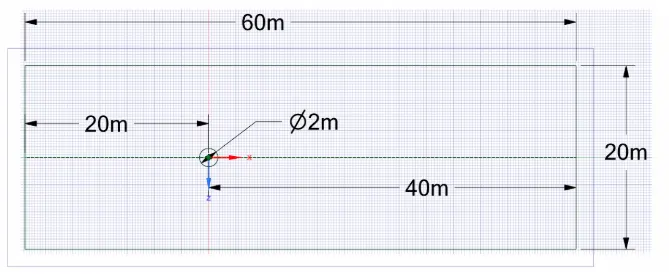
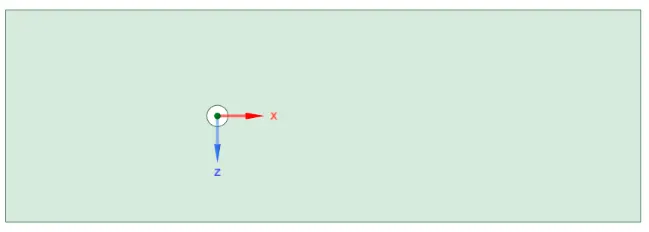
2) Next select pull tool and click on circlce and delete from rectangle and create surface.
Meshing:
1) in meshing select method and then select face of rectangle and convert quadilateral dominant to triangles
2) Select mesh sizing and perform edge sizing on circle and provide no of divisions as 36
3) Select mesh inflation first layer thickness as 5e-3 and no of layers of inflation as 6 and then click generate
4) Finally give named selections and reduce element size to 0.25m
Named selection:
Inlet:
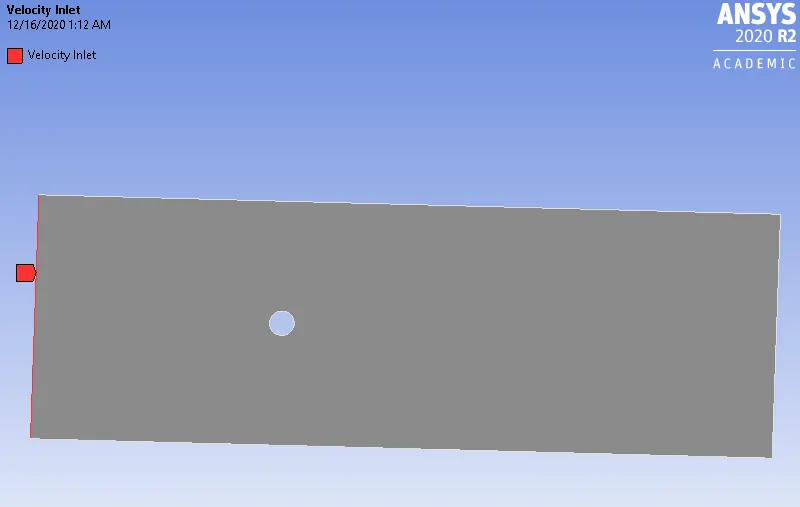
Symmetry:
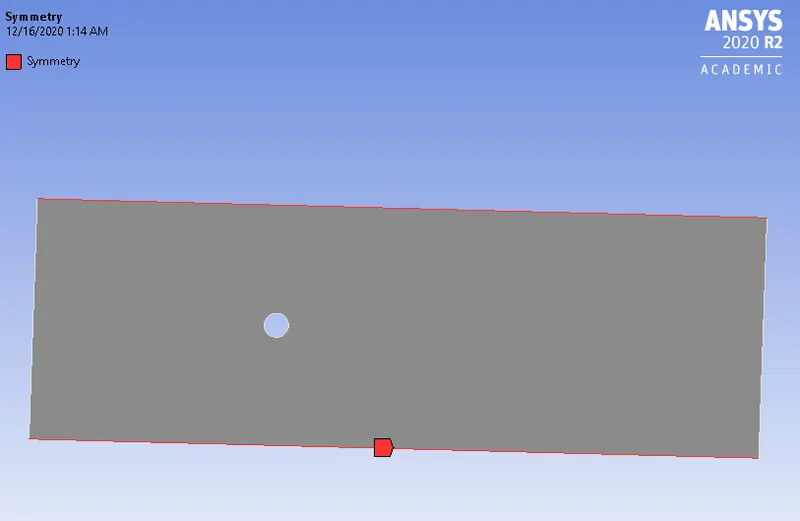
Outlet:
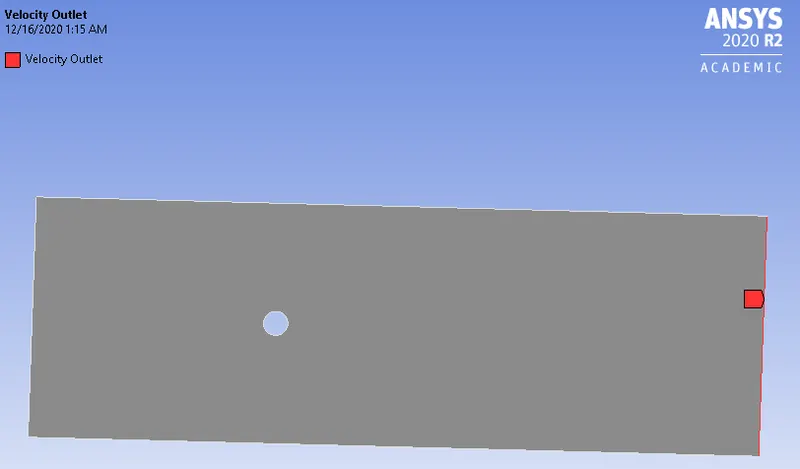
Setup:
1)General
Type: Pressure-based
Time: steady/Tansiant
Velocity formulation: Absolute
2D Space : Planar
2)Models:
Viscous: Laminar
3)Materials:
Density=1(kg/m^3)
Viscocity=0.05(kg/m.s)
4)Cell zone conditions: Fluid
5)Boundary conditions:
Inlet:
| Re | Velocity(m/s) | Viscocity(kg/m.s) | Area | Density |
| 10 | 0.25 | 0.05 | 2 | 1 |
| 100 | 2.5 | 0.05 | 2 | 1 |
| 1000 | 25 | 0.05 | 2 | 1 |
| 10000 | 250 | 0.05 | 2 | 1 |
| 100000 | 2500 | 0.05 | 2 | 1 |
Outlet:
Gauge pressure=0
Wall:
stationary No-slip wall
6) Reference values:
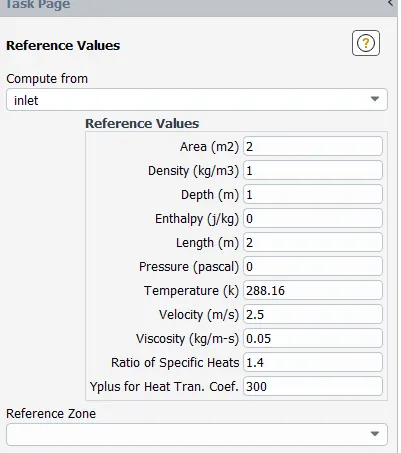
6) Create monitor point from circle origin as (8,0)
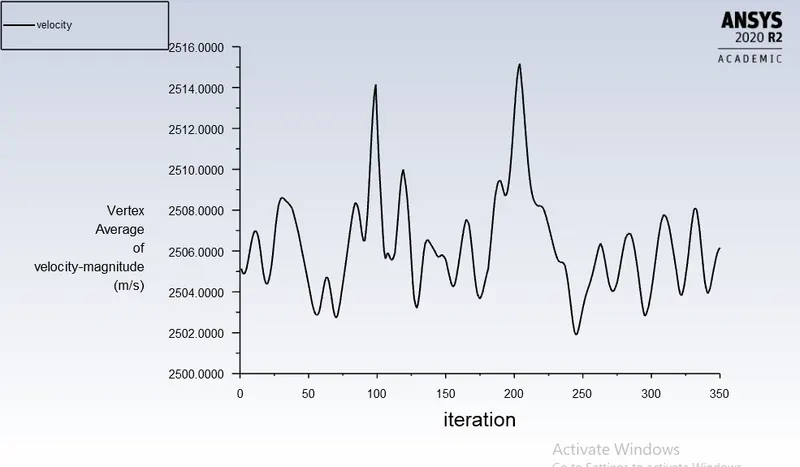
7) Next from report definations use force report for caliculation of Lift,drag and surface report for caliculation of Vortex average velocity
8)Method : Use standard method
9)intilaize the solution and run iterations for steady and no of time steps for transiant.
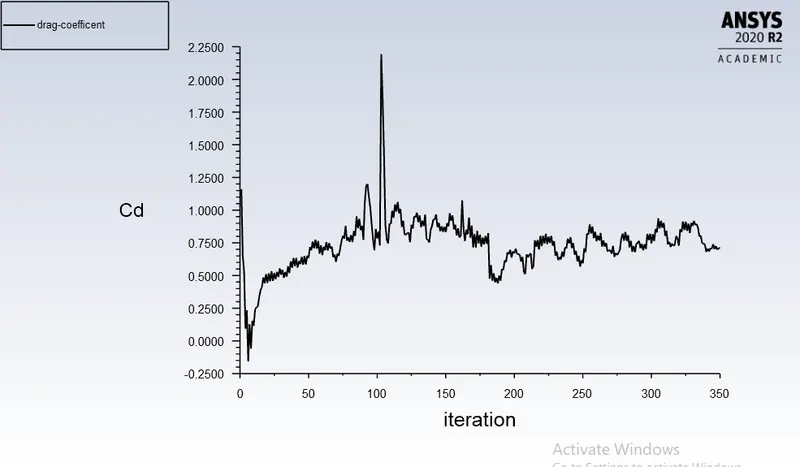
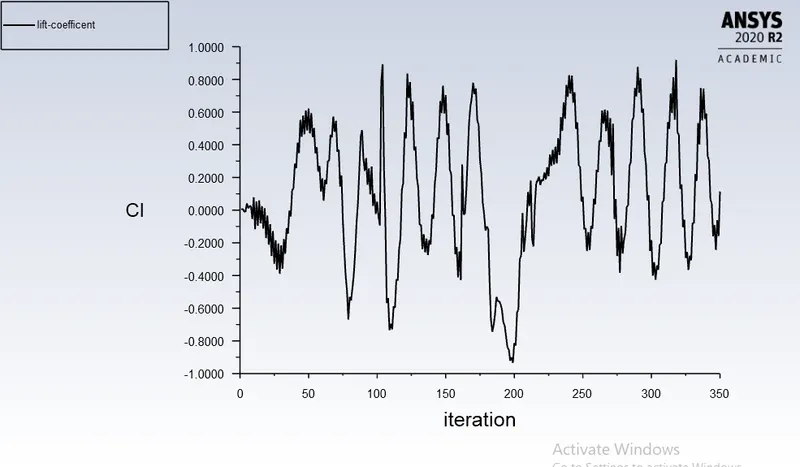
10)Compute results of cd and cl in steady/unsteady state
Steady state:
|
Re |
Cd |
Cl |
|
10 |
3.345321 |
-0.0023266935 |
|
100 |
1.3371342 |
-0.095038706 |
|
1000 |
1.05189129 |
-0.28247193 |
|
10000 |
0.92261991 |
0.89688772 |
|
100000 |
0.70877904 |
0.11425002 |
Contours of steady state at various Reynolds numbers:
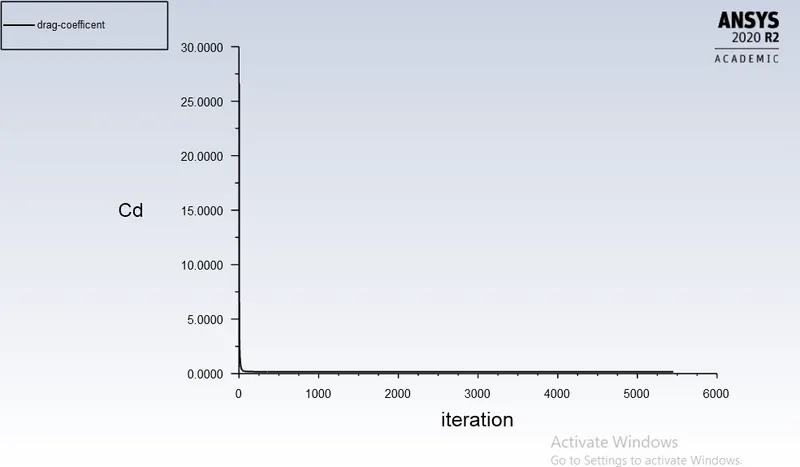
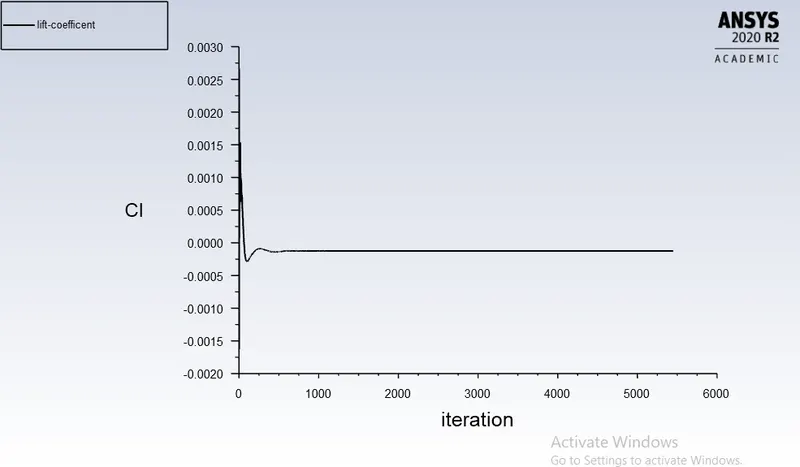
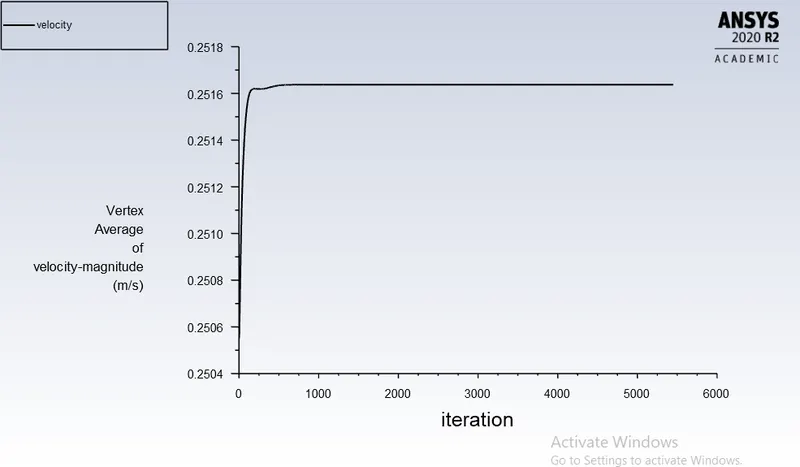
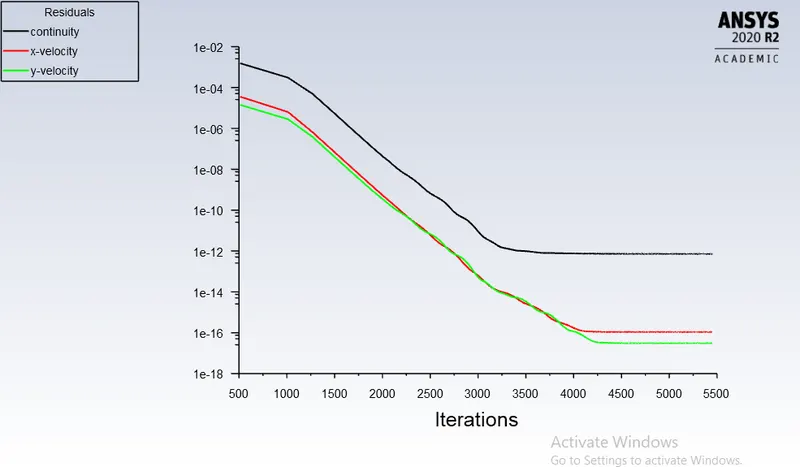
1)Re=10
1) No vortex shedding is formed
Coefficent of drag:
Coefficent of Lift:
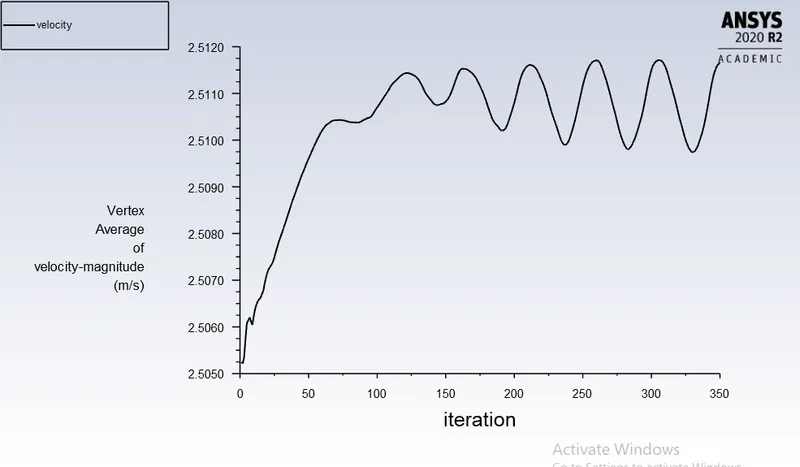
Vortex average velocity:
Residuals:
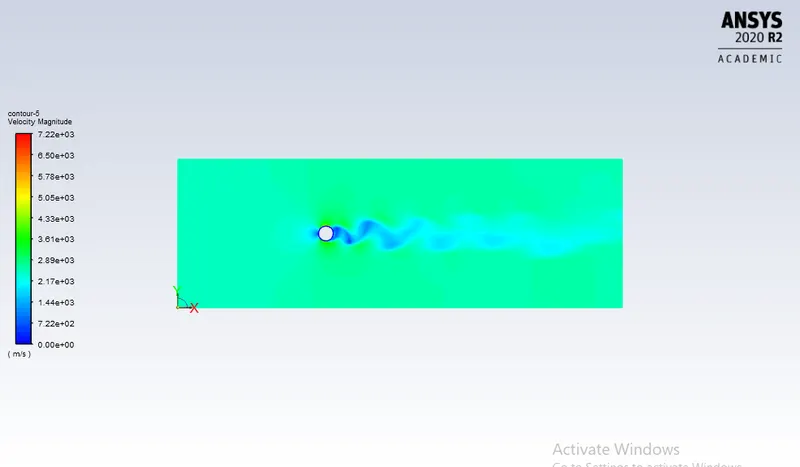
Contours of velocity:
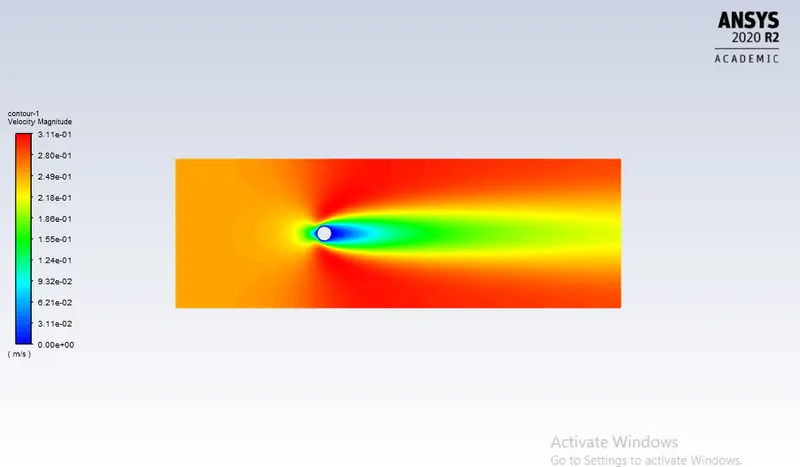
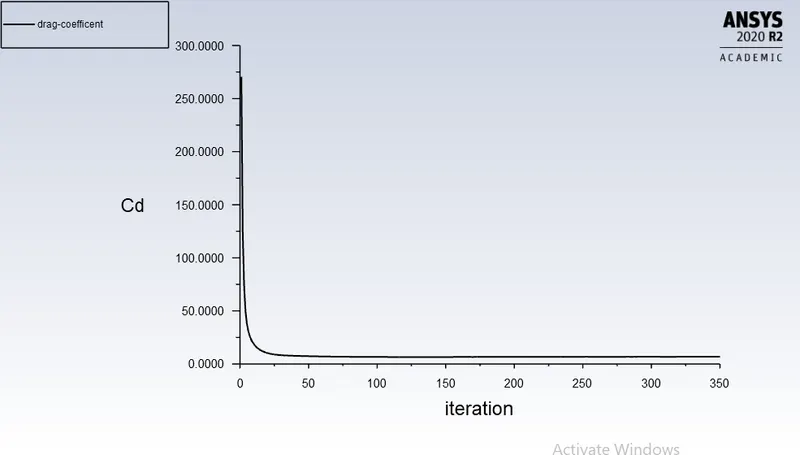
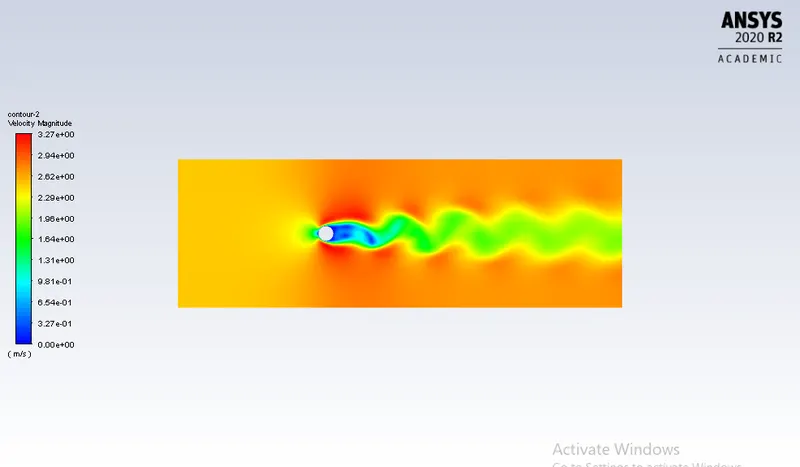
1)Re=100
Coefficint of drag:
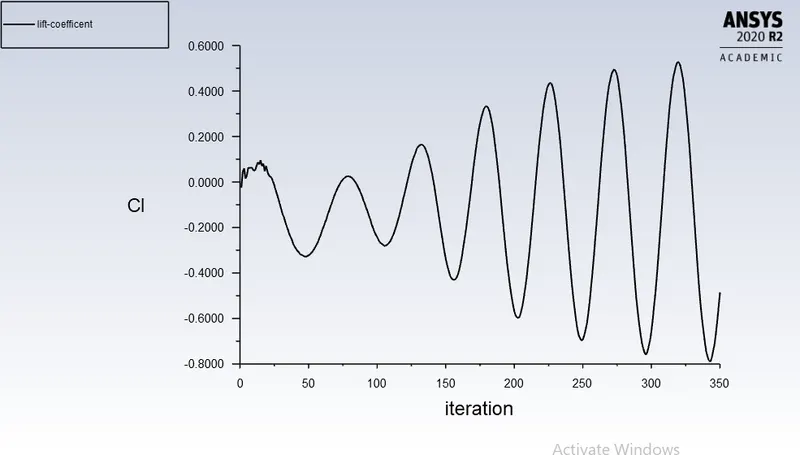
Coefficint of Lift:
Vortex average velocity:
Residuals:
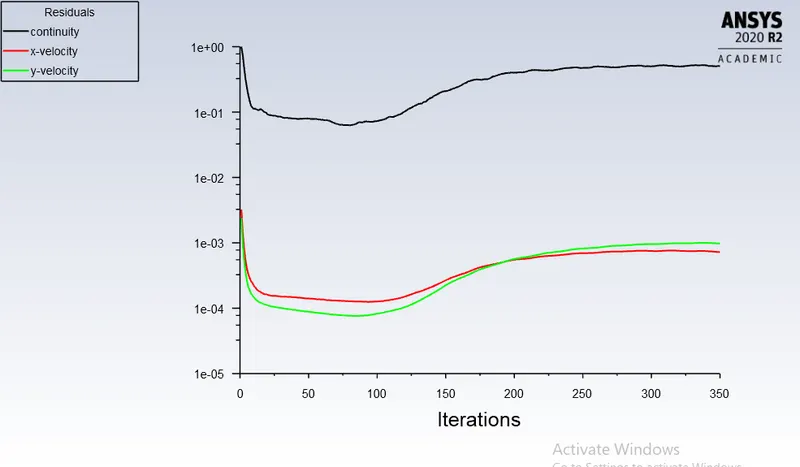
Contours of velocity:
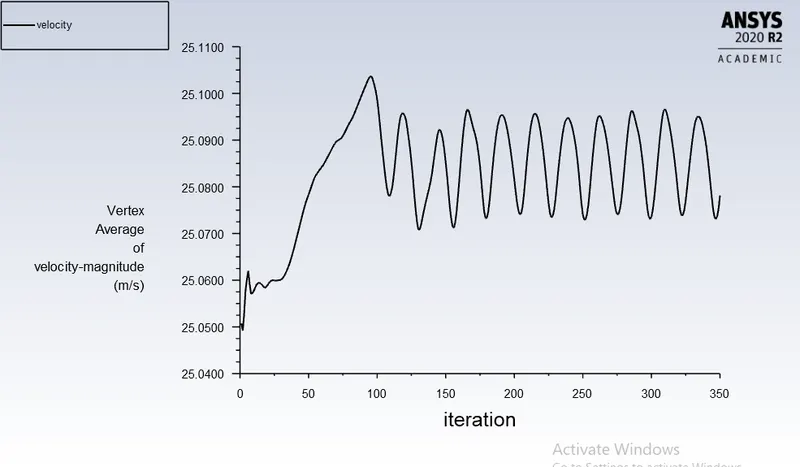
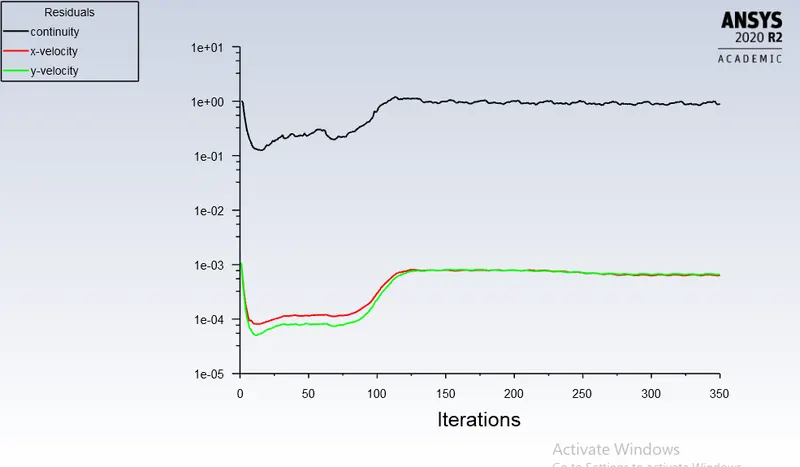
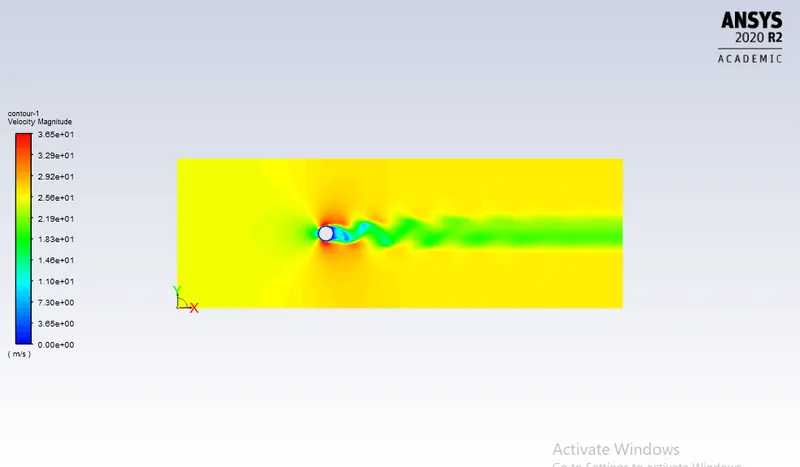
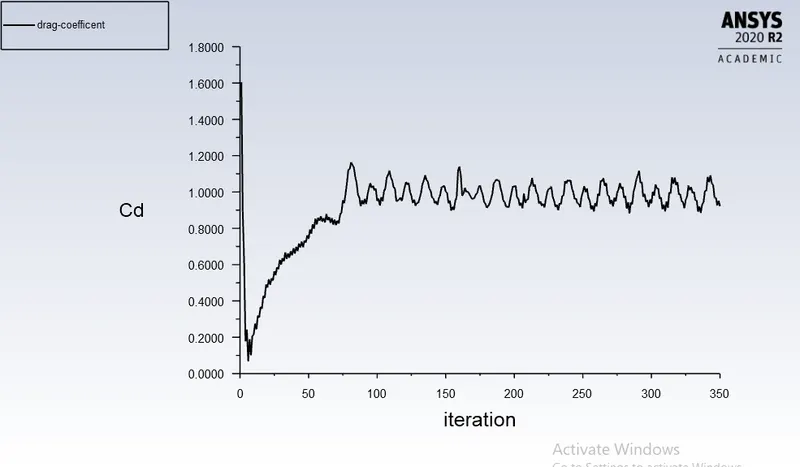
1)Re=1000
Coefficint of drag:
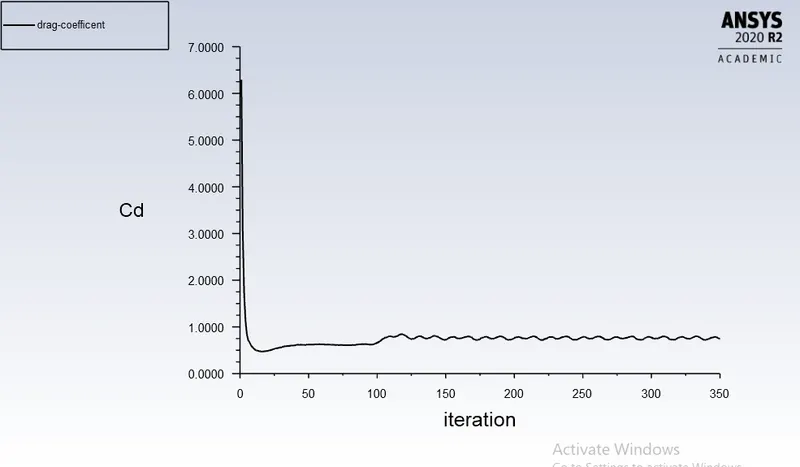
Coefficint of Lift:
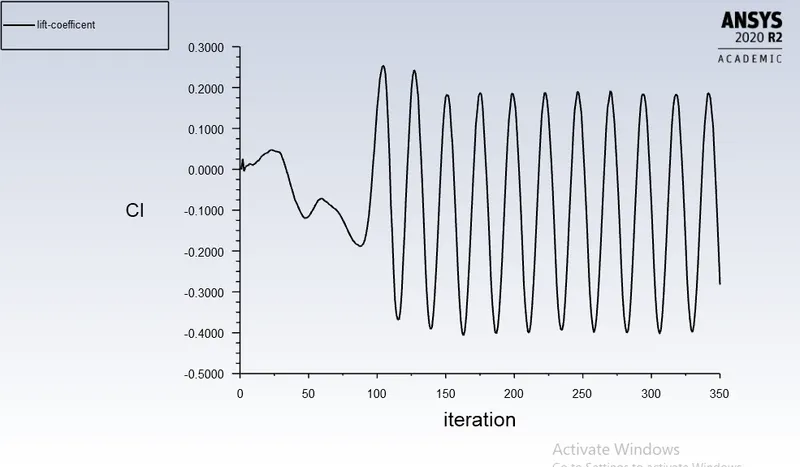
Vortex average velocity:
Residuals:
Contours of velocity:
4)Re=10000
Coefficient of drag:
Coefficient of Lift:
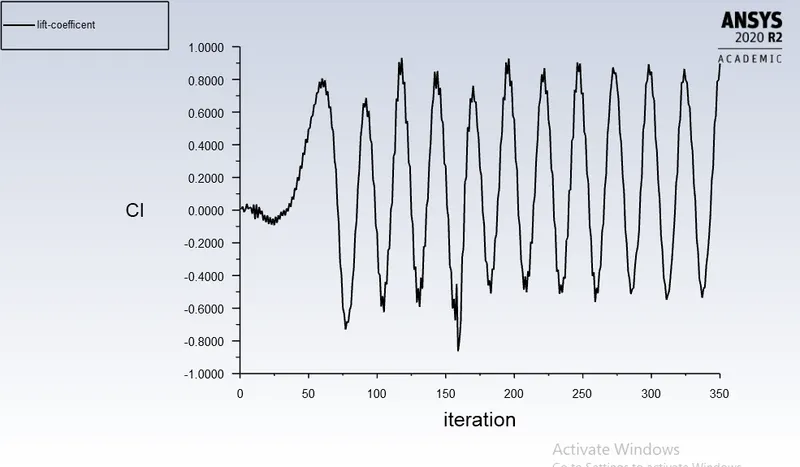
Vortex average velocity:
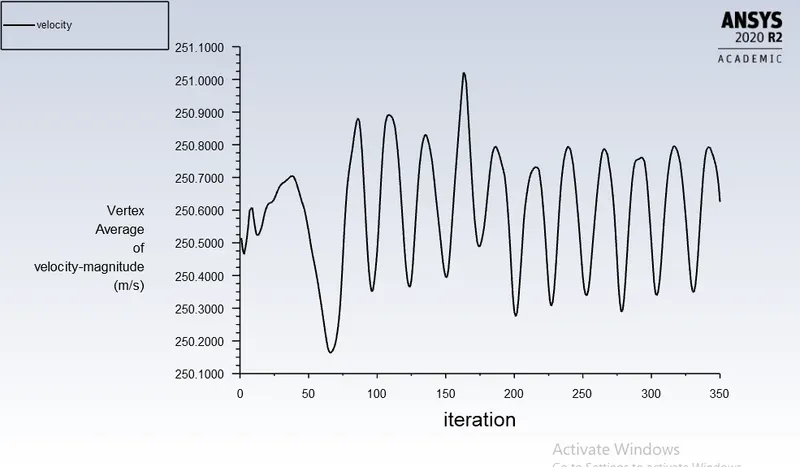
Residuals:
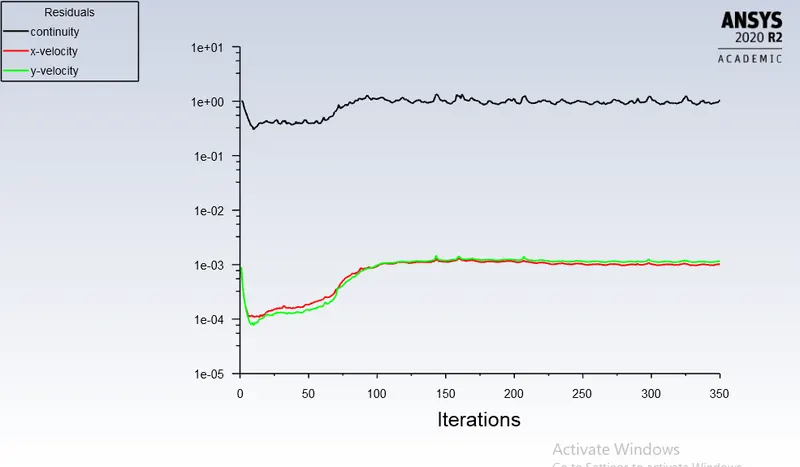
Contours of velocity:
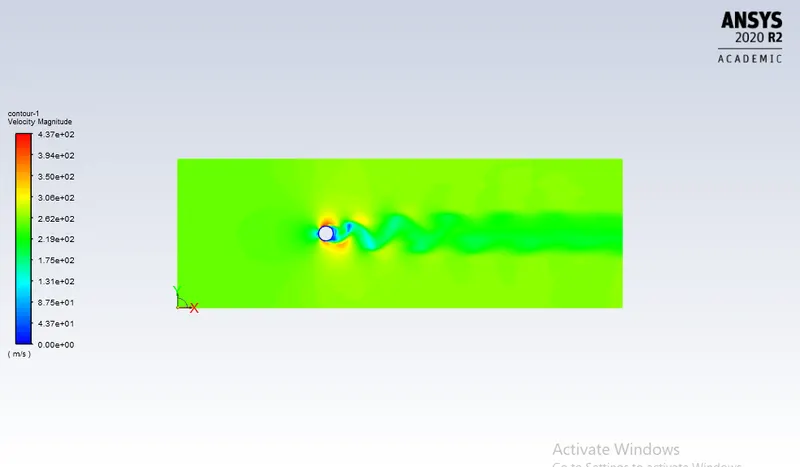
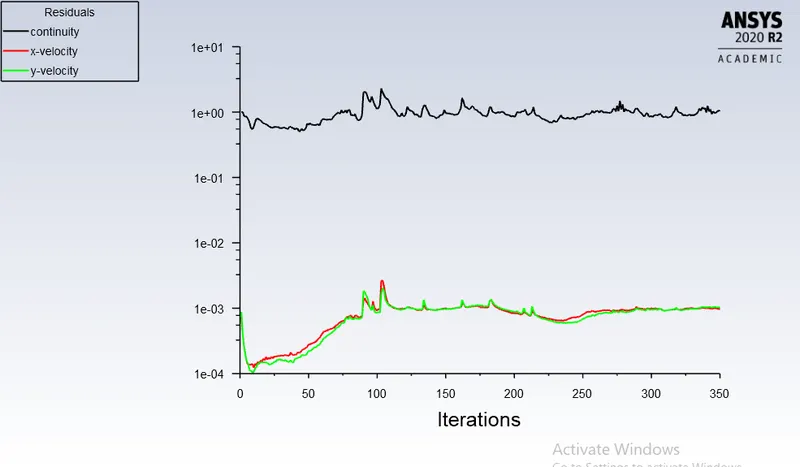
5)Re=100000
Coefficient of drag:
Coefficient of lift:
Vortex average velocity:
Residuals:
Contours of velocity:
Effect of reynolds number on Drag coefficient(cd):
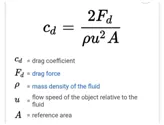
1)from above equation it is clear that coefficent of drag is inversely propontal to square of inlet velocity which indicates with increase in velocity there is decrease in coefficent of drag.
2) similarly Re=Pvl/u from this equation it shows that Re number is propontal to velocity.
3) Therfore from above two equations it is clear that with increase in Reynolds number velocity increases and coefficent of discharge decreases
|
Re |
Cd |
Velocity |
|
10 |
3.345321 |
0.25 |
|
100 |
1.3371342 |
2.5 |
|
1000 |
1.05189129 |
25 |
|
10000 |
0.92261991 |
250 |
|
100000 |
0.70877904 |
2500 |
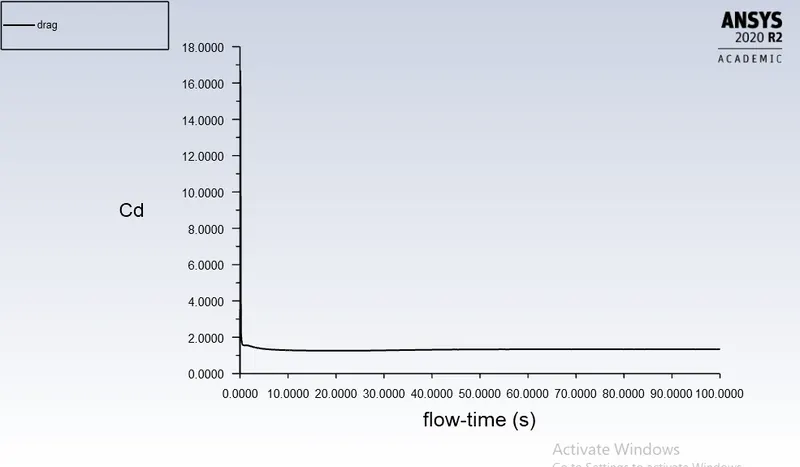
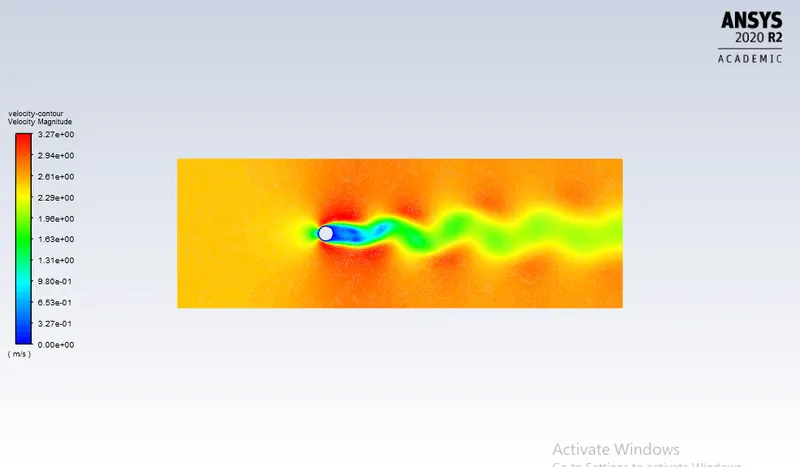
Unsteady/transiant state:
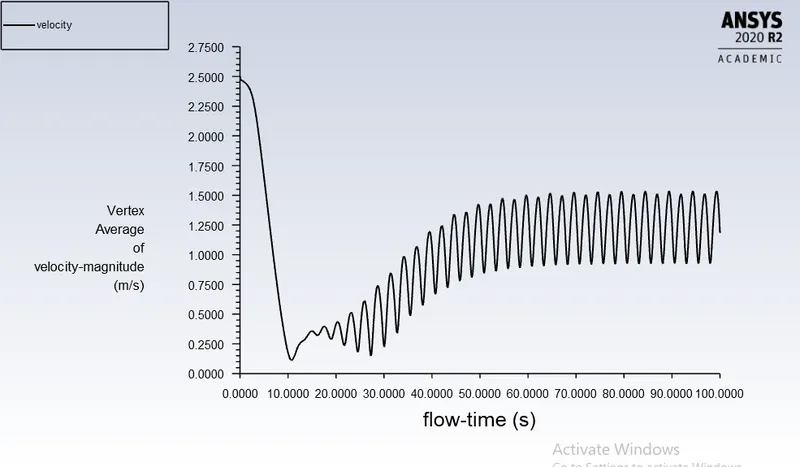
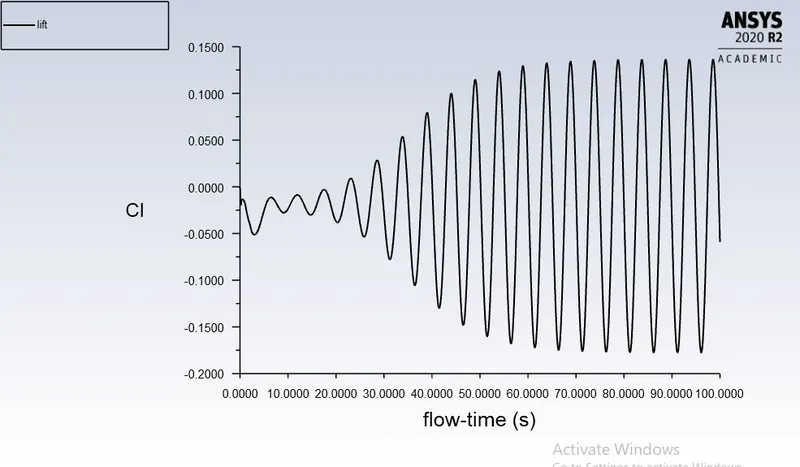
For Re=100 and velocity=2.5,viscocity=0.05
time step=0.1
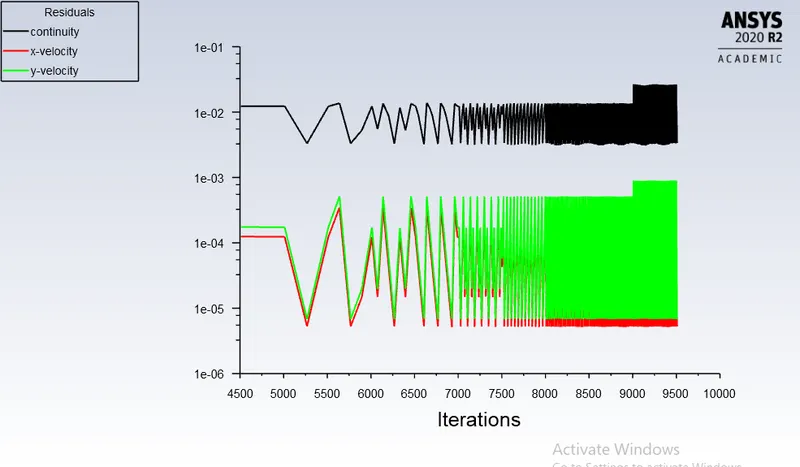
Residuals:
Vortex of average velocity:
Coefficent of drag:
Contours of velocity:
Coefficent of lift:
Caliculation of Strouhal number:
1) Strouhal number is a dimensionless value used for oscillating unsteady flows
2)From Cl plot we can caliculate frequncy oscillations directly as f=No of peaks/flow time
f=2/10=0.2
St = 0.2*2/2.5=0.16
Transiant condition Cd and cl values:
cd=1.3
cl=0.23
Conclusion:
1) plots of cd,Cl and average vortex velocity,residuals of both steady and unsteady flows are plotted and also contours of velocity also plotted for different reynold numbers
2) Plots of vortex shedding behind cylinder is shown for different reynolds number of both steady/unsteady cases
3) Strouhal number in transiant condition is caliculated for re=100
4)References:Numerical simulation of laminar flow past circular cylinder