Week 5.3 - Forced convection Analysis
Objective:
To create workflow in ansys workbench and use the simplified geometry of DME assembly provided and solve them for physics using ansys icepak.
Steps to be performed:
1.Given CAD model is inserted to ansys work bench and then convert all Non-icepak bodies to icepak bodies
2.Next insert modified cad model to ansys icepak
3.Generate mesh if no of nodes and elements cross 1 million then perform non-conformal mesh to reduce cell count
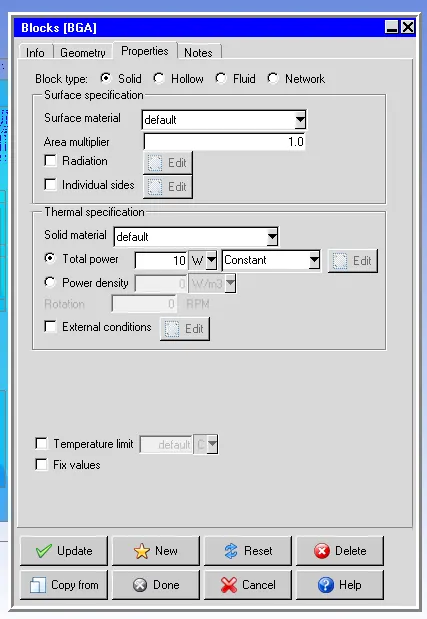
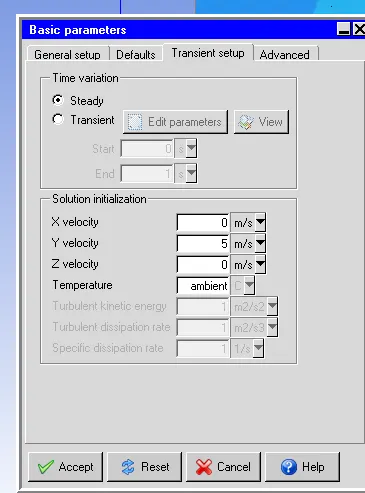
4.in forced convection analysis assume heat source as BGA generating power of 10 Watts and fan with volumetric fixed flow of 10cfm and velocity of y=5m/s
5.quality & skewness of mesh must be mainntained to get optimum results
Forced convection:
1. In natural convection, any fluid motion is caused by natural means such as the buoyancy effect, i.e. the rise of warmer fluid and fall the cooler fluid
2. In forced convection, the fluid is forced to flow over a surface or in a tube by external means such as a pump or fan.
3.Forced convection is used where heat transfer is more and quick cooling is required
4. Forced convection is often encountered by engineers designing or analyzing heat exchangers, pipe flow, and flow over a plate at a different temperature than the stream
5.Heat transfer coefficent of forced convection is high compared to natural convection.
Geometry:
1.Drag and drop given model to ansys workbench
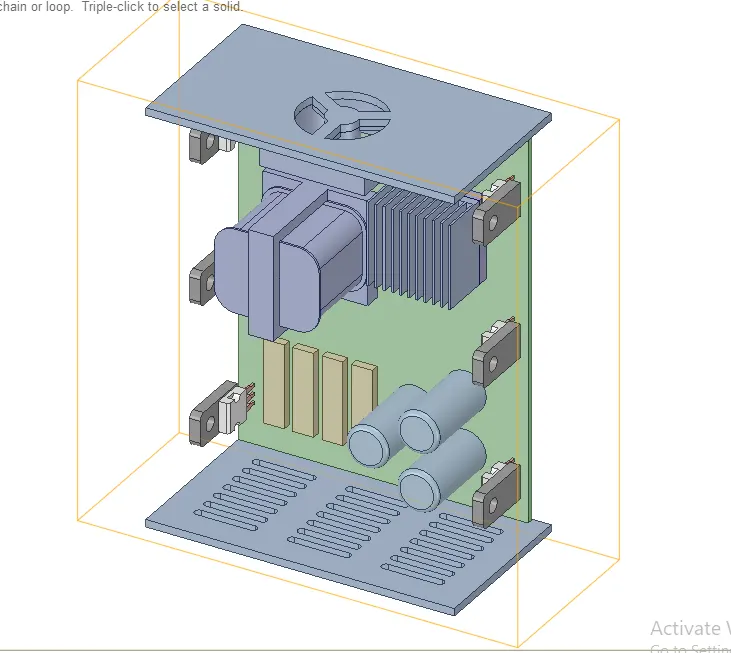
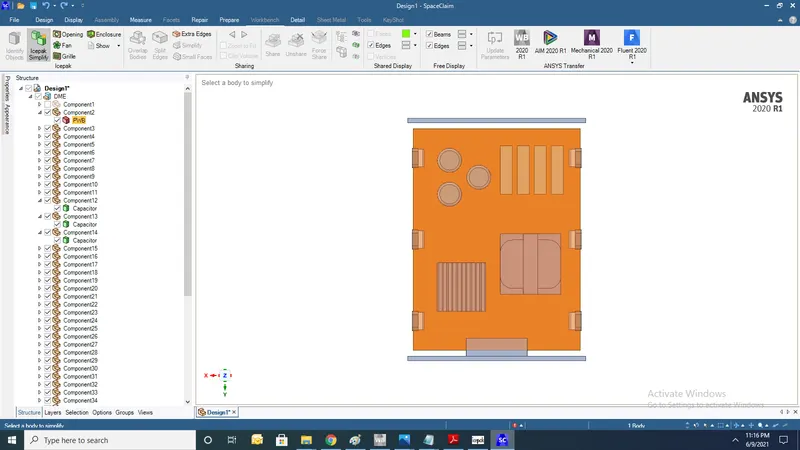
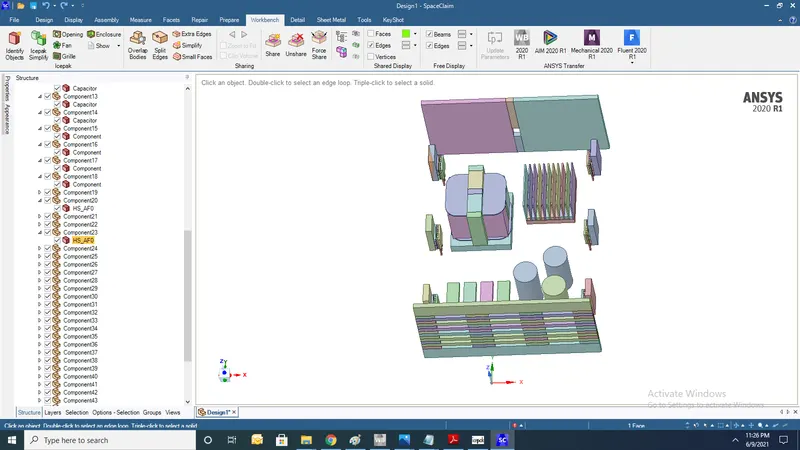
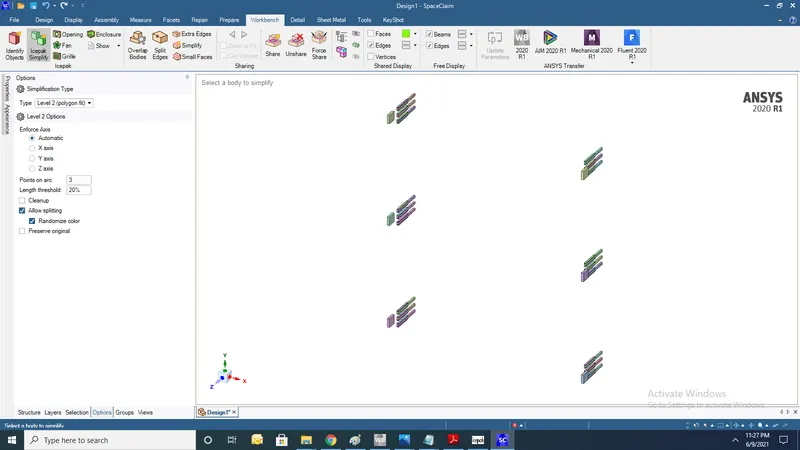
2.Convert all the cad objects to icepak bodies by using ansys icepak simplify
Type:
Level 0:
Level1:
Level2:
Level3: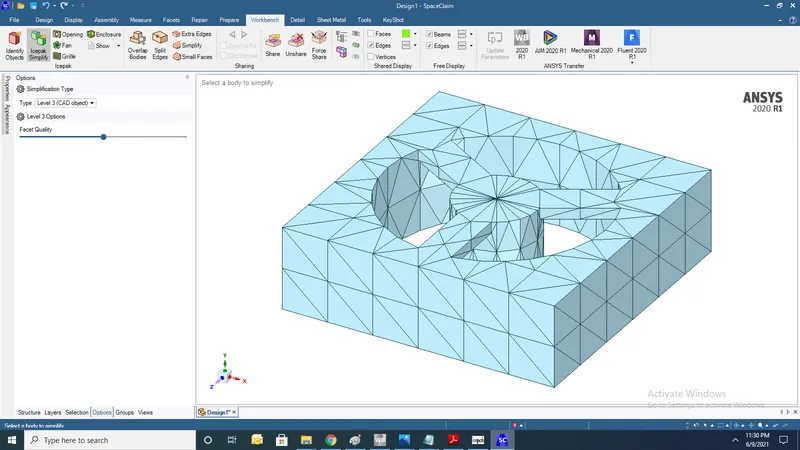
Meshing:
1.Before performing meshing in active the components which are not necessary for thermal simulation
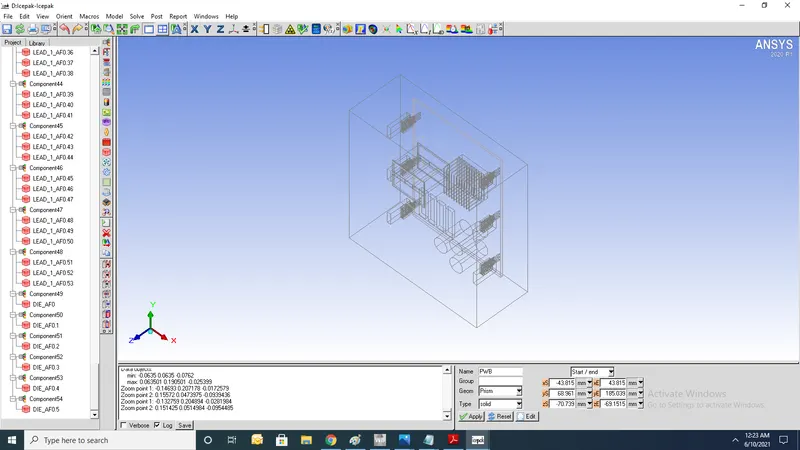
2.create fan with required dimensions as it is forced convection mode
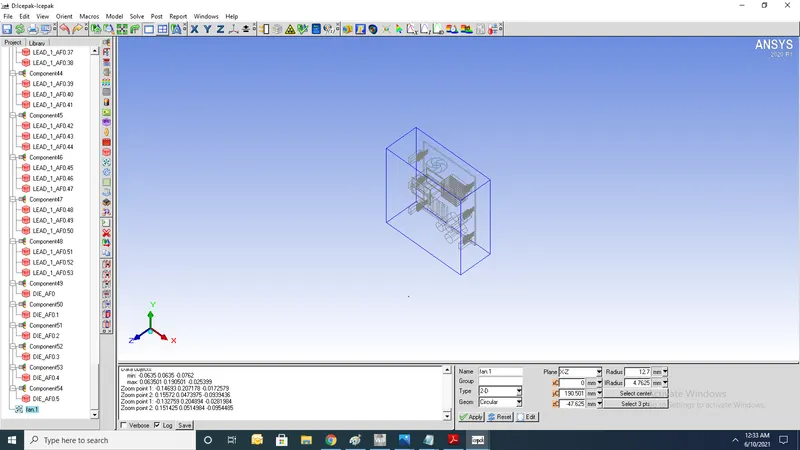
3.Dimesions of fan:
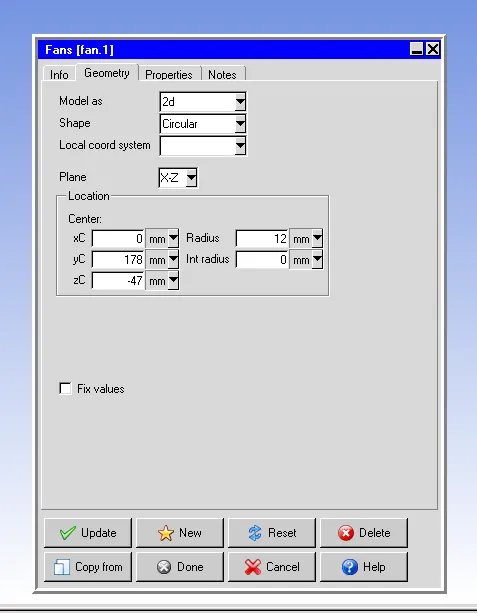
4.Volume flow rate of fan
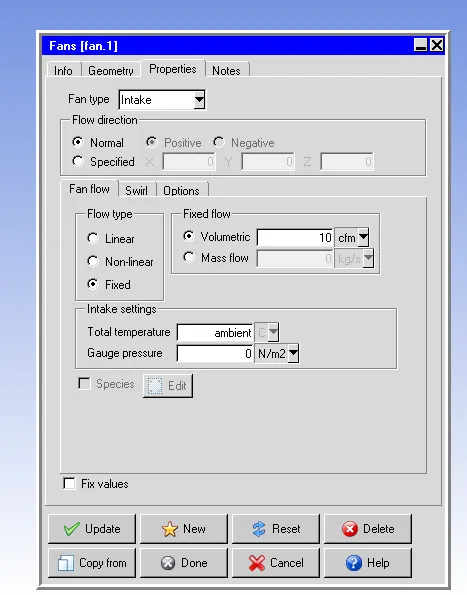
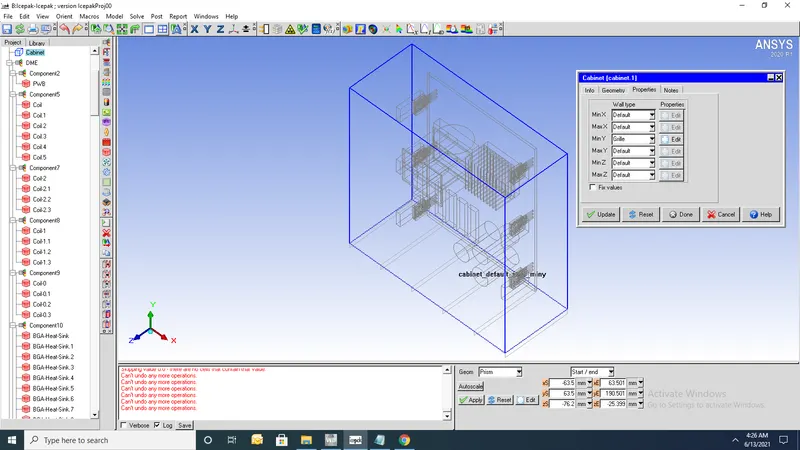
5.Create grill opening at min y
6.Assume heat source as BGA and give power as 10W
7.Now perform Non-conformal mesh use Mesher HD for CAD object
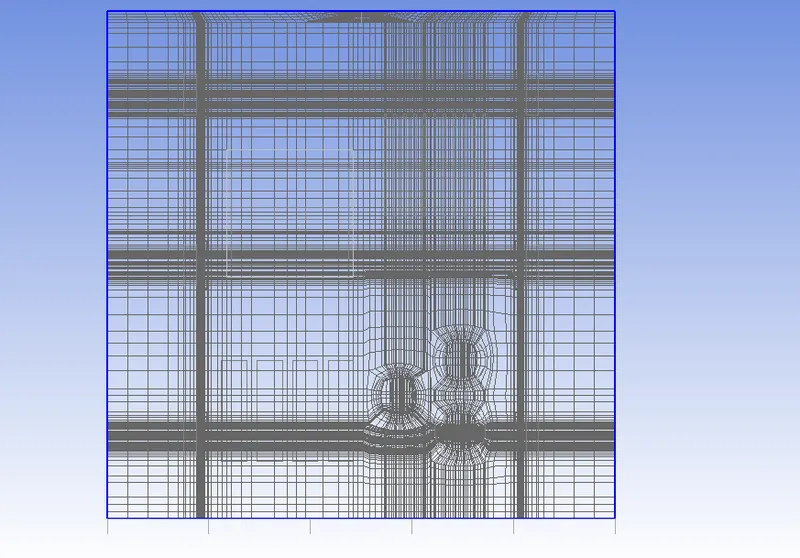
8.No of Nodes=1724900 and No of elements=1771290
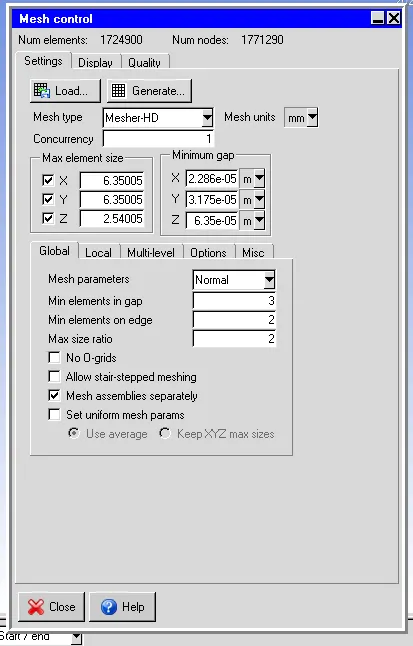
9.Check quality of mesh 1)face alignment 2)Volume 3)Skewness
Face alignment: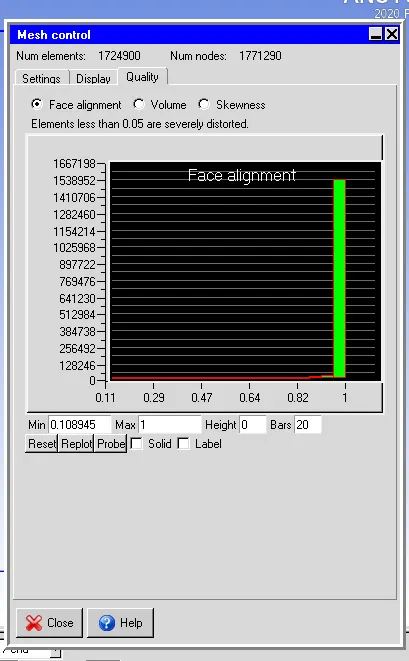
Min value of facealignment is 0.108945 which is closet to zero and lessthan1
2)Volume:
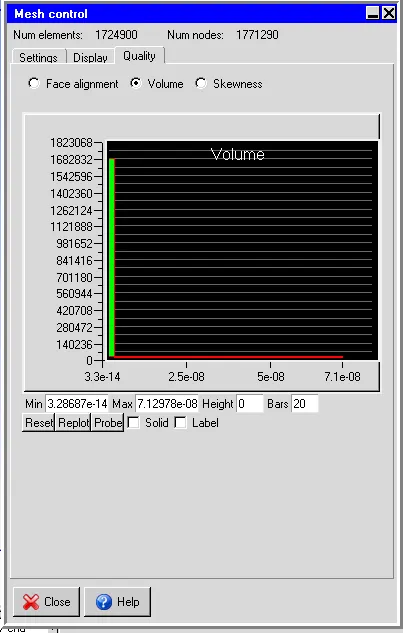
Min value of cad model is 3.2e-14 and max value of cad model is 7.12e-08
3)skewness:
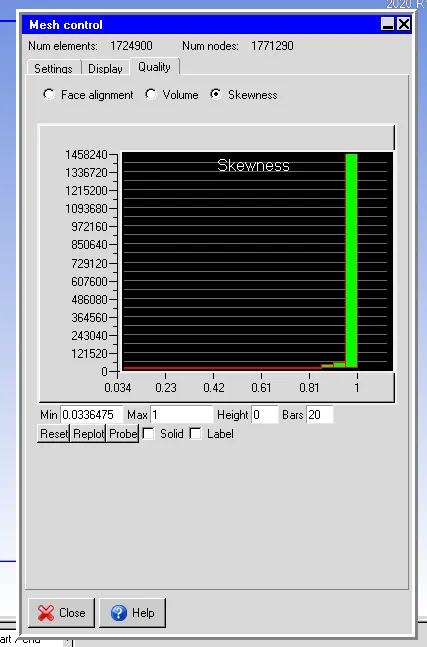
Skewness is one of primary quality measures for mesh
it determines how close to ideal (equilateral or equiangular and
Min value of skewness is 0.0336475 and max value is 1
Post-processing:
1.solve for velocity,Pressure and temperature
2. Flow has inlet/outlet (Forced convection)
3.Set flow regime as turbulent
4. Turbulent model (Zero equation)
5.ignore heat transfer due to radiation
6.Apply steady state
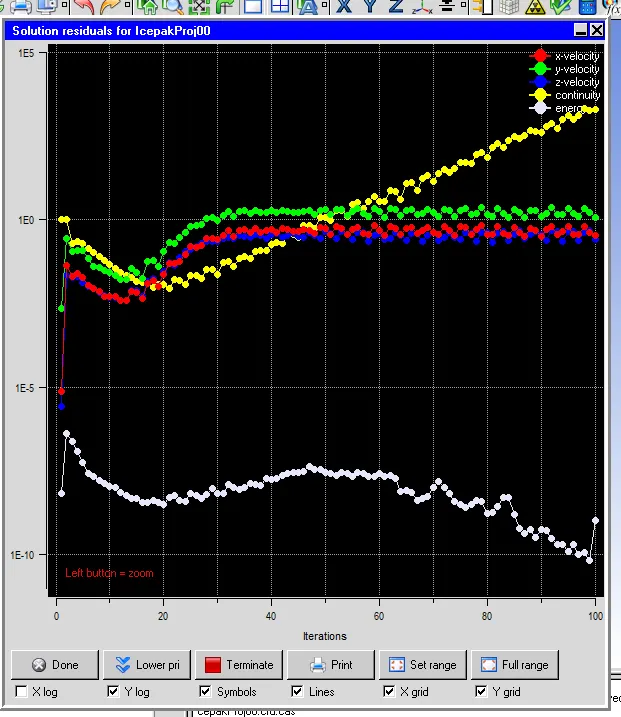
7.Run 100 iterations
Basic parameters:
Contours:
1.Residuals:
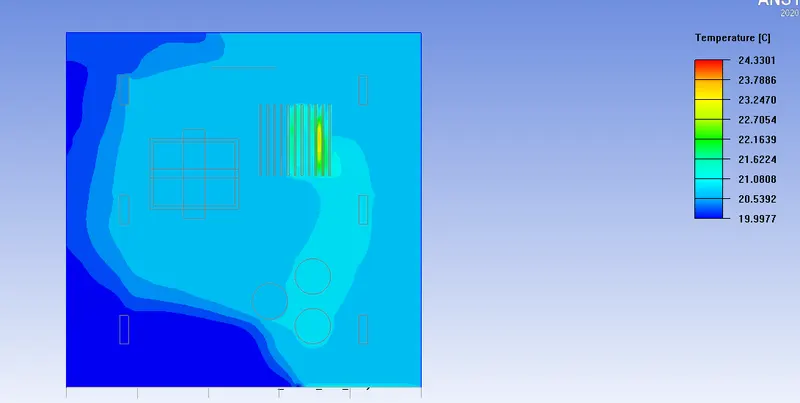
Temperature contour(iso-surface):
Objective face temperature contour:
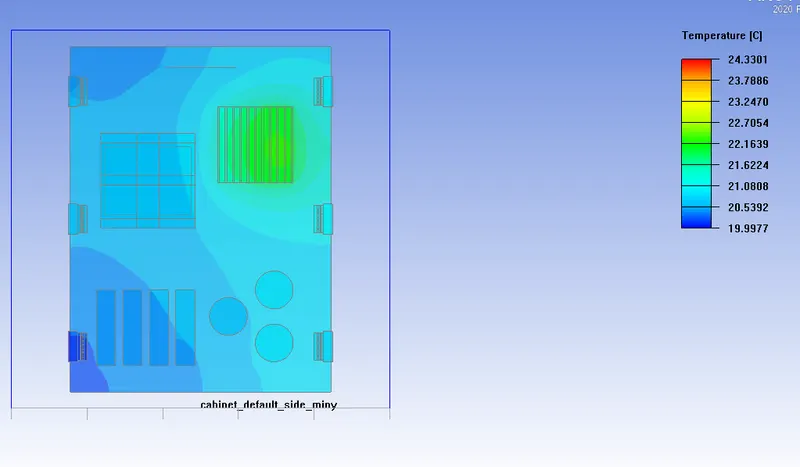
temp range:
Min=19.9977oC
Max=24.3301oC
Velocity vector:
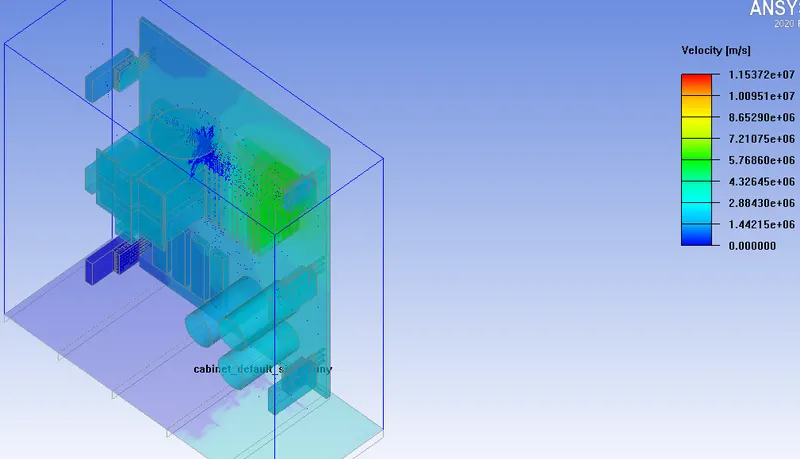
Max velocity of cad model=1.1537e07m/s
Conclusion:
1. Given model having Mintemperature of 19.9977oC and Max temperature of24.3301oC
2.Maximum velocity of given model is 1.1537e07m/s