Design of backdoor
Back Door - Design
AIM: To design a back-door assembly along with the reinforcements for a vehicle by using the given backdoor styling skin data, according to the vehicle norms and engineering standards.
Introduction:
BackDoor:
The back door of an automobile is typically the rearmost door that provides access to the cargo or passenger compartment of the vehicle. In most passenger vehicles, the back door is a tailgate or a hatchback that opens upward or swings outwards to provide access to the trunk or cargo area.
The back door is an important part of a car's design, as it not only provides access to the cargo or passenger compartment, but it also plays a role in the overall aerodynamics and styling of the vehicle. In addition, the back door may also include features such as a rearview camera, power liftgate, or a window defogger to improve visibility and convenience.
In some larger vehicles, such as SUVs or vans, the back door may also serve as an entry point for passengers, with the option of folding down the rear seats to create additional cargo space. In commercial vehicles, the back door may be designed to accommodate larger items, such as pallets or equipment, with options such as a roll-up door or a split door for added versatility.
In addition to providing access to the vehicle's cargo area or passenger compartment, the back door also plays an important role in maintaining the safety and security of the vehicle. Most back doors are equipped with locking mechanisms that prevent unauthorized access to the interior of the vehicle. In addition, many back doors are designed to be impact-resistant, providing a level of protection in the event of a collision.
Overall, the back door of an automobile is a critical component that plays an important role in the functionality, safety, and security of the vehicle. Its design and construction are carefully considered by automotive manufacturers to ensure that it meets the specific needs and requirements of the vehicle and its intended use.
Types of Backdoors:
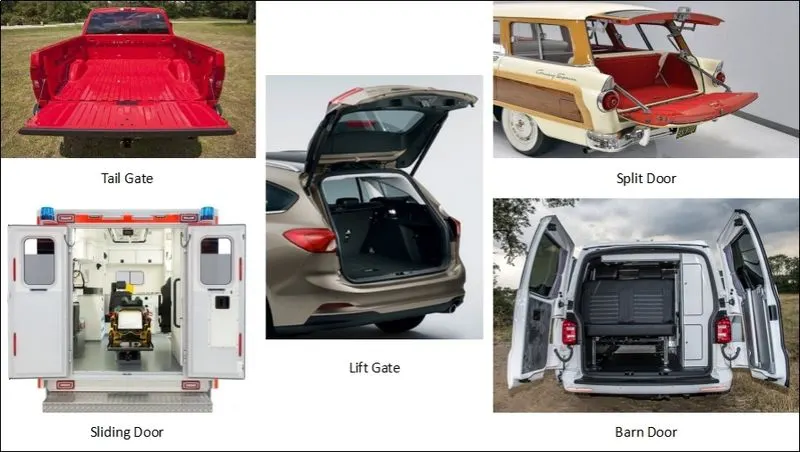
There are several types of back doors used in automobiles, including:
- Liftgate:This is the most common type of back door used in SUVs, vans, and some hatchbacks. The liftgate swings upward to open and provides access to the cargo area or passenger compartment. The liftgate can be manually operated or electronically controlled.
- Tailgate: The tailgate is a back door that folds downward and is commonly used on pickup trucks. It provides easy access to the cargo bed of the truck and can be used as a work surface or a seating area.
- Barn Door: This type of back door is commonly found on commercial vans and some SUVs. The doors open outward, with each door hinged on opposite sides, resembling barn doors.
- Sliding Door: The sliding door is commonly found in minivans and some commercial vans. It slides to one side, providing easy access to the cargo area or passenger compartment.
- Split Door: The split door, also known as a dutch door or double door, is commonly found on SUVs and some minivans. The door is split in half horizontally, with the top half swinging upward and the bottom half swinging downward. This provides easy access to the cargo area while maintaining a smaller opening for better security.
Overall, the type of back door used in an automobile depends on the intended use of the vehicle, its design, and its manufacturer's preference. Each type of back door has its unique advantages and disadvantages, and manufacturers choose the one that best suits the vehicle's intended purpose.
Design Considerations:
- Rear Visibility Criteria
- Boot space
- Force Dissipation
- Support structures mounts for Hinges and Gas stays
- Mounts for wiper motor, tail lamps, and other wiring harness
- Rear crash regulations and requirements
- Sealing and its functions
- Joining techniques like Hemming, Spot welding etc.
Back Door Design:
Data to be used:
Back Door Thickness Information
Back Door Outer Panel Thickness = 0.75mm
Back Door Inner Panel Thickness = 0.75mm
Reinforcements Thickness = 1mm
Components to create:
- Outer Upper Panel
- Outer Lower Panel
- Inner Panel
- Gas Stay Reinforcement LH And RH
- Hinge Reinforcement LH and RH
- Striker Reinforcement
- Wiper Reinforcement
Back Door Outer Panel:
The back door outer panel refers to the exterior panel that covers the back door of a car. It is the outermost layer of the door and is designed to provide protection from the elements and improve the appearance of the vehicle. It can be made from a variety of materials, including steel, aluminum, and composite materials. The material used will depend on the manufacturer's design and the intended use of the vehicle.
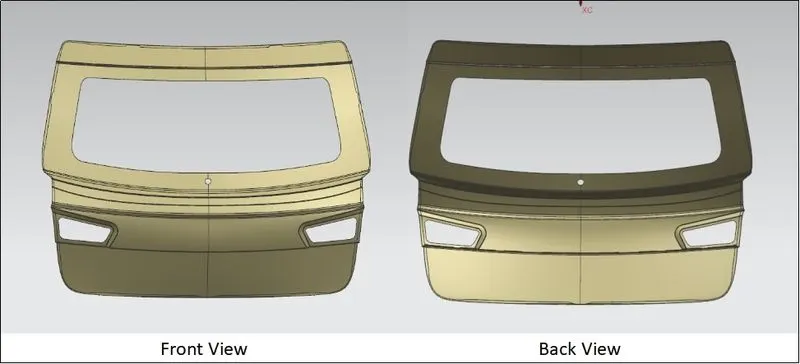
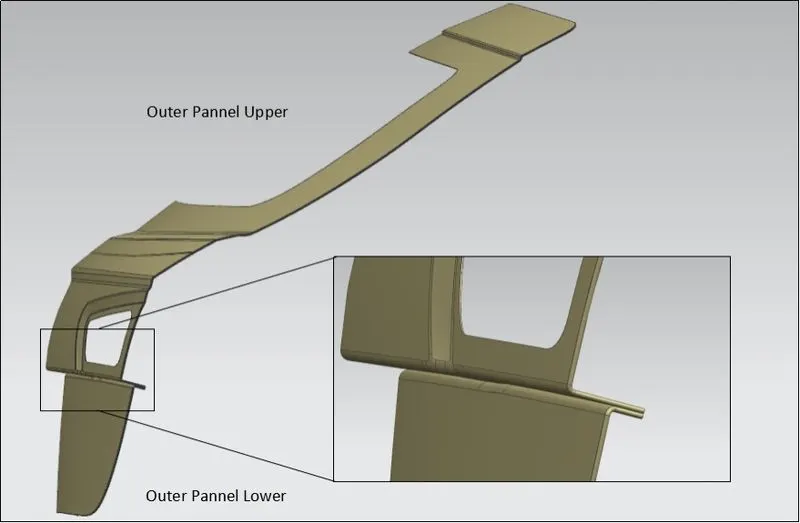
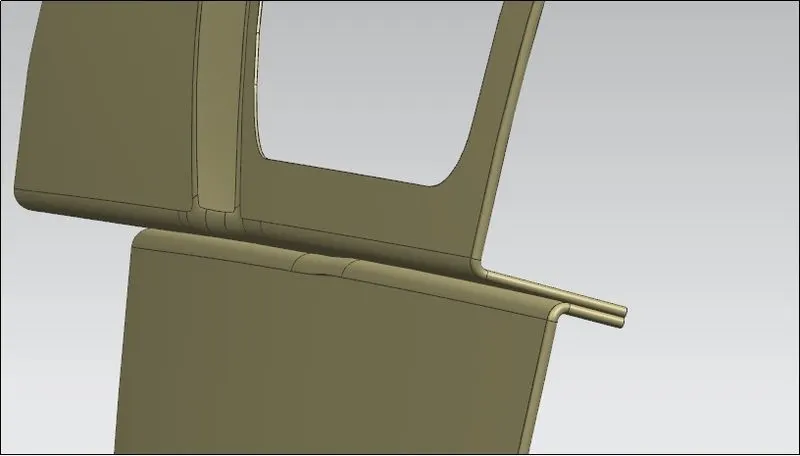
The styling team designs the skin data of the back door’s outer panel by considering the shape and size required to cover the rear view mirror and cargo space. Since the surface area of sheet is larger, the back door outer panel is designed into two parts - upper and lower. The common face of these two parts are finally joined by welding process. The outer panel is attached to the inner panel with adhesive through hemming process. So, it is necessary to provide the required hemming flange and corner reliefs for the hemming operation. We also provide mastic sealants between the outer panel and inner panel to reduce the rattling noise and vibration between them.
The outer panel may also have various features, such as a handle for opening and closing the door, a lock mechanism, and various trim pieces for tail lights. It may also have openings for a rear windshield, a rear view camera, or other accessories.
Corner Relief:
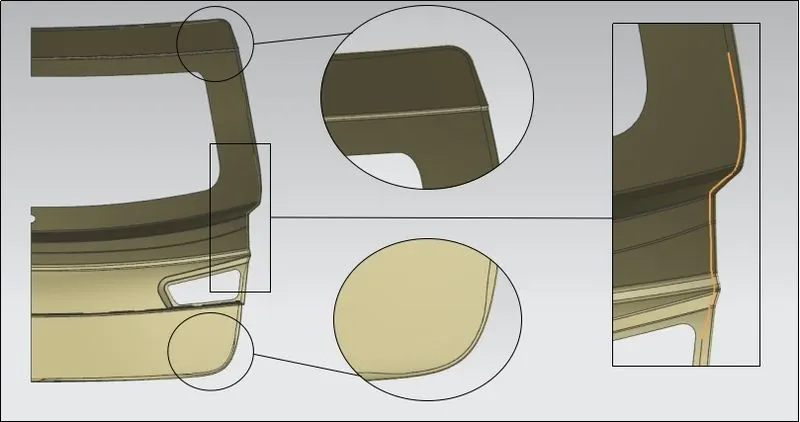
The purpose of providing corner relief is to control sheet metal material behavior and to prevent unwanted deformation during bending operations. Bending on the corner increases the thickness of the sheet metal which may cause in deformation to the expected result. To avoid these kind of issues corner relief is provided for both upper and lower outer panel.
Inner Pannel:
The automobile back door inner panel refers to the interior surface of the back door of a car. This panel is typically made of plastic or metal and serves several functions, including providing structural support for the door, helping to insulate the car from noise and temperature changes, and providing a surface for the interior trim and upholstery to attach to.
The back door inner panel may also contain various components such as speakers, window regulators, and locking mechanisms. These components are usually mounted onto the panel or integrated into it in some way.
If the back door inner panel becomes damaged or worn, it may need to be replaced. This typically involves removing the panel from the door frame, disconnecting any electrical or mechanical components, and installing a new panel in its place. It's important to ensure that the replacement panel is compatible with the make and model of the car, and that it is installed correctly to avoid any safety or functionality issues.
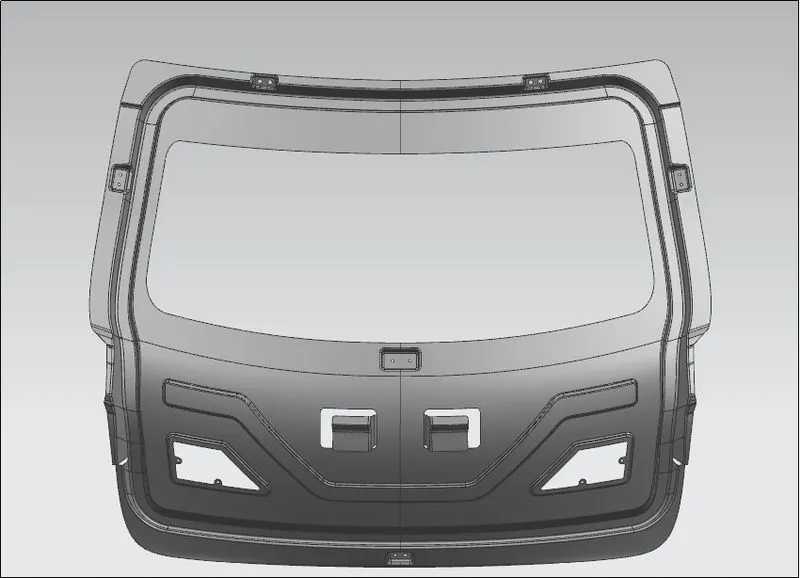
The procedure followed on designing the inner pannel are:
Step-1: The given skin data has some defects which might create problem in thickening the sheet metal. The defects are removed by trim sheet feature and generated a new surface to fill the gaps.
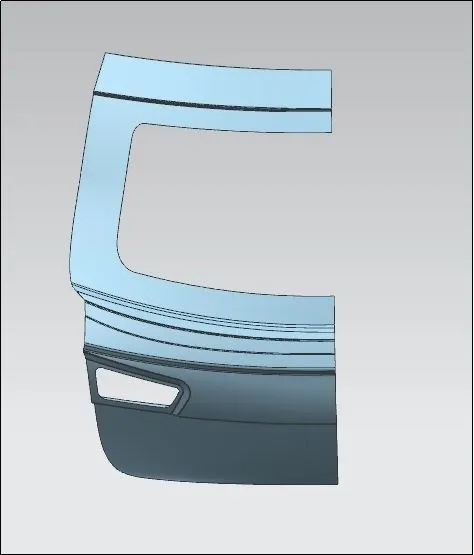
Step-2: The backdoor surface both upper and lower part) are offsetted for 1.7 mm to design inner panel and the edge of these parts holds the outer panel after hemming is done.
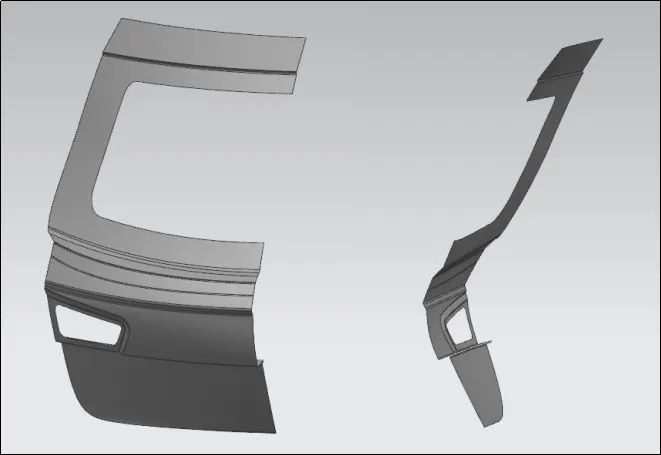
Step-3: Once again certain portion of the backdoor surface (both upper and lower part) are offsetted to desired distance to design the sealing flange of inner panel.
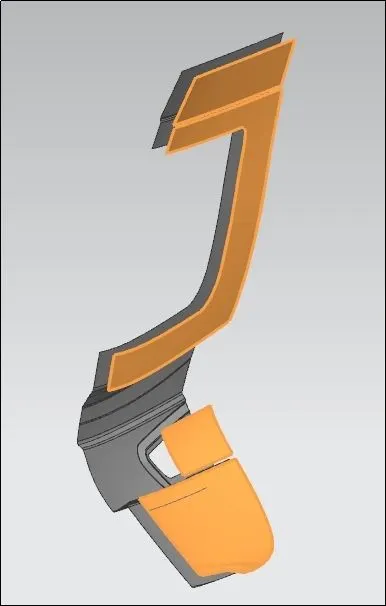
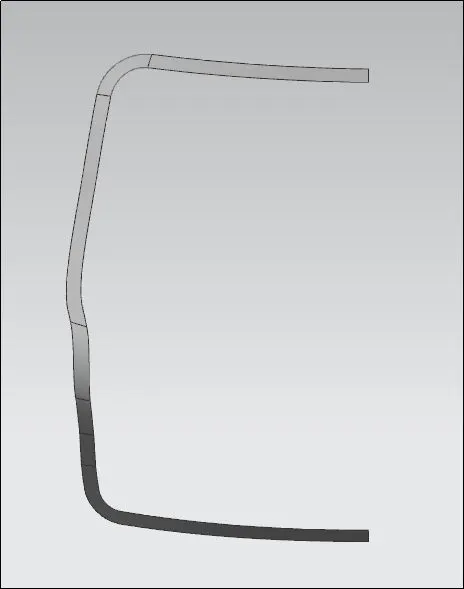
Step-4: Using the sketch and trim sheet feature, the desired sealing flange parts are derived from the offsetted surface and the gaps are filled by bridge curve and through curve mesh feature.
Sealing Flange: The sealing flange is a critical component that helps create a tight seal between the door and the vehicle's body. It is typically made of metal and is designed to fit tightly against the door seal to prevent air, water, and dust from entering the cabin.
Step-5: Using the 3D sketch feature draw a diagonal line connecting the two opposite corner of the backdoor upper panel and create a plane at exact mid point of line. With the help of the plane, construct a line (called as tooling direction) perpendicular to the diagonal line.
Tooling Direction: The tooling direction is used to draw the sheets in the respective direction apart from the existing options like with the help of vector directions and planes.. This line used in law extension and embosses for the backdoor inner panel.
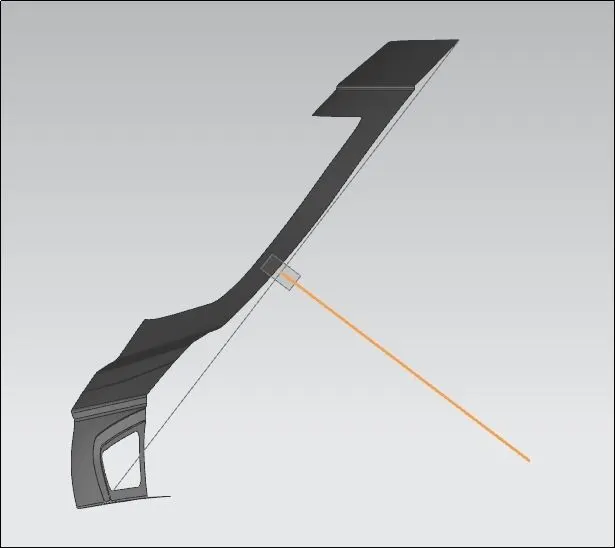
Step-6: Using the tooling direction line, generate a law extension sheet surface for a desired length in such a way that the surface should not collide the backdoor outer panel.
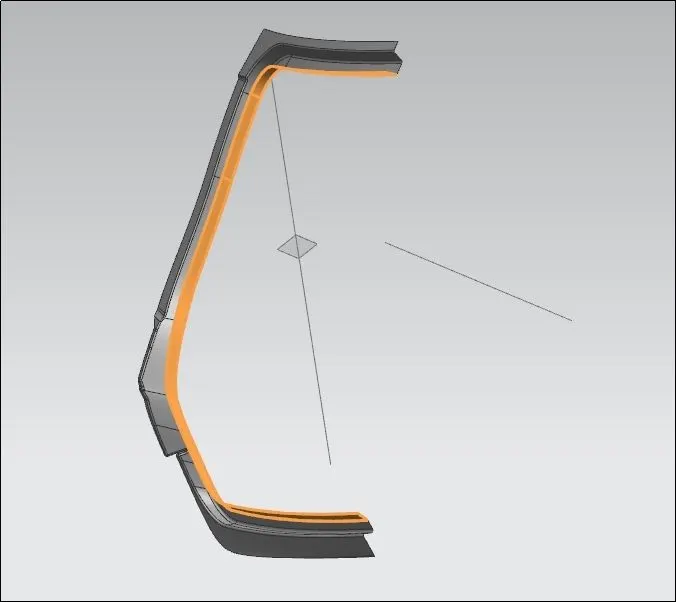
Step-7: Once the law extension is created from the edge of sealing flange, with the help of offset surface and bridge curves covered the inner panel with the cutout for the rear windshield.
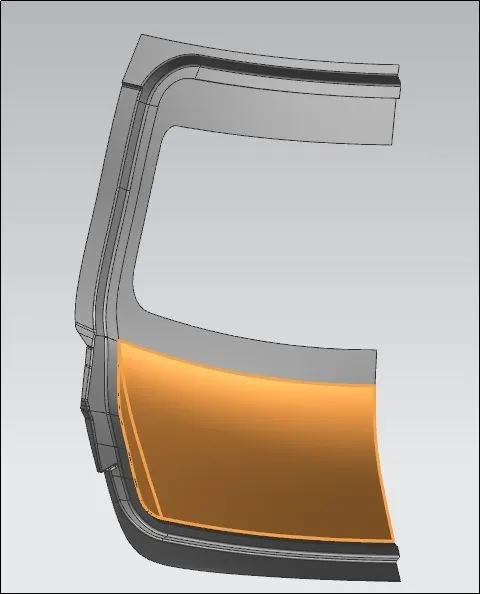
Step-8: Mounting positions are fixed for the hinge and gas stay mount for the easy opening and closing of backdoor and the cutout and the flange is provided for the mastic sealant support.
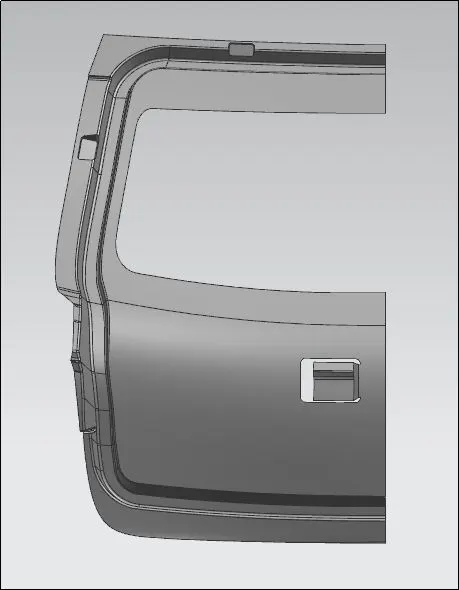
Mastic Sealant: Backdoor commonly possesses a large surface area and hemming can only be provided through its boundary. We cannot use other joining techniques like welding, riveting, etc because they leave marks on the outer panel which spoils its aesthetic appearance. So, mastic sealants are used to stick and fill the gap between the inner surfaces of the outer panel and the inner panel. Mastic sealants are elastic compounds that behave like rubber. It is applied at specific spots on the inner panel. Each mastic sealant has its effect around a circular region of 60-80mm diameter and has the capacity to increase up to 5mm height on heat. Thus, the mastic points are provided in the middle of the backdoor to reduce the noise and vibration between the inner surfaces of the hood and to act like a additional support.
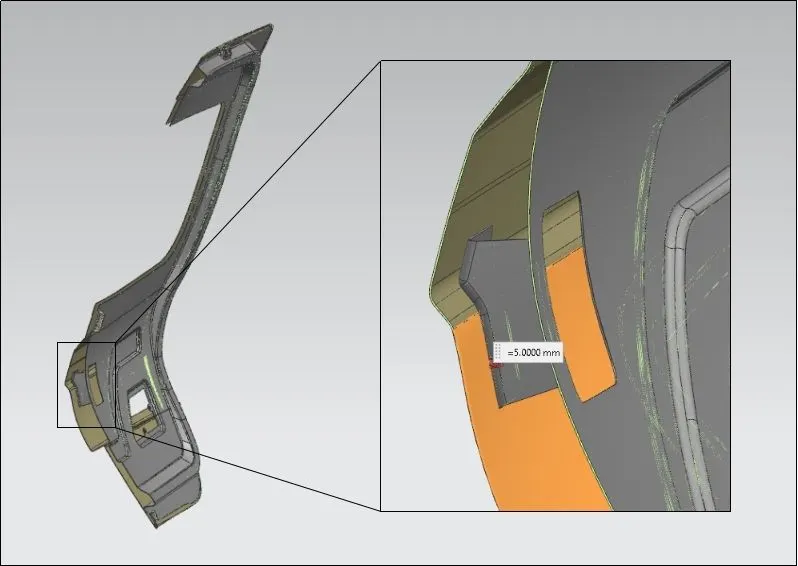
Step-9: Additionally embosses were provided on the blank surface area to enhance the strength of the backdoor inner pannel, which also helpful in force distribution on collision and the cutouts were provided to reduce the weight and holes for part holding purpose helpful while in manufacturing. The blend corner is given at the corners of edge blend will also help in ease of manufacturing.
Force Distribution: A variety of embosses in different shapes are provided throughout the interior panel to stiffness of the inner panel. These embosses also determines the force distribution to the car resulted from frontal distribution. The embosses are designed in such a way that mostly to distribute the force equally and to deviate the force outside the car so that the impact will be reduced for the passengers.
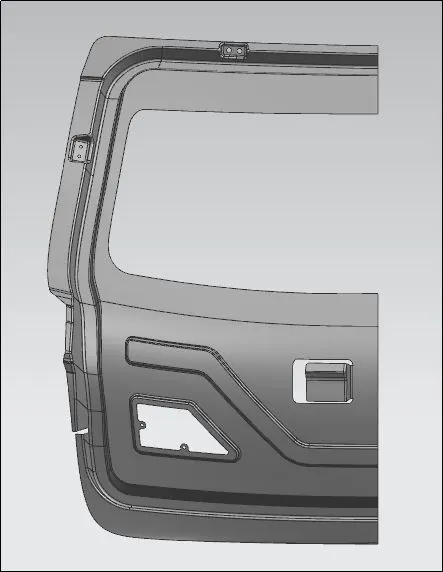
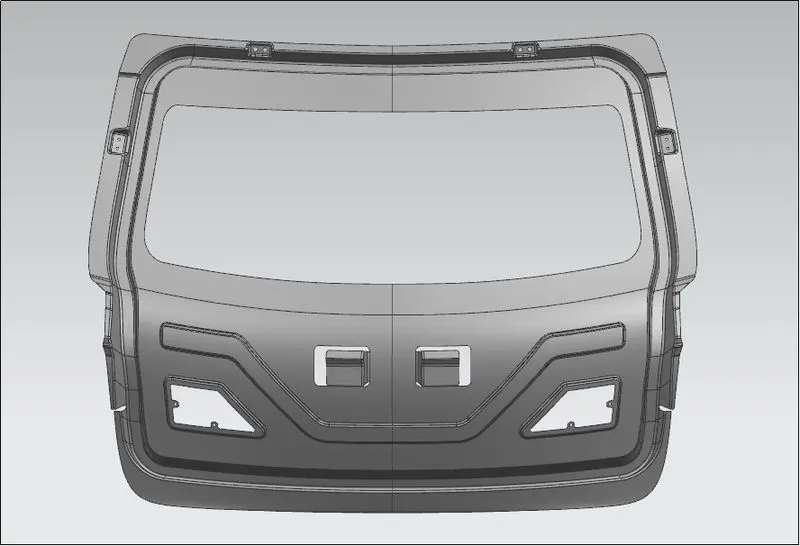
Step-10: Before designing the wiper mount and striker mount, mirror the geometry to form the full backdoor inner panel part body.
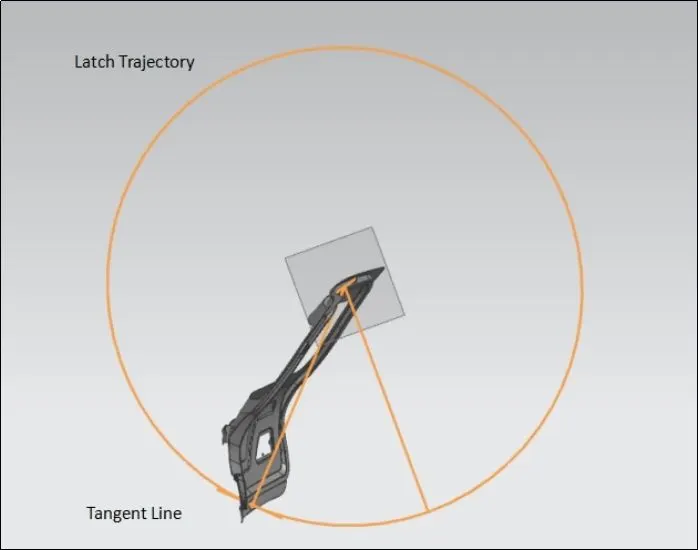
Latch Trajectory: Once the hinge position is fixed, draw a line (hinge axis) by connecting both the hinges hole position . Then the latch trajectory is formed by the circle drawn from the midpoint of the hinge axis line. The latch trajectory circle radius is fixed based on the striker mounting position on the car in order to close the backdoor properly without any gap. As the latch is fixed on the backgoor inner panel and the striker is mounted on the car frame. For proper locking of the backdoor, the striker axis should be tangential to the latch trajectory.
Step-11: Once the striker position is fixed, the striker mount is build by the embosses feature and finally created a wiper mount embosses at centre below the rear windshield.
Gas Stay:
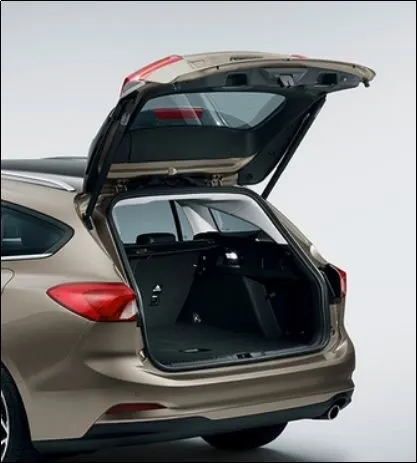
The gas stay are used only in backdoor lift gate type since it is a heavier part that can’t be hold by a person until the passengers get in or the cargo space loading. The gas stay is an apparatus used for supporting the car backdoor in an open state by means of an actuator that is activated by gas. The gas stay is positioned on both extreme sides of the backdoor and car chassis for the smooth lifting and even weight distribution of the hood. The length of the hood stay decides or limits the opening angle of the backdoor.
Reinforcements:
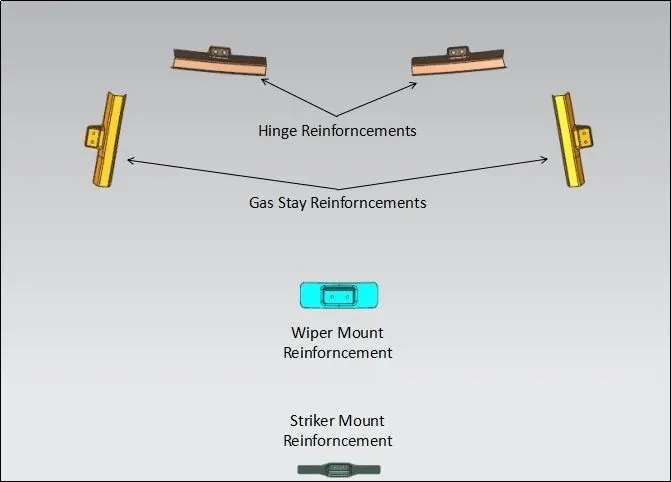
Reinforcements are the flat piece of sheet metal, which are provided according to the design requirements. In the backdoor, mainly it is used at the hinge and latch regions to improve the strength locally. Usually, the thickness of reinforcements will be higher than that of the inner panels and the value varies according to strength requirement. According to the design requirement here, it is given 1mm thickness to both hinge and latch reinforcements.
Draft Analysis:
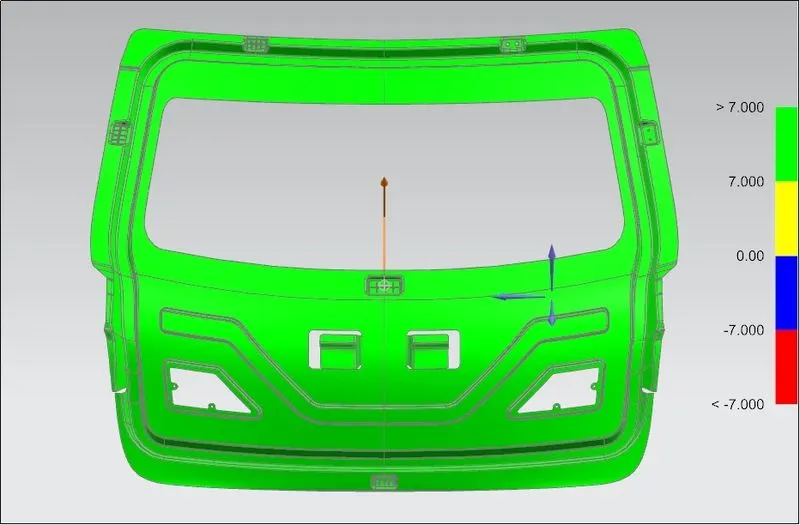
The draft analysis technique is used to analyze whether the designed part model is manufacturable based on the draft condition applied. The part should get easily removed from the panel dies (in case of Sheet metal part) or Mold (in case of plastic). As no parts can be ejected from the tool if it is having a straight 90-degree profile from its base surface. A small draft angle is provided to each and every area of the component in order to get easy removal of the component from the tool. Hence it is required to provide a direction in which components should eject easily from the tool.
Once the design was ready, the inner panel of the backdoor was analyzed for manufacturability. Draft Analysis is done for the minimum draft angle of 7 degrees and the tooling direction axis is followed. Here the draft analysis shows that the die can come out of the cavity without any interruption.
Manufacturing process involved in Backdoor Assembly:
1. Deep Drawing:
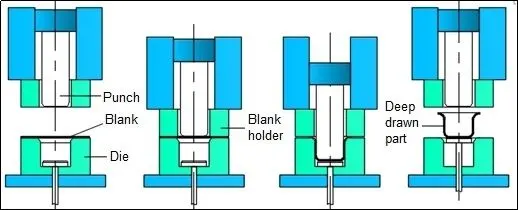
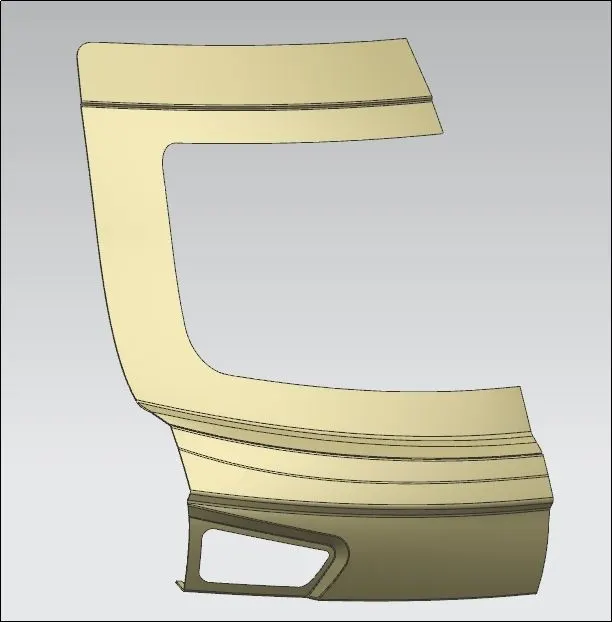
Deep drawing is a manufacturing process that is widely used in the formation of flat sheet metal into cup-like or box-like structures and even more complex contours. However, as complexity increases, manufacturing problems increase rapidly. It is better to design the shape of a deep drawing to be as simple as possible. Automobile parts, such as panels and gas tanks, are among a few of the items manufactured by sheet metal deep drawing.
Deep drawing is a sheet metal forming process with a punch and die that involves intricate material flow and force distributions. The punch and die setup is mostly similar to a sheet metal cutting operation, such as punching or blanking. Two main factors will cause the punch in deep drawing to draw the metal into the die cavity, rather than shearing it. One major factor in deep drawing is the die corner radius and the punch corner radius. When cutting sheet metal, the punch and die edges do not have a radius. Sharp corners on the punch and die cause it to cut. The force distribution will be altered by a radius on an edge, causing the metal to flow across the radius and into the die cavity. The amount of clearance is another important component that contributes to the punch drawing the sheet metal rather than cutting it. In cutting processes, clearance is typically between 3% and 8% of the thickness of the sheet metal. Deep drawing manufacturing often has clearance values between 107% and 115% of sheet thickness, which is larger than the thickness of the sheet.
2. Embossing:
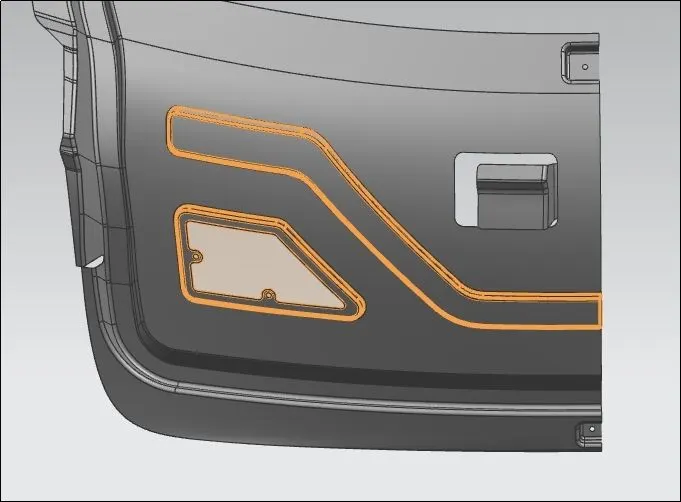
Sheet metal embossing is a stamping process for producing raised or sunken designs or relief in sheet metal. This process can be made by means of matched male and female roller dies, or by passing sheet or a strip of metal between rolls of the desired pattern. It is often combined with Foil Stamping to create a shiny, 3D effect.The metal sheet embossing operation is commonly accomplished with a combination of heat and pressure on the sheet metal, depending on what type of embossing is required. Theoretically, with any of these procedures, the metal thickness is changed in its composition.
3. Hemming:
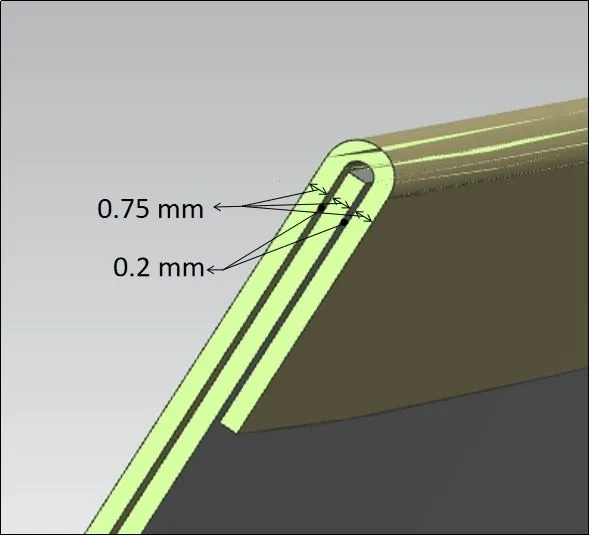
Hemming is a forming operation in which the edges of the sheet are folded or folded over another part in order to achieve a tight fit. Normally hemming operations are used to connect parts together, to improve the appearance of a part and to reinforce part edges. In car part production, hemming is used in assembly as a secondary operation after deep drawing, trimming and flanging operations to join two sheet metal parts (outer and inner) together. Typical parts for this type of assembly are hoods, doors, trunk lids and fenders.
Types of hemming formation: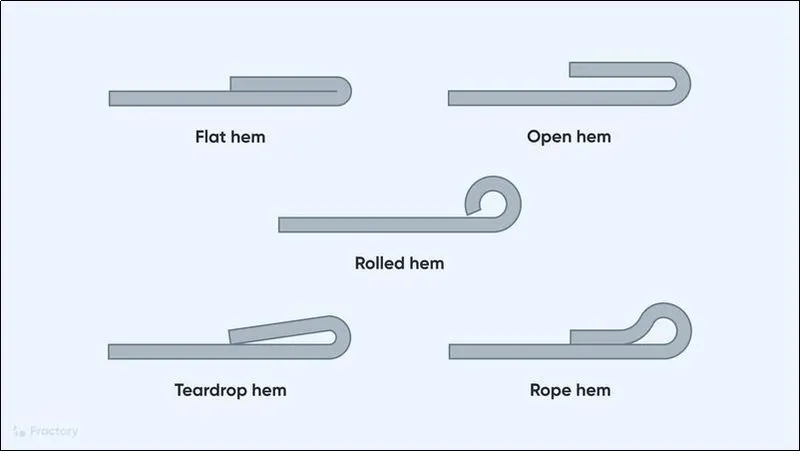
4. Blanking & Piercing:
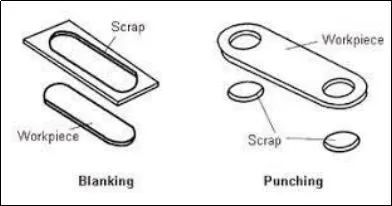
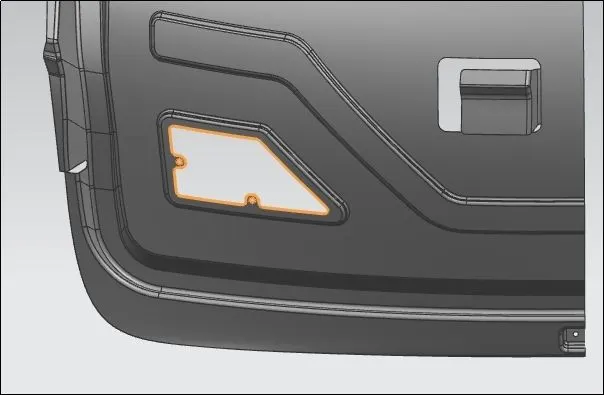
Blanking and piercing are shearing processes in which a punch and die are used to produce parts from sheet metal. Blanking produces the outside features of the component, while piercing produces internal holes or shapes.
5. Spot Welding:
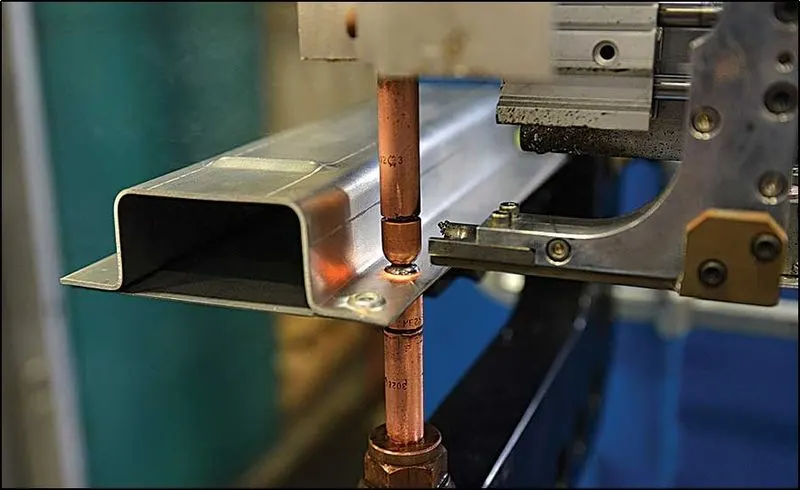
Spot welding is a fast and efficient method used to join metal sheets or parts together. It involves applying heat and pressure to specific points, or spots, to create a strong bond. Two electrode tips deliver an electric current that generates heat, causing the metal to melt and fuse. The molten material solidifies under pressure, forming a solid weld. Spot welding is widely used in industries like automotive and electronics due to its high production rates, cost-effectiveness, and ability to join various metals. It excels in joining thin sheet metal and is known for its speed and efficiency.
Here spot welding is used to join both backdoor outer panel and inner panel and done at the inner surface, so that the spot marks won’t be visible.
Conclusion:
Thus, the backdoor assembly is designed completely with the help videos considering the key points and industry standards along with the manufacturability possibilities.