Underbody Coating
UNDERBODY COATING
AIM: To make a detailed report explaining about underbody coating.
THEORY:
Underbody: Underbody parts are the elements and panels placed in the bottom side of the vehicle including the whole vehicle’s platform.
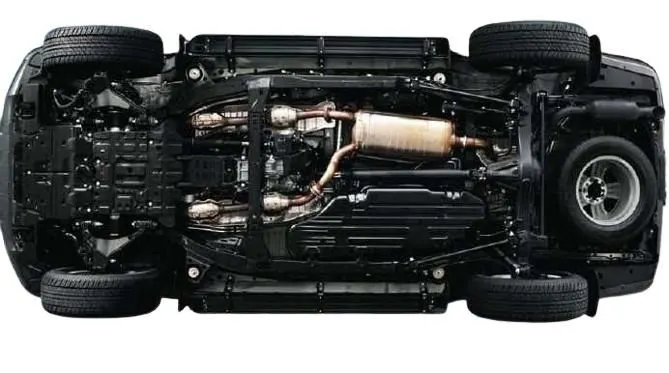
Most people live in the area of significant amount of snow, or are located in a coastal region, might familiar with the term “Underbody coating”.
A car’s underbody is exposed to the most wear and tear caused by muddy water, potholed roads, stones and other obstacles on the road and because it’s not in visible sight, we often do not notice the damage of the underneath metal parts like Suspension arms, muffler, joints, brakes, axles, transmission etc.
What is Under-body Coating?
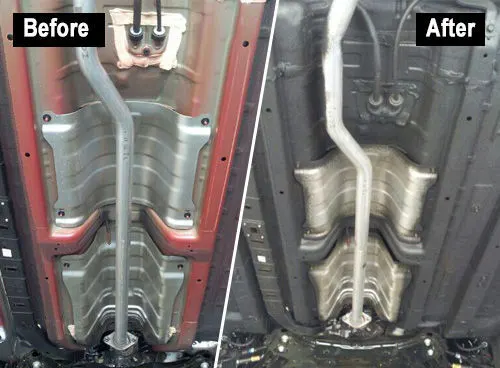
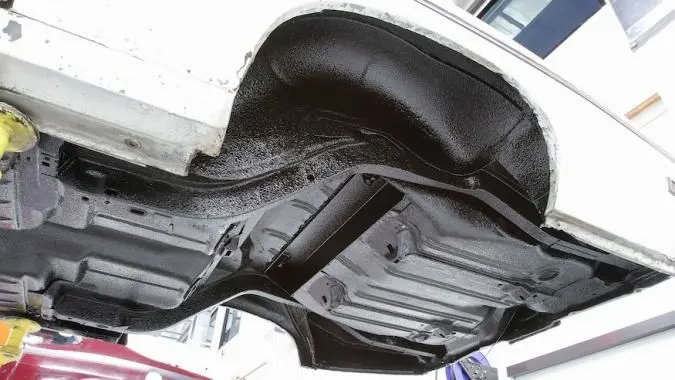
Underbody coating is the sprayed application of a wax or rubber-based composite onto the entire underneath of the vehicle. It's designed to create a rustproof layer between the underneath of the vehicle and the water, ice, and salt on the road.
Underbody coating provides a complete layer of protection for the vehicle. This includes the frame rails, wheel wells, internal body panels and floorboards. Even if your car's underside isn't actually visible, it is still exposed to potential damage when you go out driving. Things like dirt, debris, mud, and salt are kicked up from the road and get into the nooks and crannies of your vehicle's undercarriage, which would rapidly chip off the normal paint, allowing rust to begin. Therefore, it offers additional protection from the nasty things the road coughs up in addition to defending against rust and corrosion.
Why Underbody Coating is needed:
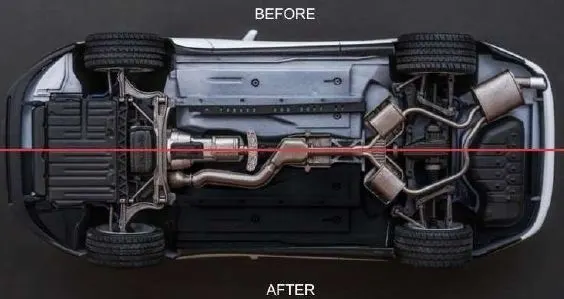
A vehicle's paint or windscreen damage is visible to the naked eye. However, finding damage underneath the car is considerably difficult but no less important. Although certain automobiles, trucks, and agricultural equipment are given undercoating at the factory, this is not sufficient in the long run. Moisture, dirt, stone-chipping and road salt cause stress cracks to form and this affects the car under seal. Once the underbody coating is affected, it is only a matter of time until it spreads over wider areas.
The Difference Between Rust Protection and Undercoating:
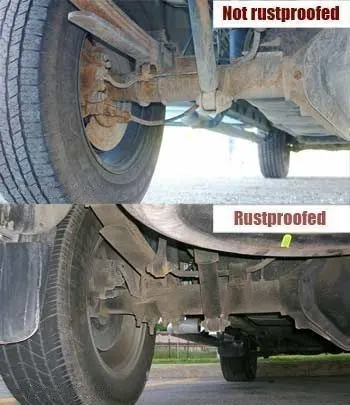
Undercoating and rust protection often go hand-in-hand, but they are slightly different, irrespective of the similar (corrosion prevention) goal . Rust protection generally protects the visible parts of the vehicle making for a much more aesthetically pleasing finish and specific areas all around the vehicle where rust can claim an initial foothold, while undercoating protects the underside of the vehicle for the longer life of the vehicle. and there are a variety of coatings available
Conversely, Rustproofing is the application of wax-based protective spray on a vehicle’s body and other parts where water can easily accumulate and form rust over time. So, technically, the undercoating is applied on the underside of a vehicle to create a layer between the vehicle and corrosion-causing substances like snow, ice, mud, debris, etc.
|
Vehicle Treatment |
Application Part |
|
Rustproofing |
Vehicle body and other hard-to-reach parts. |
|
Undercoating |
The underside of the vehicle. |
Types of Under-body coating:
Depending on the level of damage and how much protection needed to safeguard the vehicle will determine which type of automobile undercoating should be selected:
Rubberized Undercoating:
- Rubberized vehicle undercoating is simple to use, provides sound absorption, and protects against dirt, moisture, and dings or dents.
- Rubberized undercoating is safe to apply on the wheel wells and quarter panels in additional to the vehicle's undercarriage, and it dries to a soft rubbery finish that stops further rust, damage, or moisture seeps.
- The coating can be painted over and, if necessary for bodywork, can be easily removed with an undercoating removal spray.
- In general, rubberized coating is the best option for safeguarding the underside of your automobile because it offers the easiest and most effective protections against rust and moisture.
Polyurethane Undercoating:
- Undercoating sealants with a polyurethane basis can be applied more quickly and easily.
- Polyurethane undercoating frequently comes in canisters that may be pre-loaded into application guns.
- This kind of sealant functions by bonding with and shielding unoxidized metal by seeping into all seams and cracks, displacing moisture and salt, and oozing around rusty regions.It also sands quickly in case you'll need to perform bodywork and can be painted over.
- On the other hand, this kind of automotive undercoating typically needs a little more surface preparation prior to application; it is typically advised to sand and apply an etching primer to bare metals.
Wax or Paraffin-Based Undercoating:
- A paraffin-based undercoating will be the cheapest and quickest option available with which to protect the undercarriage of your vehicle.
- But keep in mind that it will lose its effectiveness, quickerthan other kinds of undercoating and will need to be removed and reapply at least once a year.
- Wax-based undercoatings never truly harden. During application, they drip or flow into seams and cracks to provide protective properties.
- In moderately humid areas, they provide at least a basic level of protection and are typically sold in spray gun canisters or aerosol cans.
Asphalt-Based Undercoating:
- Any of the aforementioned types of undercoating are adequate for protecting standard vehicles.
- Asphalt-based undercoating offers a little bit more resilience against pebbles, chips, and moisture for large trucks and heavy equipment.
- Asphalt-based undercoating generally includes a small amount of rubberized material that helps it set up firmly and reduce noise.
- This form of undercoating, which is often available in five gallon pails and has a longer cure period than the other three, is best used only for undercarriages because it cannot be painted.
Step-by-Step Process of Under-Body Coating:
Caution: Remember to work in a properly ventilated room, as dealing with paint, the serviceman need to ensure that he can breathe adequately inside the room.
- With the use of Hydraulic Jack, lift the car and remove the wheel and plastic components attached to the fender. Then, lock it firmly.
- Use the degrease to clean the entire underside of your vehicle. Once done, remove the rust completely by sandblasting or sanding, depending on the area and the rust extent.
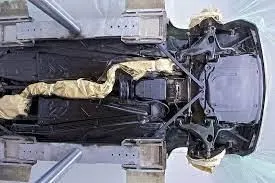
- After removing the rust and cleaning the area thoroughly, mask off the adjacent areas and parts where coating not allowed to spray, such as exhausting pipe, brake system, engine, links and joints, paint surface and etc.
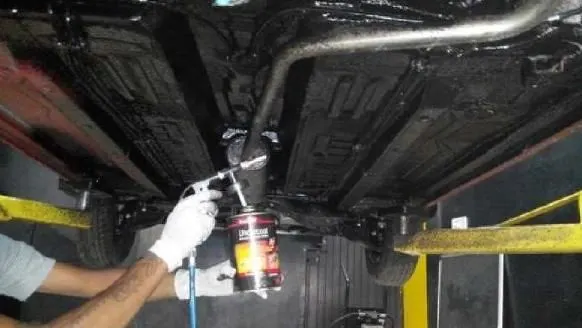
- Most undercoating is generally applied with a spray gun. A disposable spray gun will work best; once the undercoating hardens, it becomes very difficult to clean the gun even with a lot of thinner.
- Spray the coating layer by layer until the required thickness need and make ensure that layers dry in between. (Minimum two coats will provide the optimum protection. Don’t forget to allow ample dry time between coats).
- After tough free, remove all the mask paper, re-install all the parts.
- In case the under-body coating is sprayed to unwanted areas, clean it before drying.
Advantages:
- Minimizes Sound: It reduces the sound from bottom side of the car resulting a noiseless as the coating is made of wax or rubber-based composite gives smooth driving experience.
- Heat Insulation: It insulates the interior of the car from extreme temperatures from beneath the vehicle providing a comfortable cabin experience.
- Anti-chipping property: If any stone hits the coating it does not get chipped off the coating. Hence, protects the underbody from exposure to water.
- Refinement: Adding additional coating on top of the factory-installed underbody coating on your automobile gives additional reinforcement and safeguard the underbody. Additionally, there would be less chance for the factory coat to peel off.
Disadvantages:
- Corrosion:Undercoating will not help if corrosion already exists and the corrosion needs to be removed first before it can be applied, which can be expensive for you.
- Re-coating:It should be reapplied every 3 to 5 years for the better maintenance and results.
- Additional Weight:The weight of the vehicle is increased by undercoating.