Benchmarking
Benchmarking
Benchmarking is the foremost important process to do on the pre-design & development phase. Benchmarking is a technical process of comparison between product in the aspects of specifications, performance, design, making, service delivery and supply chain management in order to make better profit of the company. The benefits of benchmarking lie in its main objective, which is to identify and analyze best practices that will help in improving the overall performance of the business. Also it’s a key process to significantly improve the new product from the previous one of their product or better than the competitor’s one in all the aspects under a pre-defined targeting market sector considered to be the best in the industry.
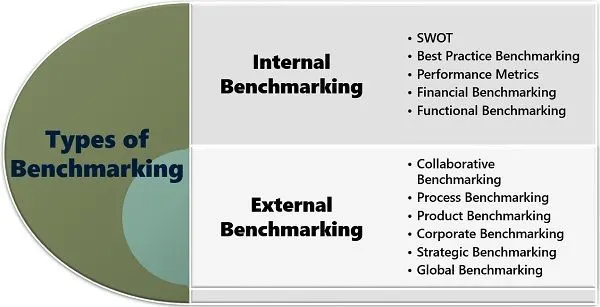
The benchmarking process generates a report through a detailed analysis, which helps in breaking down the mechanism that makes any superior performance possible. Based on the above benchmarking methods and implementing innovation to the product, the company can know their key highlights and features of the product. This will be highly helpful in promotion and push the sales by communication with the customers.
Step by Step Benchmarking Procedure:
In every organization, benchmarking is carried out in two steps:
- Benchmarking 1 is used to compare the price, features and segments, whereas
- Benchmarking 2 is used for comparing the specifications and features of individual components.
- Identify the components to benchmark
Identify the components that have to be benchmarked. The component can be a product, service, shipment quantity or economic amount output. Once the initial identification is completed, it becomes easy to collect all the relevant data to contribute for the desired set of output.
- Analyze the components
Based on the component identification, collect data and its analysis. This step helps in understanding the best practices adopted by the competitors and analyzing the performance gap between the competitive organizations. Additionally, it is the most effective way to address the discrepancy in performance.
- Integrate operational goals
For the establishment of goals and operations of an organization, its required to communicate benchmarking findings in the organizational structure and develop the plan of actions accordingly.
- Formulate an action plan
Development of a plan of action requires the construction of specific strategies and tactical decisions that can help to implement new practices. Apart from this, identifying the barriers for successful implementation of strategy which is very essential to leverage the benefits of benchmarking.
- Incorporate the best practices
This is the final step of benchmarking process were benchmarking becomes fully institutionalized and the strategies are ready to implement to bring out the change. This step requires the adoption of best practices identified via benchmarking process to eliminate negative gaps of performance.
- The potential of the benchmarking process is realized only when it is incorporated fully along all the verticals of an organization.
Benefits of Benchmarking:
1. Quality Improvement: Organizations are continuously improving the quality of their products & services with the aid of benchmarking. Organizations observe the current standard, and then try to do something better than the previous one.
2. Better performance: Benchmarking helps the organizations to overcome unsatisfactory on their product outcomes. They continuously strive to improve their performance standards in order to stay outstanding in the market.
3. Cost efficiency: Benchmarking provides organization with relevant data on the lastest technology and processes followed in current business environment. These are aimed to increasing productivity while reducing cost.
4. Prioritizing areas of improvement: While organisations understand the importance of constant development, they may occasionally be unclear of where to begin. Benchmarking helps organizations to identify the areas where the gap between their standard and that of the industry is the largest. This helps organizations to prioritize the areas that they need to work on.
5. Leveraging strength areas: Benchmarking can also throw light on the areas where the organization is doing much better than what is expected in the market. Knowing this information can be the strength for the organization.
Case:
Mr. D.S. Pughazhyendhii is a married man who lives in Bangalore which is a highly crowded city. His family comprises five members including his wife, five-year-old boy, his father, and his mother. He visits his native place Madurai which is 500 kms away from Bangalore once in a month. Also, he will be using his car to commute to his office. His budget falls between 8 to 10 lakhs on road. Please suggest to him with options so that he will buy a good car for his family.
Note: Pughazhyendhii is fond of big cars.
Objective: Considering the customer conditions and requirements, suggesting him a few good cars for his family.
Suggestions:
Minimum considerations to satisfy Mr. D.S. Pughazhyendhii recommendations:
- Budget: 8 - 10 Lakhs [On Road Price in Bangalore]
- Seating Capacity: 5 Seater Car [5 member family]
- Engine: BS 6 Engine [Emission Norms]
- Transmission: Manual or Automatic
- Fuel Type: Petrol & Diesel
- Mileage: Greater than 15 kmpl
- Dimension: Better leg room space [considering customer elder parents]
- Safety Rating: Min 3 Star Rating
- Essential Features [Safety, Entertainment, Functional, Style]
- Value for money
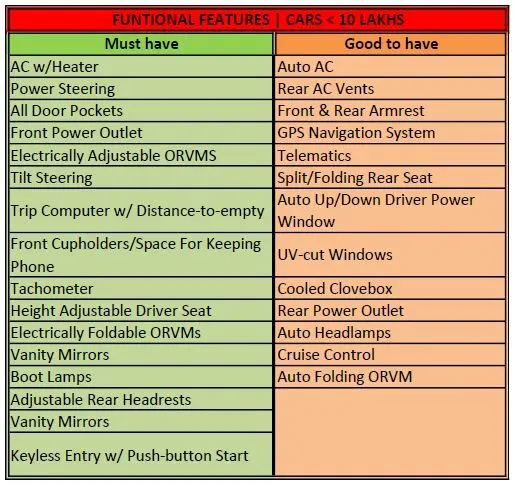
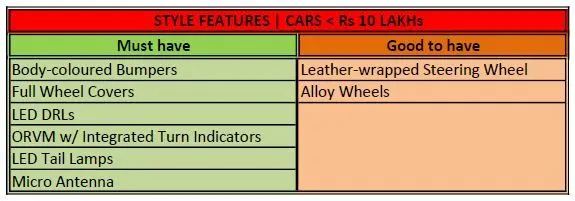
Essential Features should be included in cars under 10 lakhs:
- Safety:
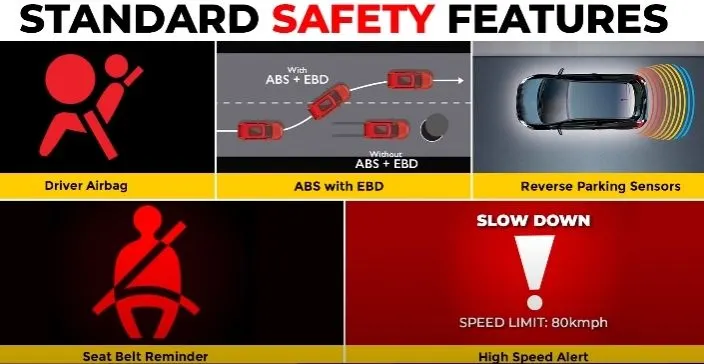
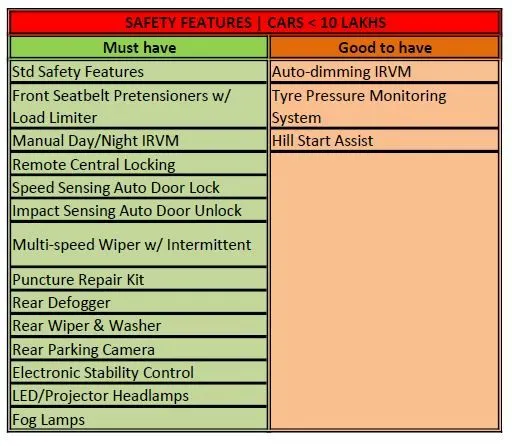
- Entertainment:
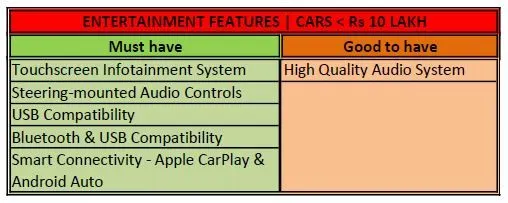
- Functional:
- Style:
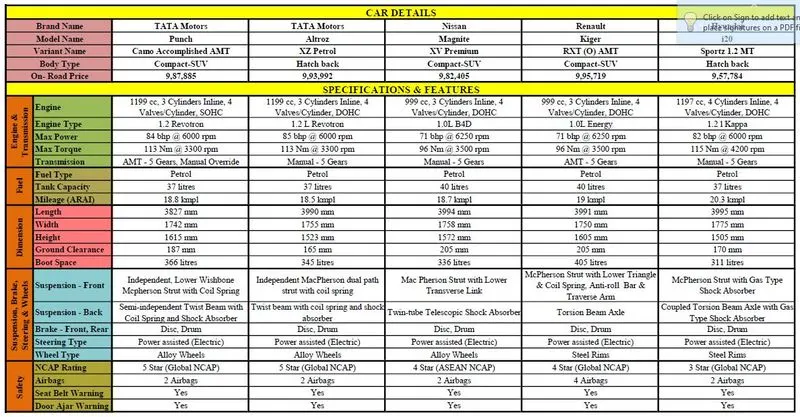
Cars Suggestions:
Based on the minimum considerations and must have features should present in cars under 10 lakhs, here are my top 5 suggestions:
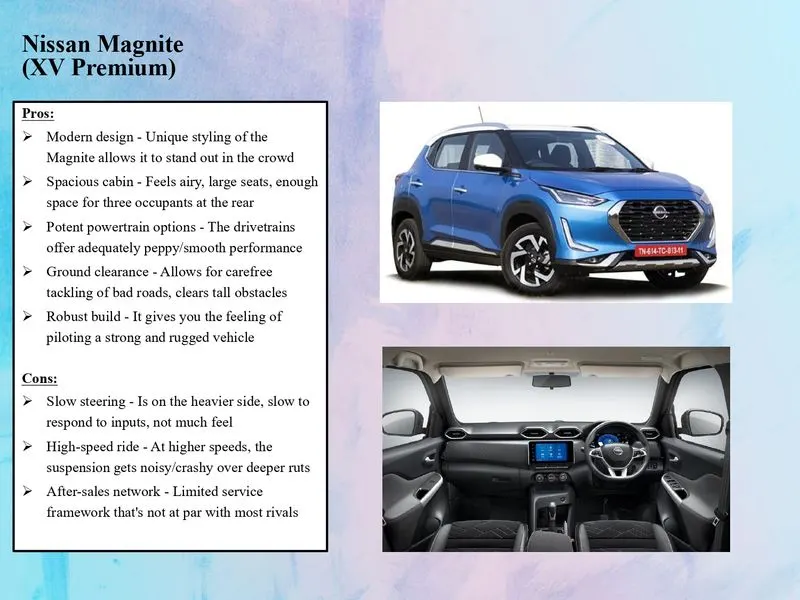
Pros & Cons:
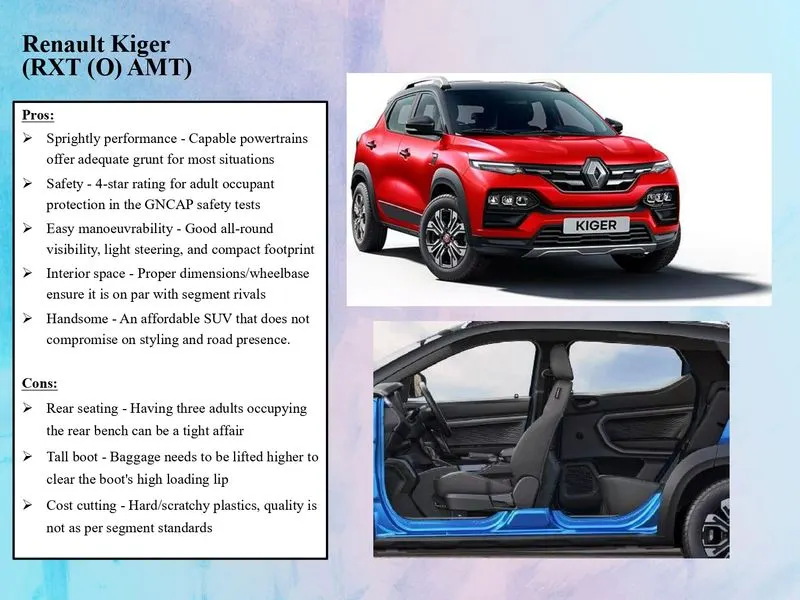
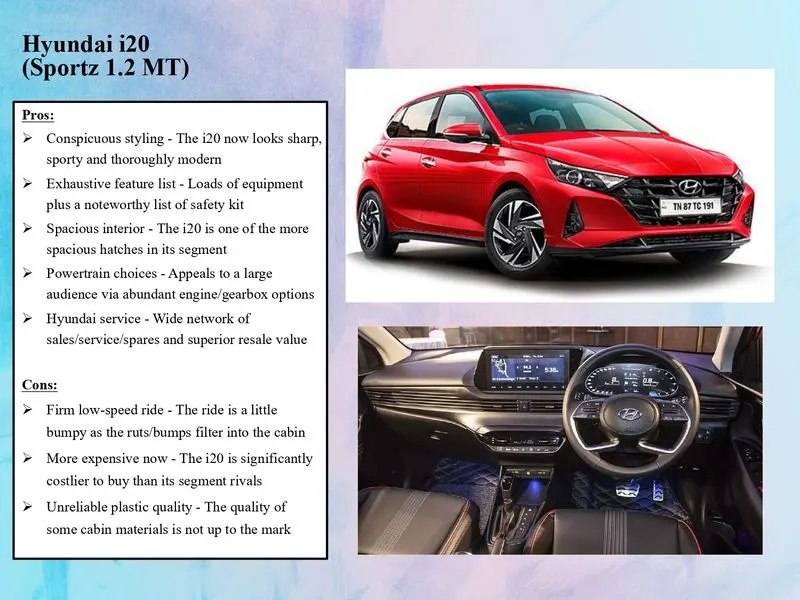
Pros and Cons for the above suggested cars:


Conclusion:
After discussing the specifications, features, pros and cons including the customer considerations and usability conditions of all the suggested vehicle individually, my concluded opinion on an overall comparison among the suggested vehicles is to choose TATA Altroz - XZ Petrol variant because of:
- Max power - 85 bhp@6000 rpm & Max torque - 113 Nm@3300 rpm engine returns 18.5kmpl millege.
- Adequate powertrain performance and stunning hatch back design with 5-star G-NCAP rating.
- Good manuerability with easy light controls and better cabin space.
- Loaded with features and value for money.