Hood design-Week 2
HOOD DESIGN
Aim: The main objective of this challenge is to learn the necessary commands, tools, and surface modelling methods for Hood design using Siemens NX Cad. To Develop a hood BIW design idea that satisfies the manufacturing feasibilities, functional requirements, and EURO NCAP standards.
Introduction:
Hood:
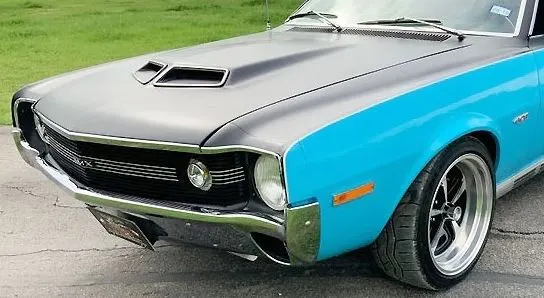
The hood or bonnet is a hinged cover used to cover the car engine compartment and other components. On front-engine vehicles, the hood was hinged at either the leading or trailing edge or on earlier models was divided into two sections, each hinged along the centerline. Hoods can open to allow access to the engine compartment, or trunk on rear-engine vehicles and some mid-engine vehicles for inspecting the engine room, maintenance, and repair work. Some high-performance cars have hood scoops that allow a direct flow of air to enhance performance in several possible ways. Apart from that sometimes on the hood, wiper jets for windshield cleaning and hood ornament (Eg: The Spirit of Ecstasy) were placed additionally. Hoods are typically made of steel or aluminum, although aftermarket manufacturers may manufacture hoods out of fiberglass, carbon fiber, or dry carbon.
Design Considerations:
The Hood is a critical component because it is the initial point of collision in frontal crashes and pedestrian hits. So it has to be designed with safety norms and pedestrian safety requirements.
Pedestrian safety:
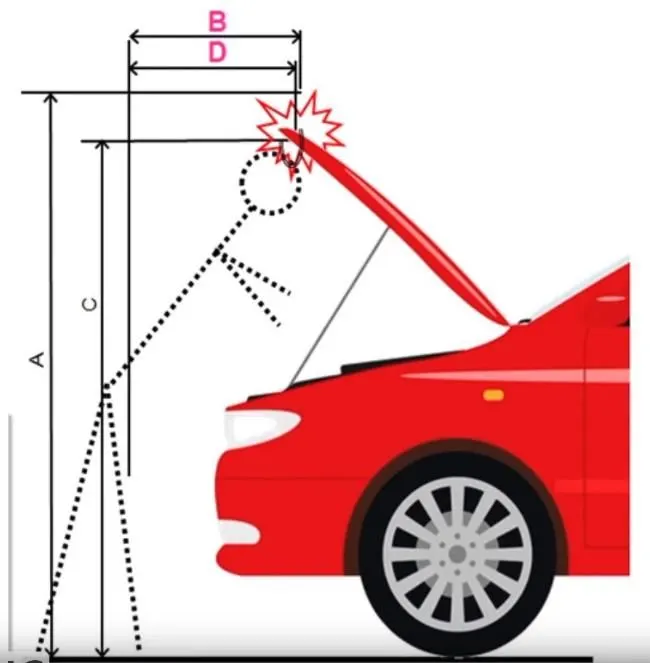
The entire automobile is designed considering both occupant and pedestrian safety and according to hood design, the head impacts zone and wrap-around distance are taken into consideration. The major reason for the fatality of the pedestrian in an accident is due to head injury resulting from the hard impact of the head against the stiffer hood or the ground. To avoid the hard impact, the hood is designed to be less stiff in child and adult heat impact areas.
Wrap around distance:
When a car hits a pedestrian, the whole human body wraps around the front shape of the car and the head impacts either the bonnet or the windscreen area. The distance at which the head impacts the car from the ground is called the Wrap Around Distance (WAD).To be specific the Wrap Around Distance is a measurement of the distance from the ground to the head impact zone over the outer surface of the car.
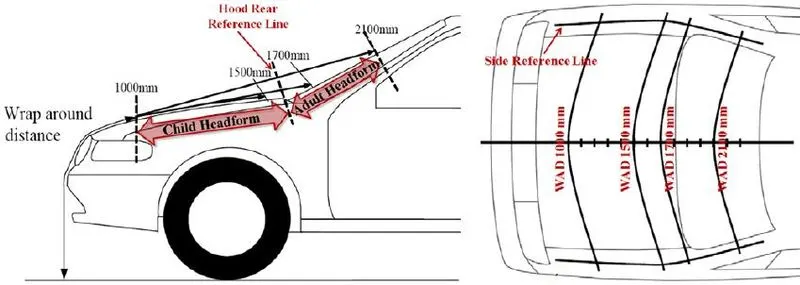
The severity of the injury caused by the frontal crash depends on the type and shape of the vehicle, the hood design, the speed of the vehicle, and the movement of the pedestrian relative to the vehicle. In addition to these parameters, the wrap-around distance plays a major role in the safety measures for a pedestrian.
Hood Head Zone:
The purpose of examining the hood head zone is to check whether anyone might get hit on the hood panel or striker when bending to operate the engine room. The hood opening angle and the ground clearance of the car are the key factors to the Hood head zone. In different regions, the standard hood opening angle changes depending on the average height of the population in different regions.
Hood Design:
Data to be used:
Hood Thickness Information
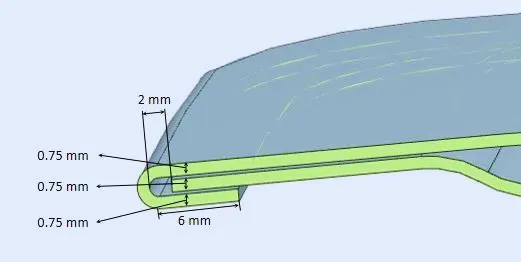
Outer Panel Thickness = 0.75mm
Inner Panel Thickness = 0.75mm
Reinforcement Thickness = 1.5mm
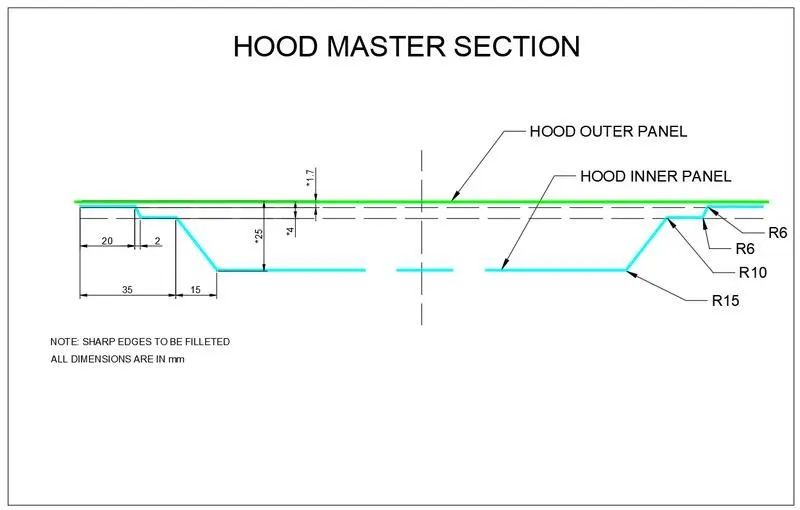
Master section:
Hood Outer Panel:
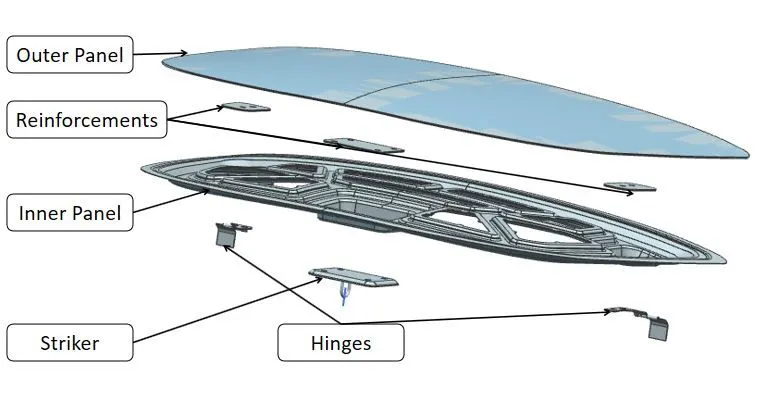
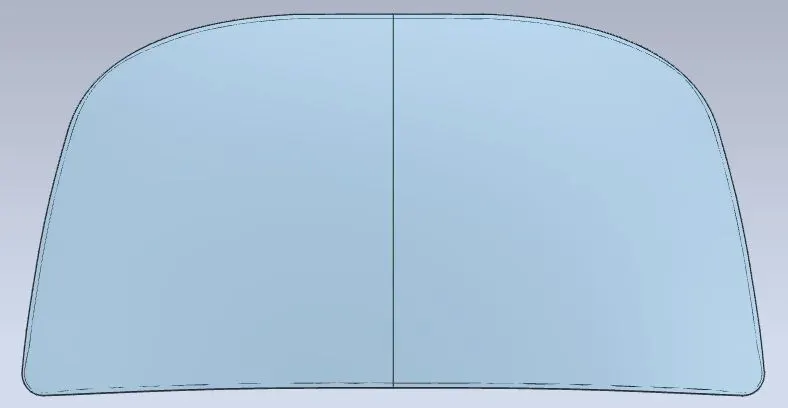
The outer panel is just a metal cover with a good aesthetic styling surface. The styling team designs the skin data of the hood's outer panel by considering the shape and size required to cover the engine compartment along with aerodynamic aspects, in order to reduce air resistance. The outer panel is attached to the inner panel by hemming. So, it is necessary to provide the required hemming flange and reliefs for the hemming operation. We also provide mastic sealants between the outer panel and inner panel to reduce vibration and the stiffener pad may place or not based on the cost-cutting.

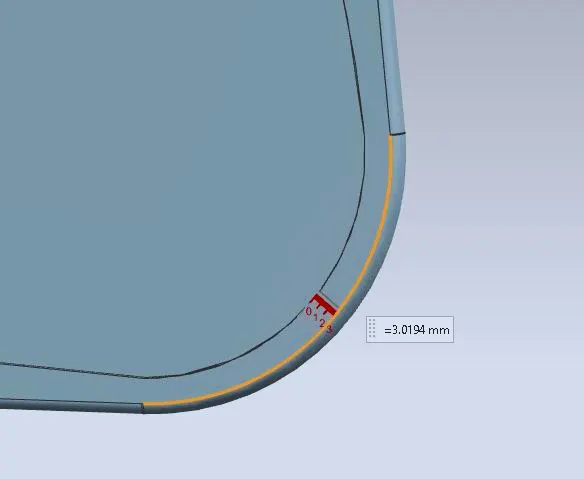
Corner Relief:
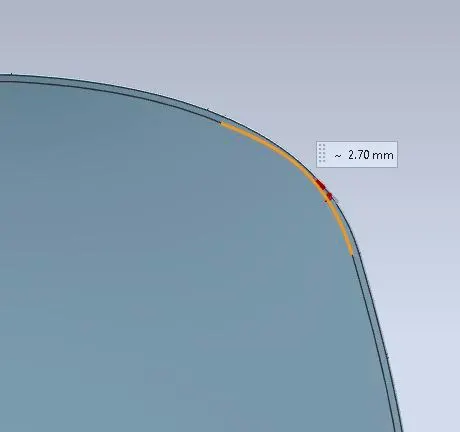
The purpose of providing corner relief is to control sheet metal material behavior and to prevent unwanted deformation during unbend operations. Bending on the corner increases the thickness of the sheet metal which may cause in deformation to the expected result.
Hood Inner Panel:
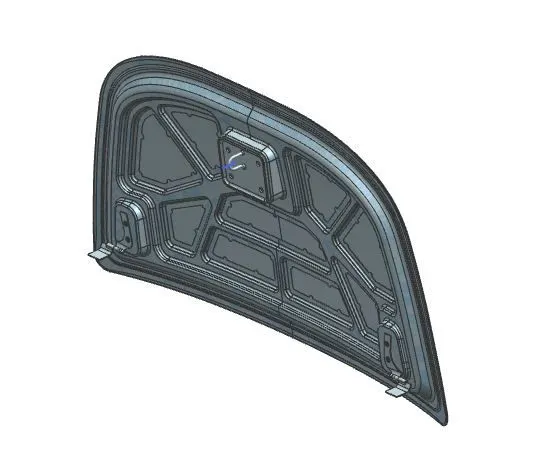
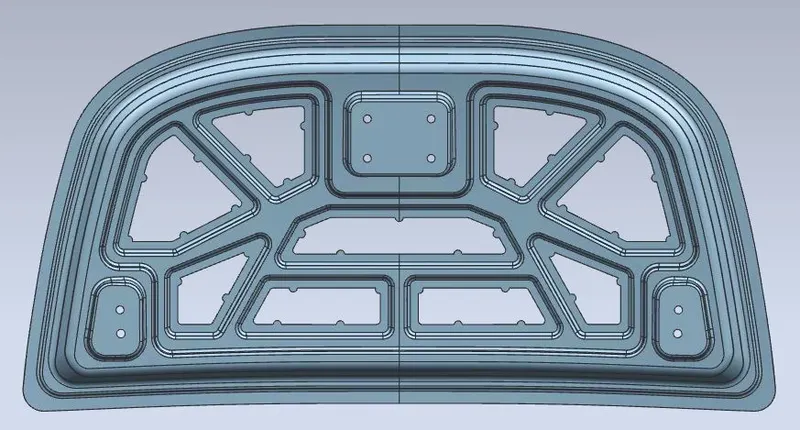
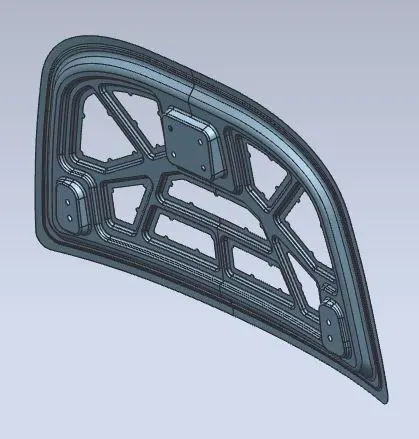
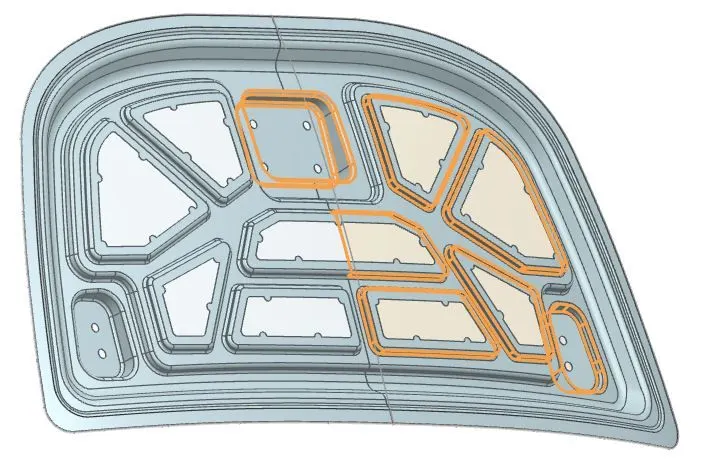
The inner panel provides strength and rigidity to the hood. The master section represents the initial embossed shape and dimensions which is the basic sectional view of the hood inner panel. Based on the skin data of the hood's outer panel and the master section the initial emboss for the inner panel was designed. Then to improve the strength of the hood and to withstand the frontal crash some more emboss were designed. These emboss help to divert the force received from frontal collision outside the A-pillar of the car for pedestrian safety. Further to reduce the inner panel weight, the upper surface of the embosses was pierced and the mastic sealant locations were also decided. Finally, we provide the emboss for the latch and striker mechanism and hinge elements after fixing the location.
Force Distribution:
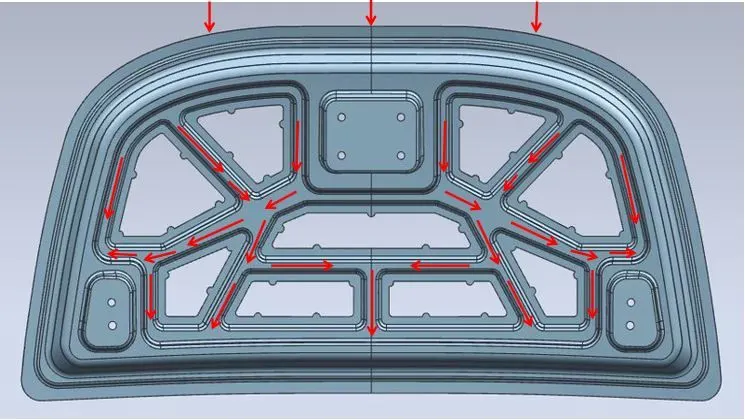
A variety of embosses in different shapes are provided throughout the interior panel to stiffness of the inner panel. These embosses also determines the force distribution to the car resulted from frontal distribution. The embosses are designed in such a way that mostly to distribute the force equally and to deviate the force outside the car so that the impact will be reduced for the passengers. Here in the figure the embosses are designed in such a way that the force is directed to either sides of the car.
Mastic Sealant Data:
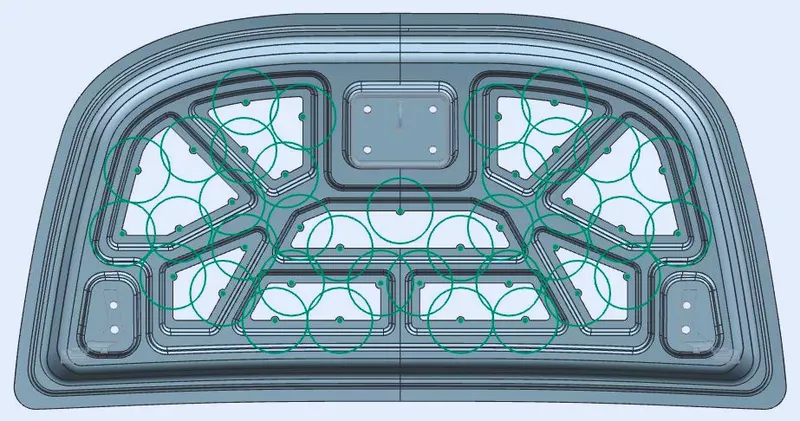
Hood commonly possesses a large surface area and hemming can only be provided through its boundary. We cannot use other joining techniques like welding, riveting, etc because they leave marks on the outer panel which spoils its aesthetic appearance. So, mastic sealants are used to stick and fill the gap between the inner surfaces of the outer panel and the inner panel. Mastic sealants are elastic compounds that behave like rubber. It is applied at specific spots on the inner panel. Each mastic sealant has its effect around a circular region of 60-80mm diameter and has the capacity to increase up to 5mm height on heat. Thus, the mastic points are arranged in such a way that it covers the areas away from the hemming region to reduce the noise and vibration between the inner surfaces of the hood.
Latch and Striker Mechanism:
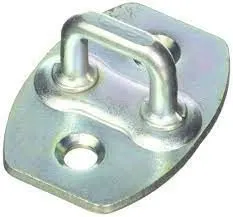
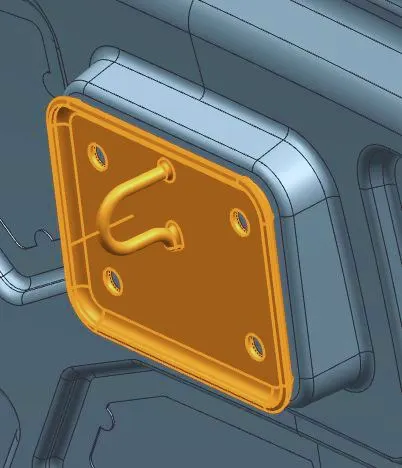
A latch and striker mechanism is used to lock the hood door to the car. Once the latch position is fixed on the chassis, the striker is fixed to the hood inner panel based on the latch trajectory to check whether it attains proper locking or not. In the latch and striker mechanism, there are two stages of locking. An initial lock is released by the lever provided on the dashboard area, which lifts the hood up to 10-15 mm. This is to prevent the accidental wide opening of the hood and the gap is enough to insert the finger and push the secondary lever to uplift the hood.
Latch Trajectory:
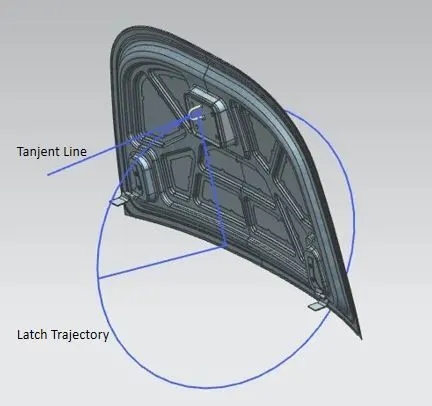
Once the hinge position is fixed, the hinge axis line is drawn. Then the latch trajectory is formed by the circle drawn from the midpoint of the hinge axis line. The latch trajectory circle radius is fixed base on the latch mounting position on the car. As the striker is fixed on the hood part and the latch is mounted on the car frame, for proper locking of the hood, the striker axis should be tangential to the latch trajectory.
Hinge Assembly:
Hinge assembly consists of two parts connected by a roller. One part is connected to the hood and the other one to the car chassis. Basically, hinges are used to connect two solid objects and typically allow only a limited angle of rotation about the fixed axis. So, in the hood for ease of car maintenance and repair work, hinges are helpful to lift and closing the hood.
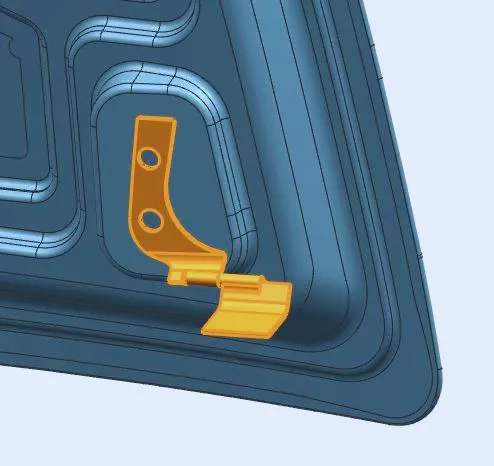
Hood Stay:
The hood is a heavier part that can’t be held by a person while inspecting the engine room or doing maintenance and repair work. A hood stay is an apparatus used in the engine room of a car, which can safely keep a car hood in the open state. The length of the hood stay decides or limits the opening angle of the hood.
There are two types of hood stay. They are:
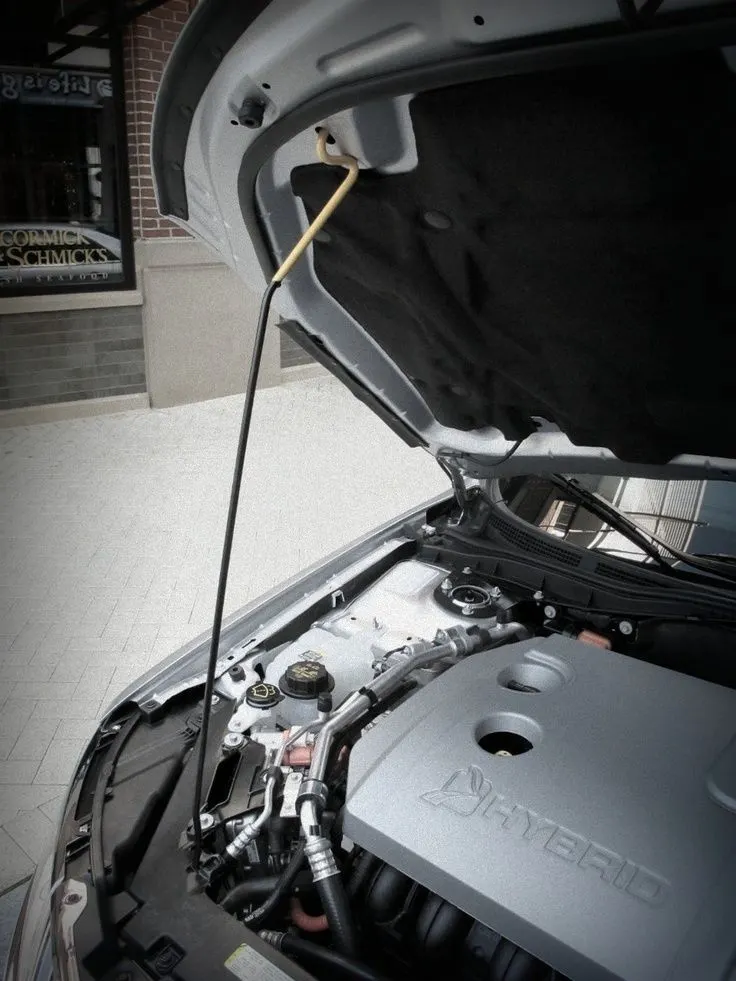
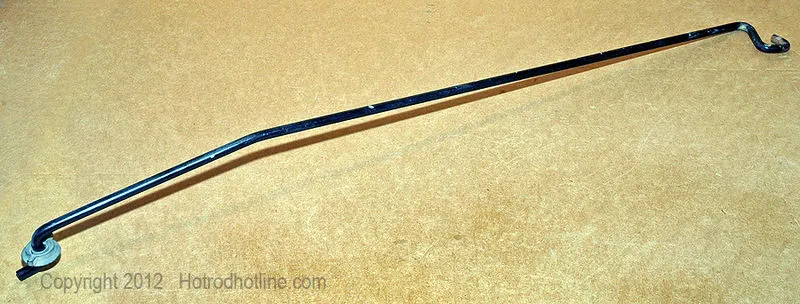
Support Rod: An apparatus used for supporting the car hood in an open state by means of a rod. One end of the support rod is either fixed on the car chassis or hood and the place holder (rest position) is also provided to avoid unwanted movement which creates noise. The support is to be positioned on the opposite side of the battery position, otherwise, it will be difficult to mount and unmount the battery. Most importantly the curvature of the support rod should not be more than 35 mm otherwise it tends to bend when supporting the hood.
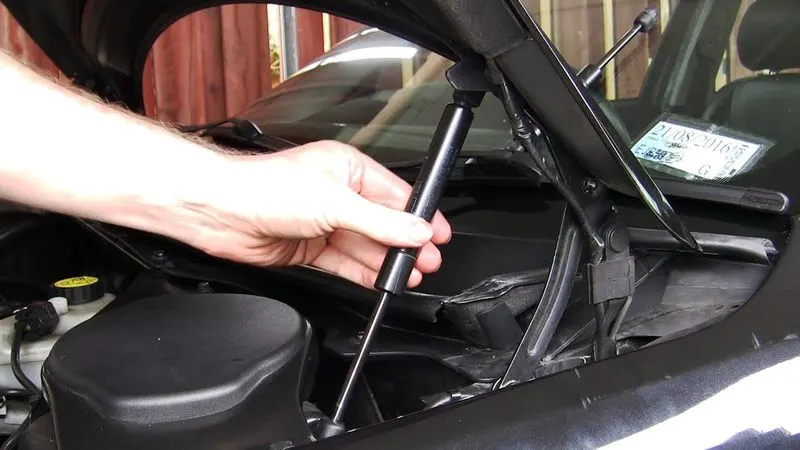
Gas Stay: An apparatus used for supporting the car hood in an open state by means of an actuator that is activated by gas. The gas stay is positioned on both extreme sides of the hood for the smooth lifting and even weight distribution of the hood.
Reinforcements:
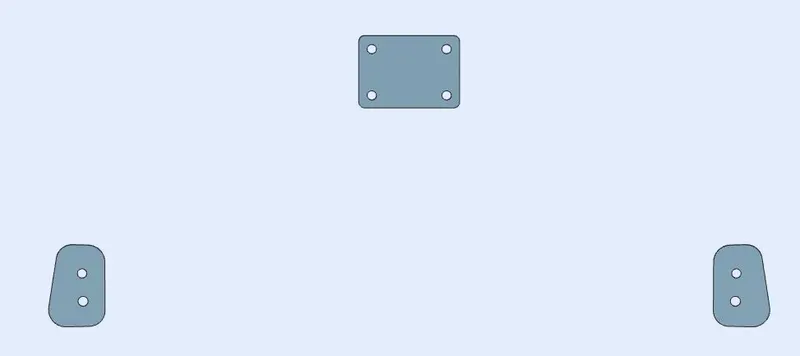
Reinforcements are the flat piece of sheet metal, which are provided according to the design requirements. . In the hood, mainly it is used at the hinge and latch regions to improve the strength locally. Usually, the thickness of reinforcements will be higher than that of the inner panels and the value varies according to strength requirement. According to the design requirement here, it is given 1.5mm thickness to both hinge and latch reinforcements.
Draft Analysis:
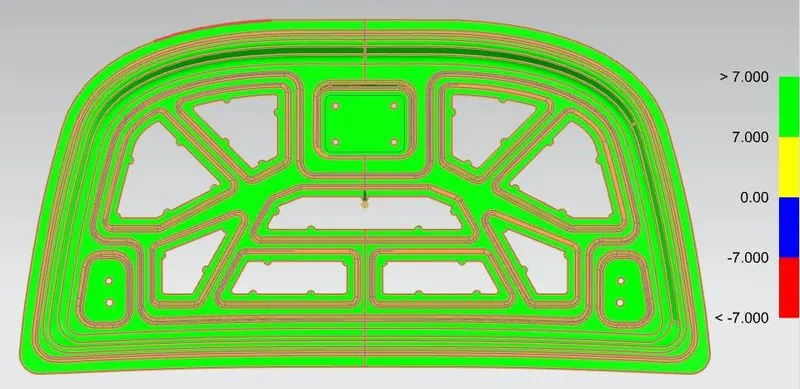
The draft analysis technique is used to analyze whether the designed part model is manufacturable based on the draft condition applied. The part should get easily removed from the panel dies (in case of Sheet metal part) or Mold (in case of plastic). As no parts can be ejected from the tool if it is having a straight 90-degree profile from its base surface. A small draft angle is provided to each and every area of the component in order to get easy removal of the component from the tool. Hence it is required to provide a direction in which components should eject easily from the tool.
Once the design was ready, the inner panel of the hood was analyzed for manufacturability. Draft Analysis is done for the minimum draft angle of 7 degrees. Here the draft analysis shows that the die can come out of the cavity without any interruption.
Manufacturing process involved in Hood Assembly:
Deep Drawing:
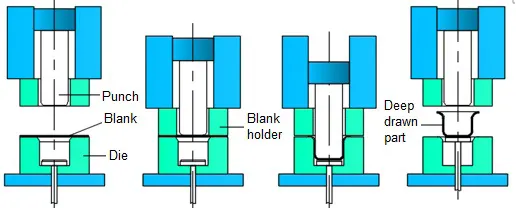
Deep drawing is a manufacturing process that is widely used in the formation of flat sheet metal into cup-like or box-like structures and even more complex contours. However, as complexity increases, manufacturing problems increase rapidly. It is better to design the shape of a deep drawing to be as simple as possible. Automobile parts, such as panels and gas tanks, are among a few of the items manufactured by sheet metal deep drawing.
Deep drawing is a sheet metal forming process with a punch and die that involves intricate material flow and force distributions. The punch and die setup is mostly similar to a sheet metal cutting operation, such as punching or blanking. Two main factors will cause the punch in deep drawing to draw the metal into the die cavity, rather than shearing it. One major factor in deep drawing is the die corner radius and the punch corner radius. When cutting sheet metal, the punch and die edges do not have a radius. Sharp corners on the punch and die cause it to cut. The force distribution will be altered by a radius on an edge, causing the metal to flow across the radius and into the die cavity. The amount of clearance is another important component that contributes to the punch drawing the sheet metal rather than cutting it. In cutting processes, clearance is typically between 3% and 8% of the thickness of the sheet metal. Deep drawing manufacturing often has clearance values between 107% and 115% of sheet thickness, which is larger than the thickness of the sheet.
Embossing:
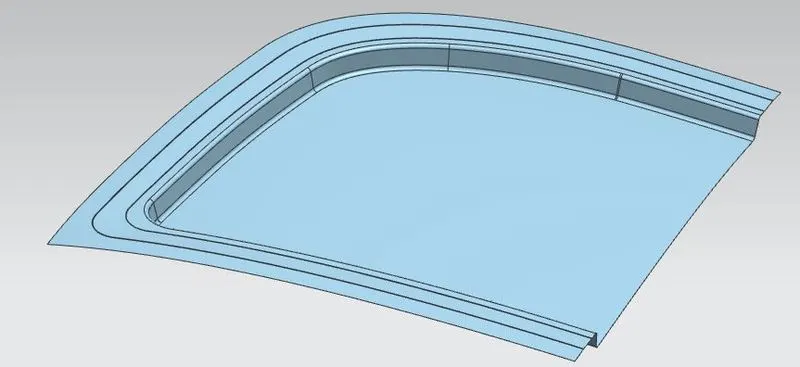
Sheet metal embossing is a stamping process for producing raised or sunken designs or relief in sheet metal. This process can be made by means of matched male and female roller dies, or by passing sheet or a strip of metal between rolls of the desired pattern. It is often combined with Foil Stamping to create a shiny, 3D effect.The metal sheet embossing operation is commonly accomplished with a combination of heat and pressure on the sheet metal, depending on what type of embossing is required. Theoretically, with any of these procedures, the metal thickness is changed in its composition.
Hemming:
Hemming is a forming operation in which the edges of the sheet are folded or folded over another part in order to achieve a tight fit. Normally hemming operations are used to connect parts together, to improve the appearance of a part and to reinforce part edges. In car part production, hemming is used in assembly as a secondary operation after deep drawing, trimming and flanging operations to join two sheet metal parts (outer and inner) together. Typical parts for this type of assembly are hoods, doors, trunk lids and fenders.
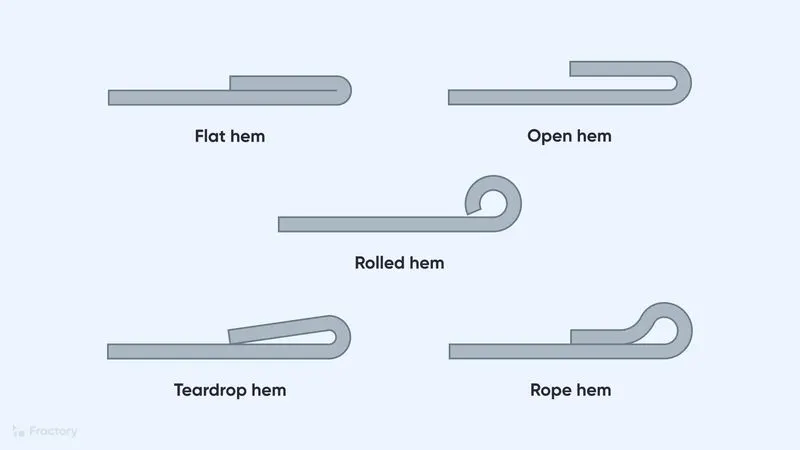
Types of hemming formation:
Blanking & Piercing:
Blanking and piercing are shearing processes in which a punch and die are used to produce parts from sheet metal. Blanking produces the outside features of the component, while piercing produces internal holes or shapes.
Conclusion:
Thus, the hood is designed completely as per the given design data and the master section considering the pedestrian safety norms and manufacturability possibilities.