Week 11 - Simulation of Flow through a pipe in OpenFoam
Aim:
To simulate an axi-symmetric flow through a pipe by applying the wedge boundary condition
Objective:
- To validate Hydro-dynamic length with the numerical result
- To validate the fully developed flow velocity profile with its analytical profile
- To validate maximum velocity and pressured drop for fully developed flow
- Post-process Shear stress and validate wall shear stress for fully developed flow
Assumptions:
- The flow is steady and laminar
- Pipe cross section is constant
- Flow is incompressible
Theory:
Hydro-dynamic length
In fluid dynamics, the entrance length is the distance a flow travels after entering a pipe before the flow becomes fully developed
For laminar flow entry length is given by:
`L_e=0.04*Re*D`
Hagen- Poiseuille's equations
`V_(avg)=(Re*mu)/(rho*D)`
`V_max=2*V_(avg)`
`triangleP=(8*mu*L*V_(avg))/r^2`
`triangleP_k=(triangleP)/rho`
`tau=(2*mu*V_max*R)/r^2`
where `Re=2100` is reynold's number
`mu=0.00089` is dynamic viscosity
D=0.02 is diameter of the pipe
R=0.01 is radius of the pipe
`rho=1000` is density of the fluid
`L_e=1.68` is length of the pipe
Simulation:
The simulation is carried in openFoam. For the given flow the icoFoam solver is chosen from the openFoam solvers and is then copied to the Foam_run folder for simulation.
For creating the geometry using File parsing in matlab the blockMeshDict file is generated.The geometry is as shown below
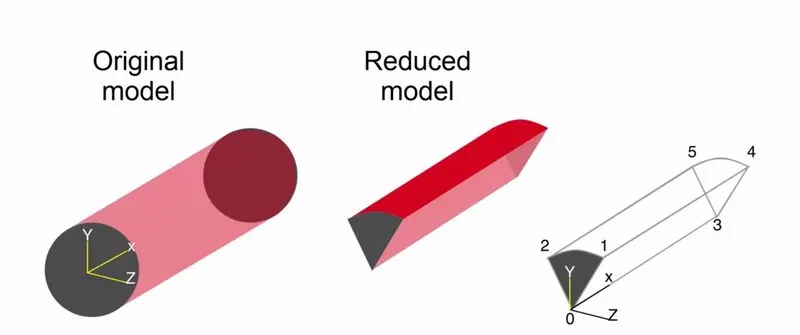
Code:
clear all
close all
clc
%Fluid properties
Re=2100;
rho=1000;
mu=0.00089;
nu=mu/rho;

%Pipe dimensions
D=0.02;
r=D/2;
L_e=0.06*Re*D;
L=L_e+0.7;
theta=3;

%Hagen- Poiseuille's equations
v_avg=(Re*mu)/(rho*D);
v_max=2*v_avg;
del_p=(8*mu*L*v_avg)/r^2;
p_k=del_p/rho;

h1='/*--------------------------------*- C++ -*----------------------------------*\';
h2='  =========                 |';
h3='  \\      /  F ield         | OpenFOAM: The Open Source CFD Toolbox';
h4='   \\    /   O peration     | Website:  https://openfoam.org';
h5='    \\  /    A nd           | Version:  8';
h6='     \\/     M anipulation  |';
h7='\*---------------------------------------------------------------------------*/';
h8='    version     2.0;';
h9='    format      ascii;';
h10='    class       dictionary;';
h11='    object      blockMeshDict;';
h12='// * * * * * * * * * * * * * * * * * * * * * * * * * * * * * * * * * * * * * //';

%coordinates of mesh
v0=[0 0 0];
v1=[0 r*cosd(theta/2) -r*sind(theta/2)];
v2=[0 r*cosd(theta/2) r*sind(theta/2)];
v3=[L 0 0];
v4=[L r*cosd(theta/2) -r*sind(theta/2)];
v5=[L r*cosd(theta/2) r*sind(theta/2)];

f1=fopen('blockMeshDict.txt','w')
fprintf(f1,'%s\n',h1);
fprintf(f1,'%s\n',h2);
fprintf(f1,'%s\n',h3);
fprintf(f1,'%s\n',h4);
fprintf(f1,'%s\n',h5);
fprintf(f1,'%s\n',h6);
fprintf(f1,'%s\n',h7);
fprintf(f1,'FoamFile\n{\n');
fprintf(f1,'%s\n',h8);
fprintf(f1,'%s\n',h9);
fprintf(f1,'%s\n',h10);
fprintf(f1,'%s\n',h11);
fprintf(f1,'}\n');
fprintf(f1,'%s\n\n',h12);

fprintf(f1,'convertToMeters 1;\n\n');
fprintf(f1,'vertices\n(\n');
fprintf(f1,'\t(%d %d %d)\n',v0);
fprintf(f1,'\t(%d %d %d)\n',v1);
fprintf(f1,'\t(%d %d %d)\n',v2);
fprintf(f1,'\t(%d %d %d)\n',v3);
fprintf(f1,'\t(%d %d %d)\n',v4);
fprintf(f1,'\t(%d %d %d)\n',v5);
fprintf(f1,');\n\n');

fprintf(f1,'blocks\n');
fprintf(f1,'(\n');
fprintf(f1,'\thex (0 3 4 1 0 3 5 2) (%d %d %d) ',300,30,1);
fprintf(f1,'simpleGrading (1 0.1 1)\n');
fprintf(f1,');\n\n');

fprintf(f1,'edges\n');
fprintf(f1,'(\n');
fprintf(f1,'\tarc %d %d (%d %d %d)\n',1,2,0,r,0);
fprintf(f1,'\tarc %d %d (%d %d %d)\n',4,5,L,r,0);
fprintf(f1,');\n\n');

fprintf(f1,'boundary\n');
fprintf(f1,'(\n');
fprintf(f1,'\tinlet\n');
fprintf(f1,'\t{\n');
fprintf(f1,'\t\ttype patch;\n');
fprintf(f1,'\t\tfaces\n');
fprintf(f1,'\t\t(\n');
fprintf(f1,'\t\t\t(0 1 2 0)\n');
fprintf(f1,'\t\t);\n');
fprintf(f1,'\t}\n');
fprintf(f1,'\toutlet\n');
fprintf(f1,'\t{\n');
fprintf(f1,'\t\ttype patch;\n');
fprintf(f1,'\t\tfaces\n');
fprintf(f1,'\t\t(\n');
fprintf(f1,'\t\t\t(3 5 4 3)\n');
fprintf(f1,'\t\t);\n');
fprintf(f1,'\t}\n');
fprintf(f1,'\ttop\n');
fprintf(f1,'\t{\n');
fprintf(f1,'\t\ttype wall;\n');
fprintf(f1,'\t\tfaces\n');
fprintf(f1,'\t\t(\n');
fprintf(f1,'\t\t\t(1 4 5 2)\n');
fprintf(f1,'\t\t);\n');
fprintf(f1,'\t}\n');
fprintf(f1,'\tfront\n');
fprintf(f1,'\t{\n');
fprintf(f1,'\t\ttype wedge;\n');
fprintf(f1,'\t\tfaces\n');
fprintf(f1,'\t\t(\n');
fprintf(f1,'\t\t\t(0 3 4 1)\n');
fprintf(f1,'\t\t);\n');
fprintf(f1,'\t}\n');
fprintf(f1,'\tback\n');
fprintf(f1,'\t{\n');
fprintf(f1,'\t\ttype wedge;\n');
fprintf(f1,'\t\tfaces\n');
fprintf(f1,'\t\t(\n');
fprintf(f1,'\t\t\t(0 2 5 3)\n');
fprintf(f1,'\t\t);\n');
fprintf(f1,'\t}\n');
fprintf(f1,'\taxis\n');
fprintf(f1,'\t{\n');
fprintf(f1,'\t\ttype empty;\n');
fprintf(f1,'\t\tfaces\n');
fprintf(f1,'\t\t(\n');
fprintf(f1,'\t\t\t(0 3 3 0)\n');
fprintf(f1,'\t\t);\n');
fprintf(f1,'\t}\n');
fprintf(f1,');\n\n');

fprintf(f1,'mergePatchPairs\n');
fprintf(f1,'(\n');
fprintf(f1,');\n');
h13='// ************************************************************************* //';
fprintf(f1,'%s\n',h13);
fclose(f1)
blockMeshDict file:
The following file is generated and used for the simulation
/*--------------------------------*- C++ -*----------------------------------*\
  =========                 |
  \\      /  F ield         | OpenFOAM: The Open Source CFD Toolbox
   \\    /   O peration     | Website:  https://openfoam.org
    \\  /    A nd           | Version:  8
     \\/     M anipulation  |
\*---------------------------------------------------------------------------*/
FoamFile
{
    version     2.0;
    format      ascii;
    class       dictionary;
    object      blockMeshDict;
}
// * * * * * * * * * * * * * * * * * * * * * * * * * * * * * * * * * * * * * //

convertToMeters 1;

vertices
(
	(0 0 0)
	(0 9.996573e-03 -2.617695e-04)
	(0 9.996573e-03 2.617695e-04)
	(3.220000e+00 0 0)
	(3.220000e+00 9.996573e-03 -2.617695e-04)
	(3.220000e+00 9.996573e-03 2.617695e-04)
);

blocks
(
	hex (0 3 4 1 0 3 5 2) (300 30 1) simpleGrading (1 0.1 1)
);

edges
(
	arc 1 2 (0 1.000000e-02 0)
	arc 4 5 (3.220000e+00 1.000000e-02 0)
);

boundary
(
	inlet
	{
		type patch;
		faces
		(
			(0 1 2 0)
		);
	}
	outlet
	{
		type patch;
		faces
		(
			(3 5 4 3)
		);
	}
	top
	{
		type wall;
		faces
		(
			(1 4 5 2)
		);
	}
	front
	{
		type wedge;
		faces
		(
			(0 3 4 1)
		);
	}
	back
	{
		type wedge;
		faces
		(
			(0 2 5 3)
		);
	}
	axis
	{
		type empty;
		faces
		(
			(0 3 3 0)
		);
	}
);

mergePatchPairs
(
);
// ************************************************************************* //
controlDict file:
The controlDict file is used to give simulation time and the time step values
/*--------------------------------*- C++ -*----------------------------------*\
  =========                 |
  \\      /  F ield         | OpenFOAM: The Open Source CFD Toolbox
   \\    /   O peration     | Website:  https://openfoam.org
    \\  /    A nd           | Version:  8
     \\/     M anipulation  |
\*---------------------------------------------------------------------------*/
FoamFile
{
    version     2.0;
    format      ascii;
    class       dictionary;
    location    "system";
    object      controlDict;
}
// * * * * * * * * * * * * * * * * * * * * * * * * * * * * * * * * * * * * * //

application     icoFoam;

startFrom       startTime;

startTime       0;

stopAt          endTime;

endTime         10;

deltaT          0.01;

writeControl    timeStep;

writeInterval   20;

purgeWrite      0;

writeFormat     ascii;

writePrecision  6;

writeCompression off;

timeFormat      general;

timePrecision   6;

runTimeModifiable true;


// ************************************************************************* //
Initial conditions:
Pressure(p)
For the pressure its given as kinematic pressure value calculated from the above equations
/*--------------------------------*- C++ -*----------------------------------*\
  =========                 |
  \\      /  F ield         | OpenFOAM: The Open Source CFD Toolbox
   \\    /   O peration     | Website:  https://openfoam.org
    \\  /    A nd           | Version:  8
     \\/     M anipulation  |
\*---------------------------------------------------------------------------*/
FoamFile
{
    version     2.0;
    format      ascii;
    class       volScalarField;
    object      p;
}
// * * * * * * * * * * * * * * * * * * * * * * * * * * * * * * * * * * * * * //

dimensions      [0 2 -2 0 0 0 0];

internalField   uniform 0;

boundaryField
{
    axis
    {
        type            empty;
    }

    inlet
    {
        type            zeroGradient;

    }

    outlet
    {
        type            fixedValue;
        value           uniform 0.0214247208;

    }

    top
    {
        type            zeroGradient;
    }

    front
    {
        type            wedge;
    }

    back
    {
        type            wedge;
    }
}

// ************************************************************************* //
Velocity(U)
/*--------------------------------*- C++ -*----------------------------------*\
  =========                 |
  \\      /  F ield         | OpenFOAM: The Open Source CFD Toolbox
   \\    /   O peration     | Website:  https://openfoam.org
    \\  /    A nd           | Version:  8
     \\/     M anipulation  |
\*---------------------------------------------------------------------------*/
FoamFile
{
    version     2.0;
    format      ascii;
    class       volVectorField;
    object      U;
}
// * * * * * * * * * * * * * * * * * * * * * * * * * * * * * * * * * * * * * //

dimensions      [0 1 -1 0 0 0 0];

internalField   uniform (0.09345 0 0);

boundaryField
{
    axis
    {
        type            empty;
    }

    inlet
    {
        type            fixedValue;
        value           uniform (0.09345 0 0);

    }

    outlet
    {
        type            zeroGradient;

    }

    top
    {
        type            fixedValue;
        value           uniform (0 0 0);
    }

    front
    {
        type            wedge;
    }

    back
    {
        type            wedge;
    }
}

// ************************************************************************* //
transportProperties file:
In this file the value for kinematic viscosity is given which is calculated using
`nu=mu/rho`
where `mu` is dynamic viscosity and `rho` is density of the fluid
/*--------------------------------*- C++ -*----------------------------------*\
  =========                 |
  \\      /  F ield         | OpenFOAM: The Open Source CFD Toolbox
   \\    /   O peration     | Website:  https://openfoam.org
    \\  /    A nd           | Version:  8
     \\/     M anipulation  |
\*---------------------------------------------------------------------------*/
FoamFile
{
    version     2.0;
    format      ascii;
    class       dictionary;
    location    "constant";
    object      transportProperties;
}
// * * * * * * * * * * * * * * * * * * * * * * * * * * * * * * * * * * * * * //

nu              [0 2 -1 0 0 0 0] 8.9e-07;


// ************************************************************************* //
Post-processing:
Mesh
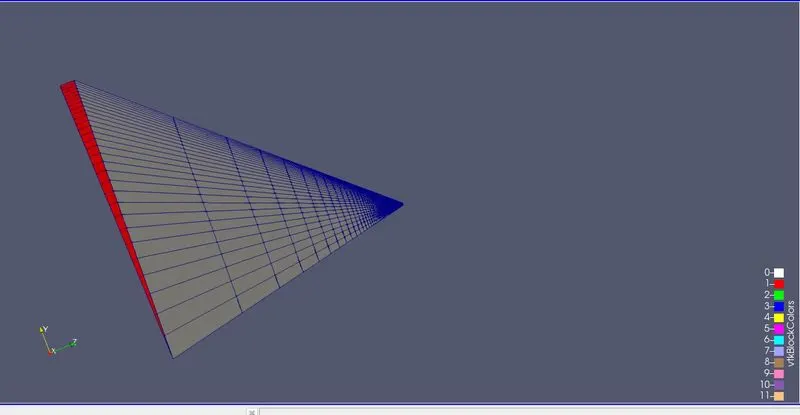
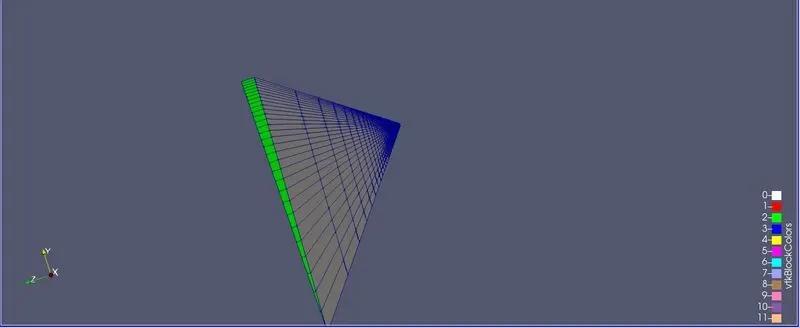
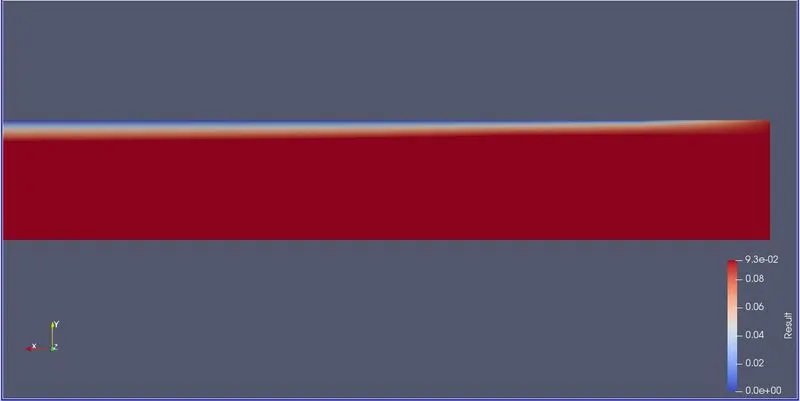
Velocity contour
At inlet
At outlet
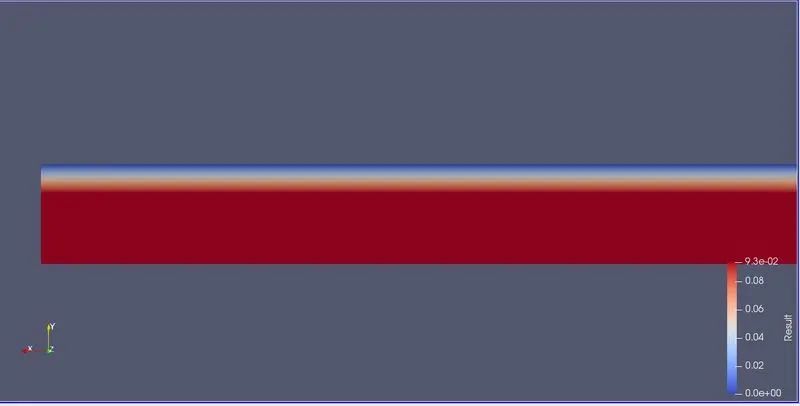
Results:
At x=0.01
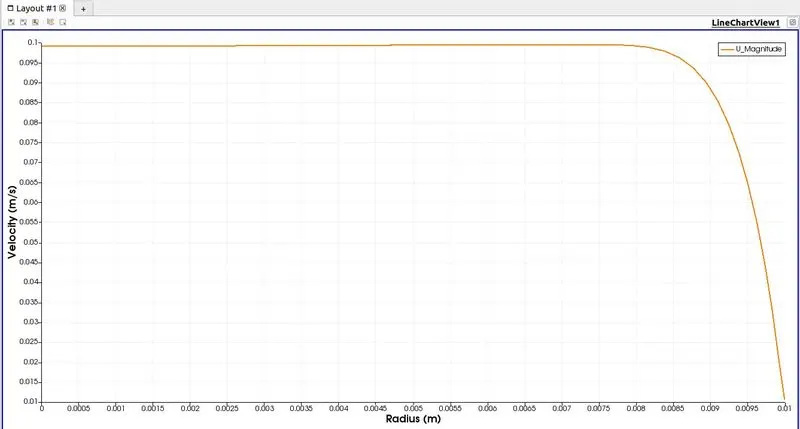
At x=0.2
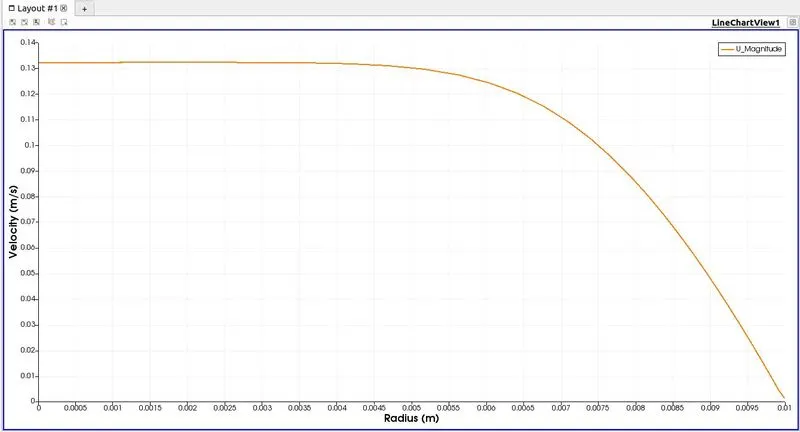
At x=0.5
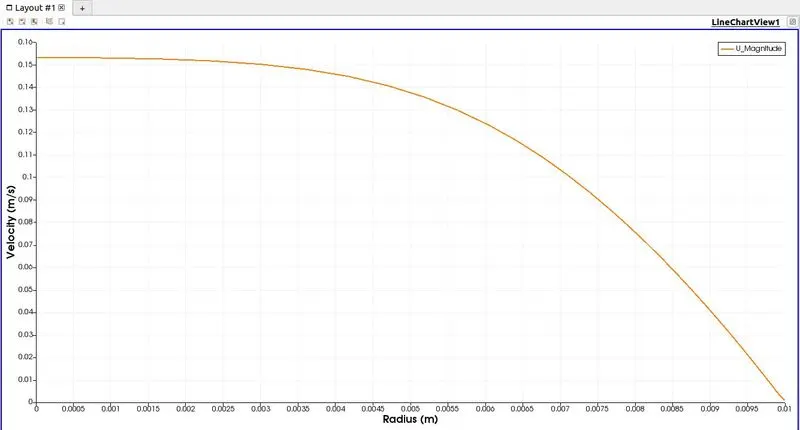
At x=1
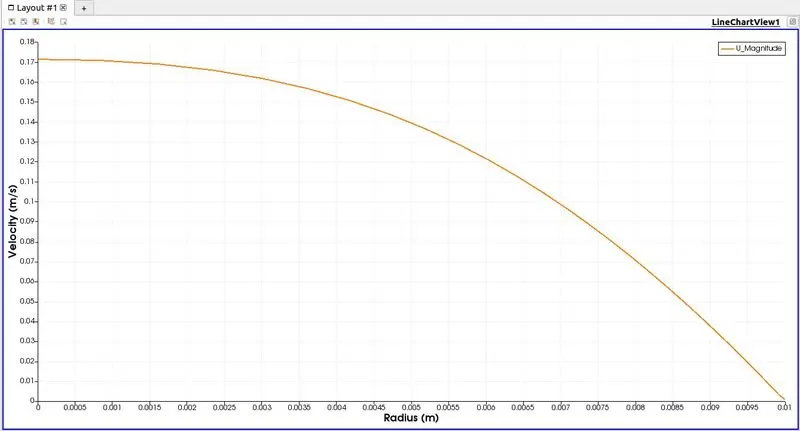
At x=1.5
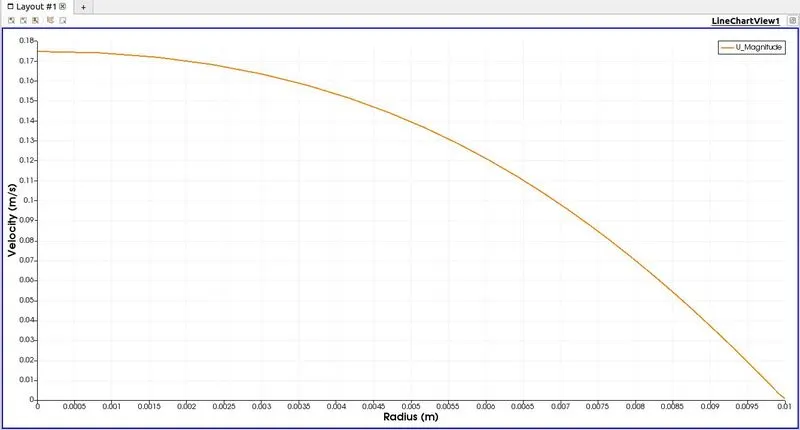
At x=2
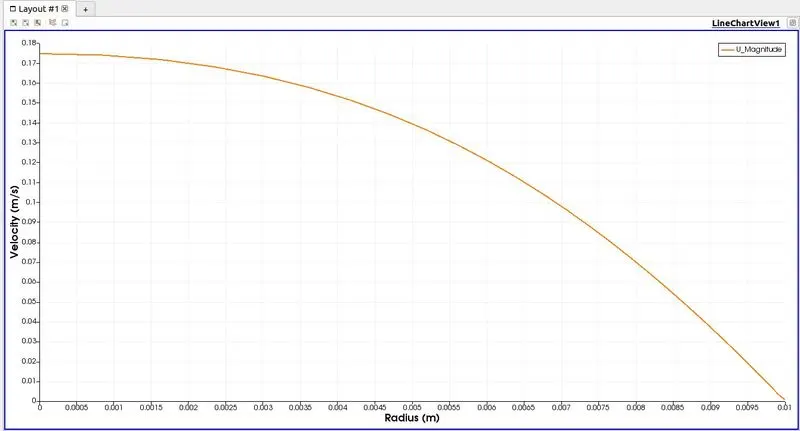
At x=2.5
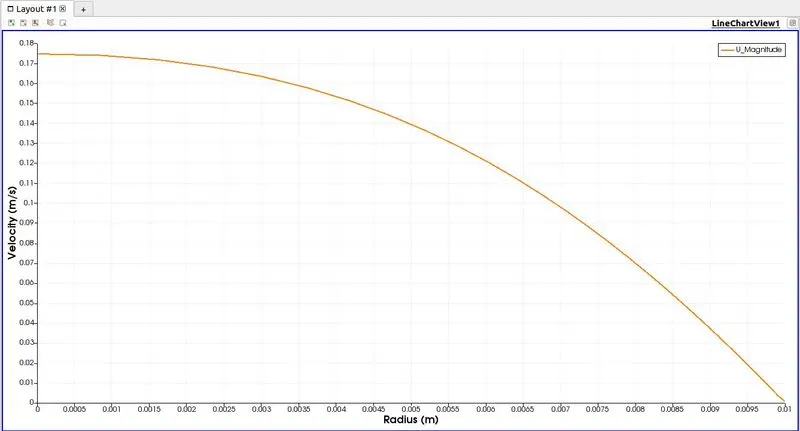
As we can see that after x=1.5 there is not much variation in the velocity profile which indicates us that the flow is fully developed.
Pressure
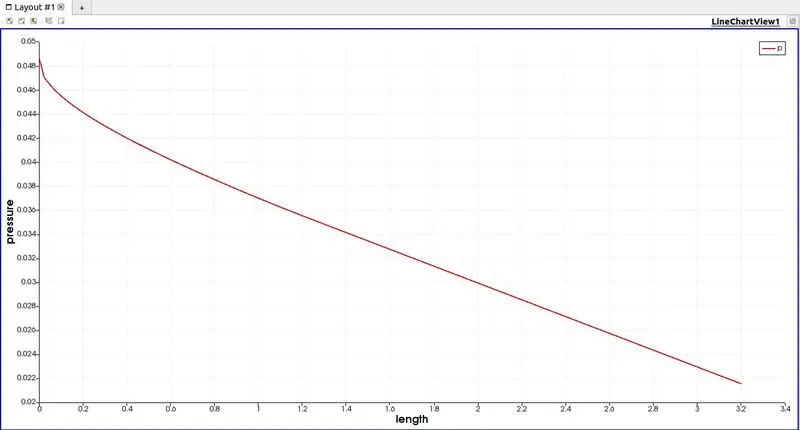
Pressure difference across the length of the pipe. since there is pressure difference the flow is possible
Shear stress
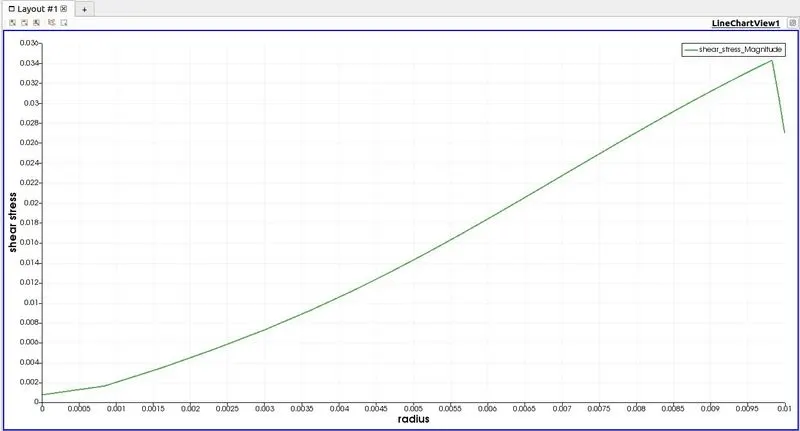
Shear stress is maximum at the pipe wall and minimum at the center of the pipe
Conclusion:
Velocity profile of fully developed flow
- Analytical
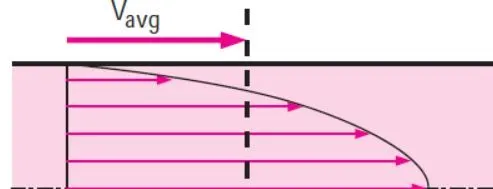
- Simulation
Note: This profile is for the half cross section of the pipe
Validation
| Variables | Analytical value | Simulation value |
| Hydro-dynamic entry length | 1.68 | 1.5 |
| Maximum velocity | 0.186 | 0.18 |
| Pressure difference | 0.021 | 0.026 |
| Shear stress | 0.033 | 0.034 |