Week 5 - Rayleigh Taylor Instability
Aim:
To study Rayleigh Taylor instability and perform the simulation for 2 different mesh sizes and compare the results.
Introduction:
The Rayleigh Taylor instability occurs when two fluids of different densities interfere with each other. This occurs when the high-density fluid sits on top of the low-density fluid with a constant gravitational field. The heavier fluid is displaced downward causing a turbulence motion between the interface. The process is dynamic where the system is trying to reduce the combined potential energy.
Theory:
Some practical CFD models that have been based on the mathematical analysis of Rayleigh Taylor waves
- Kelvin–Helmholtz instability
- Richtmyer–Meshkov instability
- Plateau–Rayleigh instability
Atwood Number
It is a dimensionless number used to study hydrodynamic instabilities in density stratified flows.It is given by the formula
`A=(rho_1-rho_2)/(rho_1+rho_2`
Where
`rho_1 =` density of the heavier fluid
`rho_2=` density of the lighter fluid
Pre-processing:
Geometry
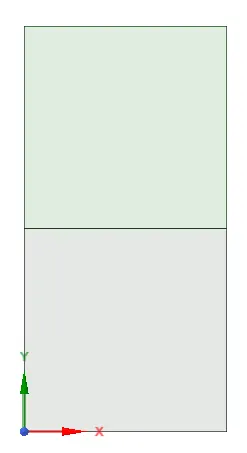
The geometry is 2D and is created using 2 squares of side 20 mm each, then the shareprep command is used to share the information between 2 layers
Case 1:
Meshing
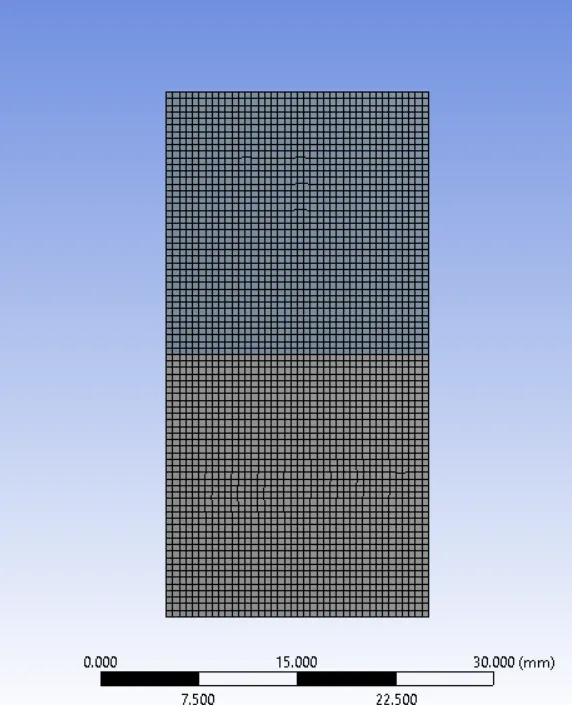
For the 1st case, we start with a baseline mesh with an element size = 0.5 mm
Setup
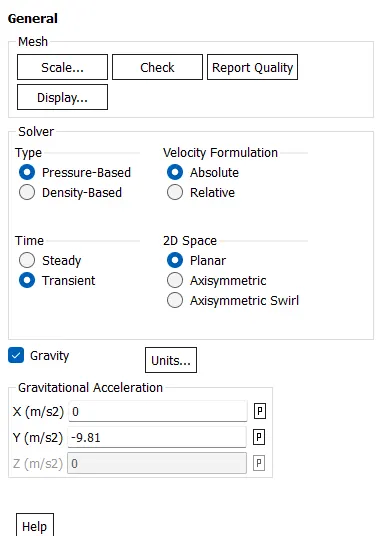
Transient simulation is carried and gravity is turned on and given a value of 9.81 m/`s^2`
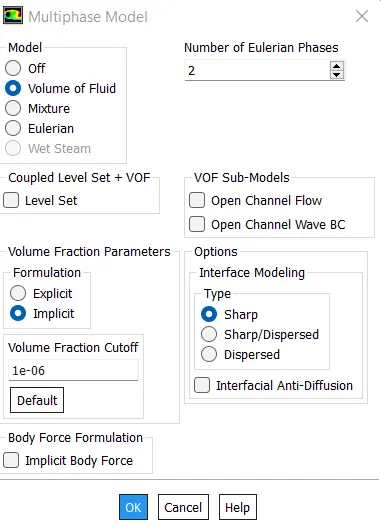
The multiphase model is used and the volume of fluid method is used with 2 Eulerian phases
The water phase is applied to the upper region and the air is given to the lower region
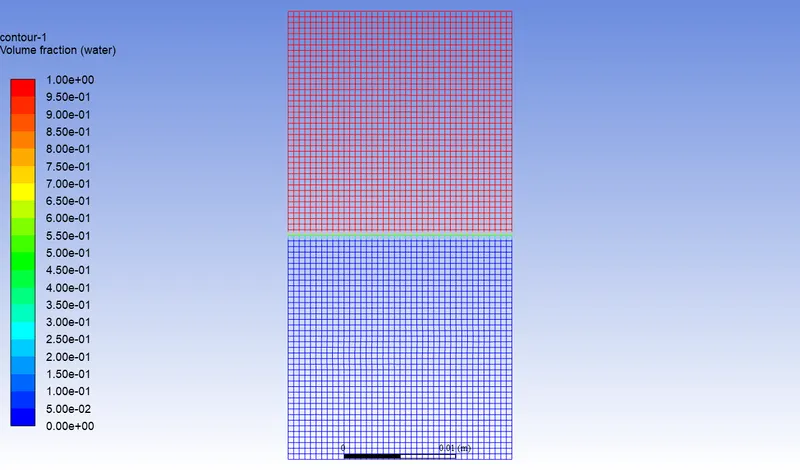
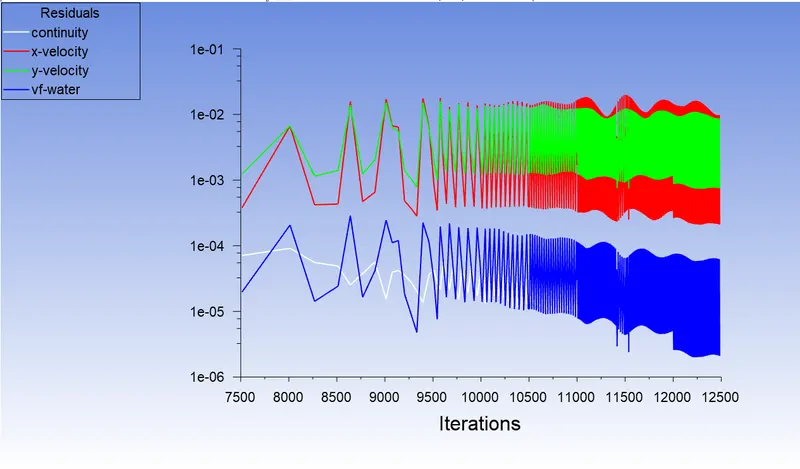
Results
Case 2 :
Meshing
Element size : 0.2 mm
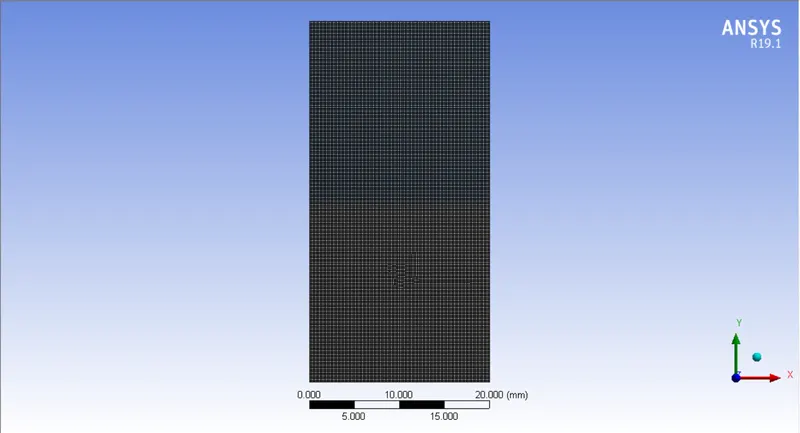
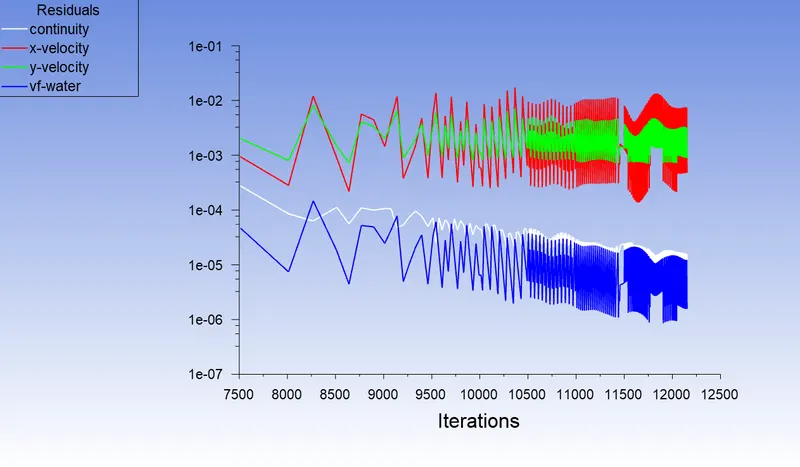
Results
Case 3 :
Meshing
Element size - 0.2 mm
Setup
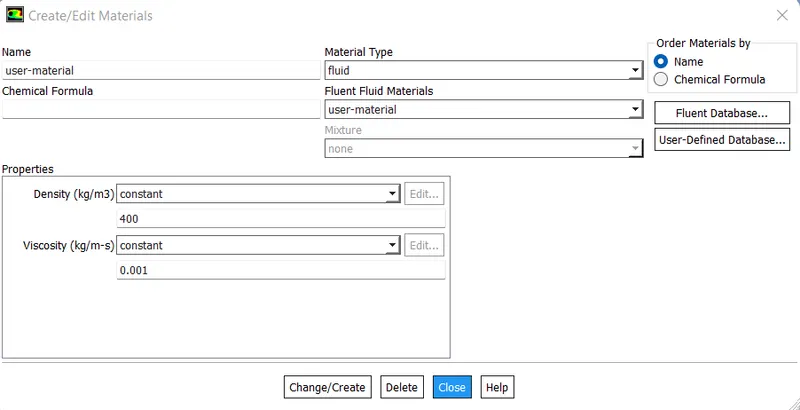
User-defined material is used which has a density = 400 kg/m3, viscosity = 0.001 kg/m-s.
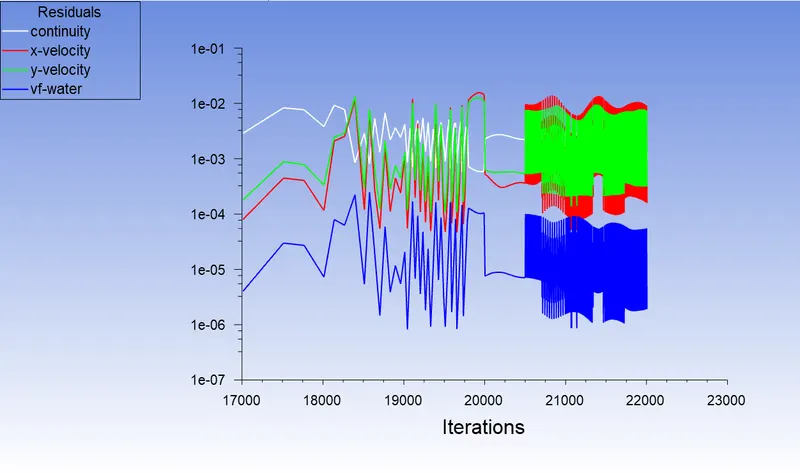
Results
Conclusion
A transient simulation is preferred over a steady-state because in a steady-state we will only be able to visualize the final state of the 2 phases from which we cannot find out anything whereas in a transient simulation we will be able to visualize the whole instability till it reaches steady state.
In the refined mesh case, we can see the bubbles and vortices formed more clearly and the simulation is also smooth. In the baseline mesh, the bubbles are not captured properly and vortices are also very hard to see.
| Phases | Atwood number |
| Water-air | 0.997 |
| Wate-user material | 0.427 |
So for phases with Atwood number close to 1, there is a lot of bubble formation and the mixing happens faster compared to Atwood number which is close to 0.