Week 4 - CHT Analysis on Exhaust port
Aim:
Simulation and conjugate heat transfer(CHT) analysis on an exhaust port to calculate the wall heat transfer coefficient of the solid surface
Introduction:
Conjugate heat transfer analysis means a combination of heat transfer in solids and liquids. In solid heat transfer takes place due to conduction and in liquid, the heat transfer will take place due to convection.
CHT is used in various applications to bring an optimized design, in some complex designs this is carried out to make the life span of the product increase. It is also accurate and easier to do than to conduct it experimental analysis which can take more time and the cost will also be higher.
Some of the common applications where CHT is used are HVAC systems, Electronic devices, Automotive parts, Power plants, Burners and Combusters, etc.
Theory:
Wall/surface heat transfer coefficient:
It tells us how well a surface or a wall can conduct heat transfer, It is given by ratio of heat flux and the temperature difference at both ends.
Pre-processing:
Geometry
The initial geometry is prepared by using volume extract and separating the fluid volume and the solid volume
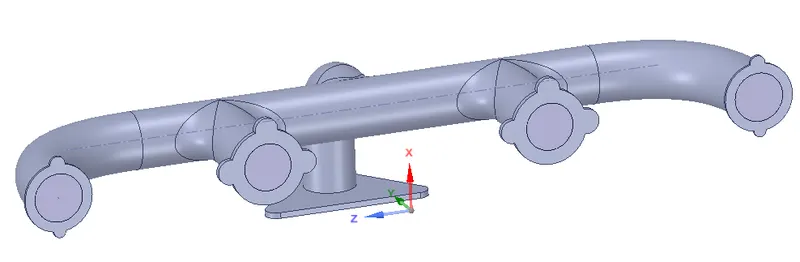
After this, the share topology is set to share, and share prep command is used
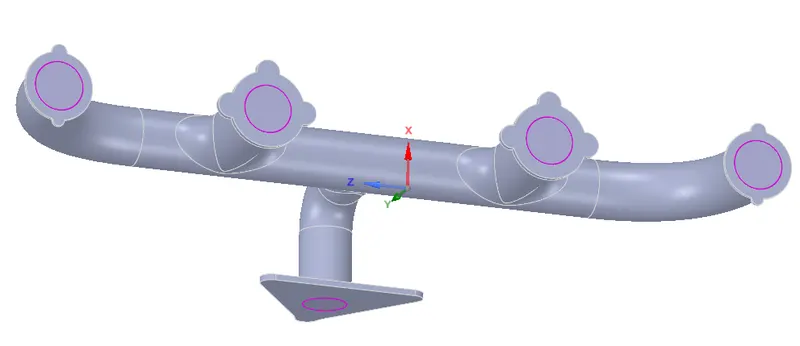
Meshing
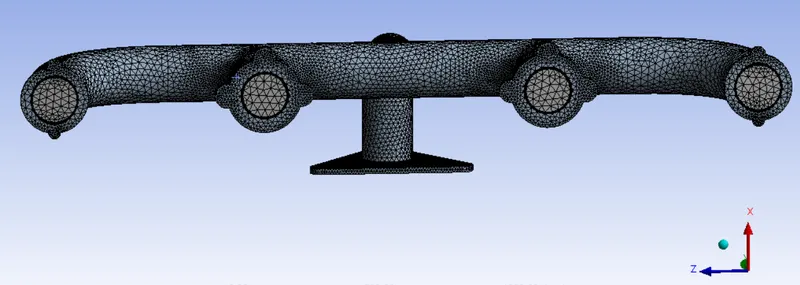
An initial baseline mesh is created
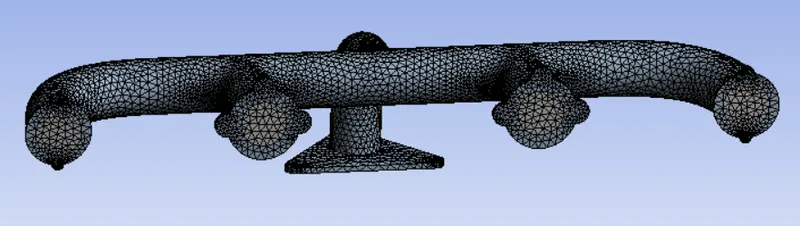
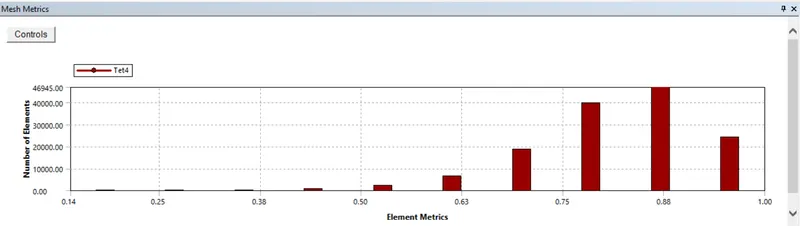
An inflation layer is added to the fluid volume with a total thickness of 5mm and a total of 5 layers
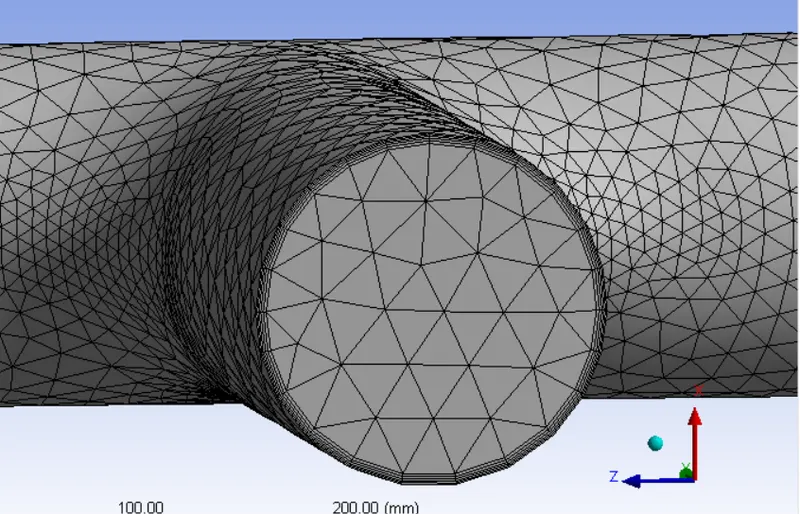
Sizing is added to the solid volume with an element size of 10 mm and with capture curvature on
Setup
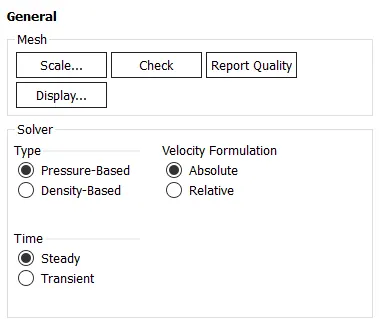
Steady state pressure-based solver is used with an k-epsillon model and energy is also included.
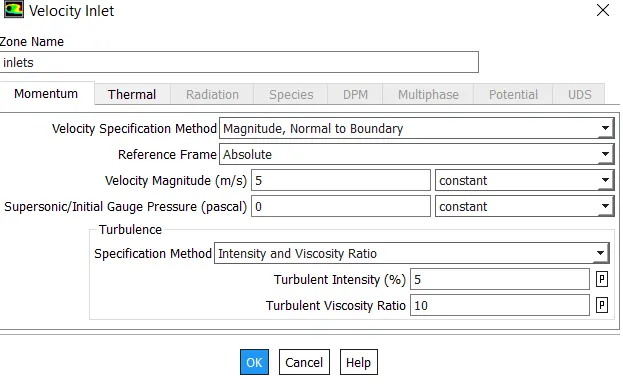
Inlet is given as velocity inlet
Results
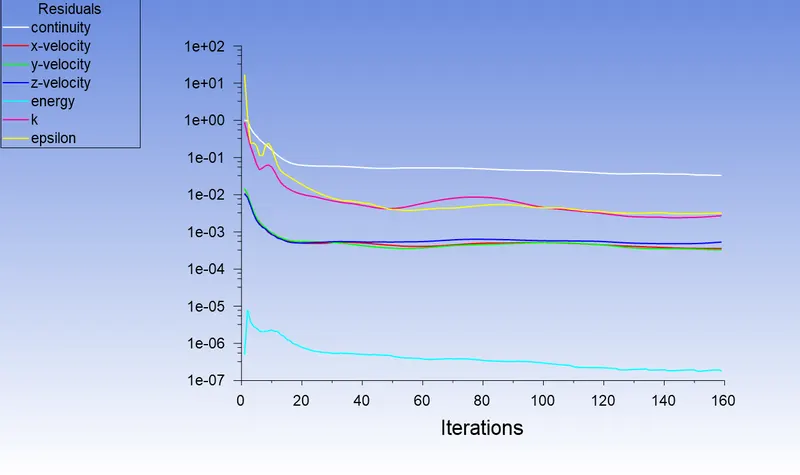
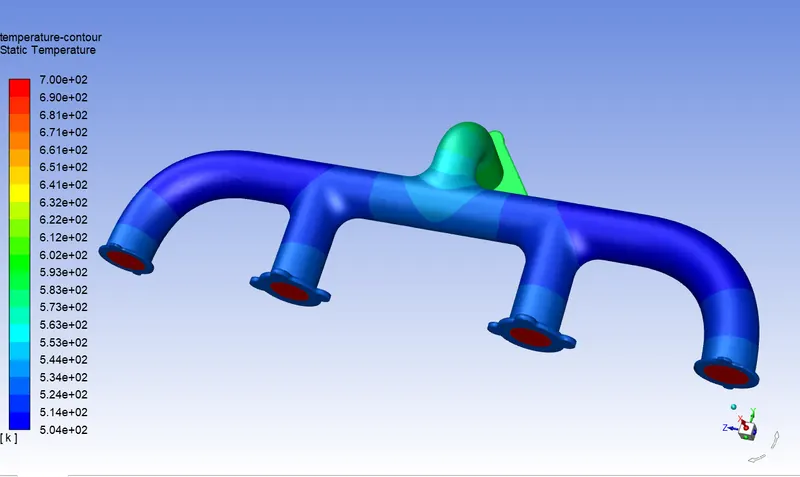
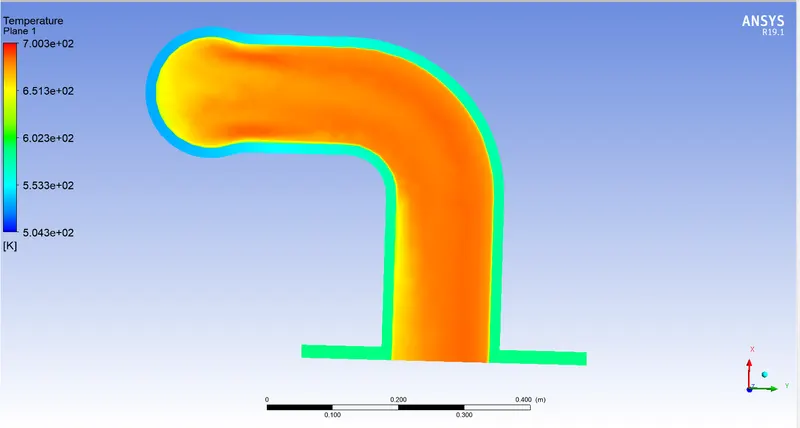
Temperature contours
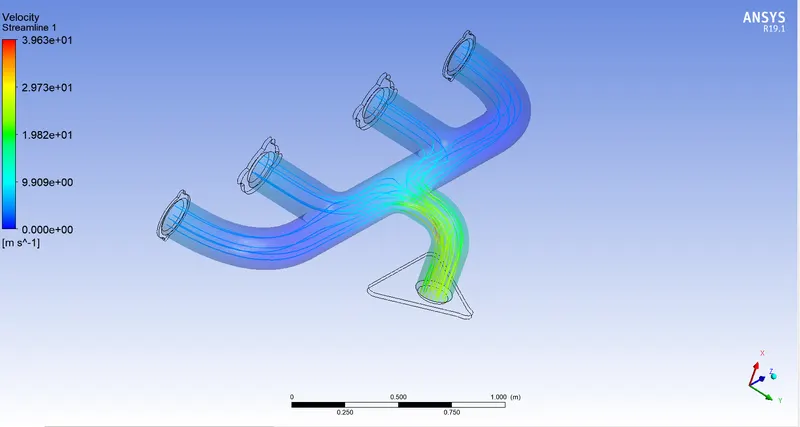
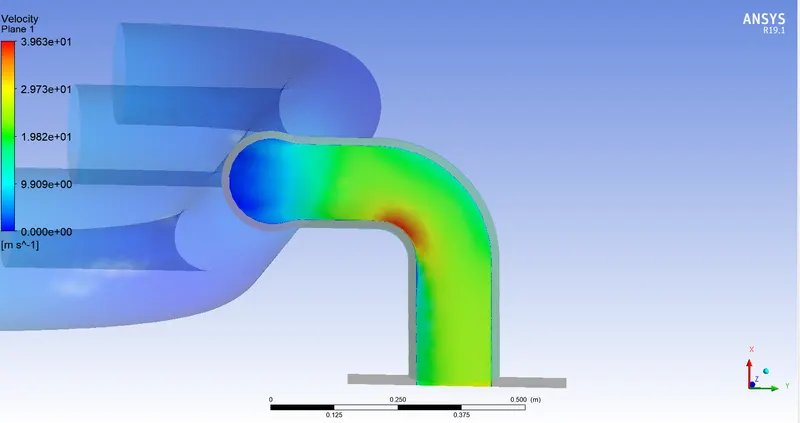
Velocity contours
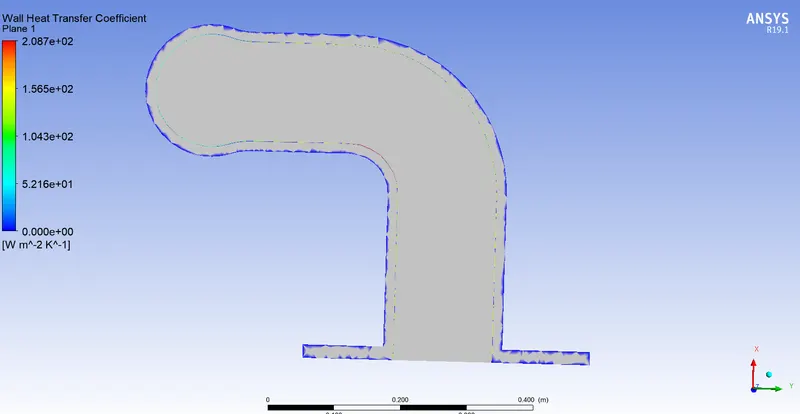
Wall heat transfer coefficient
Conclusion:
To verify these heat transfer coefficient values we can use the relation between the Nusslet number and Reynold's number.
The heat transfer coefficient was found to be higher at the junction of the 4 inlet ports, this was due to the fact that the velocity at that region is higher which will increase Reynold's number.
Hence we can say that the heat transfer coefficient depends on the velocity of the flow, properties of fluid, and the geometry