Section Modulus calculation and optimization
Challenge is to calculate Section modulus
S=I/Y
S=Section modulus
I=Momentum of Inertia
Y=distance centre point/neutral axis to extreme end of the object.
Section modulus
Section modulus is checking of strength of the cross section geometry of particular structure. This is mainly used to calculate therotically the strength of particular cross section of structure. In this way the whole structural strength can be found by calculating the section modulus at different sections of the structure along length. This only gives us a picture of strength or a logical picture of strengh of the structure. As the name mentiones the strength of a particular structure strength depends on the section, material. Further the section modulus can be of different types. Plastic and Elastic, where plastic section modulus is pressing or compression withstanding capacity and elastic is expansion or pulling withstanding capacity.
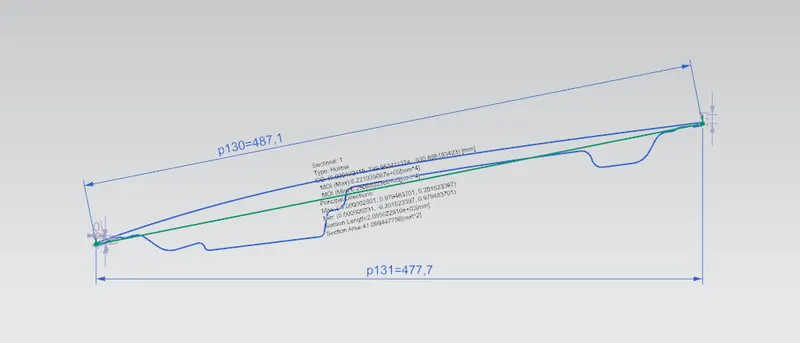
We now calculate the section modulus of our section of hood and inner panel. The section is along y-zero axis.
We can get the momentum of inertia and length of the section portion from the sectioned portioned as shown in pictures below.
In my case I have the following data from the inner panel and hood assembly section in finished project.
sectional area is 41.443573mm^2
MOI max:8.277311e+05(mm^4)
MOI min: 7.590310e+03(mm^4)
Total Length =477.7mm and y= 1/2x477.7=238.85mm
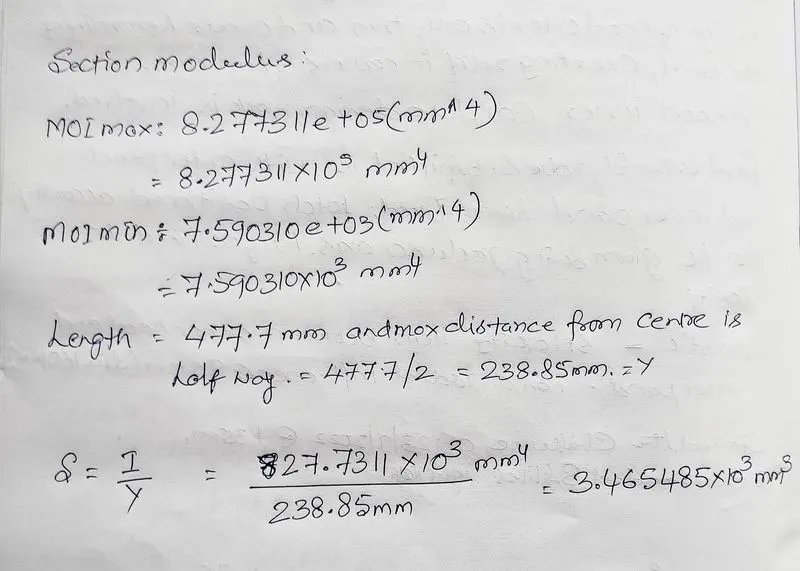
so max modulus is 3.465485e3(mm^3) or= 3465.485mm^3
similarly minimum calculation the y remains same only the I changes and the result is below
I=7590.310 mm^4/238.85mm =31.777898mm^3
After changing or reducing the height of emboising by 0.5mm the total change in inertia and modulus is as below.
sectional area is 41.0994477 mm^2
MOI max:8.22102e+05(mm^4)
MOI min:6.25055e+03(mm^3)
length is 477.7mm
we get the result S=I/Y
max 3441.9mm^3
min 26.169mm^3
Comparision below
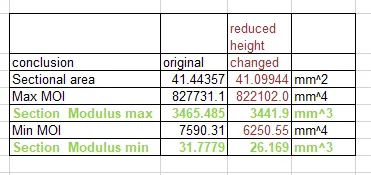
The conclusion is that by varying the section the modulus can be changed propotionately increased and decreased on length being same in both cases.
In this case the section of embossing is reduced and so the sectional area is reduced and also the inertia is propotionally reduced.
Used my hood assembly for section modulus
Created section curves on Y0 plane
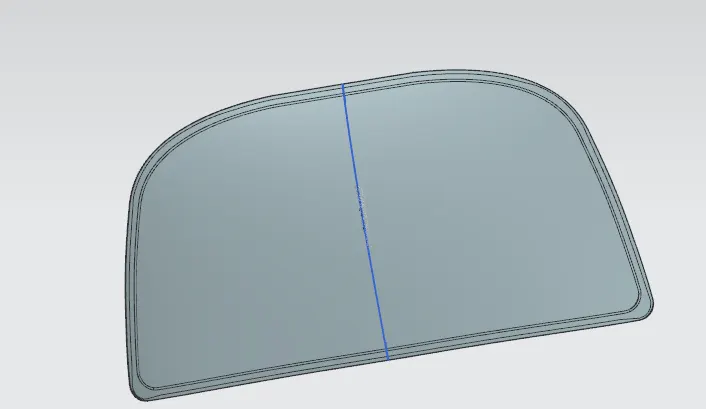
The section curves looks as below
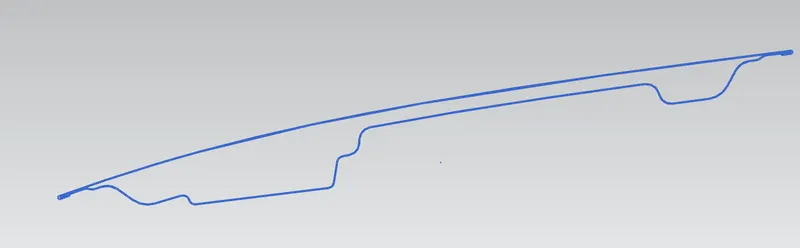
Only the outer curve of hood and inner panel were used. They were edited and joined as shown below
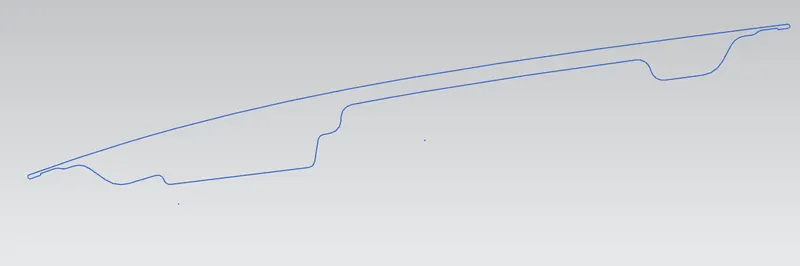
Next by using the command Section Inertia Analysis command was used for this closed profile which gave the below result
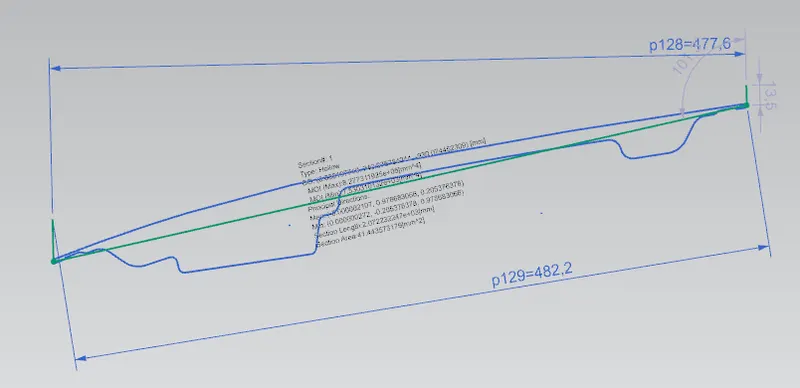
The report give the as below
Hollow section used for calculation
CG:Centre of gravity position X,Y,Z point
MOI: max Moment of inertia maximum value
MOI: min Moment of inertia Minium value
Section curve length
Section area
all units are in mm or square mm.
With change in embosing height (reduced) by 0.5mm also modifying the latch seating area, the below change was observed.