Project 1
1)Stationary d-q reference frame:
In this reference frame the d-axis is fixed to and thus coincident with the axis of the stator phase A winding. This means that the mmf wave of the stator moves over this frame at the same speed as it does over the stator phase A windings.
The induction motor model is simulated in the simulink using the parameters given and it is run with the stationary dq frame with the load torque at 0.83 times the rated torque.
The result of the simnlation will look like the,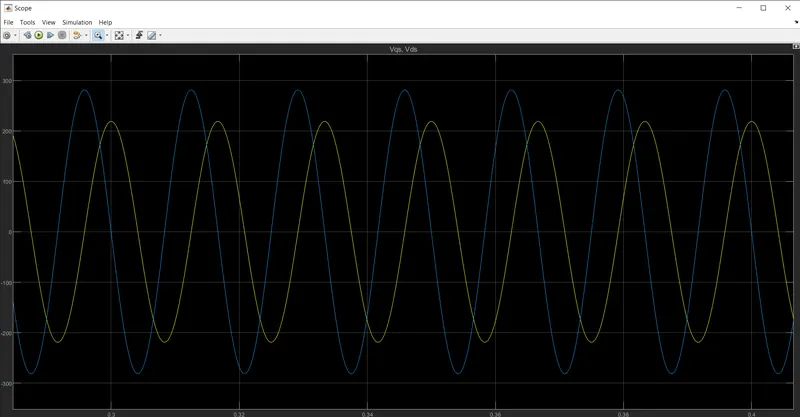
The vqs and Vds of the motor are shown above.The Vds is greater than the Vqs and the phase is shifted to the left.The voltages are converted into the dq referance frame.
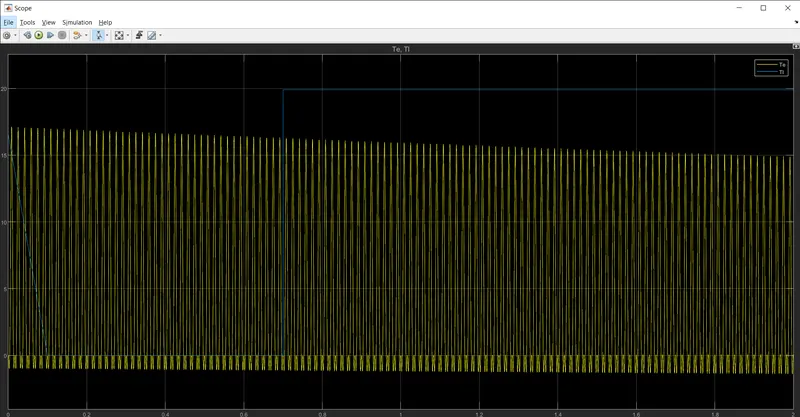
The load torque starts from 16 Nm and falls to zero as the load is removed and the torque rixe to 19Nm at 0.7sec and the motor torque remains oscillating between zer to 16Nm.The motor rotates synchronous with the load.
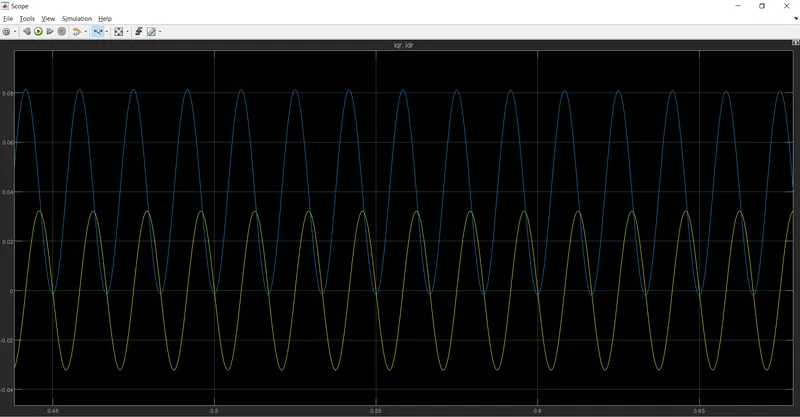
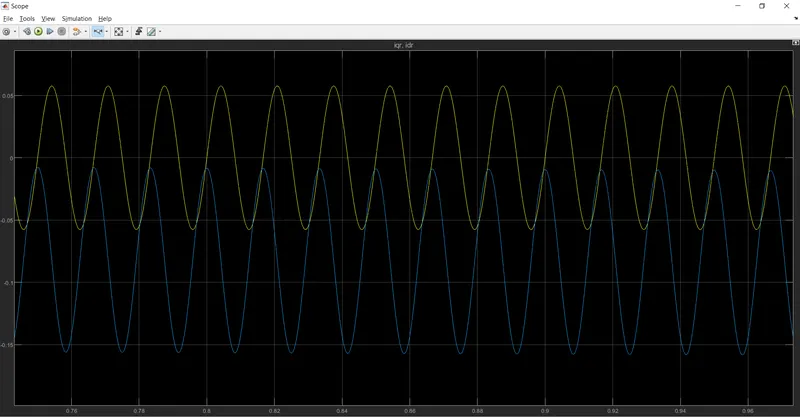
The stator and the rotor curent with respect to dq referance frame are shown above.In rotor frame q axis component is leading and has higher amplitude than the d axis component whereas in the stator frame the d axis component is leading the q axis component.
Synchronous reference frame:
When the reference frame is rotating at synchronous speed, both the stator and rotor are rotating at different speeds relative to it. However, with the reference frame rotating at the same speed as the stator and rotor space field mmf waves, the stator and rotor d,q variables are constant quantities.
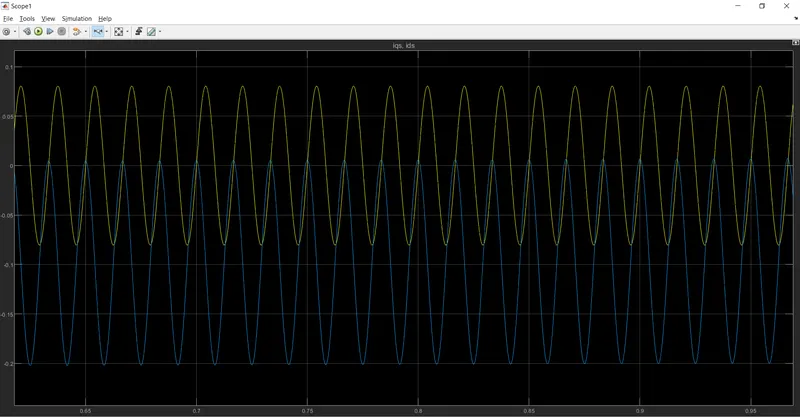
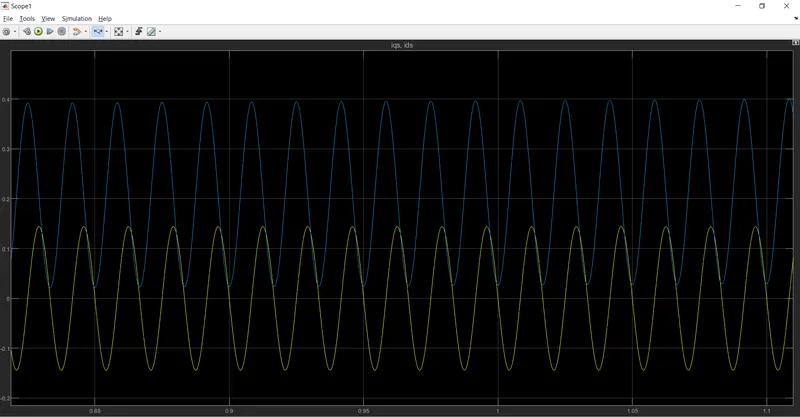
The stator and the rotor curent with respect to dq referance frame are shown above.In rotor frame d axis component is leading and has higher amplitude than the q axis component whereas in the stator frame the q axis component is leading the d axis component.
The overall amplitude of the current is higher compared with the stationary frame.
The load torque and the motor torque remains the same as that of the stationary referance frame.The change in current values in both the axis maintains rthe torque value.