Project 1 Mechanical design of battery pack
Battery pack preparation:
The given cell is ANR26650M1-B.The parameters of the cell are as follows,
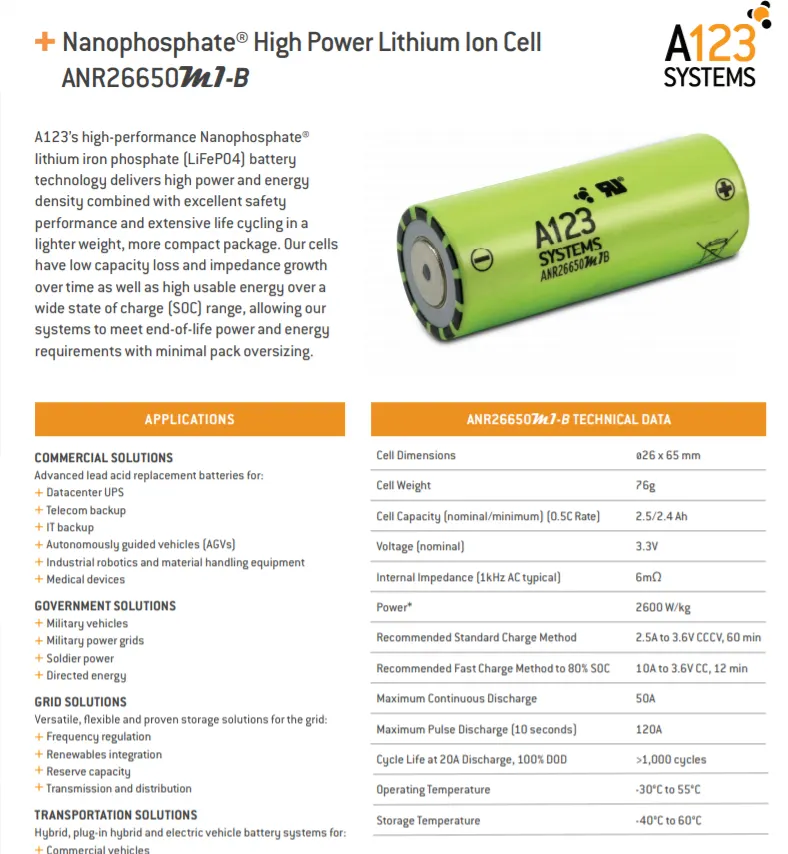
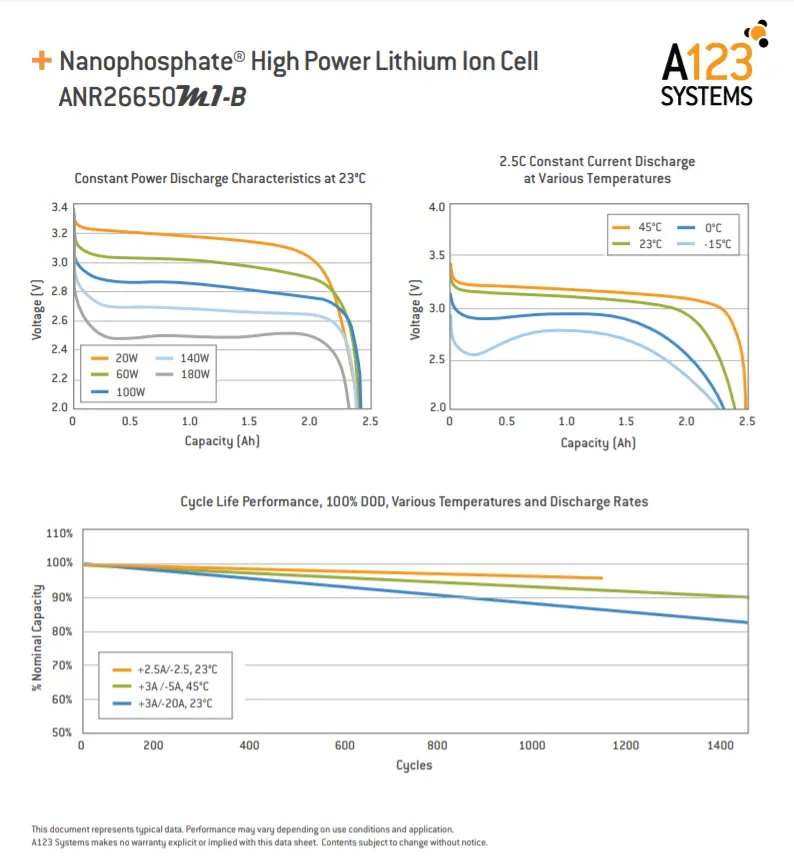
From the above characteristics we can decide the battery pack details.The main takeways from the characteristics of the cell are,
Here we have to create a battery pack of 18 kWh.It is usually determined by the voltage(V) and the capacity (Ah).
We consider the nominal voltage of the pack is 155V.
We can find the energy(Wh) of the single cell,
Energy of single cell = Nominal voltage of the cell(V)*Nominal capacity of the cell(Ah)
=3.3*2.5
=8.25Wh
Number of cells to be connected series = nominal voltage of the pack/nominal voltage of the cell
= 155/3.3
=50
50 cells needed to connect in series.
The energy of 50 cells=Energy of single cell*50
=8.25*50
=412.5Wh
Number cells connected in parallel=Total energy of battery pack/Energy of series connected cell
=18000/412.5
=44
44 cells neede to connect in parallel.
The battery pack contains 50 cell in series and 44 cells in parallel in order to deliver a capacity of 18kWh.The total cells in the battery pack is 50*44=2200 cells.
The volume of the pack=2200*volume of single cell
=2200*0.0345
=75.9m^3
The weight of the pack=2200*weight of the single cell
=2200*0.076
=167.2Kg
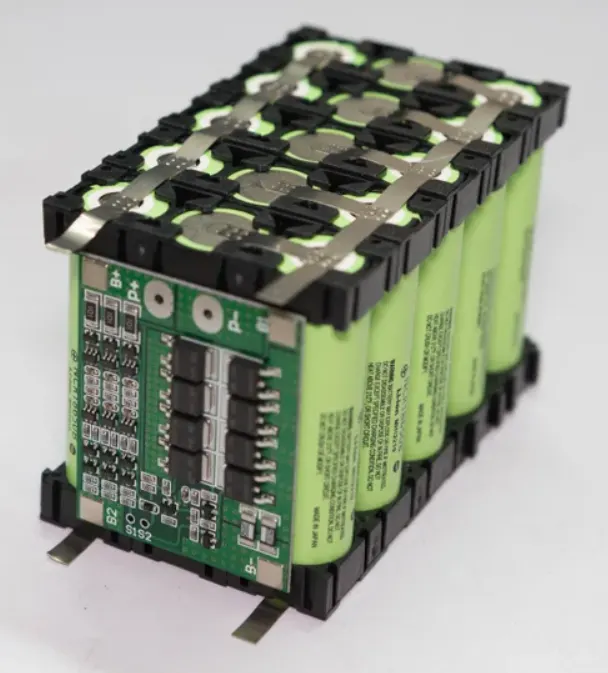
The design of the battery pack will look like the one below,
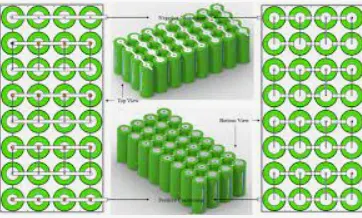
First the series connected cells are arranged and the parallel connected cells are arranged in the nickel strip.From the previous step, it is clear that our battery pack is made up of 44 parallel groups connected in series and each parallel group has 50 cells. Now we have to arrange the 2200 cells properly for making the electrical connection among them and with the BMS board.
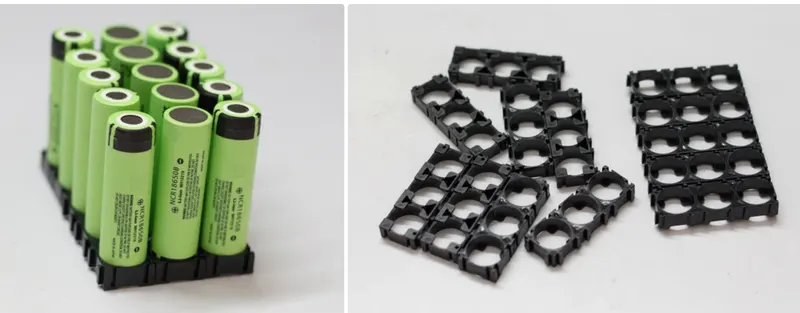
After this we need add a battery management system with the pack.
A battery management system (BMS) is an electronic system that manages a lithium battery pack and the main functionalities are
1. Monitors all of the parallel groups in the battery pack and disconnect it from the input power source when fully charged
2. Balance all the cells voltage equally
3. Doesn't allow the pack from over-discharged.
After all this steps the cells have to be fit inside a enclosure for safety and protection.Battery enclosures are typically sealed metal or plastic shells designed to protect the battery from dust, debris, and moisture, such as rain, snow and car-wash sprays. Any one of those elements can damage battery cells and ancillary electronics, so an effective enclosure keeps those potentially harmful materials away from the battery.
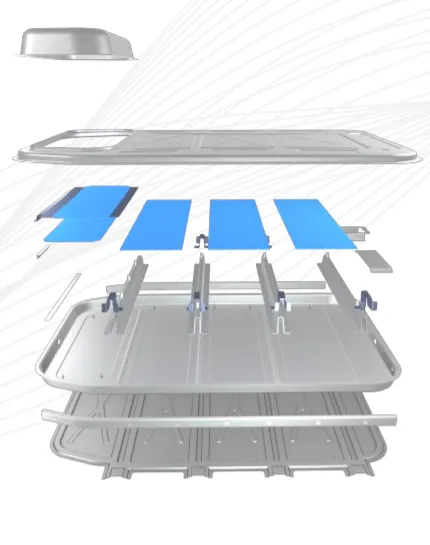
An exploded view of the enclosure. Aluminum grade use is tailored to meet the specific requirements of each component.This material provides the formability required for deep draws, yet, Labat points out, it also provides the protection required against things like road debris intrusion. He cites the material’s fracture toughness and energy absorption characteristics, as well.