Fender Design
FENDER DESIGN
AIM:
To Design a FRONT FENDER of a Car by following the given Master section as per the Design considerations that are followed in an OEM's.
INTRODUCTION
WHAT IS FENDER
A fender is a curving plate that covers the wheels on the side of an automobile and extends from the front bumper to the door in plastic, metal, or rubber. Fenders are primarily used to keep dirt, mud, and other debris off of the tyres and braking system, which increases its safety and effectiveness. Additionally, fenders protect various substances from being flung into the air as the tyres rotate, such as mud, dirt, dust, and other liquids. The car's frame is where the fenders, which come in various sizes and styles, are attached.

WHICH MATERIAL CAR FENDERS MADE OF?
Depending on the model of the car, fenders are made of metal, plastic, fiberglass, rubber, etc. They are designed to protect the sides of the car from damage due to road debris, water, etc.
DIFEERENT FENDER MATERIALS FOR DIFFERENT CARS.
1.Lamborghini Gallardo - Thermoplastic material

- Audi R8- Plastic

- Audi A6- Aluminum

- Mercedes-Benz SL (R 231) - Aluminum

WHY CAR FENDERS ARE IMPORTANT?
Car fenders are essential for preventing harm to your vehicle from road debris including pebbles, stones, sand, and other objects that could become lodged in the wheel wells. Your car will also look nicer and more fashionable thanks to them. They will protect your automobile from a variety of harm brought on by precipitation and road debris.
HOW DO CAR FENDERS OFFER PROTECTION?
When you drive, the car's fenders keep the sides of the vehicle from being splashed with liquids like water, dirt, gravel, and other substances. The body paint of your car may be harmed by liquid spills on the road. The tyres high kinetic energy (rotational energy) allows them to expel particles at high velocity as they spin very quickly on the road. If it occurs, the mud and dirt splatters may:
- Make the car dirty
- Break the windscreen or body of the vehicle parked next to yours.
- contaminate the pedestrians
- Defend the vehicle from dents
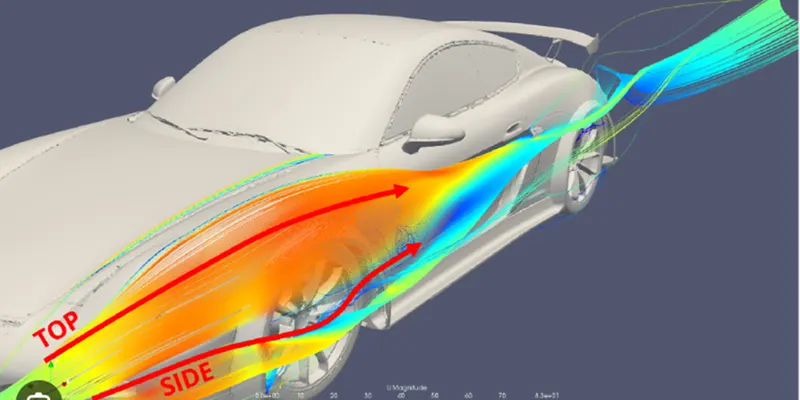
Fenders must be installed since they will shield your car's body from dings and scrapes. Additionally, fenders enhance the car's aerodynamics. As the tires rotate at high speed, they cause a lot of drag by creating turbulence around them. A curved enclosure of a fender over the wheels helps to reduce that turbulence and improve the aerodynamics of the car.
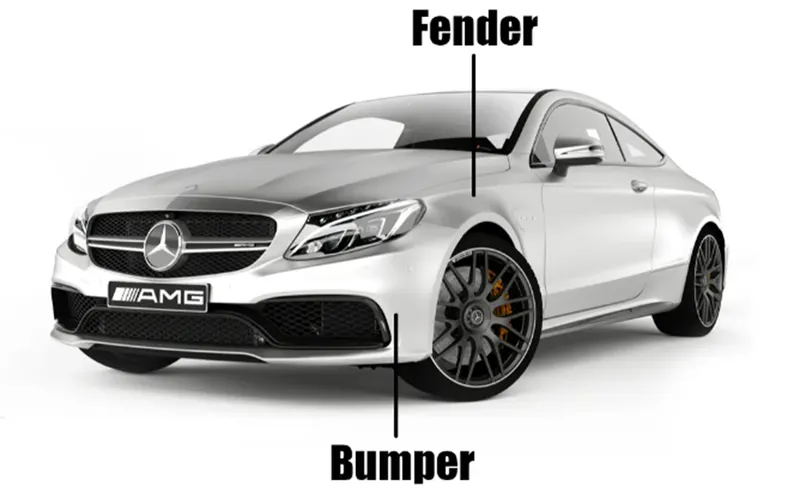
WHAT IS THE DIFFERENCE BETWEEN FENDER AND BUMPER?
The fundamental distinction between a bumper and a fender is that a bumper is attached to the front and back of the automobile, whereas a fender is attached to the side of the car body over the front and rear wheel wells. While fenders enhance the automobile's aerodynamics and prevent debris from entering the wheel wells, bumpers absorb shock when a car collides with another body. Because they can also cushion the blows from mild crashes, fenders can serve as an extension of bumpers. In the past, the bumpers on cars used to be separate frames, made of rubber. Now, bumpers are metal frames screwed into the car body. Similarly, fenders are also metal frames screwed into the body of the car.
HOW MANY FENDERS ARE ON A CAR?
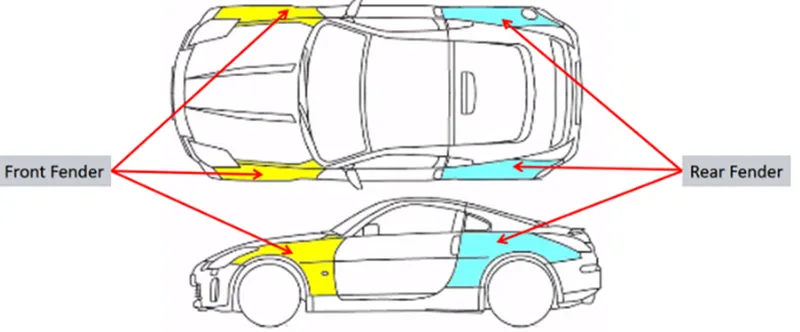
Technically, there are a total of 4 fenders on a car, each over the four-wheel wells. The two fenders on the rear wheel wells are typically called quarter panels instead of fenders.
In US automotive design industry, the fender typically refers to the front frame covering the wheel, and the quarter panel is the rear panel covering the rear wheel wells and C-pillar. You can see quarter panels right between your car’s rear door and the trunk/bed. Like fenders, quarter panels usually extend above and around your rear wheels. The main difference between fenders and quarter panels is that fenders are bolted on while quarter panels are typically welded on.
So, in terms of auto industry nomenclature, a car as two fenders on the front.
MOUNTINGS ON A FENDER:
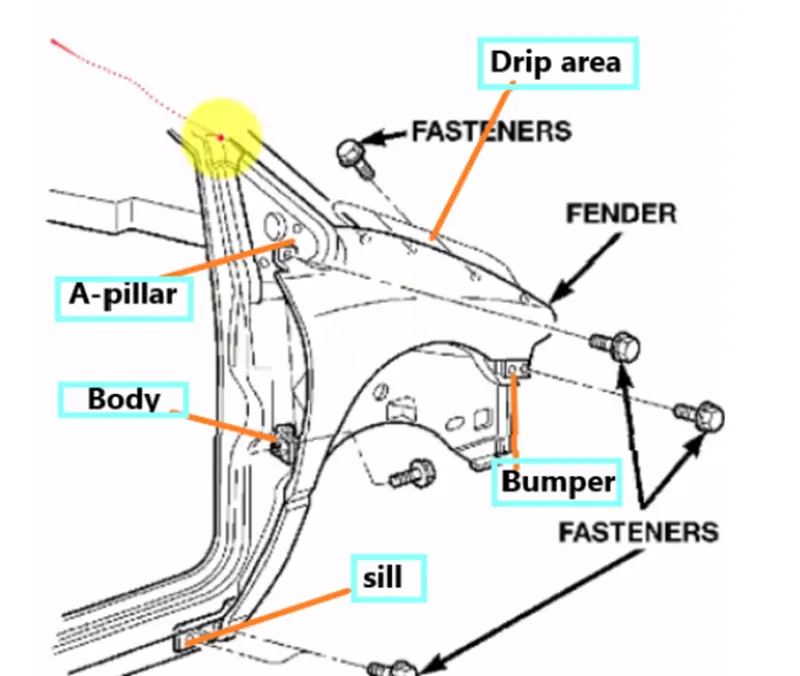
There are FIVE mounting points in the fender, they are
- A-Pillar mounting.
- Drip Area mounting.
- Bumper mounting.
- Sill mounting.
- Body mountings.
- All these mountings are joined by using the fasteners like m6,m8 screws.
FENDER DESIGN USING SIMENS NX CAD
Given A surface for the fender design.
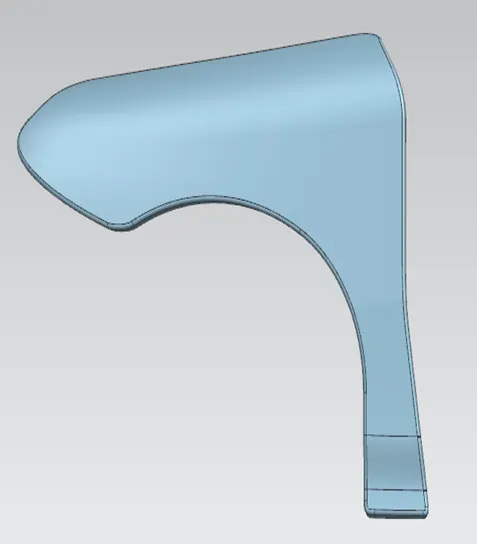
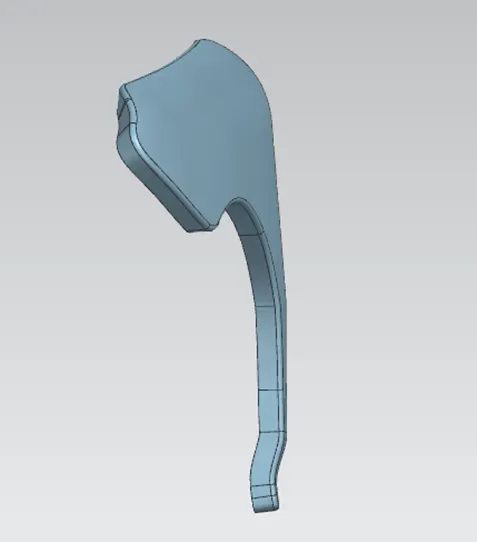
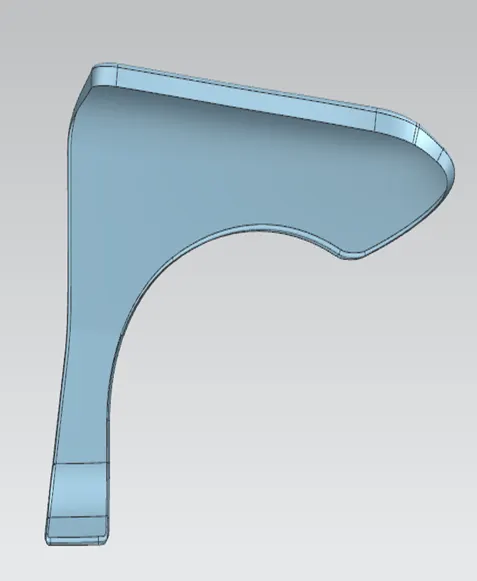
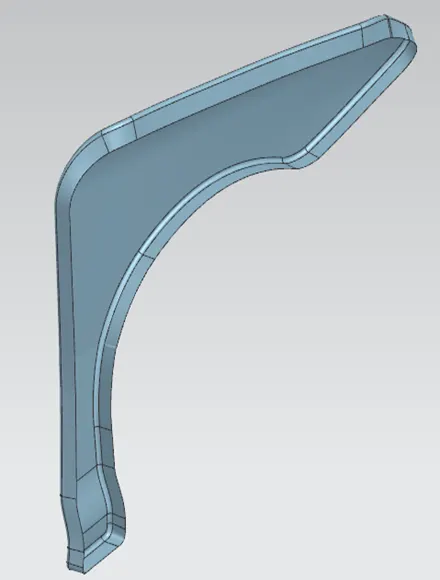
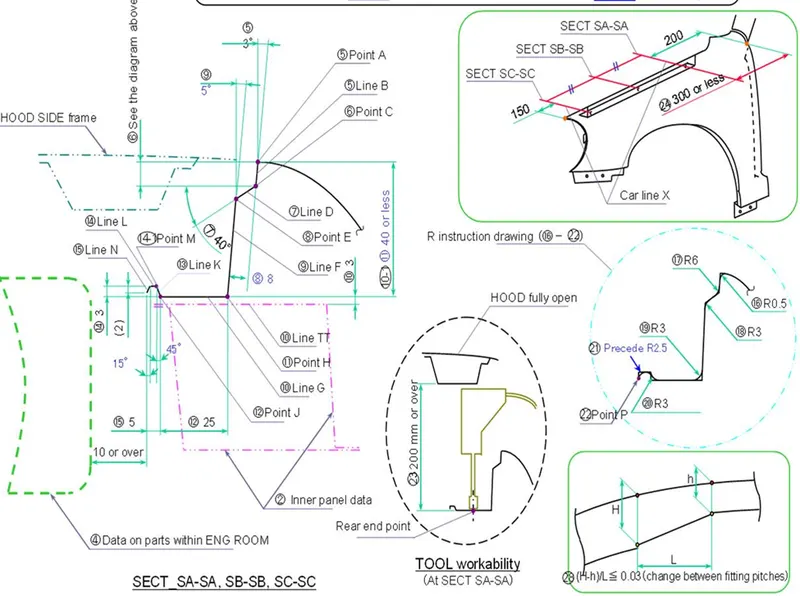
Given Master section to create the Drip Area.
DRIP AREA MOUNTING
It is the region where it gets in contact between the fender and the engine compartment. The Drip area mounting should be designed in such a way that, it should be at 150mm away from the front end of the fender for placing the headlights as the wiring should not get disturbed by the drip area mounting.
And the other consideration is the drip area should be 200mm away from the rear end of the fender, in order to maintain sufficient space for the cowl top where we have wiper mounting region is installed. For creating the drip area mounting we are provided with a master section.
We need to extend the sheet by using law extension up to the data which is provided
DESIGN OF SILL MOUNTING AREA
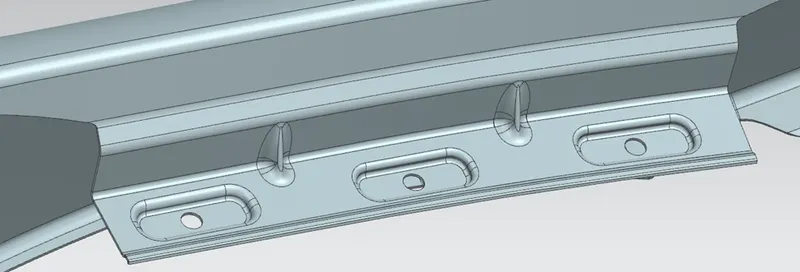
Sill is the panel directly below the bottom of the door supporting the floor and may be used to combine the floor and the body. the bottom end of the fender is mounting on the sill body for reinforcement of the fender panel, thus the sill mounting position is designed with holes and emboss, M5 fasteners are used to fix the fenders on the sill body.
BUMPER MOUNTING AREA:
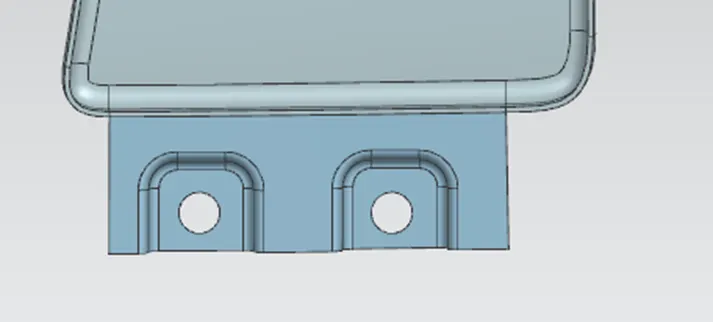
In this Mounting, the Fender connects with the bumper.
The Bumper Mounting region must be rigid in order to withstand the force acting upon it during collision. So, the Mounting space can be larger
Sweep from the edges of bumper mounting area for 50mm length and 90 degrees of angle. Creating a sketch and extrude should intersect with sweep face and split it. Again, sweep in splitted edges used 6mm length and 80 degree of angle reference with surface. Offsetting the sweep face 5mm.Trim sheet to create a hole of 5mm diameter. Edge fillet and surface fillet are 3mm.
BAFFLE AREA:
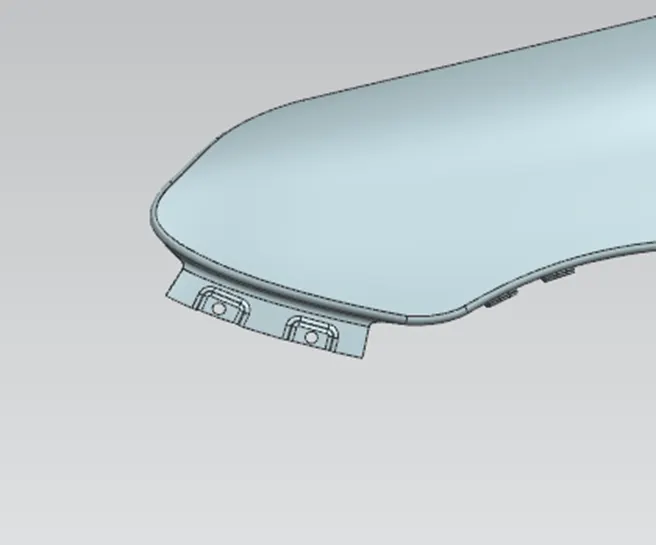
Creating holes for baffles (wheel arch).
create holes of 5mm in the splitted face in the wheel arch area.
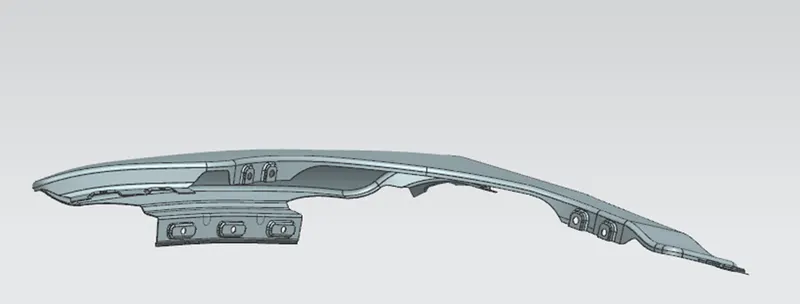
VIEWS OF FENDER
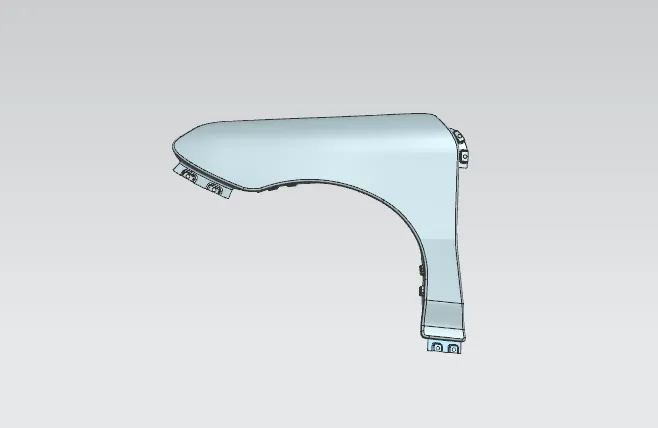
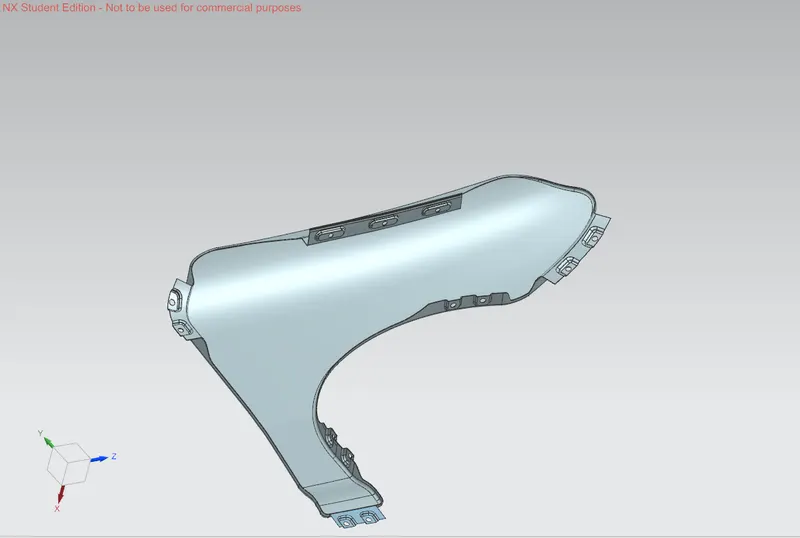
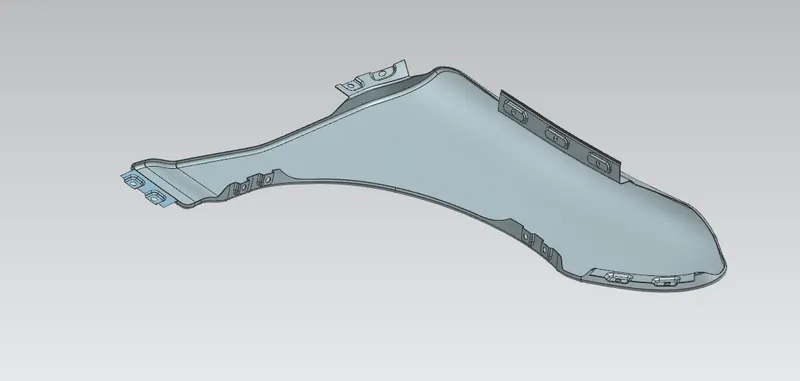
CONCLUSION:
Here, developed mounting flanges in Drip area, Sill mount, A pillar and Bumper with given design requirements.