Hood design-Week 2
HOOD DESIGN
AIM
To design the Hood or Bonet of the front driving car by using the master section and standard procedure which is used in the OEM Manufacturer's.
GIVEN MASTER SECTION
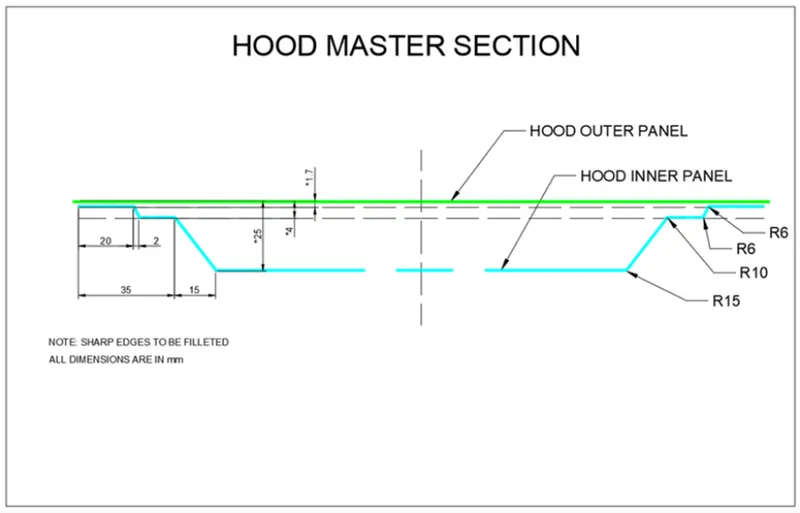
HOOD THICKNESS
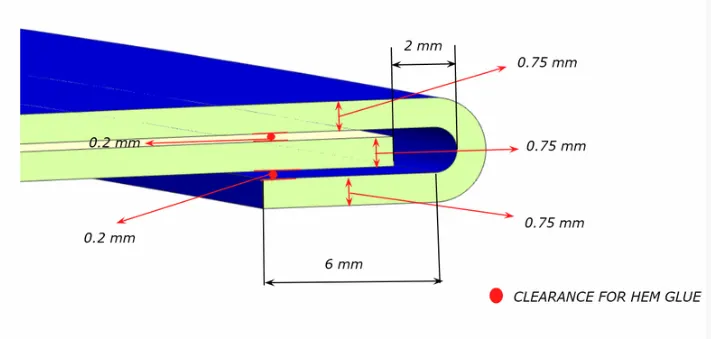
- Outer Panel Thickness = 0.75mm
- Inner Panel Thickness = 0.75mm
- Reinforcement Thickness = 1.5mm
HOOD
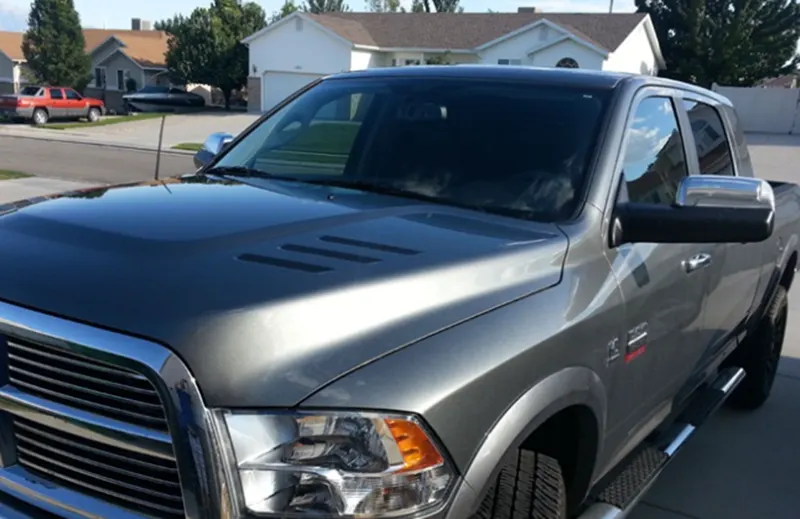
- The car hood, also known as the bonnet in some countries, is the hinged cover that is placed over the engine compartment of a vehicle. It is typically located at the front of the car and is designed to provide access to the engine, as well as to protect it from external elements.
- The car hood is usually made of metal, such as steel or aluminum, although some vehicles may have hoods made from other materials like carbon fiber. It is an important component of the car's body structure, contributing to the overall strength and rigidity of the vehicle.
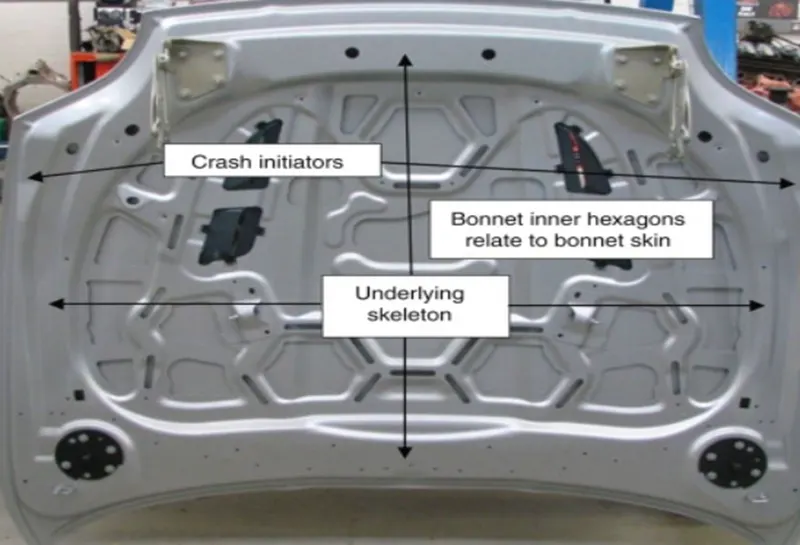
- One of the main functions of the car hood is to shield the engine and its components from dust, dirt, and other debris that could potentially damage them. It also helps to keep the engine cool by allowing airflow through the grille at the front of the vehicle.
- In addition to its practical purposes, the car hood also plays a role in the overall aesthetic design of the vehicle. It is often styled to match the rest of the car's body and may feature contours, bulges, or other design elements that contribute to the vehicle's appearance.
- To access the engine compartment, the car hood is usually secured with a latch mechanism located inside the cabin of the vehicle. Once released, the hood can be raised and held up with a prop rod or gas struts to allow maintenance or inspection of the engine.
- It's important to note that the specific design and features of car hoods can vary between different vehicle makes and models, as automotive manufacturers incorporate their own styling and engineering considerations.
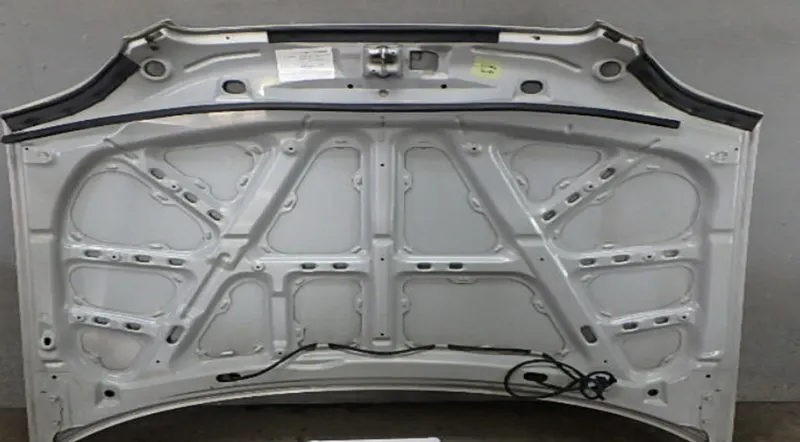
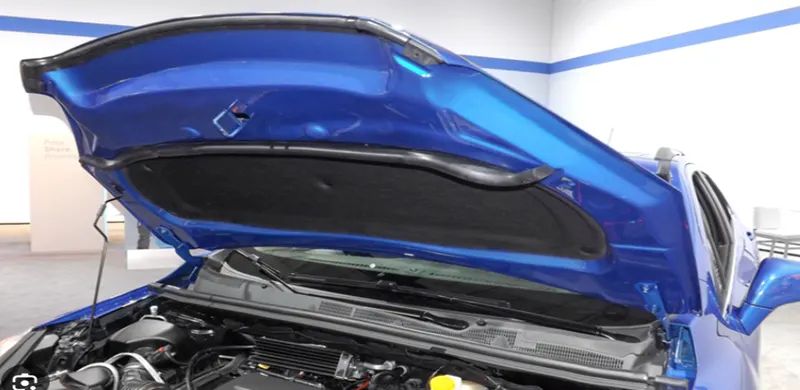
The manufacturing process of a car hood typically involves several steps. While the specific details can vary depending on the automaker and the type of hood being produced, here is a general overview of the manufacturing process:
- Hemming
- Embossing
- Deep Drawing
- Piercing
COMPONENTS OF CAR HOOD
The car hood consists of several key components that work together to provide functionality, protection, and aesthetic appeal. The specific components can vary depending on the vehicle make and model, but here are some common components found in a car hood:
OUTER SKIN: The outer skin, also known as the hood panel, is the visible exterior surface of the hood. It is usually made of metal, such as steel or aluminum, and can feature contours, creases, and design elements that contribute to the vehicle's aesthetics.
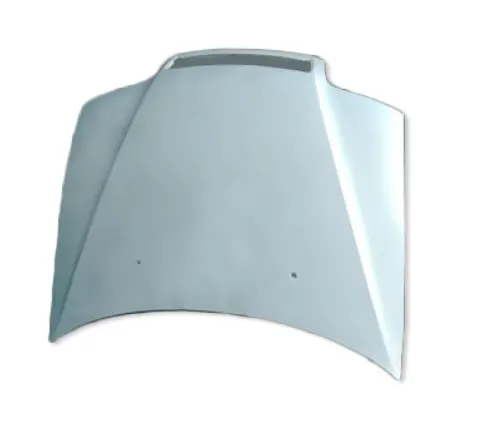
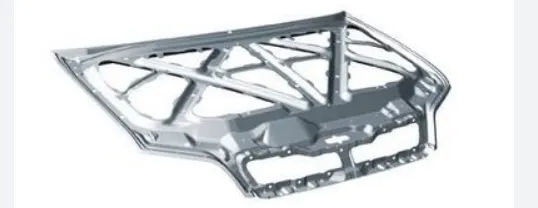
INNER FRAME AND REINFORCEMENTS: The inner frame provides structural support to the hood. It is typically made of steel and is responsible for maintaining the shape and rigidity of the hood. Reinforcements may be added at specific areas to enhance strength and impact resistance.
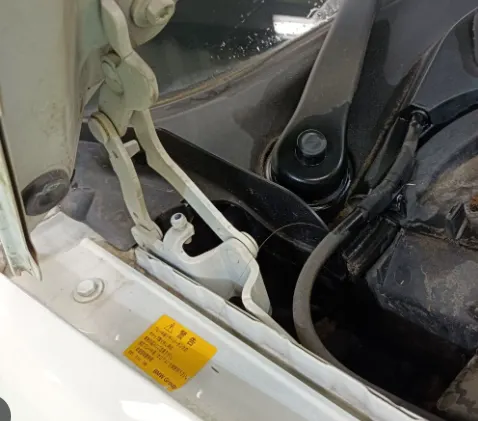
HINGES: The hinges allow the hood to pivot open and closed. They are typically located at the rear corners of the hood and are attached to the vehicle's body structure. Hinges can be simple mechanisms or incorporate hydraulic or gas struts to assist in raising and holding the hood in the open position.
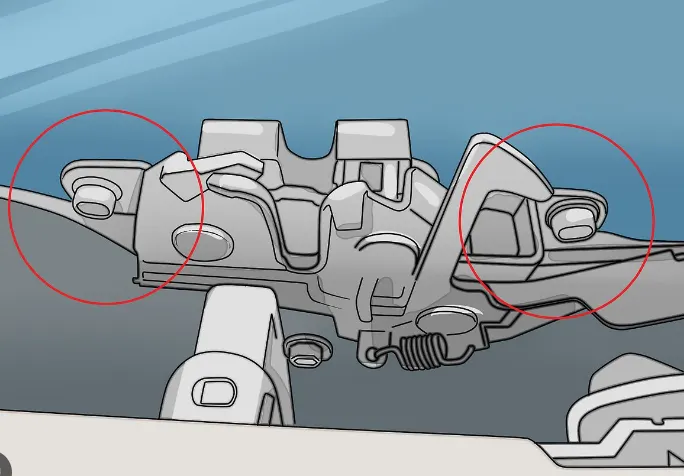
LATCH MECHANISM: The latch mechanism secures the hood in the closed position, keeping it securely attached to the vehicle. It usually consists of a hood latch, which is connected to the hood, and a striker plate mounted on the vehicle's body. The latch is typically operated from inside the vehicle.
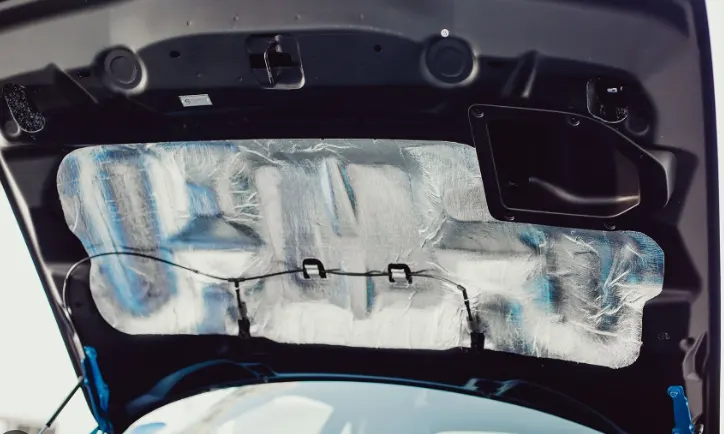
INSULATION: Some hoods may have insulation material, such as foam or sound-deadening material, attached to the inner surface. This insulation helps reduce engine noise and provides thermal insulation to protect the paint and components underneath the hood from excessive heat.
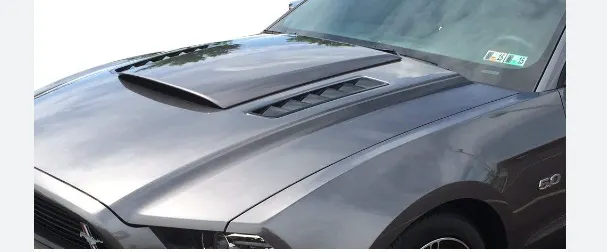
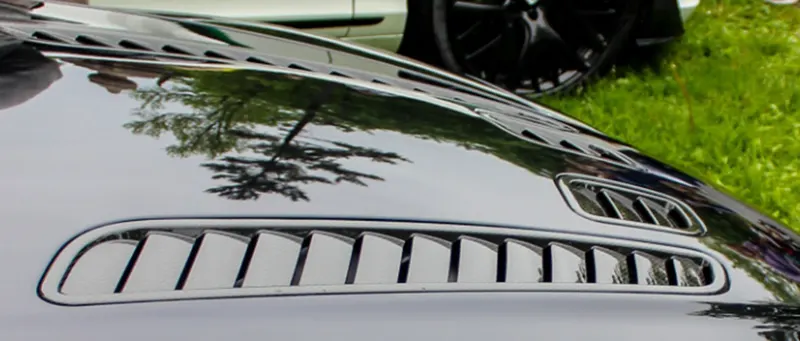
GRILLE AND AIR VENTS: Many hoods feature a grille or air vents at the front, near the windshield, or along the sides. These openings allow for airflow into the engine compartment, providing cooling and ventilation to the engine and other components.
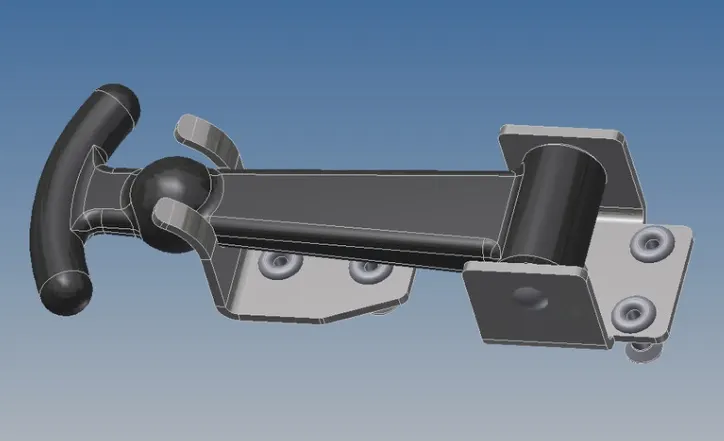
HOOD RELEASE MECHANISM: The hood release mechanism is located inside the vehicle's cabin, usually near the driver's side. It is a lever or button that, when activated, releases the hood latch and allows the hood to be opened.
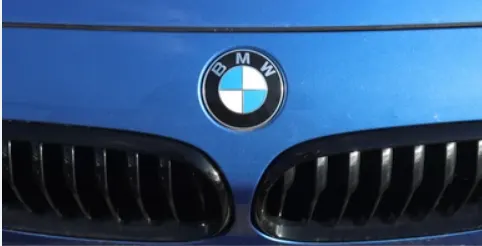
EMBLEM OR BADGE: Depending on the vehicle brand, a hood may feature an emblem or badge at the front center or along the edges. This emblem represents the vehicle manufacturer's logo and adds to the visual branding of the vehicle.
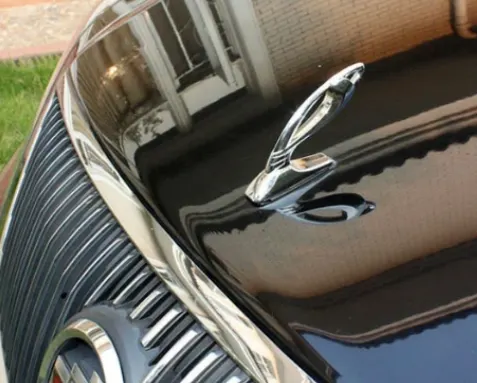

These are some of the primary components that make up a car hood. Each component plays a role in providing functionality, structural integrity, and aesthetic appeal to the overall design of the hood.
DESIGN CONSIDERATIONS OF CAR HOOD
When it comes to designing car hoods, there are several important considerations that automotive manufacturers take into account. These considerations include:
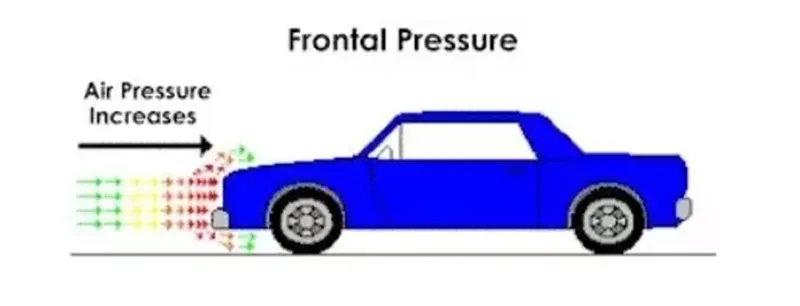
AERODYNAMICS: Car hoods play a role in the overall aerodynamics of the vehicle. Automakers strive to design hoods that minimize air resistance and reduce drag, which can improve fuel efficiency and enhance the vehicle's performance.
STRUCTURAL INTEGRITY: The hood contributes to the overall structural integrity of the vehicle. It needs to be designed to withstand various forces, including impacts, vibrations, and torsional stresses. Automakers carefully select materials and employ engineering techniques to ensure the hood provides sufficient strength and rigidity while keeping weight as low as possible.

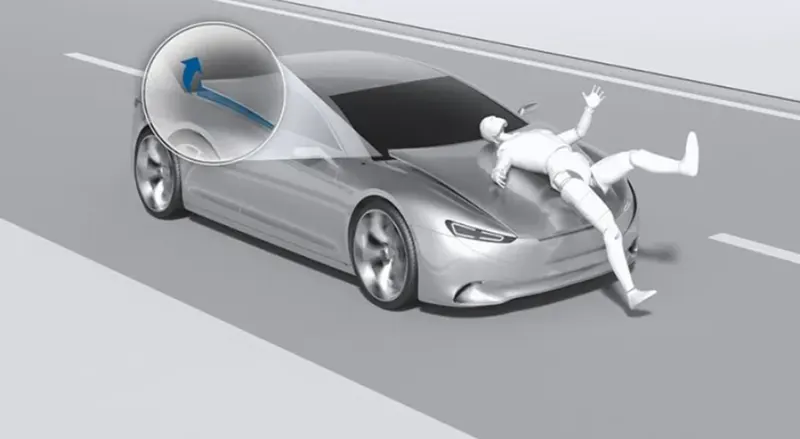
PEDESTRIAN SAFETY: In recent years, there has been an increased focus on pedestrian safety in vehicle design. Car hoods are designed to absorb impact energy and reduce the severity of injuries in the event of a collision with a pedestrian. This involves incorporating features such as energy-absorbing materials and pedestrian-friendly contours.

STYLING AND BRAND IDENTITY: The design of the car hood is an essential aspect of a vehicle's overall styling. Automakers pay attention to the shape, contours, and lines of the hood to create a cohesive and aesthetically pleasing appearance. The hood design can also reflect the brand's identity and differentiate it from competitors.

ENGINE COOLING AND VENTILATION: The hood design must allow for proper engine cooling and ventilation. It includes the incorporation of functional features like grilles, vents, and air intakes that facilitate the flow of air to the engine compartment, helping to dissipate heat and maintain optimal operating conditions.
MANUFACTURING AND COST: Automakers consider the manufacturing process and cost implications when designing car hoods. They strive to create designs that are feasible to produce efficiently and cost-effectively, while still meeting all the necessary performance and safety requirements.

These design considerations ensure that car hoods are not only functional and safe but also visually appealing and aligned with the overall design philosophy of the vehicle and the brand.
DESIGNING OF HOOD USING Siemens NX CAD
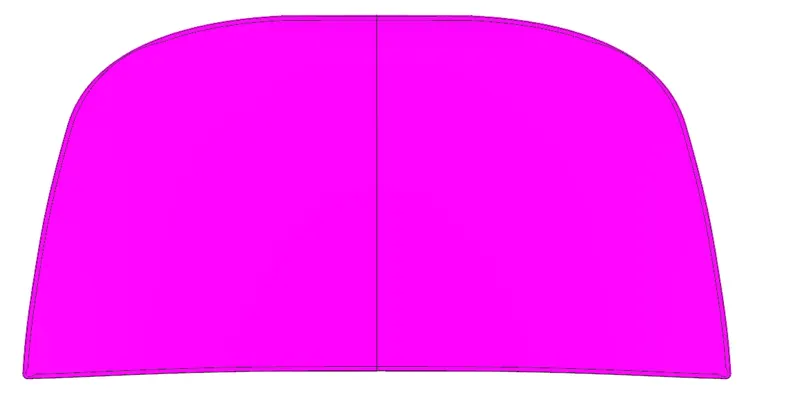
First open the assembly workbench and using add component add the hood outer panel.
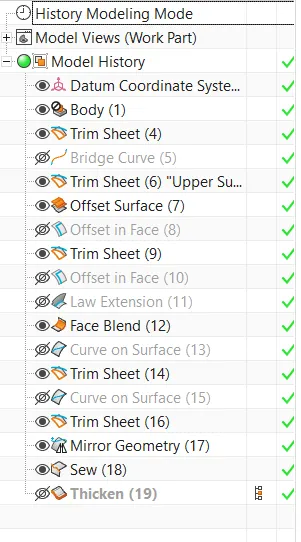
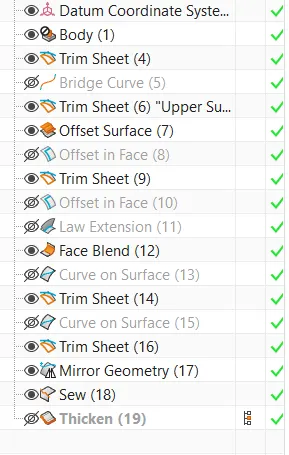
This is the product navigator tree
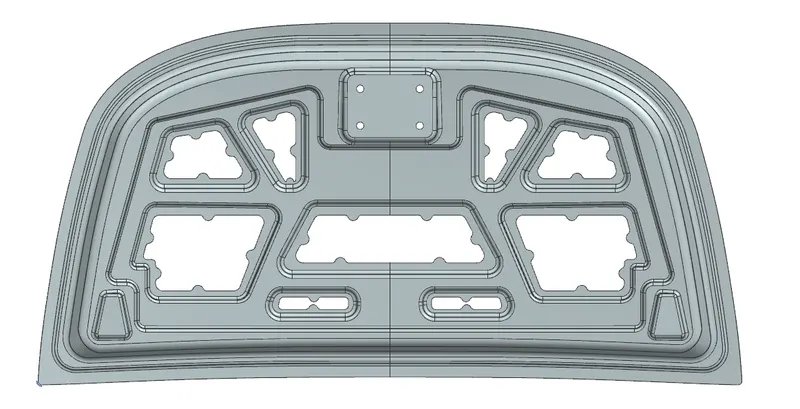
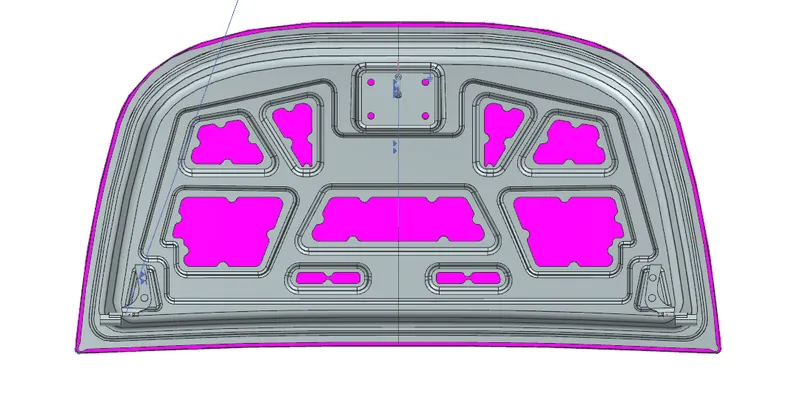
Create a hood inner panel using curve in face,offset and emboss.
Then create a another sketch and do another emboss for that sketch.
Create a hinge and striker holder at the two sides of the hood using mirror geometry option.
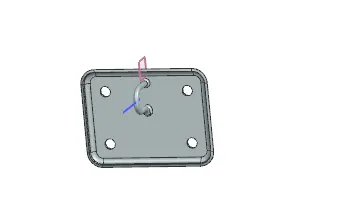
Then import the striker by using add components.
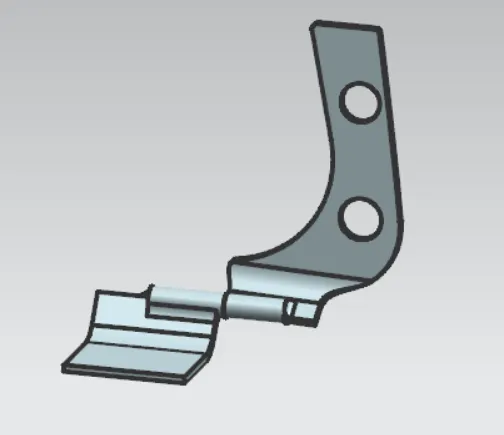
Then add the hinge assembly by using the add components.
POSITION OF STRIKER AND HINGE ASSEMBLY
1.For that Initially the the hinge is roughly attached / assembled to each outwards end of the inner panel thought the hinge W THAT reinforcement. Then a line is created along the axis of the two hinges.
2.A circle is created at the midpoint of that line and another line is Steven created tangent to this circle and then the ref line has created within the circle with particular angle. After that based on the required striker on the pic position the circle diameter and the hinge angle has been changed. Also, another line has been created parallel to the striker hook from the striking point of the striker.
3.Then the assemble the both lines and striker to the inner panel through striker reinforcement using the assembly constraints.
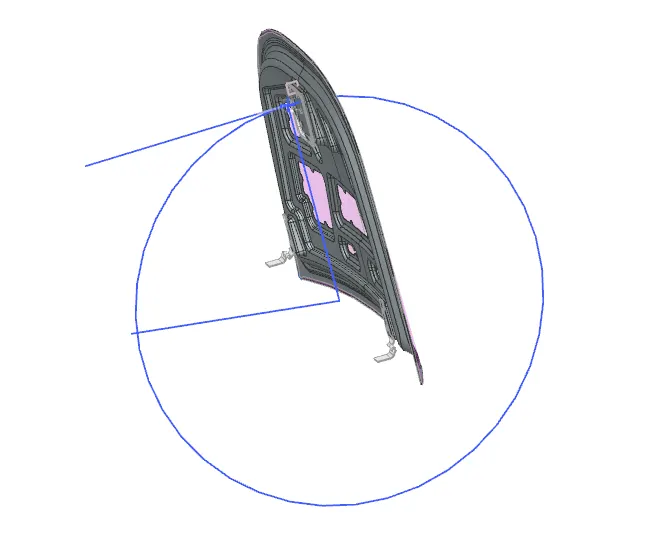
4.Then make constraints using the diiferent constraint option.
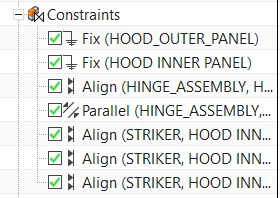
at last hemming should be done for attaching outer panel and inner panel
FINAL PRODUCT OF CAR HOOD
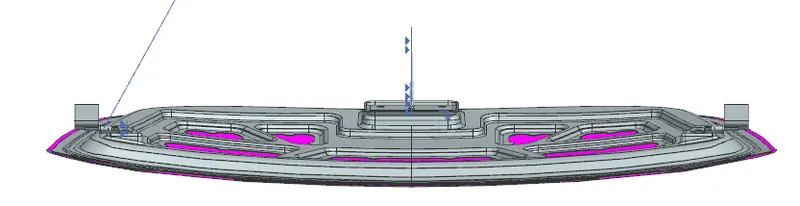
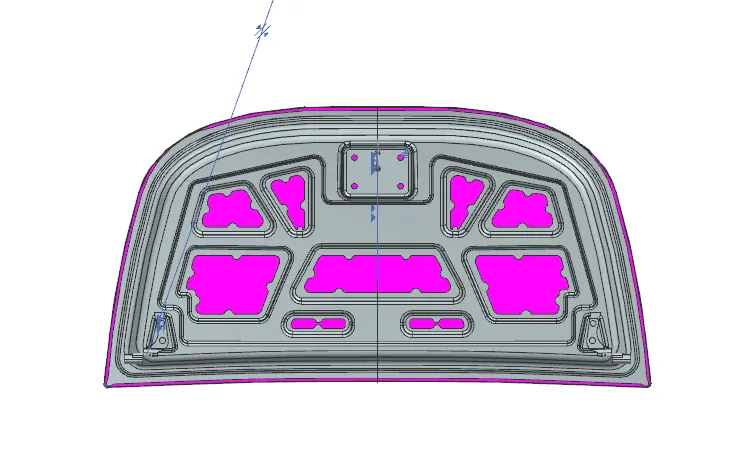
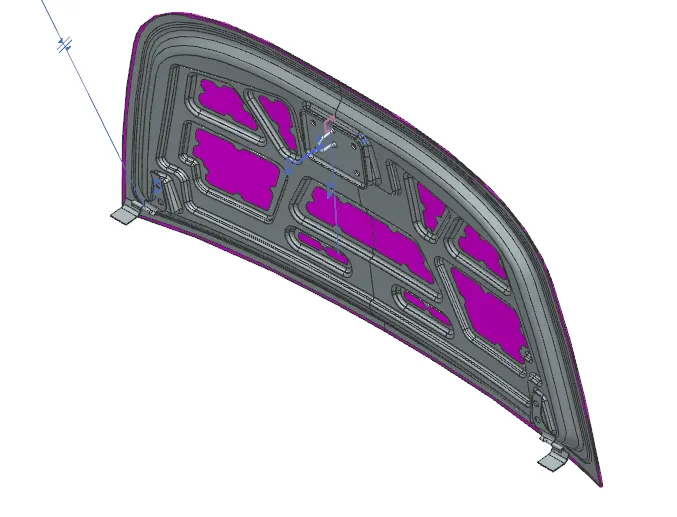
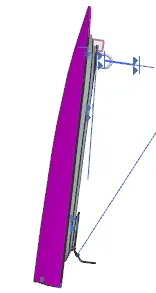
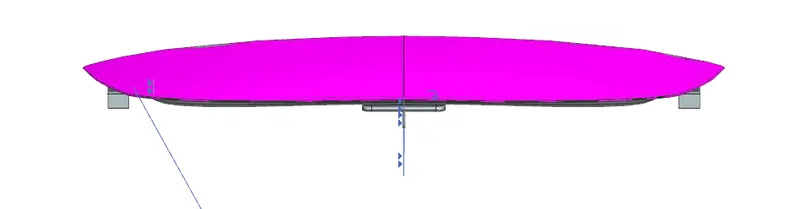
CONCLUSION:
Finally , the hood design has been completed by considering the criteria , dimensions , procedures and standards . By the process of this design , have learnt about the hood mountings , sheet metal operations like hemming , embossing , deep drawing , piercing , Pedestrain safety and its ratings .