Section Modulus calculation and optimization
REPORT ON SECTION MODULUS CALCULATION OF HOOD
AIM
To calculate the section modulus of the previously designed hood for analyzing its strength and also optimizing the design to see the difference in the bending strength of the hood. Higher the section modulus of a structure, the more the resistive it becomes to bending.
SECTION MODULUS
- Section modulus is a geometric property of a structural cross-section that measures its resistance to bending. It is commonly denoted by the symbol "Z" and has units of length cubed (e.g., mm^3 or in^3).
- In simple terms, the section modulus indicates how much a cross-sectional shape can resist bending moments. When a force or load is applied to a beam or any other structural member, it causes bending, resulting in tension on one side and compression on the other. The section modulus quantifies the distribution of material in the cross-section, determining its ability to withstand these bending stresses.
- The higher the section modulus, the greater the resistance to bending. A larger section modulus implies that more material is distributed farther from the neutral axis of the cross-section, resulting in increased resistance to bending moments. Therefore, sections with higher section moduli are typically stronger and more rigid.
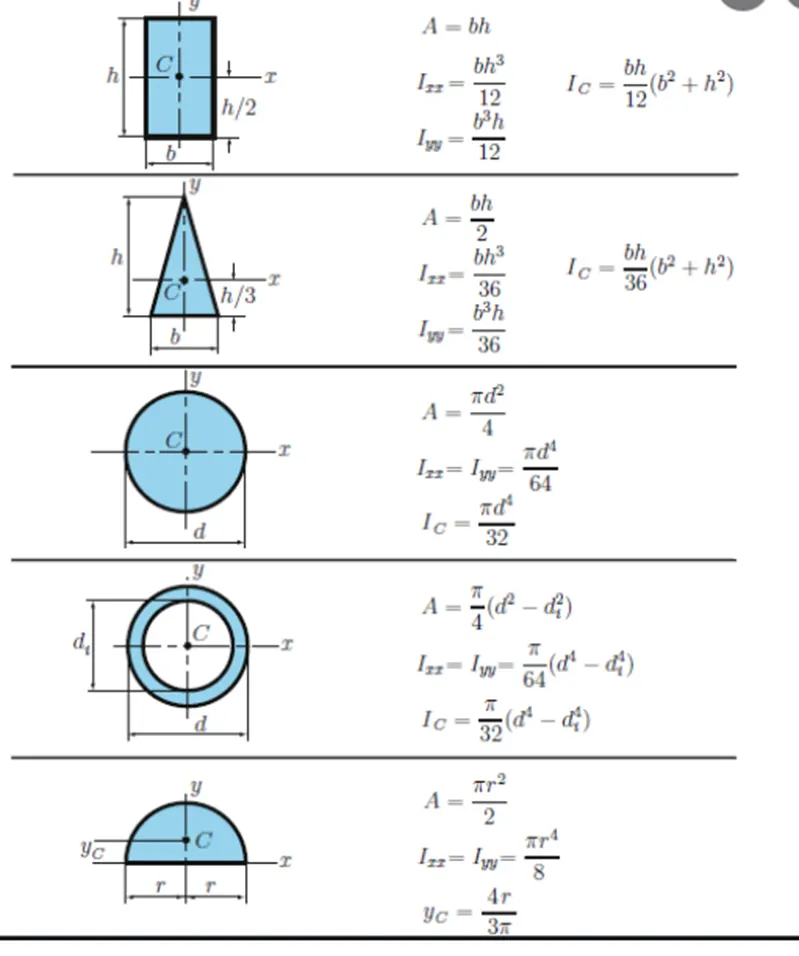
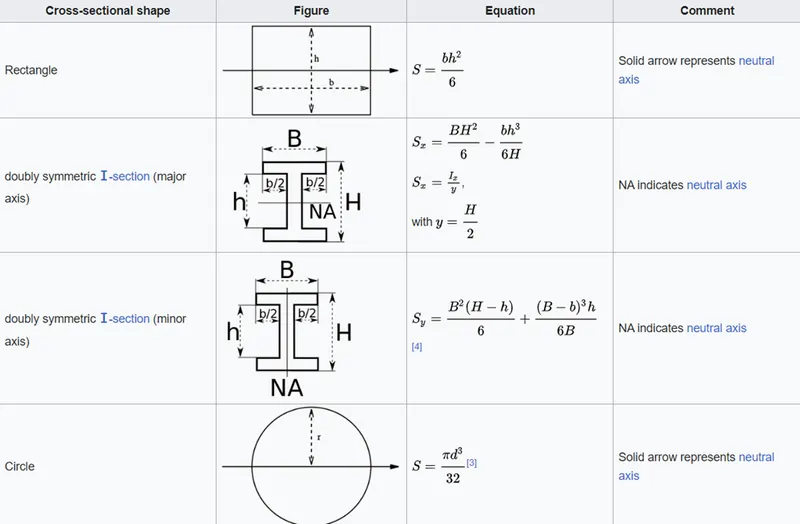
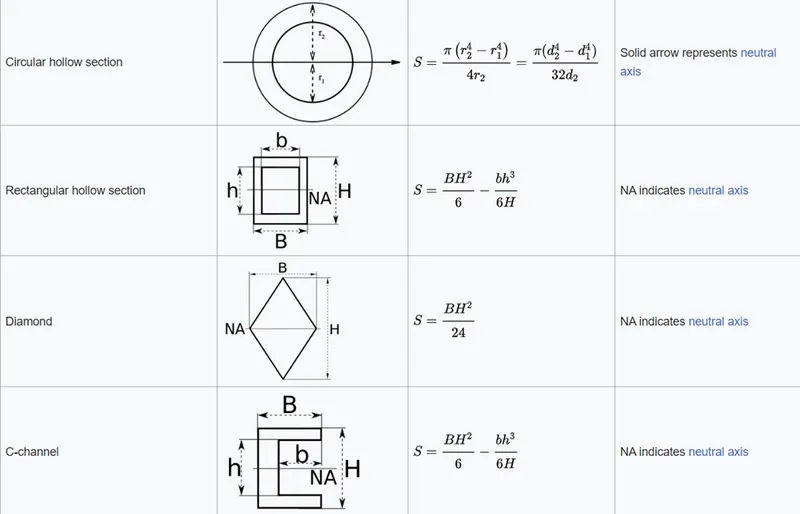
- The formula for calculating the section modulus depends on the shape of the cross-section. For simple shapes like rectangles or circles, the section modulus can be calculated using basic geometric formulas. However, for more complex shapes, such as I-beams or channel sections, the section modulus is typically obtained from structural design tables or computer software.
- It's important to note that the section modulus is just one of several factors considered in structural design. Other factors include material strength, applied loads, and design codes or standards.
S=I/Y
S = Section modulus
I= Moment of Inertia (Unit mm 4)
Y= Distance from Neutral axis to the extreme end (unit mm)
The Unit of a “section modulus” is (mm3)
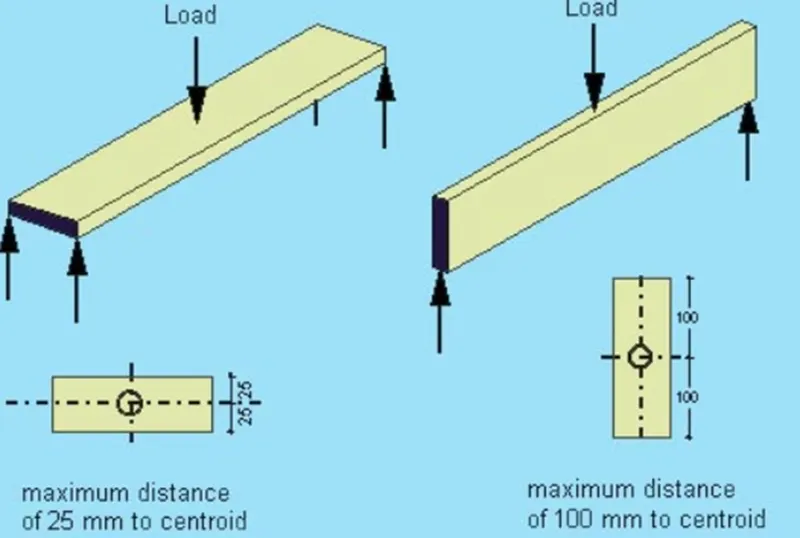
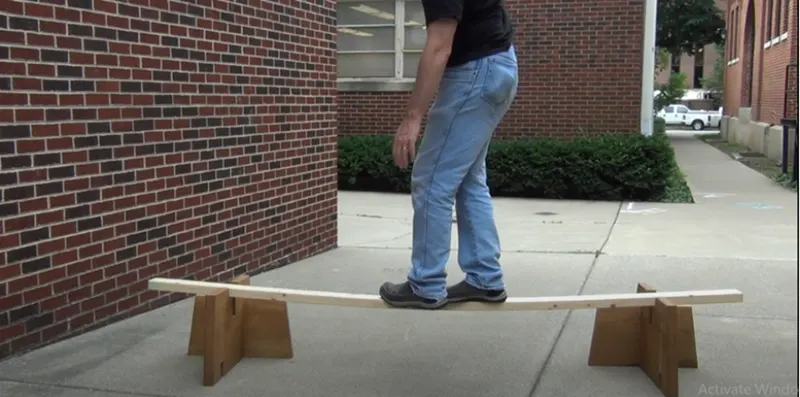
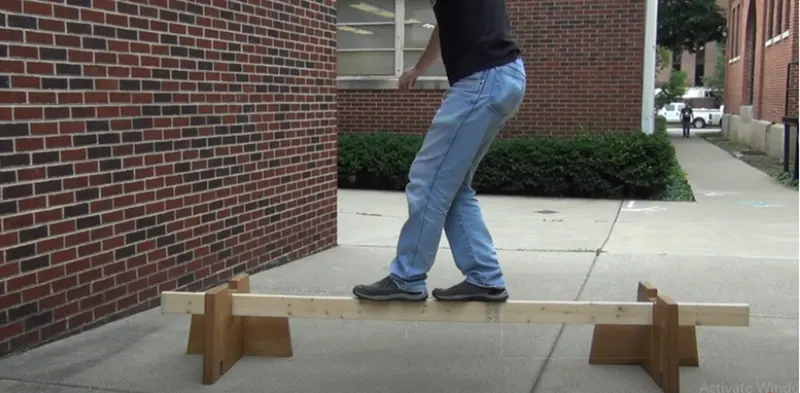
Changing the position can show the difference in bending which is because of the centroid distance from extreme fiber end.
SECTION MODULUS OF PLASTIC
- The plastic section modulus, also known as the plastic modulus or Zp, is a geometric property of a cross-section that measures its resistance to plastic (permanent) deformations. It is specifically used in the design of structures made of ductile materials, such as steel.
- When a material reaches its plastic limit, it undergoes permanent deformations without experiencing a significant increase in stress. The plastic section modulus is a measure of the ability of a cross-section to redistribute these plastic deformations.
- Unlike the elastic section modulus, which measures the resistance to bending before any plastic deformations occur, the plastic section modulus takes into account the redistribution of material in the cross-section after yielding. It provides an indication of the capacity of a section to undergo large plastic deformations without failure.
- The plastic section modulus is denoted by the symbol "Zp" and has units of length cubed (e.g., mm^3 or in^3). It is calculated by integrating the stress distribution over the plastic region of a cross-section. The plastic region refers to the area where the material has yielded and is subjected to plastic deformations.
- The plastic section modulus is utilized in the design of structures that are expected to undergo plastic deformations, such as plastic hinge regions in steel frames. It helps engineers determine the capacity of a section to resist plastic bending and ensure that the structure can safely undergo significant plastic deformations without collapse.
FIRST DESIGN STUDY
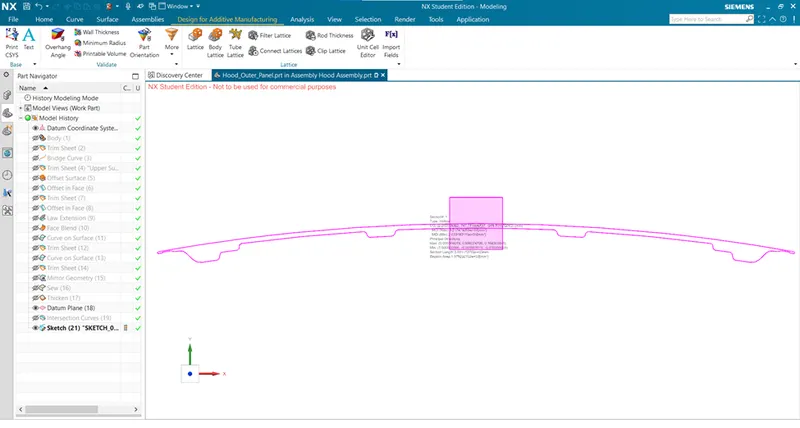
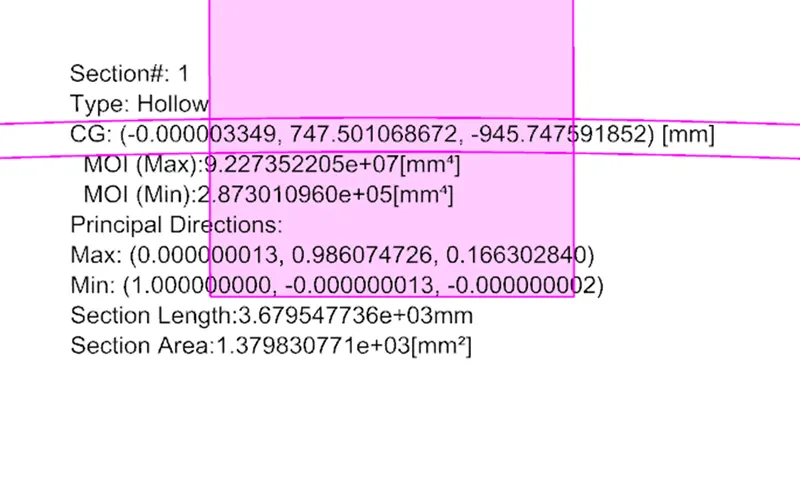
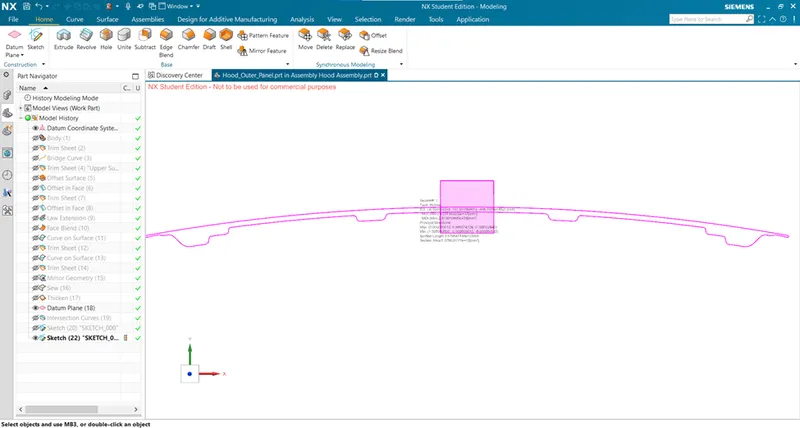
The Intersection of the design was taken and then section Inertia Analysis was done.
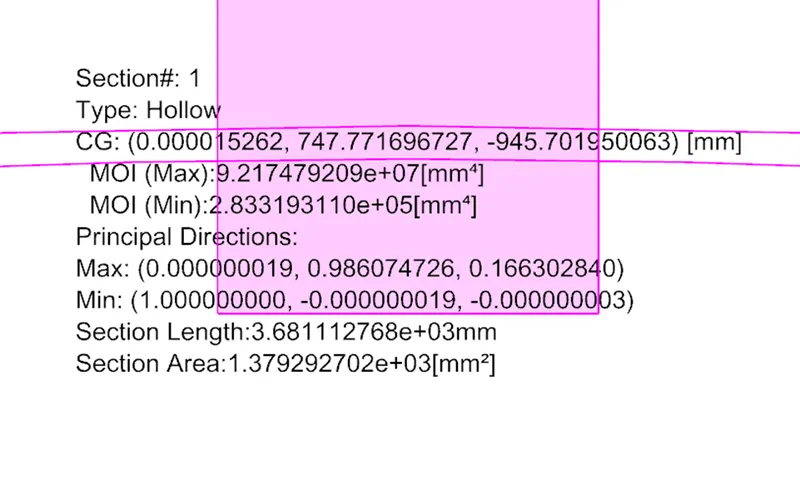
Moment of inertia(max) = 9.217479209×10^7×mm^4
Moment of inertia(min) = 2.833193110×10^5×mm^4
Y=883.1653/2=441.58265 mm
S=I/Y
S=2.833193110×10^5/441.58265
= 641.599mm^4
SECOND DESIGN STUDY
Moment of inertia(max) = 9.227352205×10^7×mm^4
Moment of inertia(min) = 2.873010960×10^5×mm^4
Y=883.1653/2=441.58265 mm
S=I/Y
S=2.873010960×10^5/441.58265
= 650.616mm^4
RESULTS:
- After the calculations of the above 2 cases the section modulus of an S1 and S2 the difference is 9.107mm^4.
- The section modulus value of case 2 is higher than the case 1
- As we increase the section area, the moment of inertia & section modulus increases which means strength and load material also increase. Which the moment of inertia directly proportional to the strength of the material.