Comparison between HEVs and EVs
Target:-
- To Find the detailed difference between Mapped and Dynamic Model of engine, motor and generator.
- How to do Model Calculation.
- To find out the effect of the environment in the gradability of the HEV and Comparing it with the pure Electric Powertrain.
Objective:-
- What is the difference between the Mapped and dynamic model of engine, motor and generator? How can you change the model type?
- How does the model calculate miles per gallon? Which factors are considered to model fuel flow?
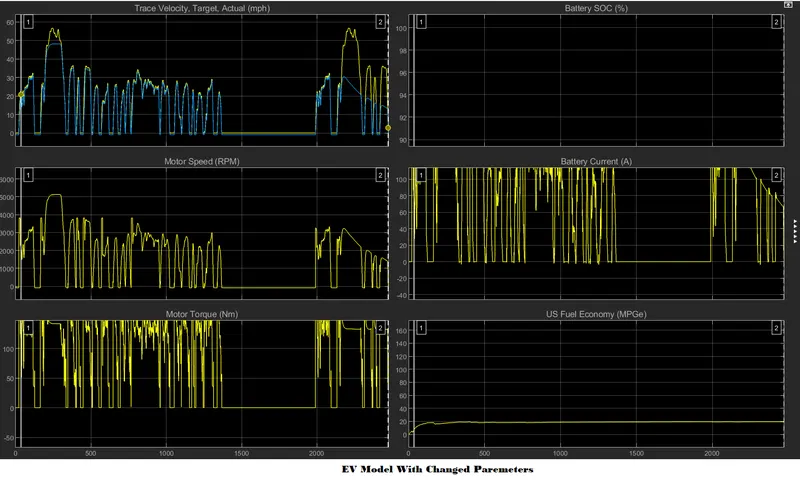
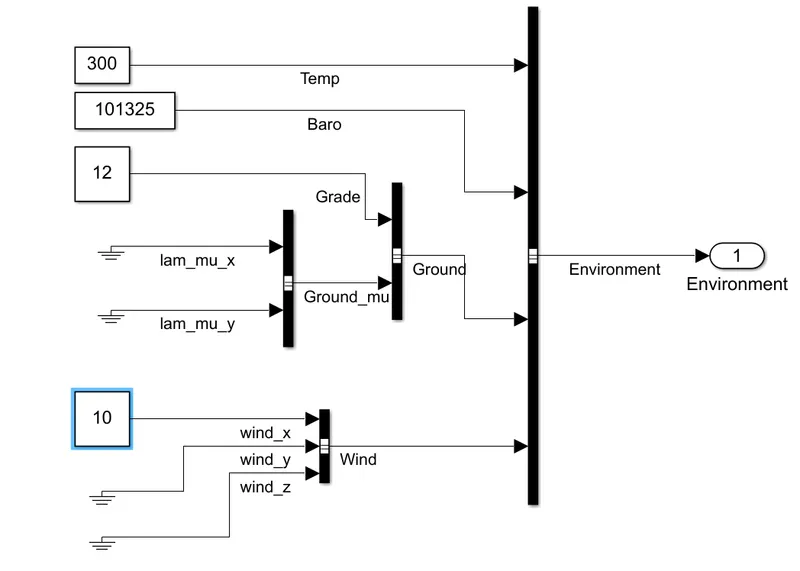
- Run the HEV ReferenceApplication with WOT drive cycle. Change the grade and wind velocity in the environment block. Comment on the results.
- Keeping all other parameters same, compare the simulated results of hybrid and pure electric powertrains.
Theory:-
- Here is the detailed difference between the Mapped and the Dynamic model of engine
Types Mapped Model Dynamic Modle Engine In this type of modelling, we are using steady-state lookup tables to characteristics engine performance
This modelling is less accurate as compared to the dynamic and the lookup table value are based on the values of the brake, torques. the date is generally mixed with dates like air mass, fuel flow, temperature, exhaust, etc.
In this type of modelling the model, block decomposes the engine characteristics which are then are separated into lower-level components.
This model then combines the components and then it captures the dynamic effects. The model uses the real-time date for more accurate in the calculation using the subsystems of the vehicle and hear we can also calculate the brake torque, exhaust.
Motor As this model works faster as compared to the dynamic model so it is used for torque control model. The output torque and the reference torque is compared and changed are made, input speed and the torque can be specified
In this model, it uses a 3phase PMSM type of motor(Permanent Magnet Synchronous Motor), which uses 3 phase voltage and it is been regulated and the phase current is been controlled which helps in controlling the torque as well as the speed is also controlled. This date is more accurate
Generator This block is the same as the other blocks and it uses most of the date required are taken from the lookup table, It takes less time to simulation.
In this, we have to change everything manually during the running time and as it is a continuous process it takes more time.
- As we know that EVs don't need gasoline as the fuel they need Electricity as fuel as compared with HEVs they required both gasoline and Electricity. we in India use litres and in the US they use gallons there is a simple calculation that can be used for converting gallons into liters i.e., we can convert US gallons into litres by sampling multiplying it with 3.78, and in this manners, we can change the Miles into KMs by sampling multiplying 1.61 with the miles. As told earlier the EVs don't run in gasoline so, to find out the gallons per miles we have to find out how the converter works and below is the calculation from which in understand how to do that-:
- The calculation of distance is done by integrating the vehicle speed with the time,
- After the convention, we have to multiply with a factor of 0.000621371,
- And then we have to convert into 100km by simply deciding it with a factor of `10^5`.
- The power of a battery is always in kilowatts per hour.
- Then by converting the KWs into Watts by 1000 multiplying then dividing it with a factor of 33.7.
- The flow rate of the Gasoline is in `m^3` then multiplying them with 0.00378541.
- This is an HEV model in which there is some default parameter, this model has both the electric power plant and there is also an IC engine they both work together for running the vehicle. in this, we have to change the parameters which are in the environment block like the gradability and the wind velocity first with the default and then with the changed parameters and then commenting in the output.
- We have to do the same experiment in this as in the above HEV but in this, it is the pure EV model and compares them with the HEV and the EV one.
Solutions:-
- To change the model from mapped to dynamic, we have to follow some steps, I have done for the HEV reference model the process is as below-:
- Go to Matlab help and then search for Powertrain block set.
- Then click on the get started then click on the getting started with power train block set.
- Click on the HEV model with the multimode then open the model (it will take some time to open).
- Open the passenger model then click on the electric plant.
- There we will find the two-part one in the generator and the other will be motor.
- Right-click on that then go to variant then we can change the variant from mapped to the dynamic model.
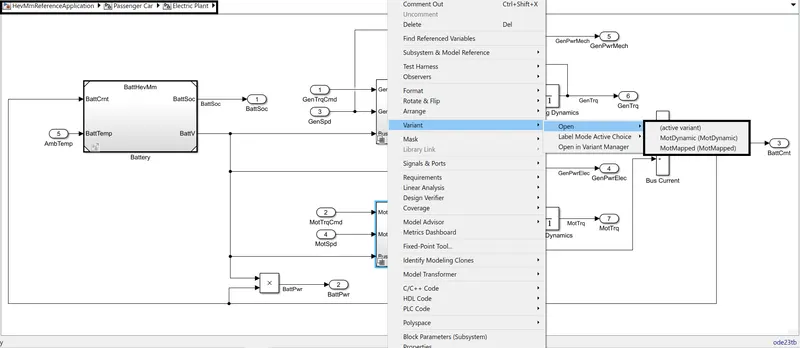
- The model process is below-:
- Go to Matlab help and then search for Powertrain block set.
- Then click on the get started then click on the getting started with power train block set.
- Click on the HEV model with the multimode then open the model (it will take some time to open).
- Open the visualisation block there we will find the performance block.
- Click on the performance block and hear you will find the block.
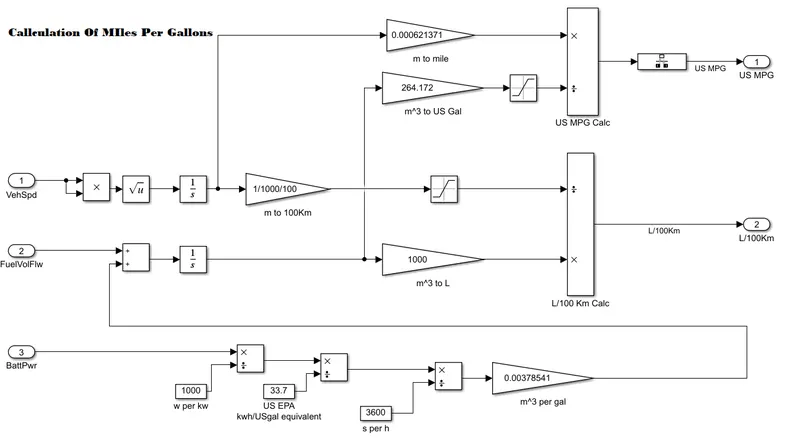
- To change the block, the process is below-:
- Go to Matlab help and then search for Powertrain block set.
- Then click on the get started then click on the getting started with power train block set.
- Click on the HEV model with the multimode then open the model (it will take some time to open).
- Run the model with the default value in that.
- After that stop, the model goes to environmental block.
- Change the grade and the velocity.
- Run the model and compare the output.
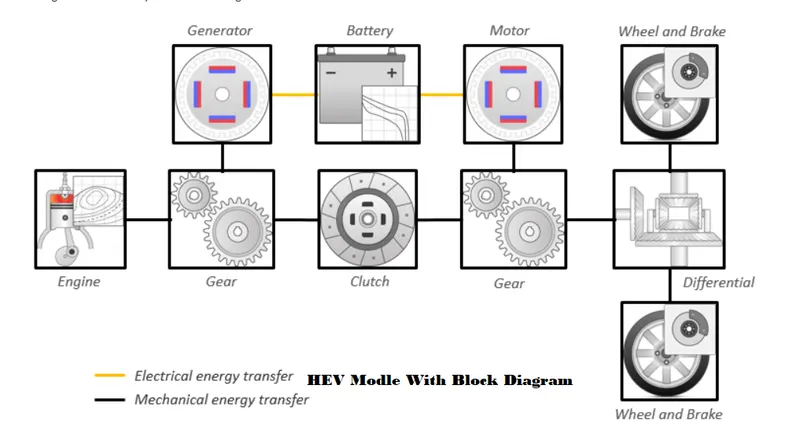
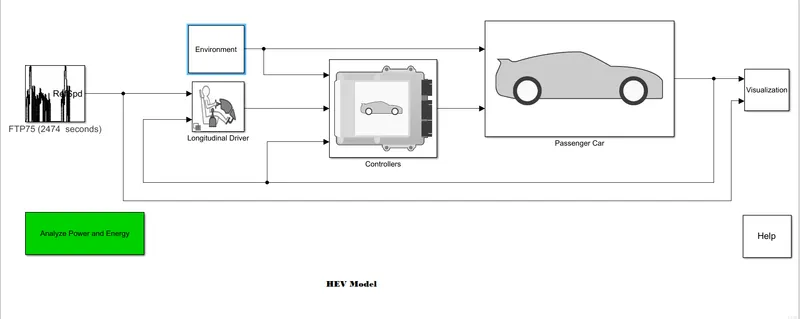
- to compare the pure EV model with the HEV one we have to open the model the process is as below-:
- Go to Matlab help and then search for Powertrain block set.
- Then click on the get started then click on the getting started with power train block set.
- Click on the pure EV model then open the model (it will take some time to open).
- Change the parameters and then compare them with the HEV one.
Block Diagram Modle Pure Electric Vehicle Hybrid Electric Vechicle 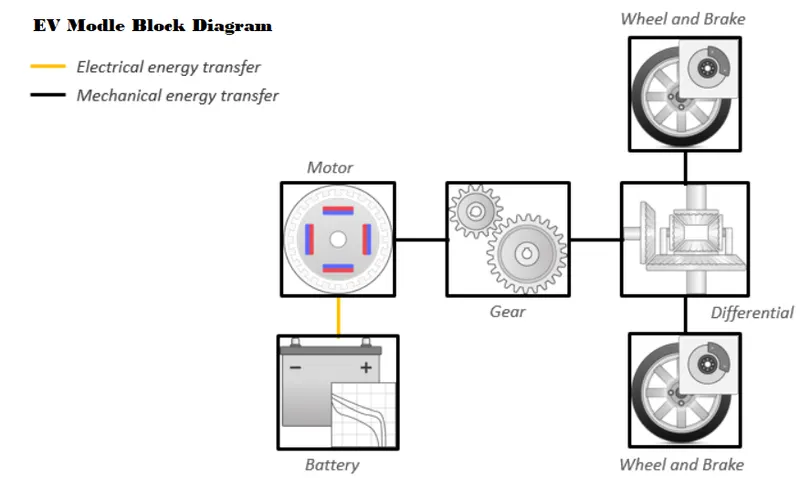
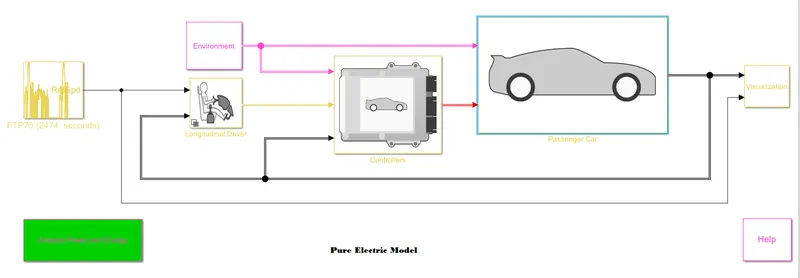
Observation:-
- Nothing has to observed.
- No observation as it is a simple calculation
- Below is the diagram one with default parameter and the other with grade 12 and barometer 10100.
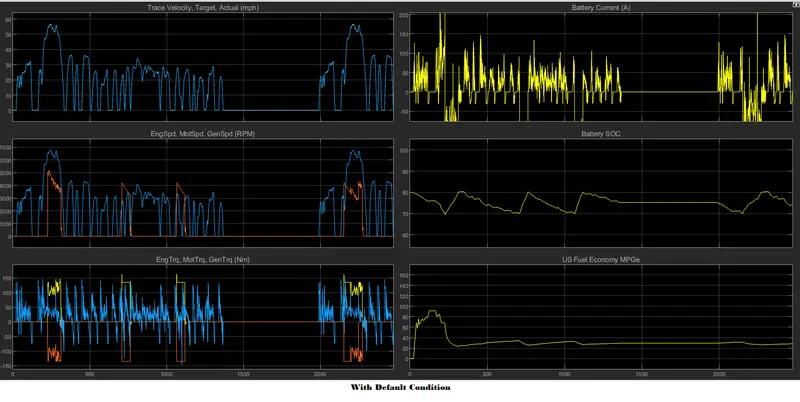
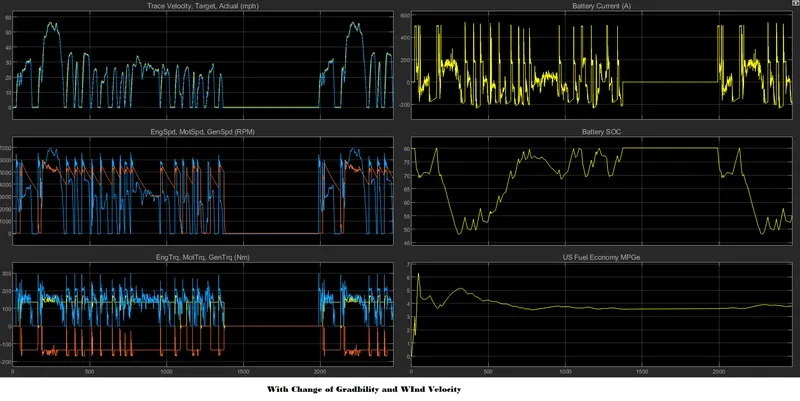
- hear ae the comparison of the two vehicles with the same parameters.
 |
Conclusion:-
- The EVs are very good at fuel efficiency, as compared it with HEVs
- As there is no midway charging in the EVs so the SOC is lower as with the HEVs.
- The EVs are more eco friendly as compare with the HEVs.
- The HEVs are more longitudinal Stable as it has more weight Compared with EVs cause HEVs have IC engine batteries generators and motors, which add the weight to the vehicle.