Morphing on CAD Geometry
Morphing on CAD Geometry
Aim -
- To Perform Morphing Operation on Given Component.
Objective -
- To Perform Morphing on Geometry using Box Morphing.
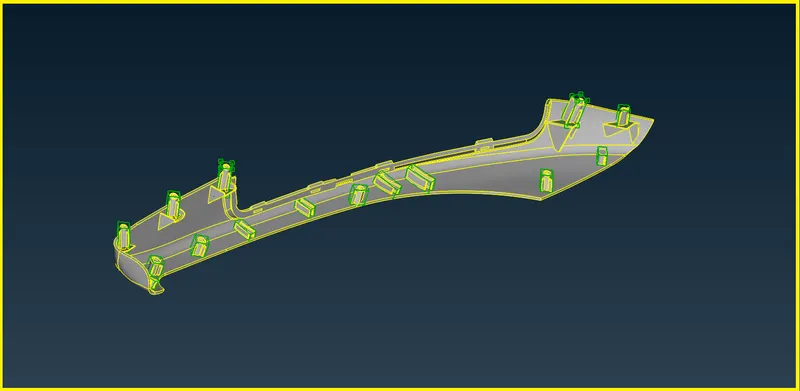
- To Perform Morphing on Model 2 to increase the heights of the Rectangular Ribs and Circular Ribs.
Theoretical FrameWork -
Morphing-
- Morph is a very helpful tool for Shape modifications.
- Most of the Morphing Modifications can be applied both on FE and Geometry models.
- The functions of the MORPH menu can be used to reshape shell and solid FE-Models, avoiding returning back to the CAD model for modifications and re-meshing the model.
- In this way, different versions of a complete meshed model may be created for optimization or any other purpose.
| Figure 1-Morphing. |
Applications of Morphing-
- It's applications can be found in any discipline:
1) Durability
2) Crash
3) NVH
4) CFD etc.
- Furthermore, Morphing can be applied to Geometry (CAD) models. In general, Geometry Morphing follows the same concept with Fe-Model Morphing. All the MORPHING functions provide detailed instructions in order to guide the user at every step. The instructions appear in the Status Bar (located just below the ANSA working area).
[Note: Morphing functions are strongly depended on the used Tolerances. This setting is controlled by the Tools >> Settings >> [Resolution/Tolerances/Units]. It is recommended to use values that are roughly two orders of magnitude smaller than the smallest element length of the model.]
- ANSA Morphing can be applied in two main methods:
- Using Morphing Boxes [Box Morphing].
- Using Direct Morphing [Direct Morphing].
Box Morphing -
- Box Morphing is performed via Boxes that can be reshaped by moving the Control Points that are located along their Edges.
- These Boxes can load almost any kind of entities.
- The user can move the Control Points in order to reshape the Boxes in two modes.
- Non-morphing mode: Boxes are simply reshaped in order to better fit to the model's shape.
- Morphing mode: Boxes are reshaped and their loaded entities are morphed accordingly.
The Box Morphing method has three approaches.
Box Morphing – Approach A
- Multiple Morphing Boxes that follow the shape of the structure. Moving or sliding Control Points results in the morphing of the model along the desired direction.
- This approach allows the user to slide one part on another, or simply reshape a part by moving the Control Points of the Boxes.
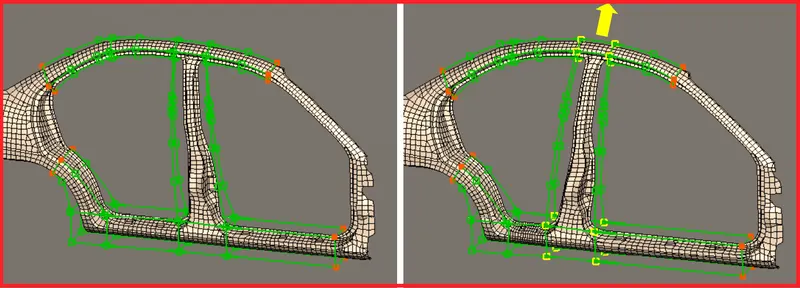
| Figure 2-Approach A. |
Box Morphing - Approach B
- A single Morphing Box, split into many, with their edges fit on the feature lines of the model.
- This approach is recommended for CFD models,but also for structural assemblies, when a modification of a Part affects the surrounding components too.
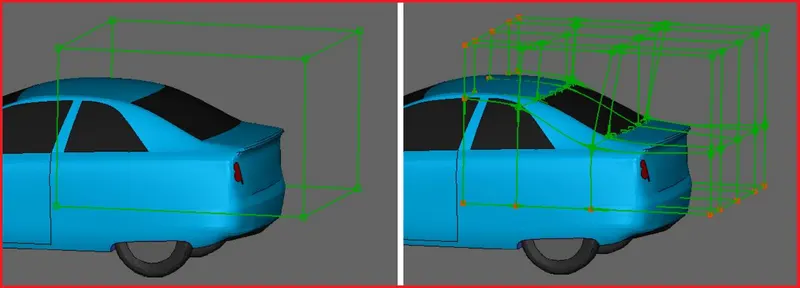
| Figure 3-Approach B. |
Box Morphing - Approach C
- A Morphing Box can handle the shape of other Boxes
- This approach is recommended when local (detailed) and global modifications are needed in the same model.
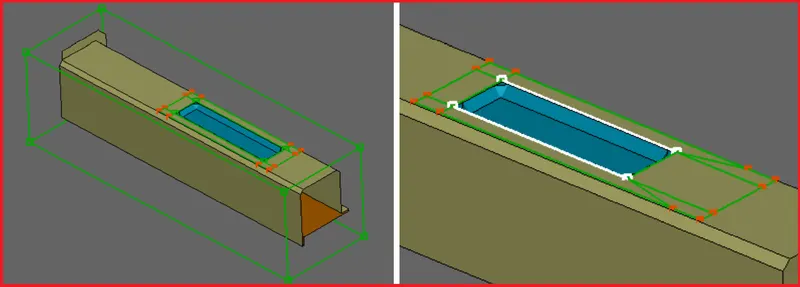
| Figure 4-Approach C. |
Direct Morphing-
- FE and Geometry Models Morphing can also be applied without Morphing Boxes. This can be performed either by specifying frozen, rigid node areas and morphing zones, or by fitting origin edges to target curves. Additionally, there are special functions for creating local depressions,sliding features/members onto a surface and modifying holes.
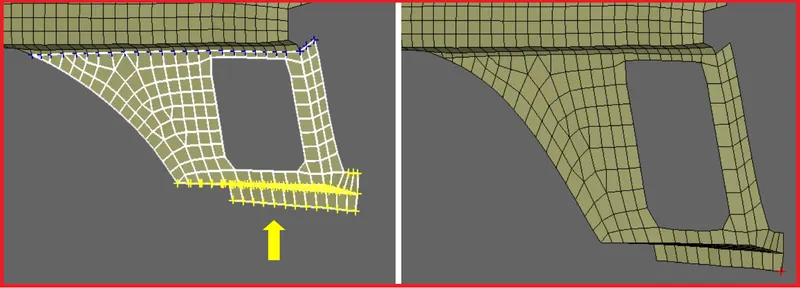
| Figure 5-Direct Morphing. |
Examples of Morphing -
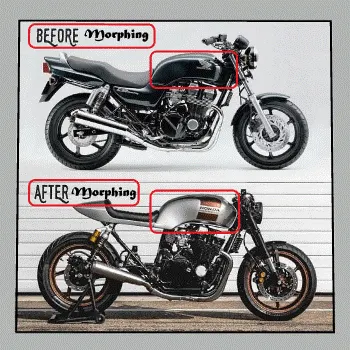
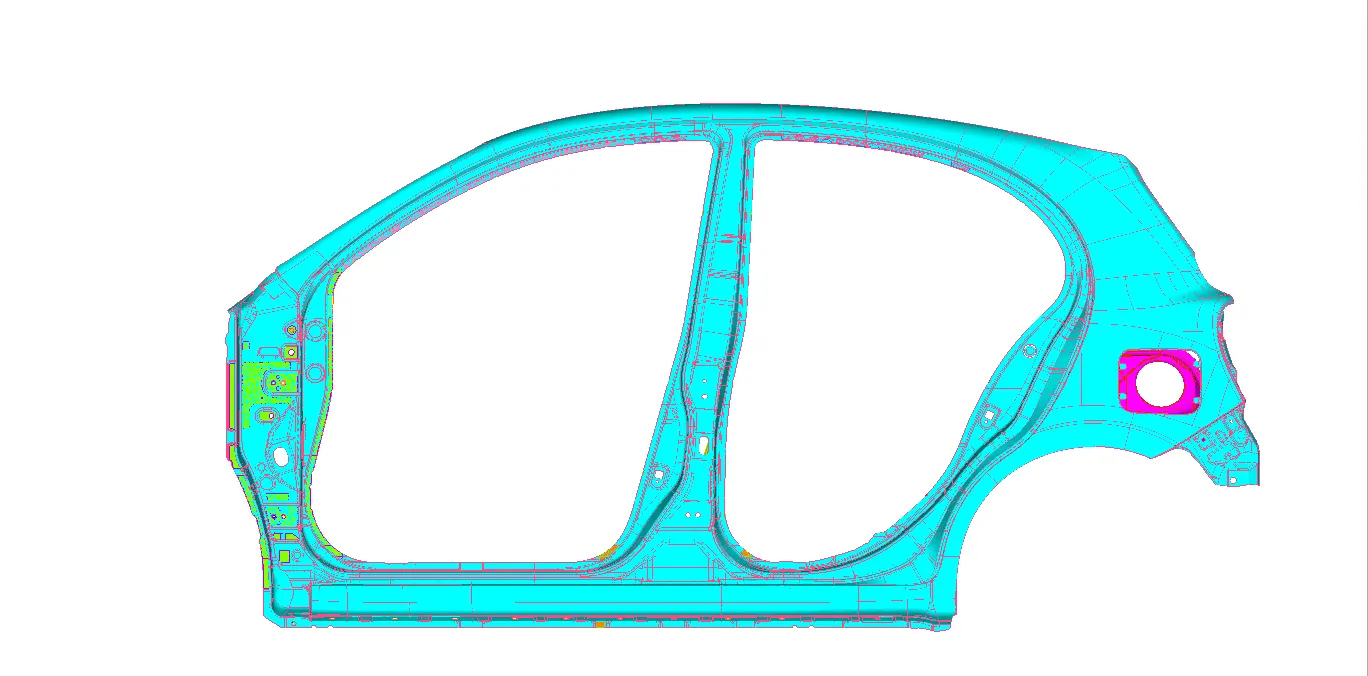
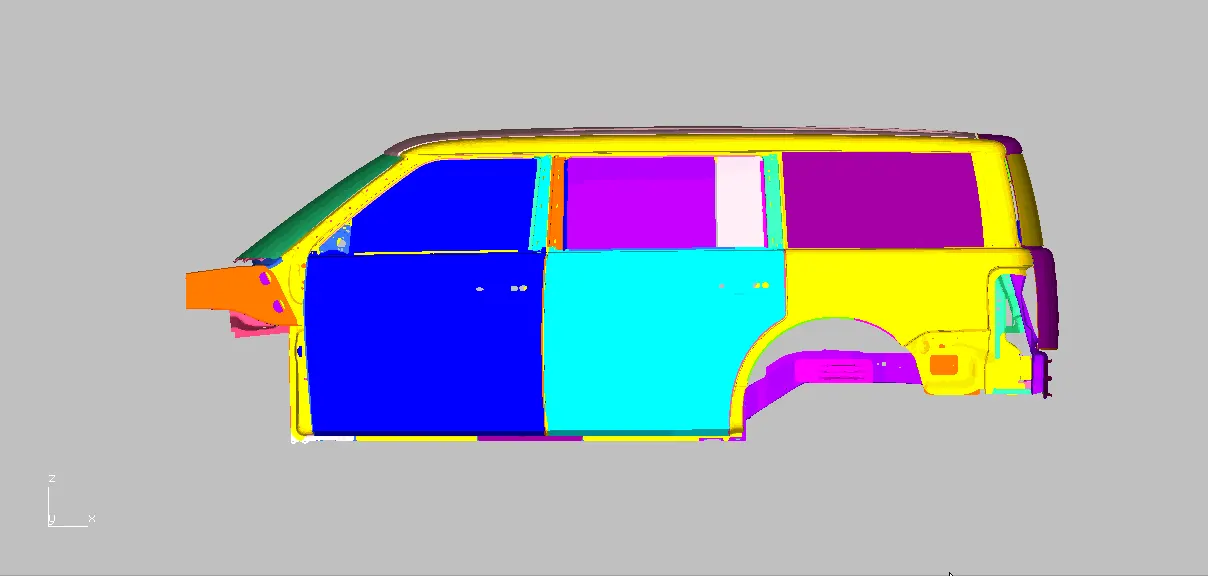
| Figure 6-Honda Before and After Morphing. |
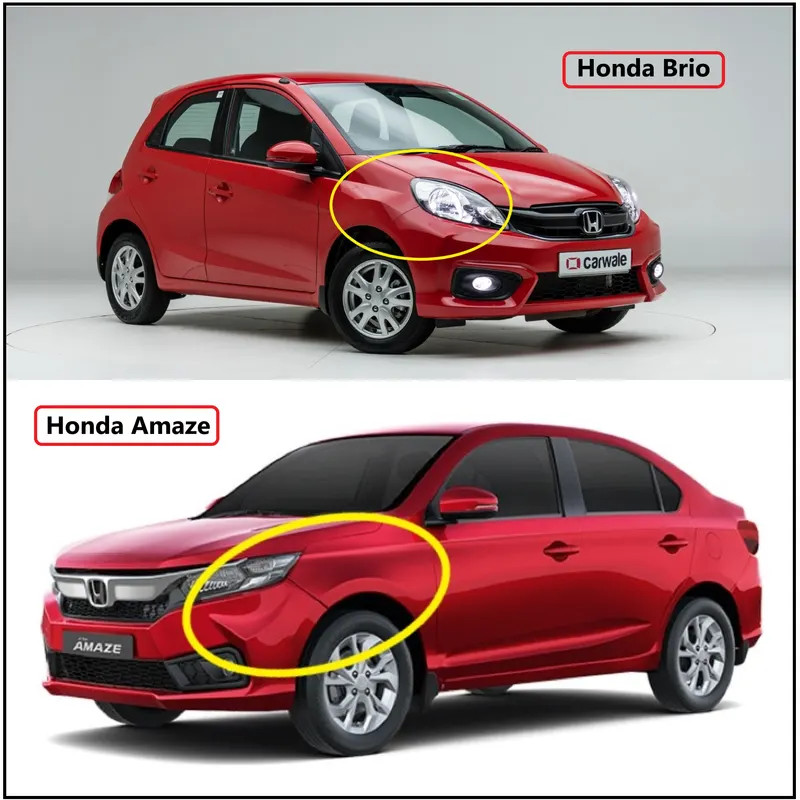
| Figure 7-Morphed Areas in Honda Brio and Amaze. |
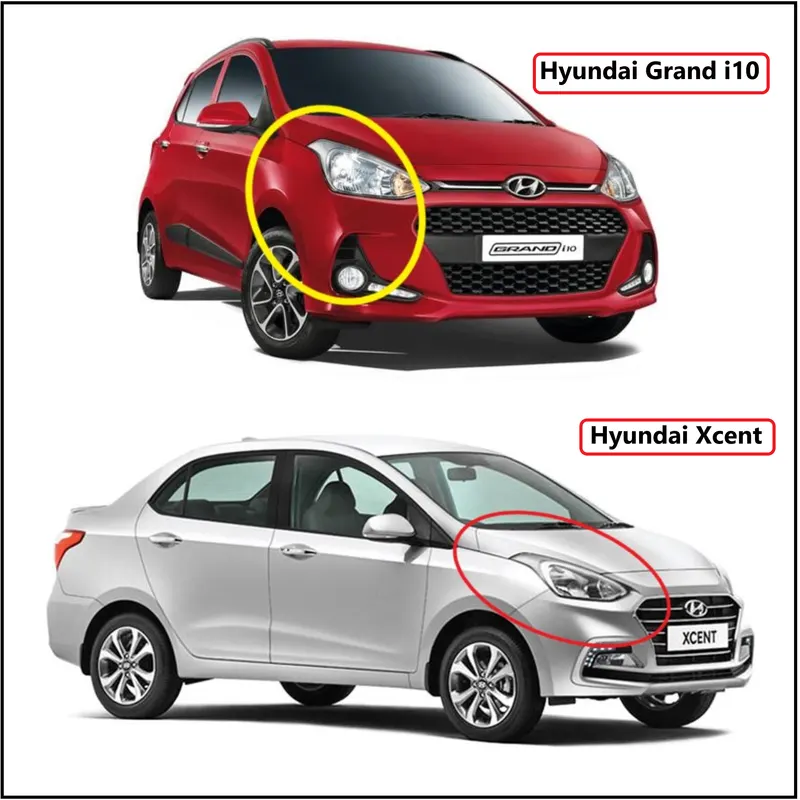
| Figure 8-Morphed Areas in Hyundai Grand i10 and Xcent. |
Procedure -
Phase 1-Importing
- Hence we are importing a given CAD geometry into the ANSA.
- There are file formates like IGES,STEP,Parasolid where we can import these file formats into any CAD,CAE Softwares.
- In ANSA we can import all the CAD Software file formates like
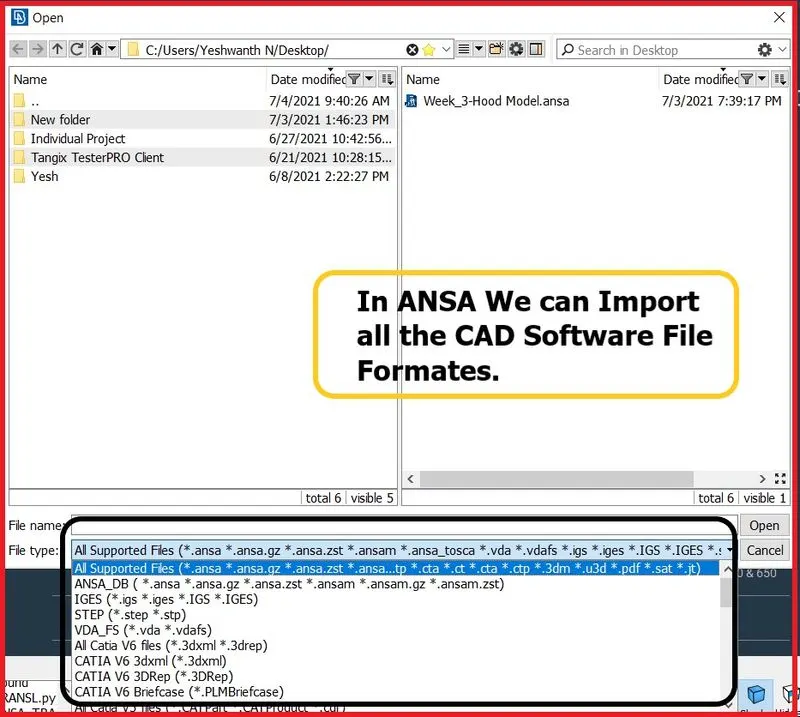
| Figure 9-Supported File Formats. |
- IGES [Initial Graphics Exchange Specification].
- STEP [Standard for the Exchange of Product Model Data].
- Solidworks.
- Catia V5,V6
- Simens NX CAD
- Inventor
- Creo
- Solid Edge
- Rhinoceros 3D
- IGES,STEP,These two are standard file formats which are mostly used in industries.But now a days in industries,they are aslo using parasolid file format.
- Now import the model into ANSA GUI.The Model given to us is in STEP File Format.
- Go to Main Pull Down Menus >> File >> Open.
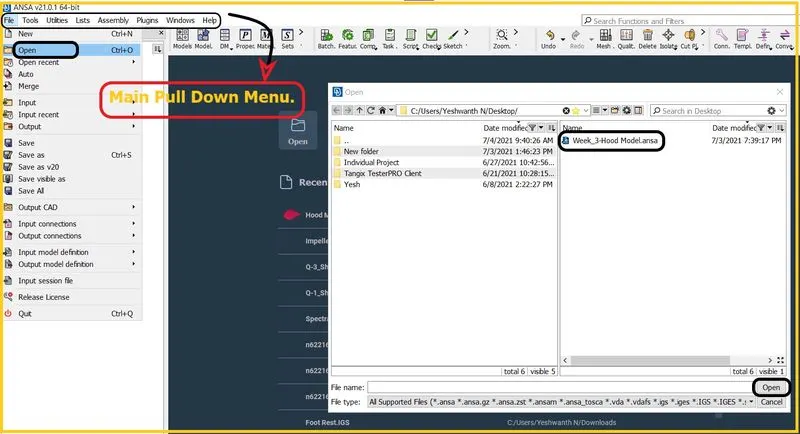
| Figure 10-Importing/Opening the Model. |
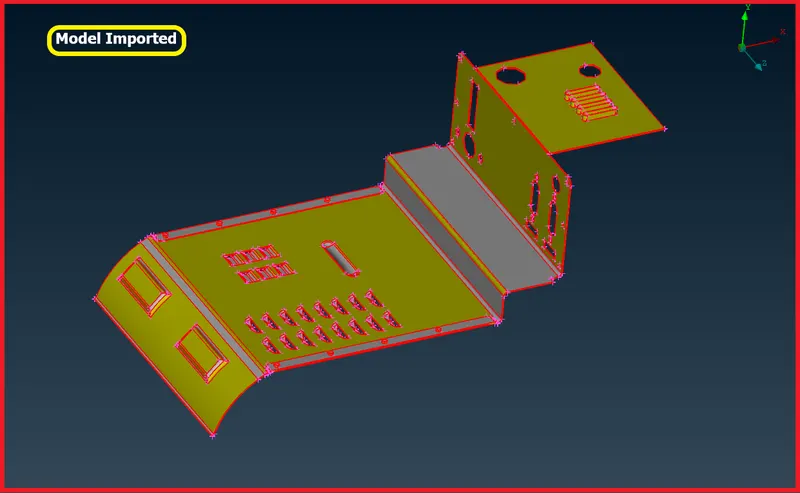
| Figure 11-Model imported into GUI. |
Phase 2-Topo and Geometric Clean Up
- Here,after importing the model into GUI.
- We can see the macros are not connected and there are free edges present in the model.
- To get rid off this or to get equivalence,Do topo on the model by window selection.
- To do Topo,Go to Topo Module >> Faces >> Topo >> Window Selection.
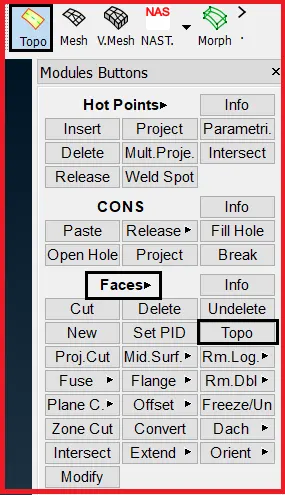
| Figure 12-Topo Module. |
- After doing topological clean up,you can see the model without free edges shown in figure 5 .
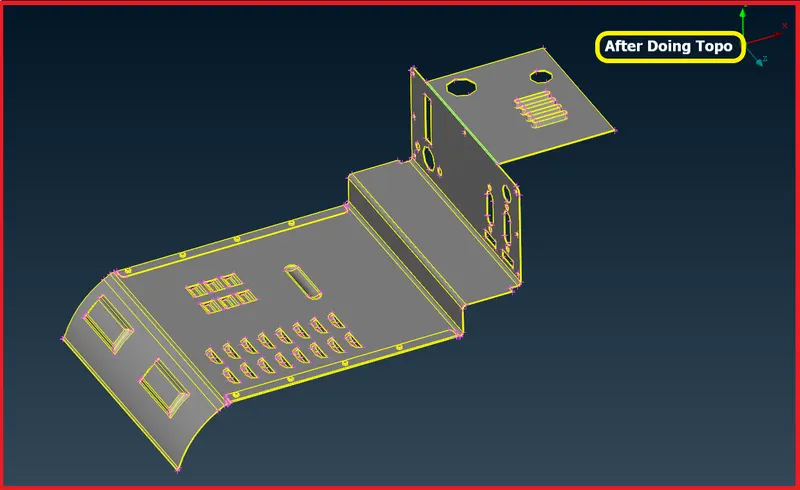
| Figure 13-After Doing Topo. |
- Now after doing topo,do a geometric clean up on the component.
- Here we will be doing some geometry checks on the parent component.
- We have to fix the geometrical errors in the parent component,Then only we will be able to extract auto midsurface using skinoffset or manual offset from faces.
- To fix the geometry checks go to Tool Bar >> Checks >> Geometry.
Step-1
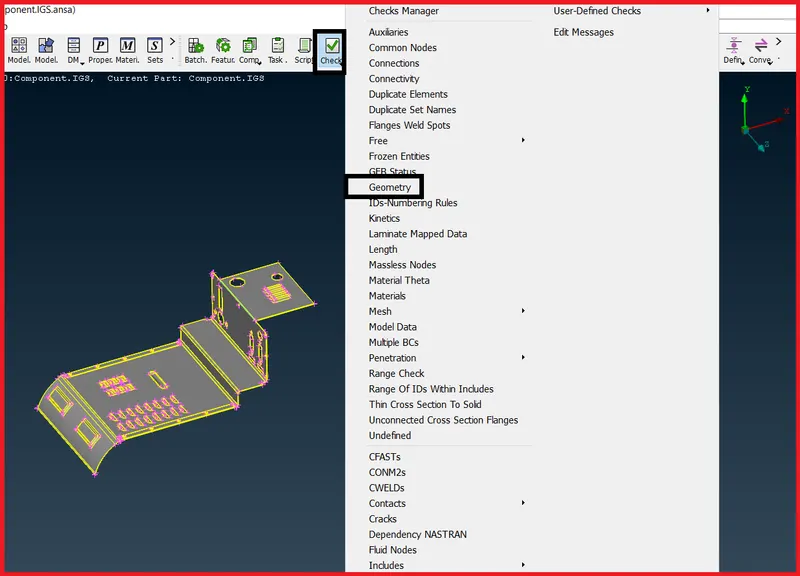
| Figure 14-Checks Manager. |
- After clicking on the check geometry,The geometric errors will be displayed.
- We can fix that geometric errors by manually or automatically.
- For this hood model,We can fix that errors automatically by auto fix.
- While checking for errors in the geometry make sure to check this options in the checks manager.
Step-2
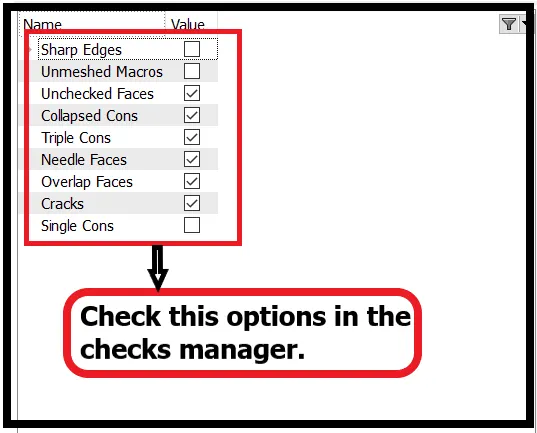
| Figure 15-Check Geometry Options. |
Terminologies for Geomerty Options -
- Unchecked faces - Faces that failed for the shadow operation.
- Needle Faces - Degenerated faces are faces that have their opposite CONS coincident.
- Collapsed Cons - A CONS where it's starting and ending position coincide.
- Triple Cons - Areas where three or more faces have a common boundary.
- Cracks - Red CONS at inner areas.[Holes are excluded].
- Single Bounds - Red CONs at outer areas.[Holes included].
Step-3
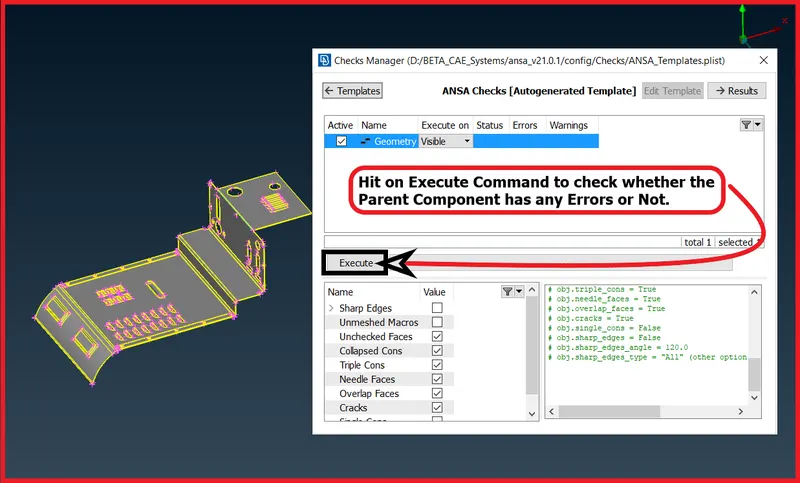
| Figure 16-ANSA Check Manager. |
Step-4
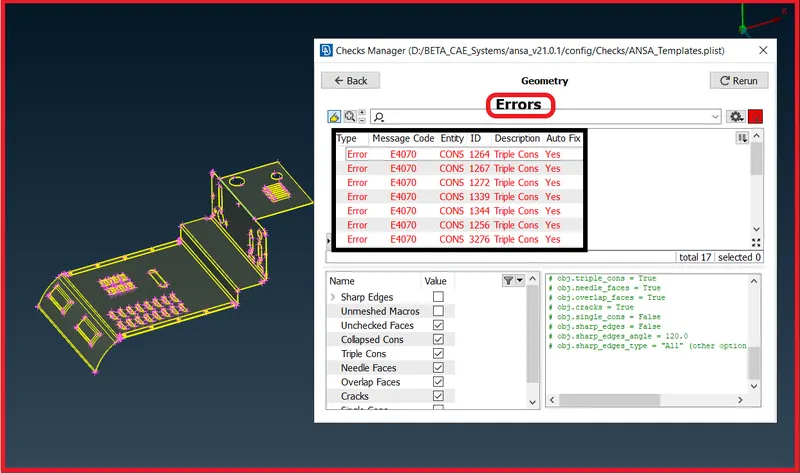
| Figure 17-Geometric Errors. |
- Here in the Checks window all problems are reported with red color.
- Under Description column the kind of problem is explained.
- Focus functions are available in order to isolate geometrical problems and handle them easier.Select to fix all or specific reported problems by pressing right mouse button on the header of the list or one or more highlighted problems.
Step-5
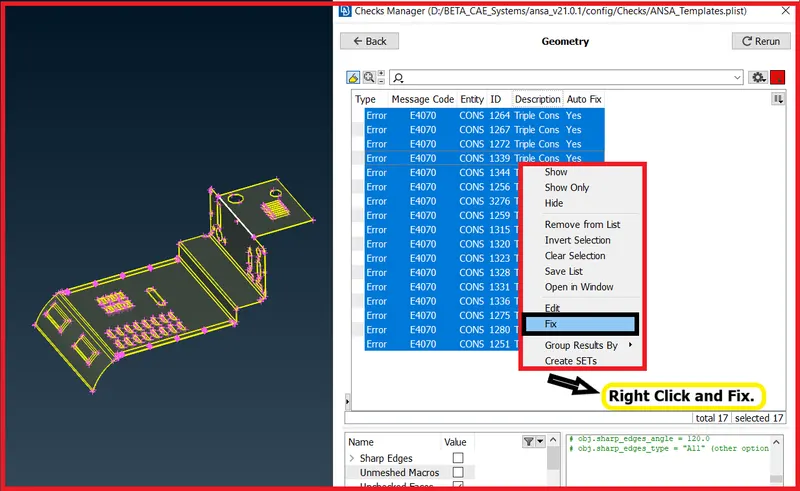
| Figure 18-Fixing Errors. |
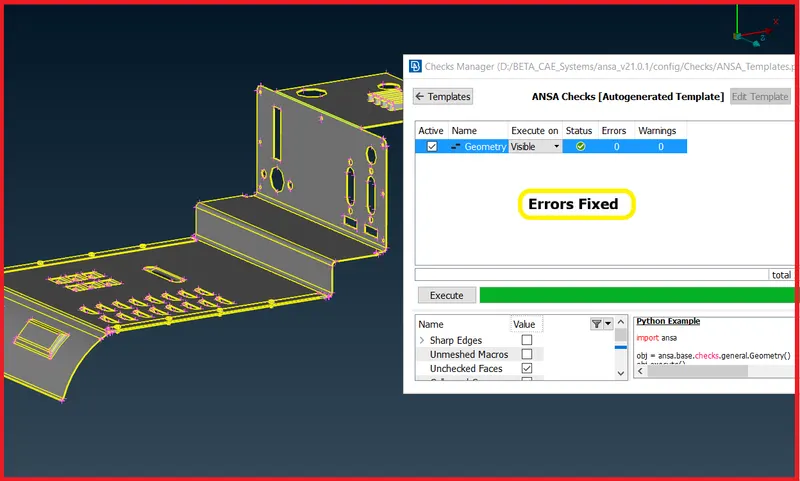
| Figure 19-Errors Fixed. |
- [Note: All problems except triple CONS can be fixed by the automatic fixing.]
- [Note: Right mouse clicking on Check Geometry line, performs an action to all listed problems.In case where not all problems are fixed automatically, retry or proceed to fix them manually.For this component no need to fix manually because all the errors have been fixed with auto fix.]
- Similarly do the same process for the Outer Extract,Hinge Reinforcement Extract and Latch Reinforcement Extract.
- Here for the Outer Extract we have toggle the lines in the hemming regions because that hemming lines will be failing for minimum length,So we have to toggle that lines while meshing on it.
Phase 3-Start Morphing
- To Morph,Switch to the Morph Module.
- Create a Morph Box
- To Create,Go to Boxes >> New >> Ortho >> Window will Pop Up >> Select Geometry.
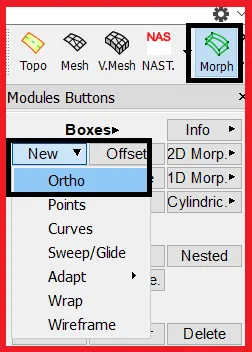
| Figure 20-Boxes Panel. |
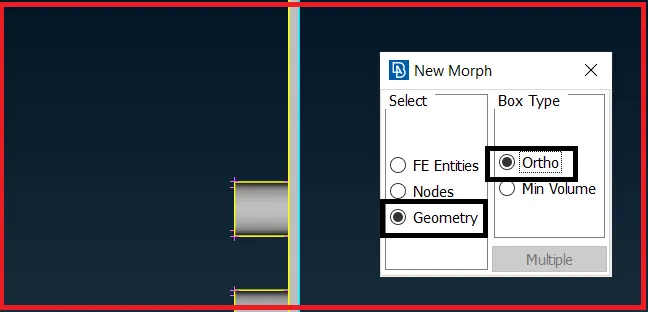
| Figure 21-Morph Sub-Panel. |
- Now select the region which you want to create a morph box and to modify that region.
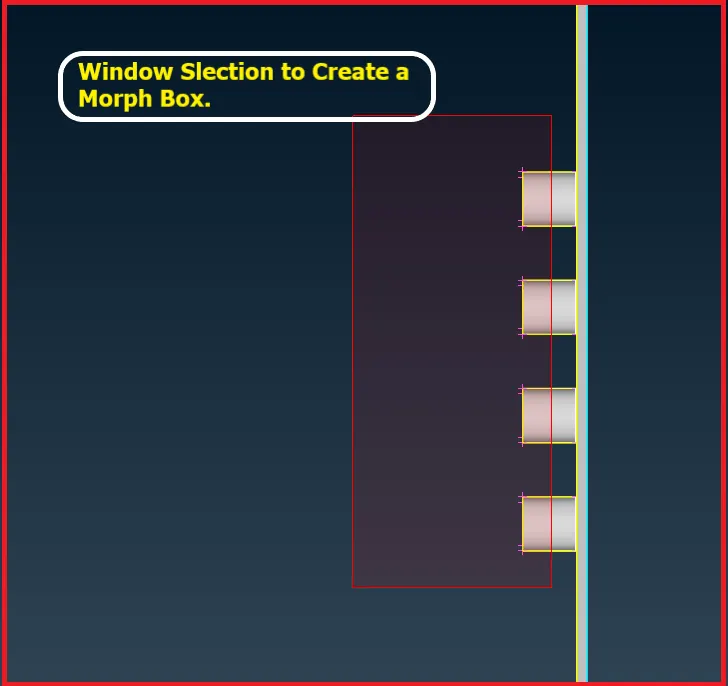
| Figure 22-Window Selection. |
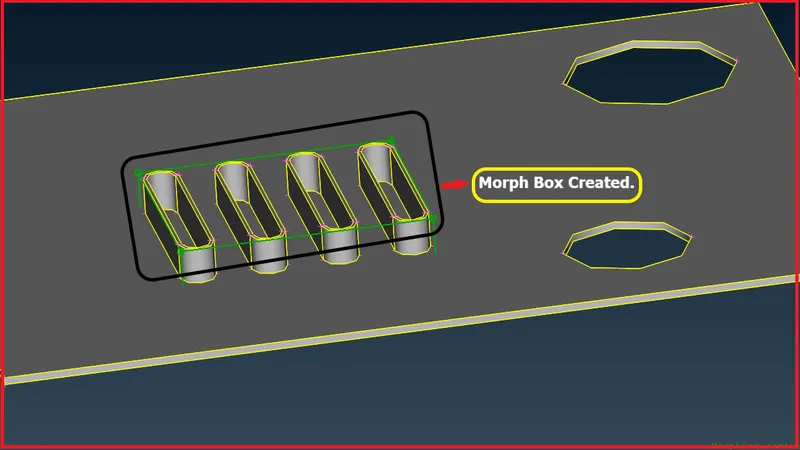
| Figure 23-Morph Box Created. |
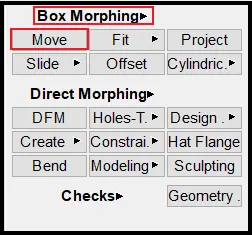
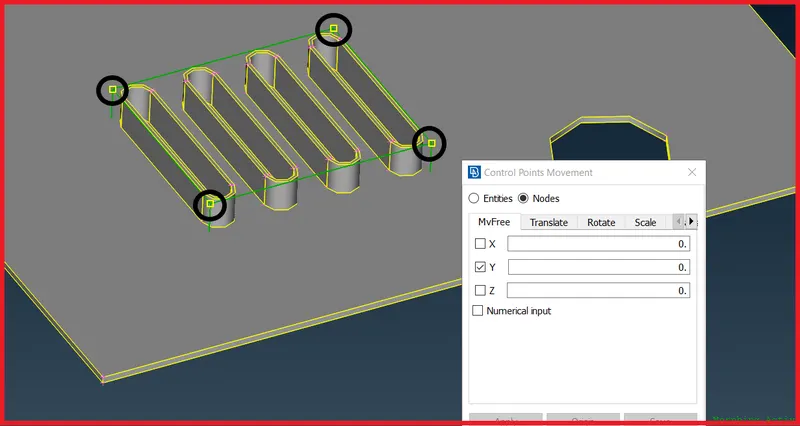
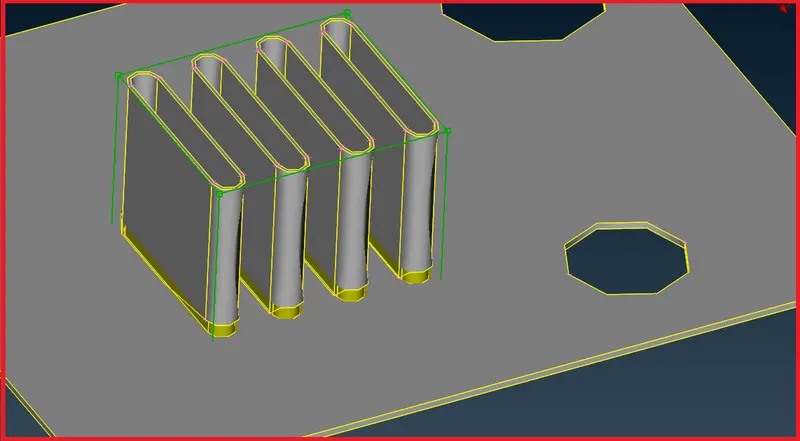
- Now increase the height of this ribs by using move tool from box morphing.
- Select all the four grids above and increase the height of those ribs.
- To Move,Go to Box Morphings >> Move >> Select the Nodes >> Middle Click.
| Figure 24-Box Morphings Panel. |
| Figure 25-Selecting the Nodes to Move. |
| Figure 26-Increased the Heights of the Ribs. |
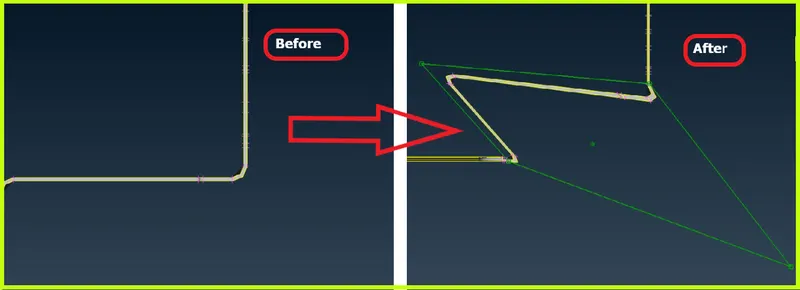
- Simillarly do the same process for the other regions also.
- Just morph in other regions.Follow the same method to modify the other regions.
| Figure 27-Morphed Region. |
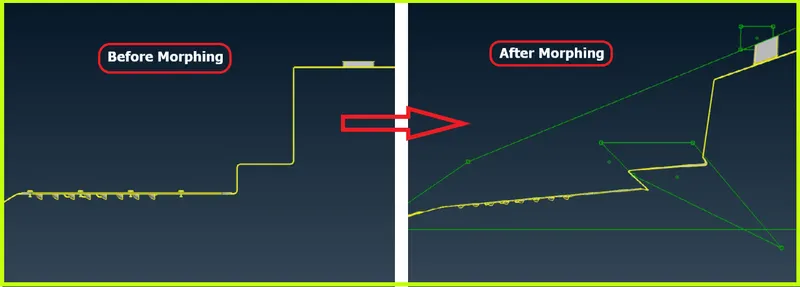
| Figure 28-Model-1 Before and After Morphing. |
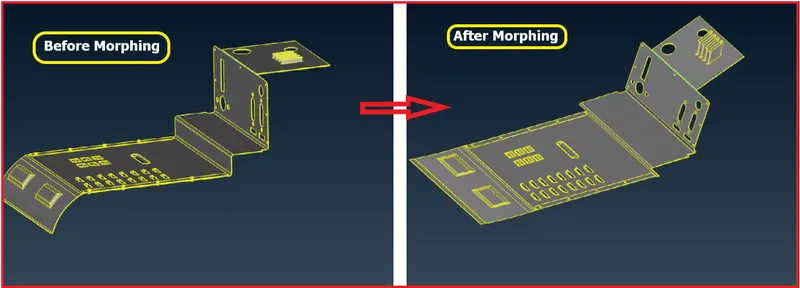
| Figure 29-Proper Representation of Model-1,Before and After Morphing. |
Model-2
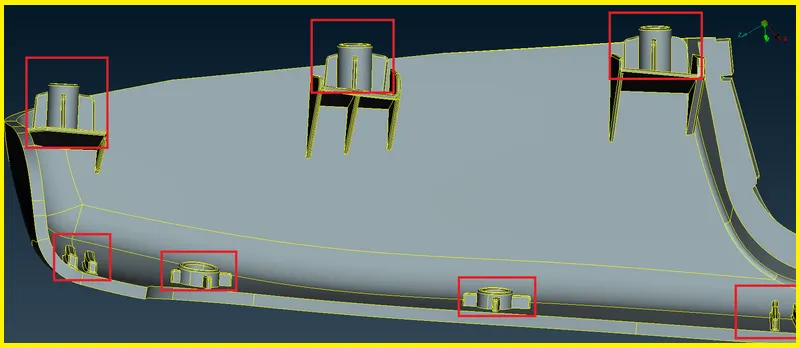
| Figure 30-Model-2 |
- Here we have to increase the height of the rectangular ribs and circular ribs.
- To increase the heights,First make visible only that ribs and increase the height by using move tool for box morphing.
- To make visible only circular ribs,Go to Focus Panel >> Or >> Select the Circular Ribs >> Middle Click.
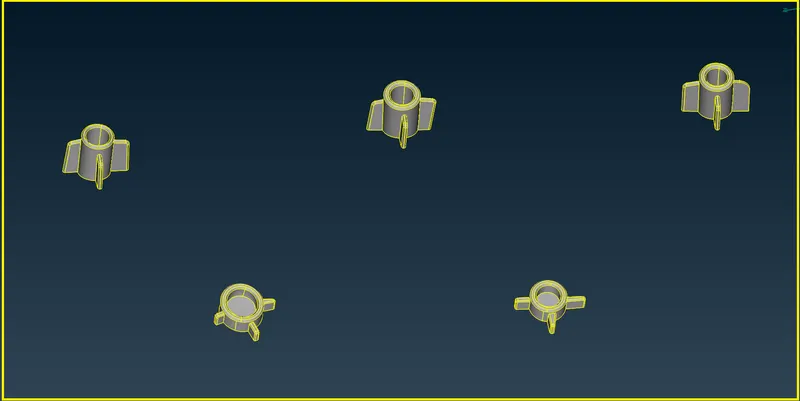
| Figure 31-Circular Ribs. |
- While increasing the height of the circular ribs using move tool from box morphing.
- Select the one particular individual circular rib and increase the height,You can also increase the height for all circular ribs at one shot but you won't get proper results.
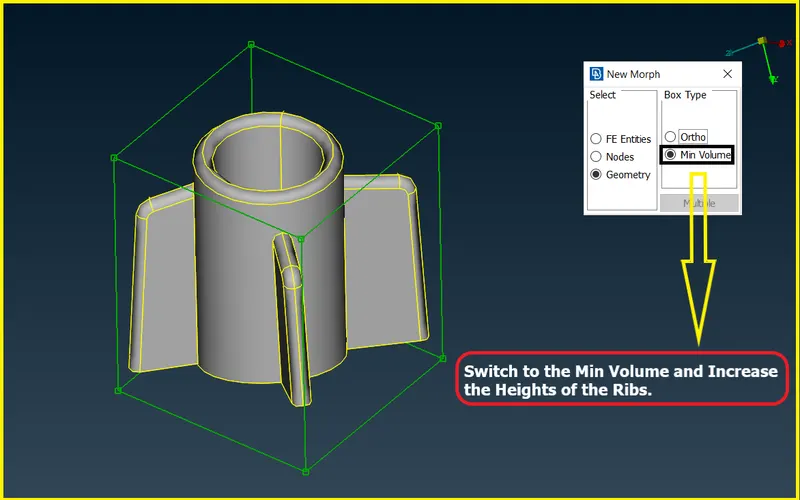
| Figure 32-Morph Box Type by Min Volume. |
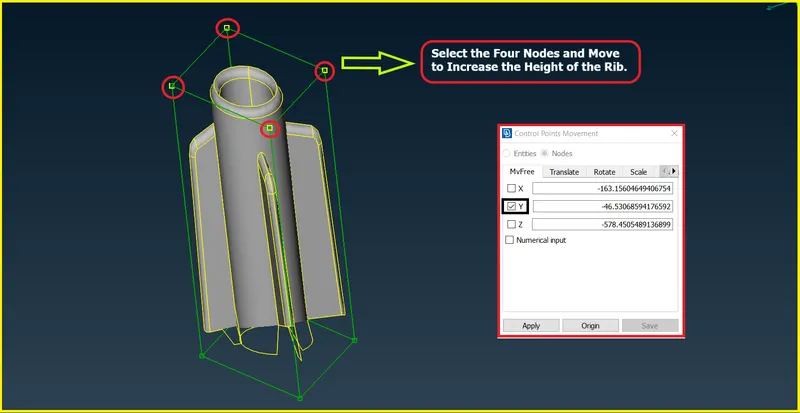
| Figure 33-Rib Height Increased. |
- Simillarly do the same process for all the circular ribs and rectangular ribs.
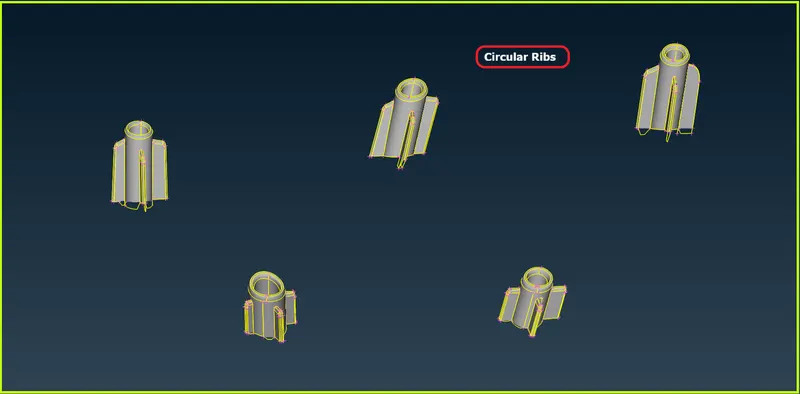
| Figure 34-Circular Ribs. |
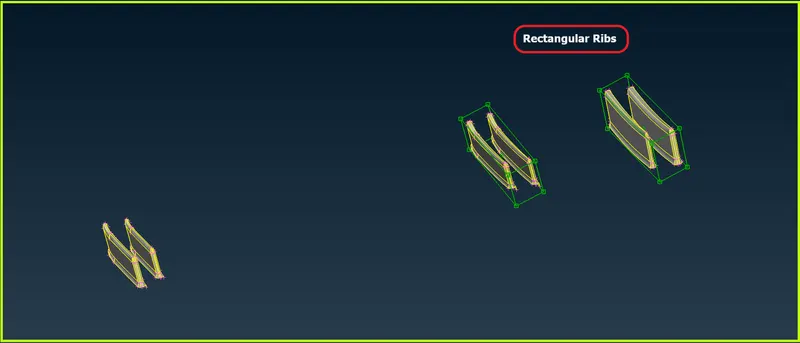
| Figure 35-Rectangular Ribs. |
| Figure 36-Model-2. |
Final CAD Model Image -
| Figure 37-Final CAD Model Image of Model-1 and 2. |
Results -
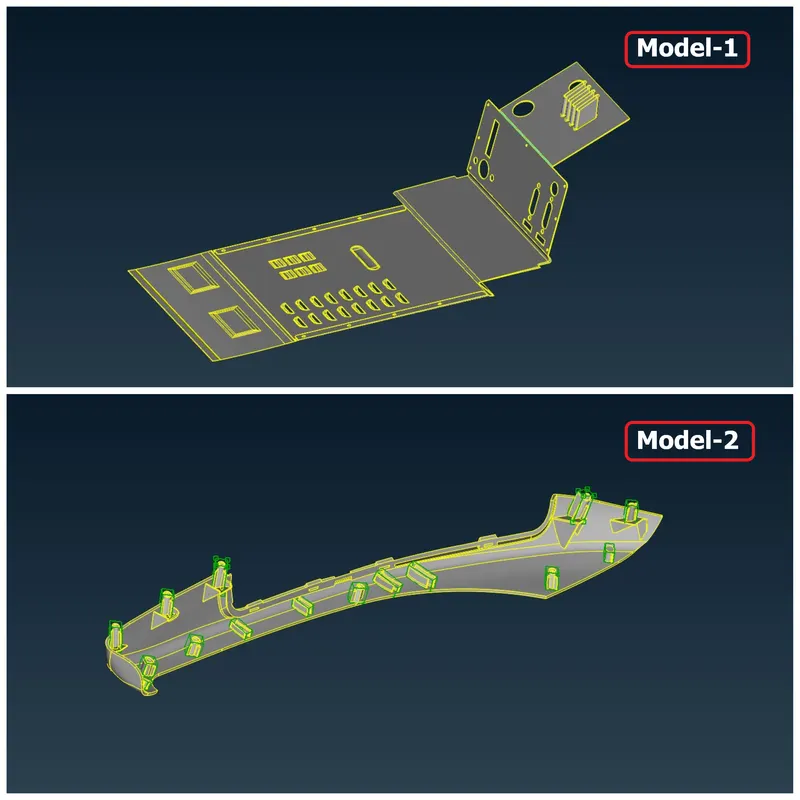
- Hence the two model given were morphed successfully.
- The Model-1 has been morphed according to the week-8 video,What the instructor taught.
- The Model-2 has been morphed,The Circular (Doghouses) and Rectangular Ribs has been increased successfully.
Learning Outcomes -
- In this Week-8 Challenege,I came to know
- How to morph the models.
- Learned how to create a morph box and change the shape of the model.
- Learned about various commands which are used to morph the models