Section Modulus calculation and optimization
Section Modulus Calculation and Optimization
Section modulus is a geometric property of a cross-section used in the analysis and design of beams and other structural elements, including components in automotive engineering such as hoods. It is an important parameter for evaluating the strength and stiffness of a part under bending loads.
The section modulus is denoted by the symbol "S" and is calculated based on the moment of inertia (I) of the cross-section and the distance from the neutral axis to the outermost fiber (y) of the cross-section:
𝑆=𝐼/𝑦
-
Importance of Section Modulus:
- Strength and Load-Bearing Capacity: A higher section modulus indicates greater strength and ability to withstand bending moments without excessive deformation or failure. This is crucial for components such as hoods that must endure various loads during use.
- Stiffness: A larger section modulus contributes to greater stiffness of a component, reducing deflection under load and improving overall structural performance.
- Safety and Durability: By ensuring that components have an adequate section modulus, engineers can design parts that are strong and durable, providing safety for vehicle occupants and other road users.
- Weight Optimization: Engineers aim to maximize the section modulus while minimizing weight by selecting appropriate materials and cross-sectional shapes. This helps improve fuel efficiency and overall vehicle performance.
- Structural Integrity: Adequate section modulus ensures that the component can maintain its structural integrity under various loads, including impact loads during a collision.
- Compliance with Standards: Many engineering and safety standards require specific levels of structural performance, which include minimum section modulus values. Designing components with the appropriate section modulus ensures compliance with these standards.
-
Applicaion in Automotive Engineering:
- Hood Design: In the design of an automobile hood, the section modulus is an important consideration for ensuring the hood's ability to withstand bending loads due to wind, aerodynamic forces, and potential impacts (e.g., collisions).
- Material Selection: The choice of material can affect the section modulus. Engineers may use advanced materials such as high-strength steel or aluminum alloys to achieve the desired section modulus while keeping the hood lightweight.
- Cross-Sectional Shape: The shape of the hood's cross-section can be optimized to achieve a high section modulus while using less material. This may involve the use of reinforcements, ribs, and other design features.
Section- 1:
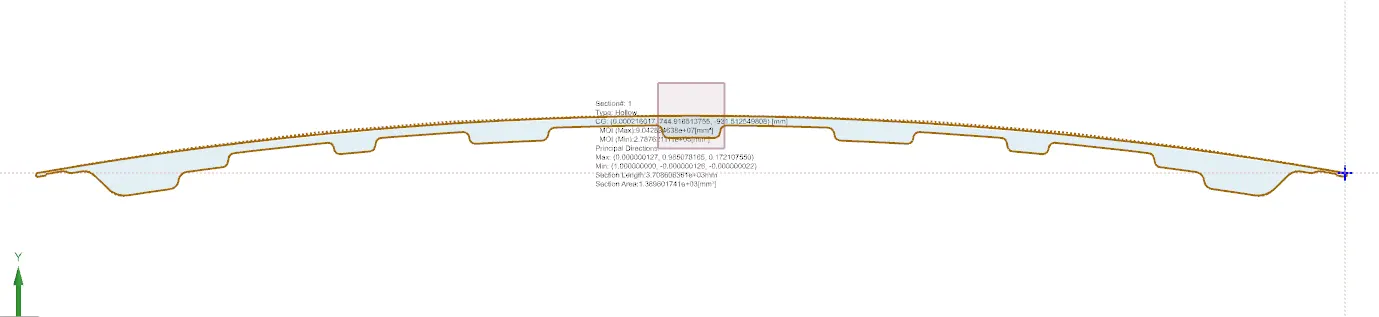
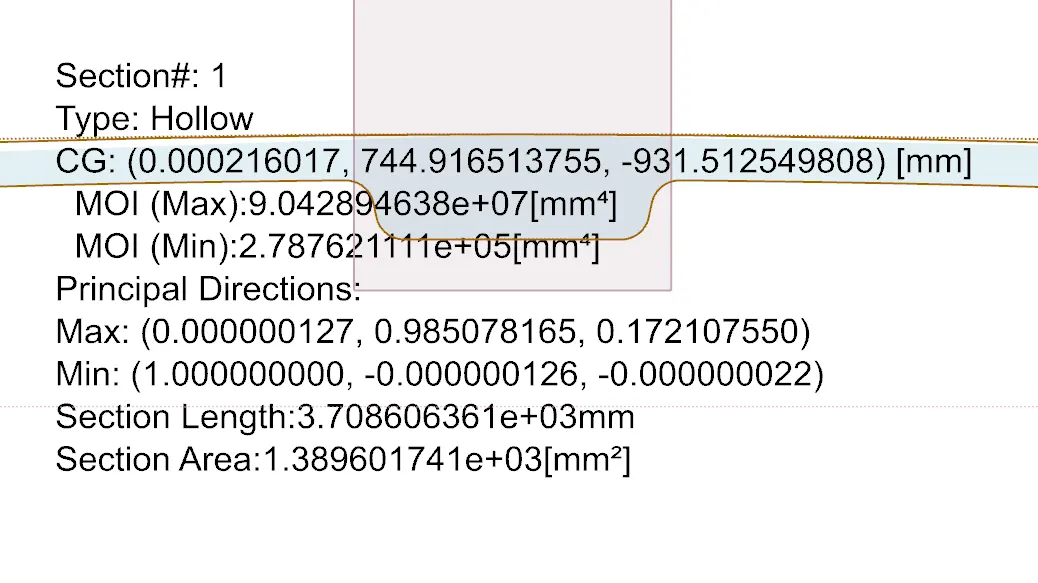
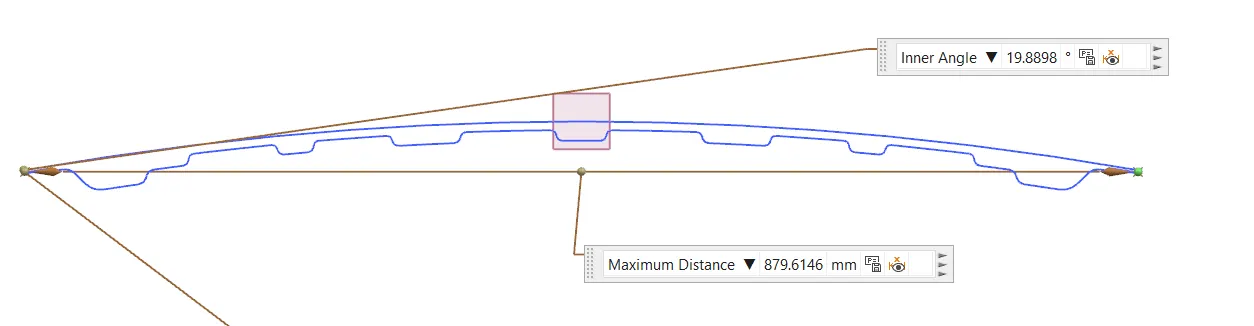
- In case 1, took the cross-section of initial hood design, to calculate moment of inertia (I) and the distance from the neutral axis to the outermost fiber (y) of the cross-section.
- Section Modulus is calculated using;
𝑆=𝐼/𝑦
Where,
S = Section Modulus
I min = moment of inertia(min.) = 2.787621111 x 10^5 mm^4
Y = distance from neutral axis to extreme end =(L/2)= 879.6146/2 = 439.8073
S = 2.78762 x 10^5 / 439.8073
S = 633.8278 mm^3
Section- 2:
- In case 2, hood cross-section is optimized by taking offset of hood inner panel by 0.5 mm in downwards direction, to calculate moment of inertia (I) and the distance from the neutral axis to the outermost fiber (y) of the cross-section.
- Section Modulus is calculated using;
𝑆=𝐼/𝑦
Where,
S = Section Modulus
I min = moment of inertia(min.) = 2.830514897 x 10^5 mm^4
Y = distance from neutral axis to extreme end =(L/2)= 879.6146/2 = 439.8073
S = 2.8305 x 10^5 / 439.8073
S = 643.5773 mm^3
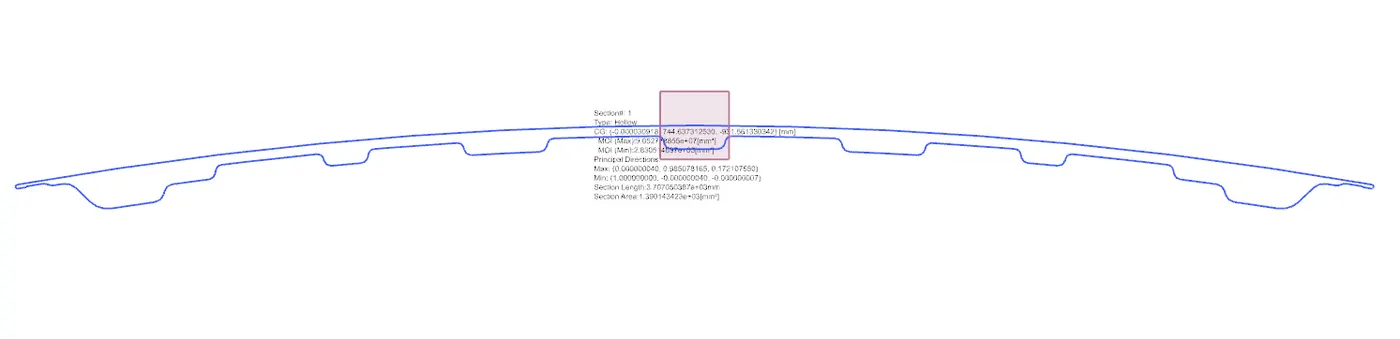
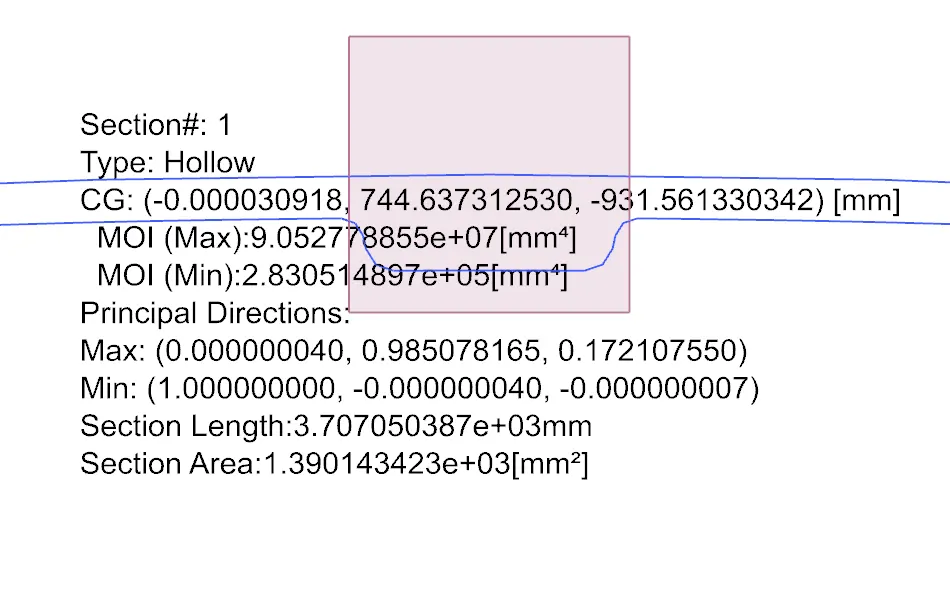
In the above comparison study, Case 2 (section 2) shows better section modulus values than case 1 which means strength also increases. In case 2, hood inner panel is offset by 0.5 mm in downwards direction.