FINAL INDEPENDENT PROJECT
FINAL INDEPENDENT PROJECT
Objective:
- Design the parts of the Forklift
- Assemble the parts in a SolidWorks assembly.
- Render a high-quality image using Photoview 360 and SolidWorks Visualize.
Motivation for the Project:
As a working professional in the design and manufacturing industry, we know forklifts play a crucial role in the manufacturing industry by enabling efficient and safe movement of heavy materials and products within facilities. They reduce manual labor, enhance productivity, and minimize the risk of injury. Forklifts also streamline warehouse operations and ensure the timely transportation of materials during the production process.
1. Introduction and Use:
A forklift, also known as a lift truck or fork truck, is a powered industrial vehicle designed to lift, carry, and move materials over short distances. It is widely used in industries such as warehousing, manufacturing, logistics, shipping, and construction.
The primary use of a forklift is to handle materials efficiently and safely. Forklifts can move pallets, containers, and heavy loads that would be difficult or impossible to lift manually. They play a vital role in reducing labor costs, improving workplace safety, and speeding up the loading and unloading process in various operations.
Common applications include:
- Loading and unloading trucks
- Stacking and retrieving goods from storage racks
- Transporting materials within warehouses or factory floors
- Handling materials on construction sites
2. Different Parts of a Forklift:
A forklift is composed of several key components, each playing an important role in its operation:
a. Mast
The vertical assembly that raises and lowers the load. It can be either single-stage, two-stage, or three-stage, depending on the lifting height needed.
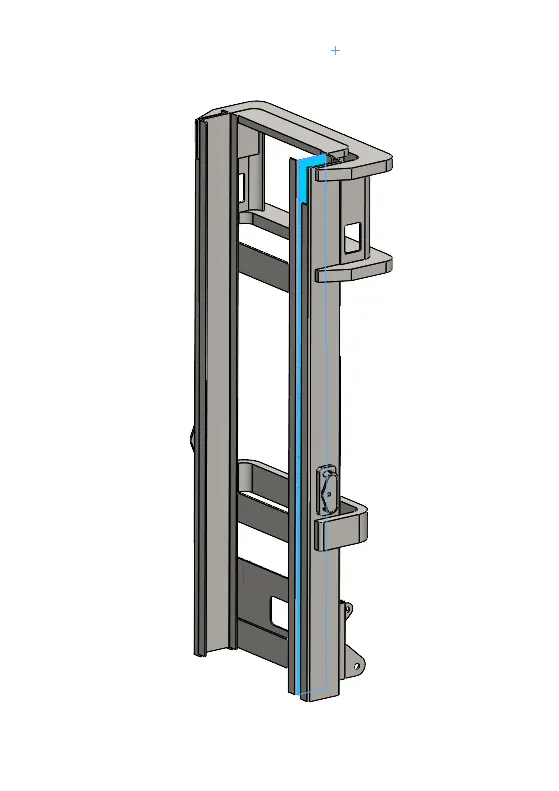
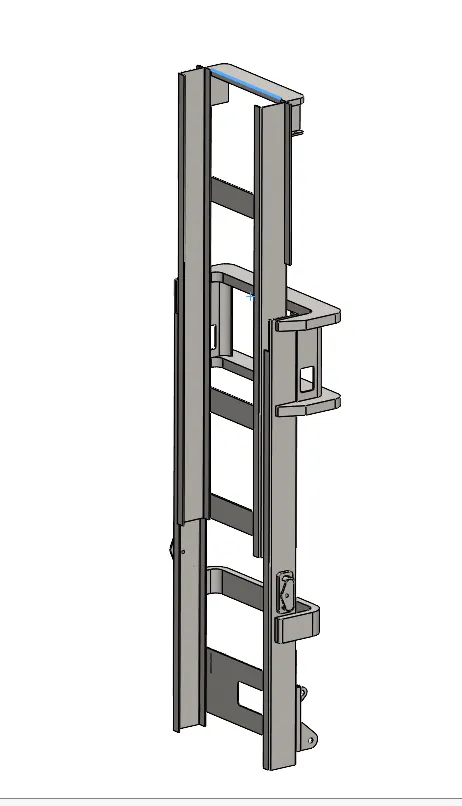
Fig: Mast
b. Carriage
The platform on which the forks are mounted. It moves vertically along the mast using hydraulic power.
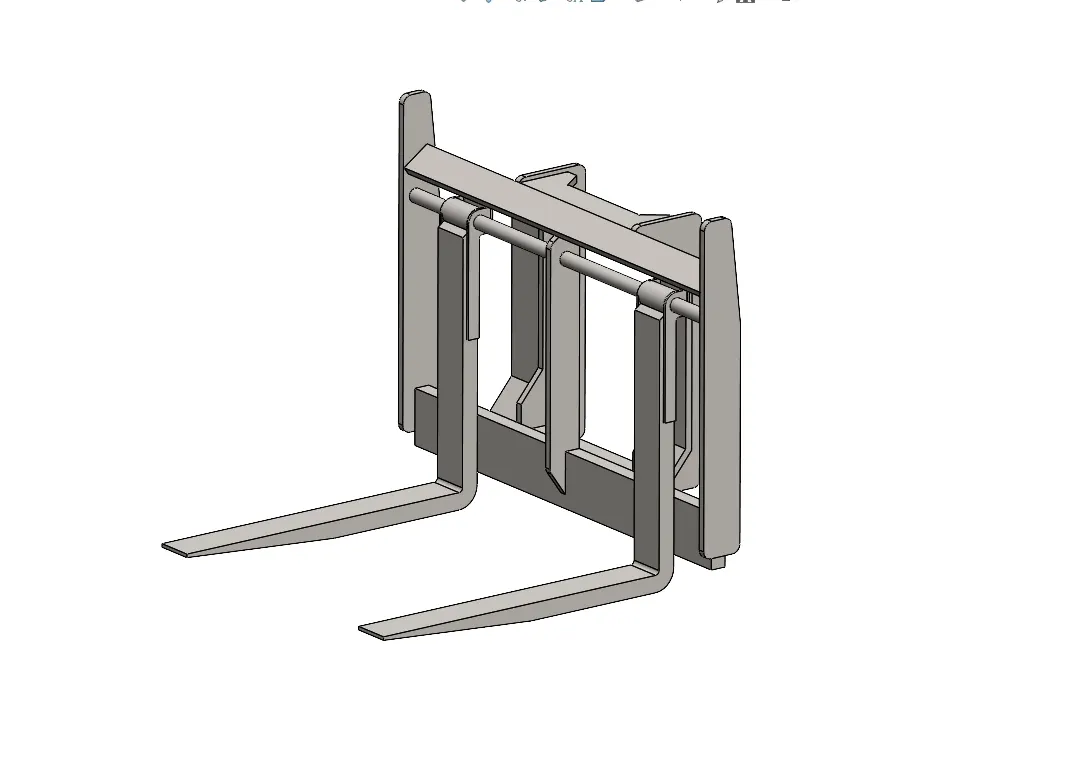
Fig: Carriage
c. Forks (Tines)
The horizontal arms that lift and carry loads. They are inserted under pallets or other materials to move them.
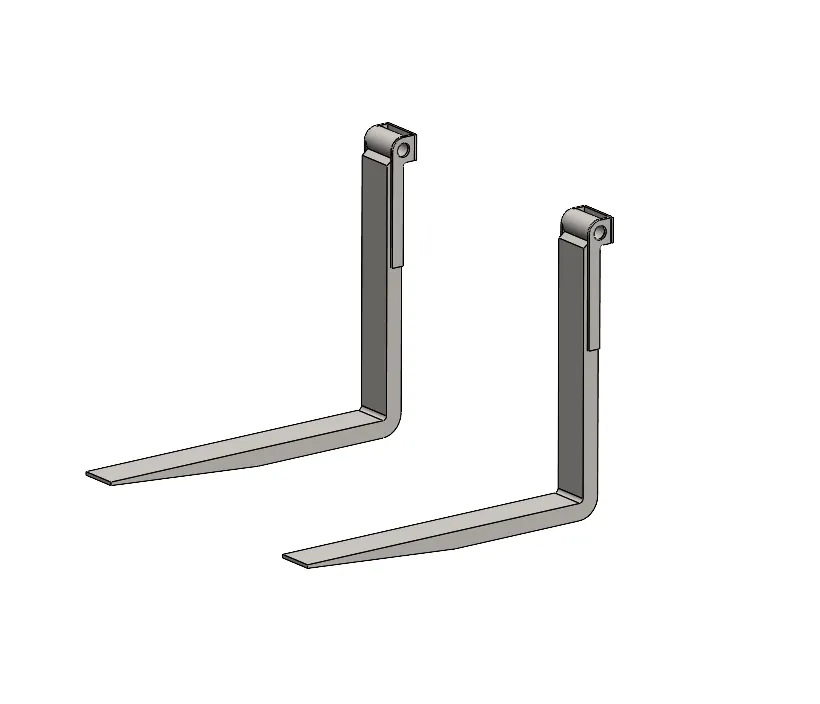
Fig: Forks
d. Counterweight
A heavy mass is located at the rear of the forklift to balance the load being lifted at the front, preventing the forklift from tipping forward.
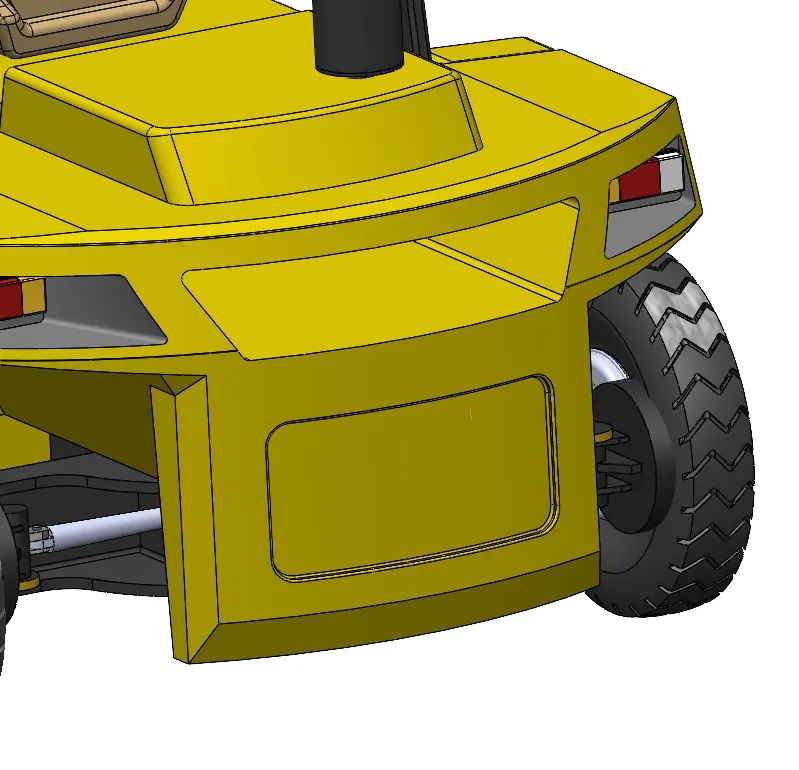
Fig: Counter weight
e. Overhead Guard
A protective structure above the operator’s seat shields them from falling objects.
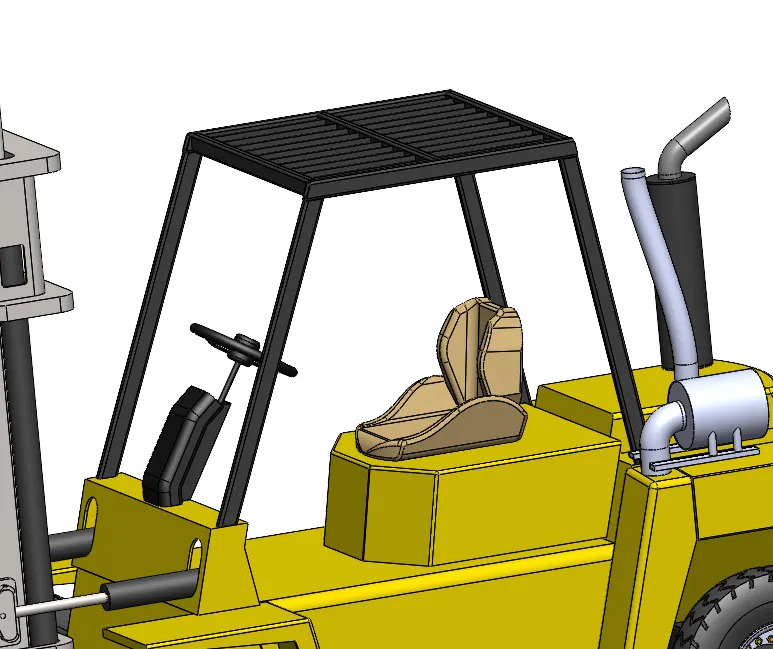
Fig: Overhead Guard
f. Tires
Forklifts can have pneumatic tires (for outdoor use) or cushion tires (for indoor, smooth surfaces).
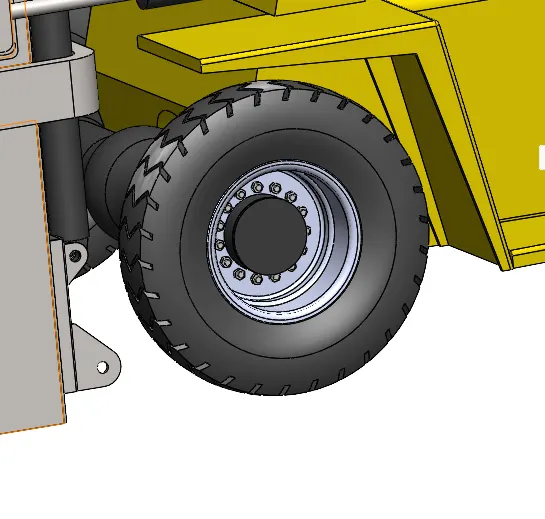
Fig: Tires
g. Operator Cab/Compartment
The area where the driver controls the forklift includes the seat, steering wheel, pedals, and control levers for lifting, tilting, and moving.
Fig: Operator Cabin
h. Hydraulic System
Controls the lifting and tilting mechanisms of the mast and forks.
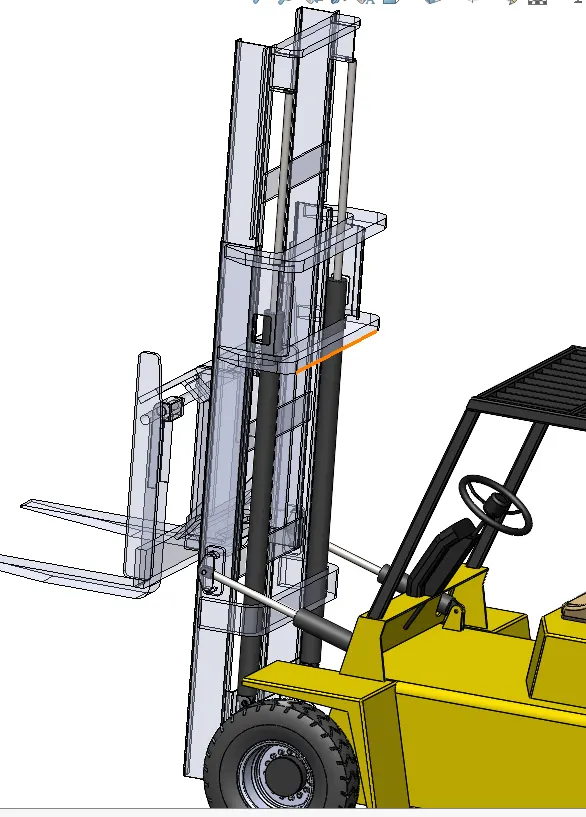
Fig: Hydraulic System
3. Forklift Assembly:
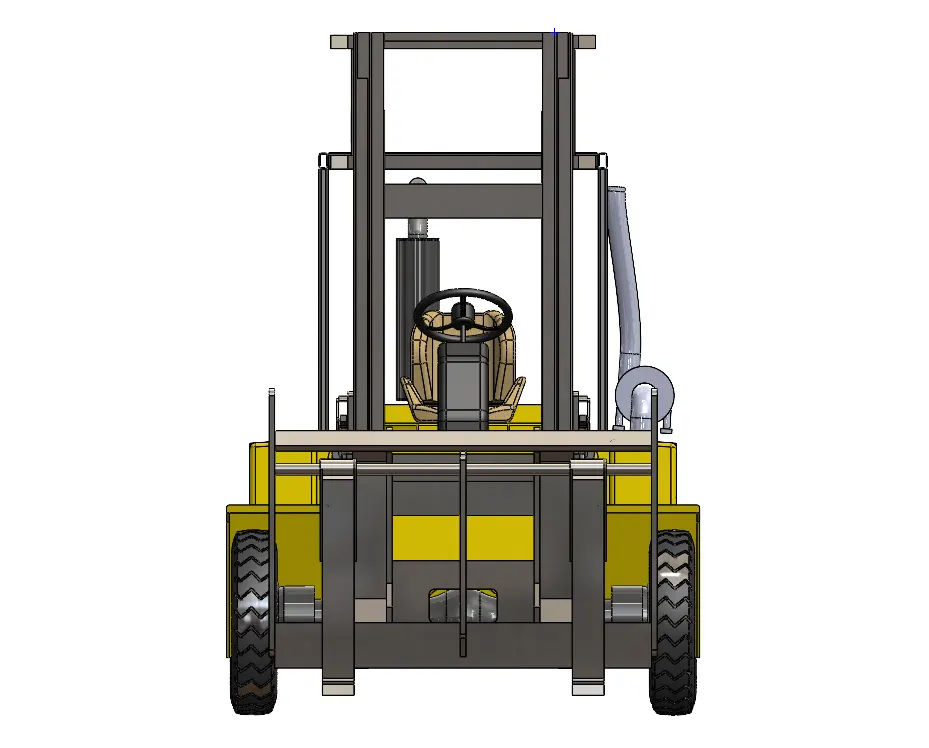
Fig: Front View of Forklift
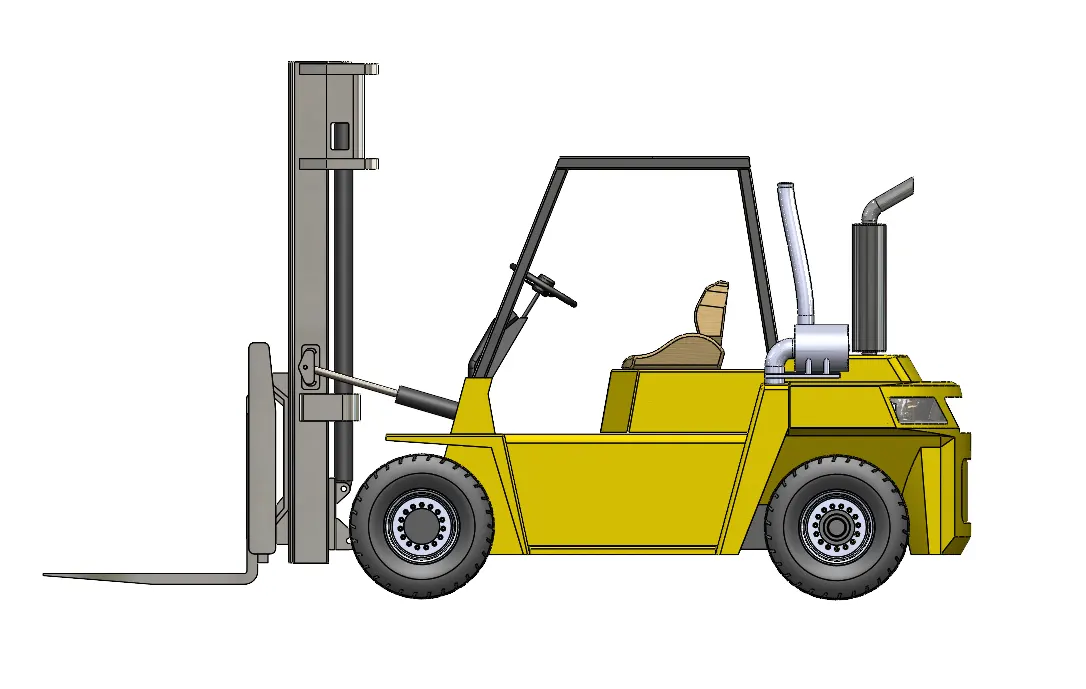
Fig: Side View of Forklift
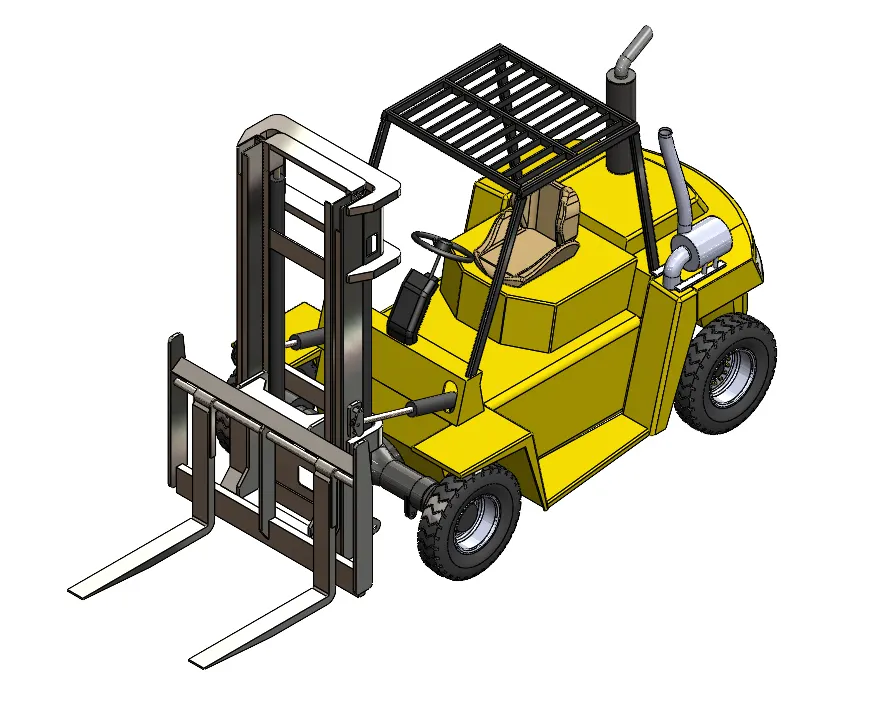
Fig: Isometric View of Forklift
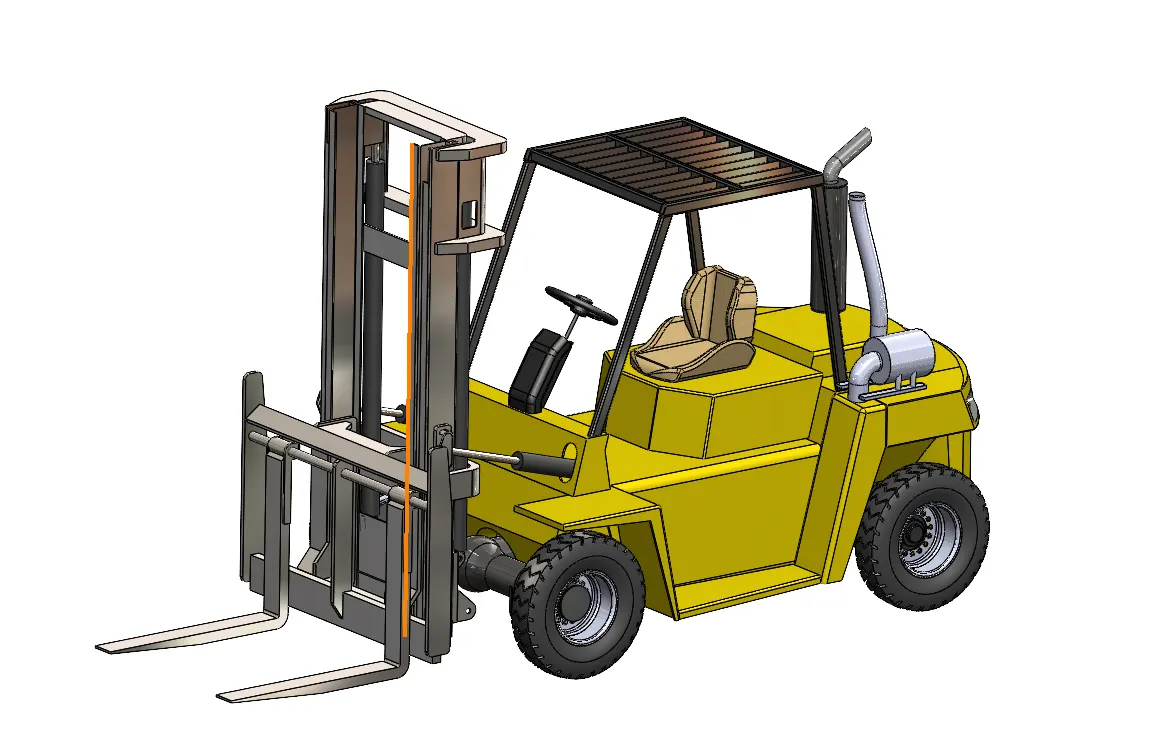
Fig: Forklift Rendered Image
4. Conclusion:
All the components are modeled and assembled using Solidworks by using the skill gain during the previous challenges.