Fender Design
- FENDER DESIGN:
Fenders covers the engine compartment from the side, here we will concentrating on front fender because rear fender comes with body side, the body side has a integrated fender where as front fender as a sperate closer component.
The primary function of fender is to prevent sand, mud, stones, liquids and other road spray from being thrown into the air by the rotating tyres . When vehicle is moving , tires pick up stones and hurl them in all direction, fender are basically present to prevent any injuries to pedestrians and constrains the motion of these particles
There are five mountings of the fenders:
- A piller mounting
- Drip area mounting
- sill mounting
- Bumper mounting
- baffel mounting
1. A PILLER MOUNTINGS: It is connected to the a piller side of the vehicle.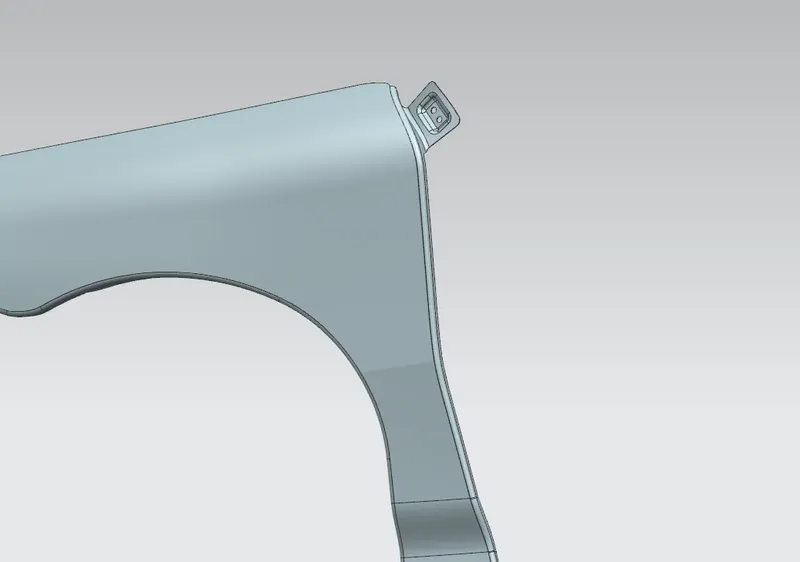
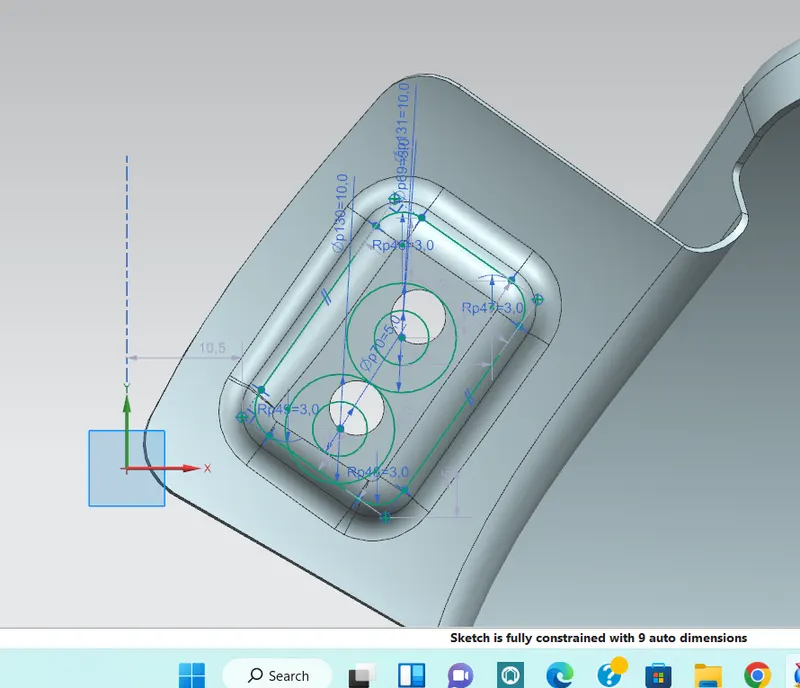
2. DRIP AREA MTG:
Drip mountings are the main mountings for the fender design which is connected withe engine compartment
- It is the area which the fender is to be attached to engine housing through bolts. There are some standards to design the drip area, from the backside of the fender there should be 200mm clearence for cowl mounting and from the front the side the clearence should be 150mm for the head lamp.
- Considering the above design wen have to design emboss, holes to attach the fender to housing & some stiffners to provide strength to the drip area.
- Engine components should not be visible from outside for this we have purposely given 3 degree of angle and 9mm length is given.
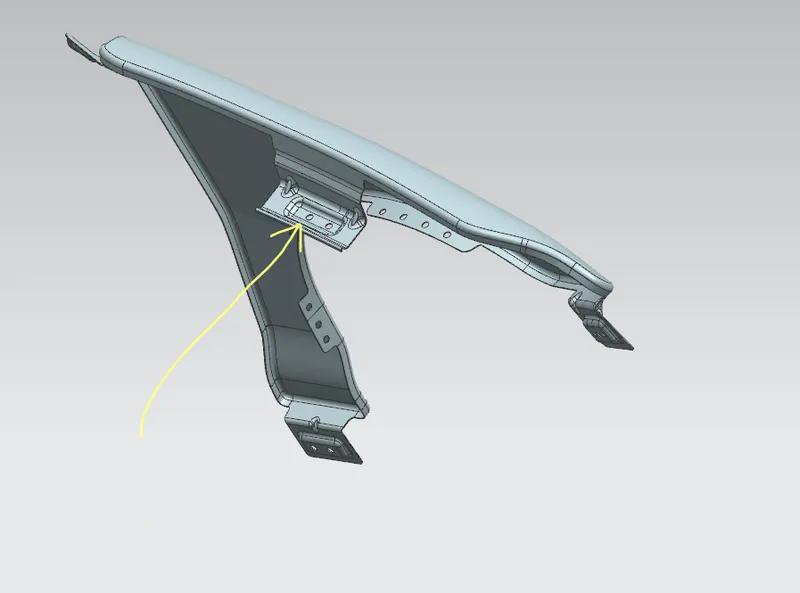
Hood side drip depth must be 40 mm 0r lree as maximum productivilt acheived at depth of 40 mm. if depth exceeds 40 mm rigidity beads is to be provided. also forming is not feasible if depth increas 40 mm due to working and spring back.
1. Sill mounting
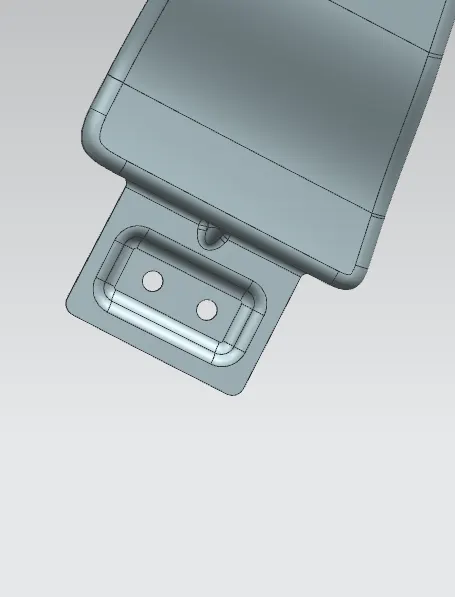
Imbosses and Stiffner are provided to increase thickness of the sheet .
4. BUMPER MOUNTINGS:
HERE the bumpers will be mounted
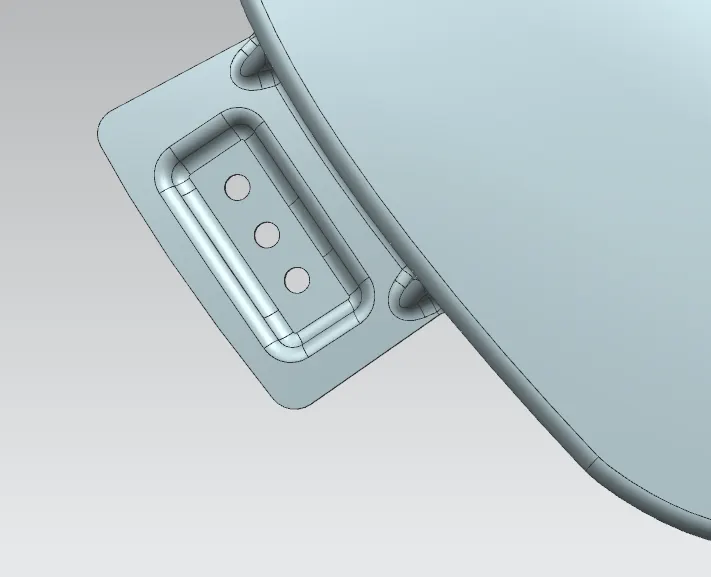
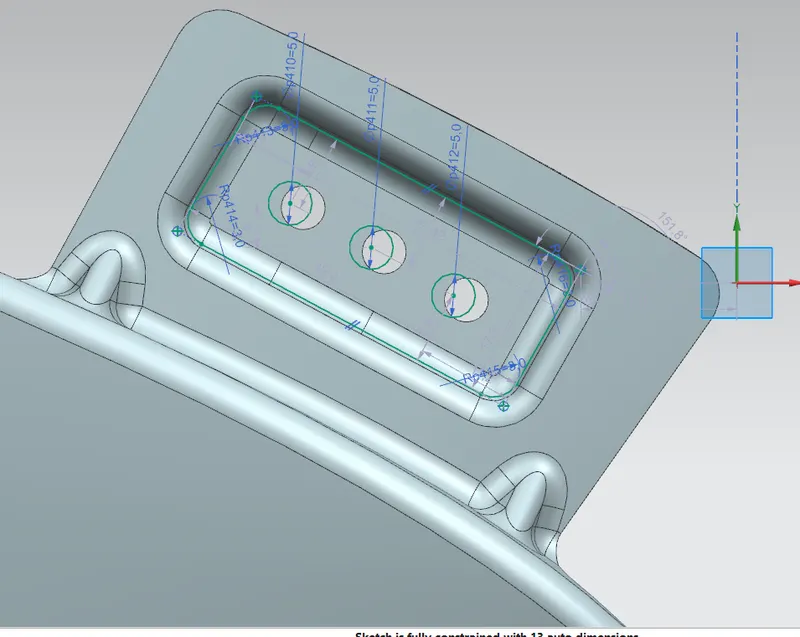
5. Baffeles Moutings:
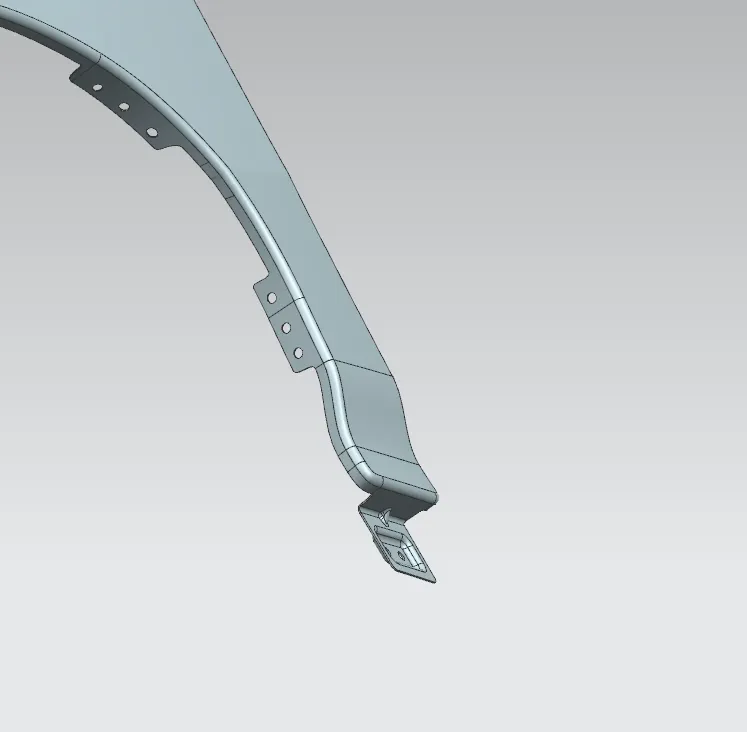
It is the mounting where plastic covers are mounted on the fender for preventing the fender from the water we can replace this with less amount
- MANUFACTURING PROCESS:
The manufacturing process includes the following steps that firstly, unfolding and shearing are carried out on a plate, wherein a proper cold roll specification is selected at first, a cold roll is unfolded, and then the unfolded cold roll is sheared to an iron plate of the corresponding size according to production material specifications; secondly, oil pressing and punching are carried out, wherein the iron plate is extended at first, then side shearing and punching are conducted on the iron plate, folding and shaping are carried out on the iron plate, and finally reshaping is carried out on the iron plate; thirdly, small first parts of the fender are machined, wherein first of all, the iron plate is punched to a needed outer contour blank, then the iron plate completing the outer contour blank is further shaped, and the iron plate is punched at last; fourthly, installation and welding of a metal plate are conducted. The manufacturing process for the car fender is simple and high in production efficiency; a body of the fender and the small parts can be separately machined, so waiting time is shortened; working efficiency of production is improved.