Hood design-Week 2
- HOOD :
Hood(bonet) is a sheet metal part in car which covers the engine compartment like batterry and more from the top, hood behave like a door for the engine. A stay rod and a Gas tay is used to keep the hood at open condition, the stray rod is fixed from one end and another is movable . We use grommet for hold And fix the stay rod , A car hood, also referred to as a “bonnet” in some countries, is the hinged cover that rests over the engine bay of a front-engine vehicle. The car hood protects the engine and connected parts from the elements while providing easy access for repairs and maintenance.
Car hoods are typically constructed from steel and sometimes from aluminum. Aftermarket car hoods may be constructed from various other materials, including carbon fiber, fiberglass, or dry carbon.
we always keep the stay rod opposite to the battery mounting.
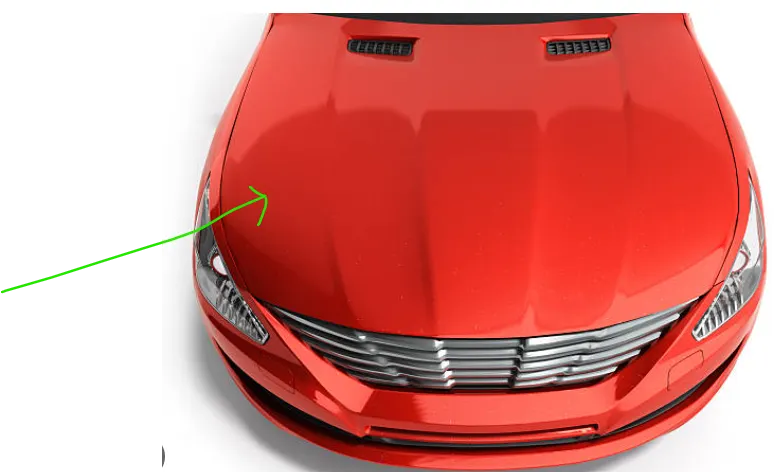
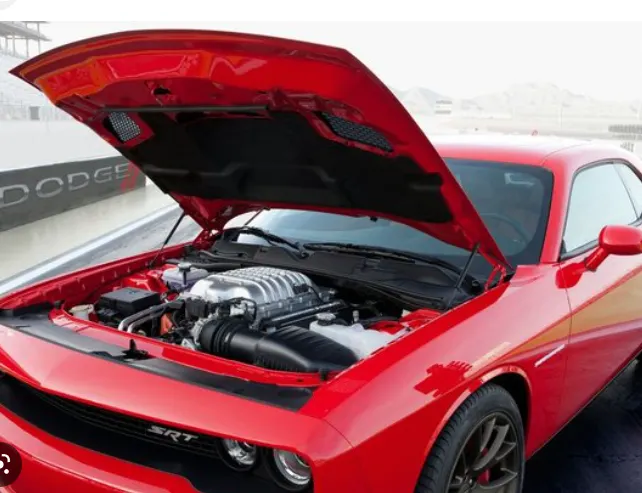
While designing the hood following factors are consodered
- its opening angle the opening angle of the hood is decided by the average height of the humen in a perticular region.
- Pedestry and safety :we take care of the pedestry which sare on the road we take care of wrap around distance for adult it is1500 to 2100 mm. and for child it is in between 1000 to 1500mm. for this safety we make a cut out on hood inner panel.
- HOOD COMPONENT
In hood assambly we require the following component for a complete set of hood
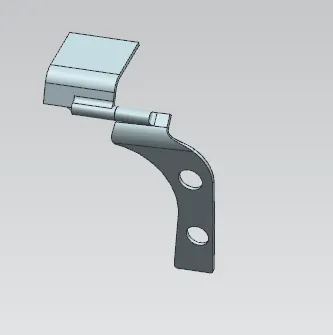
- Hinge: it helps the hood for its easy opening and closing it is on two side of the hood one is fixed with the engine compartment and another side is fixed with the hood assembly.
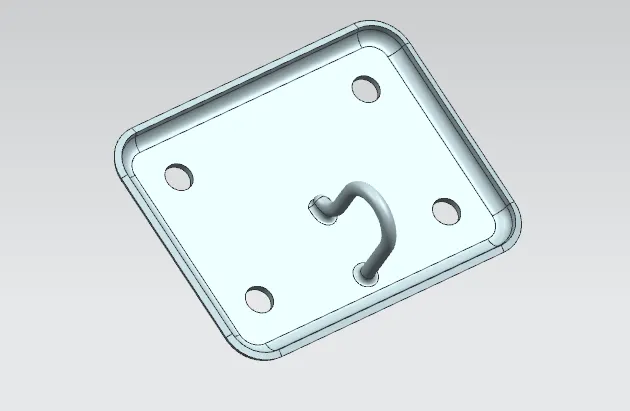
- Latch and striker : it is placed in the uo middle of the hood for the locking purpose
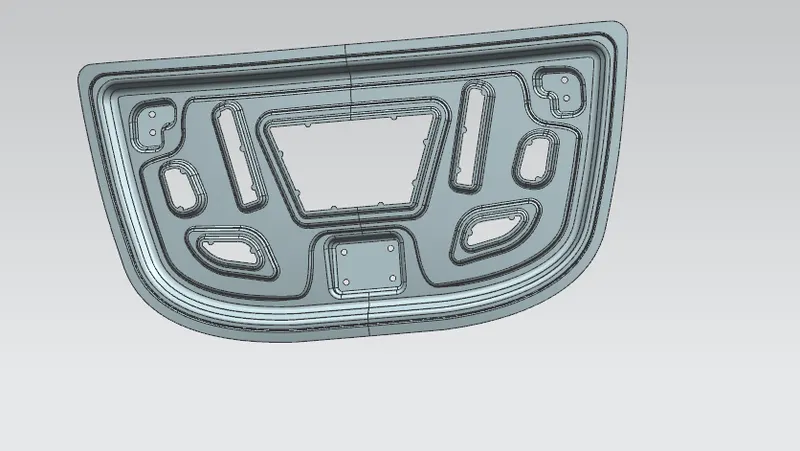
- INNER Panel: inner panel is all around covored with the outer panel it is used to provide strenth to the hood we make cut out on it and create embosse its thickness is 0.75mm.
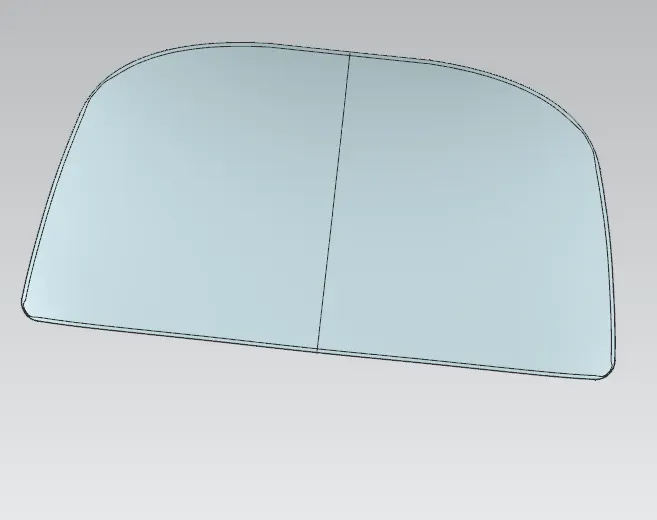
- OUTER PANEL: this is the skin of the hood which covers the ip from top it is of about 0.75 mm thickness, the gap between ip and op is 5mm whichis compensated or gloued with help of Mastic.
- REINFORCEMENT: It is provided to increase the strenth of the hood locally where the cut outs are made it is provided for gastay
- Emboss Definitions:Emboss are provided on the inner panel of the hood for increase the strength of the hood, the emboss design is selected in such that the force of impact during accident dissipate outward to the passangers.
- Deep drawing:
Deep drawing is one of the most widely used processes in sheet metal forming. Apart from its use in many other sectors, it is applied in the automotive industry for the manufacturing of car body parts.The deep drawing process is a forming process which occurs under a combination of tensile and compressive conditions. A flat sheet metal blank is formed into a hollow body open on one side or a hollow body is formed into a hollow body with a smaller cross-section.
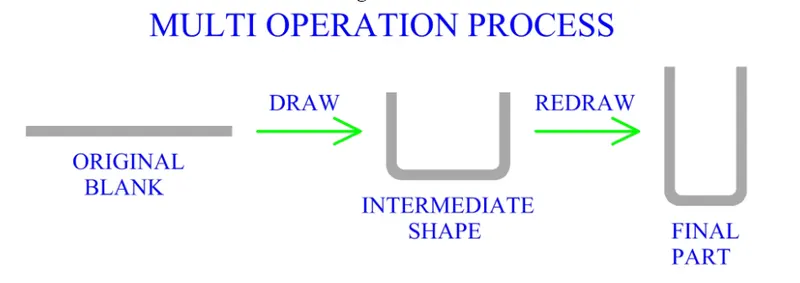
Measurement of the amount of drawing performed on a sheet metal blank can be quantified. This can be done with the drawing ratio. The higher the drawing ratio, the more extreme the amount of deep drawing. Due to the geometry, forces, metal flow and material properties of the work, there is a limit to the amount of deep drawing that can be performed on a sheet metal blank in a single operation. Drawing ratios can help determine the maximum amount of deep drawing possible. The drawing ratio is roughly calculated as,
DR = DB/DP. DB is the diameter of the blank and DP is the diameter of the punch
- Hemming:
Hemming is a forming operation in which the edges of the sheet are folded or folded over another part in order to achieve a tight fit. Normally hemming operations are used to connect parts together, to improve the appearance of a part and to reinforce part edges.
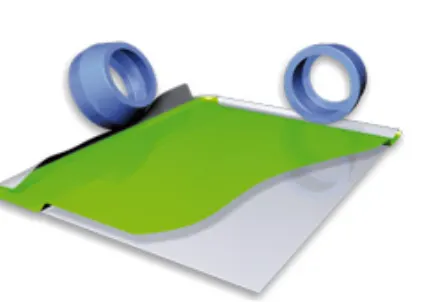
In car part production, hemming is used in assembly as a secondary operation after deep drawing, trimming and flanging operations to join two sheet metal parts (outer and inner) together. Typical parts for this type of assembly are hoods, doors, trunk lids and fenders.
The accuracy of the hemming operation is very important since it affects the appearance of the surface and surface quality. Material deformations, which occur during the hemming process, can lead to dimensional variations and other defects in parts. Typical hemming defects are splits or wrinkles in the flange, material overlaps in the corner areas or material roll-in. This is why it is important to use simulation tools in order to, on the one hand, better understand the hemming process and, on the other hand, significantly reduce the number of “trial and error” loops during tryout und production.