Underbody Coating
UNDER BODY COATING
UNDER BODY COATING DEFINITION:
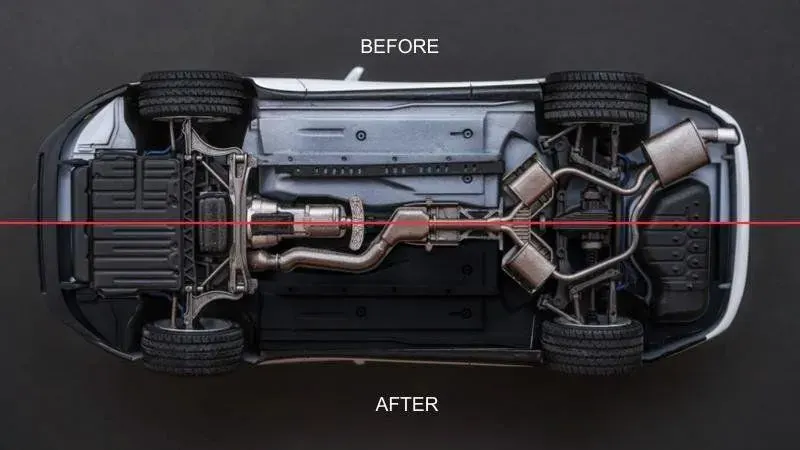
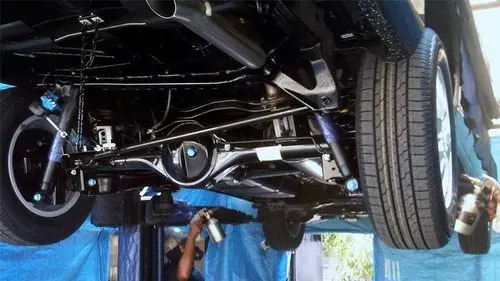
Is sprayed application of a wax or rubber based composite onto the entire under side of the vehicle, Design to create rust proof layer between under side of vehicle from the water, ice & salt.
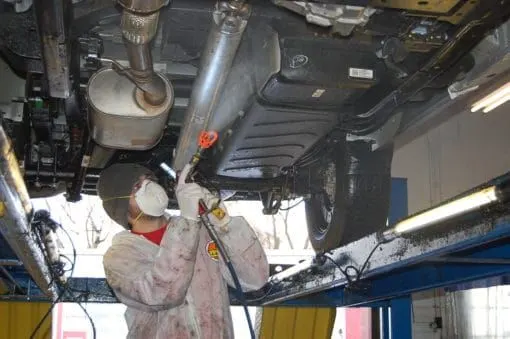
PURPOUSE OF UNDER BODY COATING:
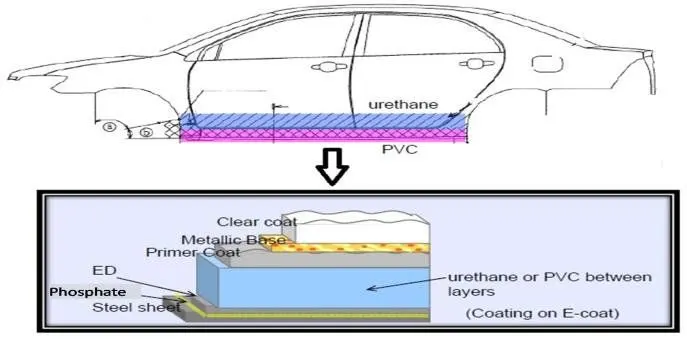
Recently, PVC and acryl/urethane sealants have also been used in the underbody areas, a process called the Dampening Coat (DC), to impart noise-proofing and vibration-deadening.The noise and vibration are transferred from the engine, drive train, suspension system, road noise of the tires, and flowing air, and the underbody sealants reduce noise transfer into the passenger compartment of the automobile. The underbody coating also provides anti-corrosion and chipping protection; typically, it is accomplished using robots equipped with airless sprayers. Displays the lower door sections and rocker panel locations where PVC or urethanes are applied as an anti-chipping protection, and shows the cross section of this layer with respect to the other coatings on the body part.
 During this third step, it is also typical to apply a soft tip primer coat that improves the chippingresistance (resistance against chipping by flying stones or debris). This layer is applied to the frontedge of the hood, which is an area prone to chipping shock, using a high elastic resin that residesbetween the ED and primer coats. Also, during the third step, the radiator supports, wheel housing, and under rear areas of the body are coated with a relatively dull black pigment called a blackout coating.
TYPES OF UNDER BODY COATING:
Rubberized - Easy to use black rubberized coating provides corrosion protection for undercarriages, wheel wells and quarter panels. The undercoating dries to a soft, rubbery finish that helps reduce road noise and protects against moisture, rust and road debris.
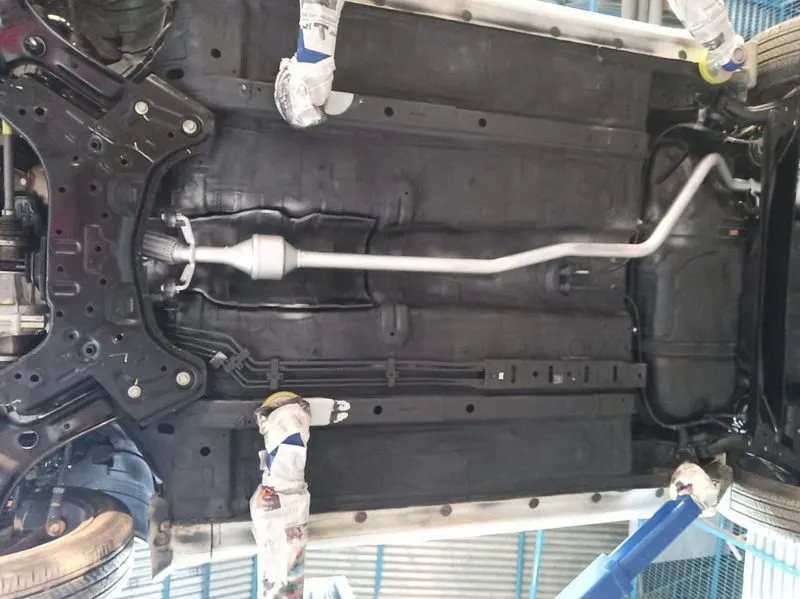
Wax based - This transitory undercoating will, on the whole, fade away after a few months. On the plus side, wax-based undercoating is resistant to dampness. It is also the most cost-effective alternative.
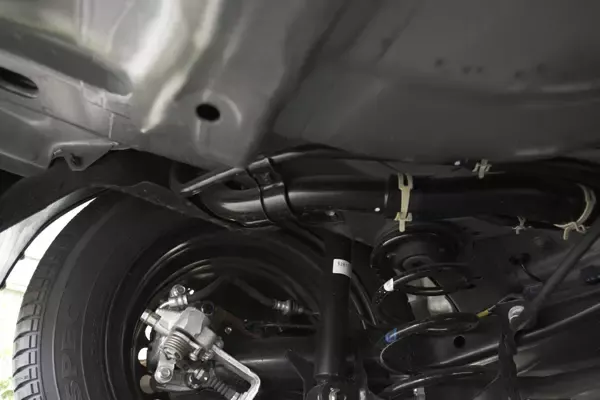
Asphalt - Suitable for lorries, trucks, and other heavy vehicles. In comparison to rubber-based coatings, this gives a higher level of protection. Asphalt-based coatings, on the other hand, incorporate a small quantity of rubber for sound insulation.
Polyurethane - This covering seals breaks and fractures in the vehicle’s underbody. It provides strong corrosion resistance and also binds to the metal. Unlike an asphalt-based coating, the polyurethane coating may be painted over.
ADVANTAGE OF UNDER BODY COATING:
- Fights Rust
- Absorbs Noise
- Reinforcement
- Thermal insulation
- Prolong Car’s Life
DIS-ADVANTAGE OF UNDER BODY COATING:
- It adds weight to the vehicle.
- An undercoating is not impervious to damage.
- It must be reapplied every 3 to 5 years for the best results.
- It is less helpful if corrosion is already present.