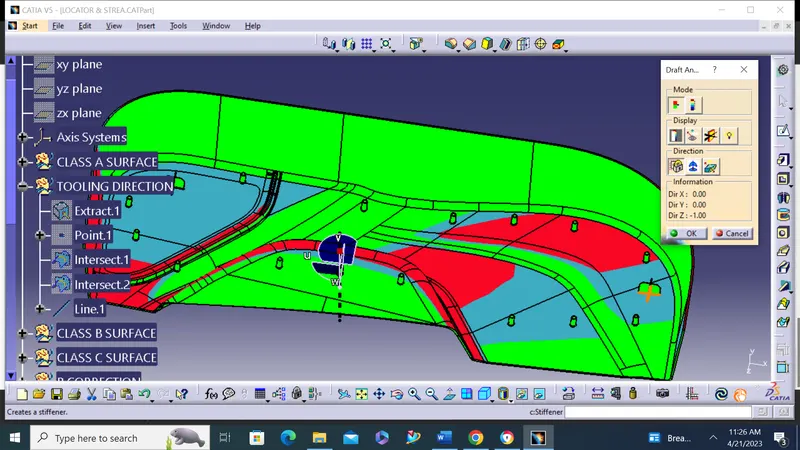
Week 10 - Challenge 3 - Door Trim Lower with Engineering Features
CLASS A SURFACE: Class a surface is an asthetic surface which is visible to the customer
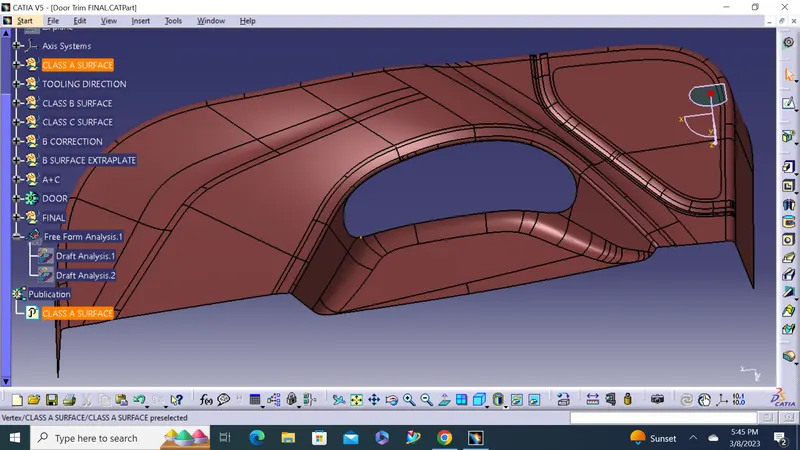
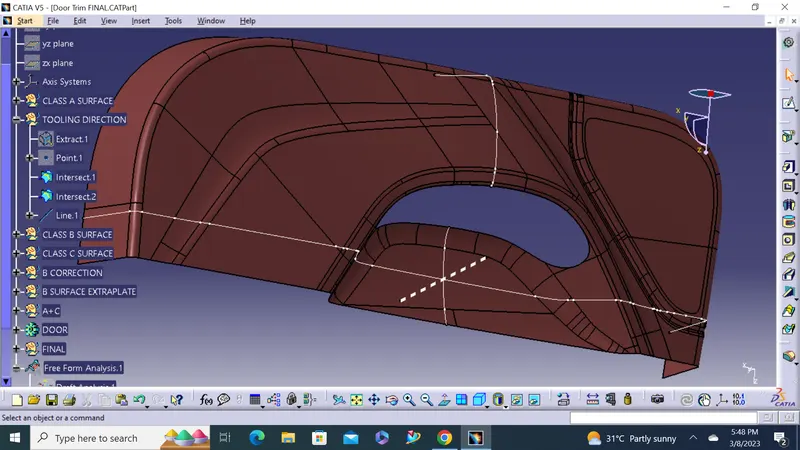
TOOLING AXIS
1.Identify the best possible direction for creating the tooling axis.
2. First extract the particular surface.
3.Create a point on the center of that surface.
4.Draw a line normal to the surface passing through the point.
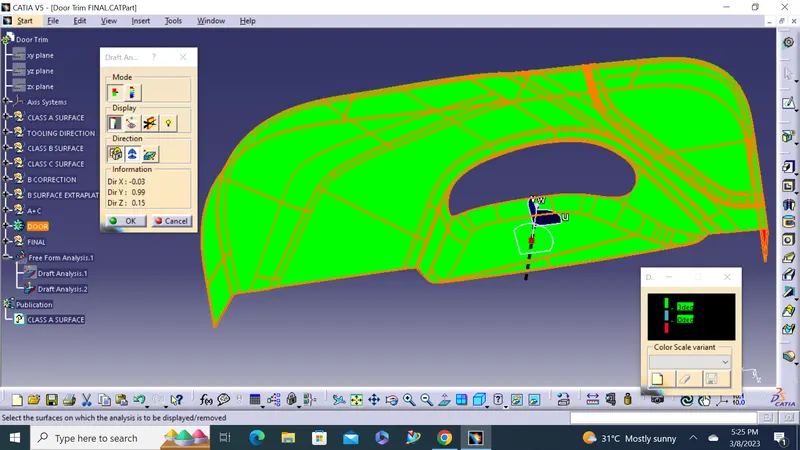
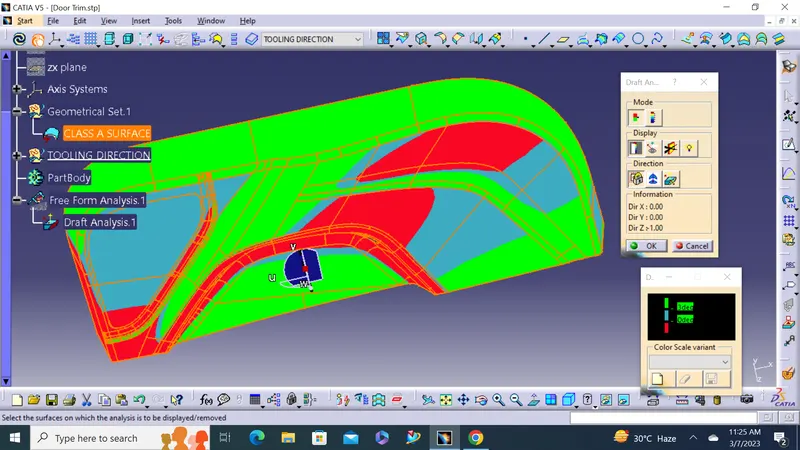
DRAFT ANALYSIS CLASS A
1.Once the tooling axis is obtained, we conduct draft analysis on the class A surface with the help of tooling axis. This helps in determining weather the tooling axis we created is right or wrong.
2.Click on the draft analysis option.
3.Click on the compass icon and place the compass on the tooling axis.
4.Click anywhwere on the surface to generate the analysis result.
5.From the result it is clear that the surface has passed the draft analysis test
CLASS B SURFACE:
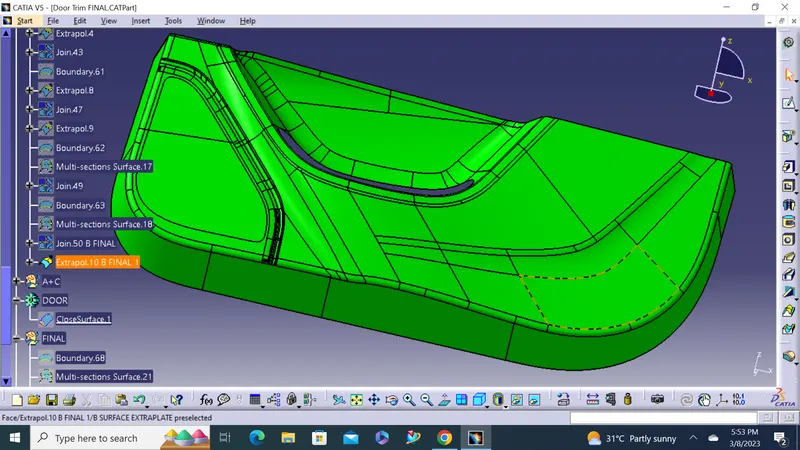
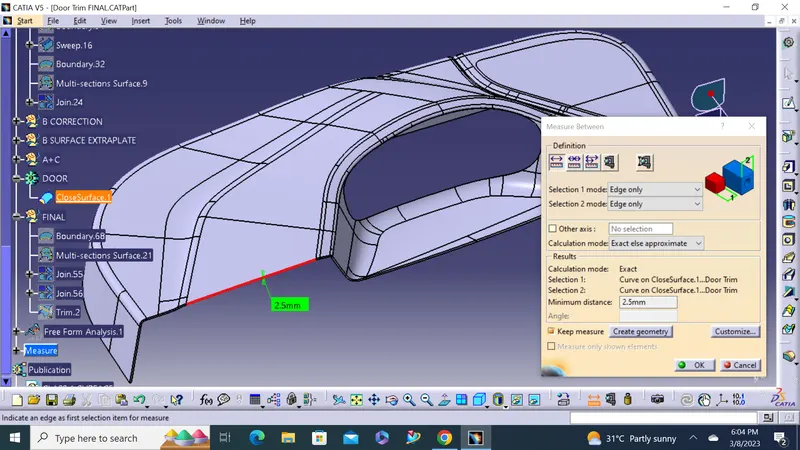
1.The surface which lies beneath the class A to a small offsetted distance and often it is called as an engineering surface where the components like doghouse,heat stakes, ribs, screwbosses lies
2.First of all check the outerlying boundary of the class A surface ang get to conclude whether there may be a possibility of an open patches the try to offset the class A surface to 2.5 mm
CLASS C SURFACE:
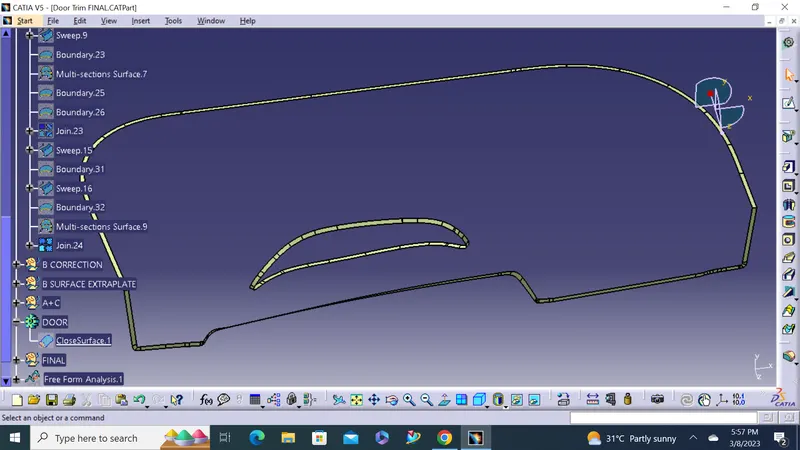
1.Select the boundary option and select the outer boundary of Class A.
2.Using sweep command sweep the surface for 90 degrees inwards
3.Then select the inner boundary and repeat the same steps.
4.We get both the C surfaces.
A+B+C SURFACE:
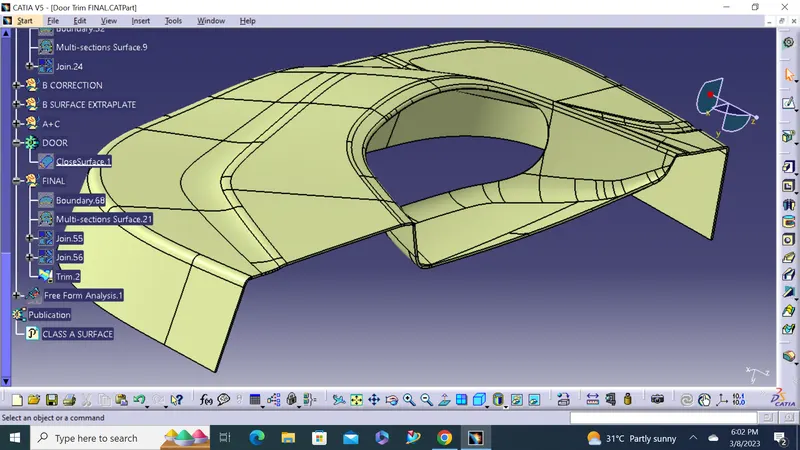
1.First join Class A with both the C surfaces.
2.Then using trim option, trim the A+C surface with B
SOLID OF 2.5MM THICKNESS
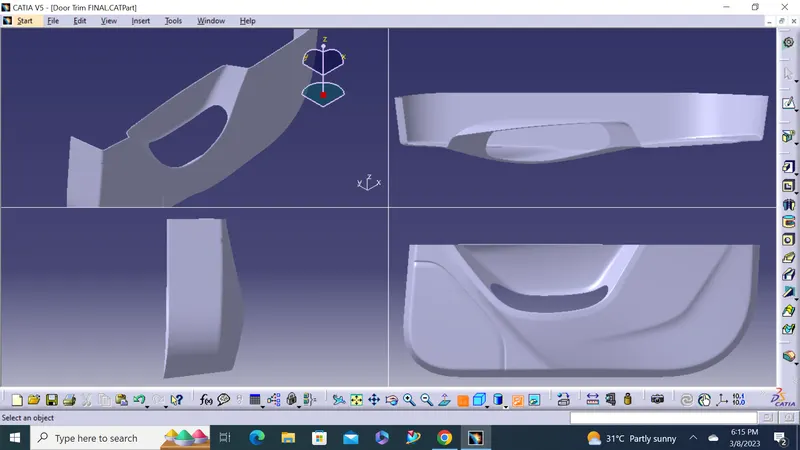
VIEWS
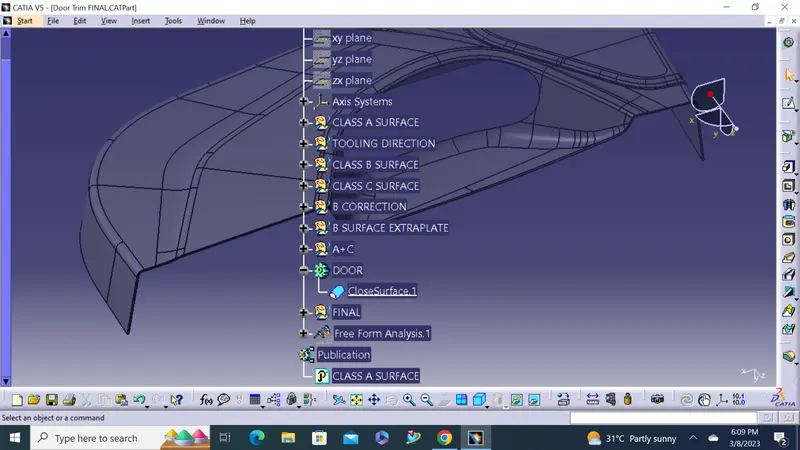
TREE STRUCTURE
FINAL DRAFT ANALYSIS
Introduction:
3-2-1 Principle:
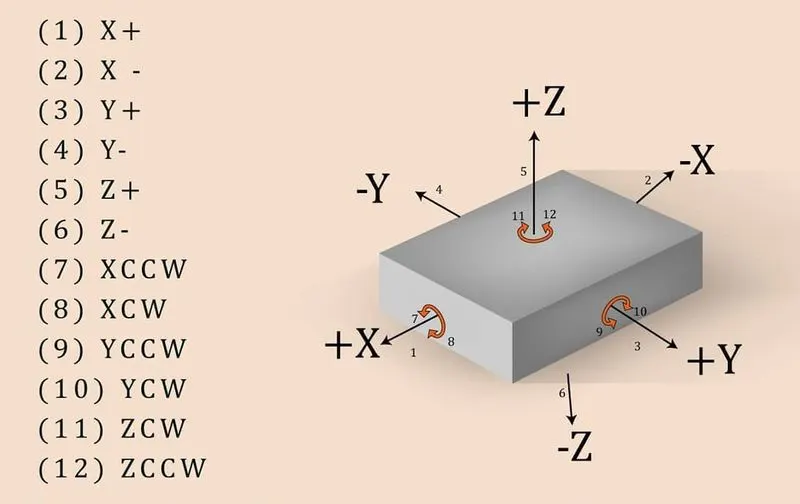
Locating Process: In order to completely specify the position in space of a three-dimensional object (such as the cube that’s shown),
we refer to six coordinates with total 12 degrees of freedom.
1. Translational position along the X-axis
2. Translational position along the Y-axis
3. Translational position along the Z-axis
4. Rotational position about the X-axis
5. Rotational position about the Y-axis
6. Rotational position about the Z-axis
These six coordinates are known as the six degrees of freedom of a three-dimensional object. As the double-headed arrows indicate, the translational and rotational positions can vary in either direction with respect to each of the three axes. To completely prevent movement, all six degrees of freedom must be restricted.
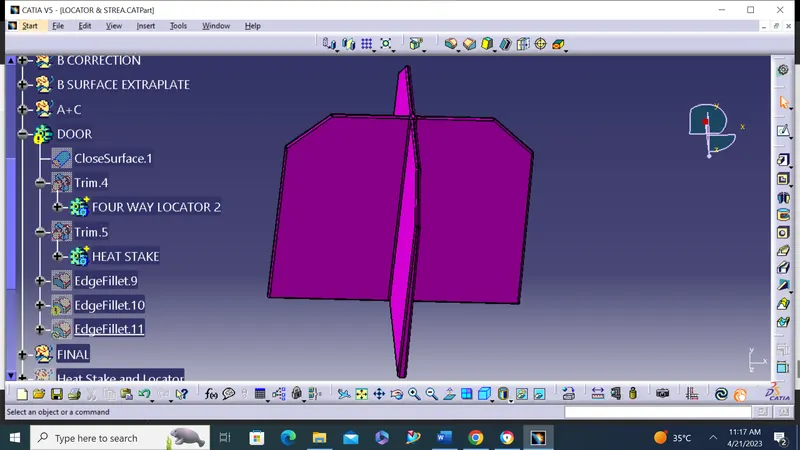
4-Way Locators:
These are the locators which arrests the 4 degrees of freedom by four ribs junctional together. These are of following type especially used for mold designs.
Heat staking:
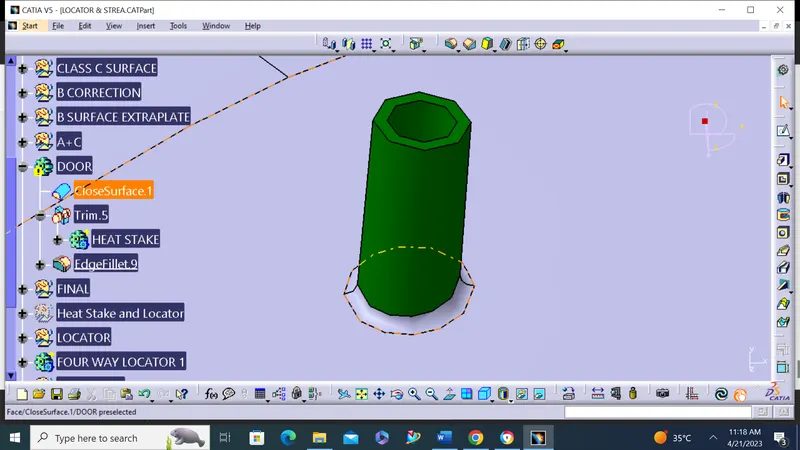
Heat Staking is a pulsed-heat process to join two or more parts out of which one at least is made of plastic. The process is to deform
the plastic material using heat and force at a set process time. The bond is made by partially de-forming the plastic part in order to
fix the other. Heat Staking makes it easy to bond metal to plastic and is commonly used in high volume/low cost applications such
as automotive, IT and consumer appliances.
Shaping Plastic Using Heat and Pressure:
The plastic is deformed by heating it to a temperature above the glass transition temperature. Super-heated air or a thermode is
used for this. Pressure is then applied to create the stake. After the stake has been formed, the plastic should be cooled down again
below the glass transition temperature. Cooling is performed under constant pressure to ensure good fixation of the parts.
Compressed air can be applied for cooling when a thermode is used. Heat is used to facilitate the creation of the stake. Heat control
is critical, especially for glass-filled plastics which often have a process window of less than 10 degrees Celsius. When the
temperature is too high, the glass fibres come out of the plastic which leads to a rough surface and adhesion to the thermode. If the
temperature is too low, the plastic will crack due to cold deformation.
Heat staking Benefits:
1. Similar and dissimilar materials may be joined: metal to metal, plastic to plastic, metal to plastic
2. Accurate control operating within a small process window
3. Local heating resulting in no damage to surrounding materials
4. Processing of glass-filled materials
5. No mechanical vibration
6. Many heat-stake shapes possible through custom designed tools
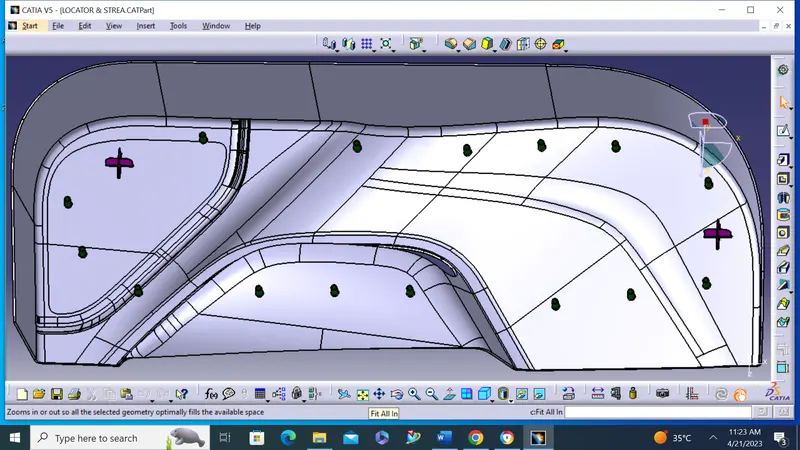
Door Trim Lower with Engineering Features LOCATOR & HEAT STAKE:
DRAFT ANALYSIS: