Flow over an airfoil
Aim: In this study, I have study the effect on lift by increasing the angle of attack in solidworks software. In our study fluid is air.
Introduction: Lift is a force which act as against the gravitational force. Generally when a body is contacting with the fluid then by their relative velocity, two forces generate one is drag force and second is lift force. I will focus on lift generation here.
- According to exist different statements of lift by different principle.
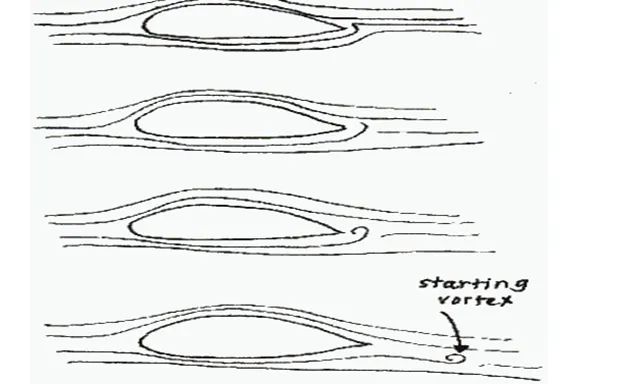
When a fluid flow over the surface at some reynolds number, it create vortices formation near the trailing edge in counter clock wise so due to conservation of angular momentum , a clock wise circulation of velocity formed as shown in below figure.
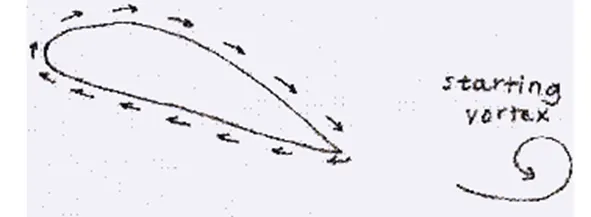
The vector addition of velocity

So net result of velocity is that upper layer of velocity will high and lower surface has low velocity so due to this according to Bernoulli’s equation lower surface has high pressure compare to upper surface and this pressure difference create lift.
Second reason for lift can be that more curvature surface push the air downward and it create uppward force due to the newton third law.
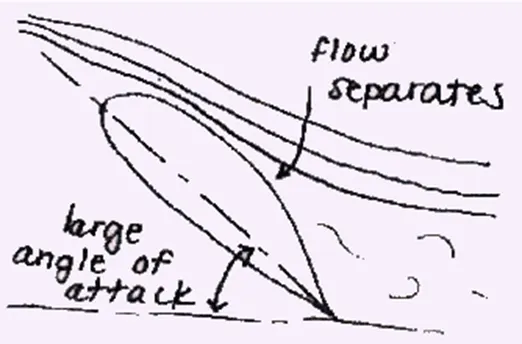
So by increasing the the angle of attack, more lift produce due to the more air push downward and resulting more uppward force as above reason . It al happens till certain limit after that ,lift force decreases.It is due to the increase in pressure gradient and boundry layer sepration occur and wake region formed .
(b)According to my understanding
As in given below figure different colour show different meaning:
Black colour: It shows the shape of body
Blue colour: It shows the flow direction of fluid
Red colour: It show the centrifugal force by moving mass particle of air. This force produced by that particles moving in a curve fashion
At 0 degree angle of attack
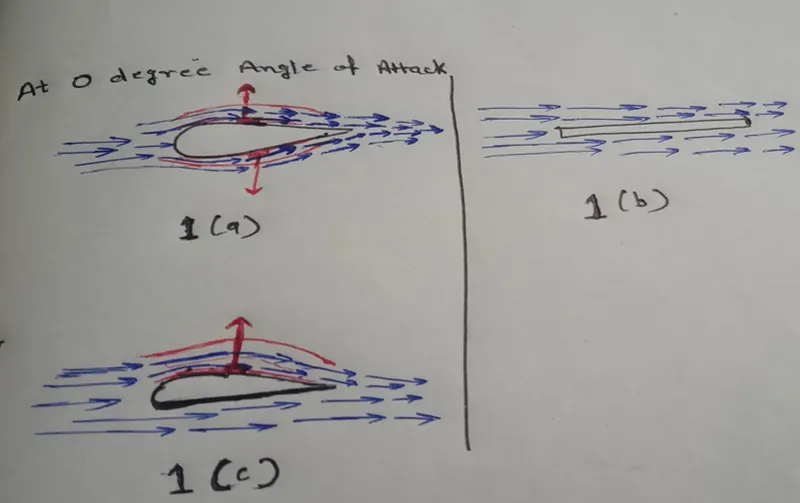
In figure 1(a) this is the aero foil shape or I can be it is look like the cross-section of aeroplane wing. It’s both upper and lower surface of aero foil shape has curved faces and due to this, centrifugal forces formed in opposite direction by moving the air particles. These air particles is sticked to the body surface by coanda effect and these particles try to body surface pull at both surfaces and these forces cancelled to each other. So no lift occurs.
In figure 1(b) this is the rectangular slab cross-section, it has no curved surfaces at upper and lower surfaces. So no lift occurs.
In figure 1(c) this has upper curved surface so moving fluid on upper surface create centrifugal force but lower surface has flat surface and no centrifugal force create at lower surface. So resultant force occur toward upside and lift occur.
At 10 degree angle of attack
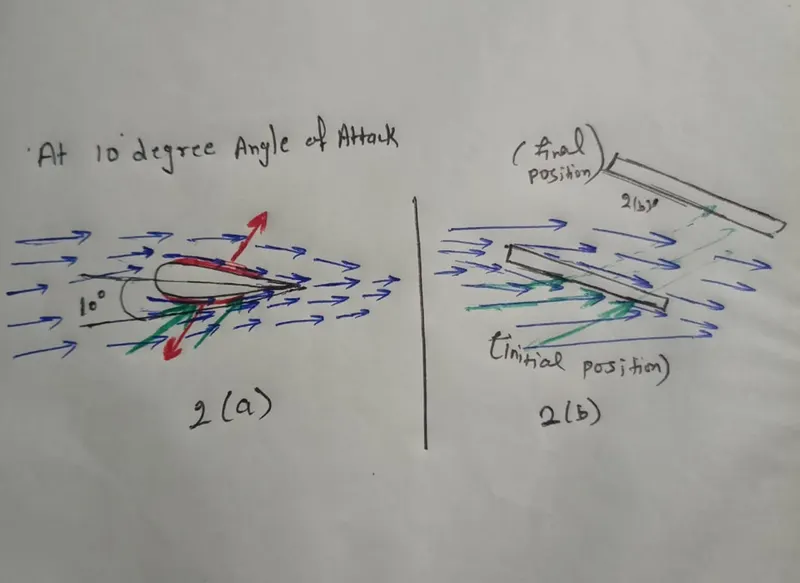
In figure 2(a): upper surface and lower surface has centrifugal force but in opposite direction. One extra force (by green colour arrow) is also feel at lower surface by striking flow mass of air and this (F=m.a) force push the body toward upside and this is the lift for that body. This can be seen in figure 2(b) that by green colour arrow force changes the rectangular slab position from initial position to final position.
Methodology:
1.Firstly, I input the naca air foil shape as given input
- Extrude that curve sketch to make shape of wing body to contacting the air flow.
- Input the air flowing condition 600m/sec
- Create the computational domain region approximate 5 times in front of starting edge and approximate 15 times behind the trailing edge (end point of aero foil shape).
- Create goal condition in which we get the lift and drag force result on surface
- Run the analysis
Result and Discussion:
At 0 degree angle of attack
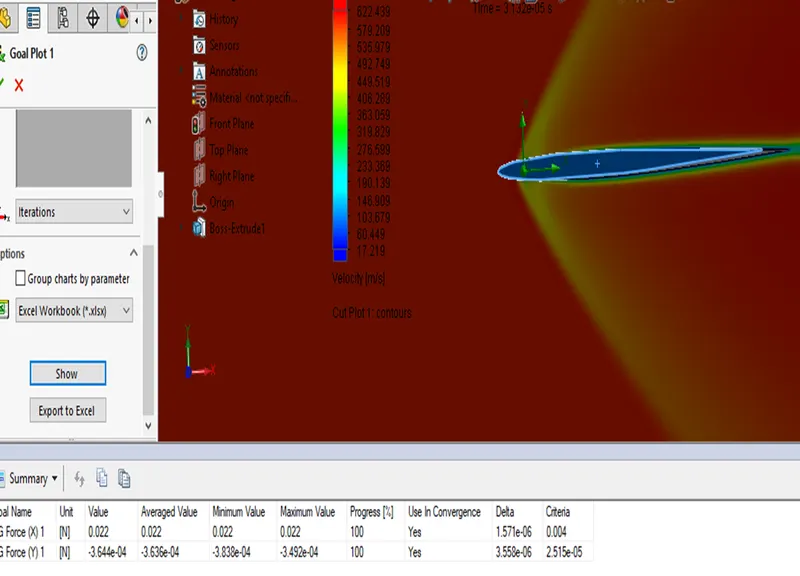
Force in X direction is drag force
Lift force is in Y direction that is approximate to zero
At 2 degree angle of attack:
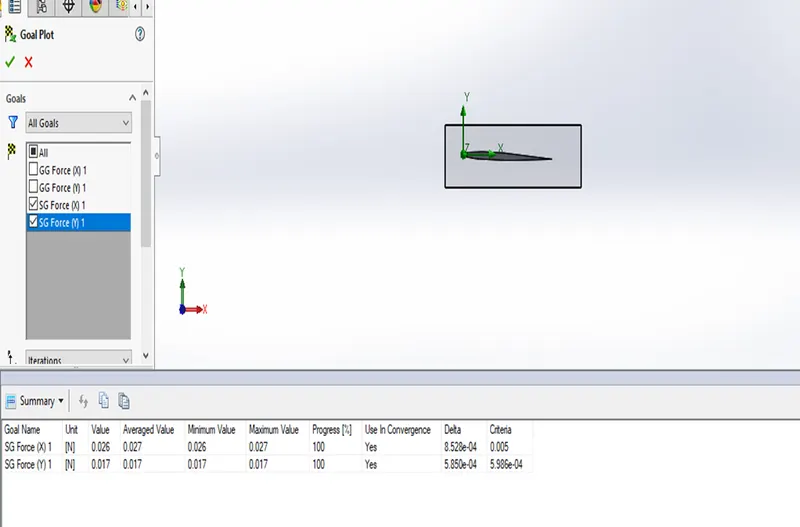
Force in X direction is drag force
Lift force is in Y direction that is approximate to 0.017N
At 4 degree angle of attack:
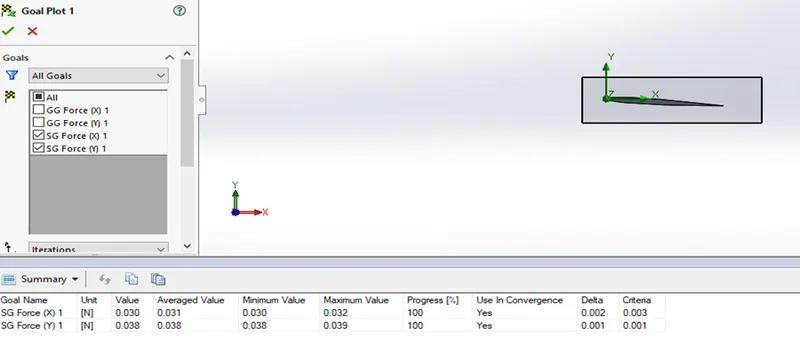
Force in X direction is drag force
Lift force is in Y direction that is approximate to 0.038N
At 6 degree angle of attack:
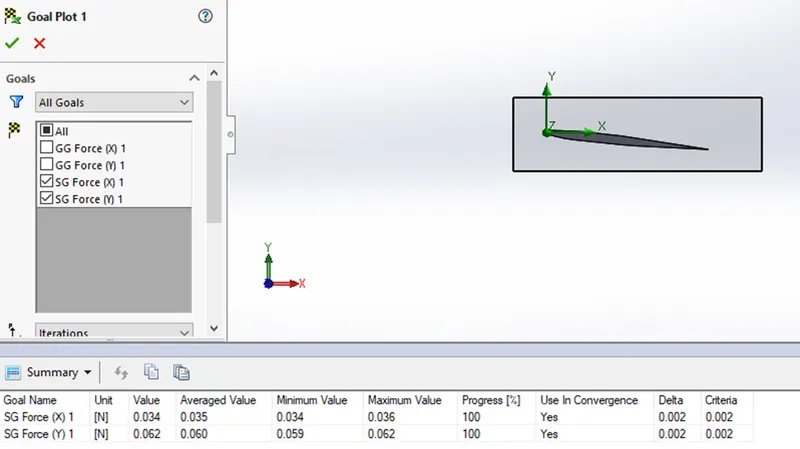
Force in X direction is drag force
Lift force is in Y direction that is approximate to 0.062
At 8 degree angle of attack:
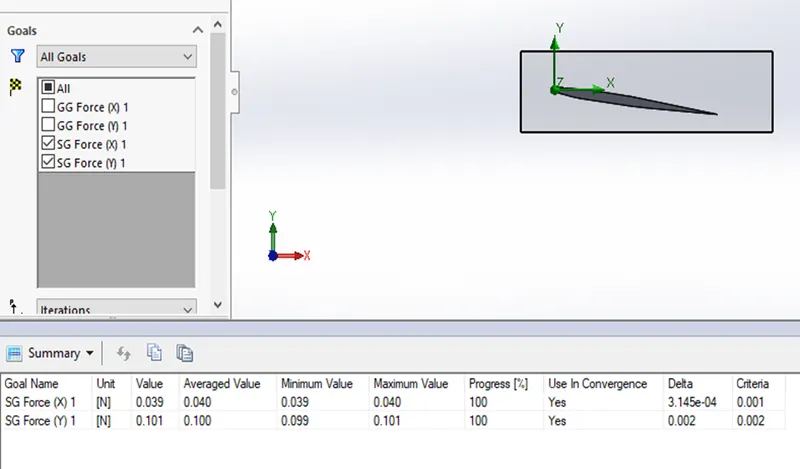
Force in X direction is drag force
Lift force is in Y direction that is approximate to 0.101N
At 10 degree angle of attack:
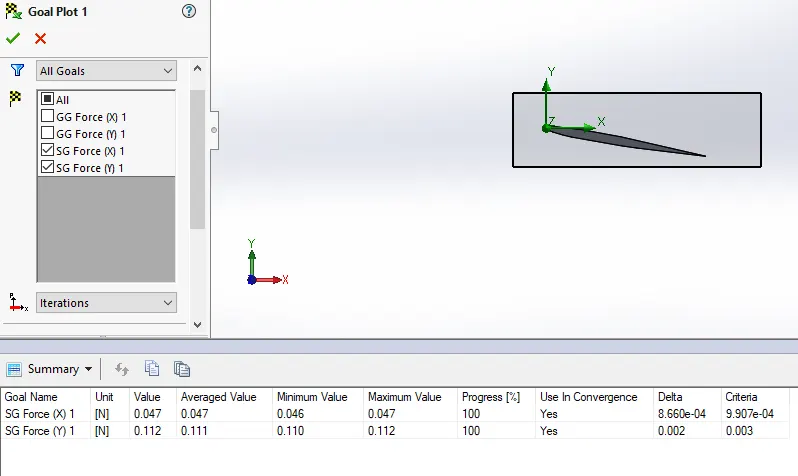
Force in X direction is drag force
Lift force is in Y direction that is approximate to 0.111N
According to our getting result we can say that by increasing the angle of attack lift increases.
And according to above given explanation above in introduction after some limit of increasing angle of attack , the lift force decreases due to flow separation and causes increasing pressure gradient