Basic Morphing Techniques using HYPERMESH
AIM
To practice all the Morphing techniques that were shown in the video for the given component & to write a report on Morphing and its use cases in various industries.
Refer to the following images for Morphing
GIVEN DATA
Figure 1. Given data
THEORY - MORPHING
- Morphing is a design change terminology or used to change the design or shape of any component without any numerical inputs.
- We can try morphing in both FE model & Cad model.
- Morphing techniques will be also used for design optimization.
- It is used mostly on the Version 2 products. The input from the original models will be morphed to change the design & performance of the product slightly compare to the V1.
- Mesh morphing module in HyperMesh, Allows you to morph an FE model in useful, logical, and intuitive ways
which result in minimal element distortion. - Only nodal location is changed . Node id, element id and any association
such as contact groups remain unchanged. - Allowing you to modify original mesh to meet new mesh design.
The Morphing module is in HyperMesh -> Tool page -> HyperMoprhpanel
MORPHING PROCESS
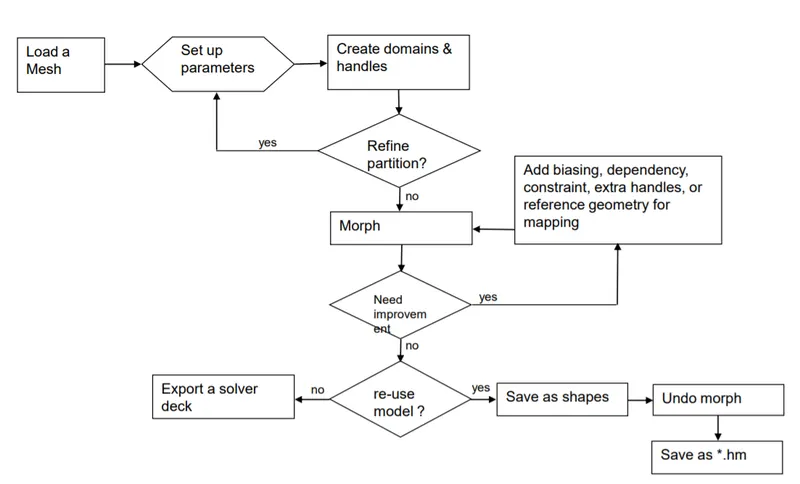
Figure 2. Process of morphing
DOMAIN & ITS TYPE IN HYPERMESH
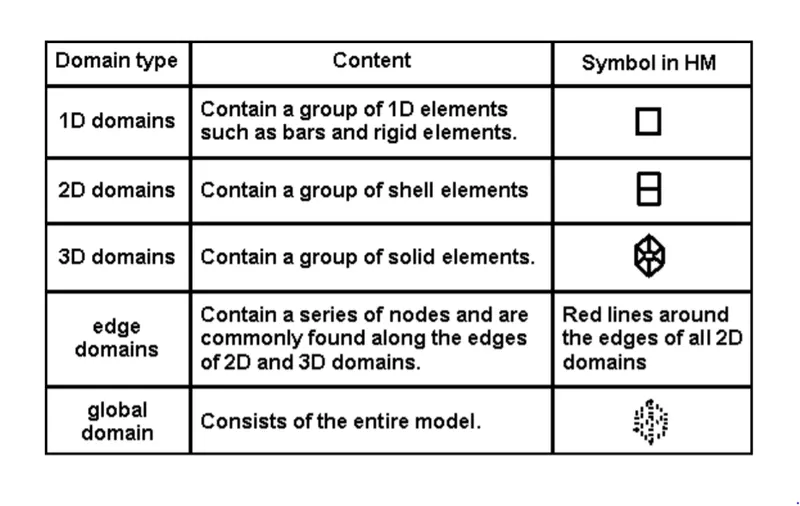
Figure 3. Domain & its type in hypermesh
APPLICATION OF MORPHING
- Rapidly change shape of existing model
- Improve element quality by dragging handles or mapping edge domains
- Fit old model to new design data
- Map an existing mesh onto lines or surfaces
- Generate NURB surfaces using FE -> Surf feature in HyperMesh
- Generate and edit shape variables for optimization.
Application A: Easily alter the diameter of holes for solid models
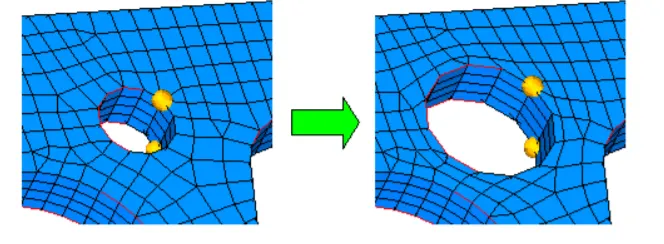
Figure 4. Application - Easily alter the diameter of holes for solid models
Application B: Rapidly stretch the full vehicle body
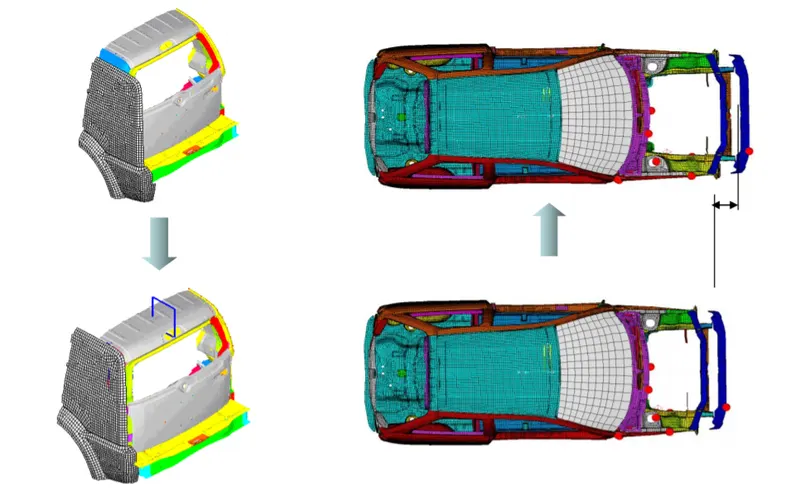
Figure 5. Application - Rapid stretch of full vehicle body
Application C: map to geometry
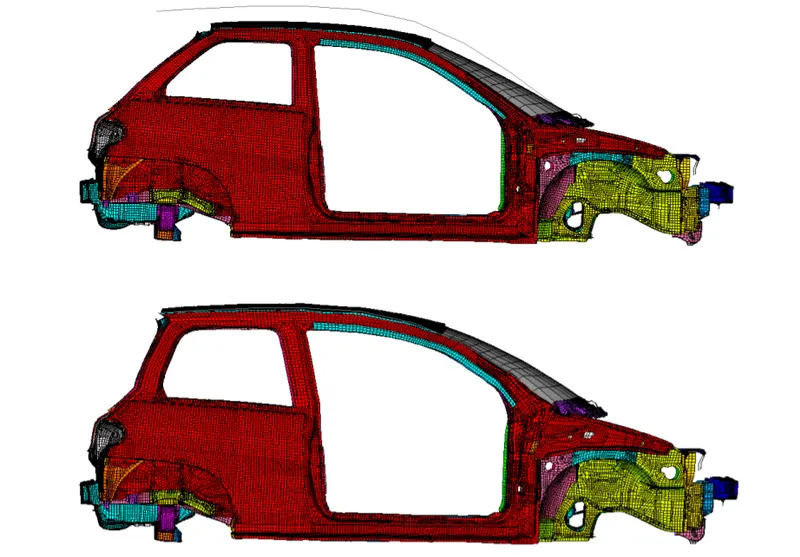
Figure 6. Application - Map to geometry
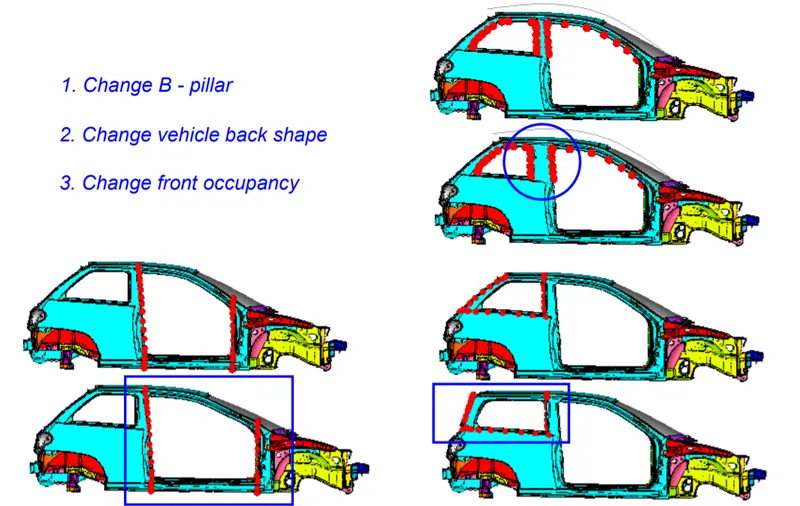
Figure 7. Application - Change B pillar, Change vehicle back shape, change front occupancy
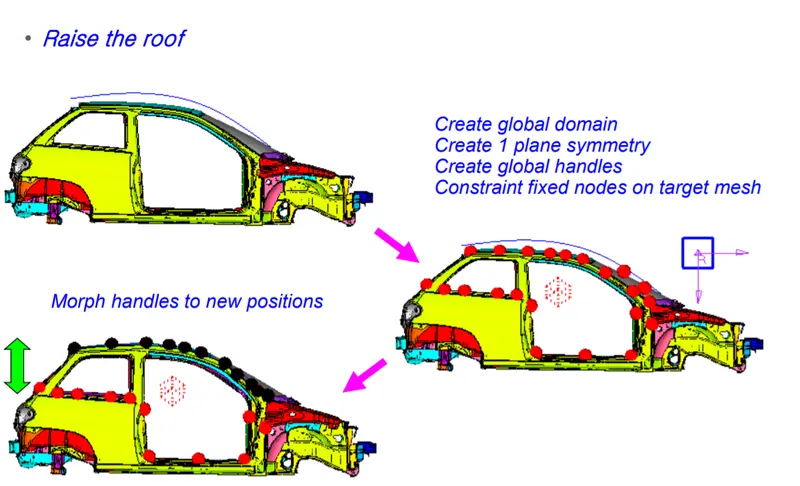
Figure 8. Application - Raise the roof
- In Automotive Industry -
- Morphing techniques are used to convert the hatch back type passenger vehicles to sedan type passenger vehicles. So here, the Geometry morphing techniques would be used.
- Example: Cars like,
- Honda brio (Hatch back) --> Honda Amaze (Sedan type)
- Ford Figo (Hatch back) ---> Ford Figo (Sedan type)
- Swift (Hatch back) ---> Swifte Desire (Sedan type)
- Hyundai i10 (Hatch back) ---> Hyundai Xcent (Sedan type)
- Some SUV vehicle to Pickup trucks.
- In two wheeler segment, Yamaha FZ & Fazer V1 ---> Yamaha FZ & Fazer ----> Yamaha FZ & Fazer V3
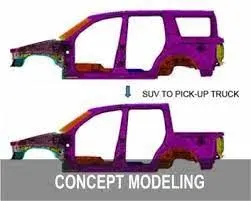
Figure 9 - SUV --> PICKUP TRUCK
Tools for Morphing:
- Morph constraints: Create/update/release constraints to morph a CAE model.
- Systems: Create, edit and update systemSymmetry: Create, edit and update symmetry. Update domains/handles to symmetry
- Shapes: Create/apply/autoshape/convert shape into loads/save shape/apply the saved shape to another model.
- Morph Volume: Create/edit & update/save & export-import/convert HEXA into morph volume
- Domains: Create/edit/update domains and setup parameters
- Handles: Create/edit/update handles and dependency or save-to load-from a file
- Morph: morph the model and create shape entities.
- Map to geom: map domains and handles to geometric data.
- Freehand: Easy way of morphing. Good for quick change and bead creation
PROCEDURE
Step1: Import the given FE Model.
Step2: Extract surface from FE model.
Step3: Compare the given figure.
Step4: Create Volume and split it as needed.
Step5: Morph - Morphing has been performed with the help of handle. The more we split we get accurate changes.
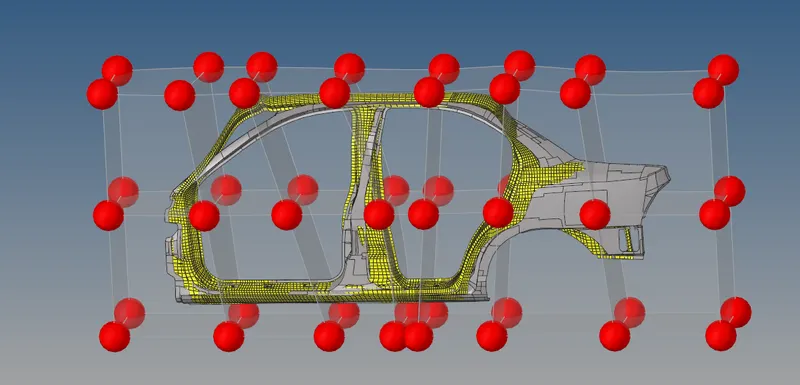
Figure 10. Morphed model
The above morphing is achieved by volume morph method.
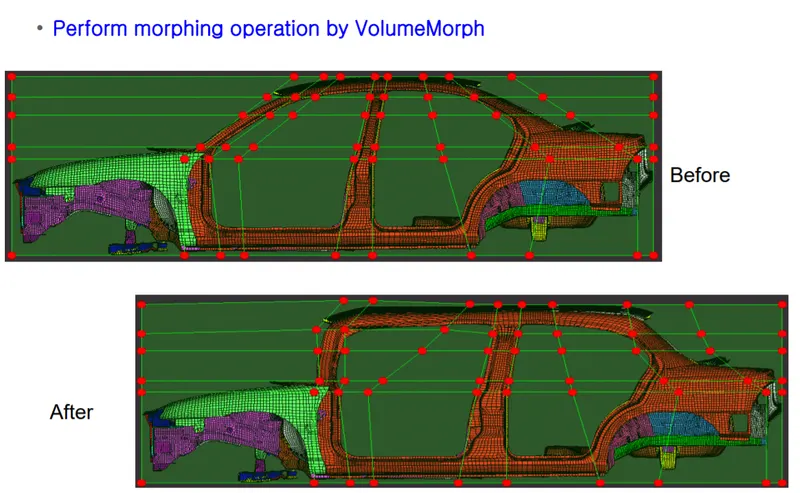
Figure 11. Morphing operation - by Volume morph
CONCLUSION
As per objective, practiced all the Morphing techniques that were shown in the video for the given component & a report on Morphing and its use cases in various industries has been prepared.
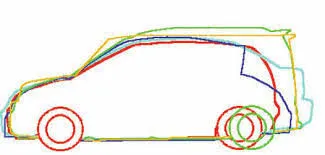
Figure 12. Morphing operation
LEARNING OUTCOMES
At the end of this challenge, I can able to Perform some basic morphing techniques.
REFERENCE
- Altair hypermorph resources (https://blog.altair.co.kr/wp-content/uploads/2011/03/hypermorph.pdf)
- BETA CAE Systems - Morphing
- Skill-Lync Coursework