Week 5 - Rayleigh Taylor Instability
Types of Instability :
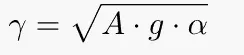
- Rayleigh taylor instability : Rayleigh taylor instability is the interpenetration of materials that occurs whenever a light fluid pushes on a heavy fluid. It is a dynamic process whereby the two fluids seek to reduce their combined potential energy. The ensuing turbulence and mixing has far-reaching consequences in many natural and man-made flows, ranging from supernovae to inertial confinement fusion (ICF) capsules.
- Richtmyer meshkov instability: RMI occurs when two fluids of different density are impulsively accelerated. Normally this is by the passage of a shock wave. The development of the instability begins with small amplitude perturbations which initially grow linearly with time. This is followed by a nonlinear regime with bubbles appearing in the case of a light fluid penetrating a heavy fluid, and with spikes appearing in the case of a heavy fluid penetrating a light fluid. A chaotic regime eventually is reached and the two fluids mix.
- Plateau–Rayleigh instability: The Plateau–Rayleigh instability, often just called the Rayleigh instability, explains why and how a falling stream of fluid breaks up into smaller packets with the same volume but less surface area. It is related to the RTI and is part of a greater branch of fluid dynamics concerned with fluid thread breakup. This fluid instability is exploited in the design of a particular type of ink jet technology whereby a jet of liquid is perturbed into a steady stream of droplets.
- elvin helmholtz instability : kelvin helmholtz instability is a fluid instability that occures when there is velocity shear in a single continous fluid or a velocity difference across the interface between two fluids.Kelvin-Helmholtz instabilities are visible in the atmosphere of planets and moons.
CFD Models based on RTI:
- Mass diffusion model : The mass diffusion equation describes the transport of mass and energy due to model viscosity and hence drives actual mixing in the fluids. Even if any configuration in Rayleigh-Taylor unstable, the diffusion process could be responsible for significant mixing if the viscosity is sufficient large.
- Single diffusion Model:
- Potential Flow model : This model is valid for all instability changes from early non-linear stage to asymptotic but limited to Atwood number=1. In this model, Single-mode perturbation expands the flow equation to second-order around the bubble tips. Hence, obtaining an ordinary differential equation for bubble velocity.
- Boyancy Drag Model : It is valid for every Atwood number but limited for non-linear stage of instability. It uses ordinary differential equation to evolve the width of mixing layer. The bubble, spikes and amplitude are described by balancing the inertia, buoyancy and drag forces. These models cannot model multiple mixing interfaces, cannot be extended to 2-3 dimensions and as a rule, invalid to address inability to mix, also known as Counter Gradient Transport i.e reduction of total fluid masses within the mixing zone. To address the above problem multi-fluids model have to be used.
- Besnard-Harlow-Rauenzahn (BHR): It's a more advance version if single-fluid model. The BHR model is based on the evolution equations arising from second-order correlations and gradient-diffusion approximations. Using Mass-weighed decomposition, the original BHR model includ full transports equations for the Reynold's stress, turbulent mass-flux, velocity, density fluctuation and turbulent kinetic energy dissipation rate.
Geometry:
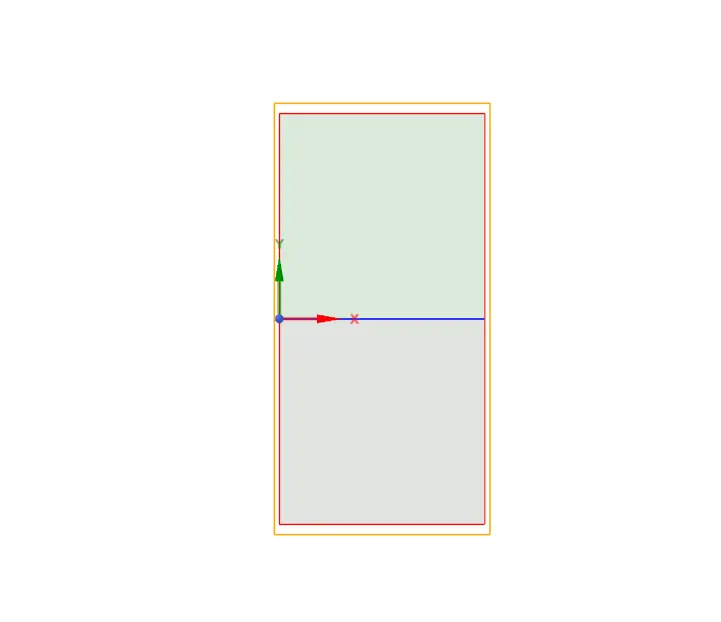
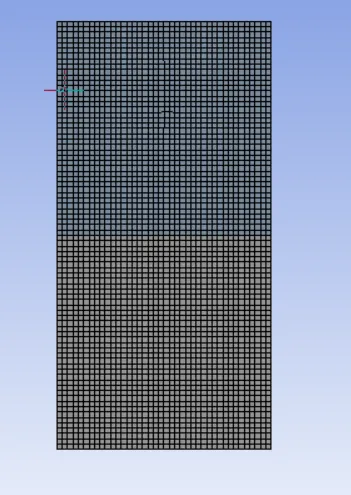
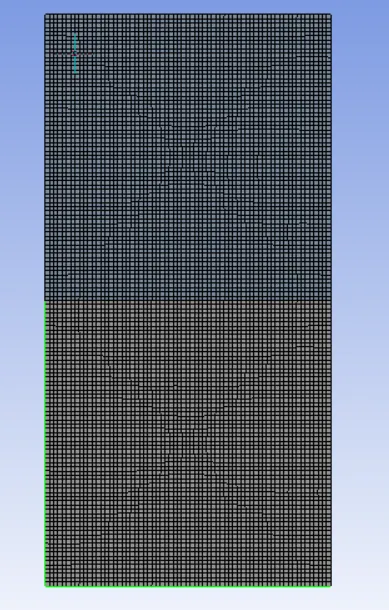
- Top and bottom are of dimension 20 x 20 mm
- Before going to mesh use share topology to share the interferace
Mesh :
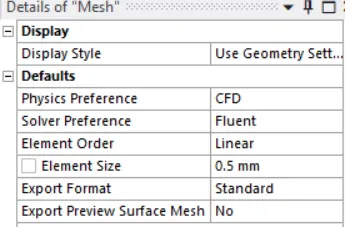
Base line mesh (0.5 mm)
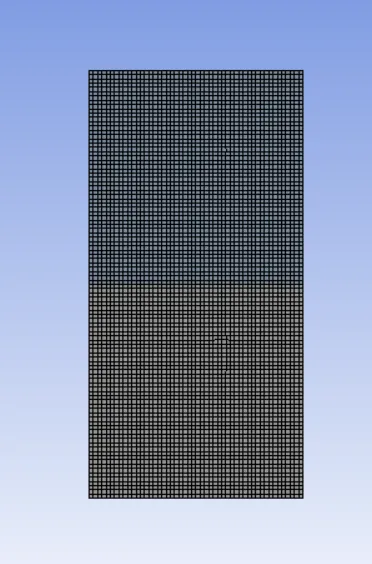
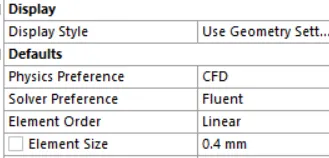
Case 2 : (0.4 mm mesh)
Case 3:(0.3 mm)
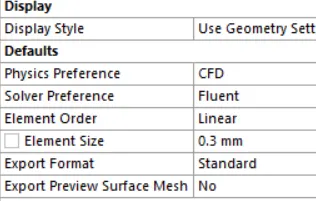
Fluent setup:
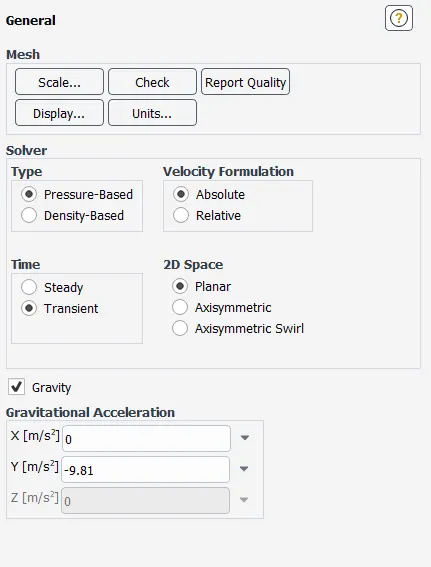
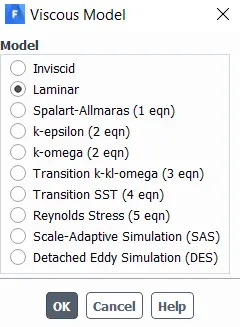
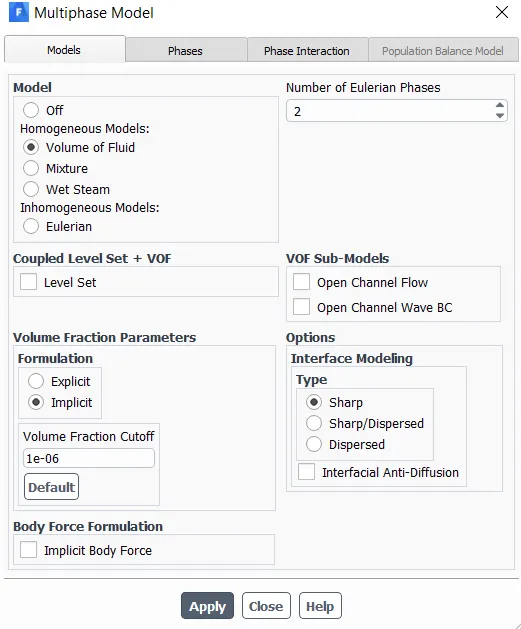
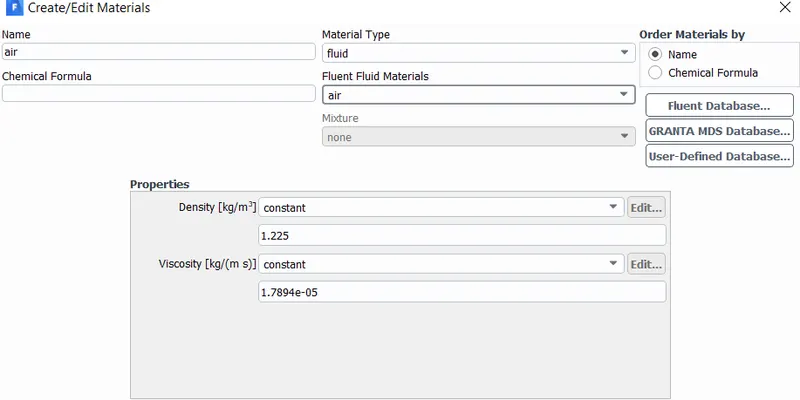
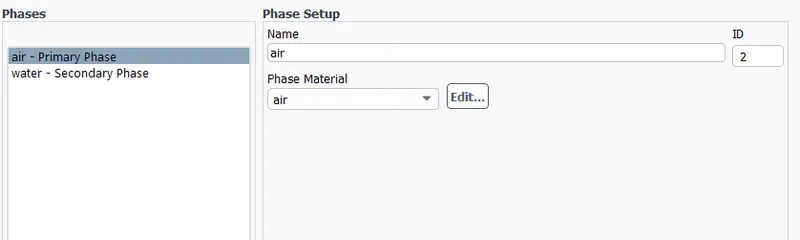
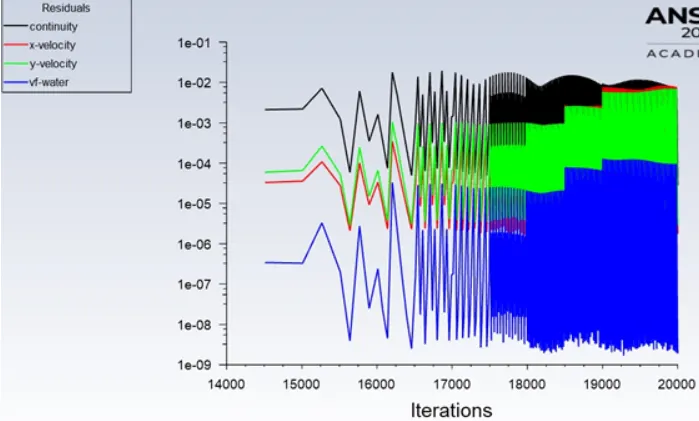
Case 1 : Base line mesh(0.5 mm)
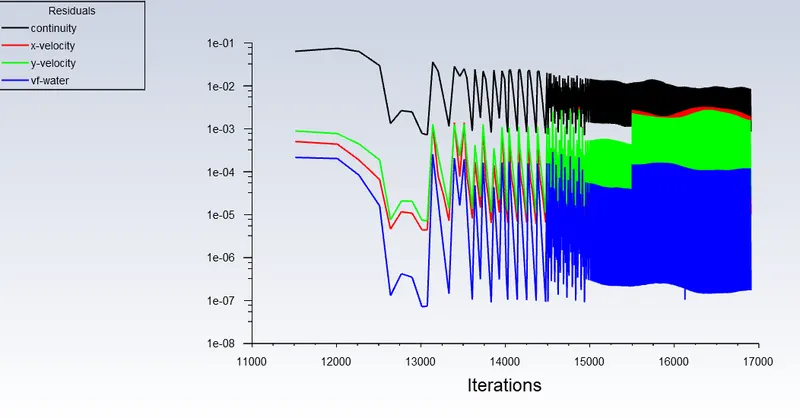
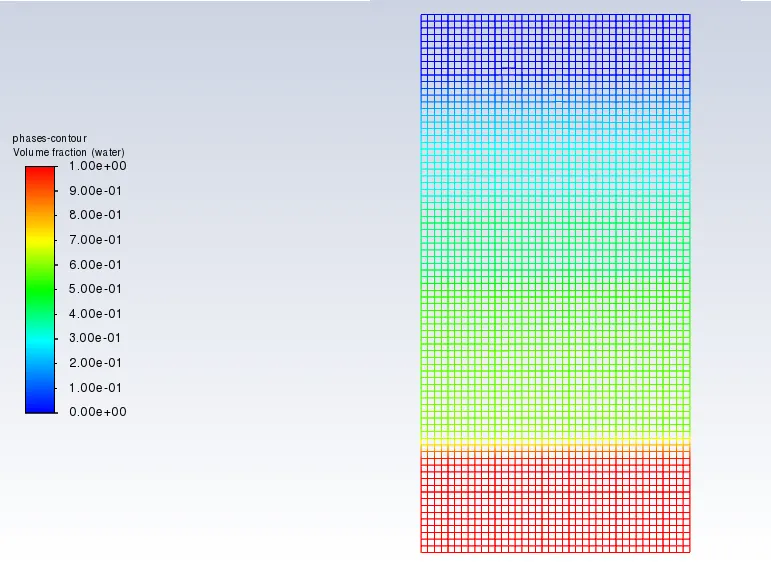
case 2:(0.4 mm)
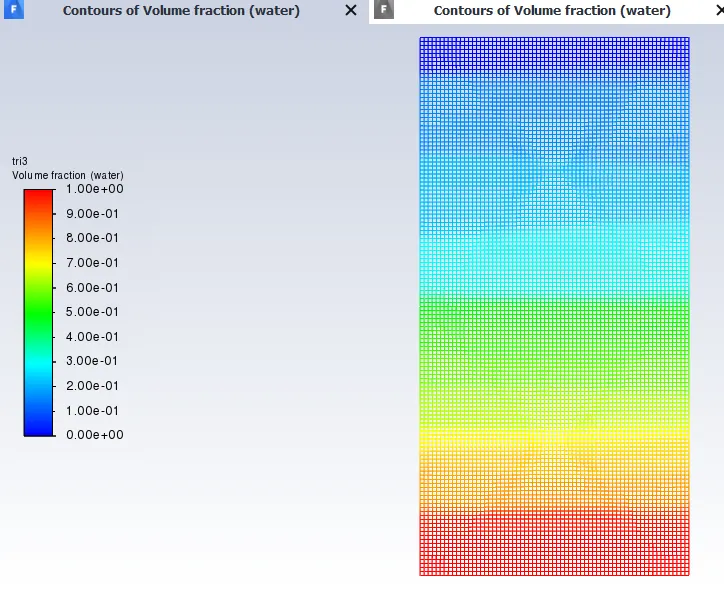
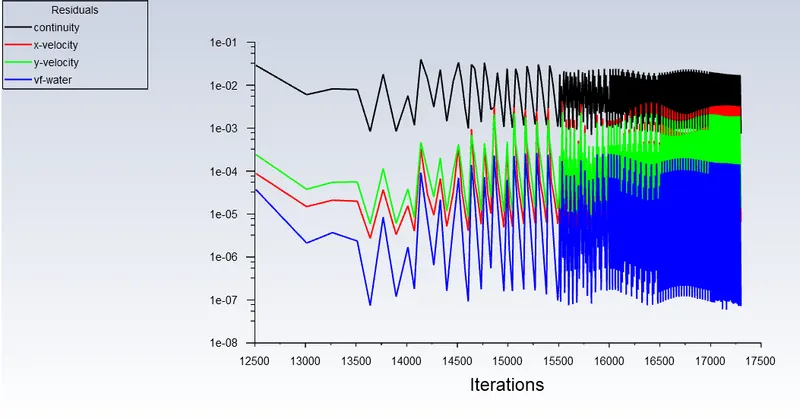
Case 3:(0.3 mm)
Atwood number :
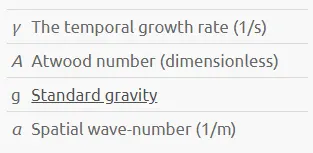
The Atwood number is a dimensionless number in fluid dynamics used in the study of hydrodynamic instabilities in density stratified flows. It is a dimensionless density ratio related to the density of heavier fluid and the density of lighter fluid. Atwood number is an important parameter in the study of Rayleigh–Taylor instability
- For Atwood number close to 0, RT instability flows take the form of symmetric “fingers” of fluid
- for Atwood number close to 1, the much lighter fluid “below” the heavier fluid takes the form of larger bubble-like plumes.
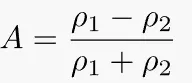
p1 = density of heavy liquid p2 = density of lighter liquid
Why not steady-state simulation ?
- We can compute the smooth transition of irregularities that takes place at the interface of the fluids.
- The difference between the steady and transient is that you can't see the small variation of instability.
- The steady-state simulation is performed if we are more concerned about the final state or equilibrium state results.
- Moreover, in transient we can see the behavior of the solution and every instant such that capturing Bubble, Vortex and Shockwaves.
Conclusion:
- Fine mesh results in formation of bubbles and vorties
- For real-time change of interface transient anlaysis is prefered
- Atwood number depends on density of fluid