Week 6 - CHT Analysis on a Graphics card
Conjucate Heat Transfer(CHT):
Computatiopnal fluid dynamics and more specifically conjugate heat transfer (CHT) analysis can accurately predict heat transfer by simultaneous solving all the relevant solid and flow field heat transfer processes, for example: conduction through solids, free and forced convection in the gases/fluids and thermal radiation.
The CHT approach has an advantage over FE thermal analyses in that wall heat transfer coefficients and their local variations on surfaces are directly calculated within the model rather than based on simplified empirical calculations. The CHT approach therefore has benefits for those applications where heat transfer is either non-uniform or difficult to calculate empirically.
Some Applications are :
- Temperature distribution analysis
- Visualisation of heat transfer features for improved understanding of system flow phenomena.
- Assessing insulation or heat shield effectiveness and optimising of material selections.
- Coupling CHT with FE analysis to evaluate thermally induced stresses, expansion or fatigue.
- Identification of localised ‘hot spots’ or heat sinks in checking against specified requirements
PART A : ( Using Upgrad Mesh and its Results with velocities from 1 m/s to 5 m/s)
CASE 1:
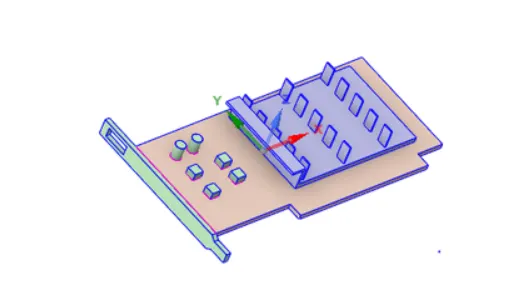
Geometry:
To reduce the interference here we use Share topology method:
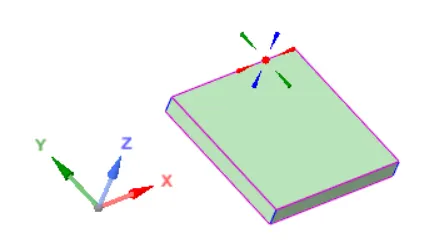
1. Processor
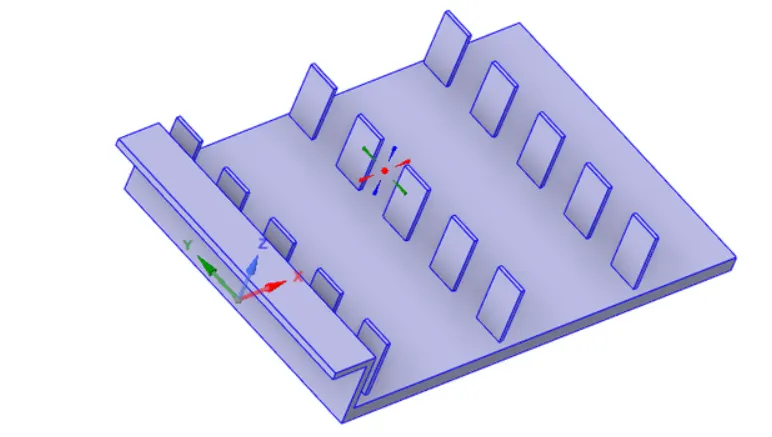
2. Fins
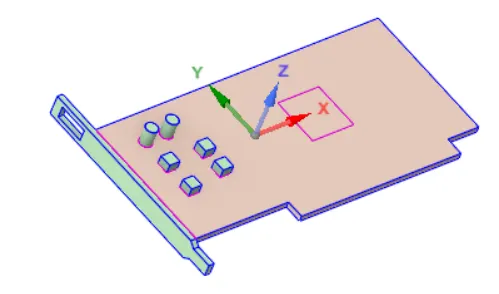
3. Base
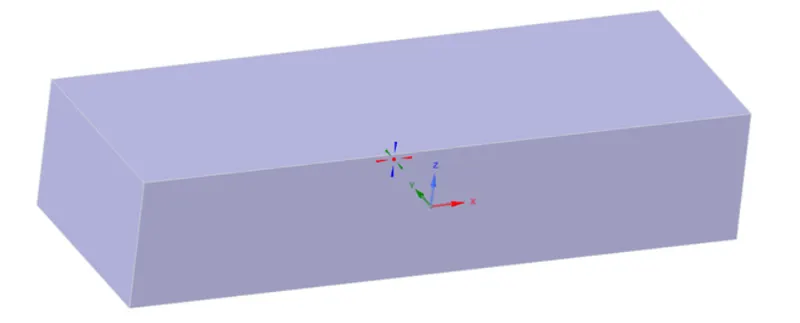
4. Graphic card
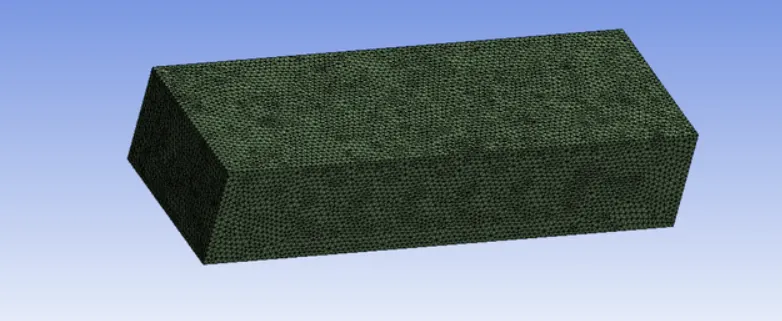
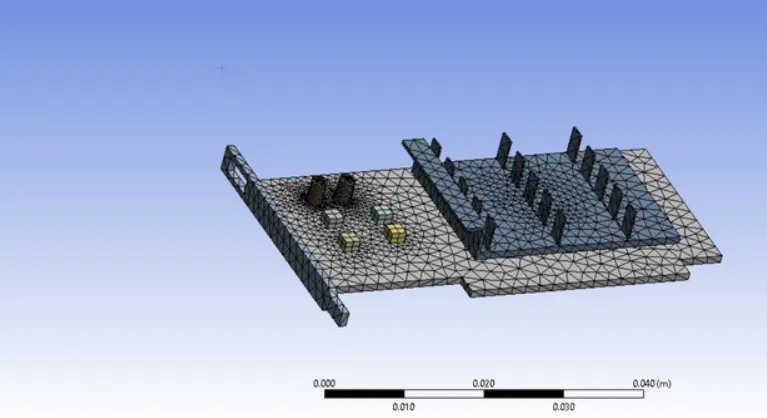
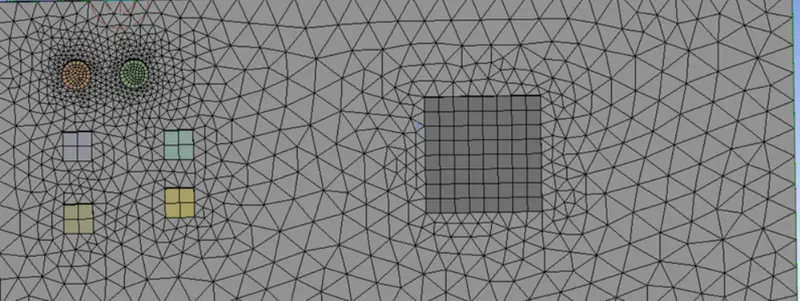
MESH:
Total element size = 0.003 m
Body sizing to the processor = 0.0015 m
FLUENT:
| Solver Type | Pressure-based |
| Velocity | Absolute |
| Time |
Steady K-omega SST |
| Materials |
Solid type : Aluminium Gold Fluid type : air |
| Boundries |
inlet velocity : 2m/s Temperature : 300k outlet pressure = 0 |
| Reference value | Standard |
| Initilization | Standard |
| Models | Energy : on |

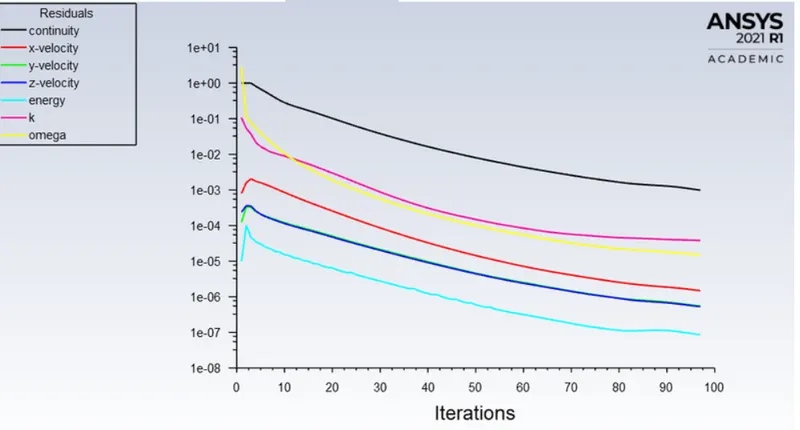
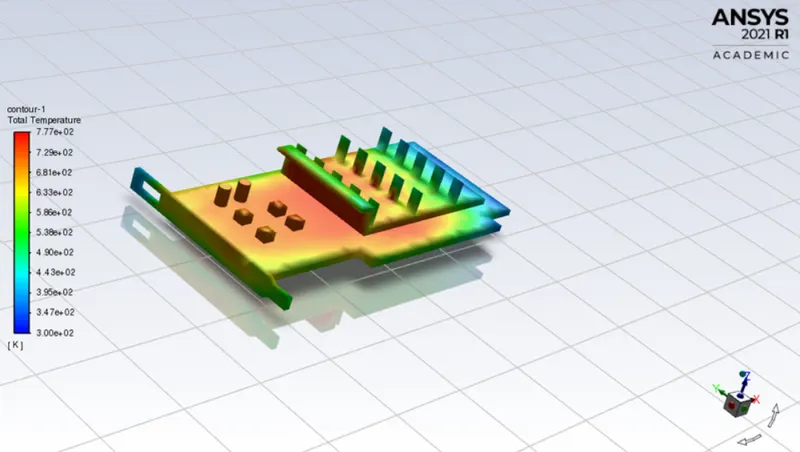
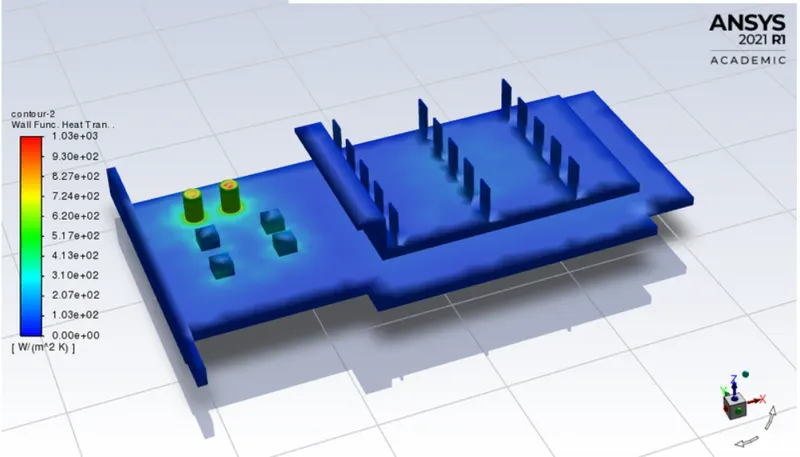
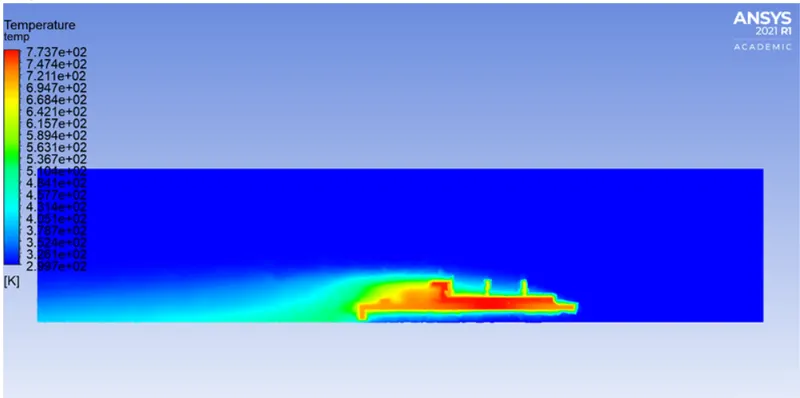
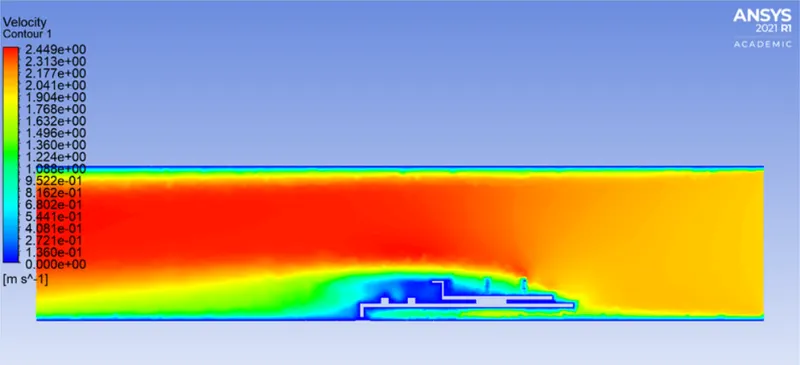
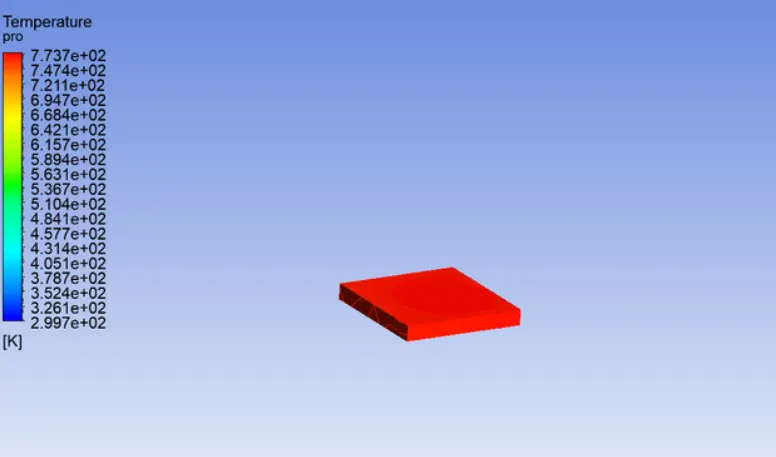
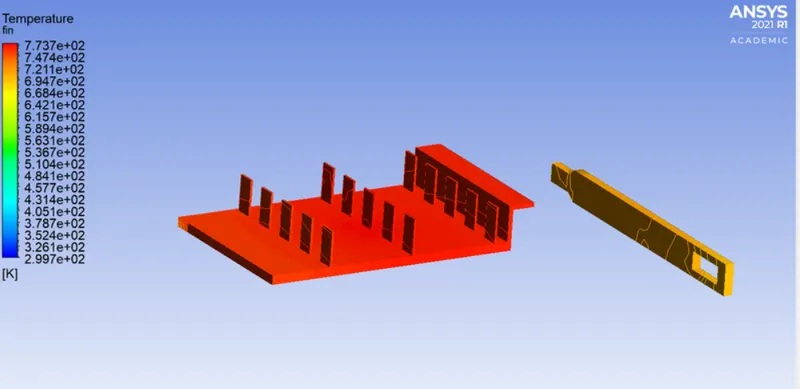
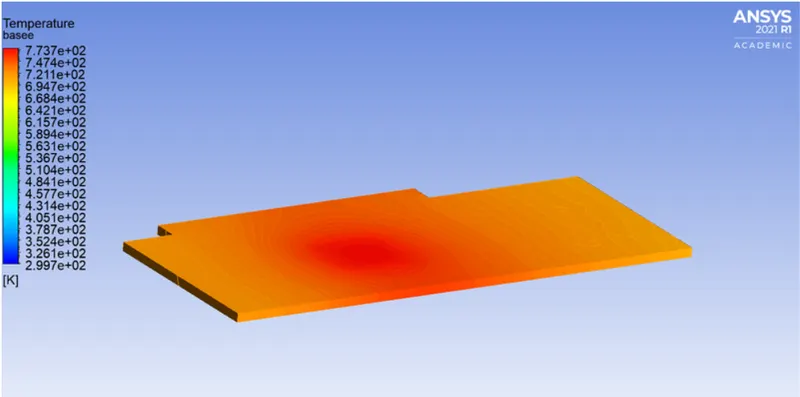
CASE 2:
| Solver Type | Pressure-based |
| Velocity | Absolute |
| Time |
Steady K-omega SST |
| Materials |
Solid type : Aluminium Gold Fluid type : air |
| Boundries |
inlet velocity : 5m/s Temperature : 300k outlet pressure = 0 |
| Reference value | Standard |
| Initilization | Hybrid |
| Models | Energy : on |
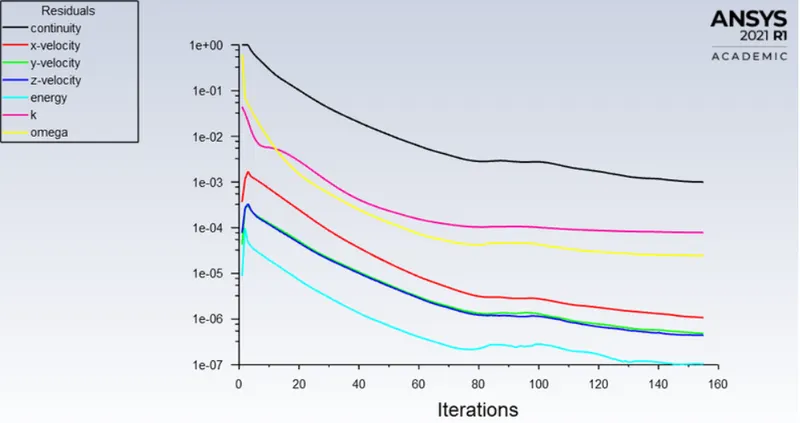
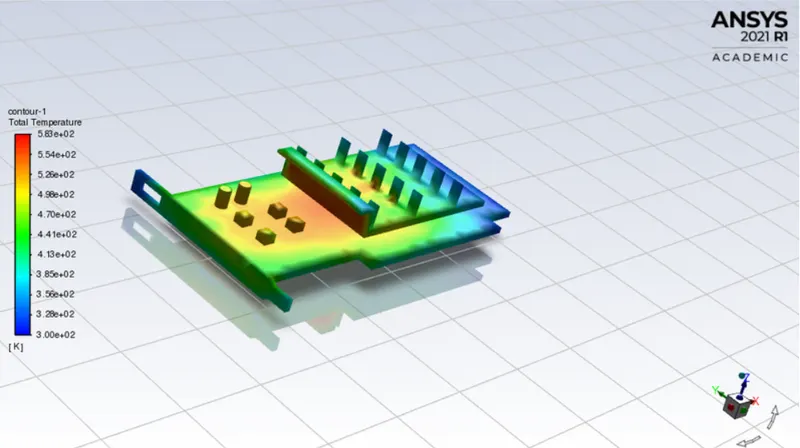
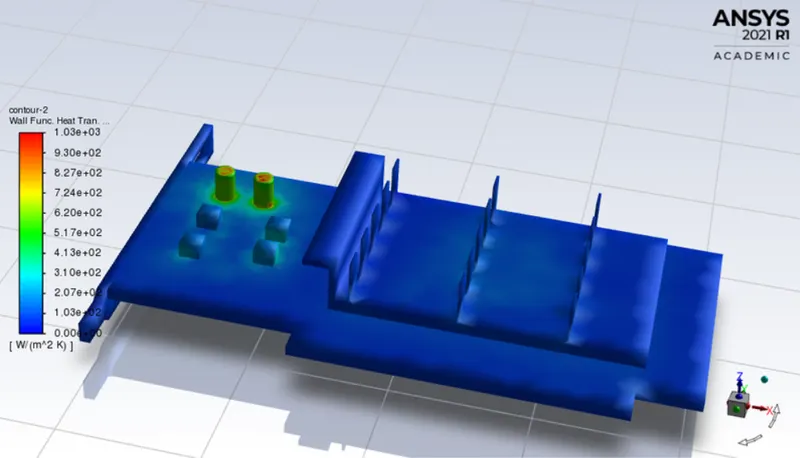
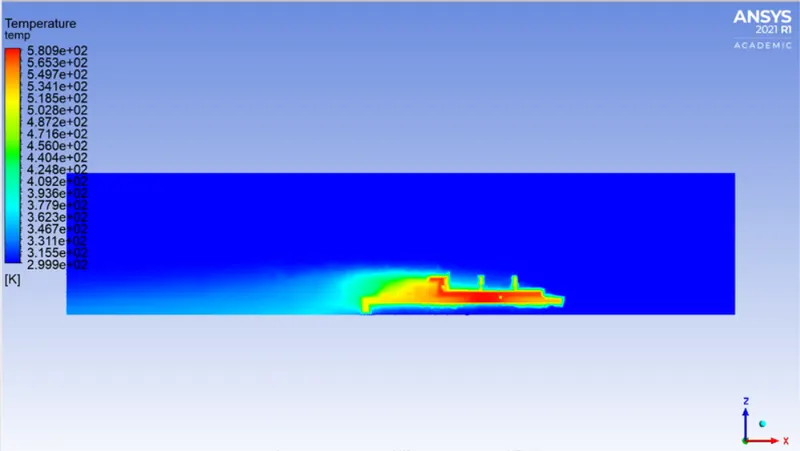
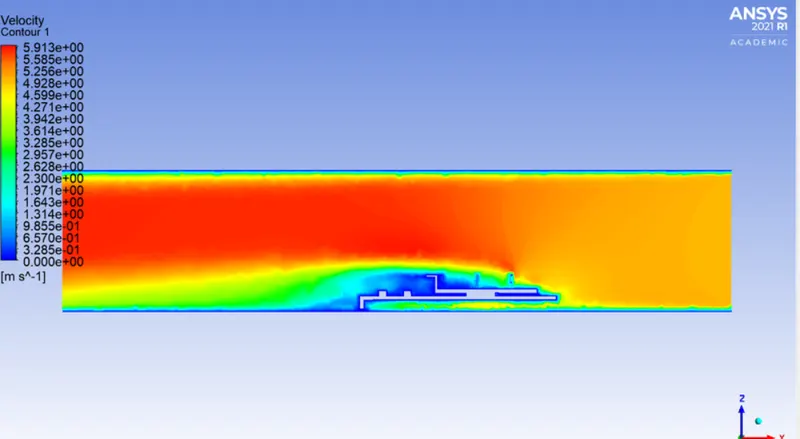
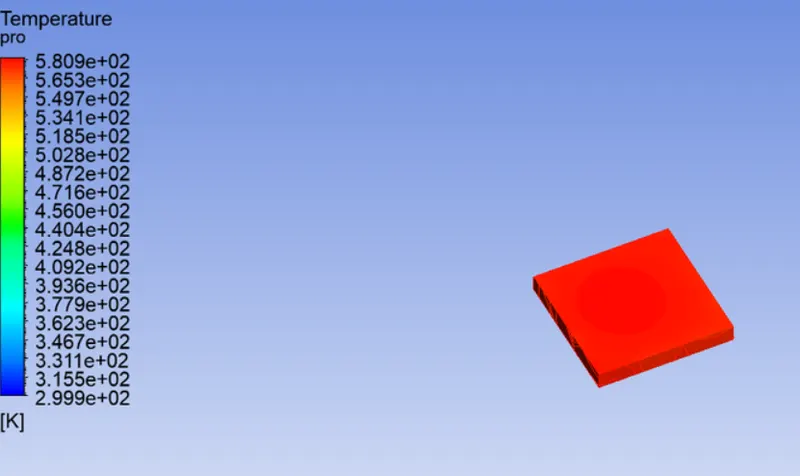
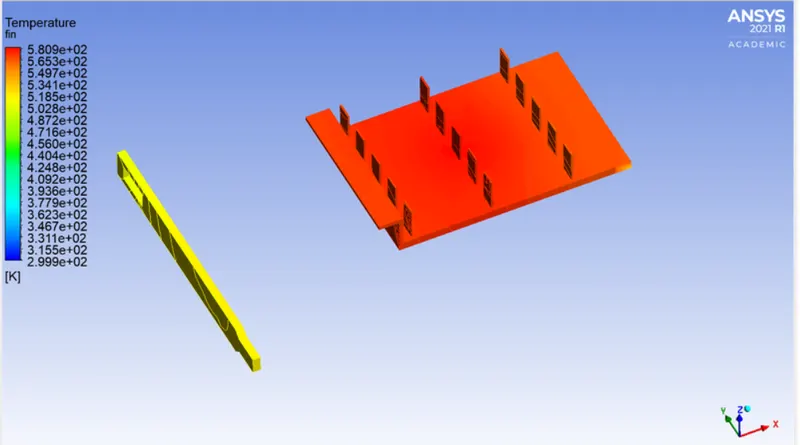
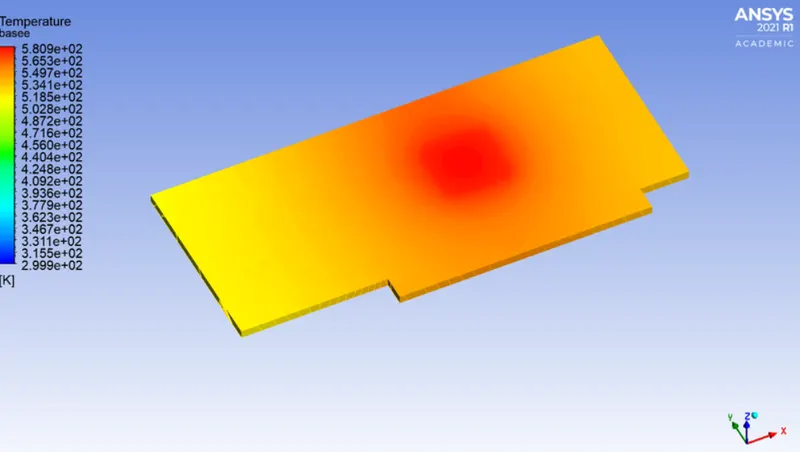
Case 3 : (1 m/s)
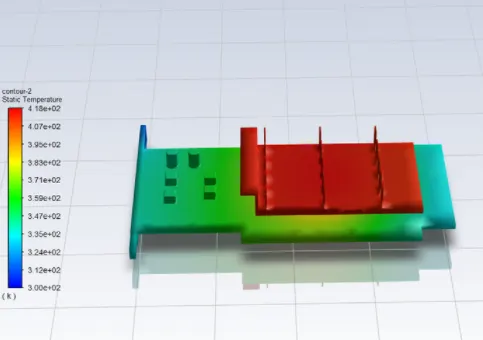
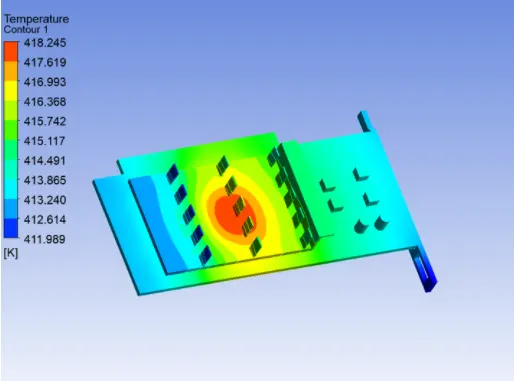
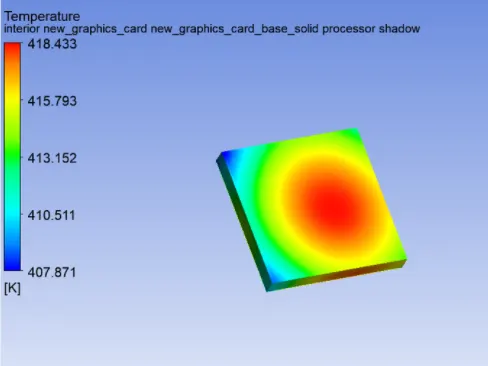
| Cases | Velocity | Total Temperature on card | Total Heat transfer coeffecient(w/m ^2k) |
| case 1 | 2 | 773 | 1020 |
| case 2 | 5 | 583 | 1020 |
| case 3 | 1 | 1070 | 1020 |
Conclusion:
- Higher velocity in a particular region means a higher Reynolds number.
- Mesh resolution near walls usually has the biggest impact on numerical results.
- Some factors that should be considered which the most significant is the turbulent boundary layer. Make sure that we stay in the laminar sub-layer region where velocity profiles are assumed to be laminar and viscous stress dominates the wall shear