Week 8 - Simulating Cyclone separator with Discrete Phase Modelling
Cyclone sepearator:
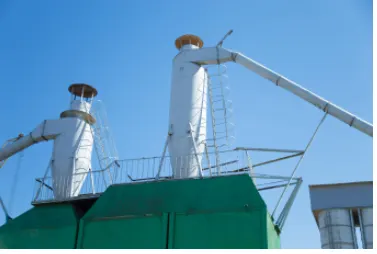
Cyclone sepeartor is a means of separating different liquid phases (different liquid densities), or, separating particles from a gas stream. Cyclone separators often form part of a pre-cleaning stage prior to a gas or liquid being discharged. This article focuses on the gas cyclone separator.
Working:
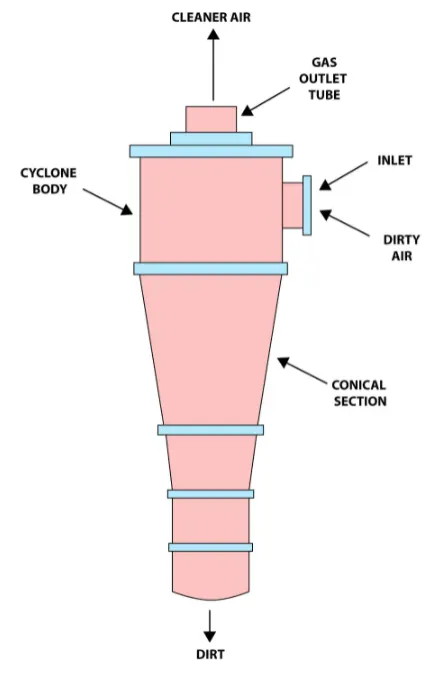
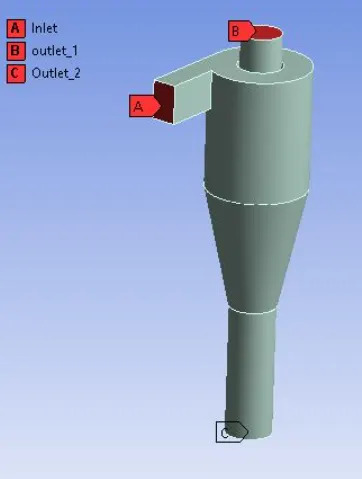
- Gas containing entrained particles enters at high velocity through the tangential inlet at the top of the cyclone. The gas flows into the cyclone body/barrel at a tangent and begins to flow in a circular downward spiral towards the lower reject port; this downward flowing spiral is referred to as a spiral vortex.
- The cone diameter gradually decreases which causes the gas velocity to increase. The outer vortex creates an additional inner vortex closer to the centre of the separator body and this inner vortex flows spirally upwards towards the accept port.
- Particles with more inertia will impact with the side of the cyclone whilst particles with lower inertia will remain within the gas stream. Inertia can be thought of as a particle’s ability to continue travelling in a straight line even when external forces are applied. When an external force is applied -such as by the cyclonic vortex- the particles with low inertia will not continue to travel in a straight line, they will instead travel spirally as they are swept along by the gas stream.
- Particles with greater inertia will be less affected by the vortex and will continue travelling in a straight line. This straight-line trajectory causes the high inertia particles to move out of the gas stream and impact with the cyclone separator body. These particles then fall to the base of the cyclone separator and out of the reject port. In this way, entrained particles of a certain size can be separated from the gas stream
- Particles discharged through the reject port are usually either recycled (off or on site), or, disposed of.
Modelling:
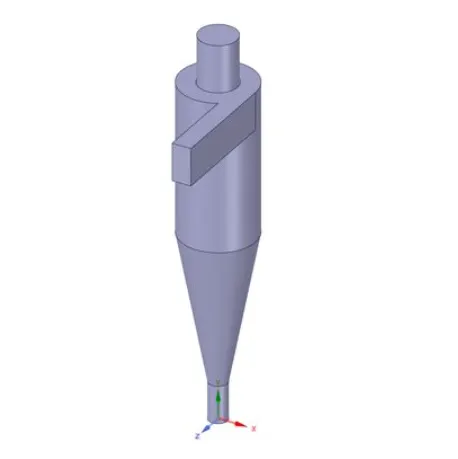
- Step file of cyclone seperator is uploaded into spaceclaim
- The prepare option was choosen and using edge select volume was extracted
- Then its proceded to meshing phase
Meshing:
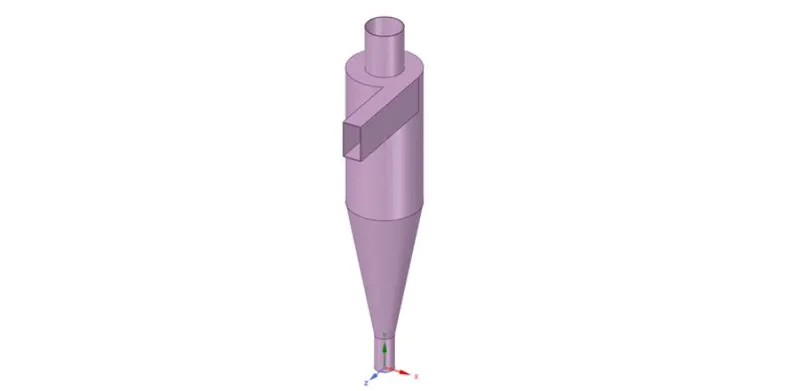
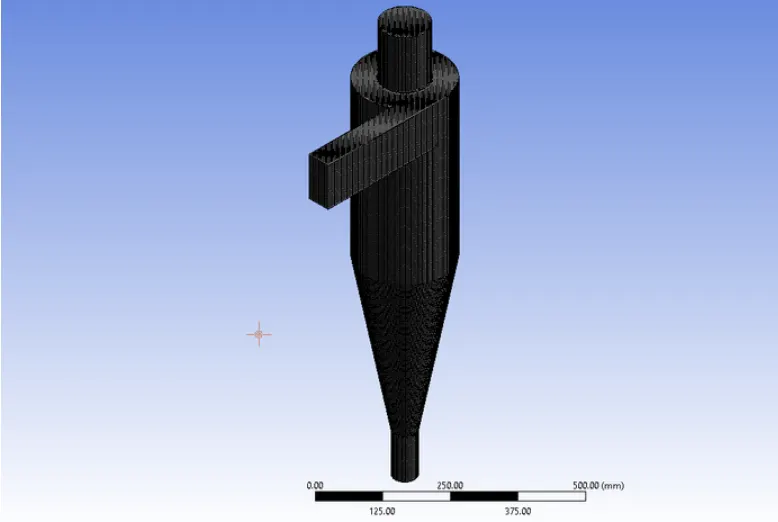
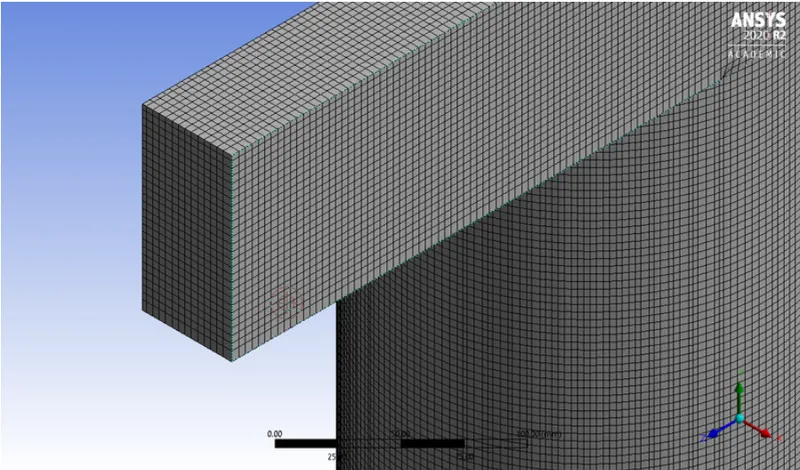
- Since we have to track particle history data and for swirling simulation we need to have equal size mesh elements which results in using cartesian mesh method inorder to get equal volume of mesh elements
- Gobal size = 20 mm cartesian size = 5mm
- Mesh elements came near to 430000 which is suffecient
- The mesh refinment plays a important role in this case
Fluent setup:
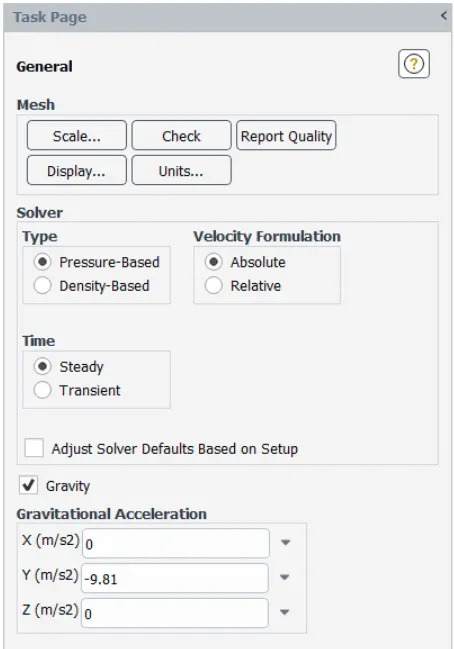
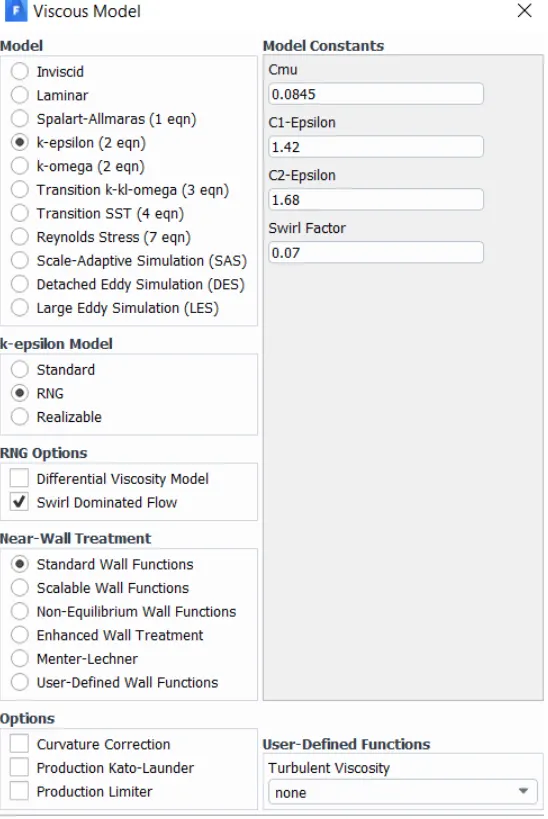
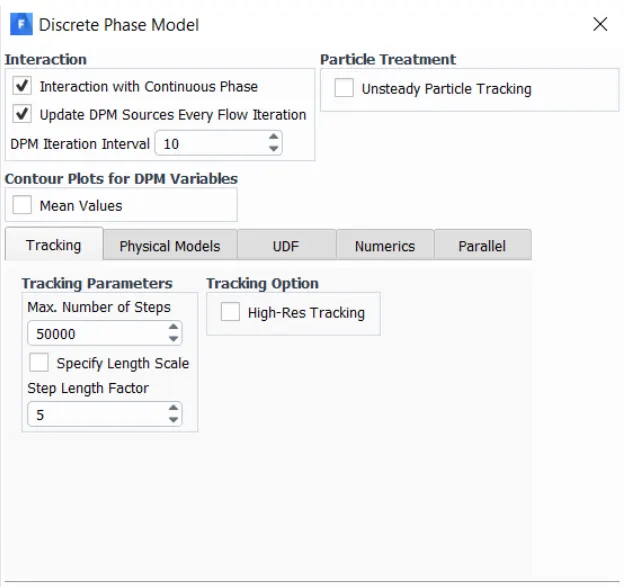
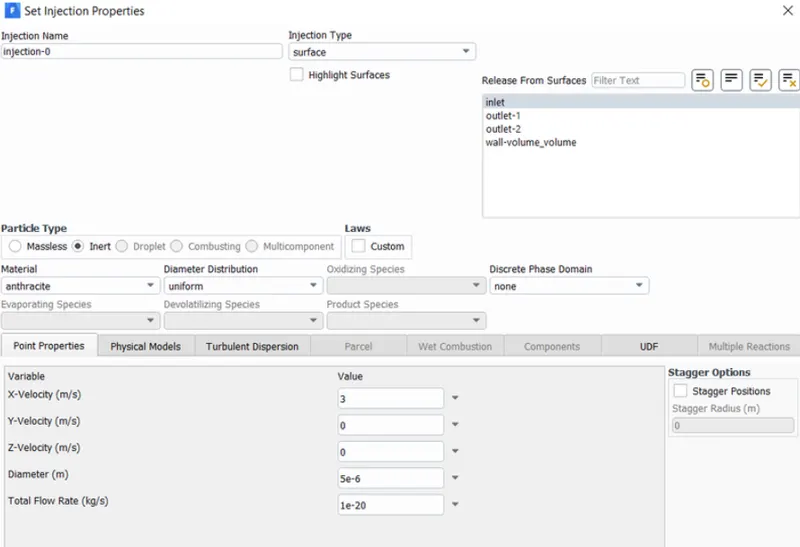
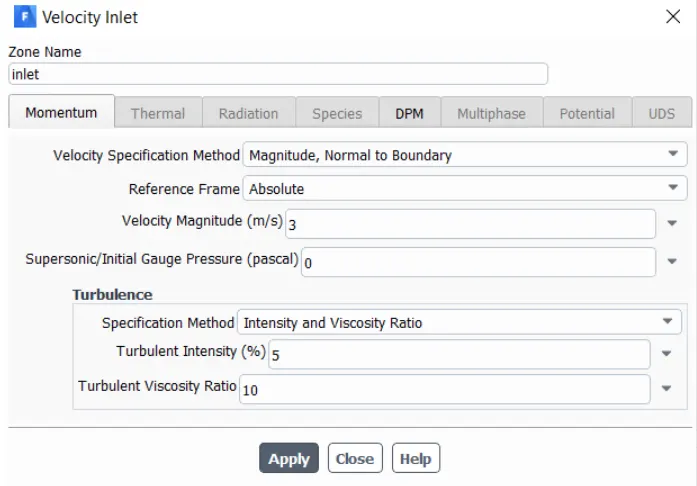
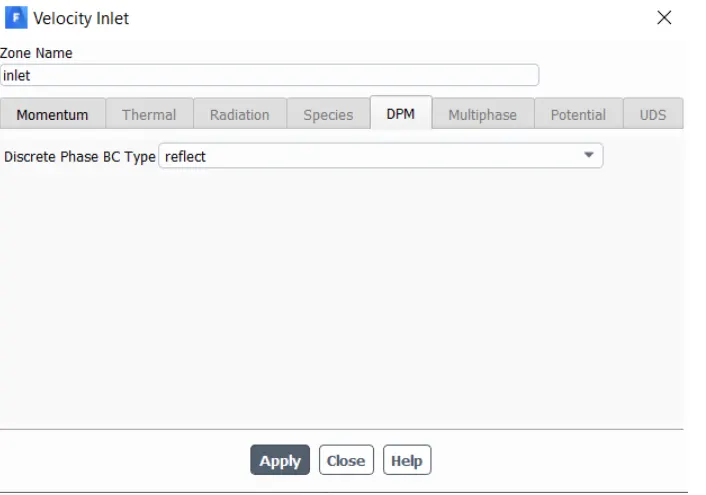
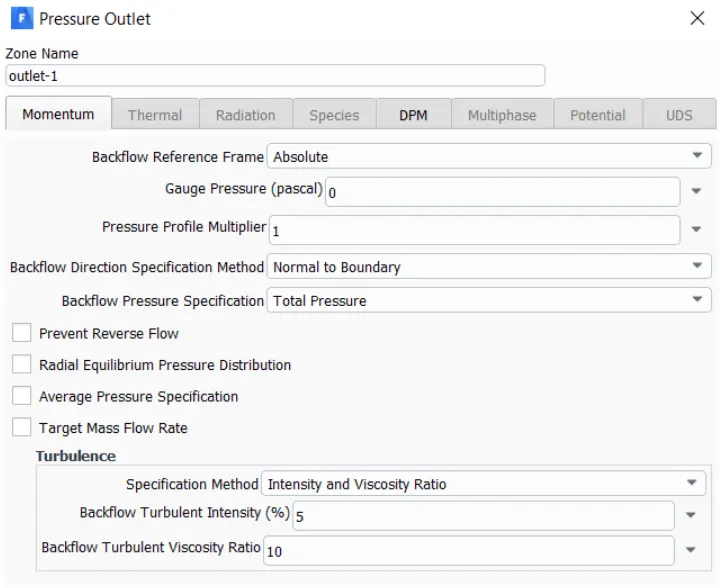
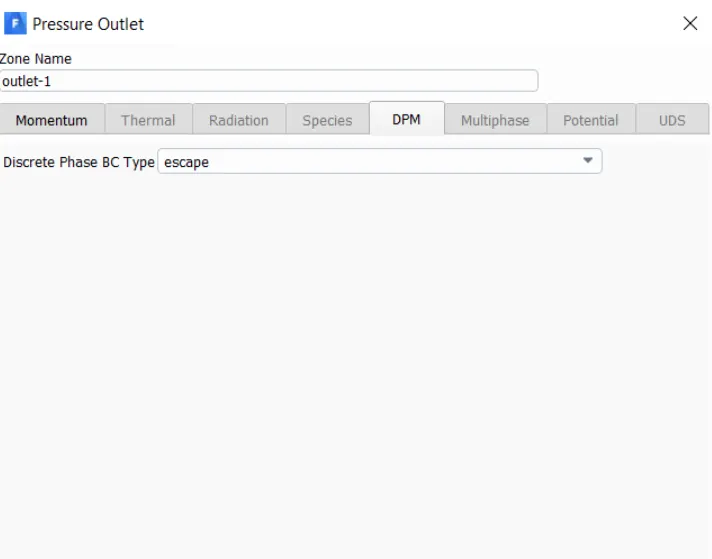
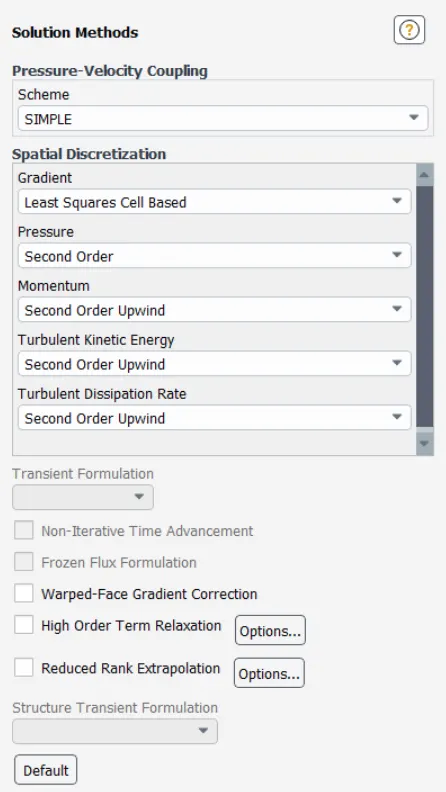
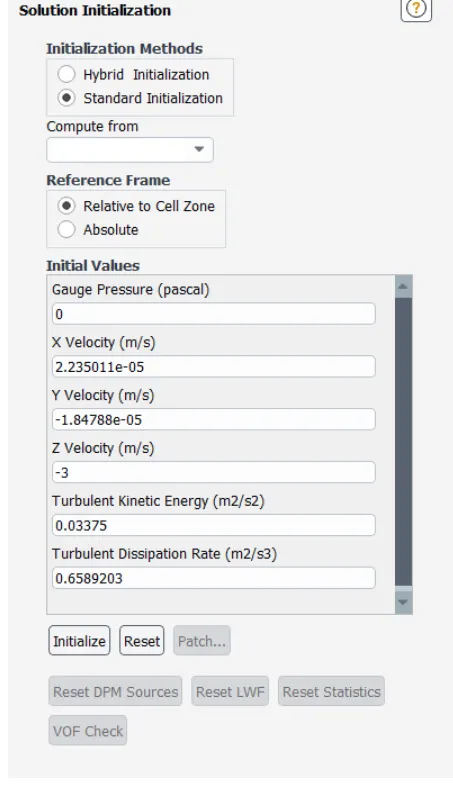
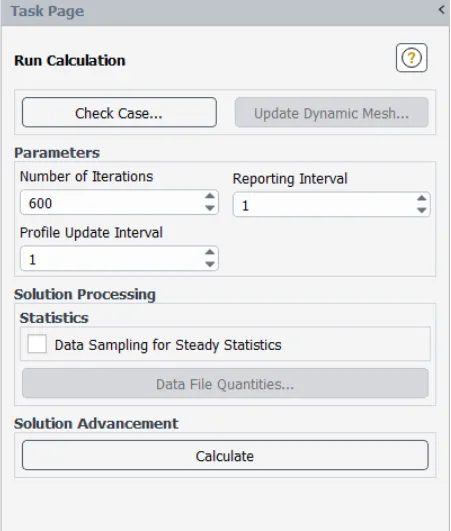
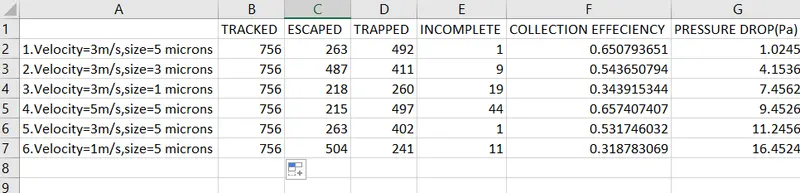
1. V= 3m/s , size = 5 microns
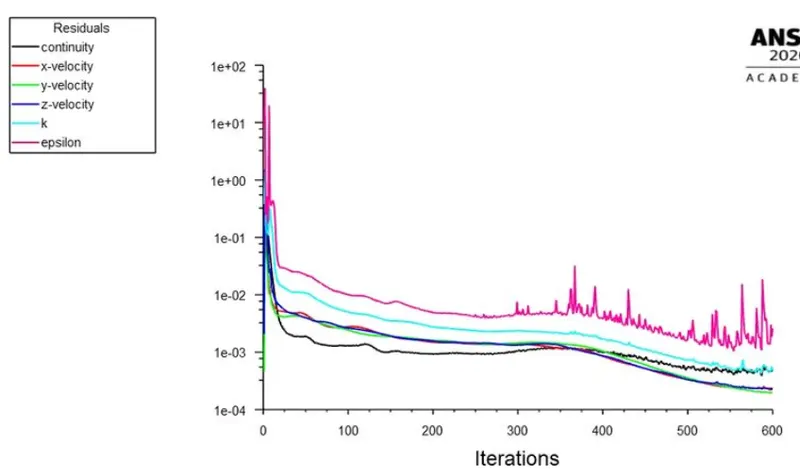

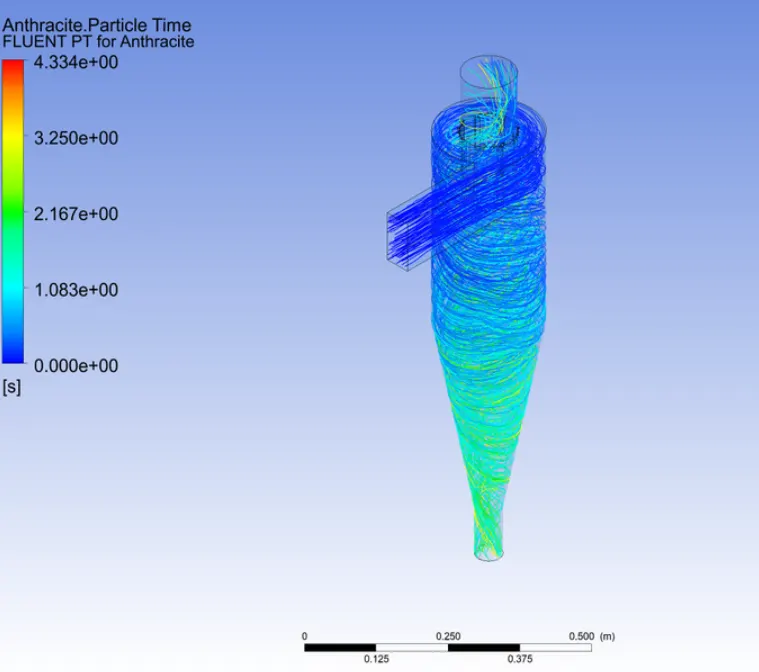
2. V= 3m/s , size = 3 microns
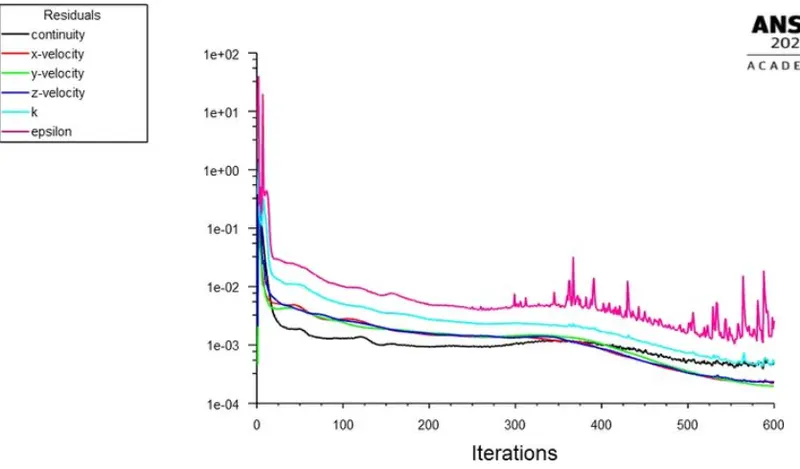

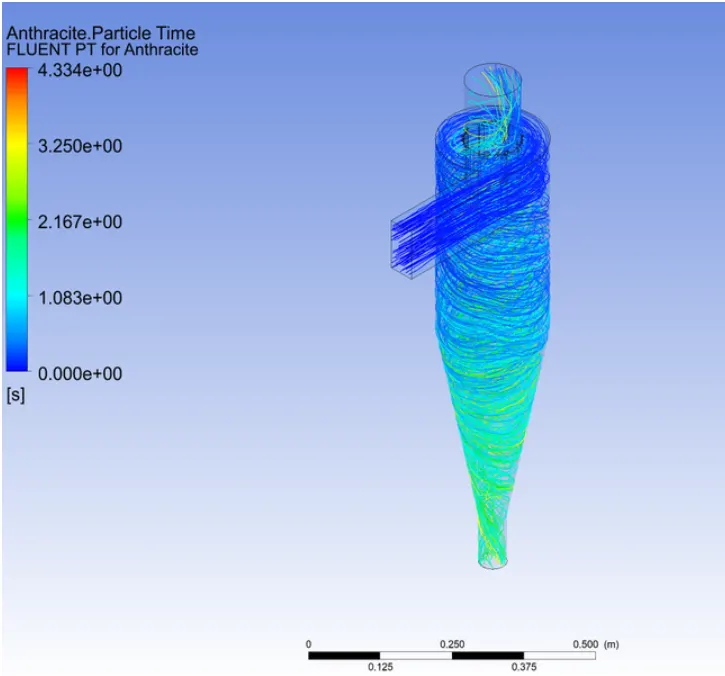
3. V= 3m/s , size = 1 microns
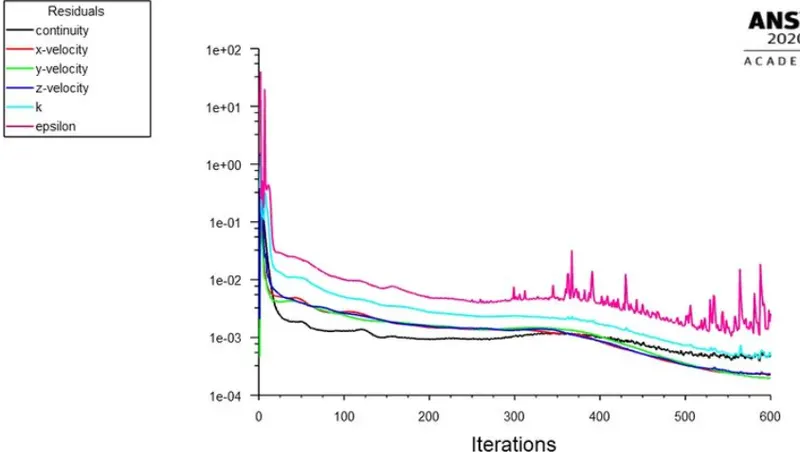

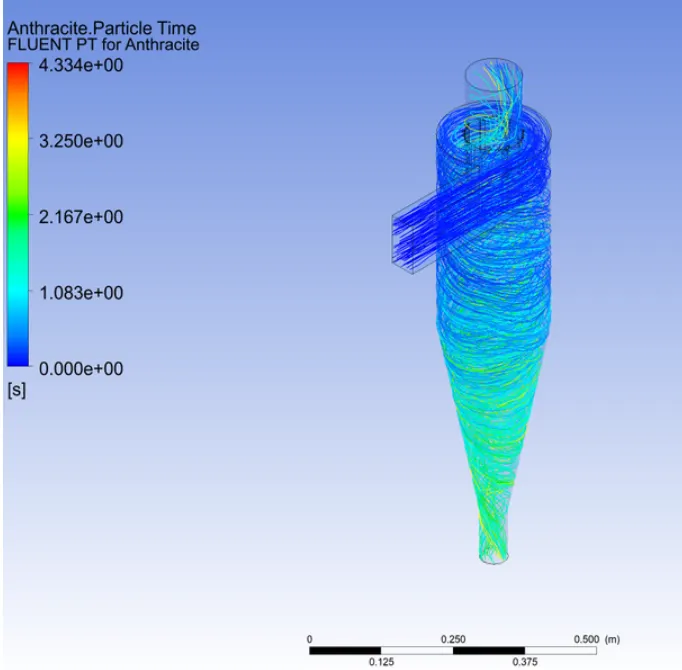
4.V= 5m/s , size = 5 microns
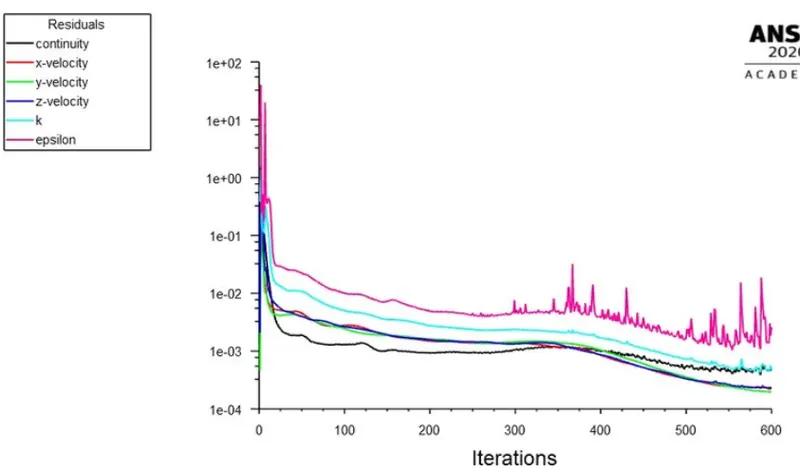

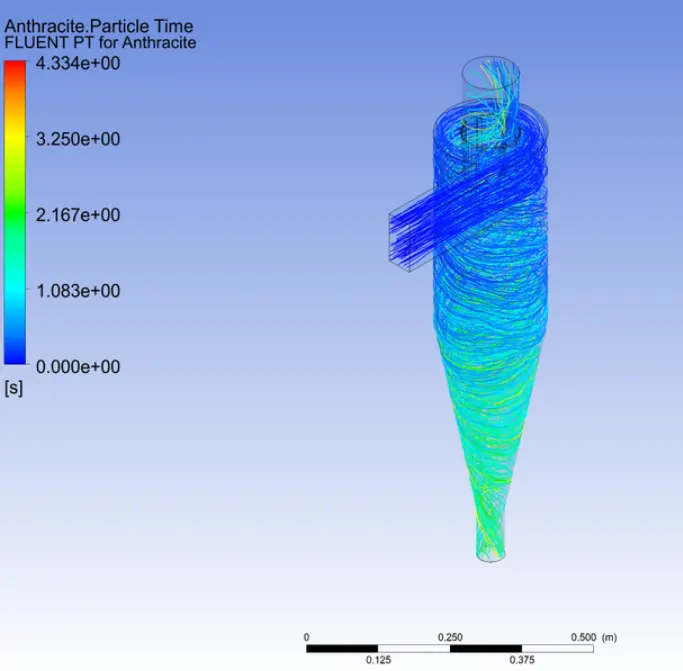
5. V= 3m/s , size = 5 microns
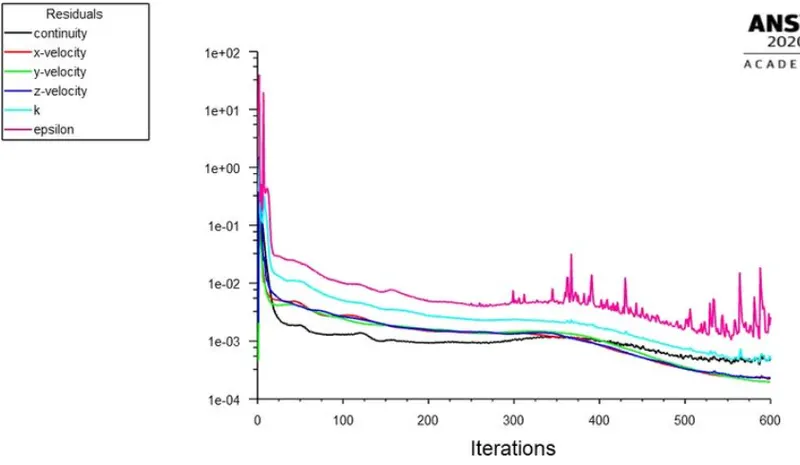

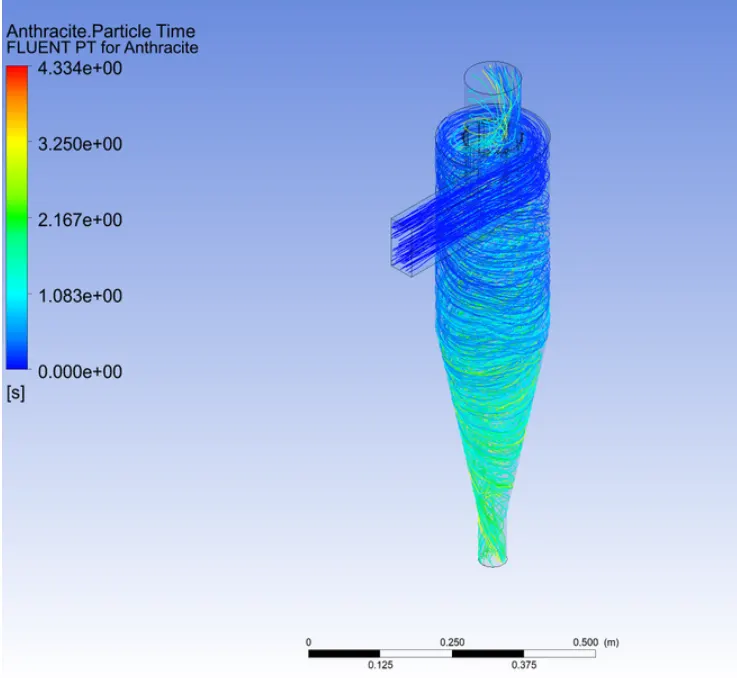
6. V= 1m/s , size = 5 microns
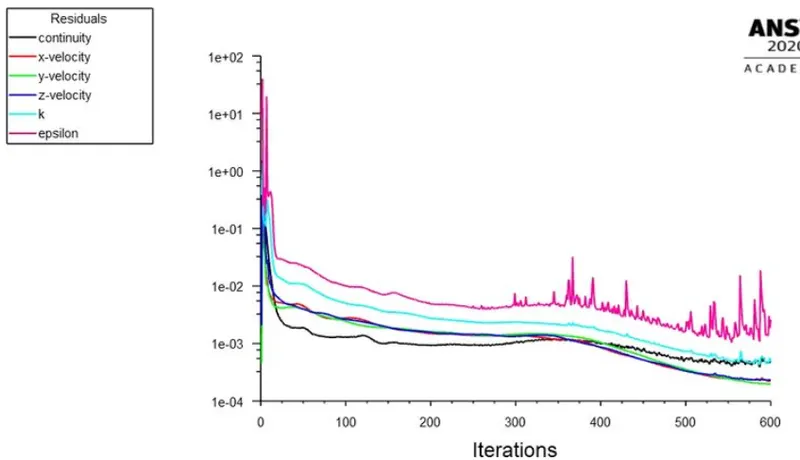

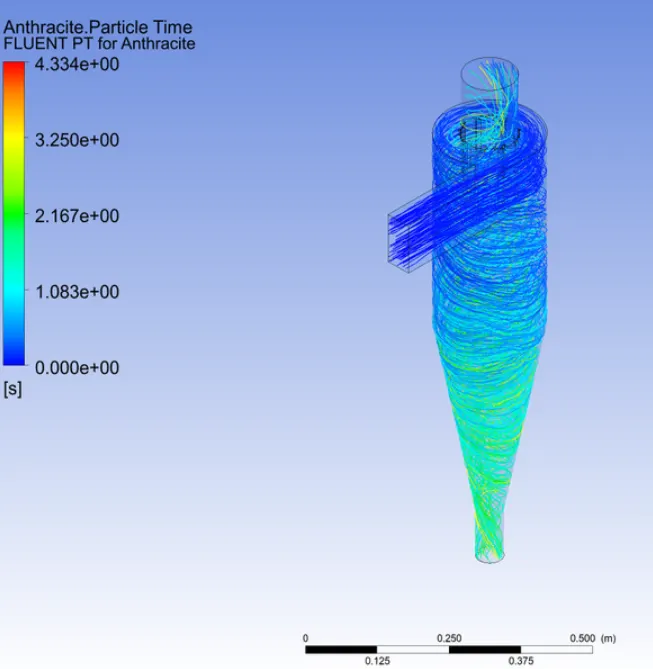
Conclusion :
- With the increase in particle size at constant fluid and velocity,number of incomplete particle decreases
- With the increase in particle size at constant fluid and velocity,collection effeciency increases
- With increase in velocity at a contant particle size ,collection effeciency increases