Week 1- Mixing Tee
Introduction: Mixing tee
Mixing tees—in which two fluid streams with different physical and/or chemical properties mix—are widely used in the petrochemical industry. When there is a large temperature difference between two streams, large metal temperature fluctuations can occur in the region where the two streams meet if proper design steps are not taken. The temperature fluctuations in the metal can lead to thermal fatigue of the pressure boundary piping. If through-wall cracking occurs, the fluid may leak, possibly causing a fire and damage. Therefore, it is imperative to ensure that the piping system can withstand the temperature fluctuations.
Procedures:
- open Ansys ---------> Fluid flow(fluent)
- import the geometry provided and editing in space claim (short & long)
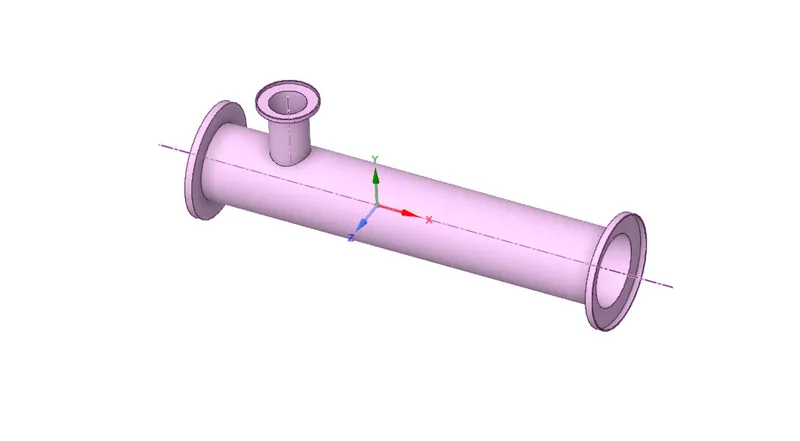
- For analysing the mixing of 2 fluids the geometry is suppressed and for that its required to have extract volume of tee.Prepare menu------> volume extract------->edge selection(3 outside edges)------> exit from space claim
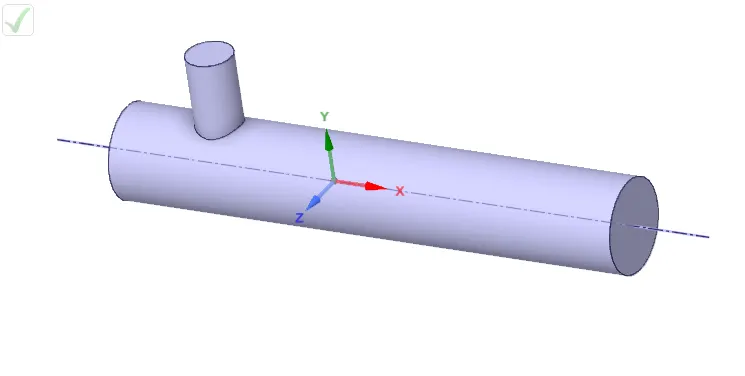
- Open mesh file and name all inlets and outlets as x,y for easy refering , adding values.
- To understan the analysis and mesh in detail the Model can be cut into half with section plane and then exit
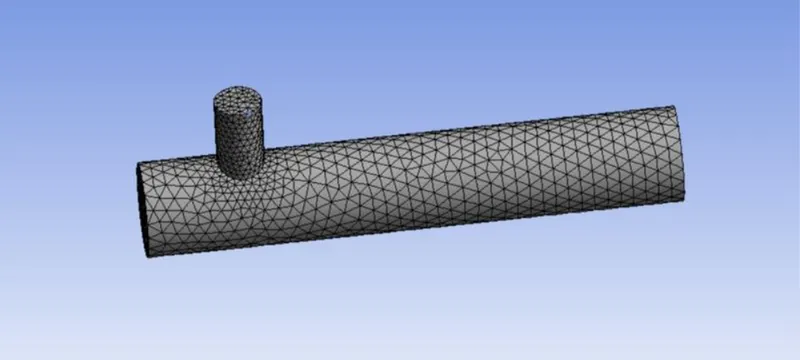
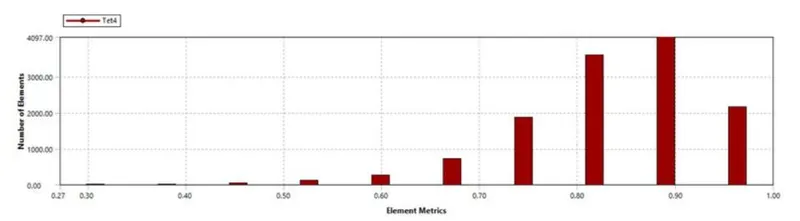
- Open setup to check whether the applied mesh is correct, then only we can move further
- Physics menu -----> viscous model -------> K-epsilon model ------> close
- Click on material and choose air as working fluid
- Now go to boundry option to select the boundry conditions. For example , click on inlet _x ----> edit. where all parameters like thermal,radiation, momemtum can be given. In this case velocity = 3m/s and thermal = 36C
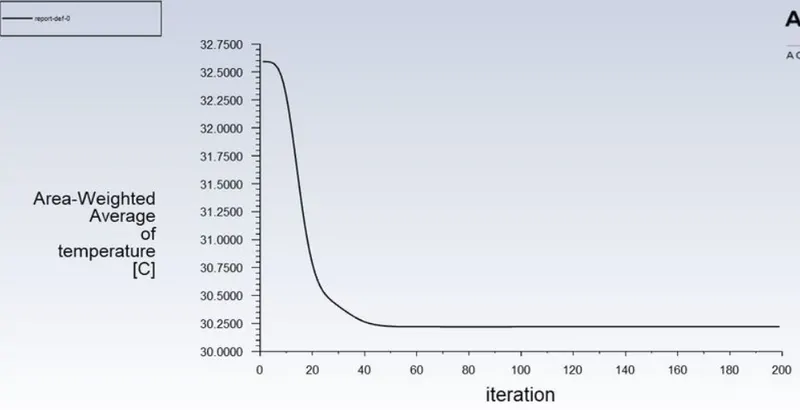
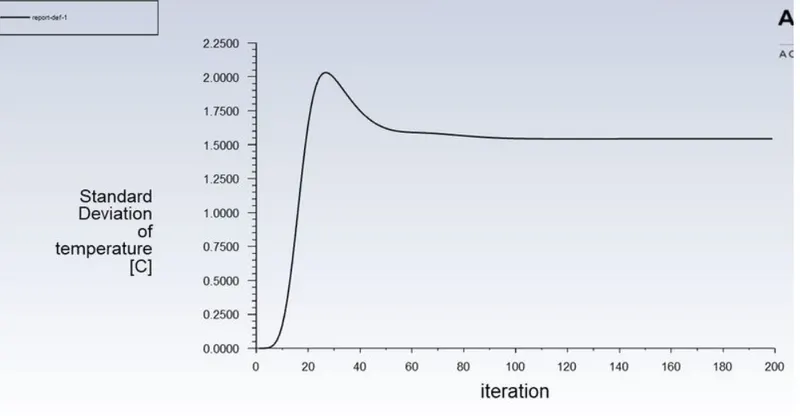
- To generate temperature of outlet report and standard deviation of temperature. Solution ----> area weighted average -----> feild variable ------> temperature.
- Click on intiliazation for calculating approx values of velocity and pressure
Results:
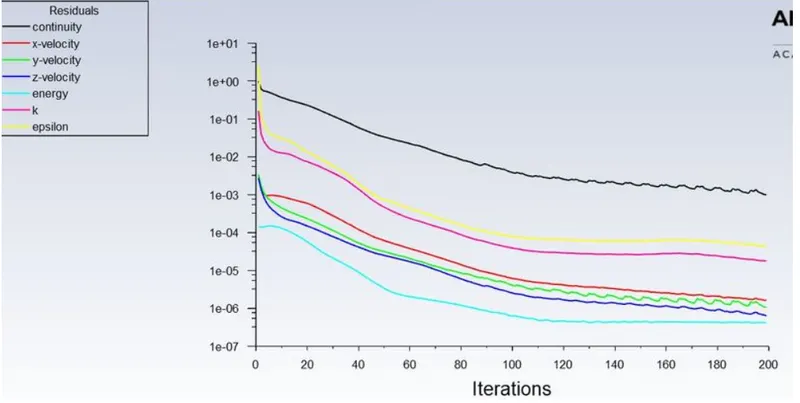
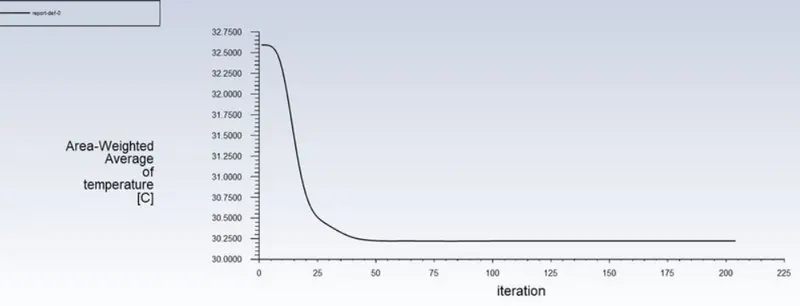
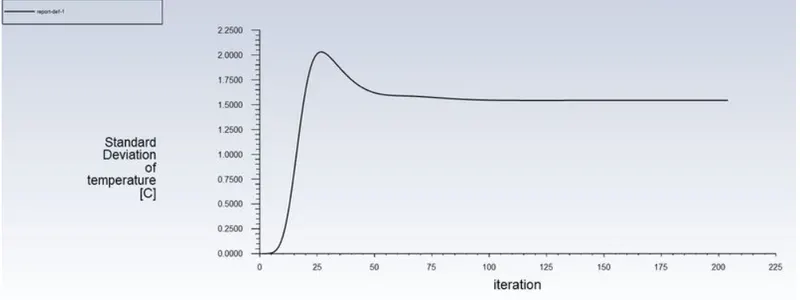
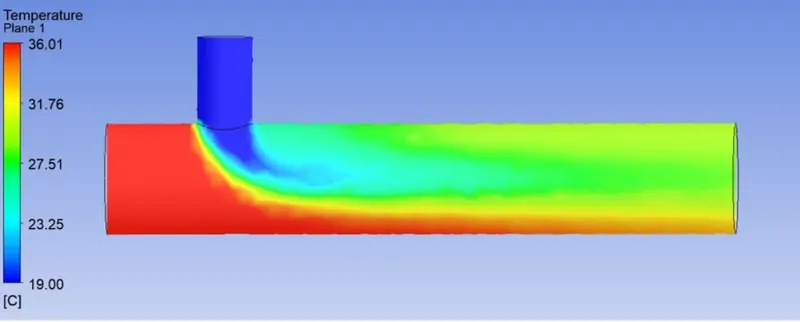
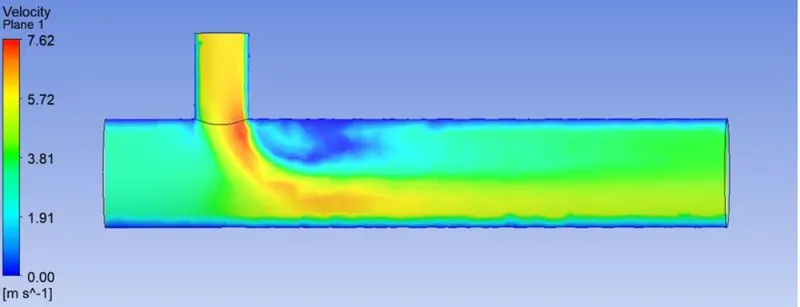
case 1: In this case K-epsilon was better than K-omega because after some iteration solution was converged. So k epsilon is prefered to study liquid far from wall.
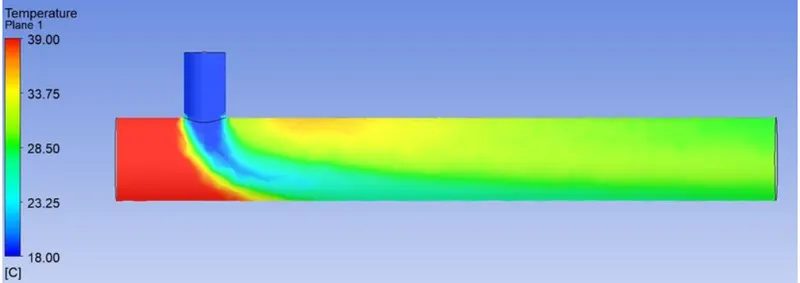
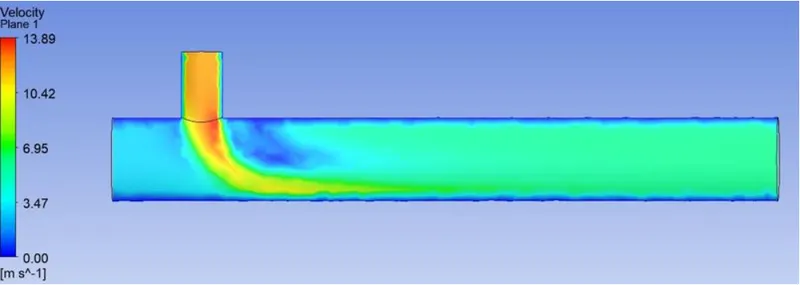
Plots and contours of K -epsilon:
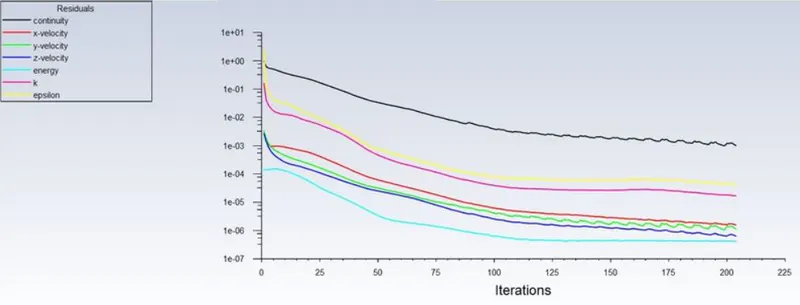
Plots and contours of K-omega model:
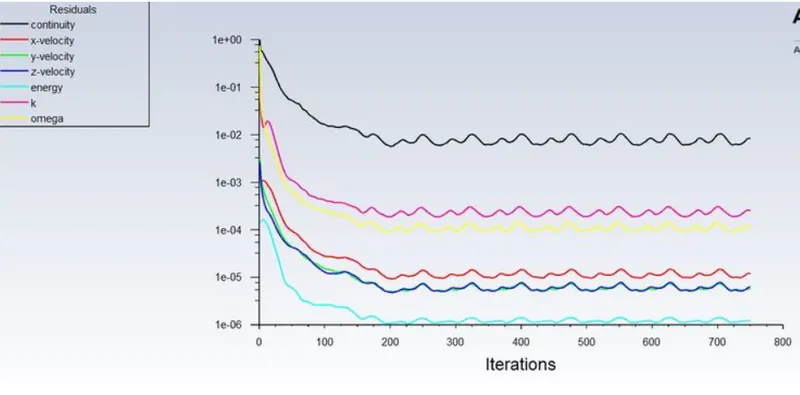
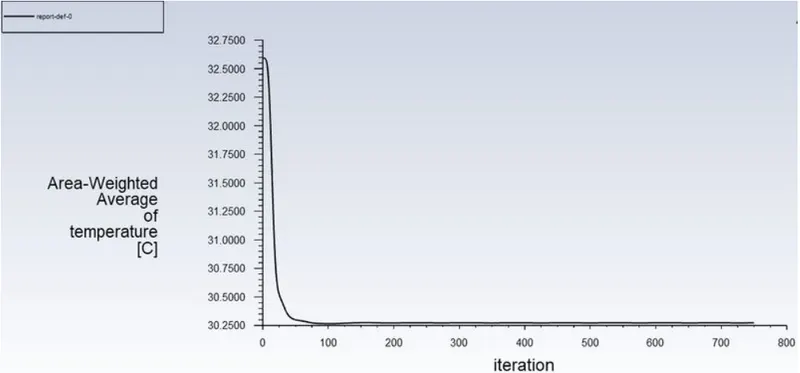
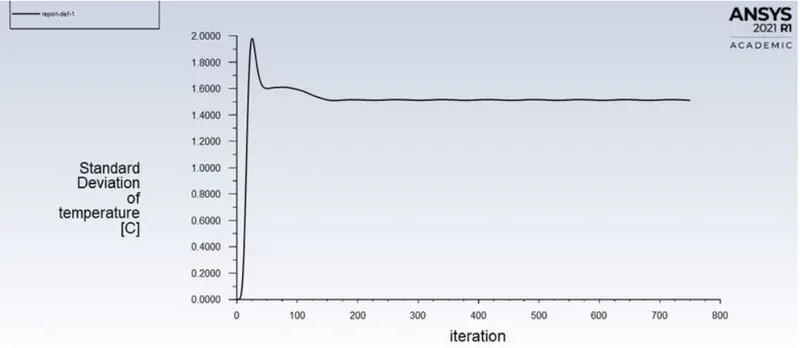
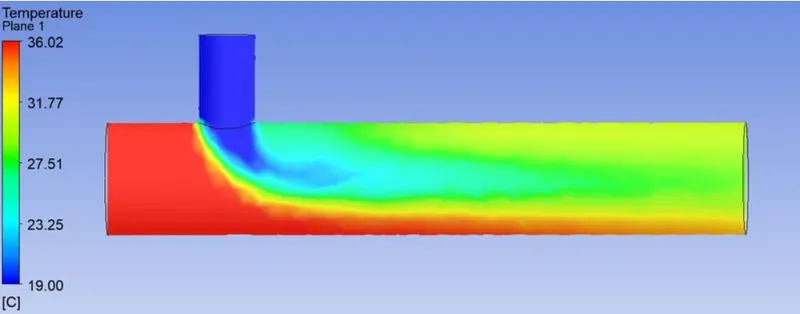
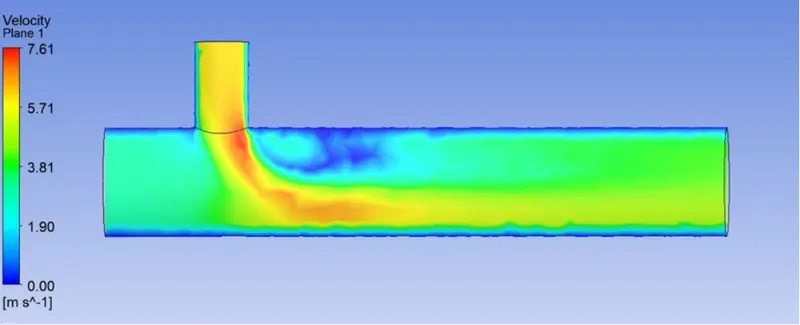
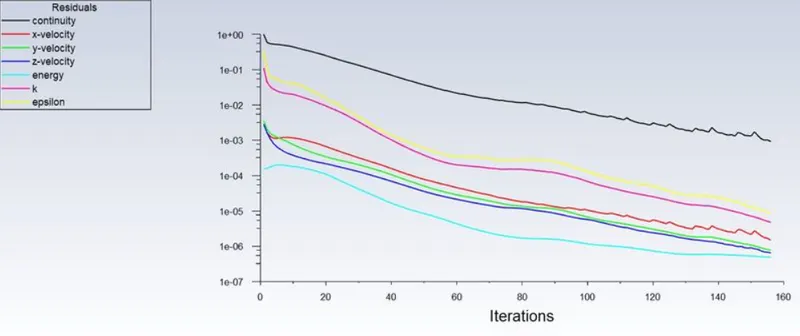
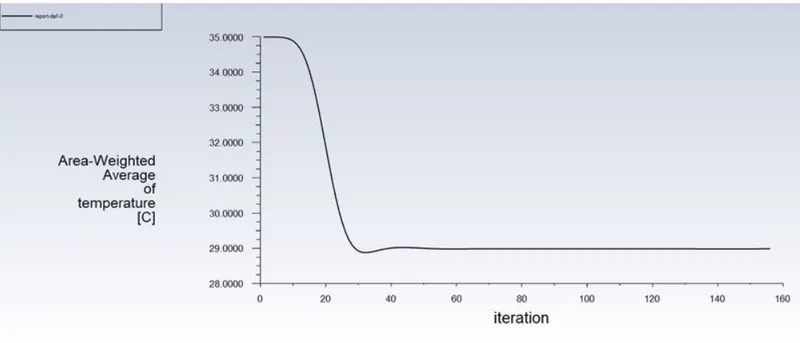
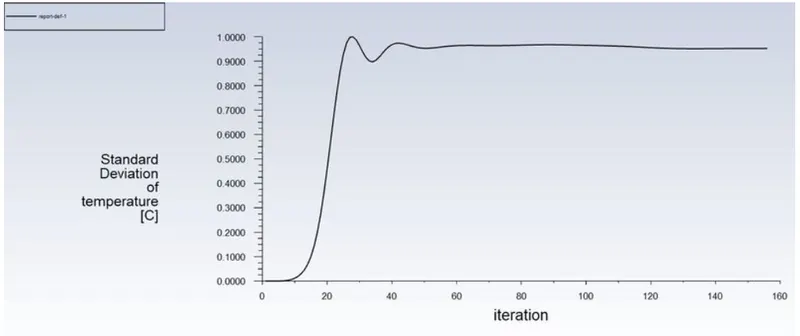
Case 2: In this case long mixing tee was used , with fluid hot velocity of 3m/s and cold velocity of 12 m/s.. We used k-epsilon and solution was converged after 156 iteration.
| Parameter | cell count | Avg. outlet temp | iteration |
| case 1 | 12812 | 30.2 | 199 |
| case 2 | 15588 | 29 | 156 |
Mesh Independent study:
In general, the finer the mesh, the more accurately one can capture the contours of a geometry and there are more “data points” on the geometry to generate an accurate displacement and stress response.A mesh independence (or grid independence) study is something an analyst can perform to determine the dependence of the results on the mesh density.