Week 3 - 2D meshing for sheet metal
Aim:
For the given Hood model, Take the mid surface for all the components after checking the geometrical errors and mesh the mid surface with the given element Quality criteria.
Procedure:
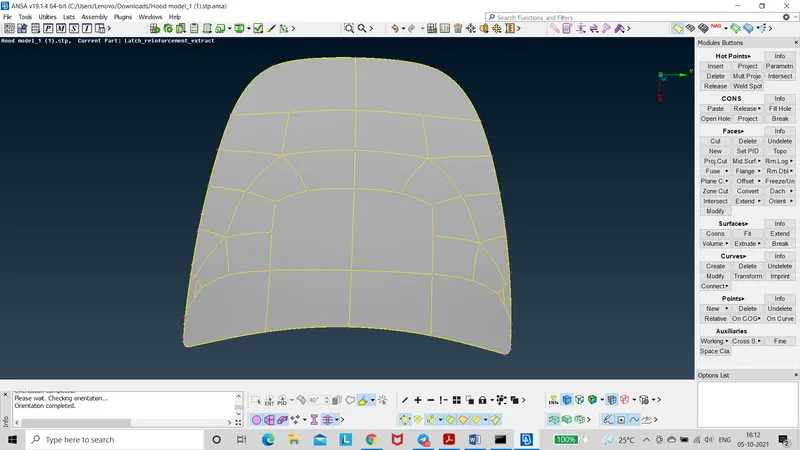
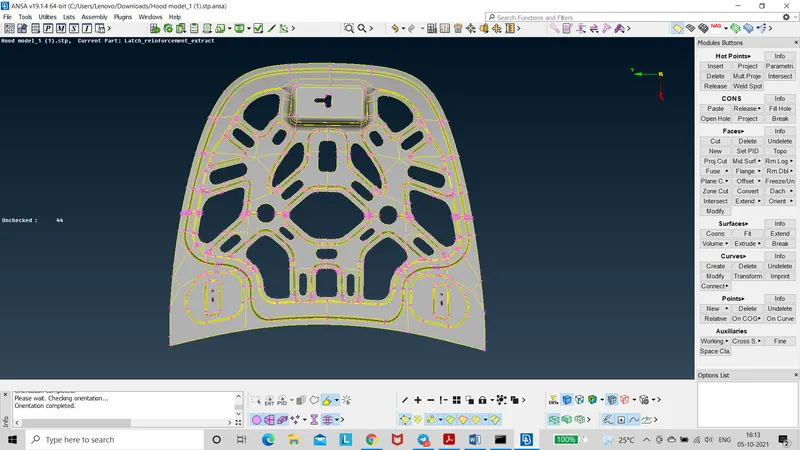
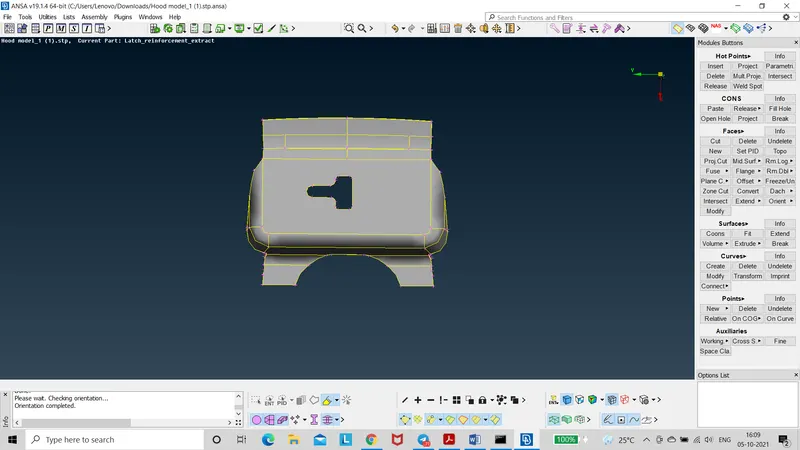
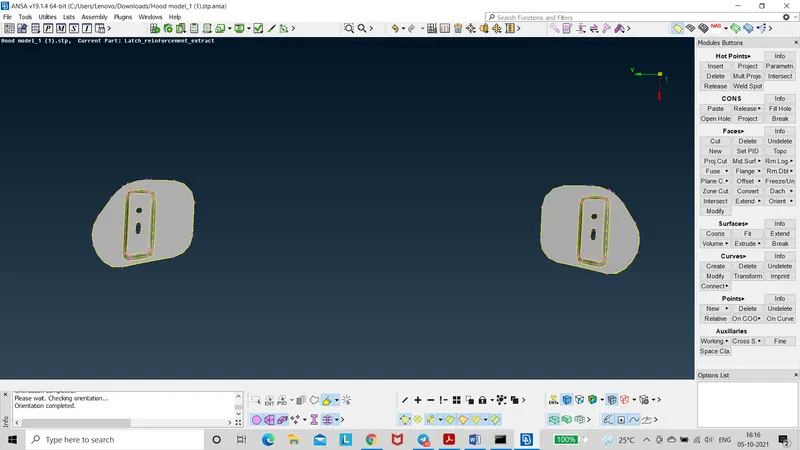
Hood components as follows
- latch (1.2mm thick)
- hinge (1.2mm)
- inner panel (0.75 mm thick)
- outer panel (0.75 mm)
|
S.No |
Quality Criteria |
Value |
|
1 |
Target/Average length |
5 |
|
2 |
Minimum Length |
2 |
|
3 |
Maximum Length |
7 |
|
4 |
Aspect |
3 |
|
5 |
Warpage |
15 |
|
6 |
Skewness |
45 |
|
7 |
Jacobian |
0.7 |
|
8 |
Minimum Quad Angle |
45 |
|
9 |
Maximum Quad Angle |
135 |
|
10 |
Minimum Tria Angle |
30 |
|
11 |
Maximum Tria Angle |
120 |
|
10 |
Tria Percentage |
15 |
Components before Process
1. Outer Hood
2. Inner hood
3. Latch Reinforcement
4. Hinge Reinforcement
Steps involved in this challenge:
- Geometry clean up
- Mid Surface extraction, Shell property, and Quality assigning
- Meshing and assigning thickness to it
1.Geometry clean up:
Before opening the file we have to set the Tolerances and resolution from the settings options, these options ensure that the topology is performed for the specified range during file opening.
There are gaps present between the two cons and unwanted needle faces are present in between two faces. By using Topo module buttons the actions are performed to fix the errors in the geometry.
2. Mid Surface Extraction:
The Mid surface of the inner hood is taken by a manual method using the offset from the face module. For the mid surface extraction, we selected one side of the geometry and given an offset value of half the thickness value of the inner hood which is 0.375. (0.75/2)
Similarly, we can be able to extract the mid surface of the other parts of the hood and with proper thickness to get the mid surface.
Quality criteria :
Before starting with meshing the model, the Mesh Parameters have to be set.
There are two types of two-dimensional cell shapes that are commonly used. These are the triangle(tria) and quadrilateral (quad).
3. Meshing and assigning thickness to it
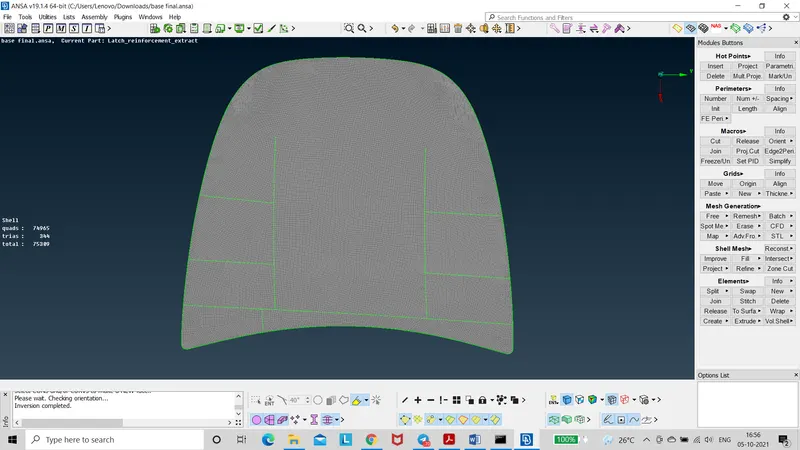
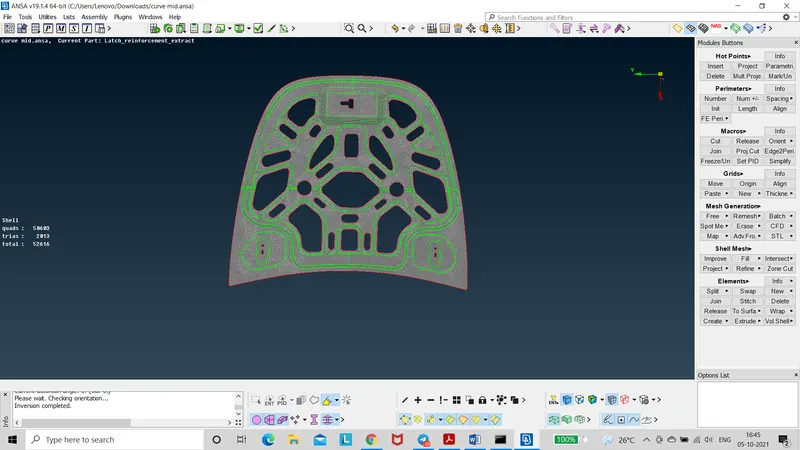
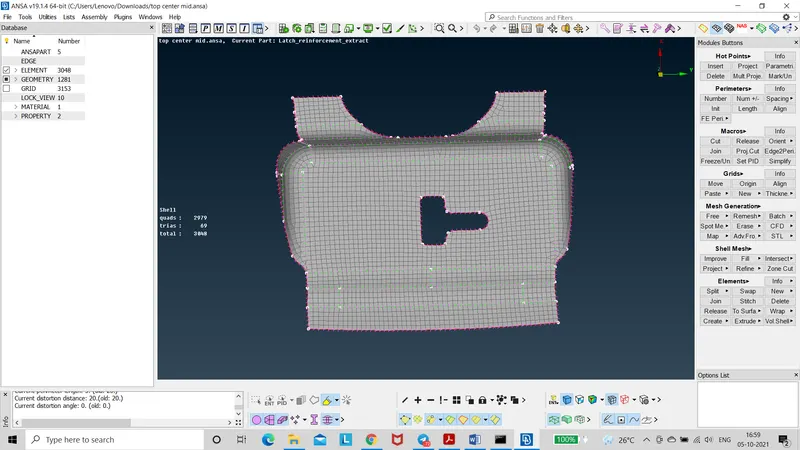
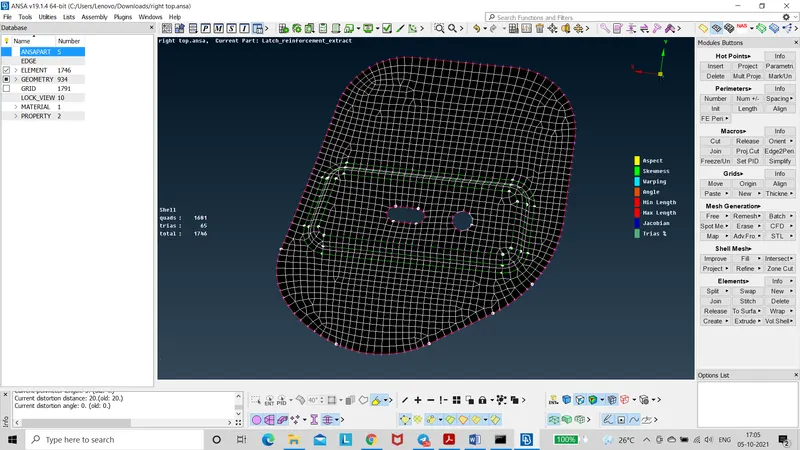
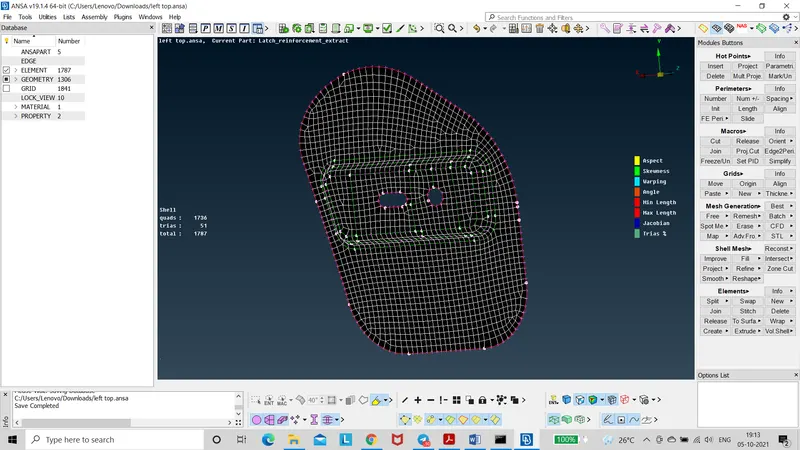
Here the quality condition provided in the challenge is entered into the Quality criteria and it is saved for the checking while meshing. Here the Best meshing algorithm is used and the element type is taken as a mixed type and used the 1st order equation for solving.
Best mesh generation is a well-organized algorithm if the macro area is properly defined say in the rectangular shape, it also reduces the human efforts, features are also most perfectly captured.
Improve and reconstruction option can be used for improving the mesh flow and reduces triangular mesh.
Components after Geometry clean up, Midsurfacing and Meshing
Learning outcomes:
- Fix geometrical errors in Ansa by manually.
- Midsurface extaction accordinng to the thickness.
- Assigning the property and material specification to the component.
- Studied to do meshing according to the quality criteria.
- Improved the mesh according to the requirements.
- use of element Split, face Cut, and many other options.
Conclusion :
The hood component has meshed successfully and the elements are visualized in solid representation using the shell as a solid option in the Quality -Presentation part and covered the Quality criteria using ANSA.
Attachments :
Hood components are processed and attached in the attachments.
Thanks and Regards,
Vishal R