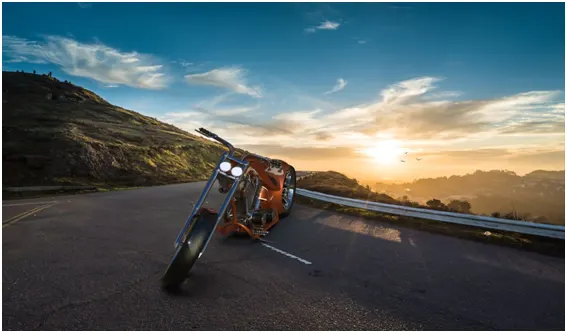
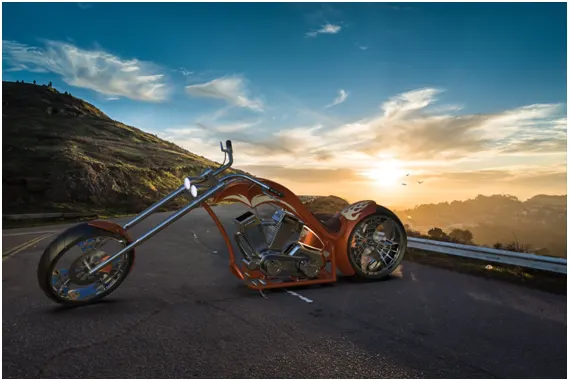
Photo Realistic Rendering
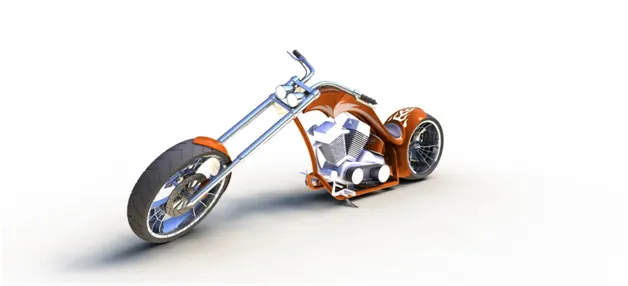
MODELLING OF AMERICAN CHOPPER
OBJECTIVE:
To create a chopper by using different features in Solidworks. Some of the features we are going to use are,
- Extruded Boss/ Base
- Extruded Cut
- Trim
- Lofted Boss/ Base
- Swept Boss/ Base
- Mirror
- Fillet
- Shell
- Creating new reference plane
- Projected curve
- Linear and curved patterns
INTRODUCTION:
Solidworks is a 3D modeling software of Computer Aided Design and Engineering (CAD and CAE). It is used for 3D modeling, Assembling, Drafting, 3D rendering. Some additional packs like Solidworks Visualize, Solidworks electrical, Solidworks composer and more.
In Solidworks, there are many command sections available individually for featuring, sketching, evaluating, rendering, visualizing. We can also apply decals, appearance and lights. The commands used are shown in a separate column called feature tree.
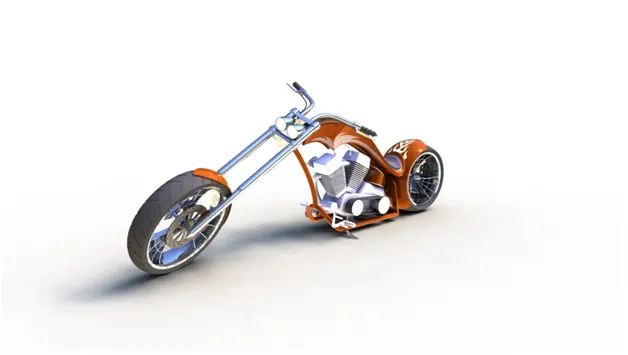
Chopper is a type of customized heavy motorcycle with powerful engine and having long handle bar in order to reduce the rider fatigue on a long journey.
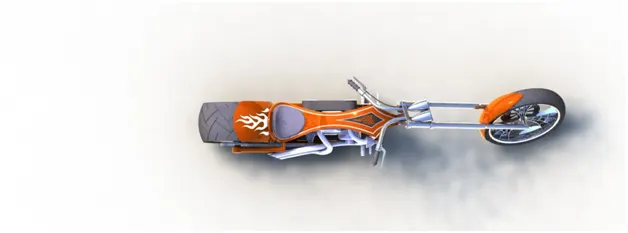
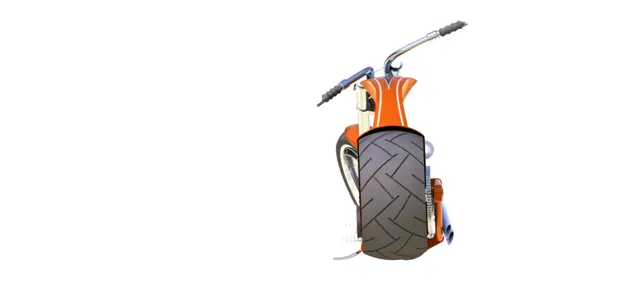
In this project we have made the modeling and rendering of American chopper.
PROCEDURE:
Here, we used a blueprint of Chopper to get a visualization idea for the modeling. The blueprint is placed on the background plane to get proper ideation of chopper design. After completion of each part we assembled the whole chopper with the reference of that blueprint. After the final assembling of chopper rendering is done. The Parts and their way of modeling of this project are listed below.
TRANSMISSION BELT:
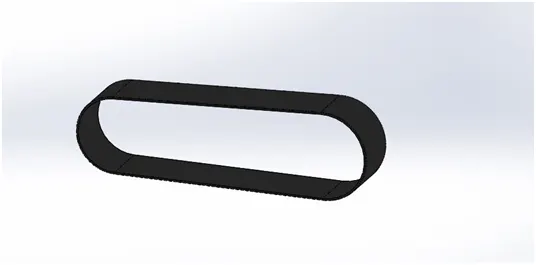
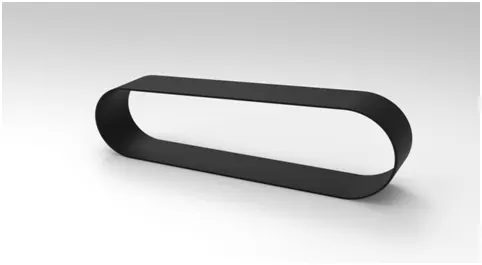
Transmission belt is used to transmit the power from one shaft pulley to another. In this model we sketched in one plane and gave some dimensions to constrain the sketch. After that the sketch is extruded to the required width. And the material is applied.
The features used here are,
- Extruded Boss/Base.
- Fillet
KICKSTAND:
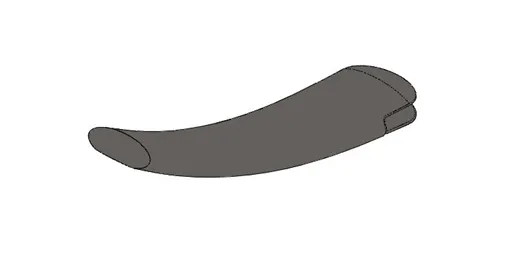
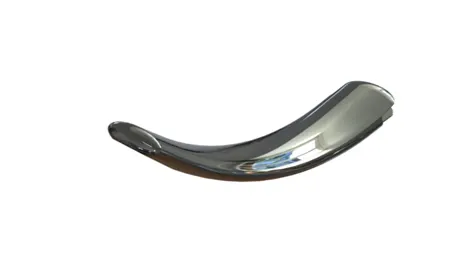
Kickstand is common available part in all motorcycles to rest the vehicle on the floor. This should have enough strength to carry the whole vehicle load.The features used for this part are,
- Lofted Boss/Base
- Dome
- Extruded cut
- Split body
- Fillet
FRONT FENDER:
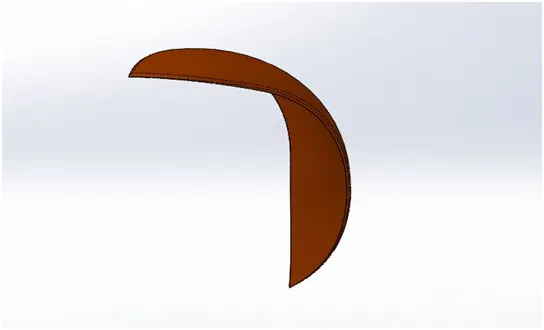
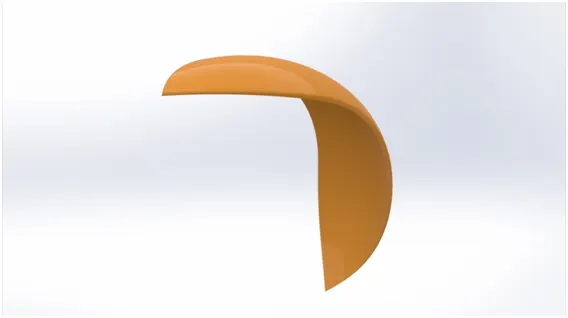
Front fender is seen above the front wheel to prevent or block the unstable particles falling over the rider like mud, stone, water from causing damage to the interior part of chopper. The features used here are,
- Revolved Boss/Bas
- Split body
- Fillet
REAR FENDER:
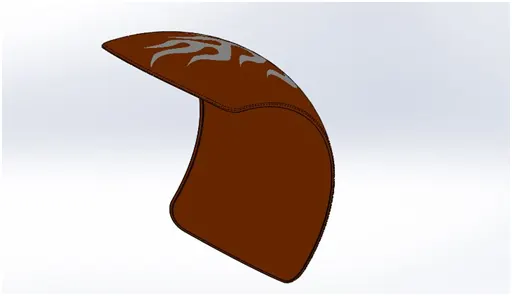
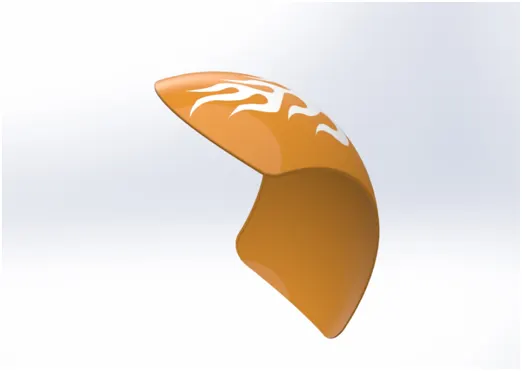
Rear fender is placed above the rear wheel to prevent the splash of water or mud on pillion rider. The features used for this part are,
- Revolved boss/Base
- Split body
OIL TANK:
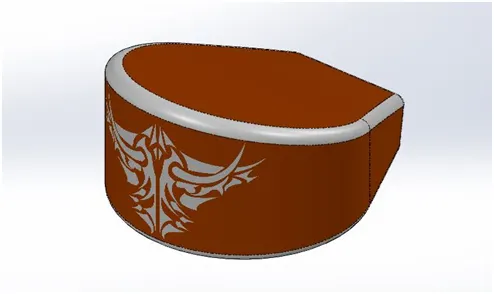
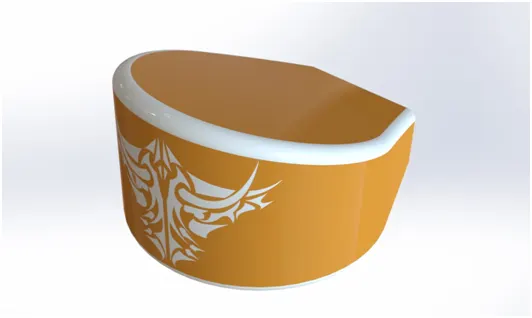
Oil tank is used to store the lubricants, oils that help in cooling, lubricating and to collect carbon particles inside the engine. The features used for this part are,
- Extrude Boss/Base
- Combine
- Shell
- Fillet
CHAIN:
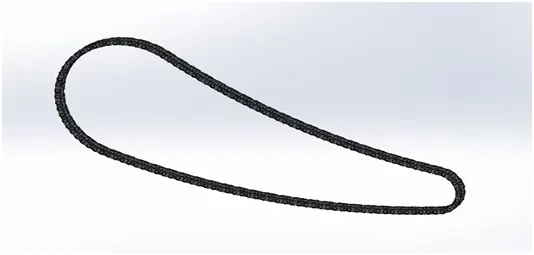
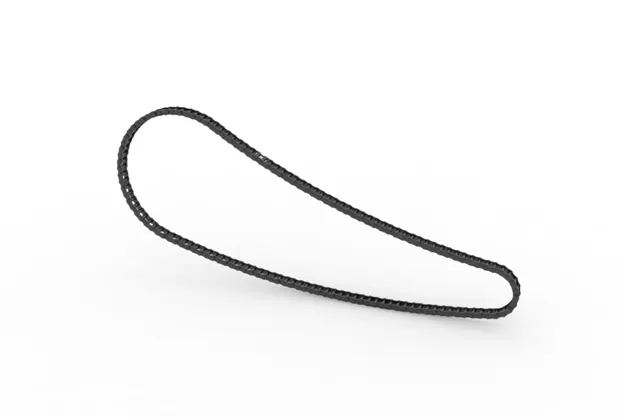
Chain is a part that transmits power form engine to the rear wheel. Almost two wheeler vehicles have this type of power transmission. The features used for this part are,
- Extrude Boss/Base
- Fillet
- Curve driven pattern
- Delete Body
PEDAL:
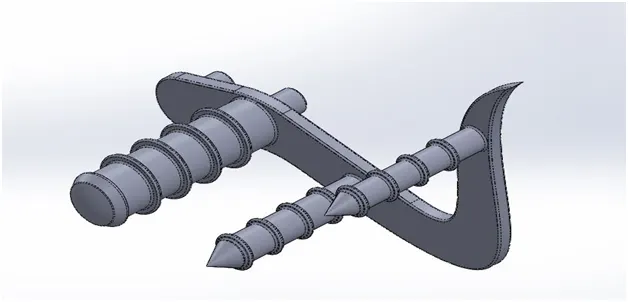
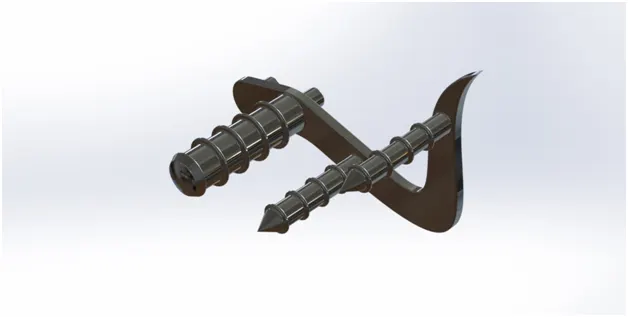
Pedal is the name of the part that is operated by the rider’s feet. The pedal used for apply brake and also for shift the gears. The features used for this part are,
- Extrude Boss/Base
- Fillet
- Revolve Boss/Base
- Dome
- Linear pattern
FRONT WHEEL:
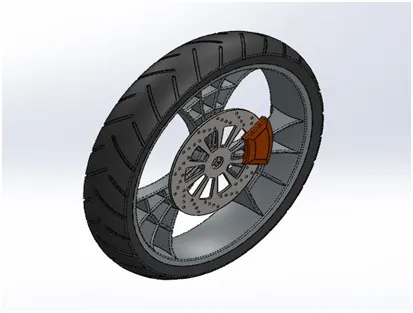
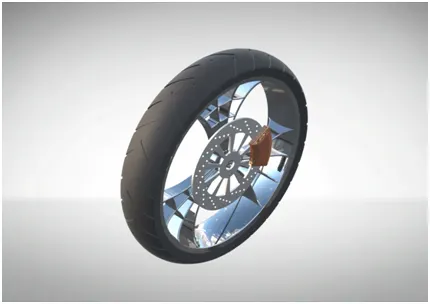
Front wheel is used to carry the front load and to give direction for the vehicle. But front wheel is driven by the engine power. It consists of four sub parts. They are Tyre, Rim, Rotor and Caliper. The features used for this part are,
- Extrude Boss/Base
- Fillet
- Revolve Boss/Base
- Extrude cut
- Circular driven part
- Chamfer
REAR WHEEL:
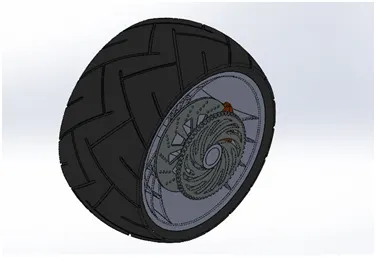
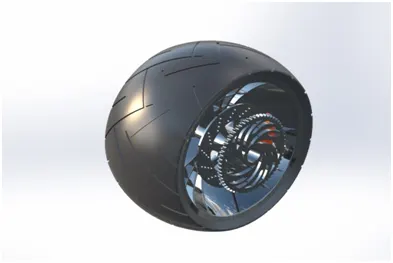
Rear wheel is used to carry rear load of the vehicle. Compared to front wheel rear wheel is little broader than front and it is driven by engine power. The features used for this part are,
- Extrude Boss/Base
- Fillet
- Revolve Boss/Base
- Extrude cut
- Combine
- Circular driven pattern
- Chamfer
FRONT FORK:
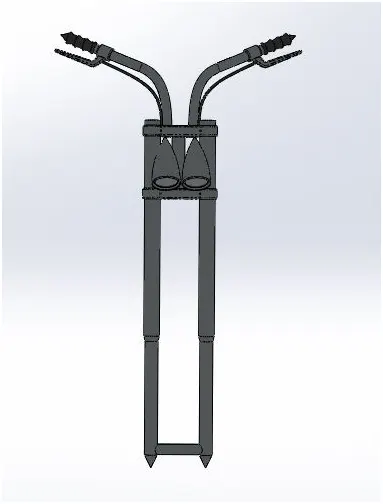
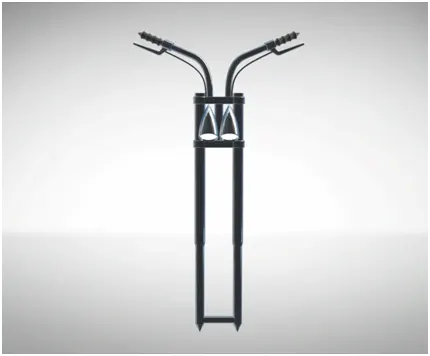
Front fork is used to absorb the road shocks in front portion of the vehicle and helps rider to control the vehicle. It consists of all the controls including switches, clutch lever, front brake lever, accelerator and headlights. The features used for this part are,
- Extrude Boss/Base
- Fillet
- Revolve Boss/Base
- Dome
- Sweep Boss/Base
- Combine
CHASSIS:
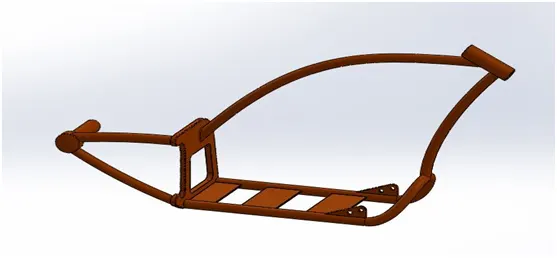
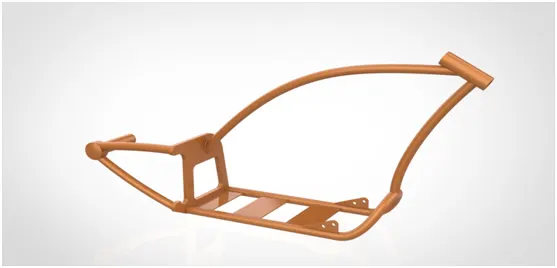
Chassis is the structural part that holds all the parts and gives a completely defined shape to the motorcycle. The features used for this part are,
- Projected curve
- Sweep Boss/Base
- Extrude Boss/Base
- Extrude cut
- Chamfer
- Fillet
- Dome
- Split
- Combine
ENGINE:
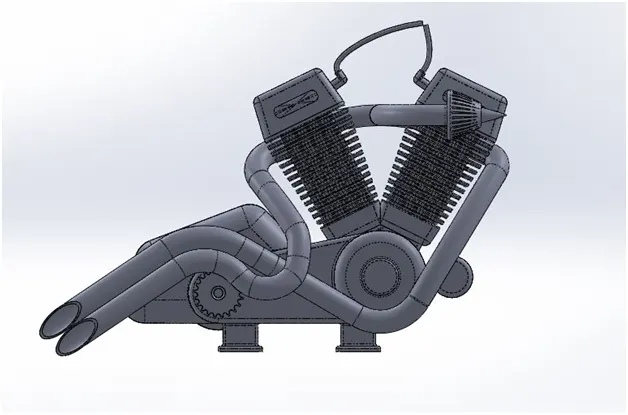
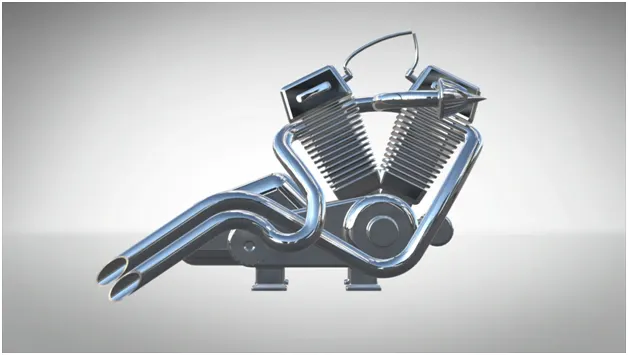
Engine is also called as heart of the vehicle because it produces the power to propel. It converts Chemical energy into heat energy and that heat energy is converted to mechanical movement. The features used for this part are,
- Projected curve
- Sweep Boss/Base
- Extrude Boss/Base
- Extrude cut
- Chamfer
- Fillet
- Revolved Boss/Base
- Split
GAS TANK:
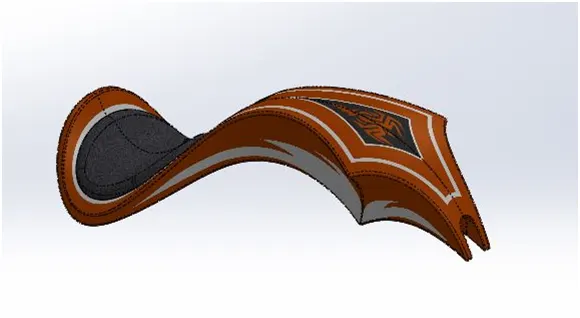
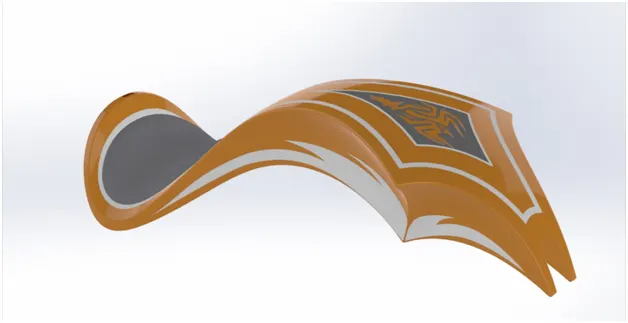
Gas tank is used to store the fuel. Also give good look for the chopper. A rubber seat is also placed at the end of the tank. The features used for this part are,
- Surface sweep
- Surface trim
- Projected curve
- Boundary surface
- Mirror
- Surface knit
- Split line
- Fillet
- Surface loft
- Cut sweep
FINAL ASSEMBLY:
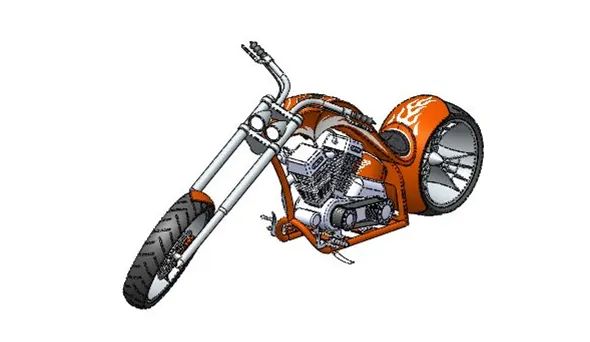
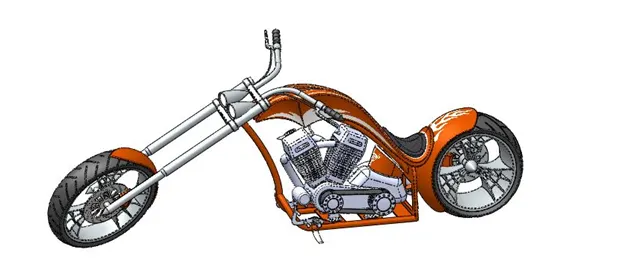
Final assembly is done by applying some mates and relations between the parts and planes. We kept Chassis as reference for the assembly. After the chassis all the parts are assembled accordingly. Rendering quality is kept according to the performance and speed of the PC. Here we successfully modeled a chopper and rendered it.
CONCLUSION:
In this project we have learnt how to use the design tools, design procedure from ideation sketch to the final render. Each part is made by using diffrent tools to get desired output model.
RENDERED IMAGES:
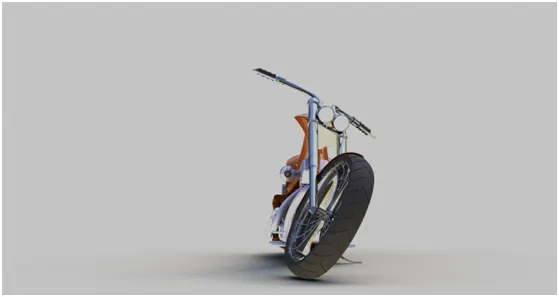
RENDERED IMAGES WITH BACKGROUND: