Automotive Hood design
Objective: To design and assemble the parts of the car Hood in Siemens NX.
About hood:
A car bonnet is the metal part that covers the engine of an automobile. The term car bonnet is a British term, used primarily in England, Ireland, Scotland, Wales, India, New Zealand, Australia, etc. Bonnet comes from the Old French word bonet, which means cloth used as a headdress.
A car hood is a hinged cover that rests over the engine of a front-engine vehicle. Hoods can open to allow access to the engine compartment for maintenance and repair.
Hood is made aerodynamic in shape to reduce air effect and used to decorate the front portion of the car and to add a good looking to the car.
Components:
Hood assembly
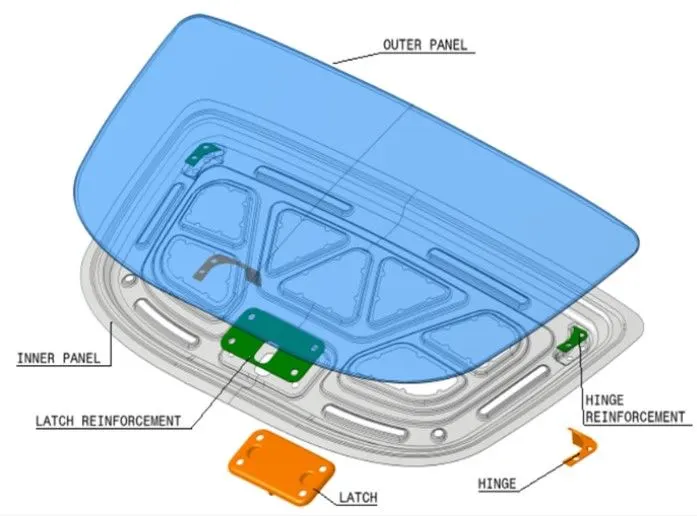
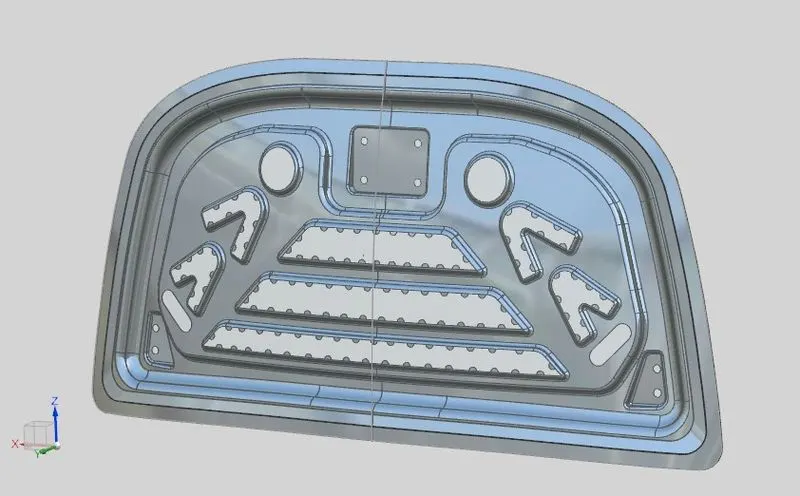
- Inner panel:
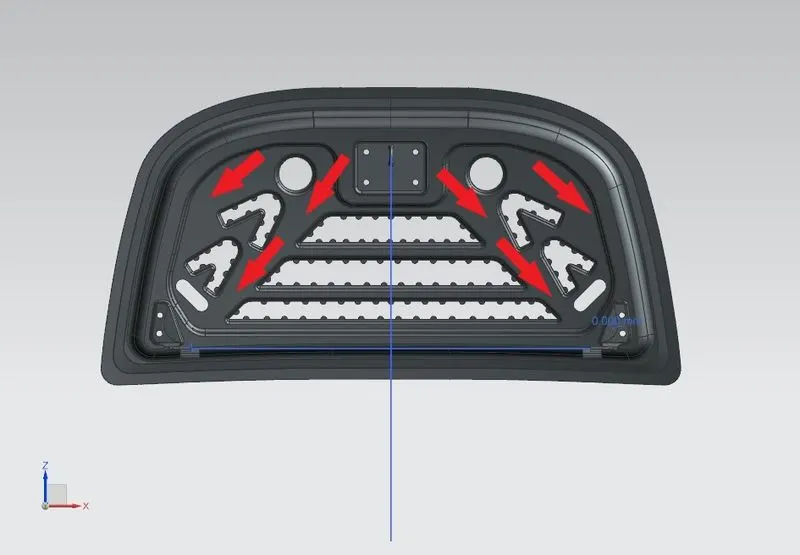
It the main part of the hood which gives support to the outer panel of the car and with its embossing shapes dissipates the force in different directions when the vehicle takes crashes to not to injure the men in the car.
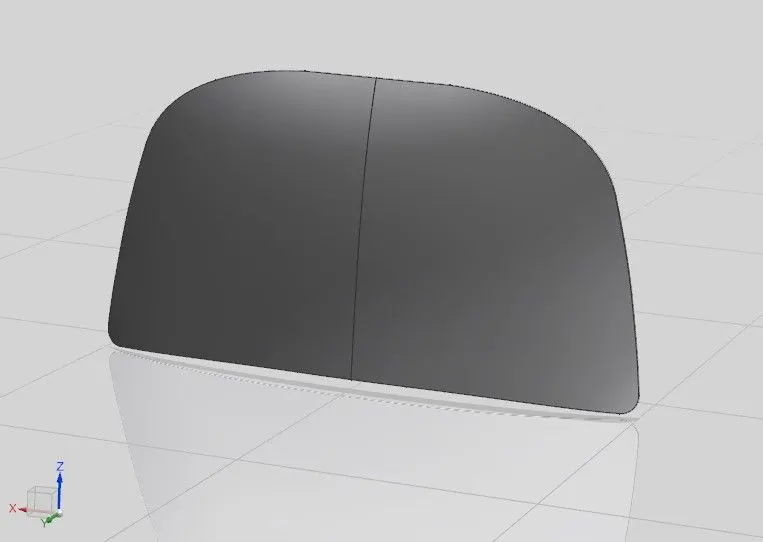
- Outer panel:
The outer panel is actually called the skin of the vehicle which is designed by the styling team to get a good look for a vehicle by covering the inner panel and engine parts of the car. This part is should not be welded to the inner panel but using the sealant and mastic point makes a contact between the inner and outer panel which acts as a bond between both and makes the hood stiff.
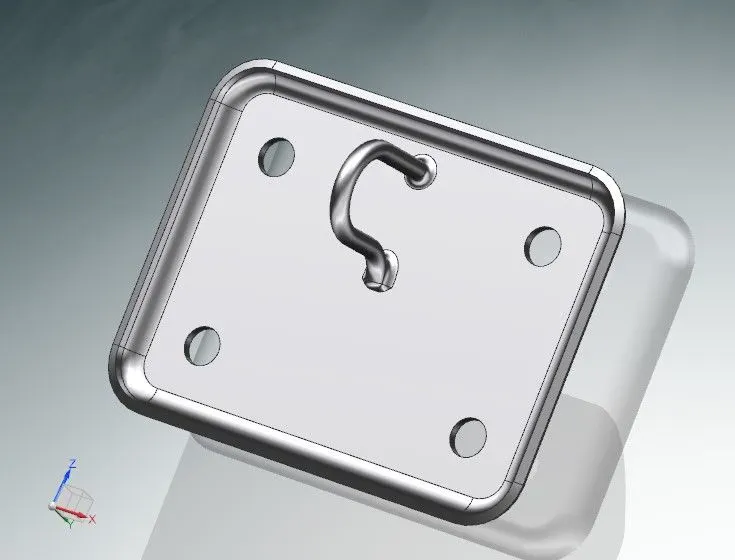
- Latch:
It is a part that helps in locking the hood with the striker which is mounted on the engine block when it is not in use. It plays a major role in opening and closing hood for maintenance of car engine and gives a tight locking position not to create undisturbed noises when the vehicle is running.
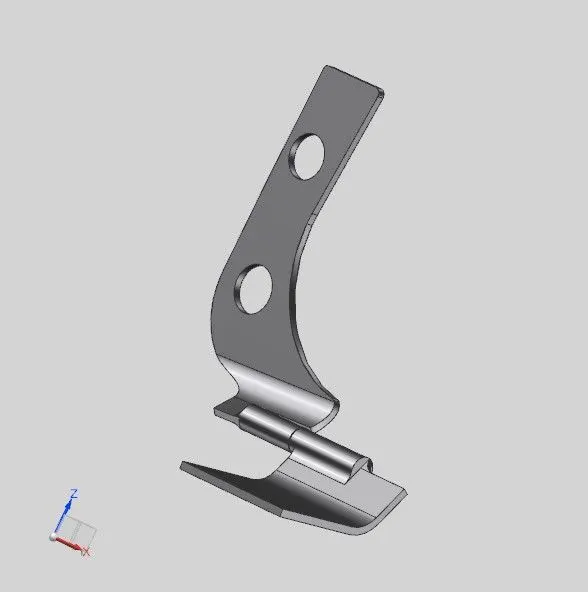
- Hinges:
The hinge consists of two parts- hinge at the inner panel and hinge at the engine compartment.
This coupling allows the hood to open and close, as well as makes contact between the engine block to the hood. It also controls the lifting of the bonnet mitigates the consequences of a collision between a pedestrian and a vehicle.
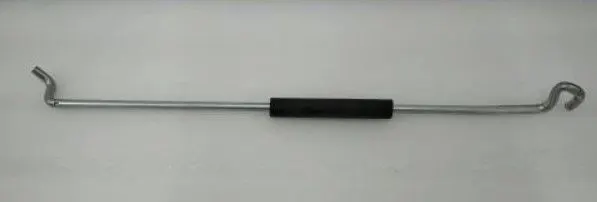
- Support rod:
It is an object which supports the hood when the vehicle is under maintenance by making the contact between the hood and the engine compartment.
Design considerations:
When the Hood is designing, we should take some the considerations like pedestrian safety, vehicle quality, occupant safety, styling, manufacturing, etc.
- Pedestrian safety:
For pedestrian safety, ENCAP assessment has the principles which use in crash tests with a pedestrian.
When designing the hood we should consider those principles and allow our design to get qualified with good results from the ENCAP which impacts in the sales of the vehicles.
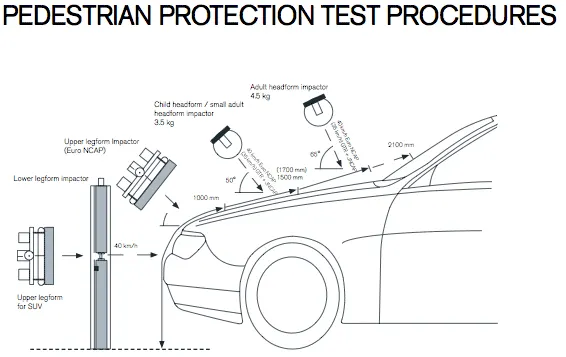
In this test, the hood is divided into the child impact zone and the adult impact zone. From the results, the grades and rating will be provided to the vehicle.
We should consider both the child head impact and the adult head impact.
- Wrap around distance: It is the process of tracing the points on the front outer structure. It includes, but not limited to the bonnet wings, wind-screen scuttle, and wiper-arms, windscreen frame.It is bounded by the geometric trace of the 1000mm wrap around the line in the front, bonnet side reference lines, and 2100mm wrap around the distance.
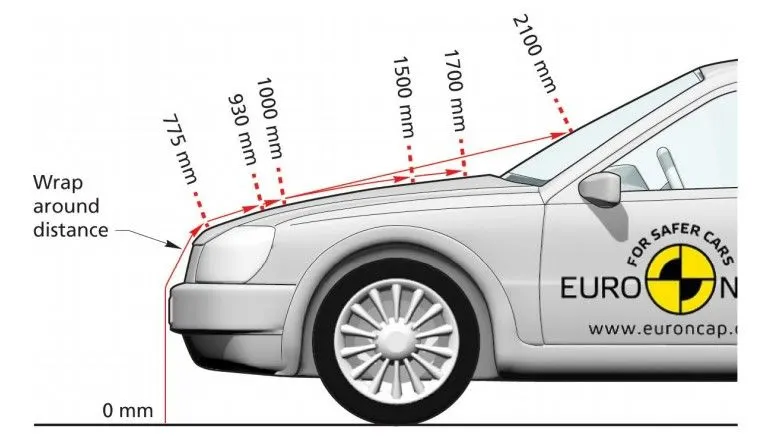
Side reference line: It is defined as the geometric trace of the highest points of contact between a straight edge of 700mm long and the side of the bonnet. When a straight edge held parallel to the lateral vertical plane of the car and inclined inwards by 45* is traversed down the side of the bonnet top and A-pillar.
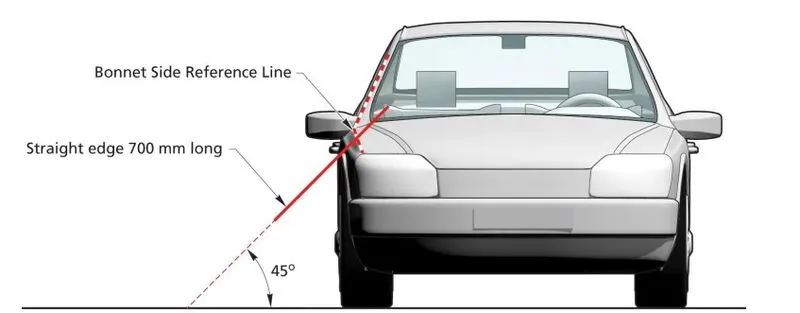
This side reference line allows checking the impact trace by a pedestrian.
- If the side reference line falls on the fender, the WAD will be greater and the impact zone will be less.
- If the side reference line falls on the hood the WAD will be lesser and the impact zone will be high.
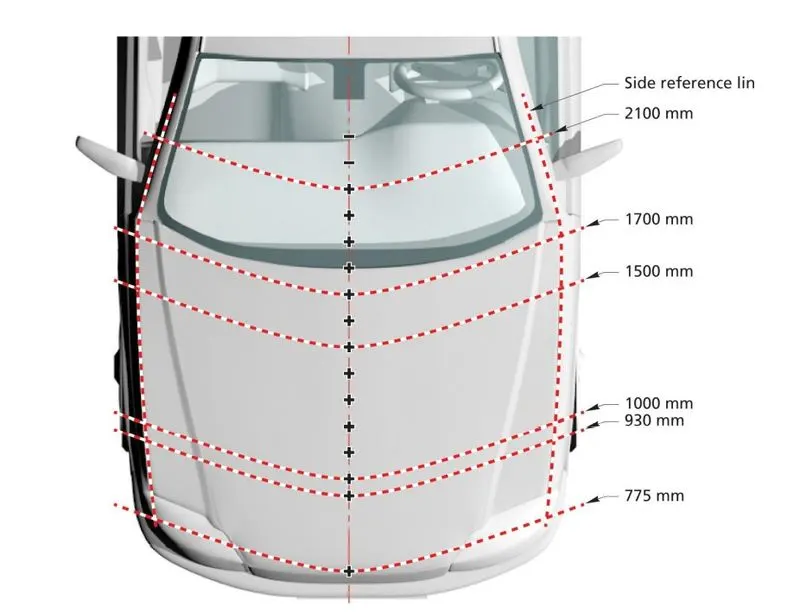
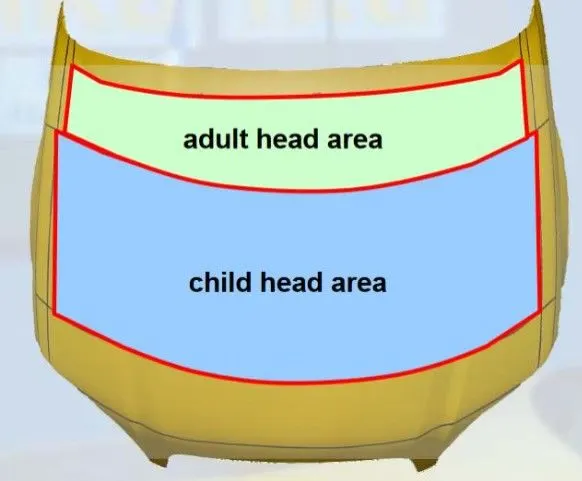
As per the ENCAP, the child head impact zone lies in between 1000WAD-1500WAD, and the Adult head impact zone lies in between 1500WAD-2100WAD.
Material selection:
- Hood is made out of steel or aluminum, if the car body requires less weight ratio carbon fiber or dry carbon is also used.
- Silicon polymer and silicon copper paste for mastic seal.
- Reinforcement vinyl ester composite for latch
- Steel for hinges.
Styling:
- Tight radii on hemmed panel edges.
- Stretch flanges.
- Good shape with low strain doubly curved surfaces.
- Excellent painted surface quality.
Manufacturing considerations:
- Clean sheared edges on the outer panel.
- Gauling resistance for the inner panel.
- Dent resistance during assembly of parts.
- Visual defects should be avoided from stretch forming.
CAD APPROACH:
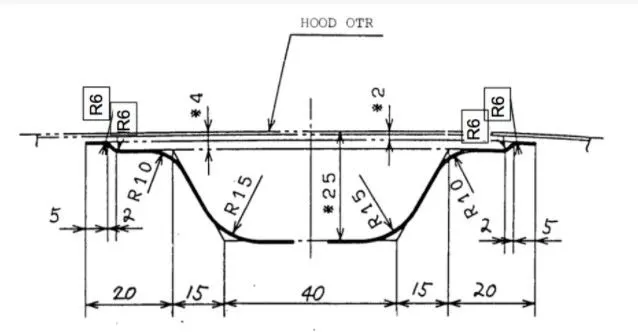
Hood inner panel should follow this master sketch and add the depth by taking the limit from this master sketch and plan for more stiffness by allowing the different embossing shapes.
And the outer panel thickness = 0.75mm
Inner panel thickness = 0.75mm
Reinforcement thickness = 1.5mm
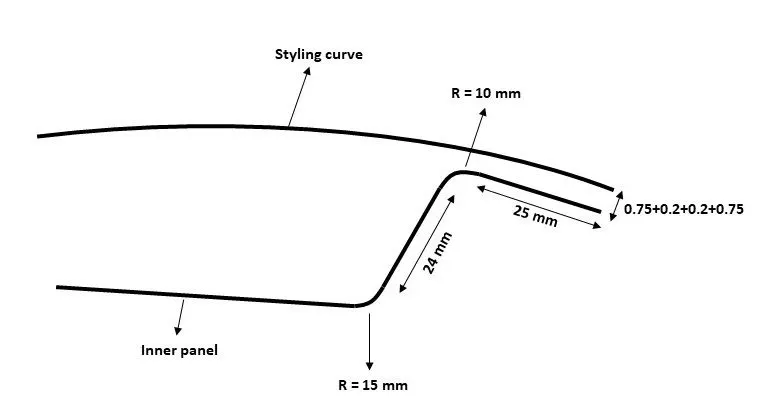
The hemming should be added and make both the inner and outer panel connected by allowing the given tolerances.
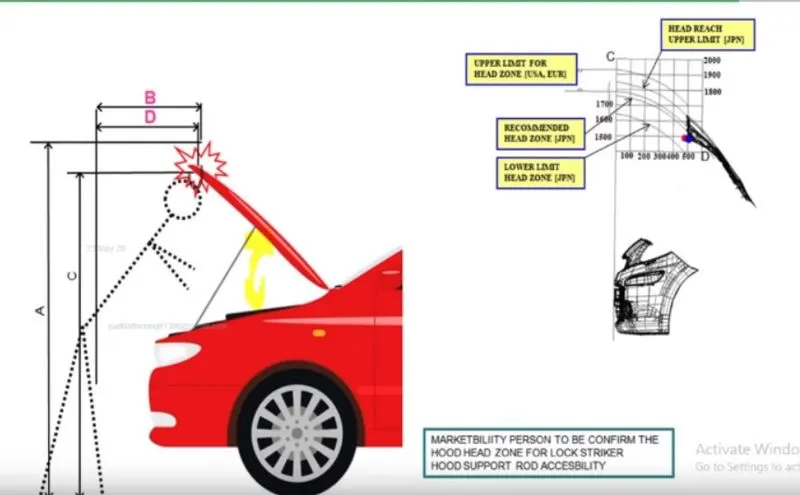
Opening angle:
This angle generally changes from place to place and the rules to be followed at the respective locations based on their average heights of the human beings.
Positioning of latch and sticker:
The latch should be placed exactly center of the hood and also allow the latch to be followed the path of the circle which has a series of tangent points.
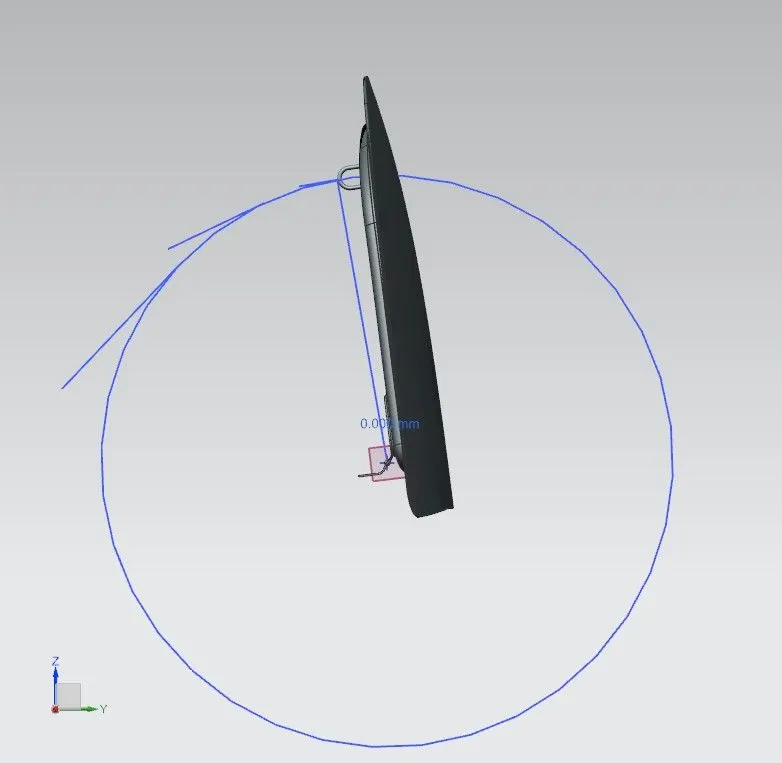
The edge point of the latch should touch the tangent points to give the free movement of the hood when opening and also gives the perfect locking not to produce the noise while running the vehicle.
Design of hood:
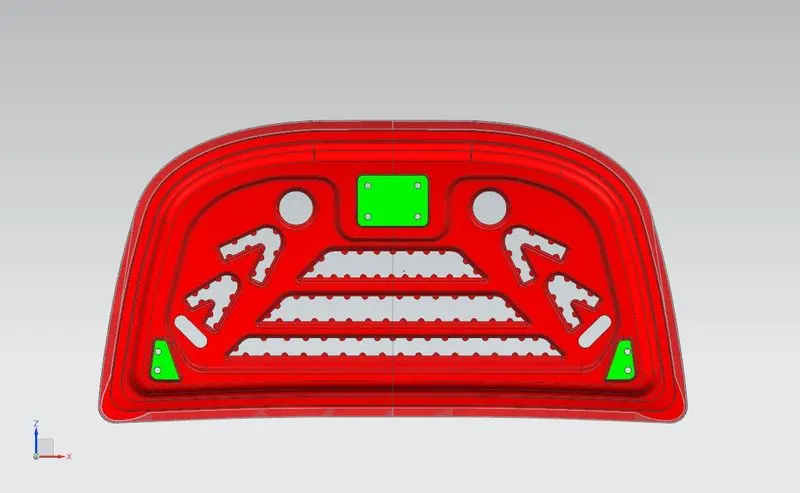
hood inner panel with reinforcement
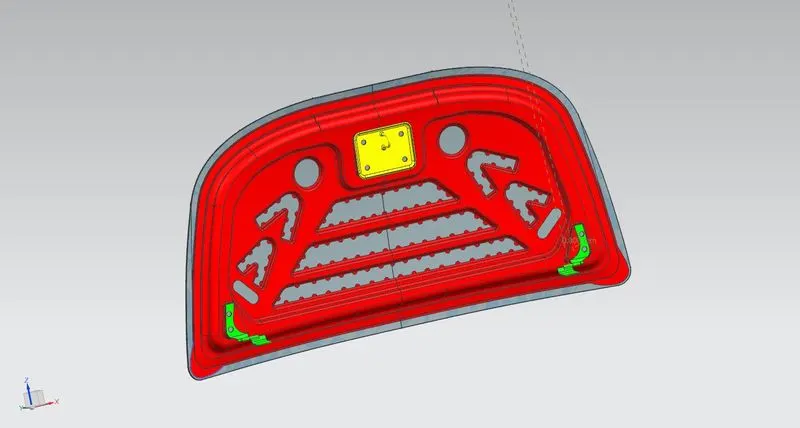
hood along with outer panel
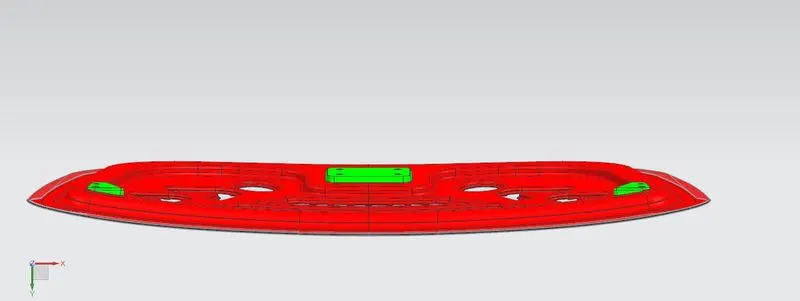
isometric view of hood assembly
Force distribution:
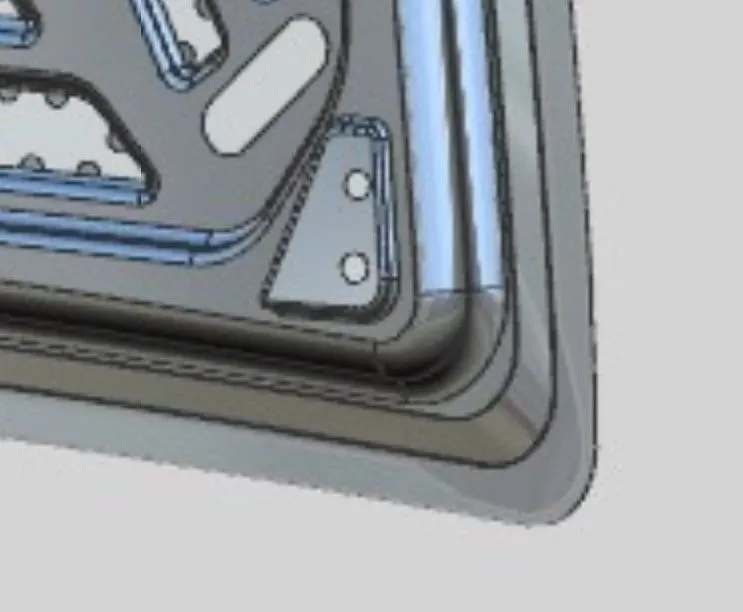
RELIEF:
Edge relief should be provided to the hemming of an outer panel to remove the edges of the sheet by making the corner round in shape.
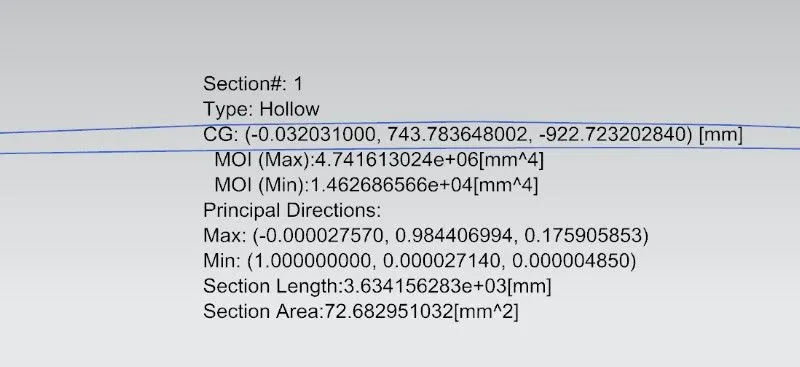
Moment of Inertia:
Conclusion:
The design of Car hood is done by taking the principles of hood design into considerations along with manufacturing. And checked with the ENCAP safety standards for the safety of pedestrians and passengers of cars.