Assignment 7-Side Pole Crash Simulation Challenge
OBJECTIVE:-
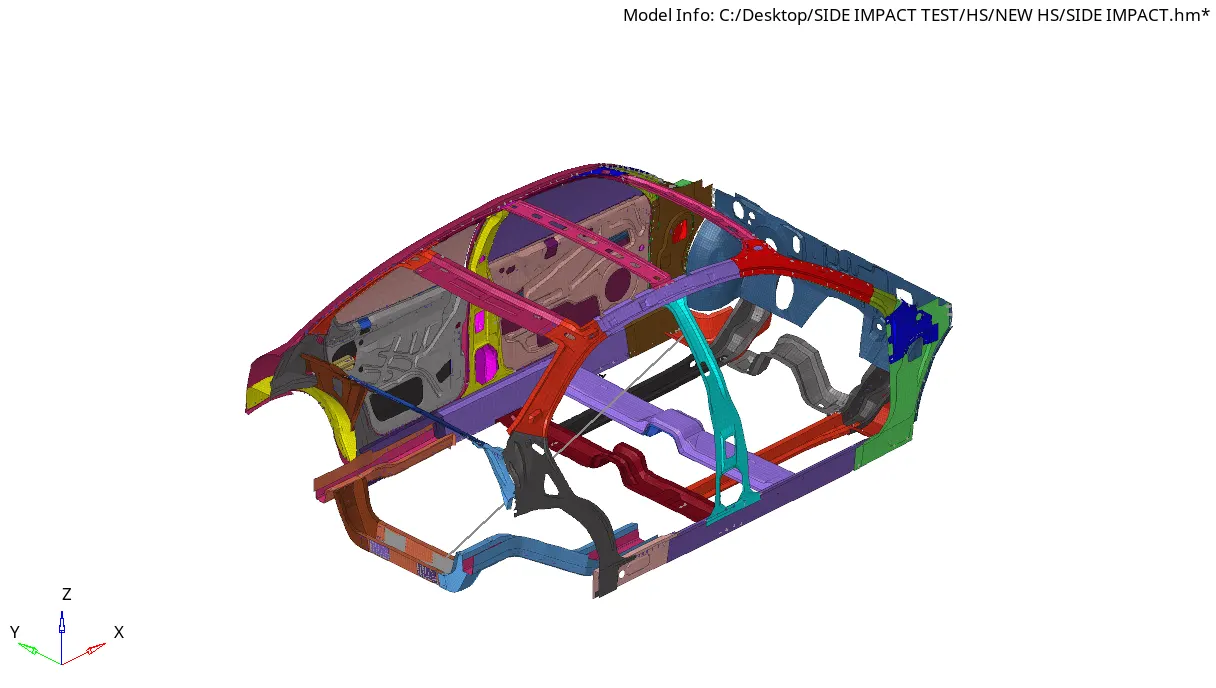
To perform side pole crash simulation in Hypermesh with Radioss as the solver, To compare the forces being subjected to various sections of the car due to the crash, Intrusion at B pillar, hinge pillar, and fuel tank region, peak velocity of an inner node of the door.
PROCEDURE:-
Step-1:
Import the model and first and foremost check the units.
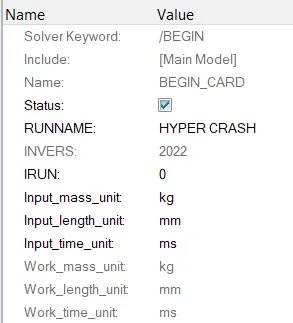
So it is with Kg, mm, ms unit system.
Step-2:
We must create an appropriate interface, friction 0.2, and recommended parameters.
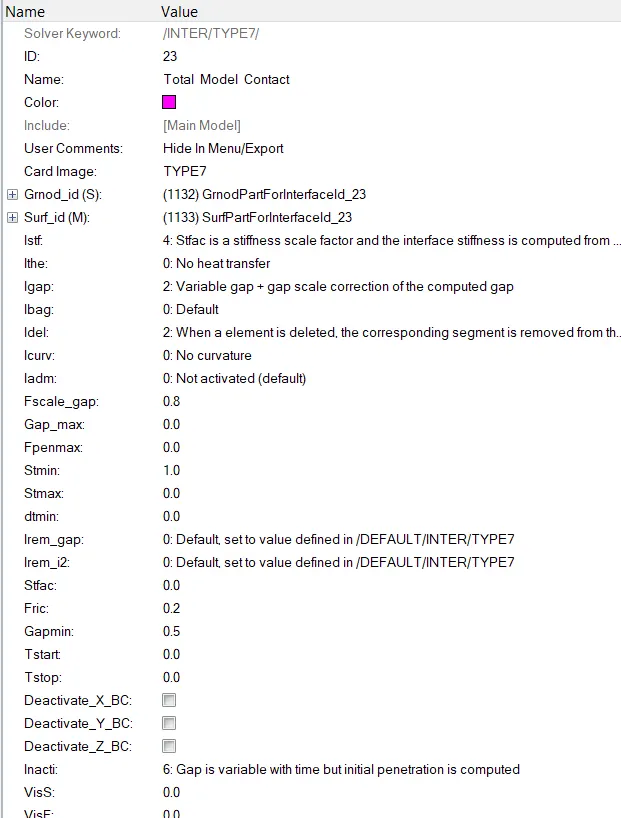
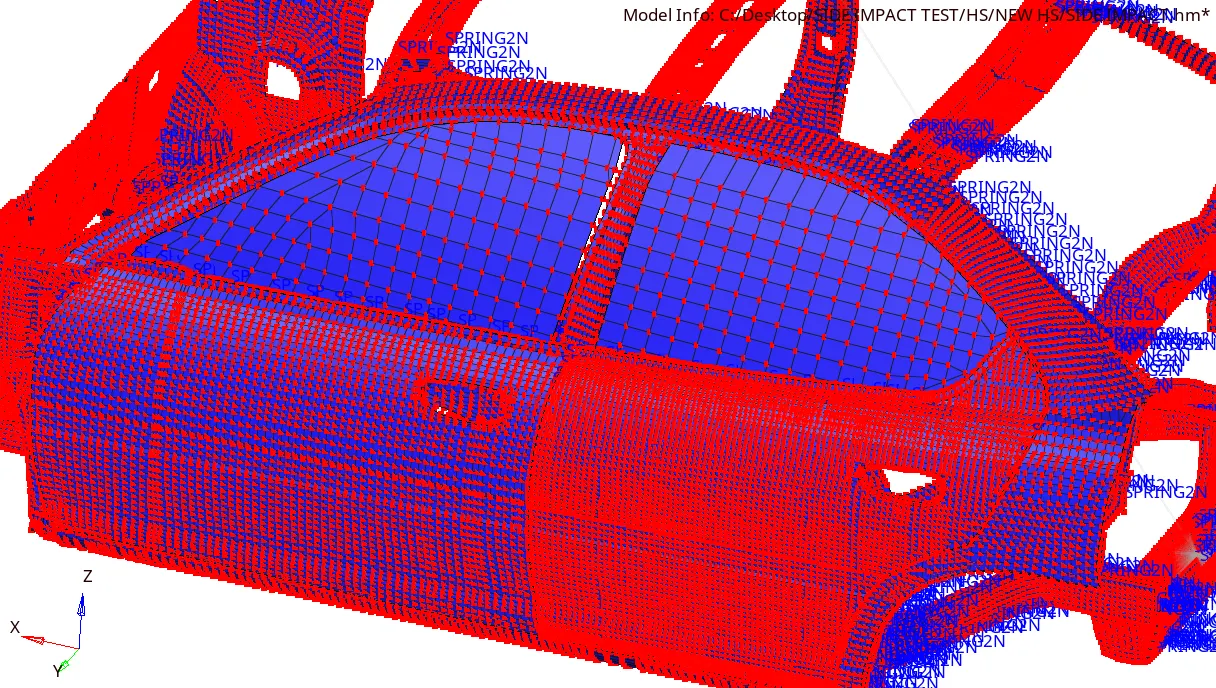
Type-7 contact is considered for this case to the whole model.
Step-3:
Now, we need to check for any initial penetrations in the model.
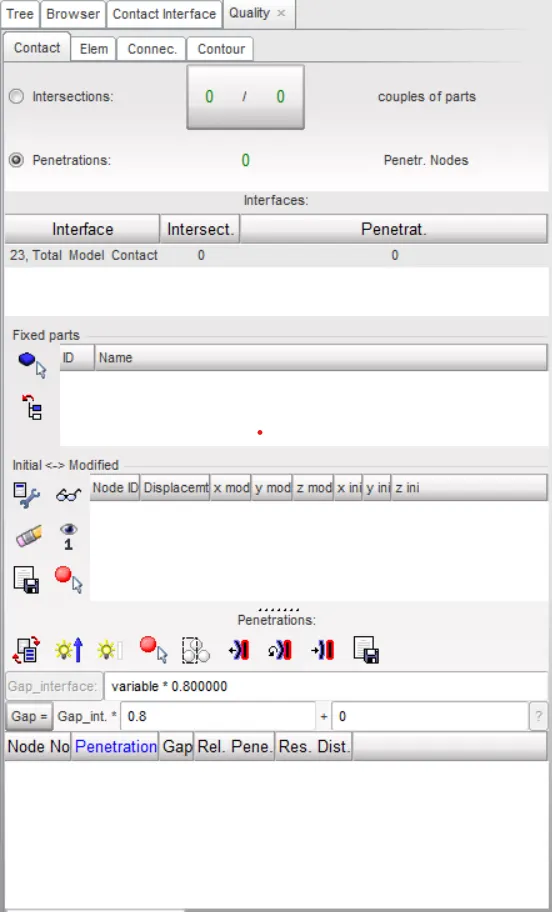
There are no initial penetrations, we are good to move on.
Step-4:
Now We need to create a rigid pole with a friction of 0.1 as per the FMVSS 214 standards.
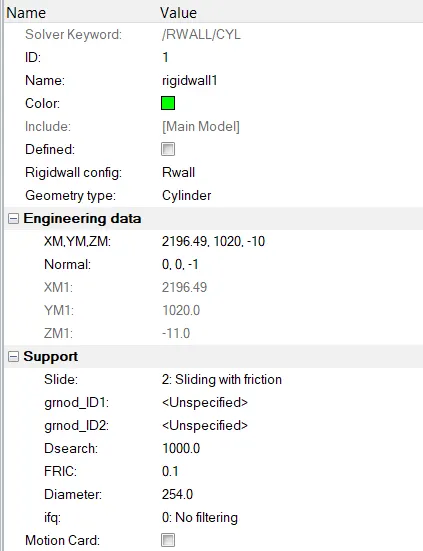
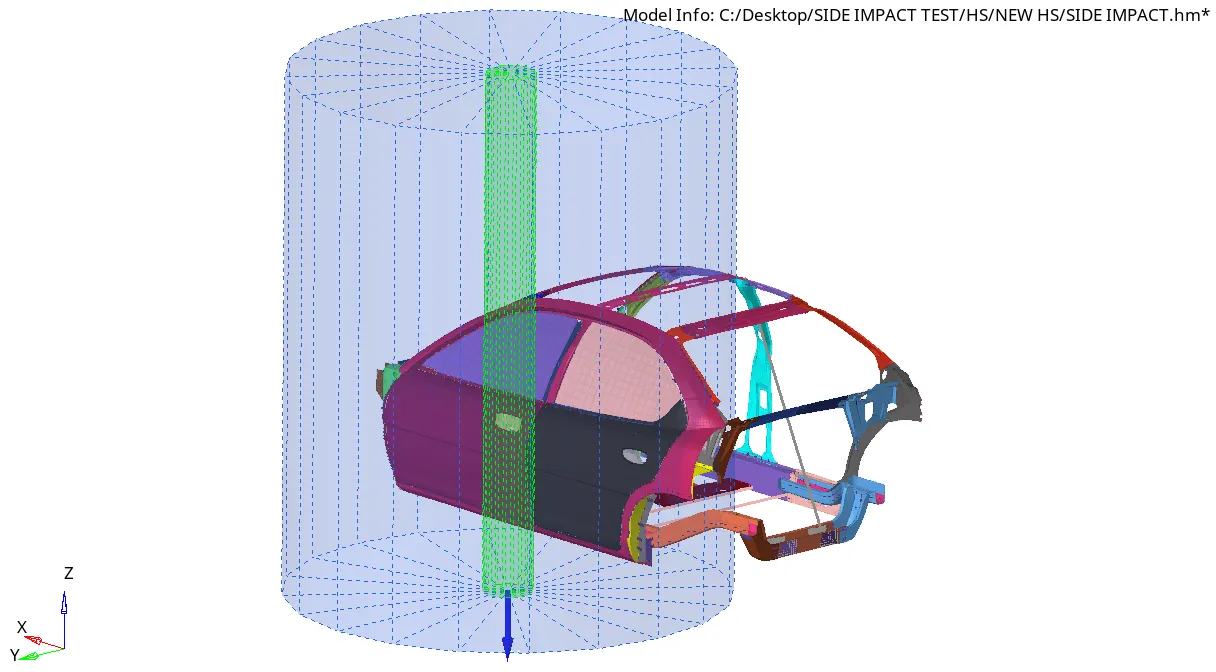
As shown in the image created a Pole with FMVSS standards.
Step-5:
Now compare the model weight with the reference model and use added masses to reach the target weight of 700kg while getting CG about the required range.
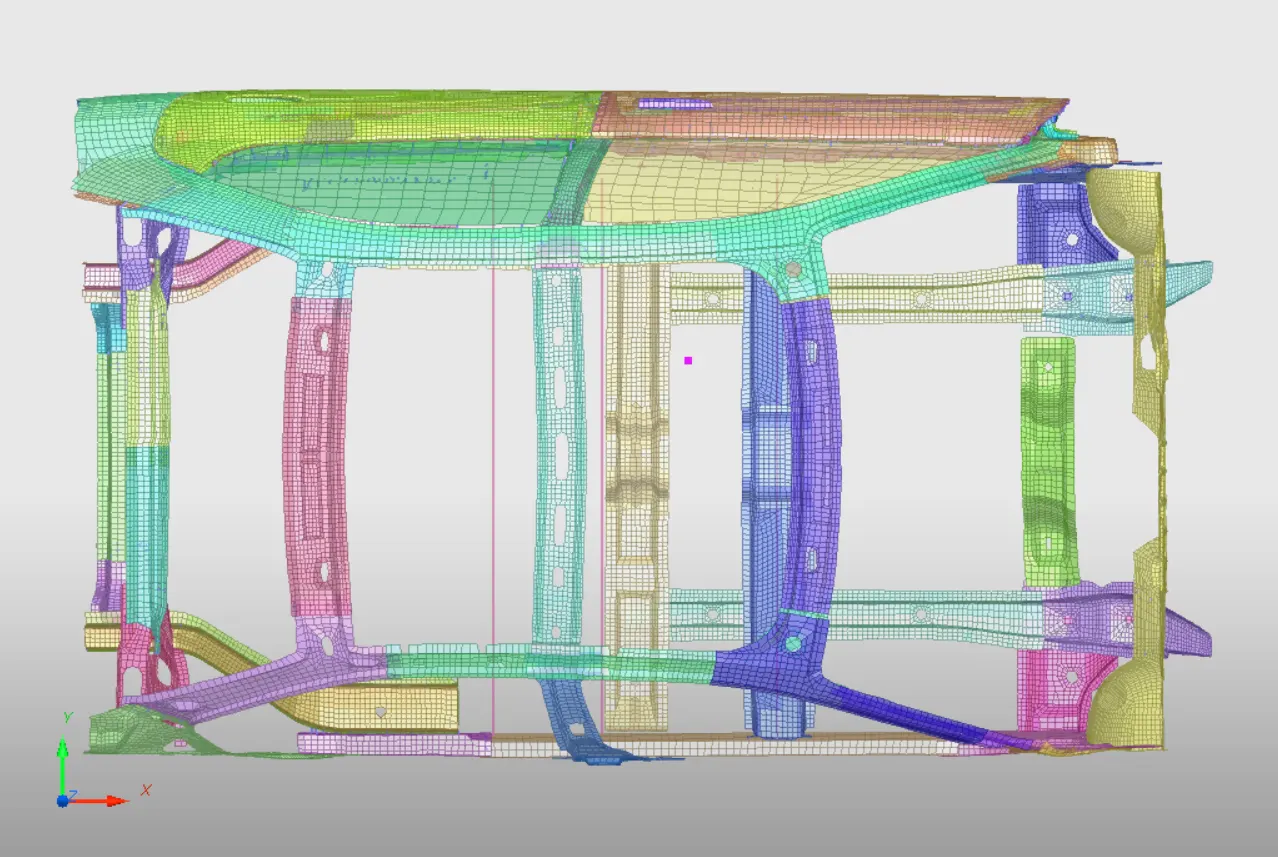
You can see in the image a Pink dot has appeared it is showing the CG (center of gravity) of the model, which needs to be corrected.
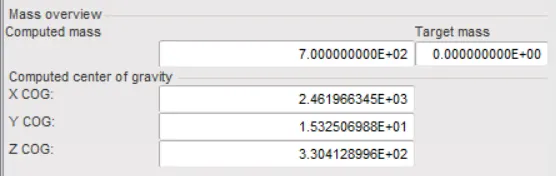
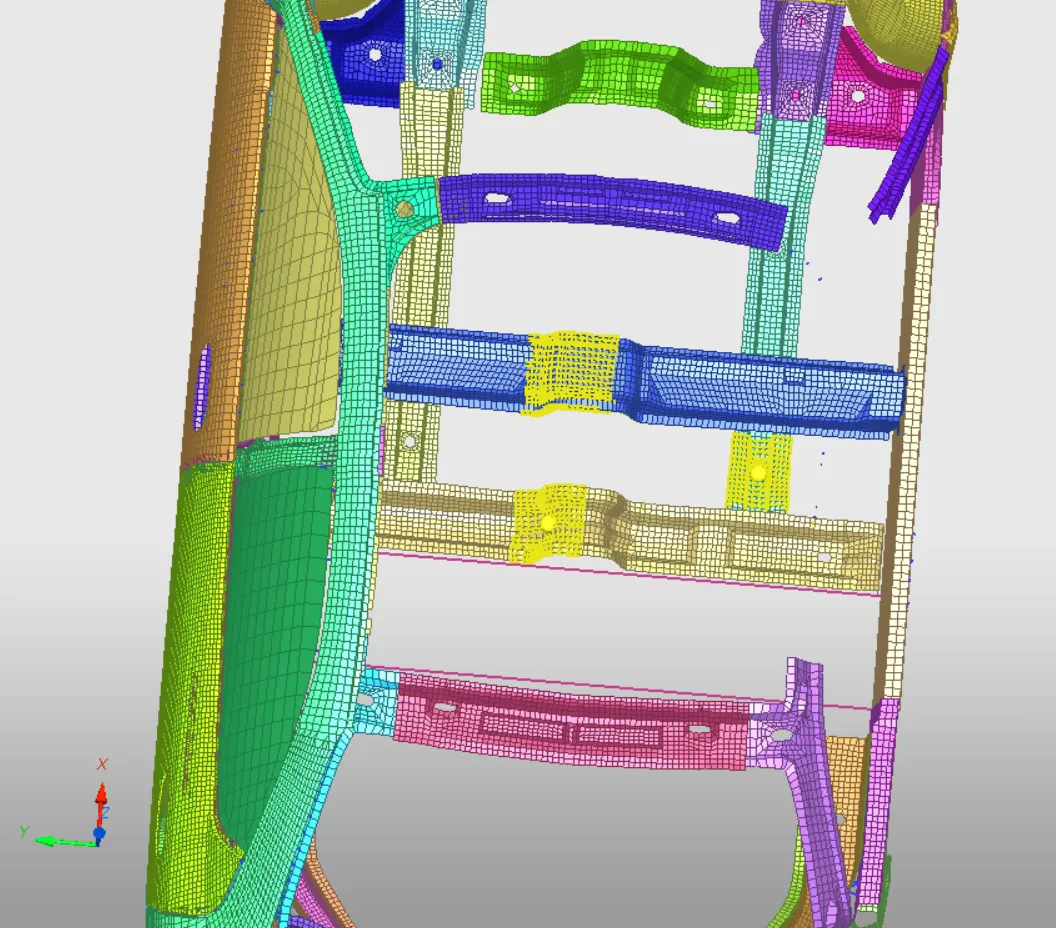
So I added mass on the cross beams in trying to Keep CG in the required position.
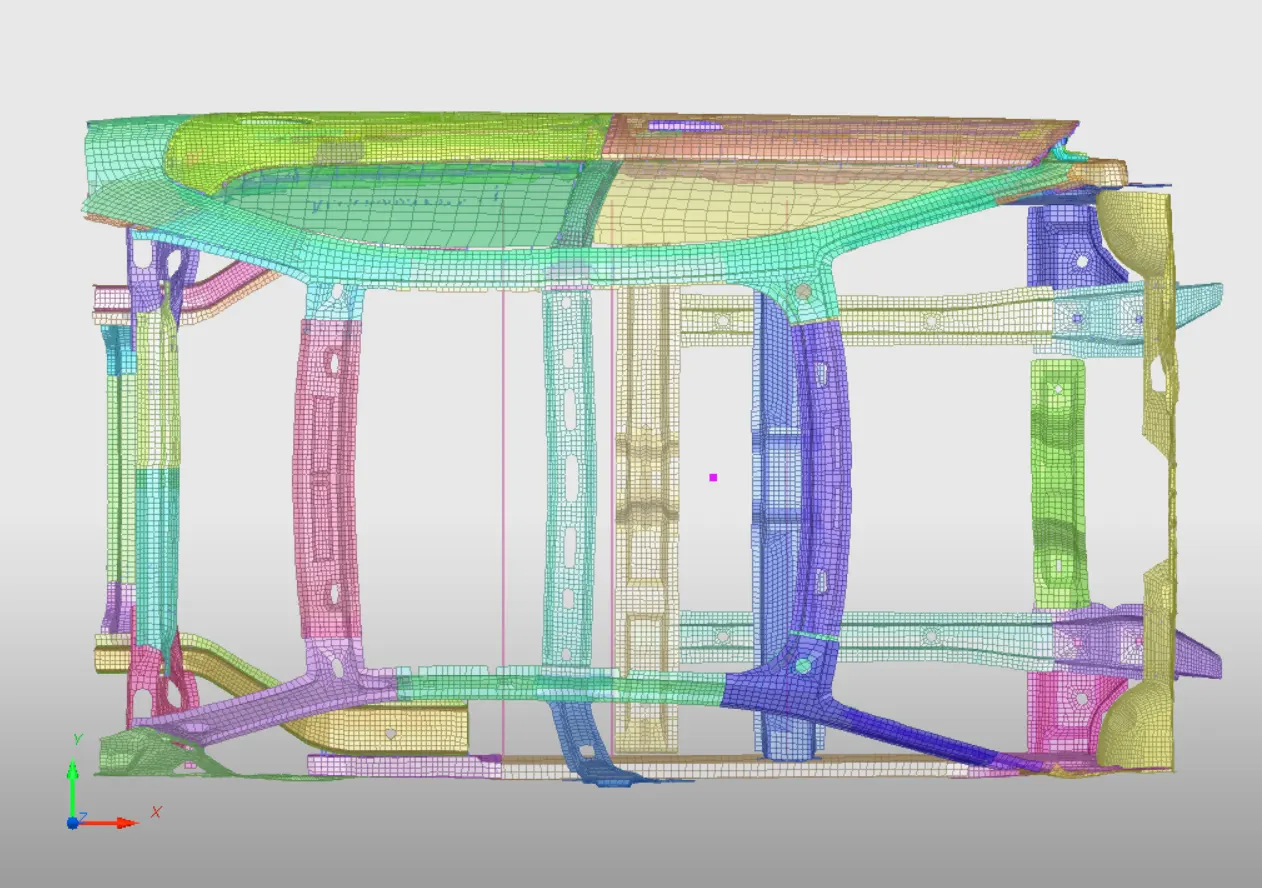
Finally, CG got its position.
Step-6:
Now, we need to set the Initial velocity - to 20mph, as per the standards.
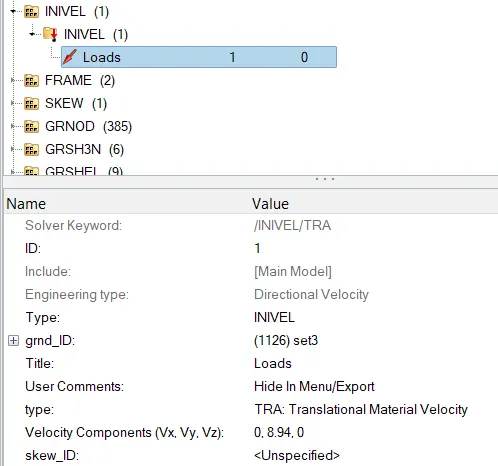
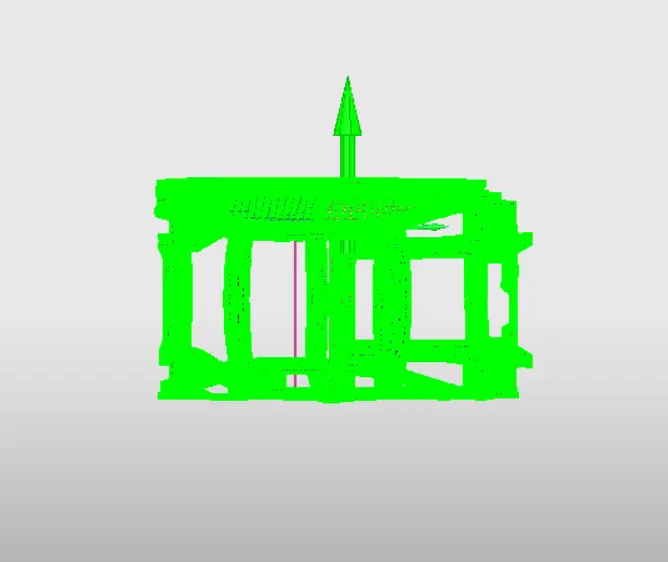
As shown in the picture we need to set the initial velocity towards the pole.
Step-7:
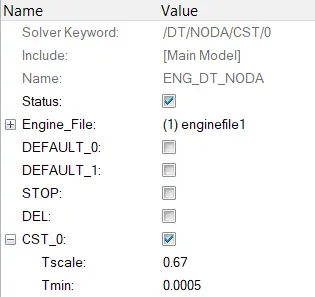
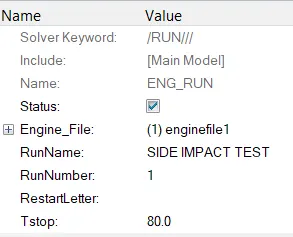
Now setting Timestep:0.5 to 0.1 microseconds. and run time of 80ms.
Step-8:
To plot sectional energies we need to make sections in the required positions.
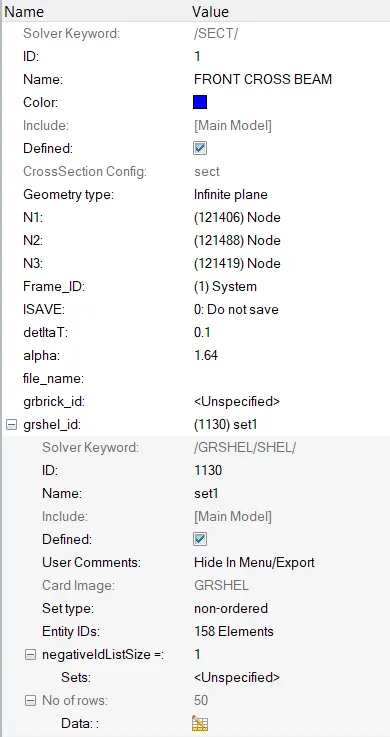
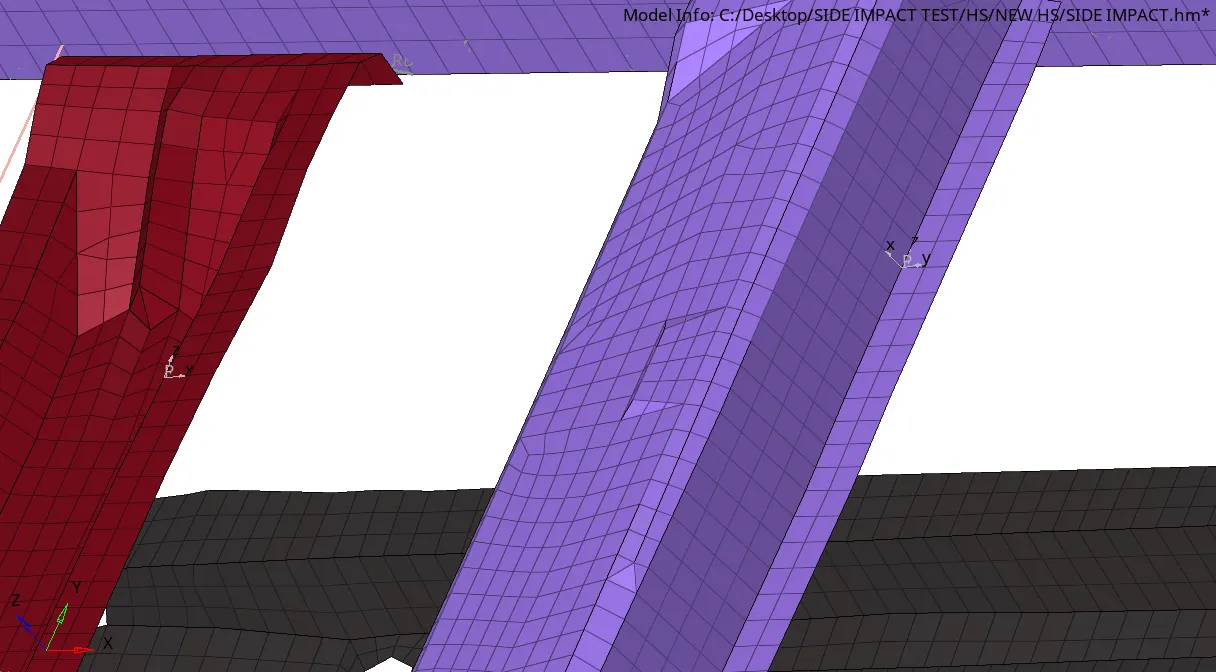
Frames need to be created to assign sections.
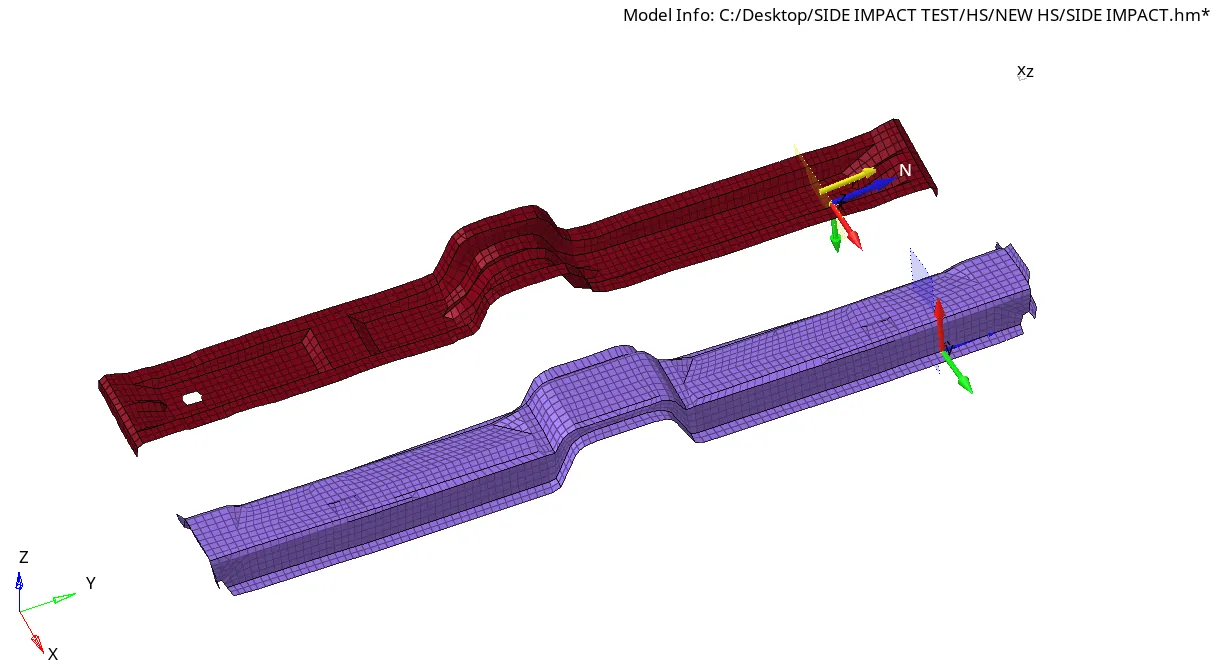
Finally, sections are created, and we are good to go.
Step-9:
To find instructions at Hinge pillar, B-Pillar & Fuel Tank.
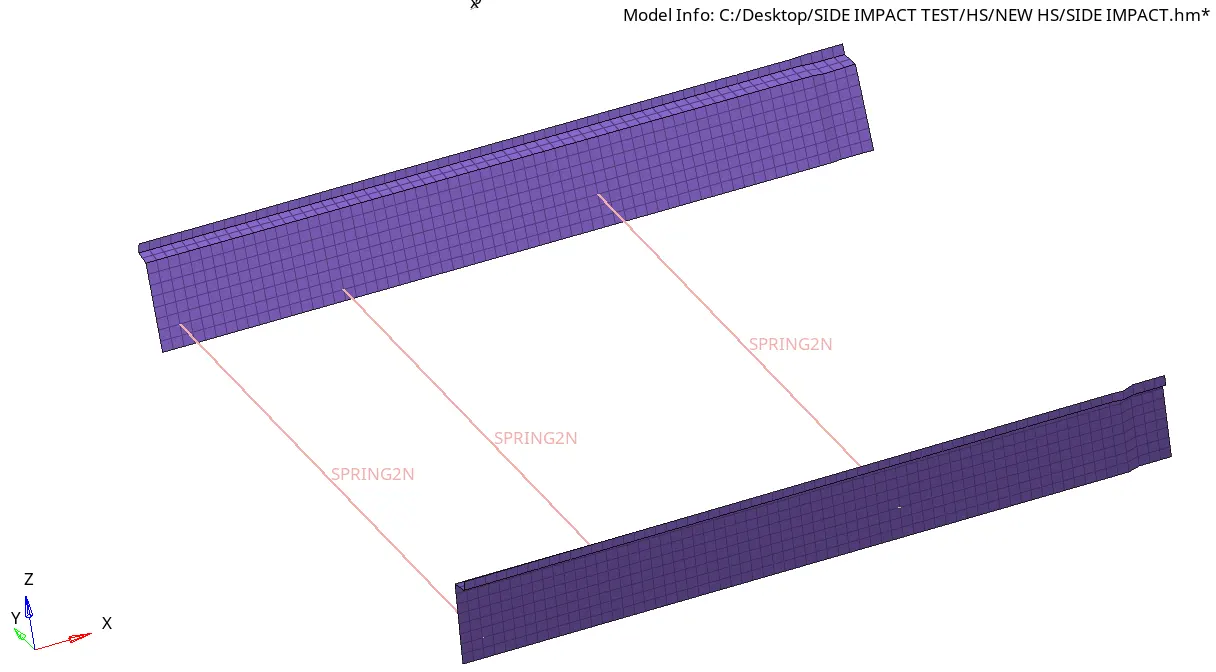
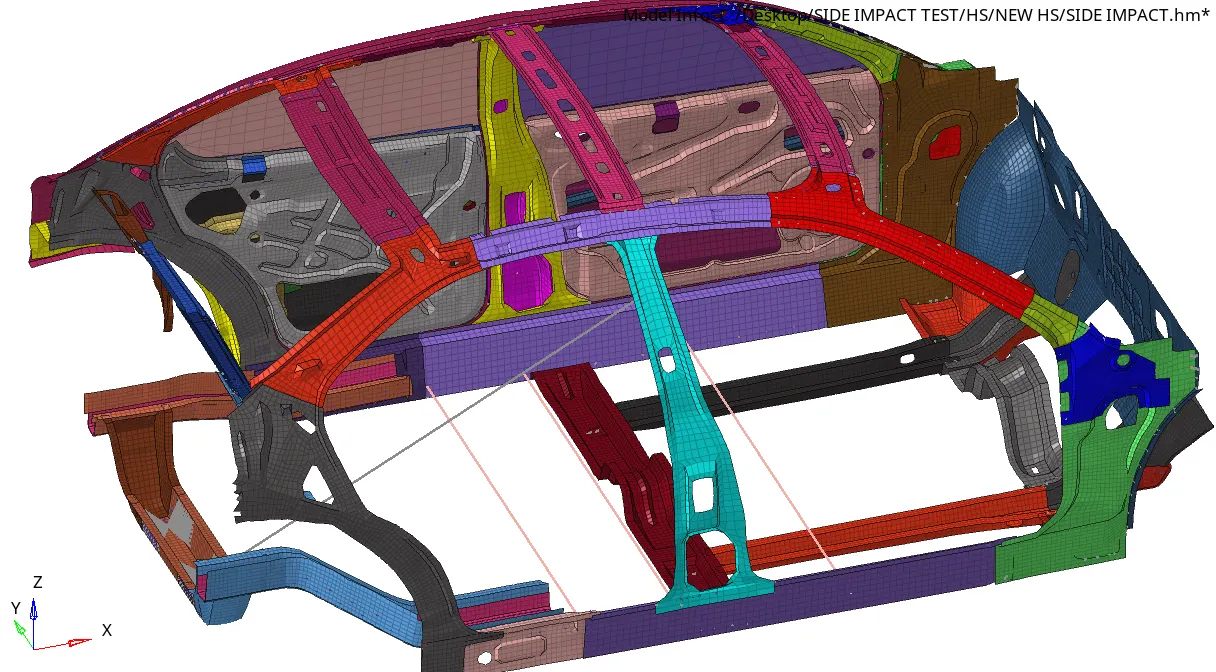
Step-10:
To know the peak velocity at the left front door as the reason it is the position where passengers sit beside it.
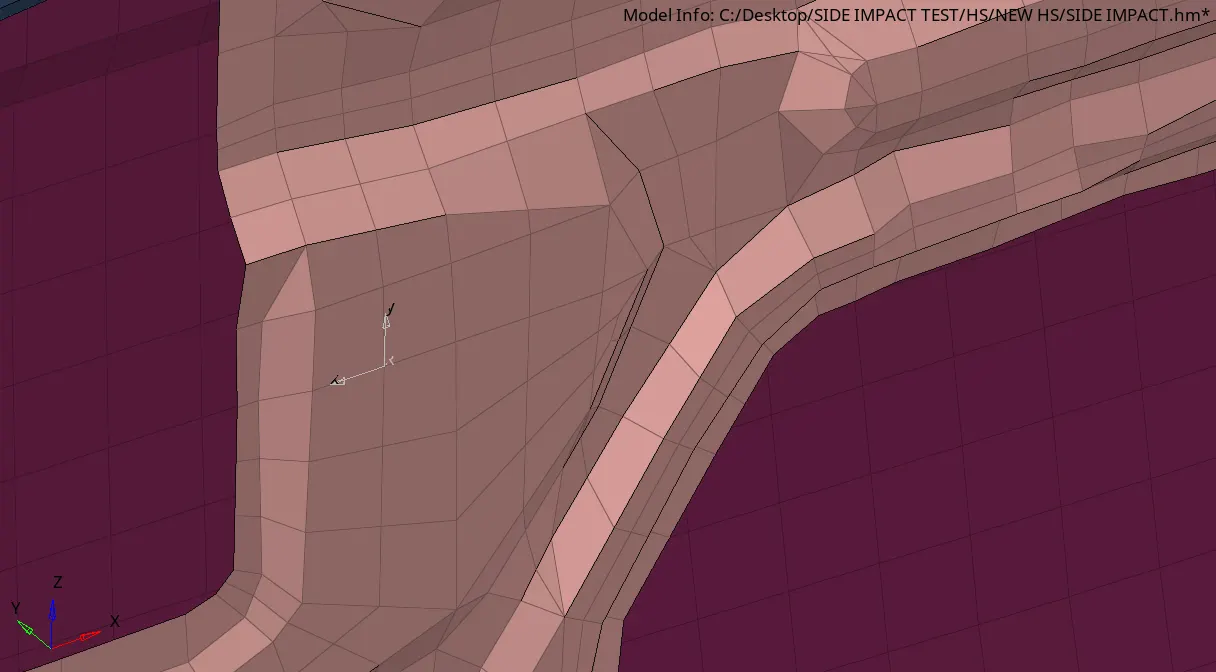
So for this, we can create a TH node to find peak velocity.
Step-11:
Now all kinematic conditions and all settings are done for the simulation we need to run the model checker to know if there are any errors.
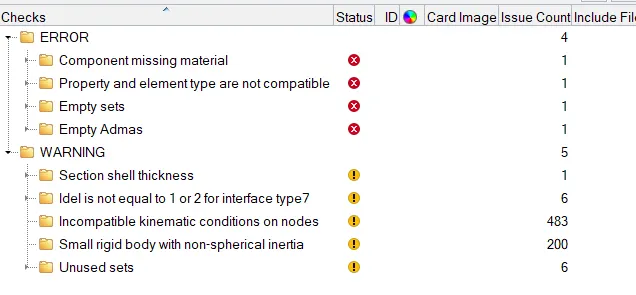
Some errors need to be addressed and corrected.
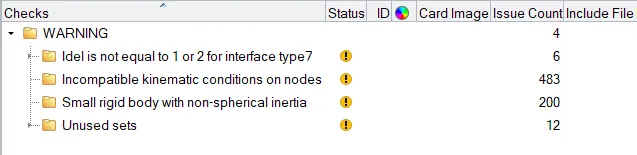
All the errors are corrected, and now we are good to run the simulations.
Step-12:
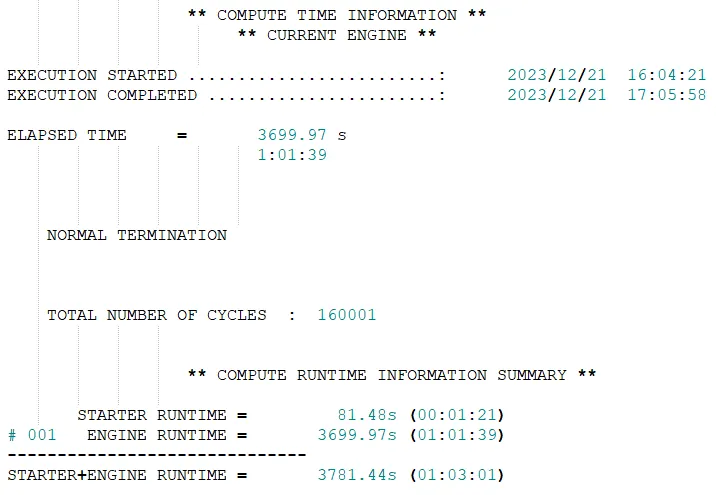
The simulation took 1 hr 3 min & one second to complete it.
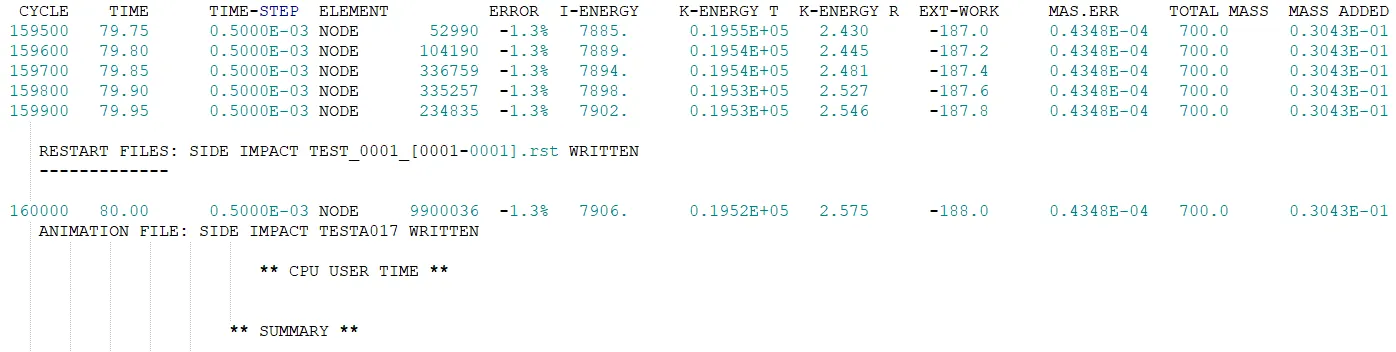
The energy is -1.3% which is in the range of +5 to -15% and the mass error is 0.4348E-04 which is very minimal when compared to even 1% so it is also less than the range of 1 to 3% of added mass, so we can plot the results.
--------------------------------RESULTS:---------------------------------
Energy Plot:-
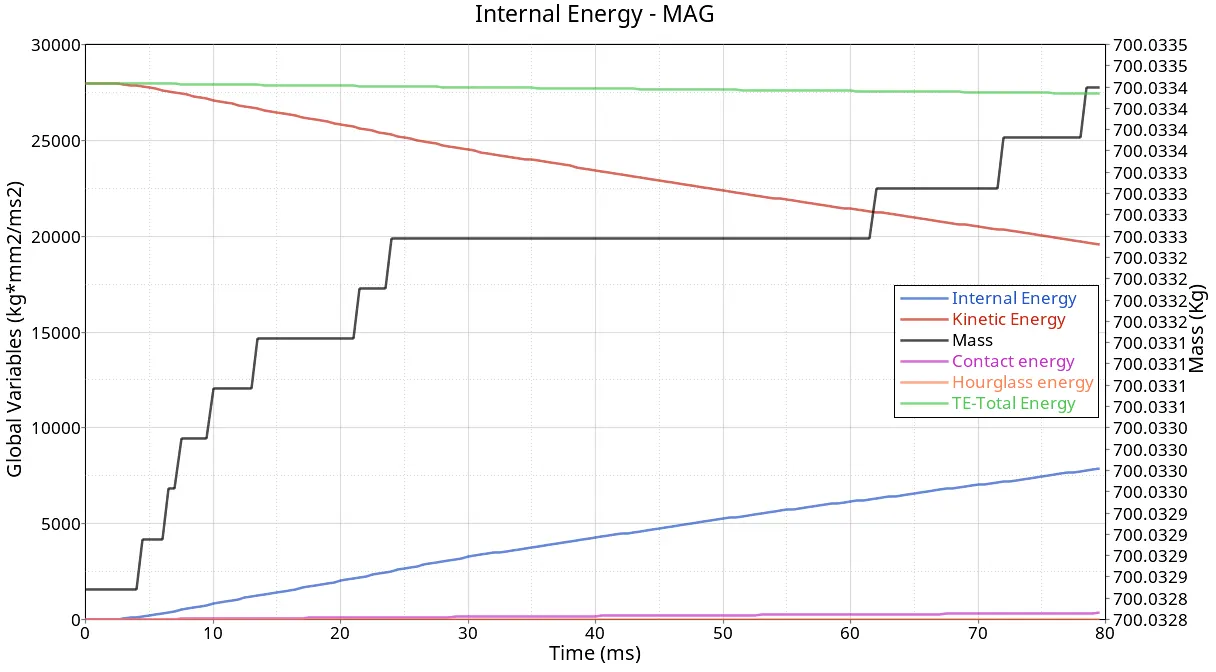
Here the kinetic energy is converted into internal energy with the addition of mass when there is a requirement to stabilize the time step above the minimum time step of 0.5 microseconds. Contact energy and hourglass energy graphs have values near to zero and Total energy remains almost constant as time increases.
Cross-Sectional Energies:-
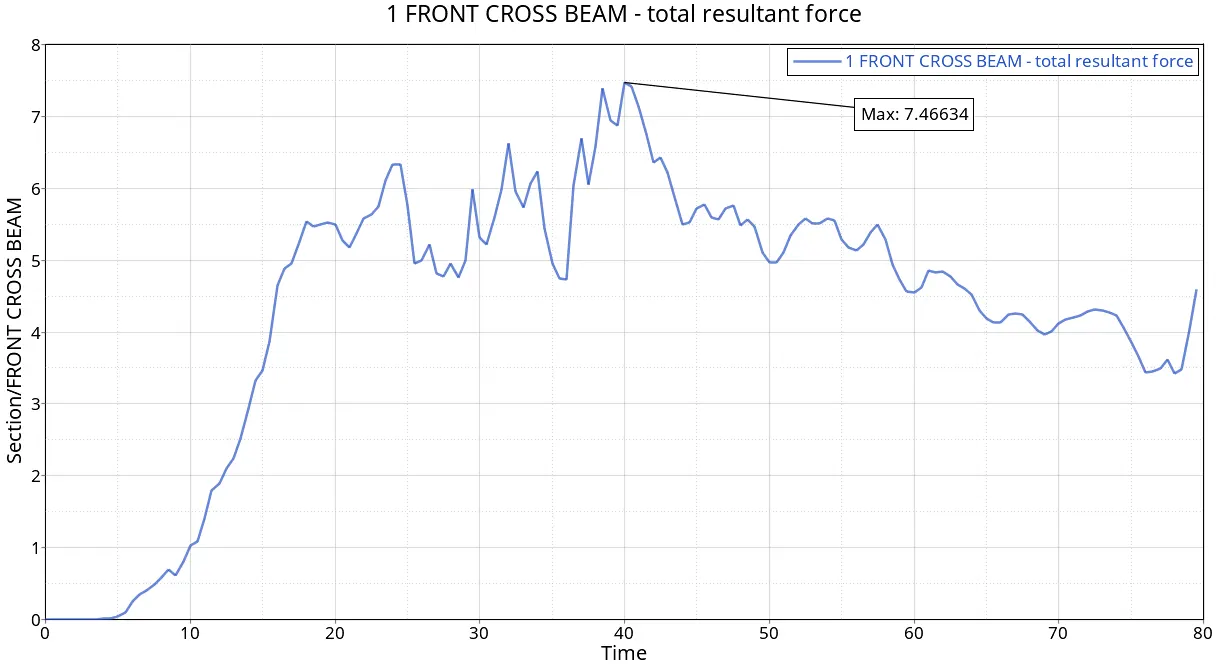
For the front cross-sectional beam it received 7.46634 KN of force.
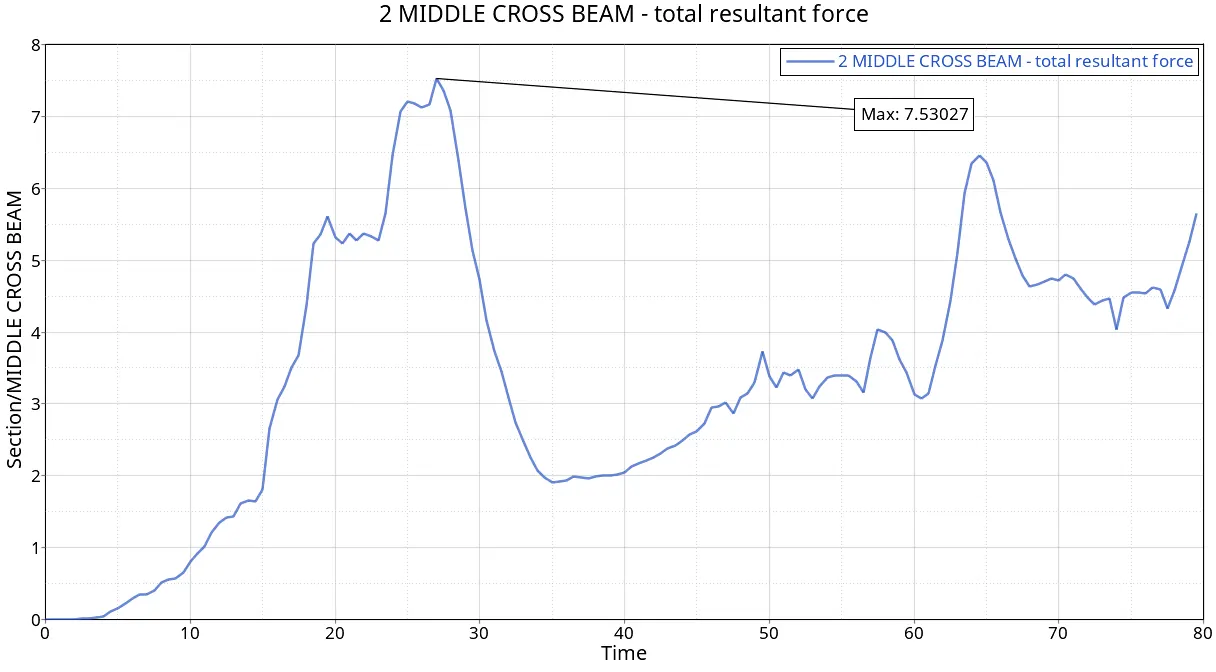
For the middle cross-section, it recorded a force of 7.53027 KN.
Intrusions:-
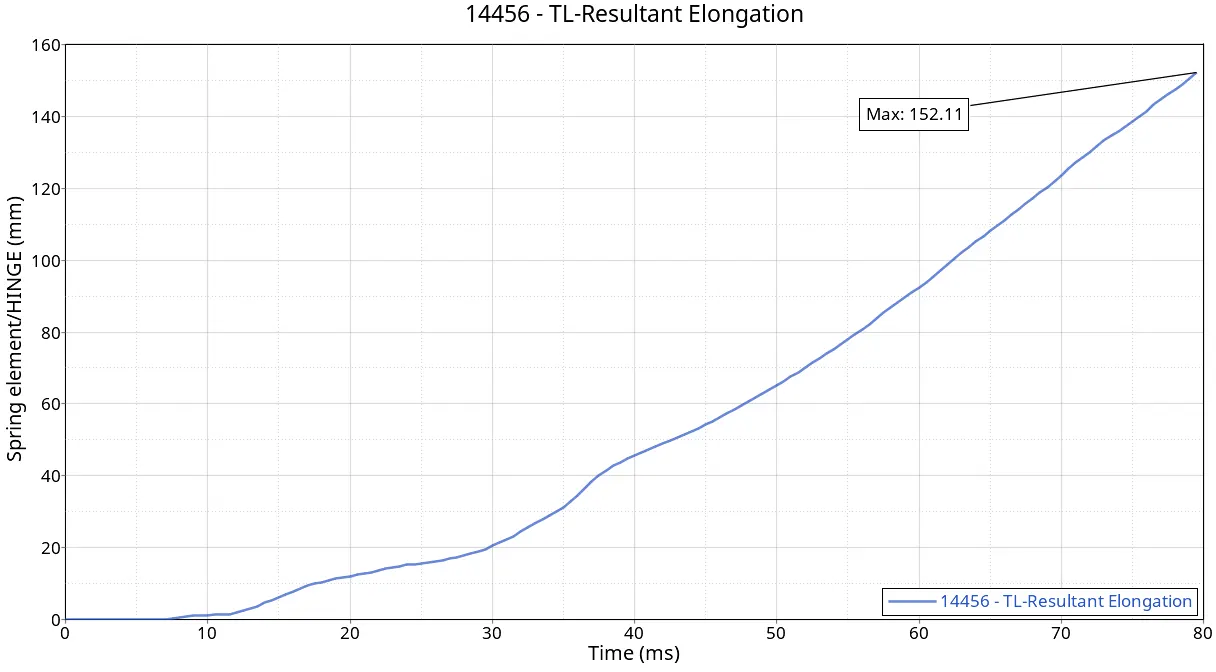
For the Hinge pillar, it recorded 152.11 mm of deformation starting to rise from around 10 seconds onwards.
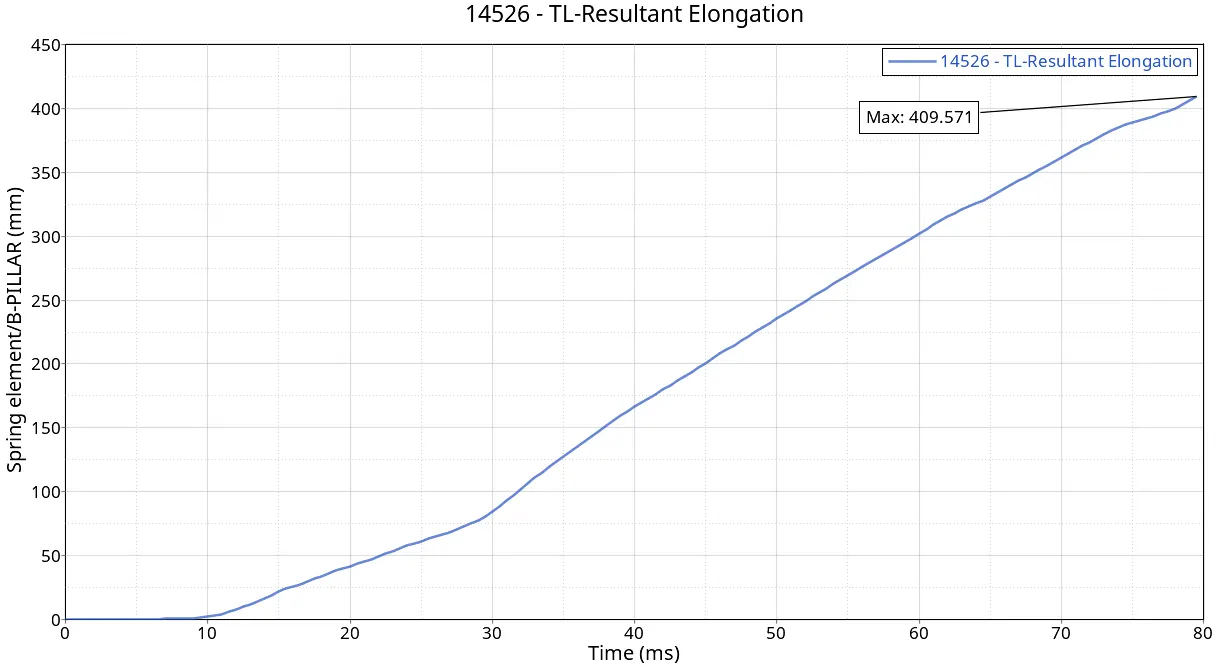
For the B-pillar, it recorded 409.571 mm of deformation starting to rise from around 10 seconds onwards.
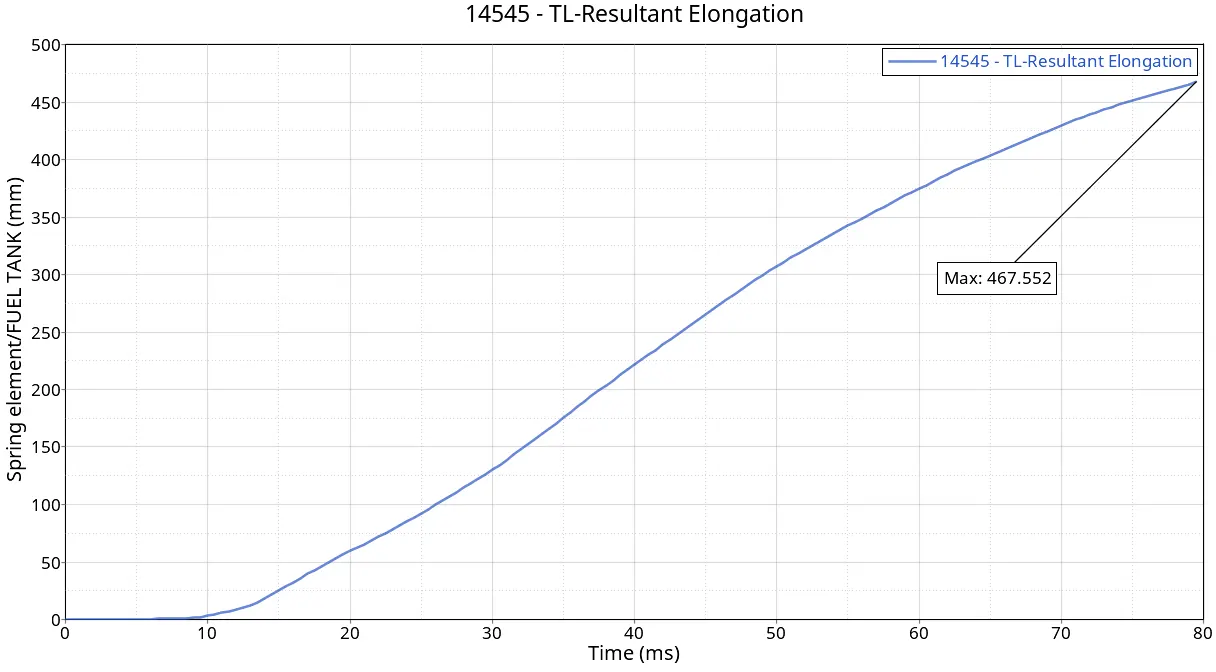
For the Fuel Tank, it recorded 467.552 mm of deformation starting to rise from around 10 seconds onwards.
Peak Velocity Of Inner Node Of The Door:-
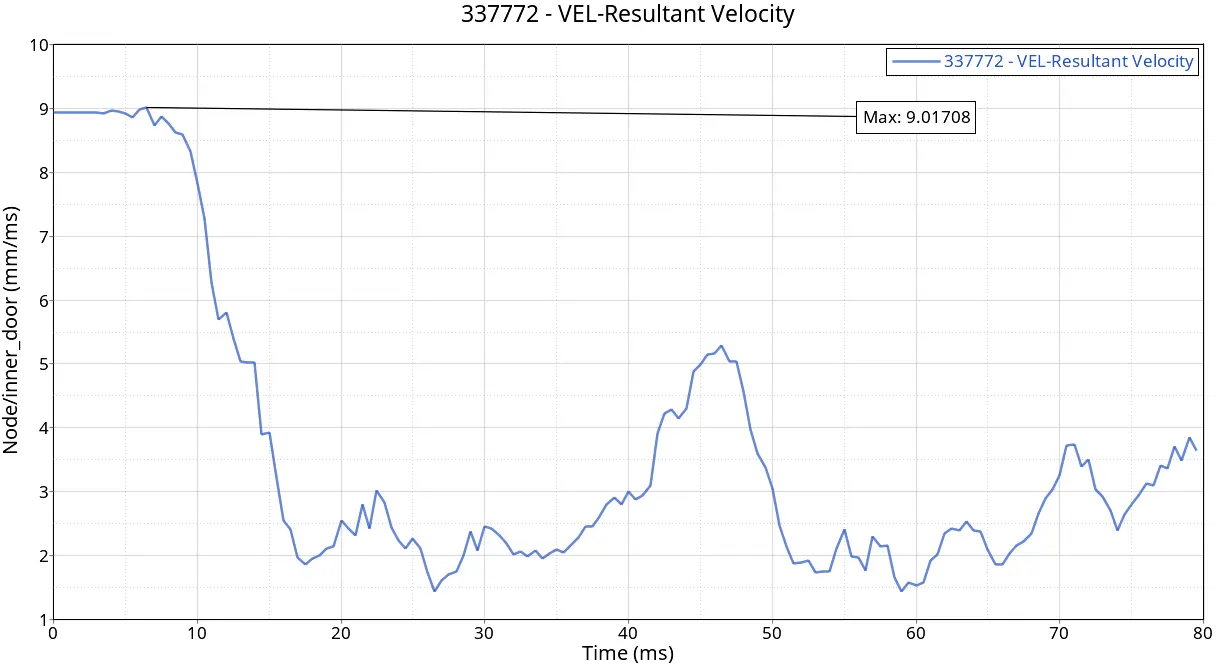
We can see it recorded a peak velocity of 9.01708 m/s initially but it got suddenly reduced due to the crushing of the door with the pole as when the contact is getting increased within the surface the velocity is reduced.
Simulation:
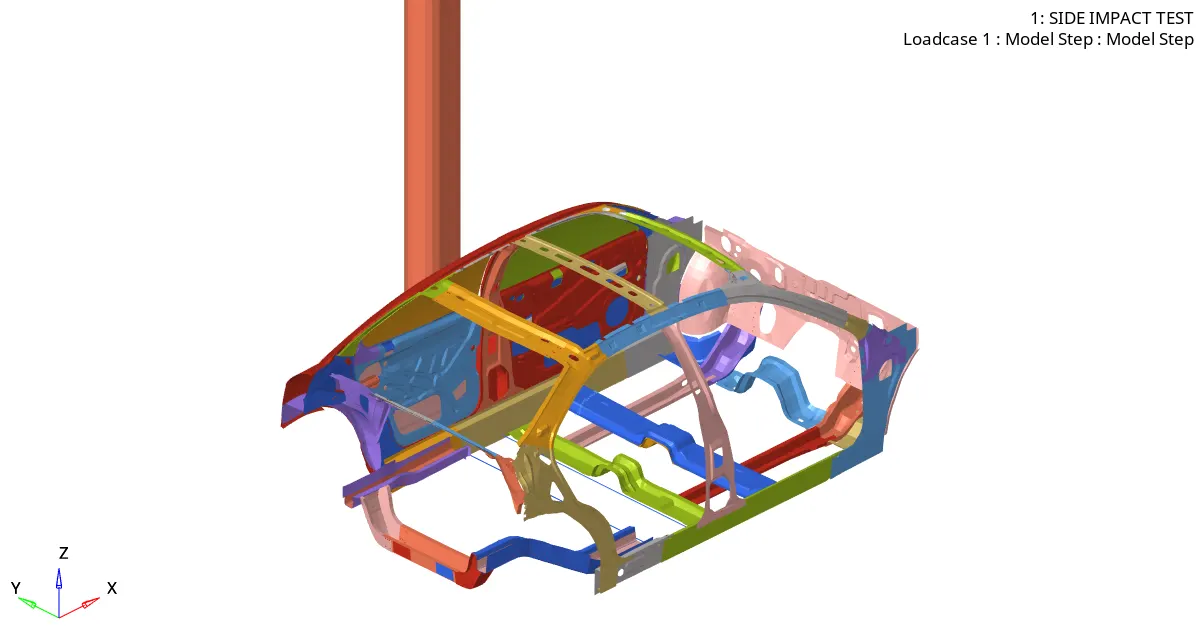
It is the setup that we made.
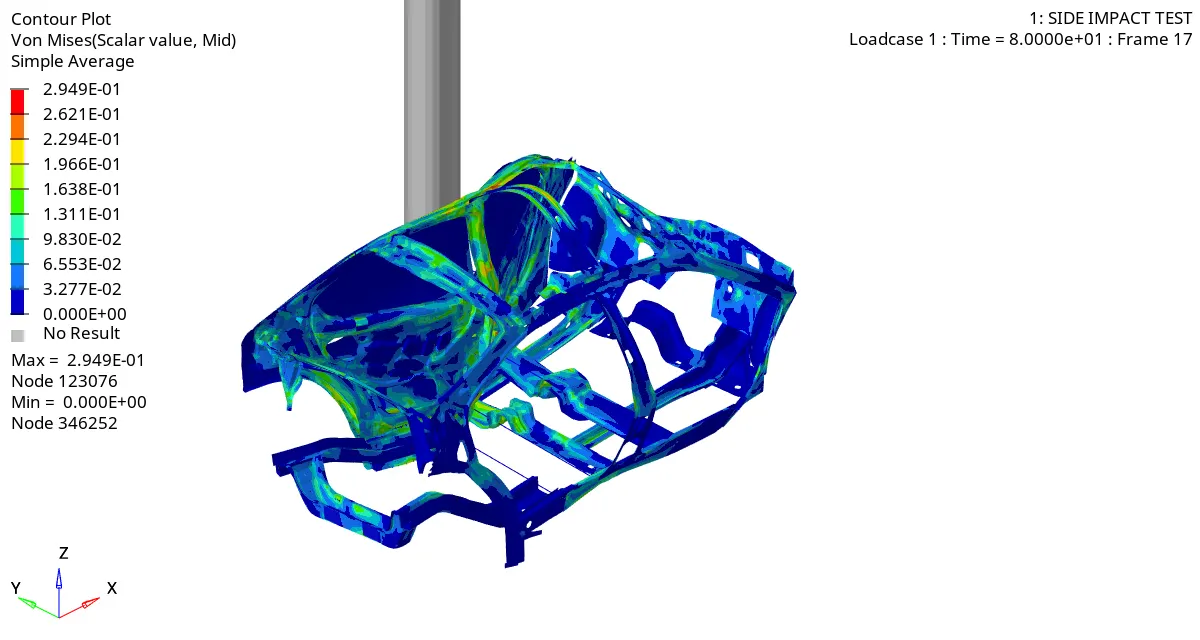
I plotted Von-Misses stress Max of 2.949E-01 Mpa during the crash.
CONCLUSION:
From this analysis, I got to know that the cross beams are very important in side crash scenarios to absorb maximum energy so that the impact on the passenger is reduced, By adding support to the cross members we can increase the energy absorption capacity of the beams so by that we can reduce the impact.
Errors & it's Rectification:-
We can find the errors for the incompatible conditions, unused sets, and some Th-related issues so we can clear all the issues by checking the properties of them and correcting them individually for unused sets we can also delete if we not need in further for analysis.