Assignment 4-RADIOSS Material Laws Challenge
OBJECTIVE: To observe the model with different conditions related to the material as to how it is reacting to the impact and make a conclusion of which is the best scenario.
Procedure:-
Case-1:-
Import the FAILURE_JOHNSON_0000.rad file and run the model as it is. Give the title name as Law2_epsmax_failure.
Step-1:
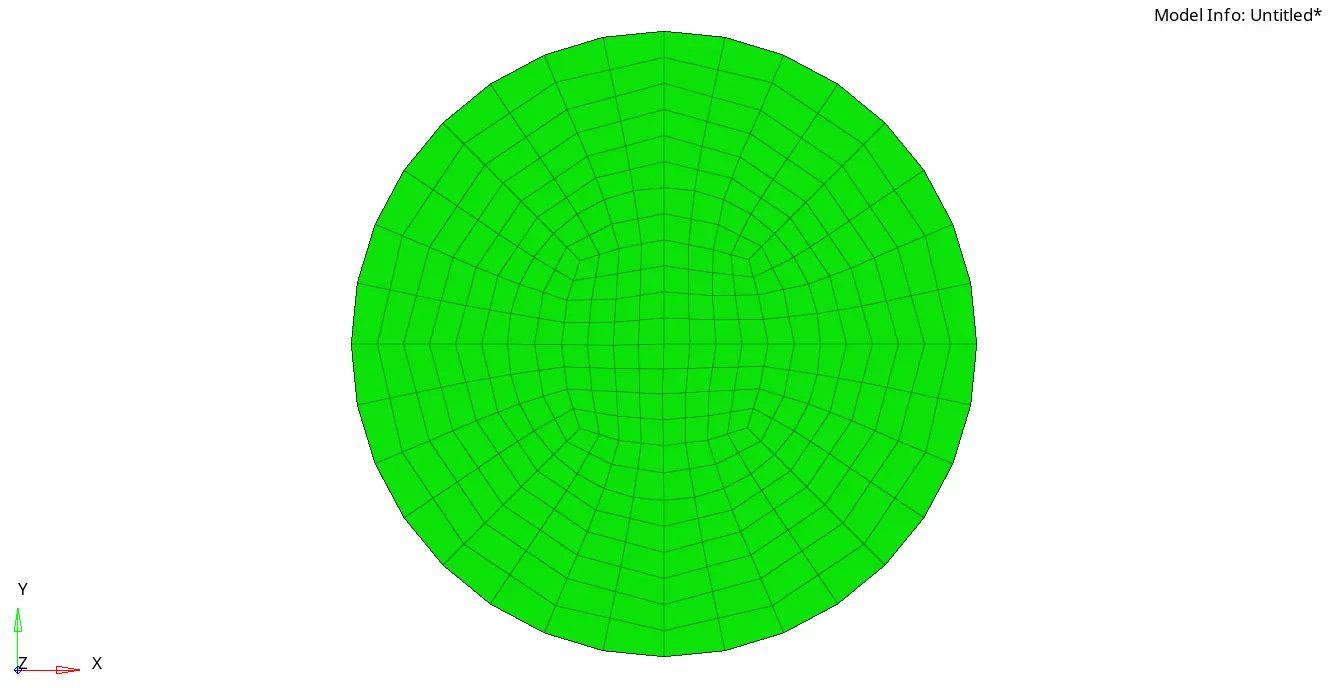
The given model is imported into the Radioss solver and run the simulation.
Step-2:
CYCLE TIME TIME-STEP ELEMENT ERROR I-ENERGY K-ENERGY T K-ENERGY R EXT-WORK MAS.ERR TOTAL MASS MASS ADDED
49379 5.010 0.1011E-03 SHELL 159 0.8% 0.2730E+05 67.81 62.38 0.2721E+05 0.000 9.228 0.000
The energy & mass error are acceptable so we can plot our results.
Step-3:
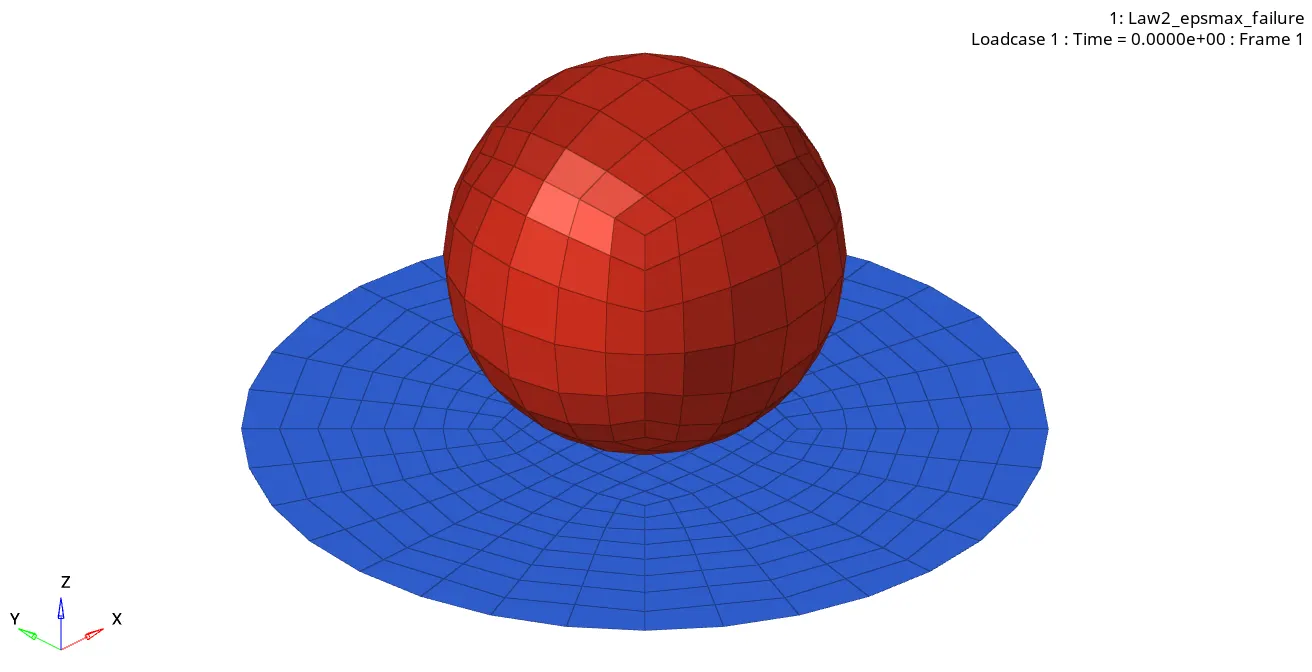
Now to run the animation H3d file was imported.
Step-4:
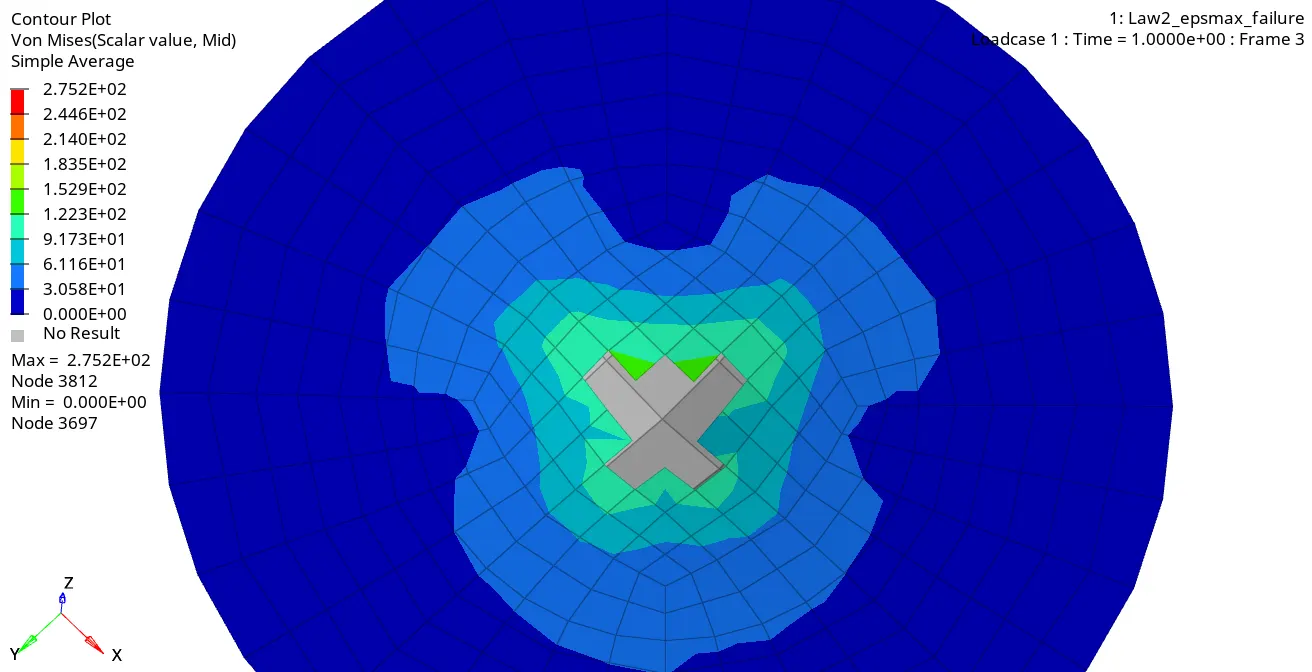
Here we can see the elements got deleted from the point of the simulation when the ball was entering as those elements exceeded the Failure plastic strain of 15.1%.
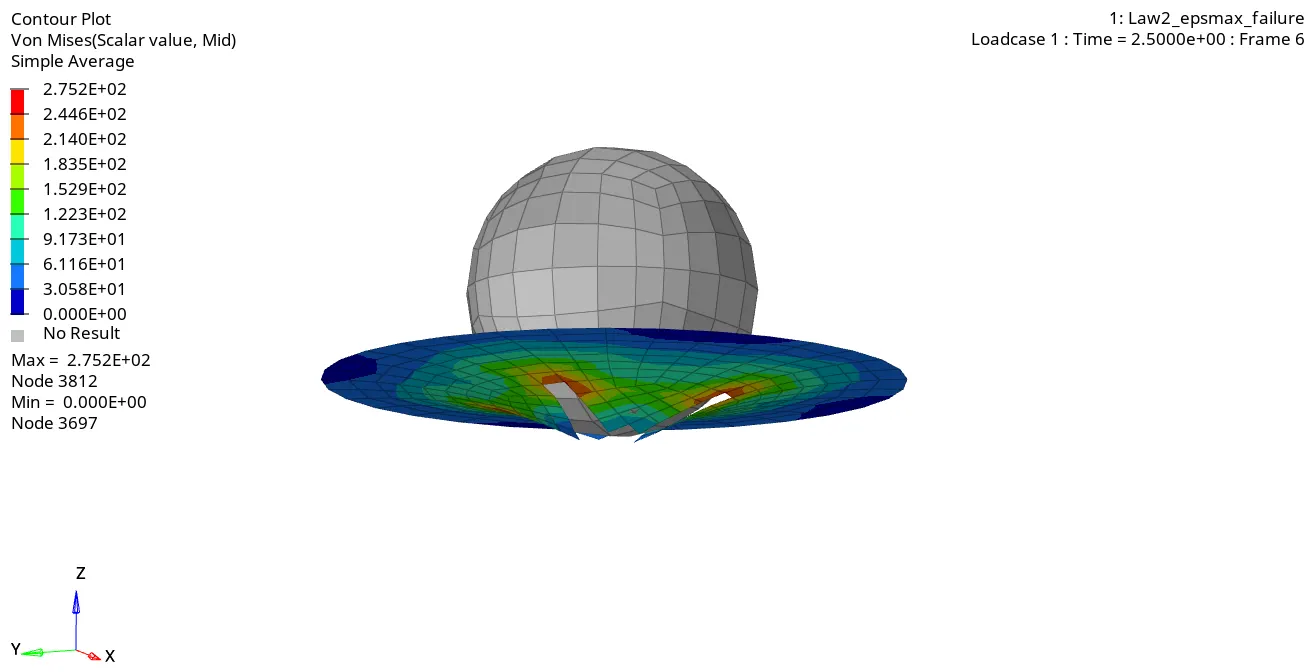
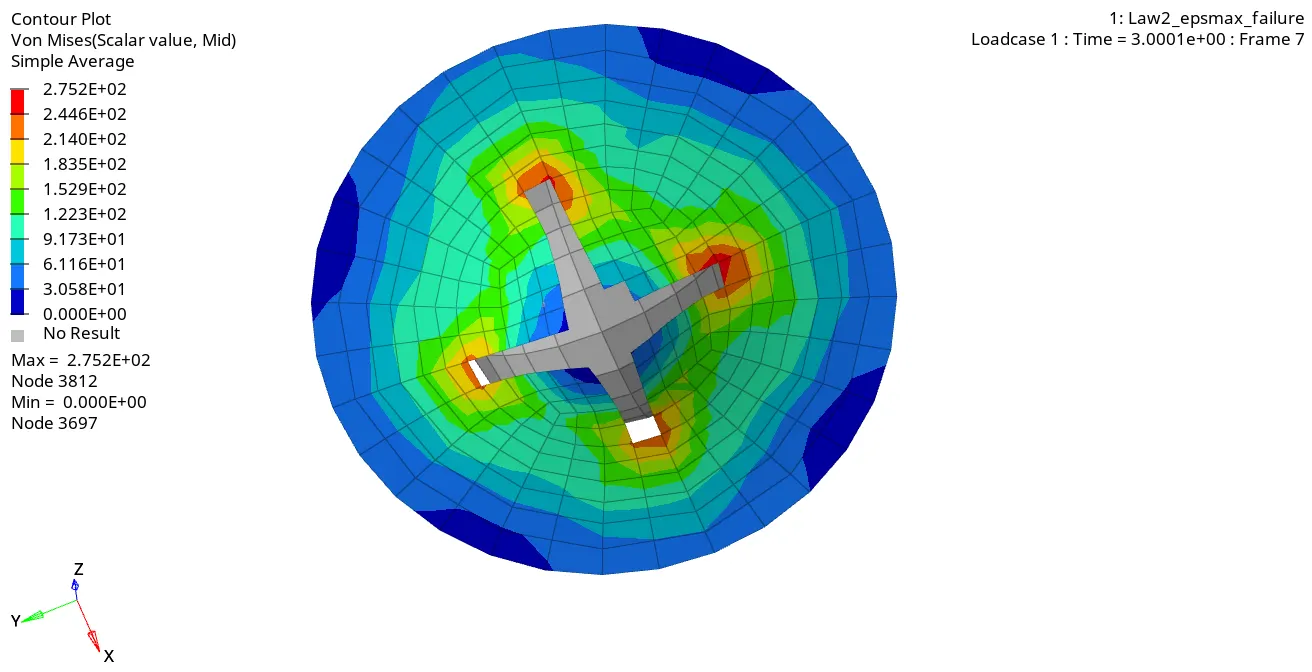
The elements were deleted during the progression of the simulation when it reached the Eps_Max value.
Step-5:
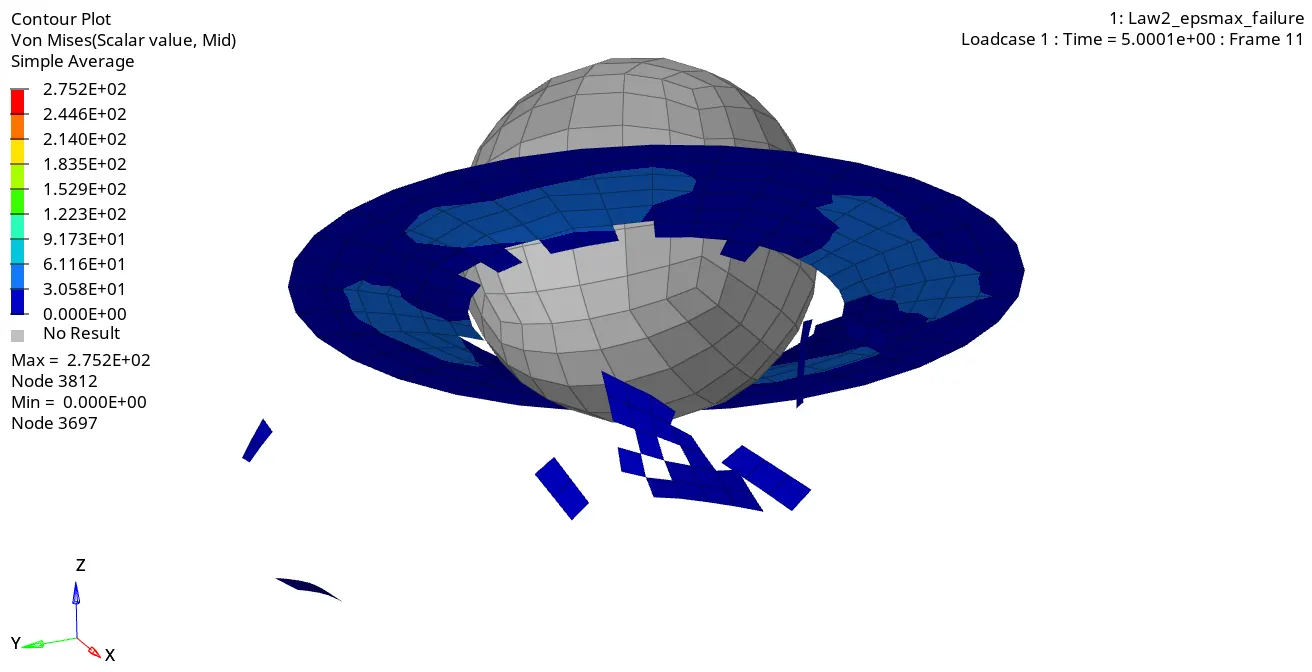
Even when the maximum stress (Pressure) is set to 425 Mpa the elements are deleted when the strain of 15.1% is reached so the elements are removed from the mesh in the impacted area even before the stress reaches the set value.
Step-6:
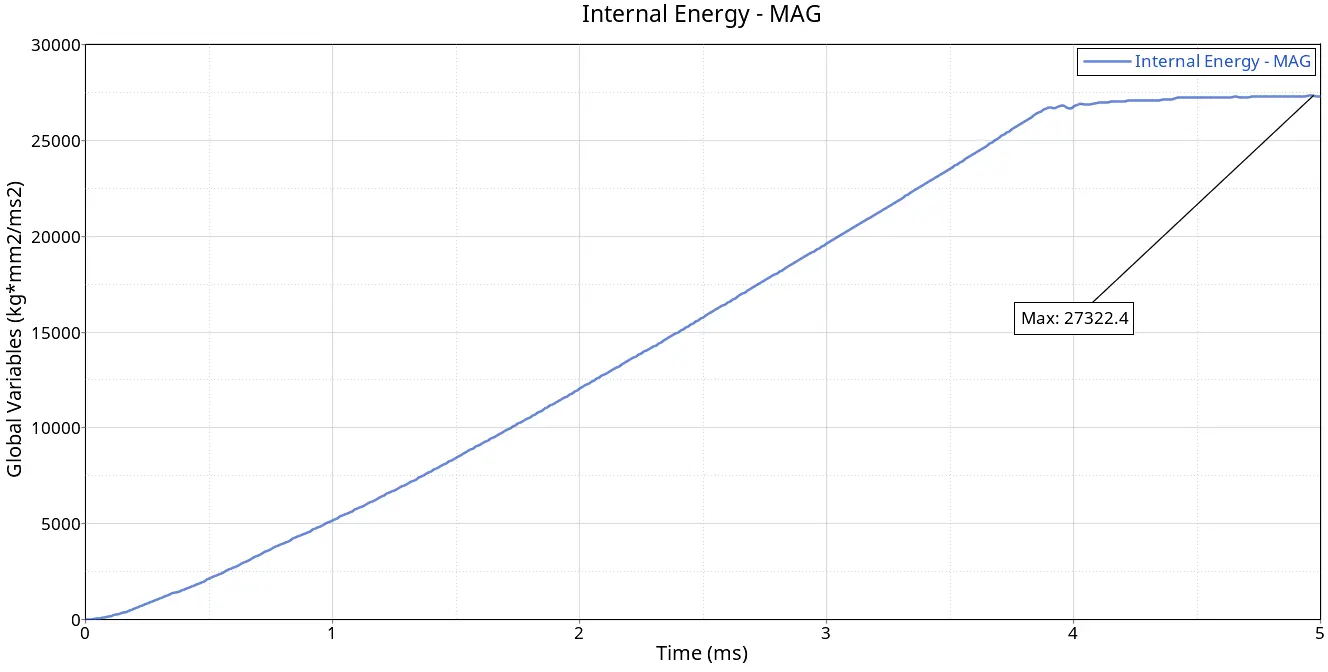
The elements got deformed with linear strain up to around 3.9 ms but when the maximum energy of 27322.4 J is observed, the elements got lost connectivity in the form of energy dissipation.
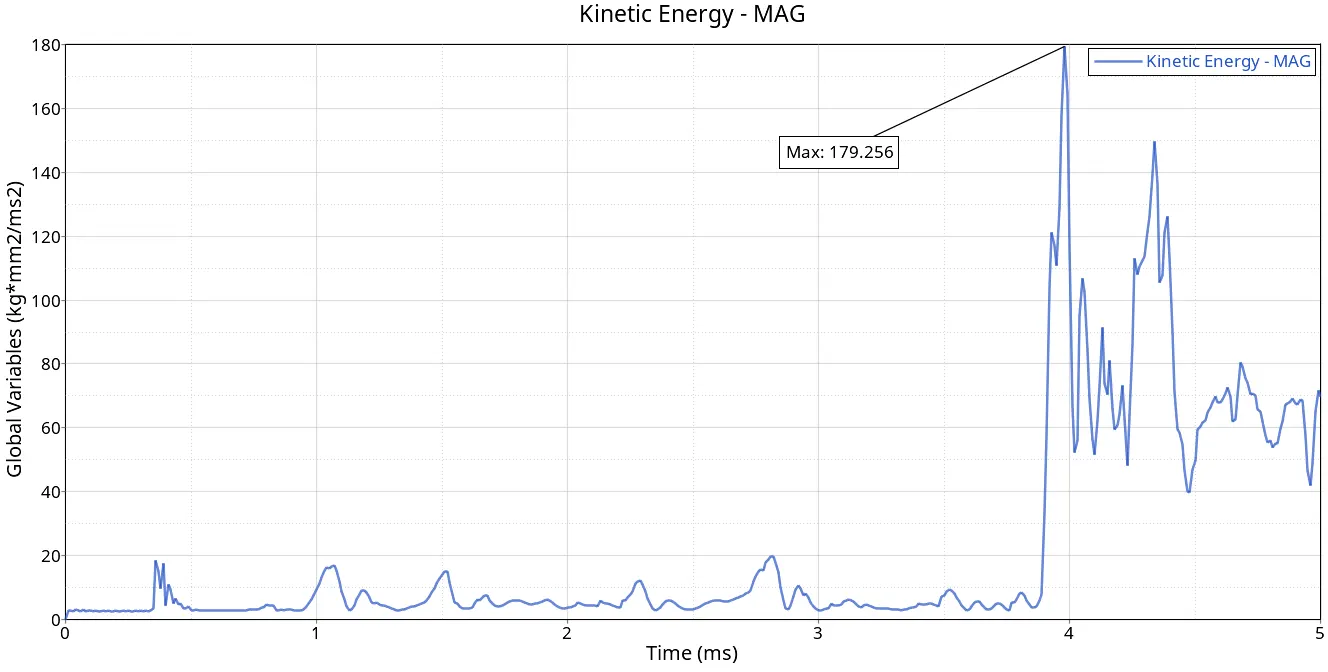
At around 3.9 ms the ball got fully penetrated, which means the mass is acting fully with maximum velocity.
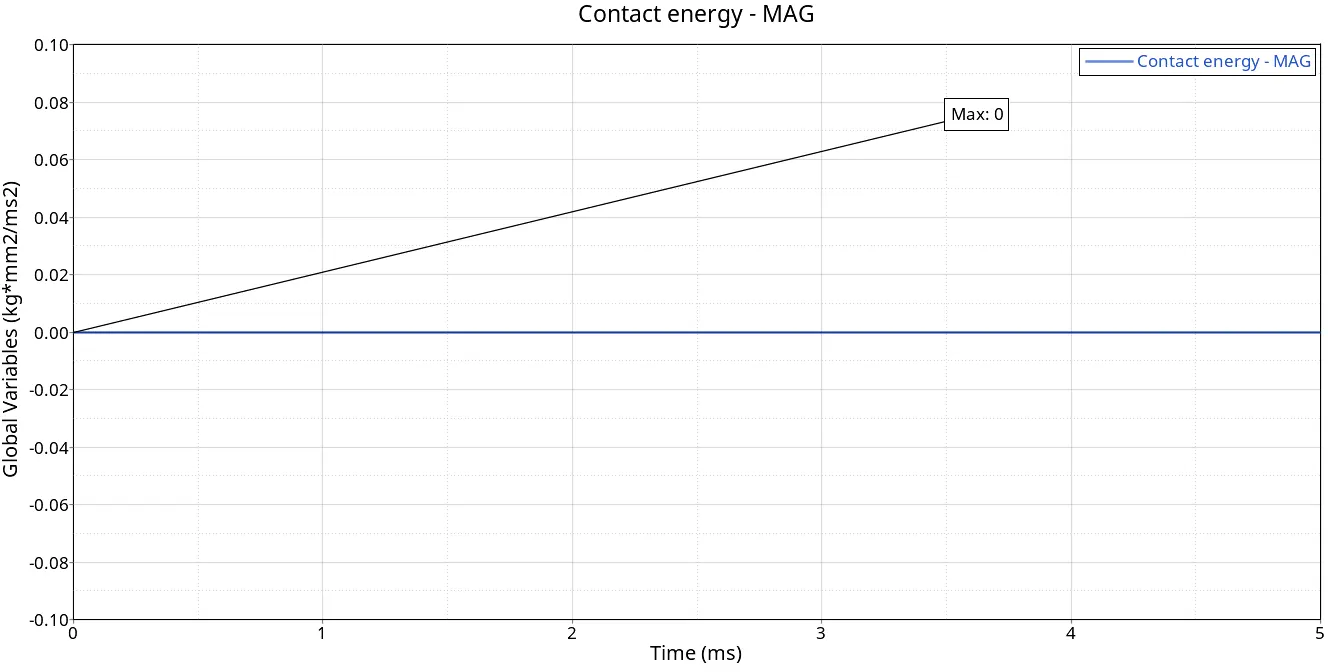
Contact energy is 0 as no contact of the elements to have frictional forces.
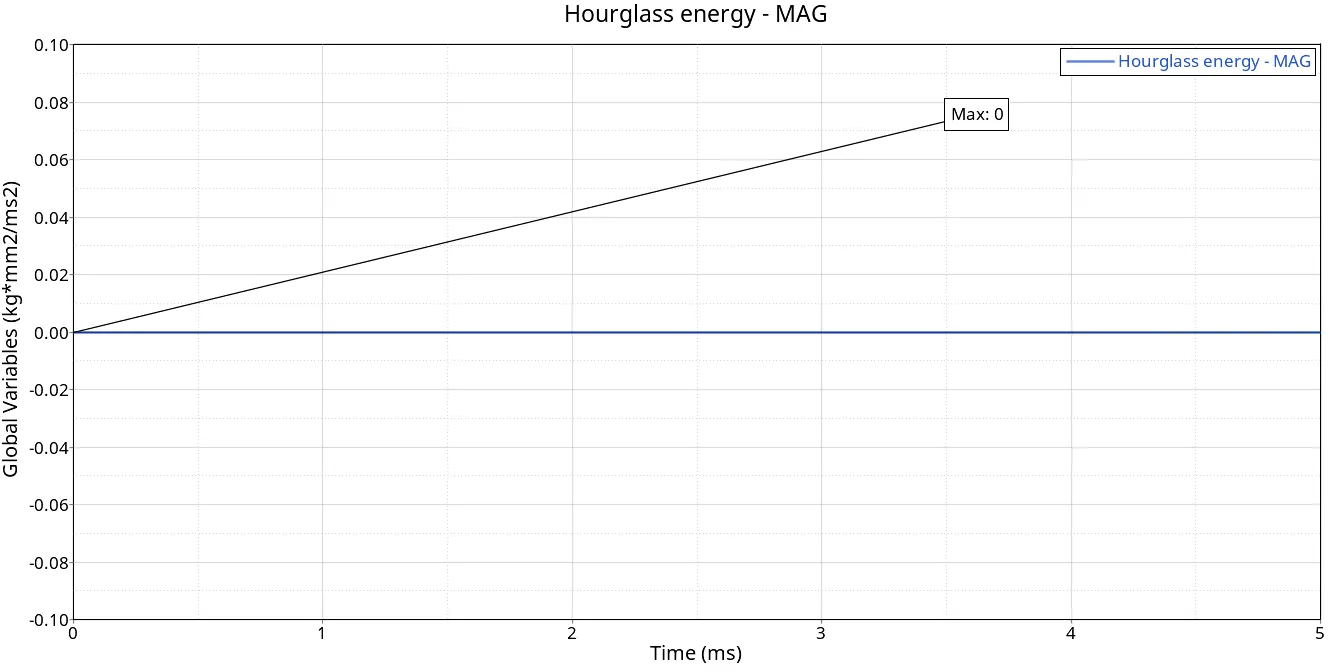
As we expected to have 0 loss of energy in the form of Hourglass energy because of we used QEPH in elemental formulation to avoid it.
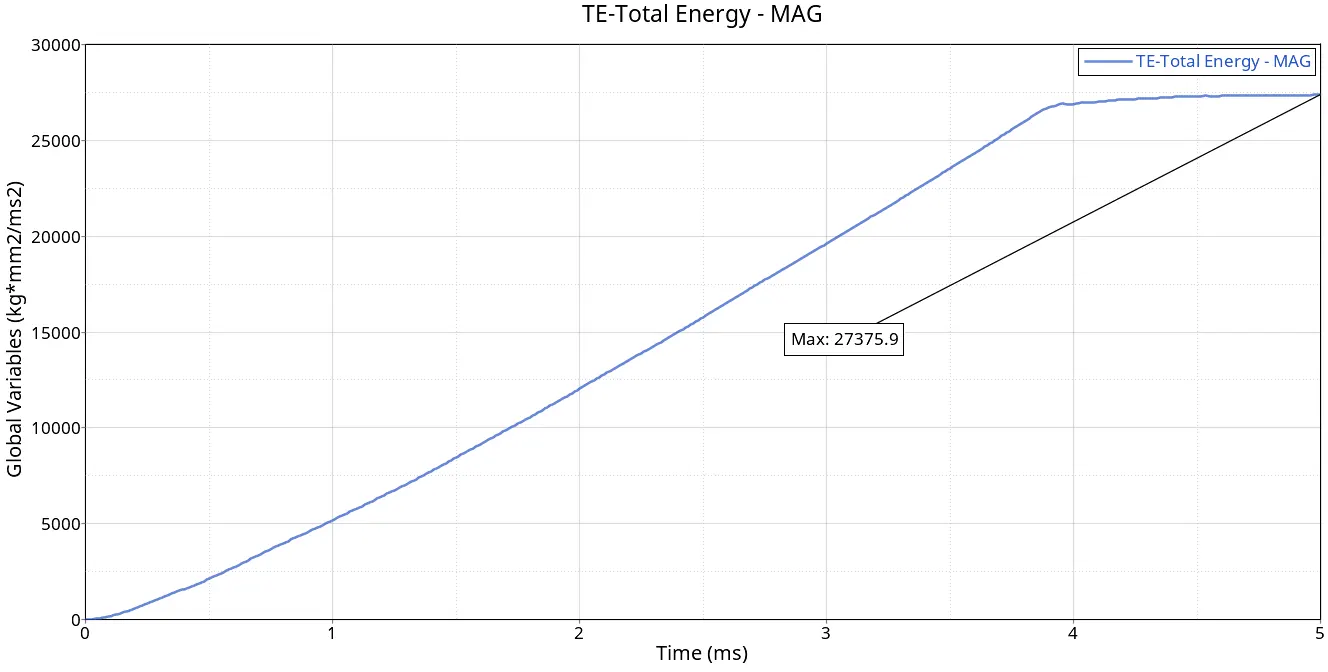
There is only a slight difference in internal and Total energy which is a good thing.
-------------------------------------------------------------------------------------------------------------------------------------------------------
Case-2:-
Import the case 1 rad file, named “Law2_epsmax_failure” and perform the simulation with failure plastic strain (EPS_p_max) and fail_Johson card enabled.
Changes to be made in /FAIL/JOHNSON card:
ifail_sh= 1
Dadv= 1
Ixfem= 1
Use the recommended values for the property card.
Give the title name as Law2_epsmax_crack.
Procedure:-
Step-1:
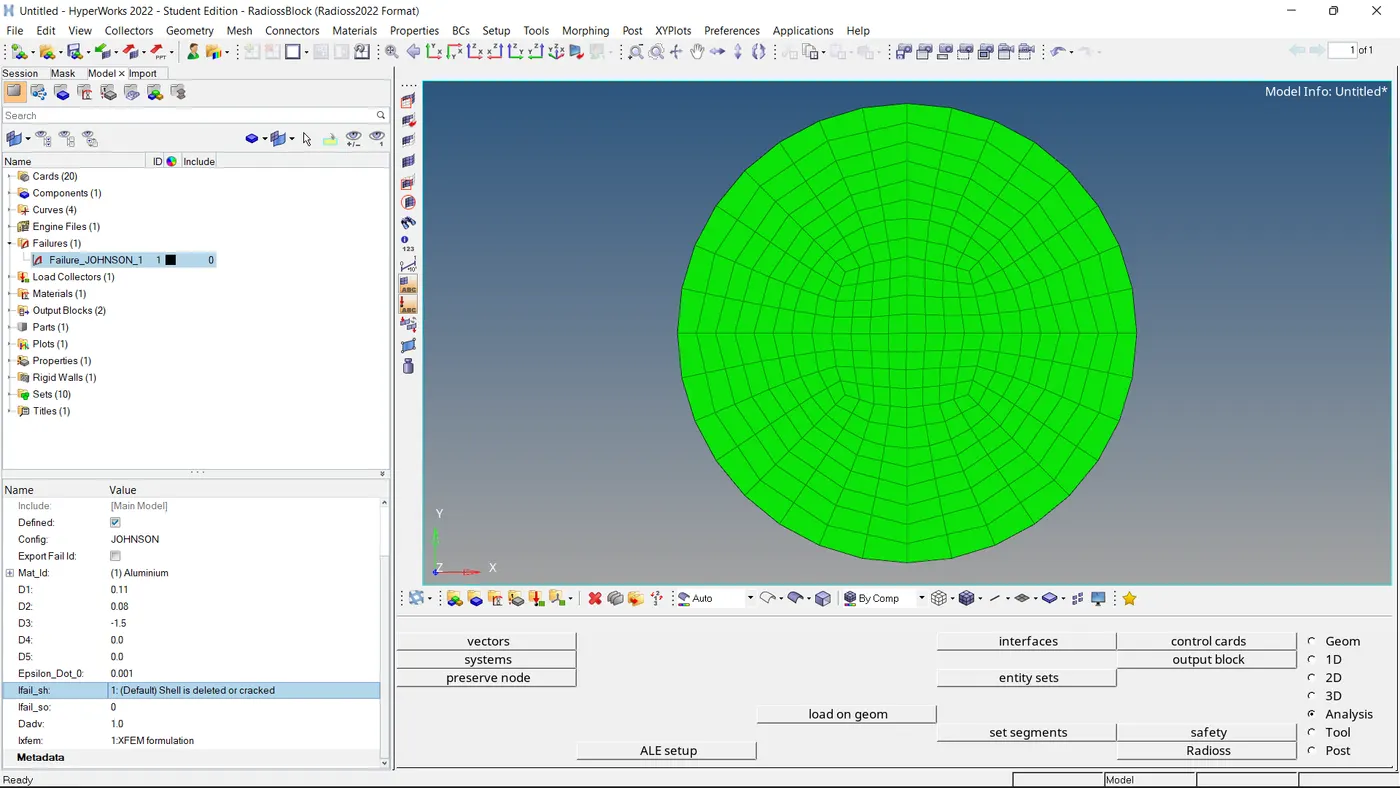
Here we need to set the failure card values to fun the simulation in this case.
Step-2:
CYCLE TIME TIME-STEP ELEMENT ERROR I-ENERGY K-ENERGY T K-ENERGY R EXT-WORK MAS.ERR TOTAL MASS MASS ADDED
49216 5.010 0.1069E-03 SHELL 210 4.1% 0.3082E+05 141.9 61.40 0.2980E+05 0.000 9.228 0.000
The energy error and mass error are acceptable so we can plot our results.
Step-3:
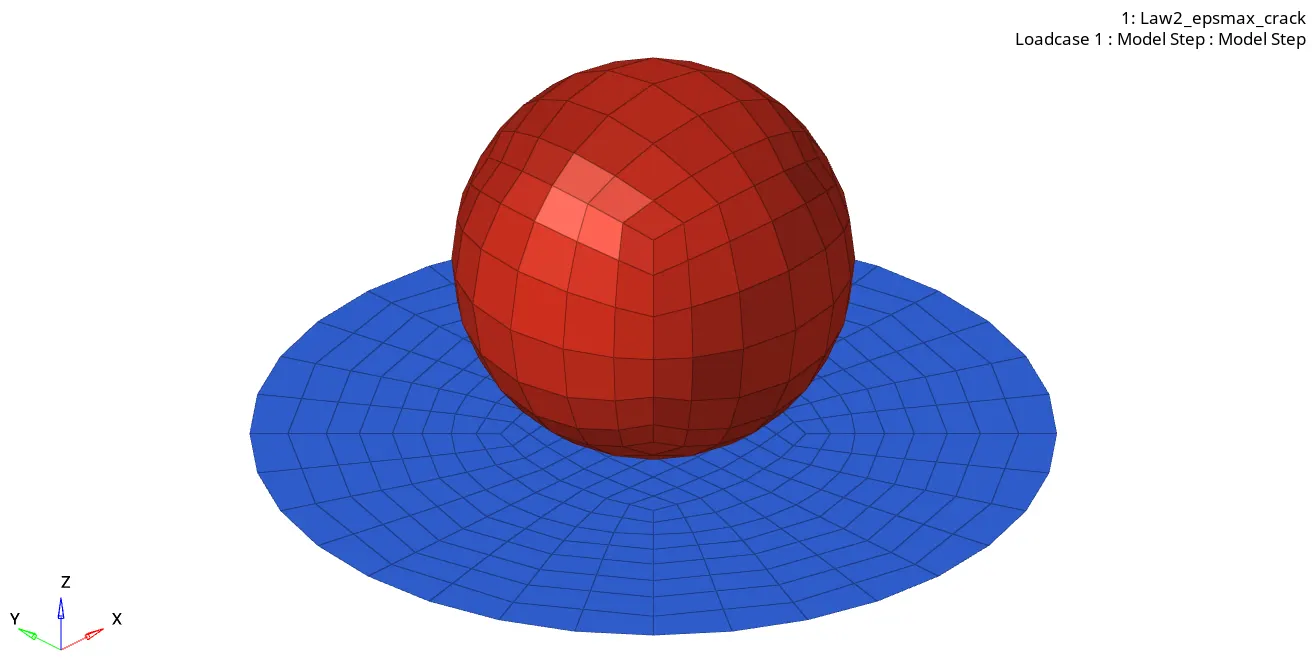
The model was imported into the hyperview to visualize the simulation.
Step-4:
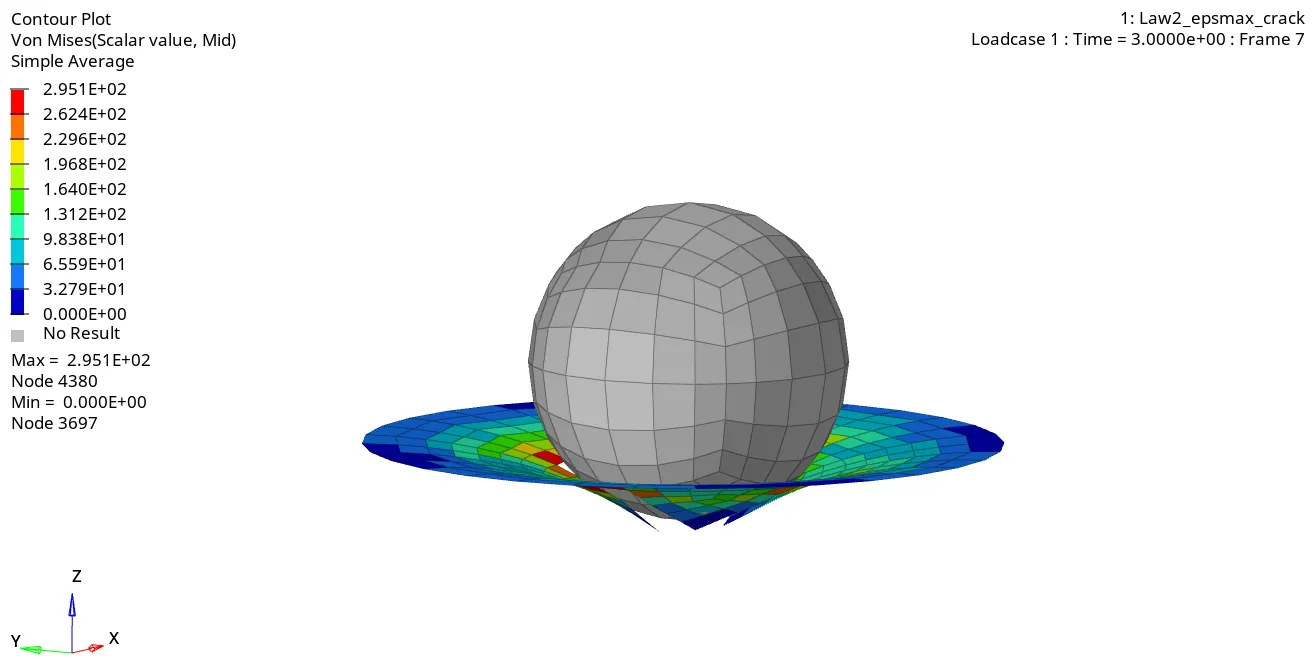
When the ball came into contact with the shells the energy dissipation got started.
Step-5:
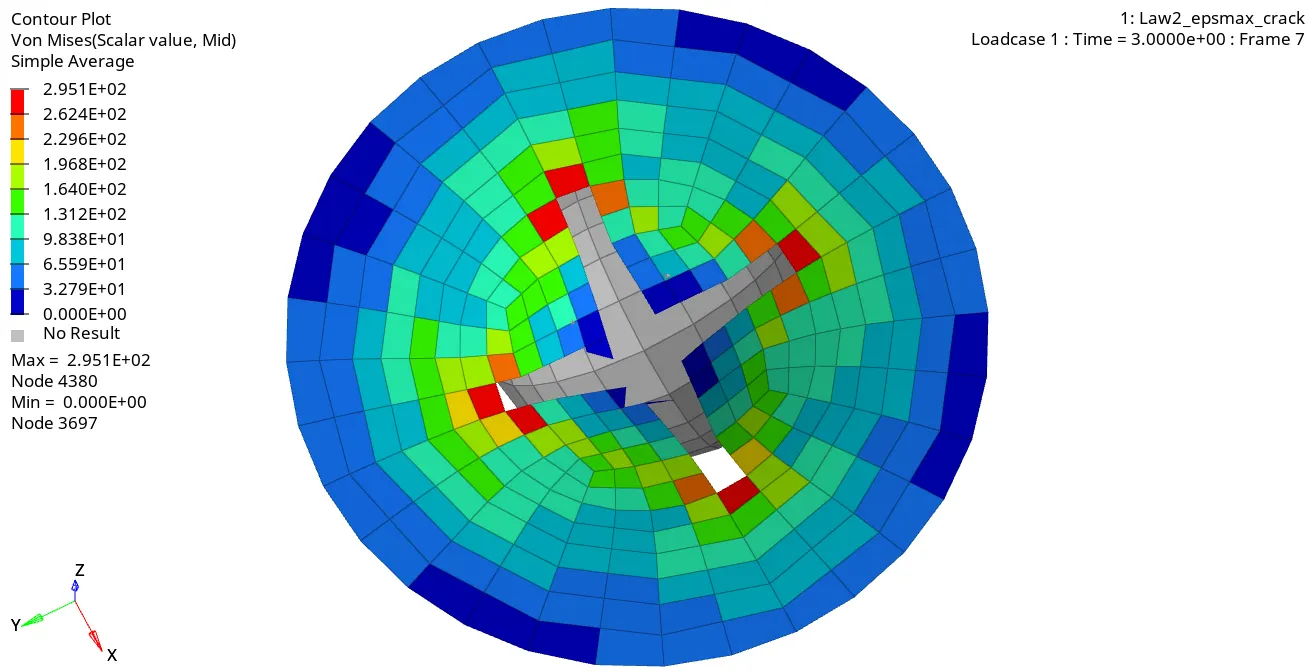
We can see more clearly how the crack is got propagated when it reaches the Eps_max value.
Step-6:
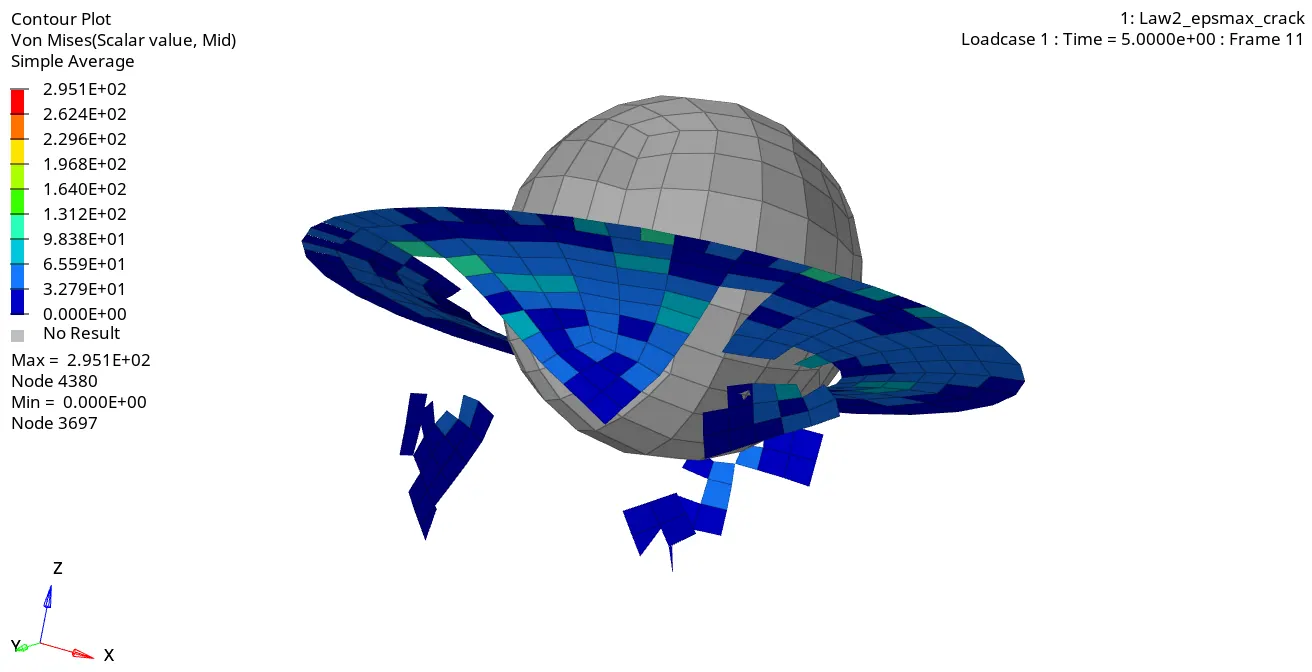
We can observe the elements that have reached EPS_MAX value got deleted and the other elements observed the energy.
Step-7:
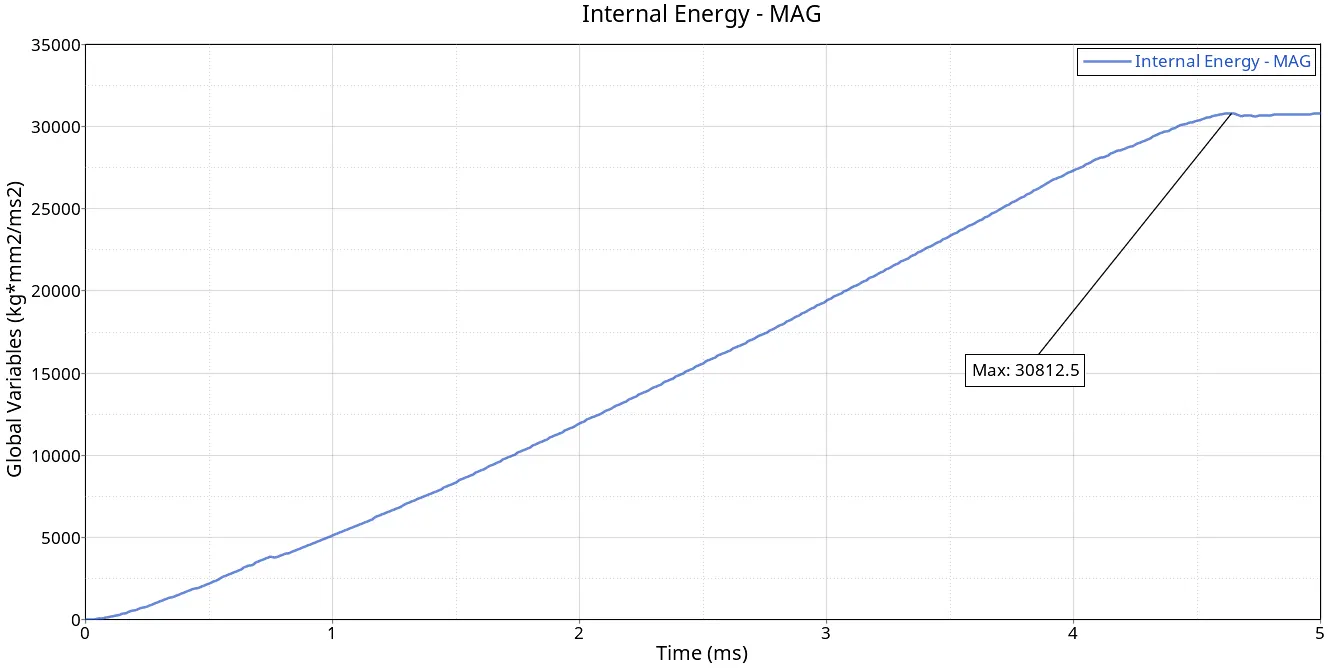
The elements got deformed with linear strain up to around 4.5 ms but when the maximum energy of 30812.5 J is observed, the elements got lost connectivity in the form of energy dissipation.
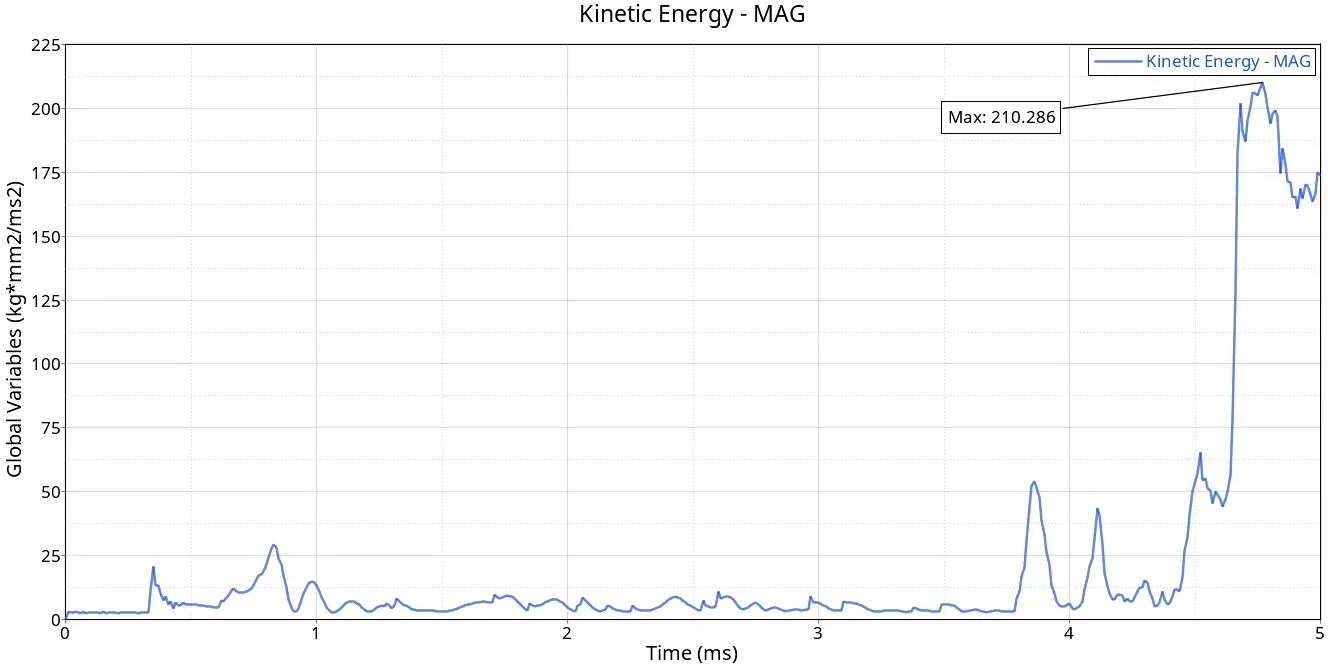
At around 4.5 ms the ball got fully penetrated, which means the mass is acting fully with maximum velocity.
Contact energy is 0 as no contact of the elements to have frictional forces.
As we expected to have 0 loss of energy in the form of Hourglass energy because we used QEPH in elemental formulation to avoid it.
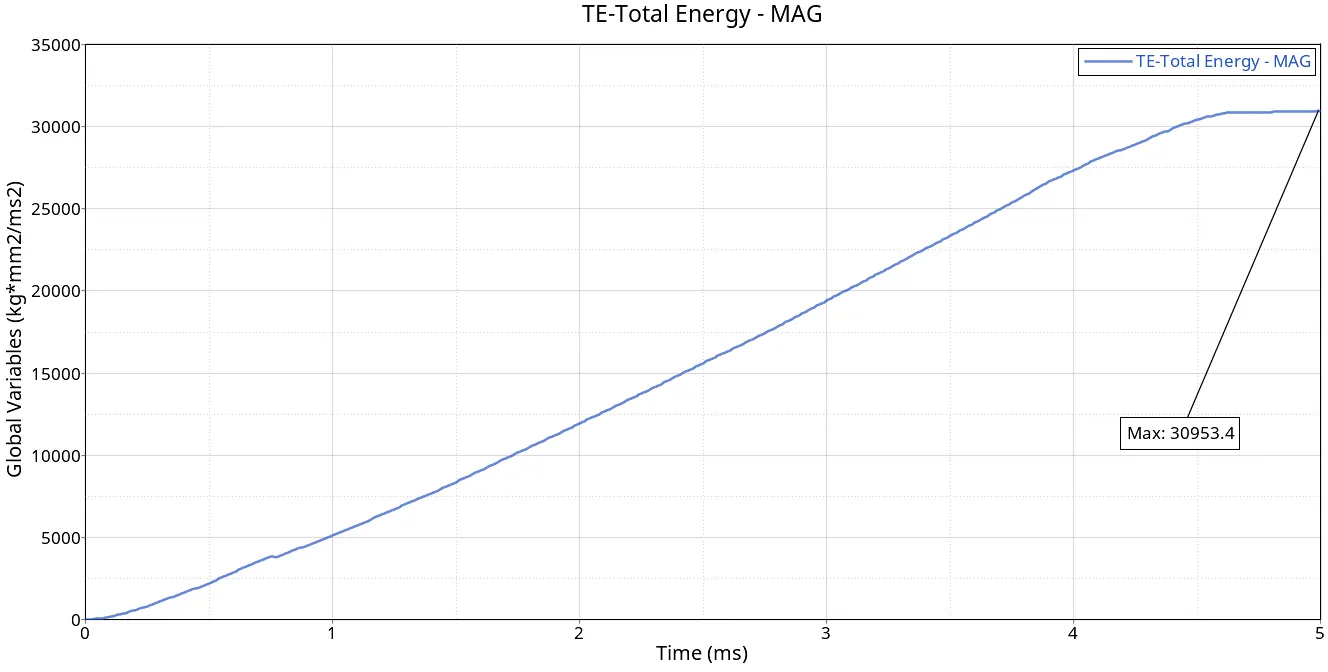
There is only a slight difference in internal and Total energy with a slight increase in total energy.
---------------------------------------------------------------------------------------------------------------------------------------
Case-3:-
Import the case 2 rad file, named “Law2_epsmax_crack” and perform the simulation by removing the fail_Johnson failure card. Give the title name as Law2_epsmax_nofail.
Give the title name as Law2_epsmax_crack.
Procedure:-
Step-1:
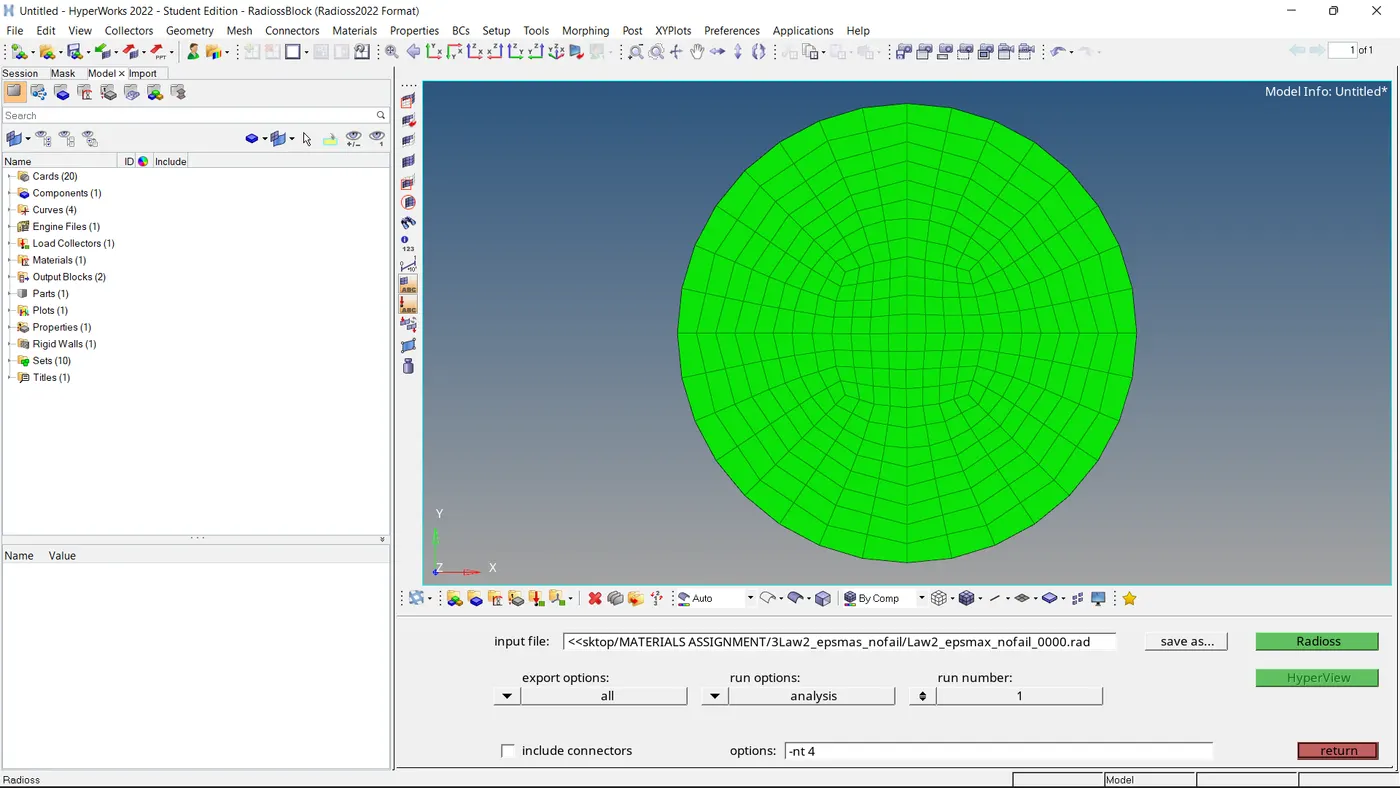
The model was imported and immediately as per this case, I deleted the Failure card before running the simulation.
Step-2:
CYCLE TIME TIME-STEP ELEMENT ERROR I-ENERGY K-ENERGY T K-ENERGY R EXT-WORK MAS.ERR TOTAL MASS MASS ADDED
49407 5.010 0.1010E-03 SHELL 159 0.8% 0.2744E+05 87.08 62.10 0.2736E+05 0.000 9.228 0.000
The energy & mass errors are acceptable so we can plot our results.
Step-3:
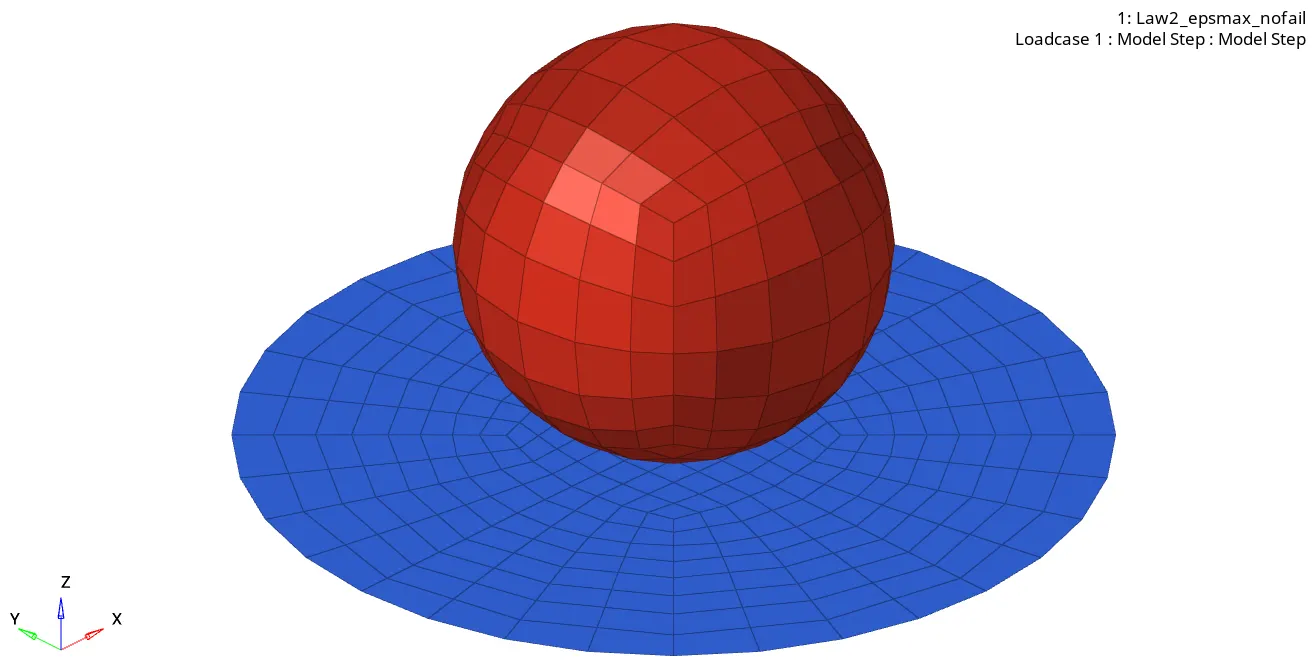
The model was imported into the hyperview to visualize the simulation.
Step-4:
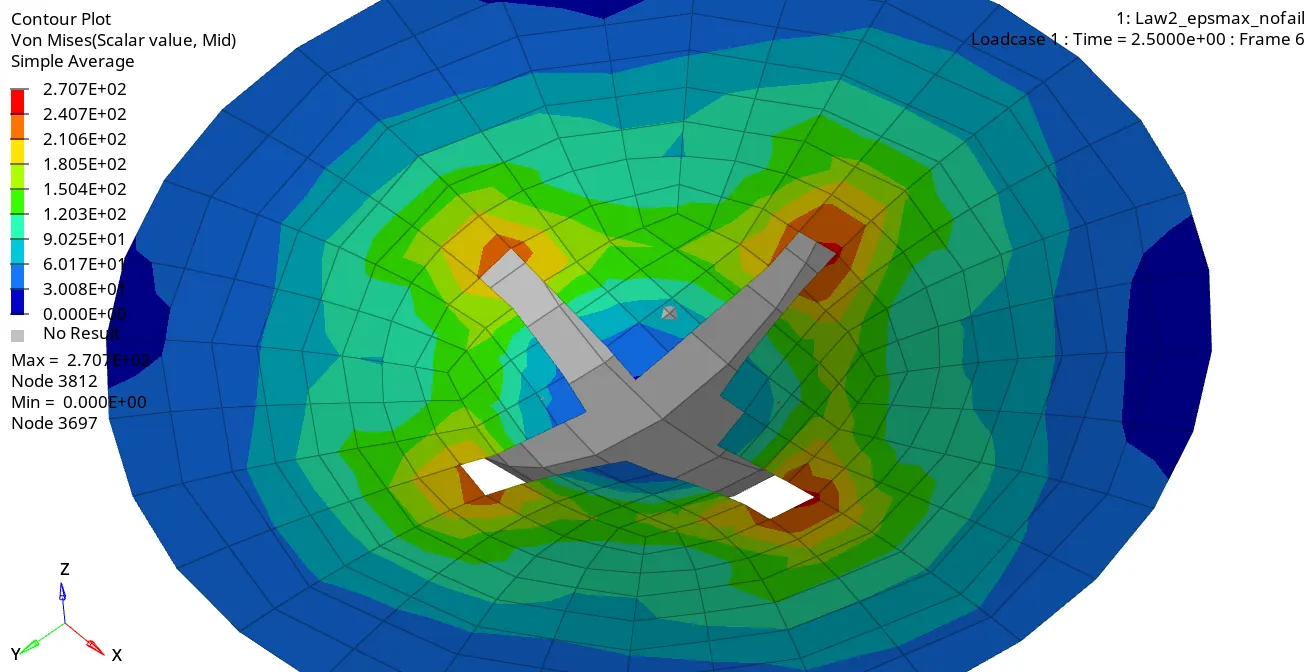
Even when the maximum stress (Pressure) is set to 425 Mpa the elements are deleted when the strain of 15.1% is reached so the elements are removed from the mesh in the impacted area even before the stress reaches the set value.
Step-5:
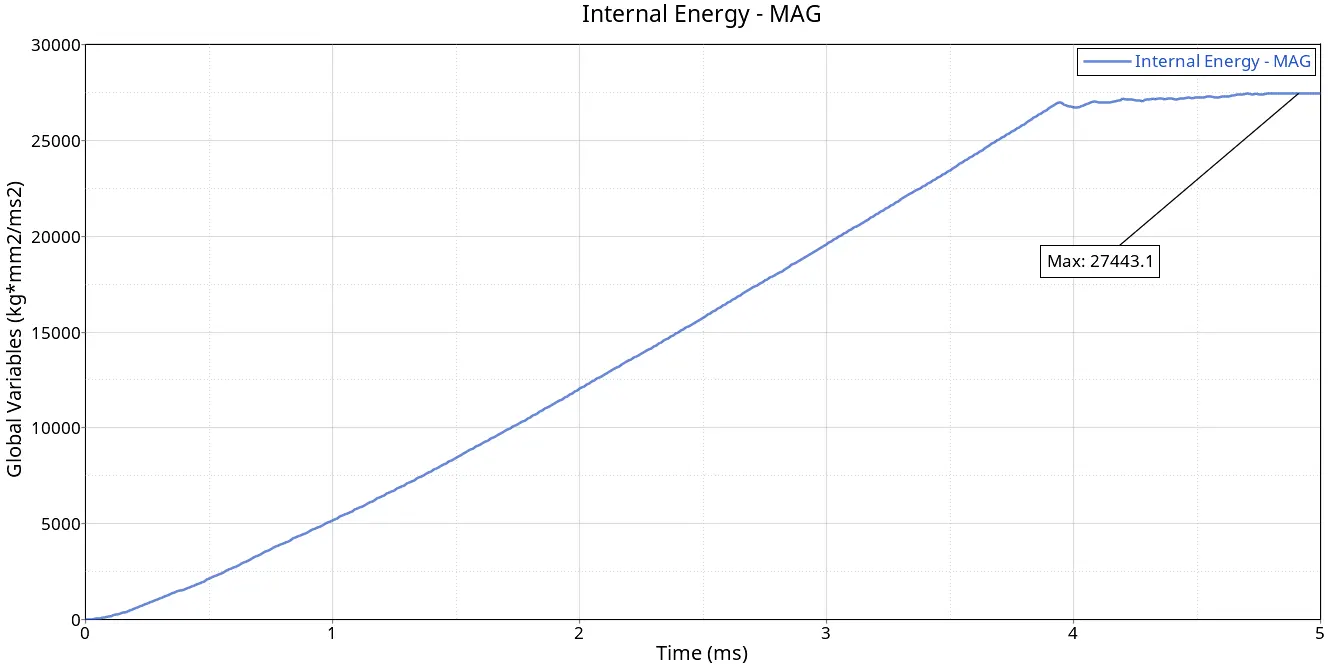
The elements got deformed with linear strain up to around 4 ms but when the maximum energy of 27443.1 J is observed, the elements got lost connectivity in the form of energy dissipation.
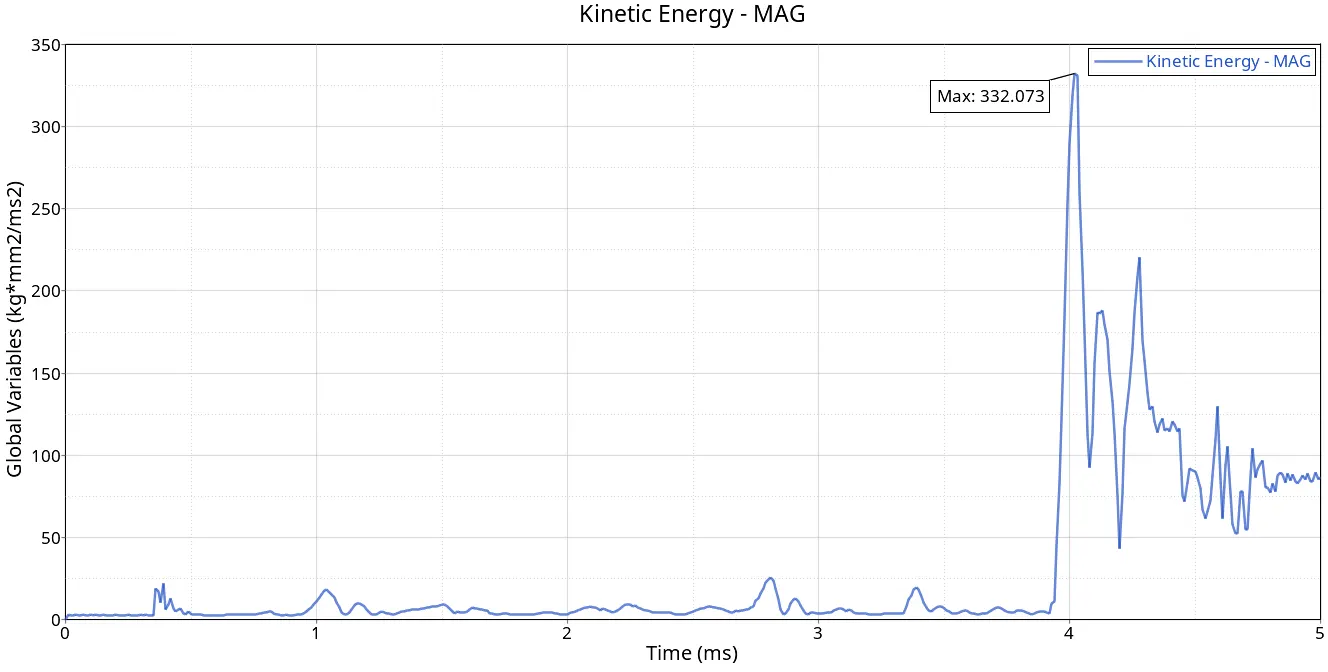
At around 4 ms the ball got fully penetrated, which means the mass is acting fully with maximum velocity.
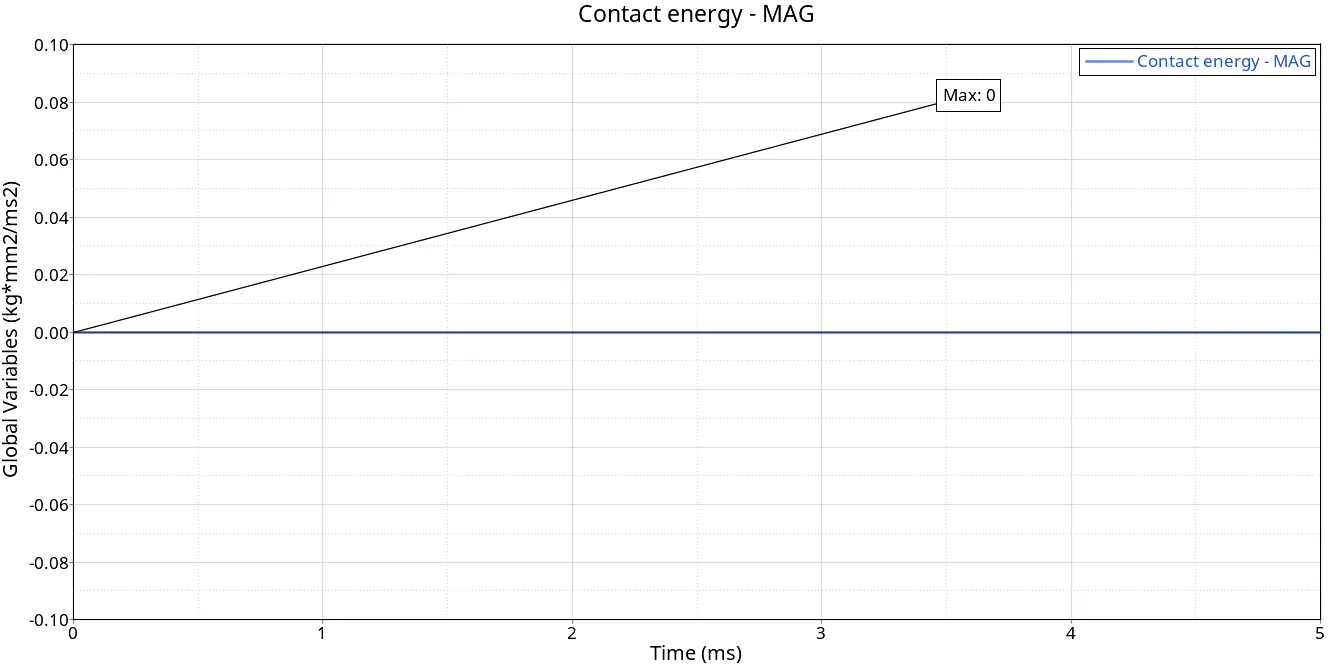
Contact energy is 0 as no contact of the elements to have frictional forces.
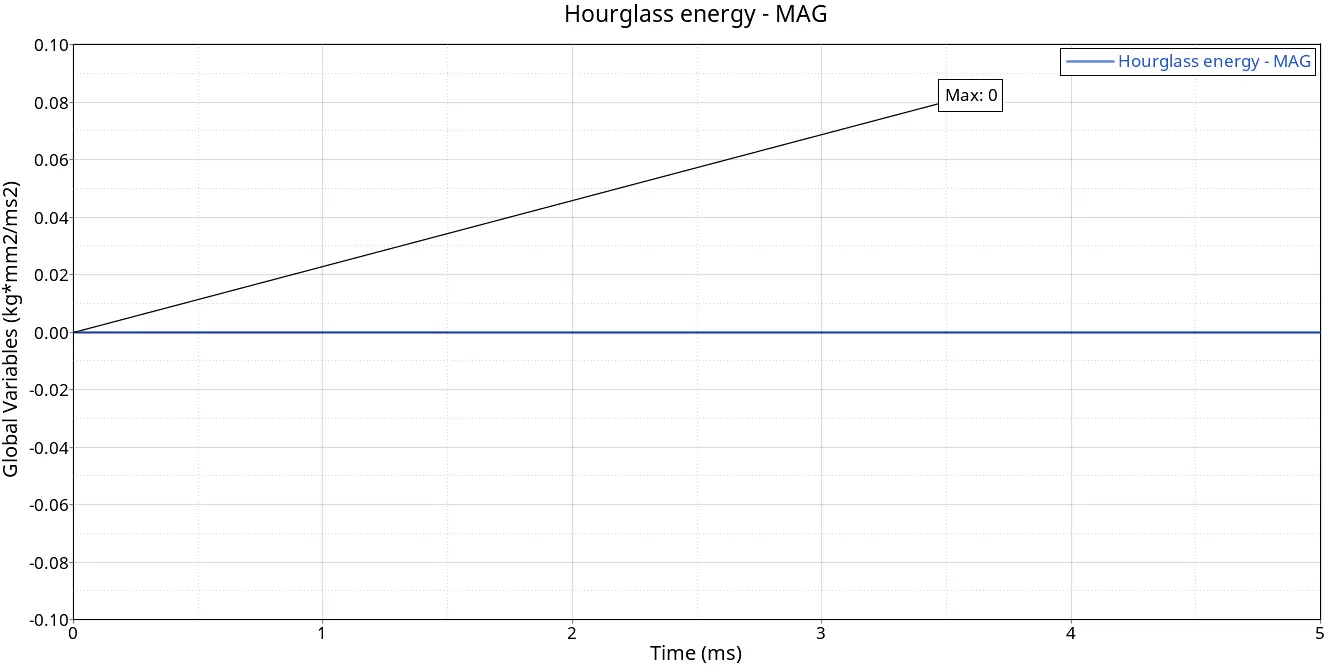
As we expected to have 0 loss of energy in the form of Hourglass energy because we used QEPH in elemental formulation to avoid it.
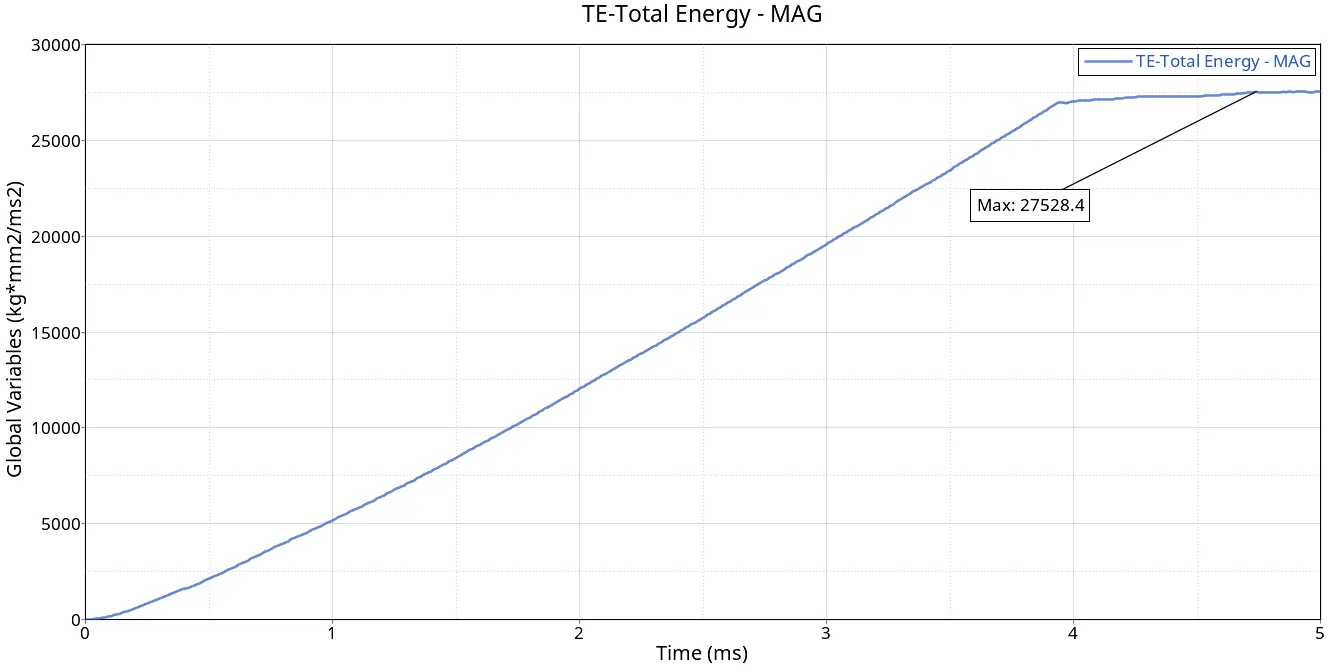
There is only a slight difference in internal and Total energy which is a good thing.
---------------------------------------------------------------------------------------------------------------------------------------
Case-4:-
Import the case 3 rad file, named “Law2_epsmax_nofail” and perform the simulation by removing both the failure plastic strain (EPS_p_max) and the fail_Jhonson failure card.
Procedure:-
Step-1:
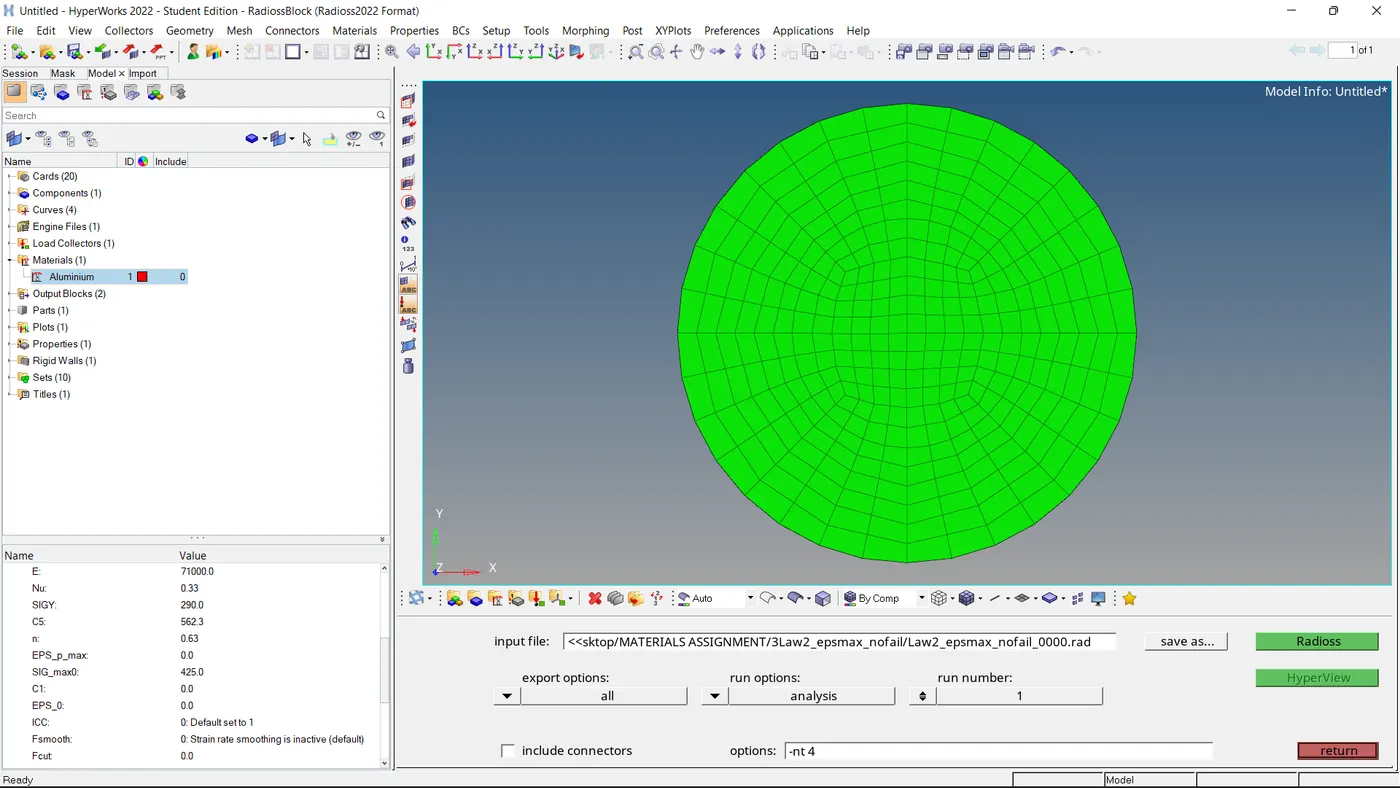
As per this case the Eps_p_max the failure plastic strain is 0, we are only running the simulation with maximum stress value of 425 Mpa.
Step-2:
CYCLE TIME TIME-STEP ELEMENT ERROR I-ENERGY K-ENERGY T K-ENERGY R EXT-WORK MAS.ERR TOTAL MASS MASS ADDED
48736 5.010 0.1052E-03 SHELL 159 3.0% 0.6487E+05 2.969 0.2465E-01 0.6298E+05 0.000 9.228 0.000
The energy & mass errors are acceptable so we can plot our results.
Step-3:
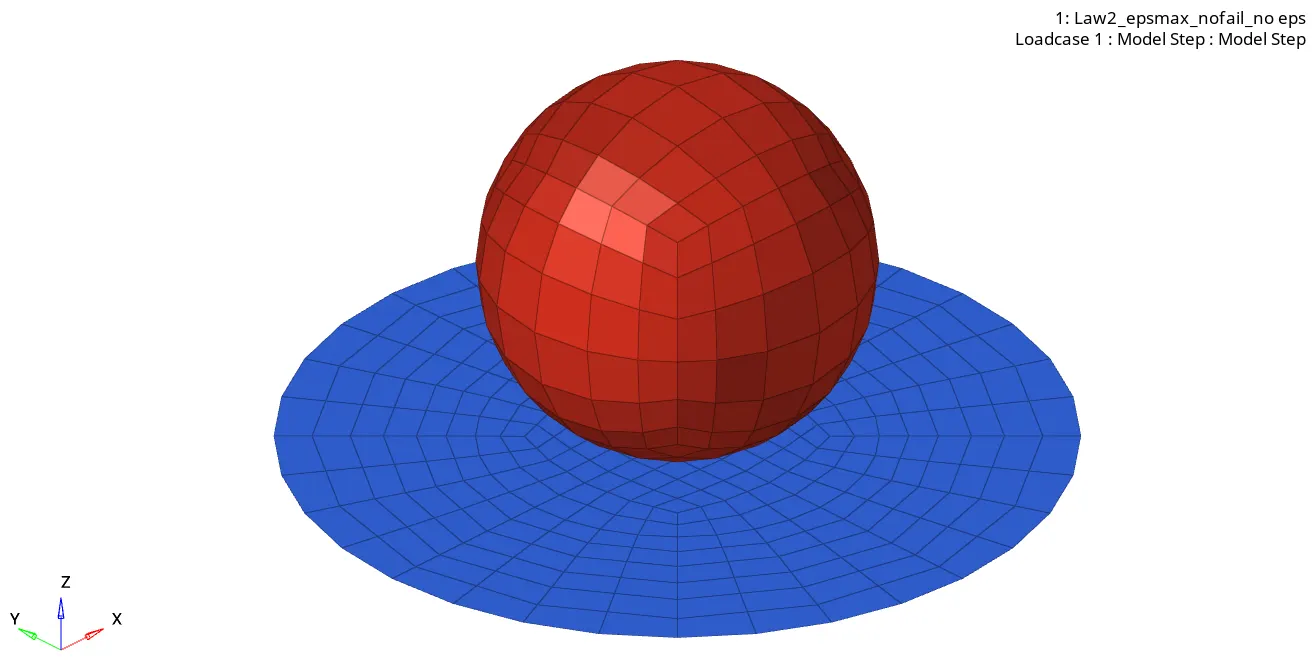
The model was imported into the hyperview to visualize the simulation.
Step-4:
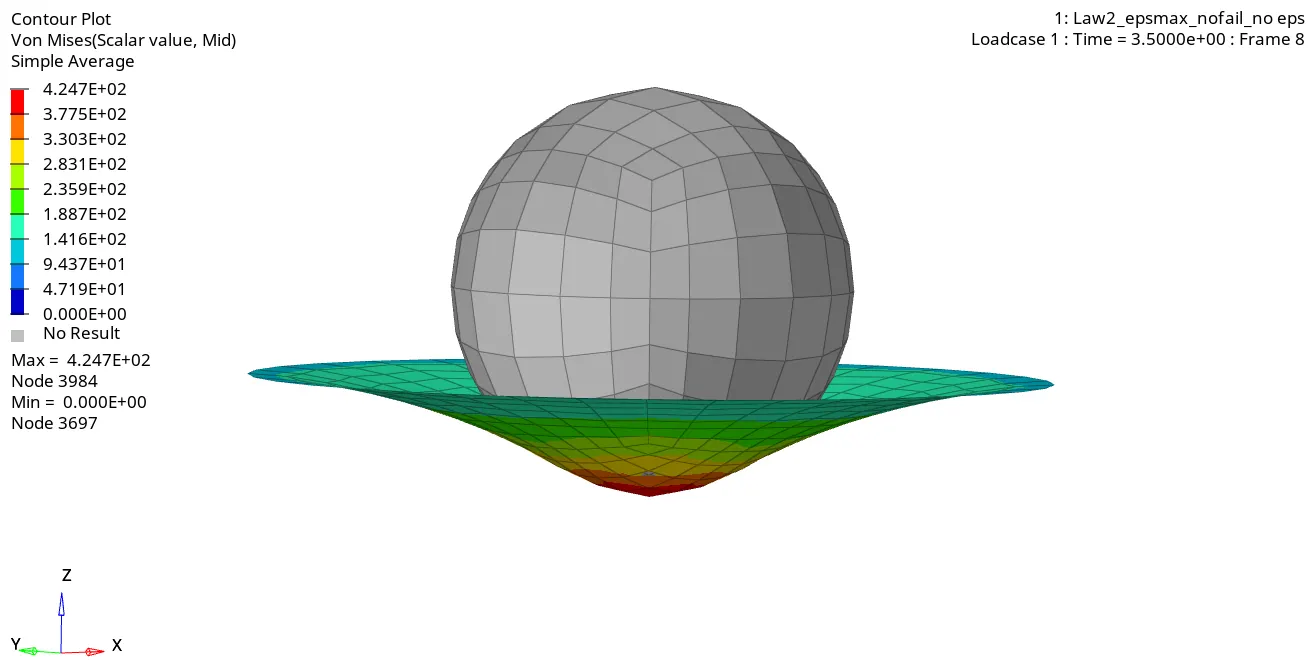
Here the stress values are recorded at around 425 Mpa as no failure plastic strain value is assigned.
Step-5:
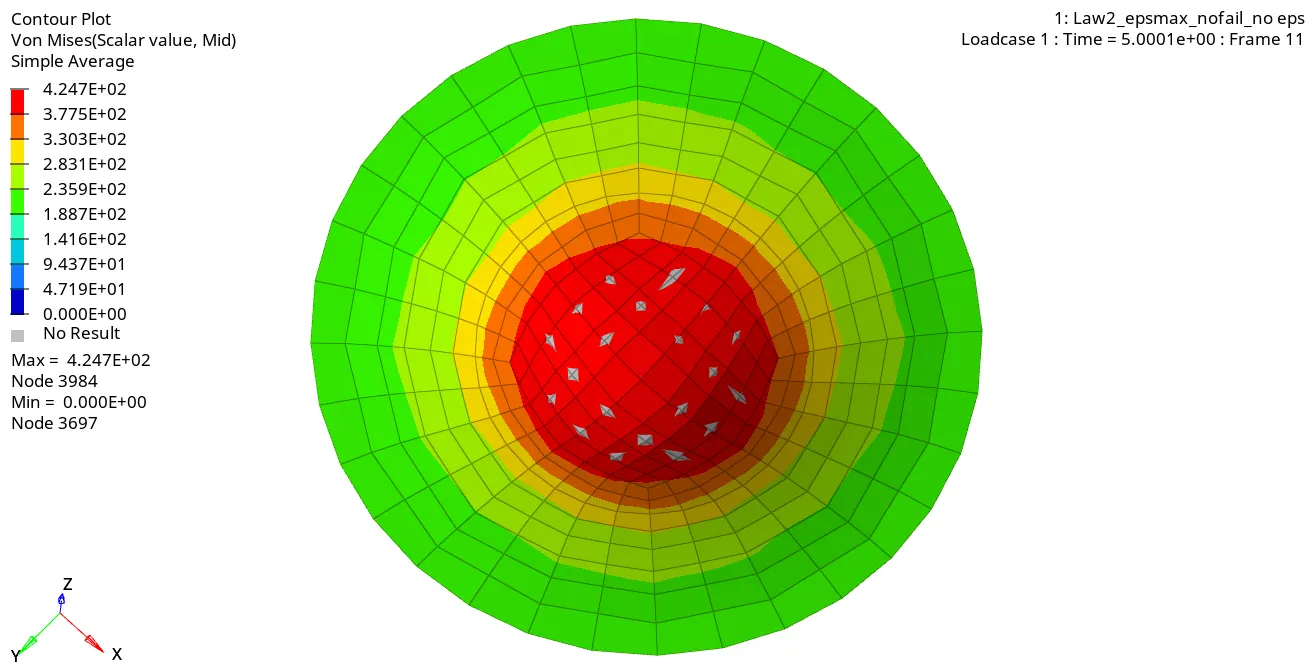
As the maximum stress (Pressure) is set to 425 Mpa the elements are not deleted and no the elements are removed from the mesh in the impacted area even before the stress reaches the set value because there is no failure plastic strain value, the total energy is being absorbed by the material without dissipation.
Step-6:
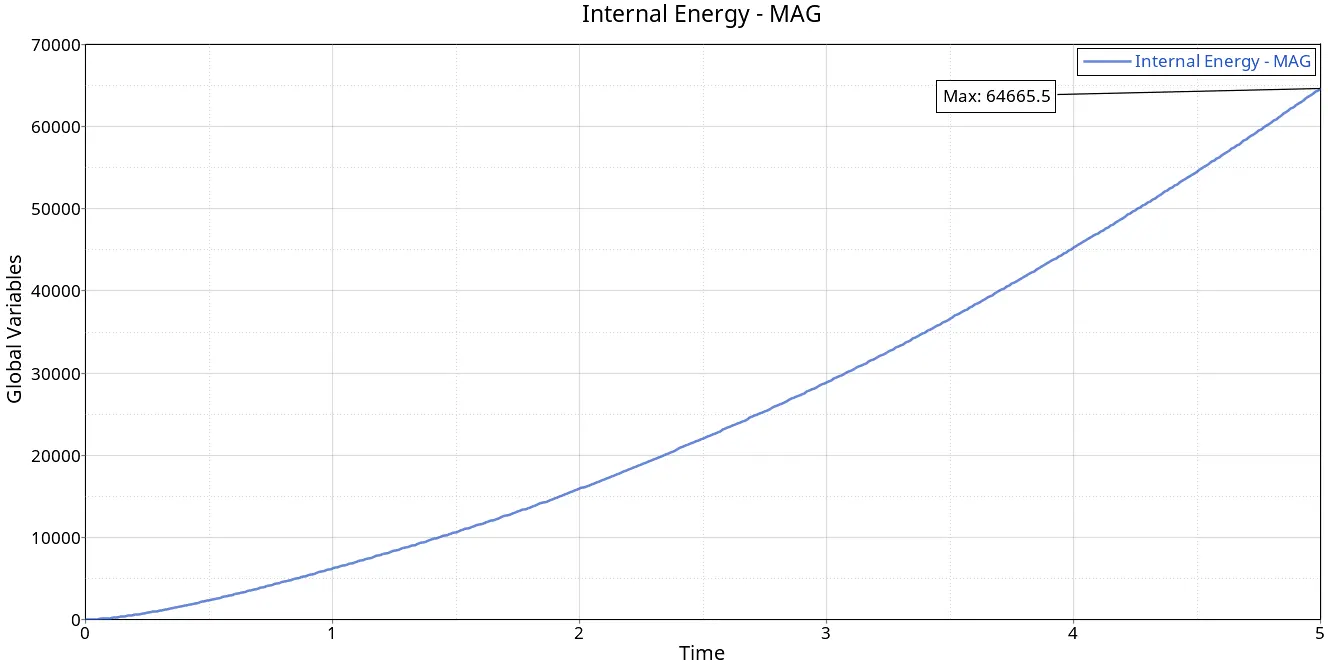
The elements got deformed with linear strain up to last with the maximum energy of 64665.5 J is observed and there are no elements got deleted in the form of energy dissipation because of total impact energy is absorbed.
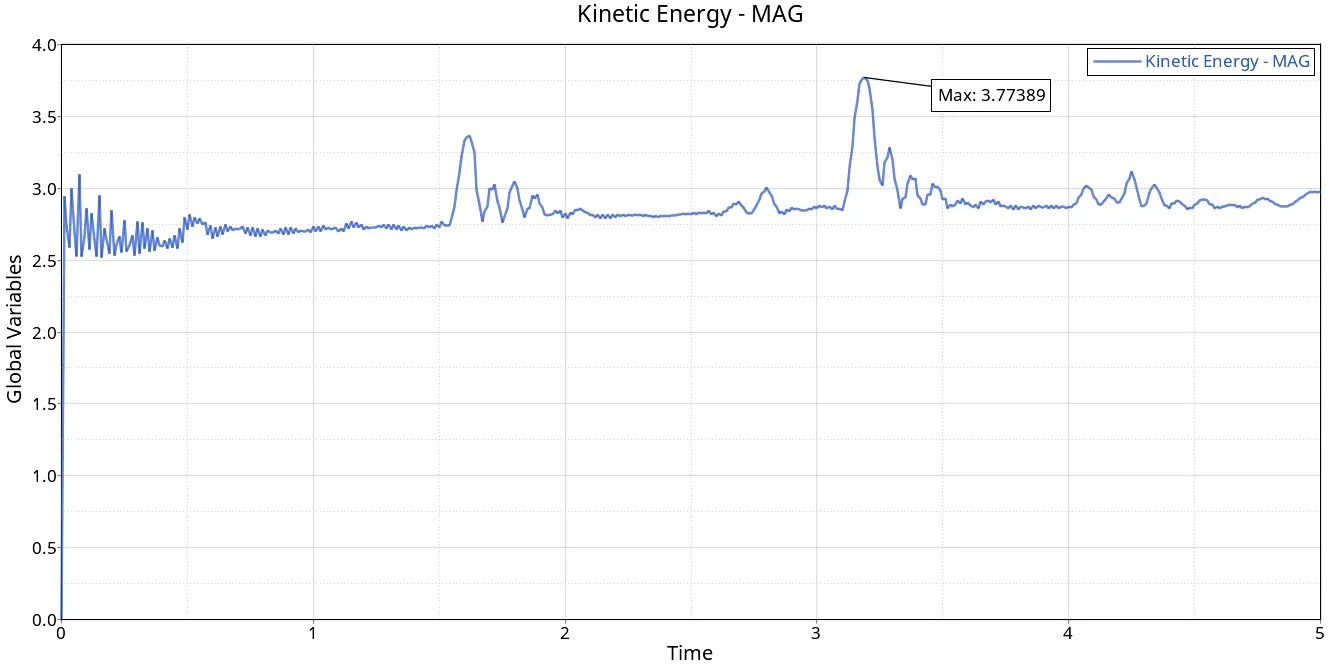
At around 3 ms the ball got fully penetrated, which means the mass is acting fully with maximum velocity.
Contact energy is 0 as no contact of the elements to have frictional forces.
As we expected to have 0 loss of energy in the form of Hourglass energy because we used QEPH in elemental formulation to avoid it.
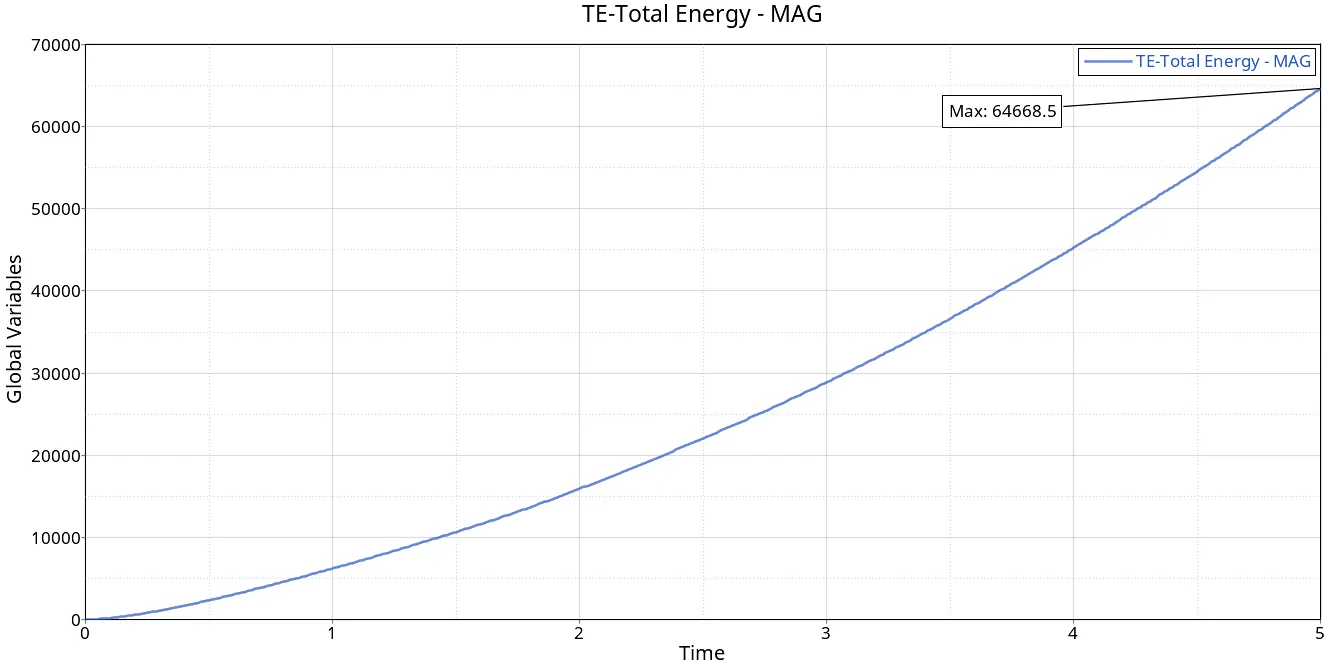
There is only a slight difference in internal and Total energy with a slight increase in total energy.
---------------------------------------------------------------------------------------------------------------------------------------
Case-5:-
Import the case 4 rad file and perform the simulation by changing the material card to Law 1. Keep the same value for rho, E, and nu values.
Procedure:-
Step-1:
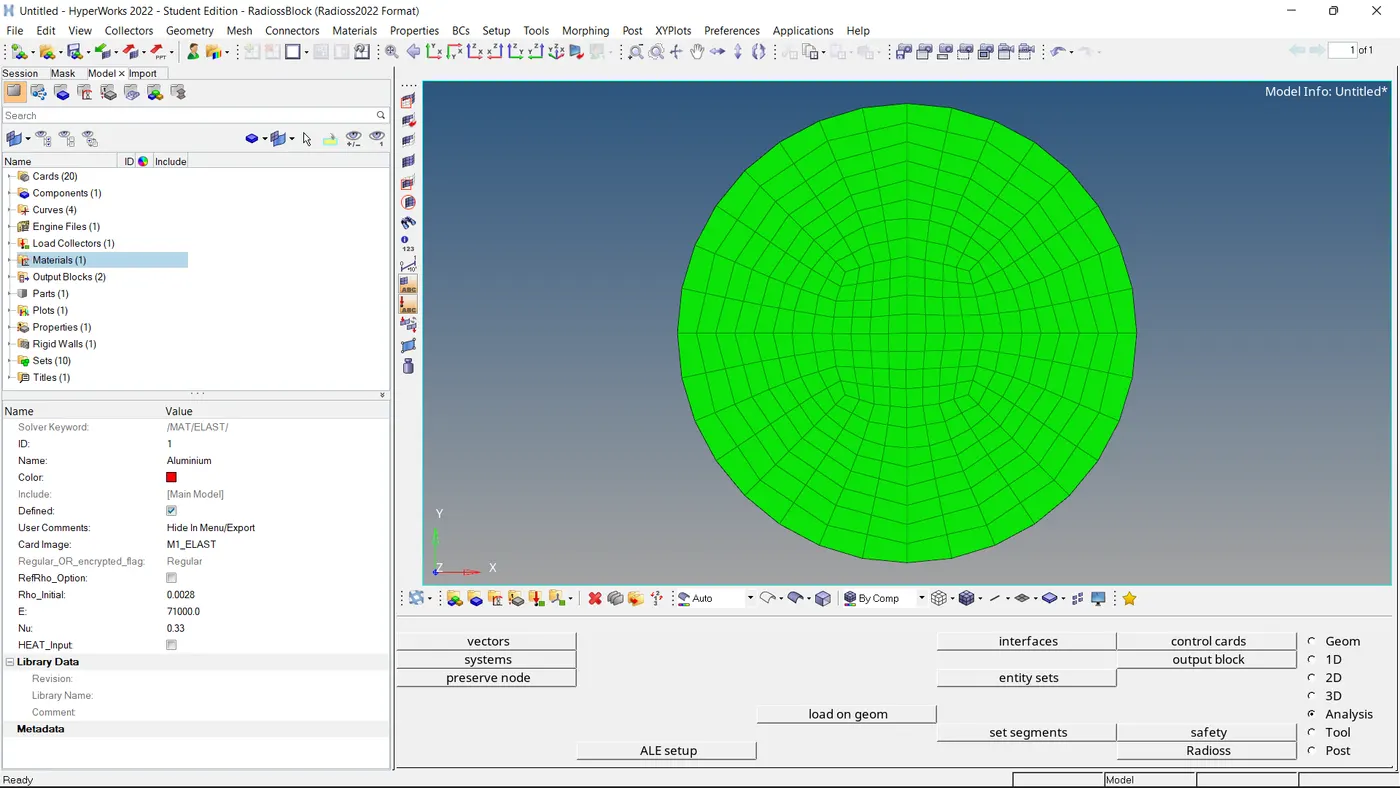
Here as per this case the the material card changed to M1 Elast before running the simulation.
Step-2:
CYCLE TIME TIME-STEP ELEMENT ERROR I-ENERGY K-ENERGY T K-ENERGY R EXT-WORK MAS.ERR TOTAL MASS MASS ADDED
47968 5.010 0.1095E-03 SHELL 159 1.3% 0.8632E+06 1677. 3337. 0.8568E+06 0.000 9.228 0.000
The energy & mass errors are acceptable so we can plot our results.
Step-3:
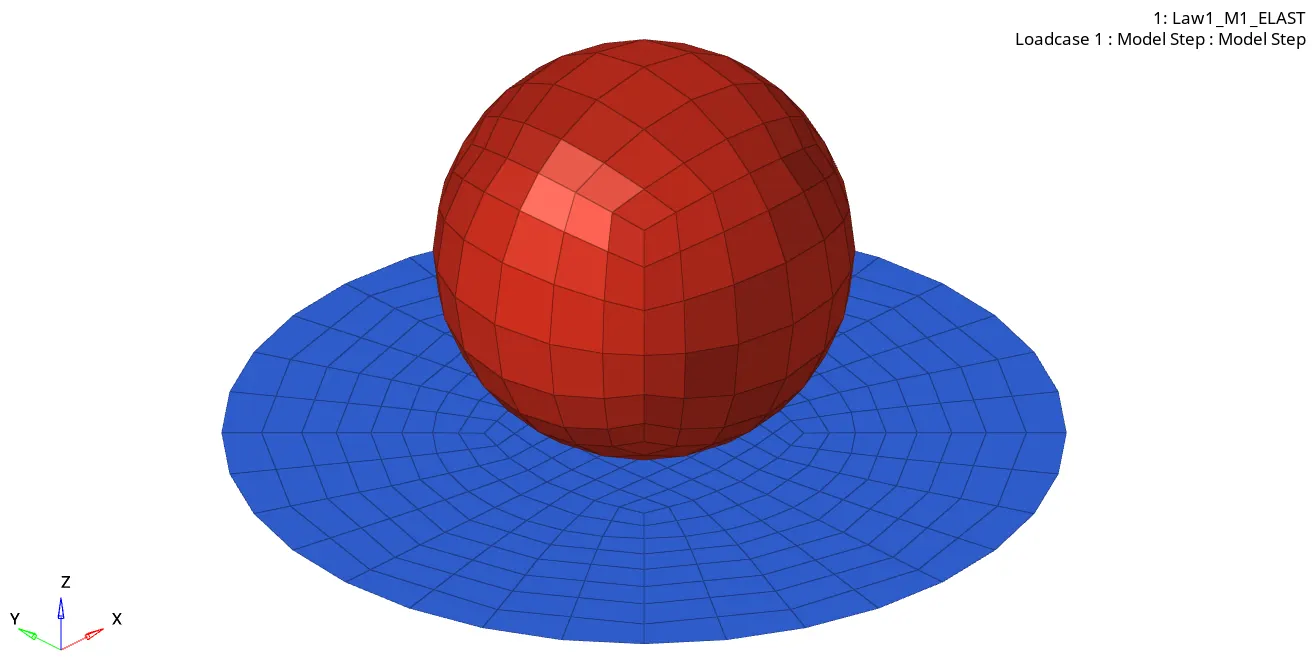
The model was imported into the hyperview to visualize the simulation.
Step-4:
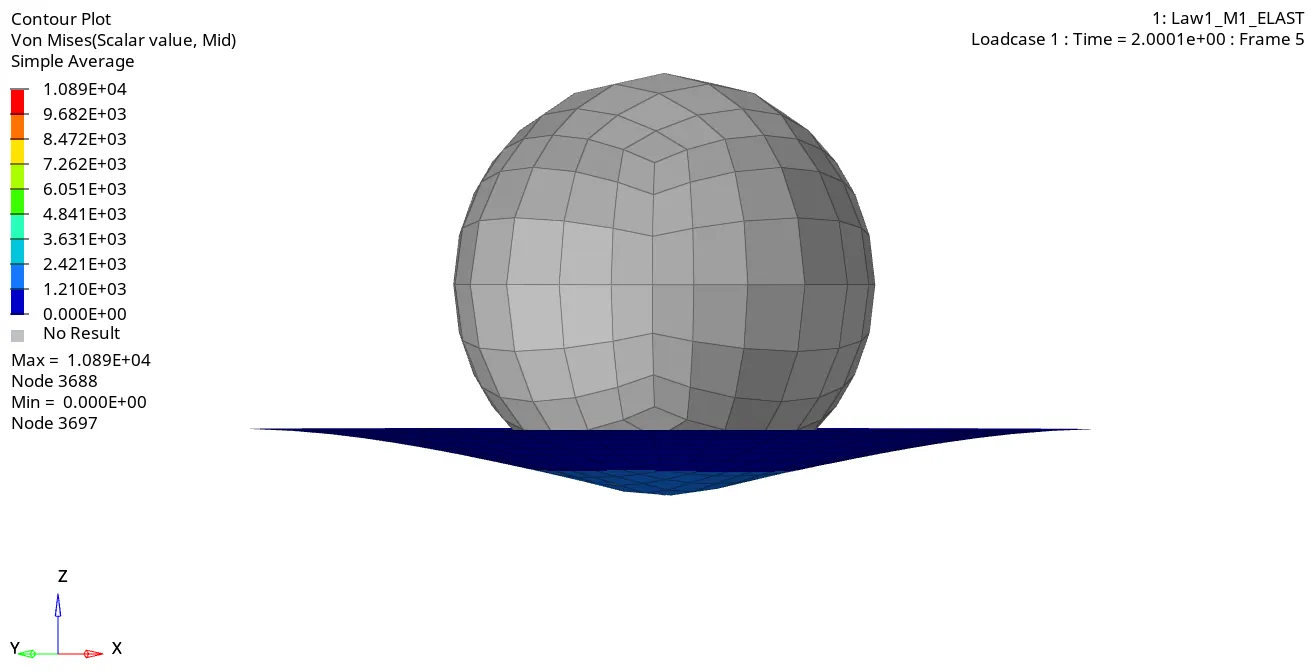
Here the stress values are recorded at around 110 Mpa as it only applicable to record the conditions within the yield limit of material.
Step-5:
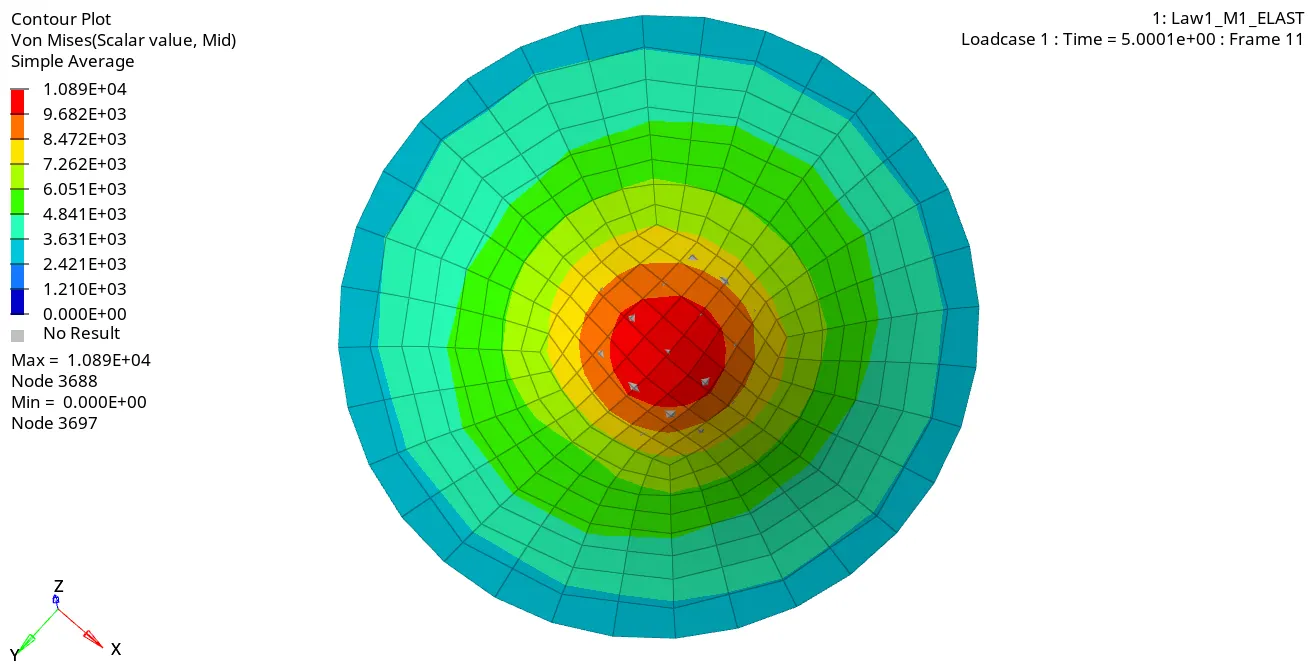
As it only observe within yield limits no elements are deleted and no the elements are removed from the mesh in the impacted area, the total energy is being absorbed by the material without dissipation.
Step-6:
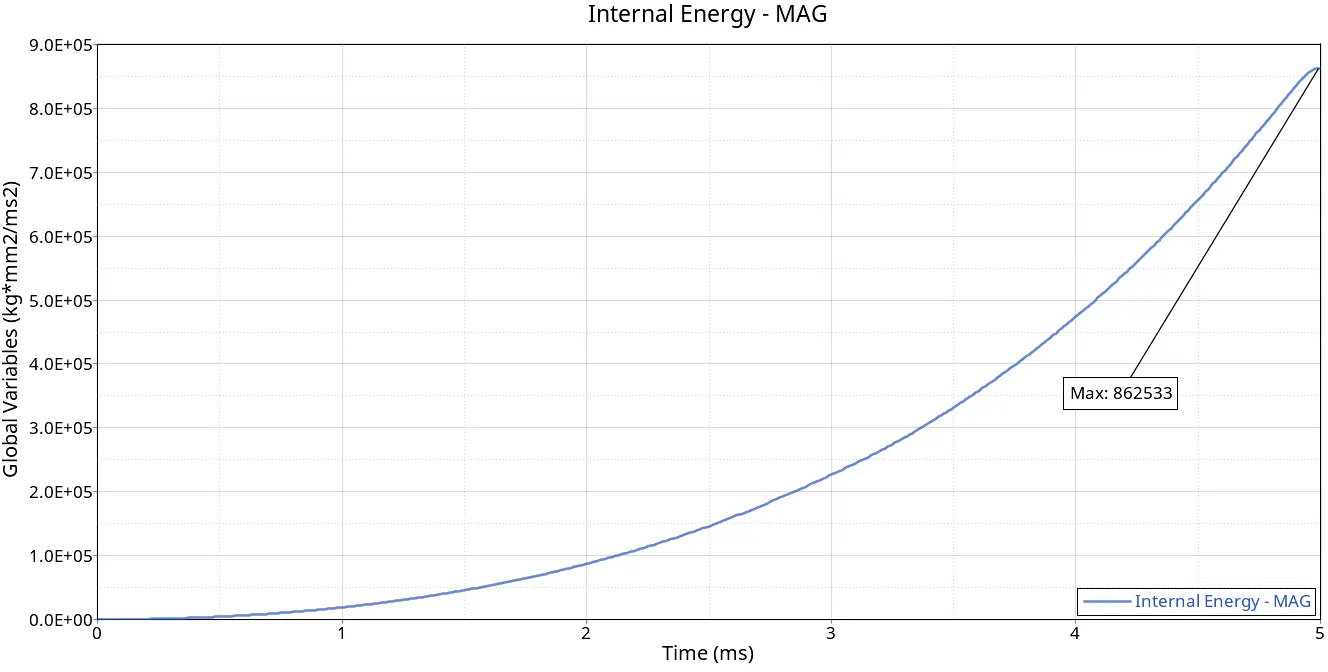
The elements got deformed with linear strain up to last with the maximum energy of 862533 J is observed and there are no elements got lost connectivity in the form of energy dissipation because of total impact energy is absorbed.
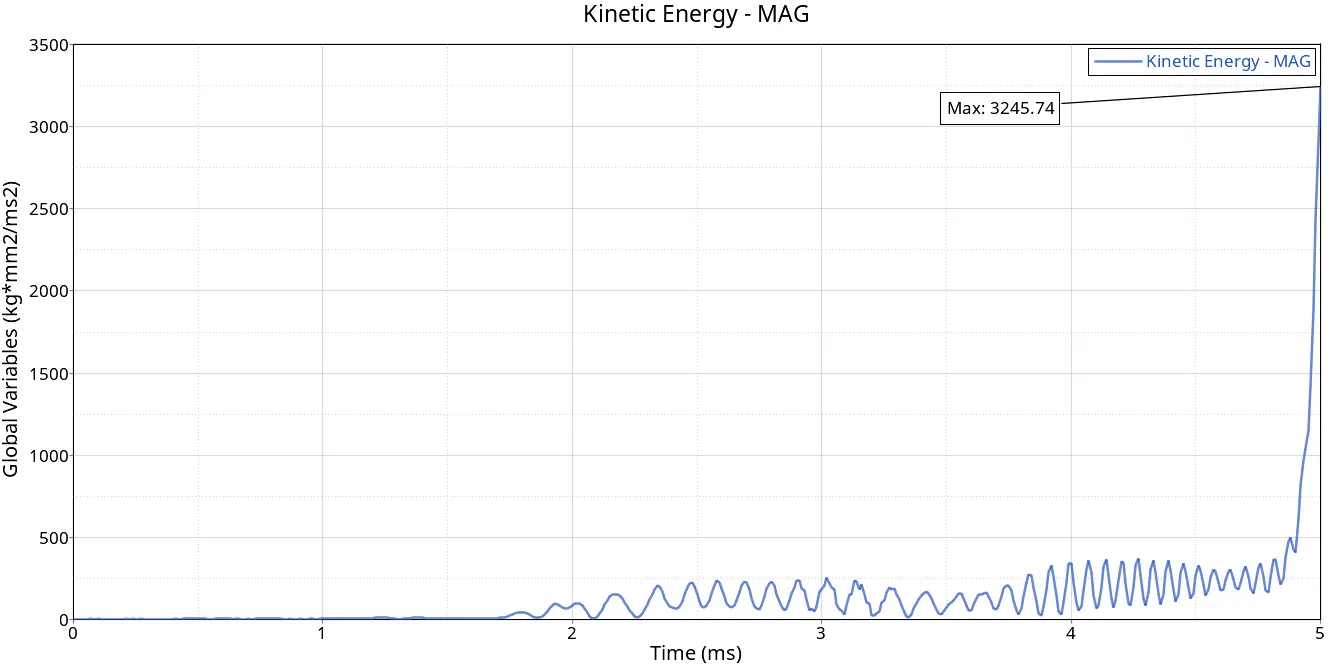
At around 5.1 ms the ball got fully penetrated, which means the mass is acting fully with maximum velocity.
Contact energy is 0 as no contact of the elements to have frictional forces.
As we expected to have 0 loss of energy in the form of Hourglass energy because we used QEPH in elemental formulation to avoid it.
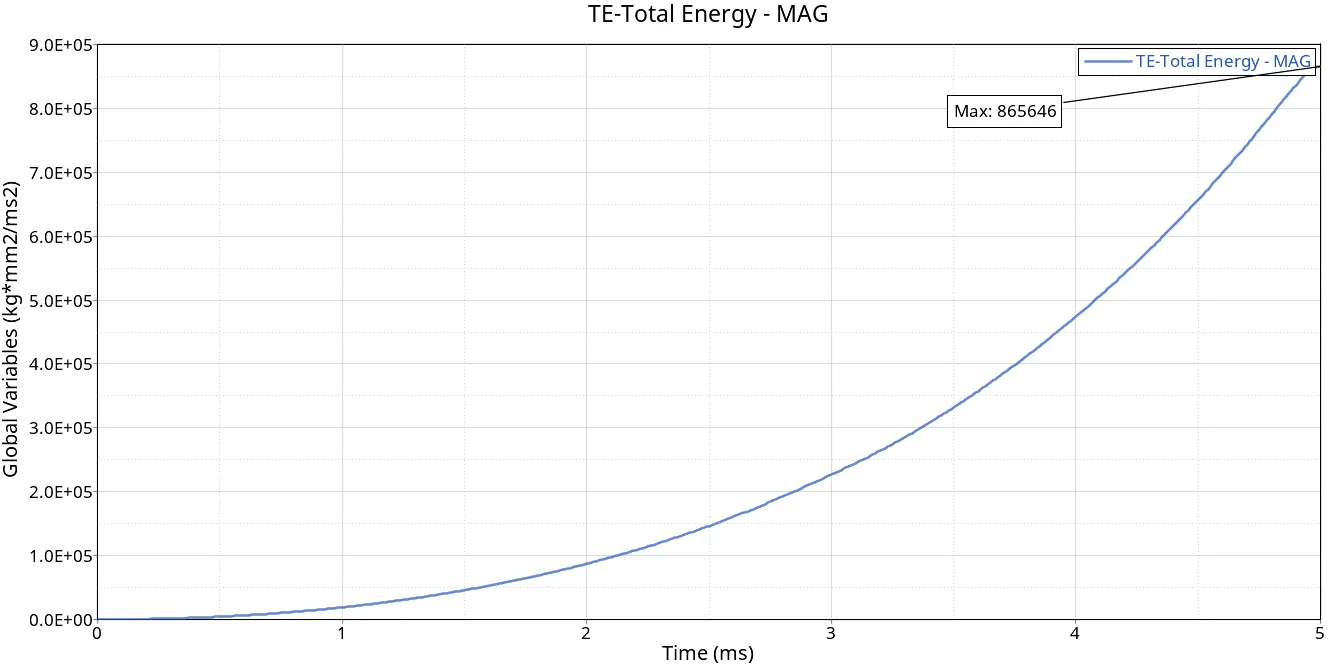
There is only a slight difference in internal and Total energy with a slight increase in total energy.
-------------------------------------------------------------------------------------------------------------------------------------------------------
Case-6:-
Import the case 1 rad file, named “Law2_epsmax_failure” and perform the simulation with the law 36 material card. Refer to the video titled "Materials 7" for further information.
Procedure:-
Step-1:
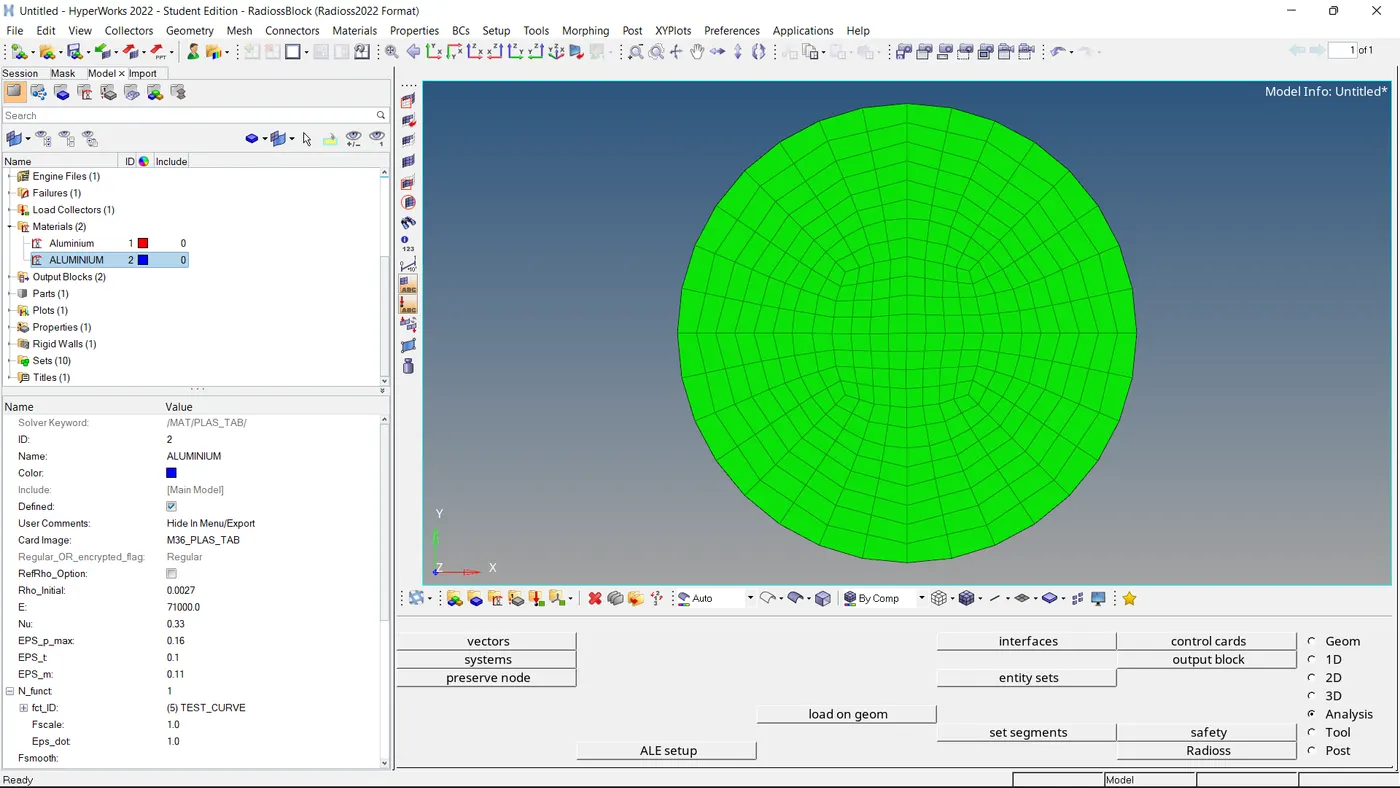
Here in this case I created a martial with M36 Pas_Tab material card.
Step-2:
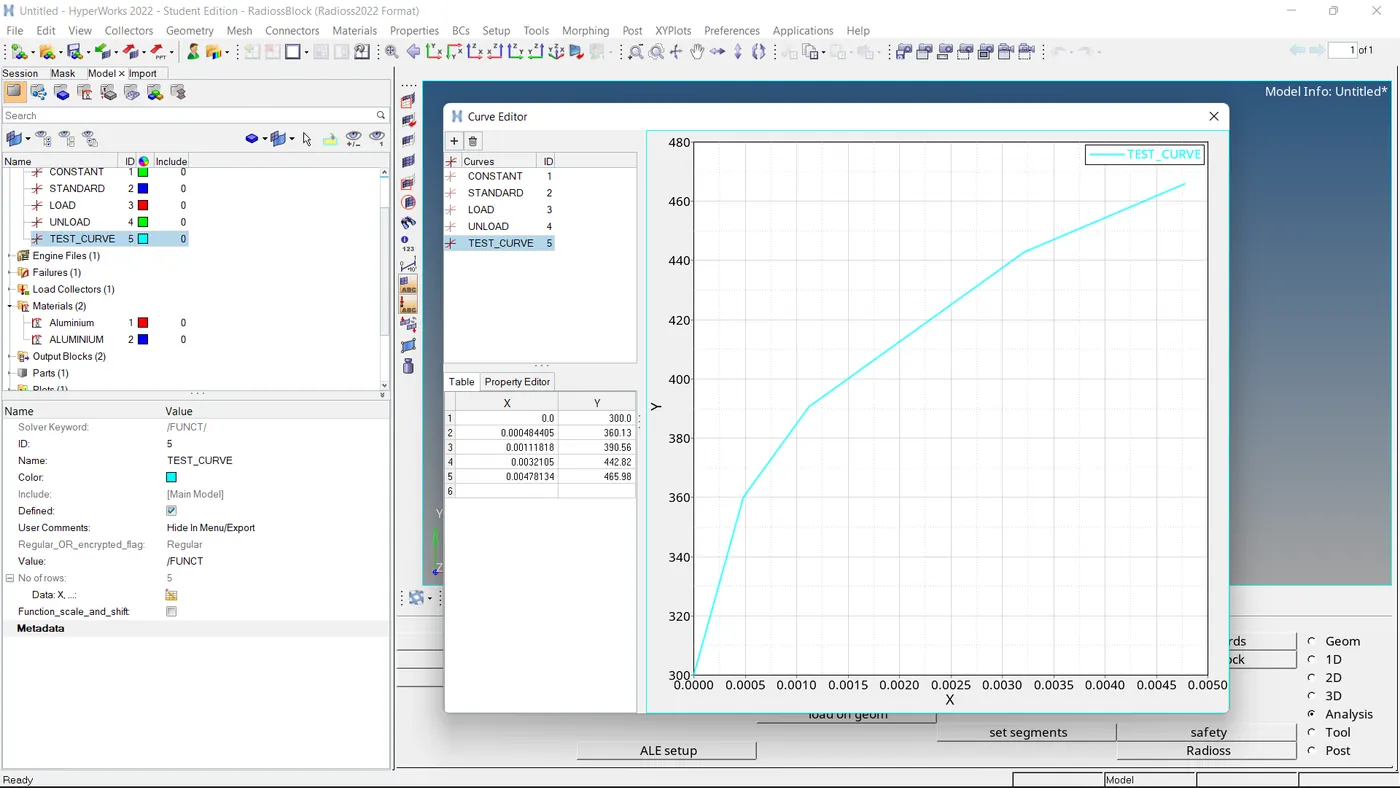
Now a test curve need to create with practical material tested values and added a function to the material.
Step-3:
CYCLE TIME TIME-STEP ELEMENT ERROR I-ENERGY K-ENERGY T K-ENERGY R EXT-WORK MAS.ERR TOTAL MASS MASS ADDED
53153 5.010 0.9424E-04 SHELL 159 -1.9% 0.3848E+05 316.5 441.9 0.4000E+05 0.000 9.077 0.000
The energy & mass errors are acceptable so we can plot our results.
Step-4:
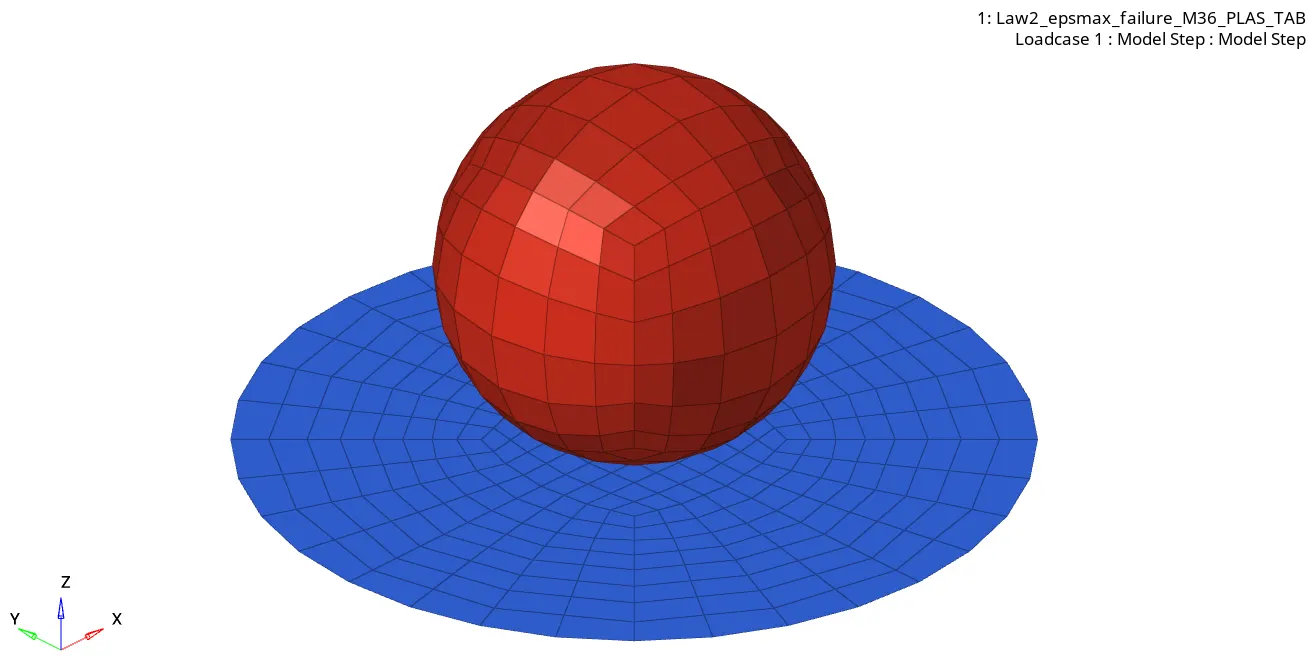
The model was imported into the hyperview to visualize the simulation.
Step-5:
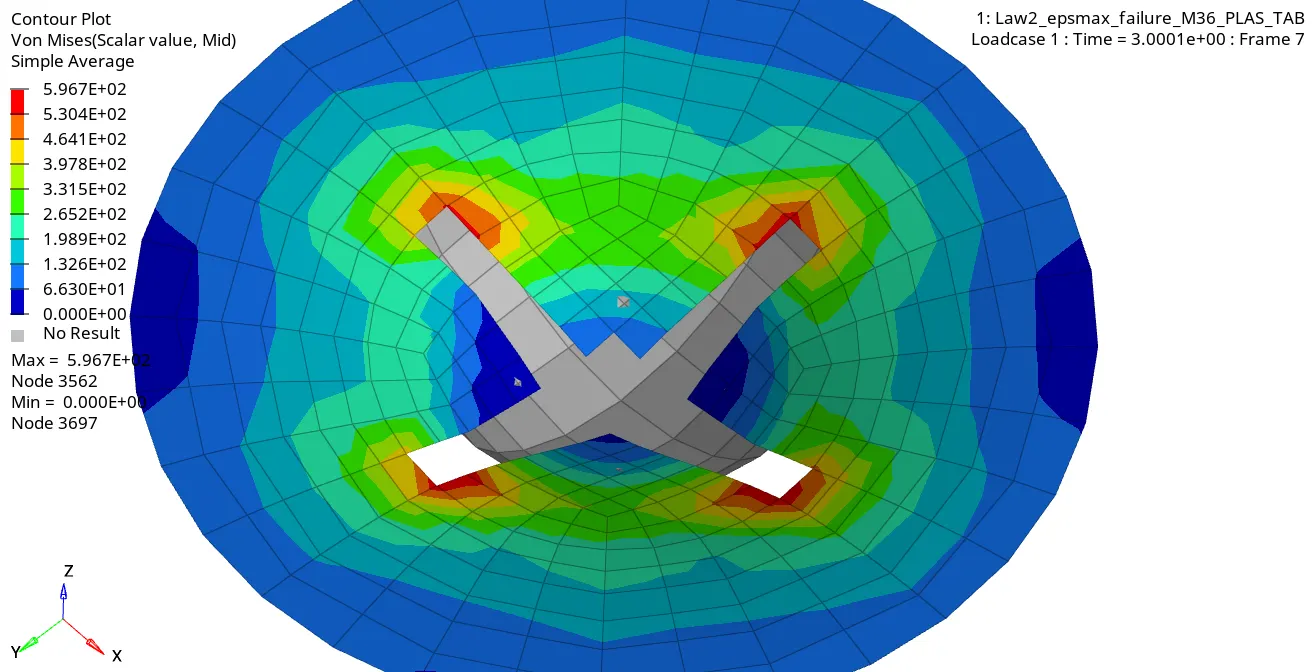
Here the stress values are recorded at around 597 Mpa as it has higher strain rates with different loads.
Step-6:
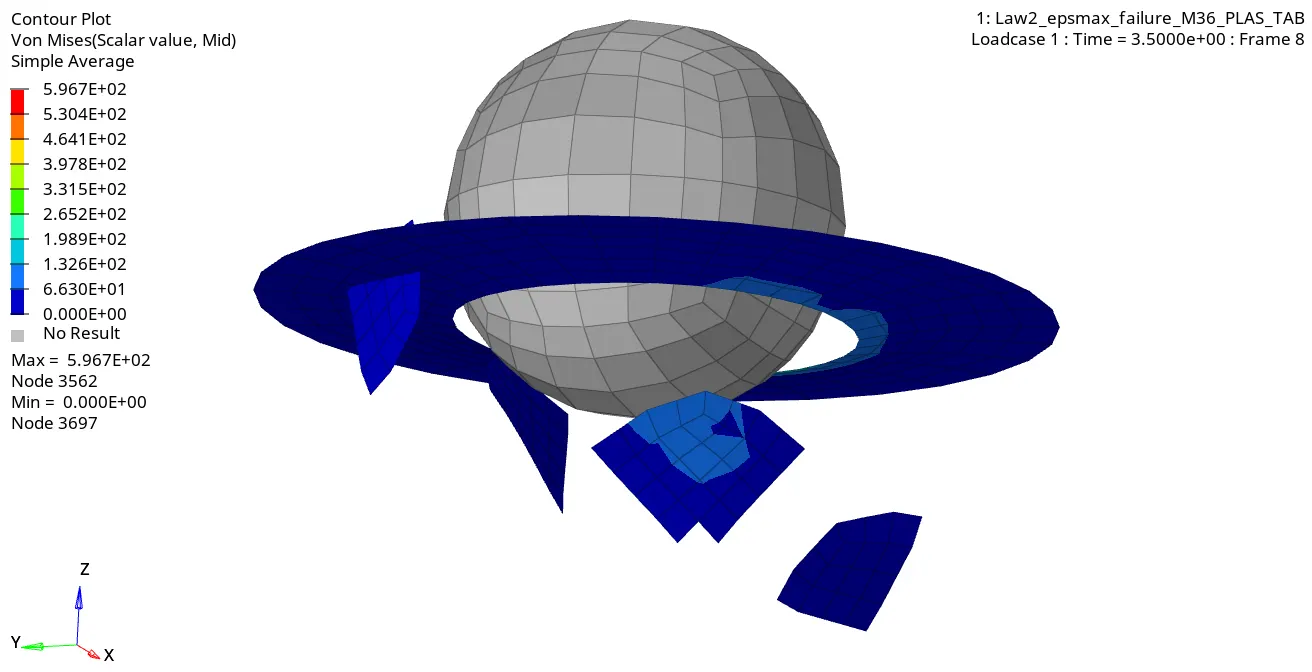
Here in this case the elements will follow Rupture criteria, as when they reached 16% of plastic failure strain rate for tension, compression & shear.
Step-7:
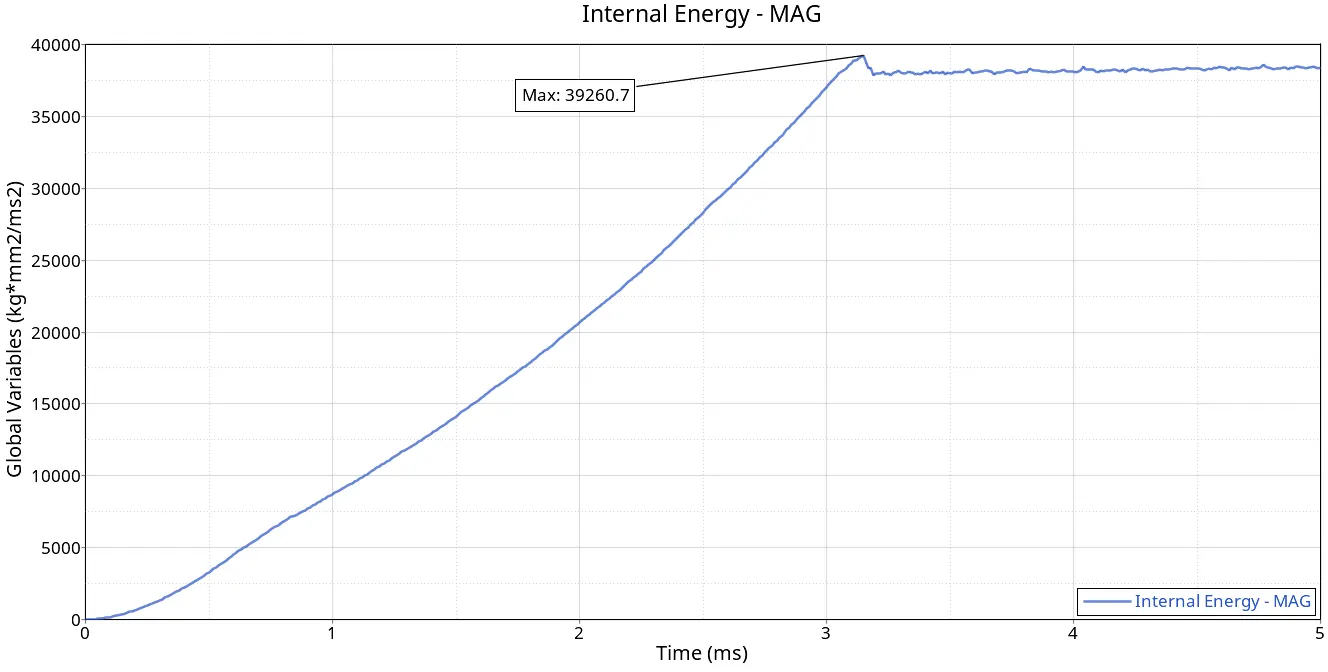
The elements got deformed with linear strain up to around 3ms with the maximum energy of 39260.7 J is observed and there are elements got lost connectivity in the form of energy dissipation.
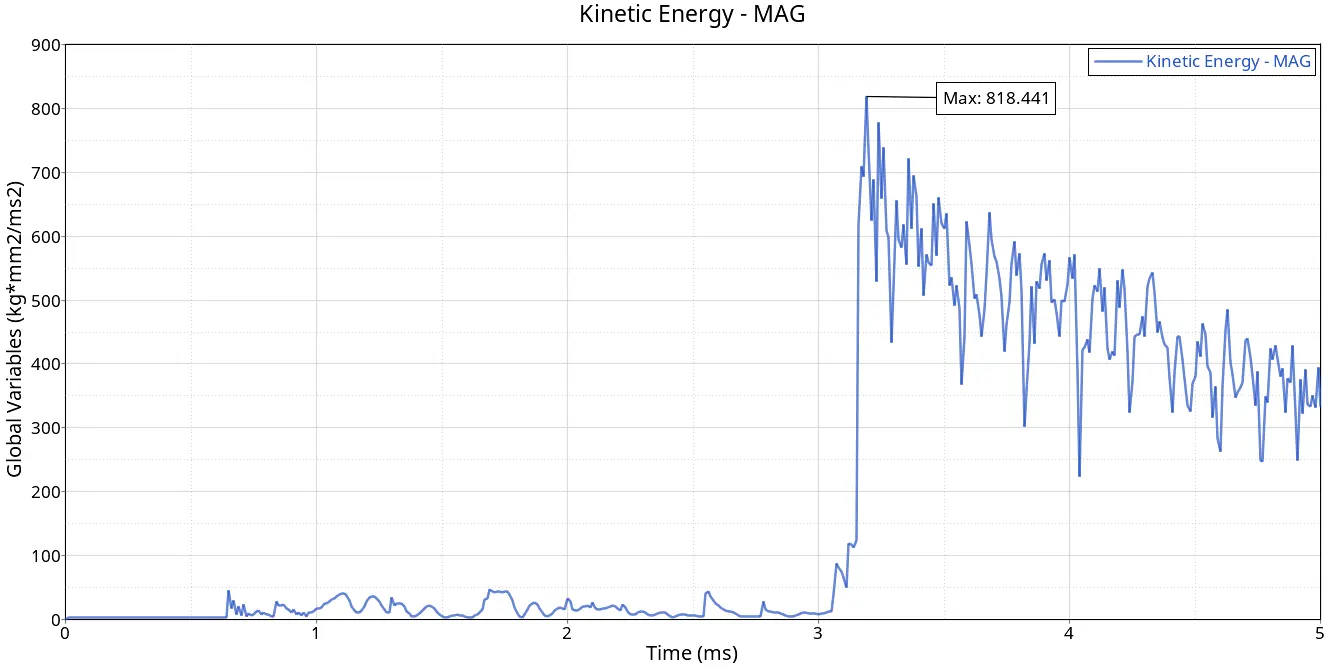
At around 3 ms the ball got fully penetrated, which means the mass is acting fully with maximum velocity.
Contact energy is 0 as no contact of the elements to have frictional forces.
As we expected to have 0 loss of energy in the form of Hourglass energy because we used QEPH in elemental formulation to avoid it.
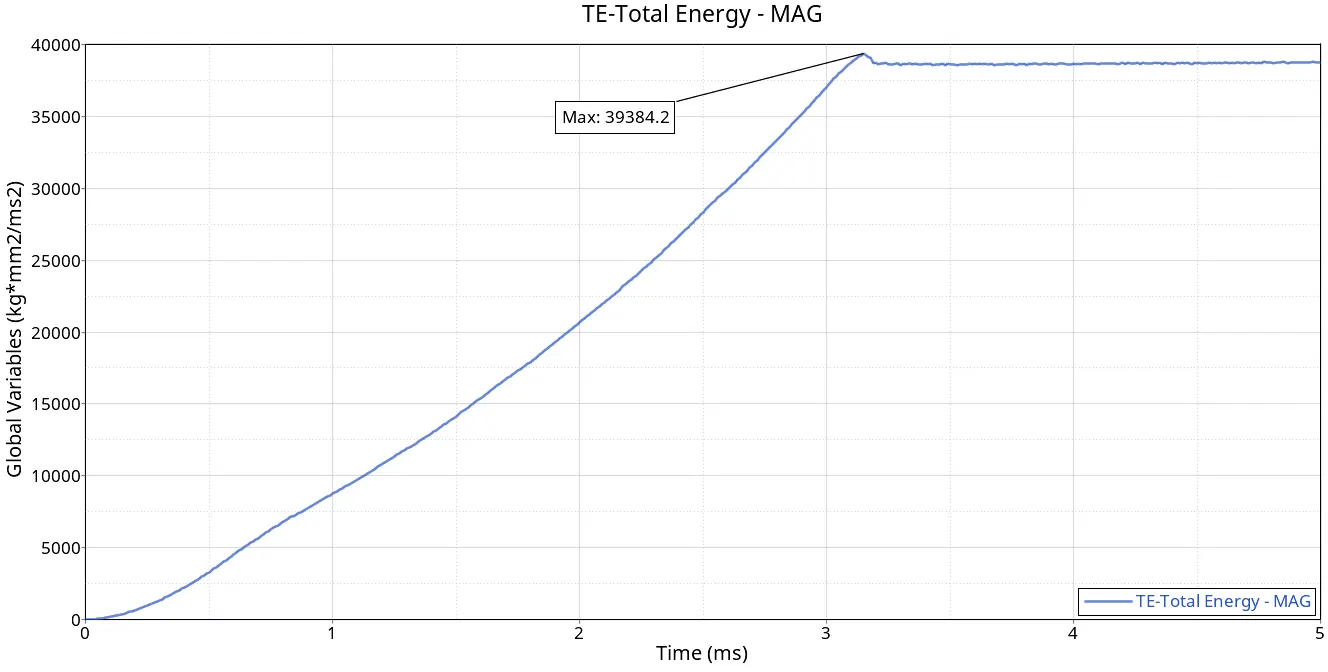
There is only a slight difference in internal and Total energy with a slight decrease in total energy.
-------------------------------------------------------------------------------------------------------------------------------------------------------
Case-7:-
Open the Law27_0000.rad file and perform the simulation with the law 27 material card. Use the recommended shell properties.
Procedure:-
Step-1:
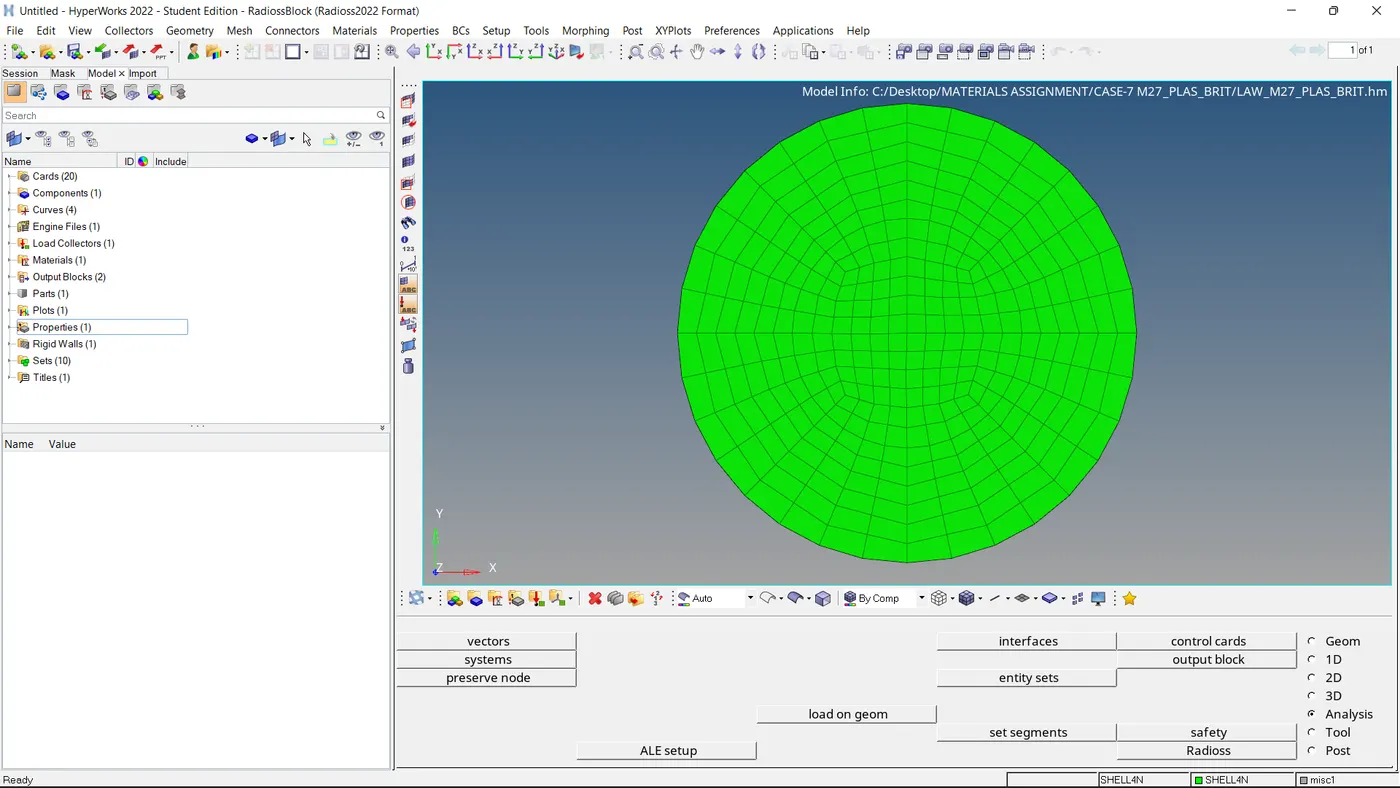
The file got imported into Radioss which is having Law27 Elastic plastic brittle material card.
Step-2:
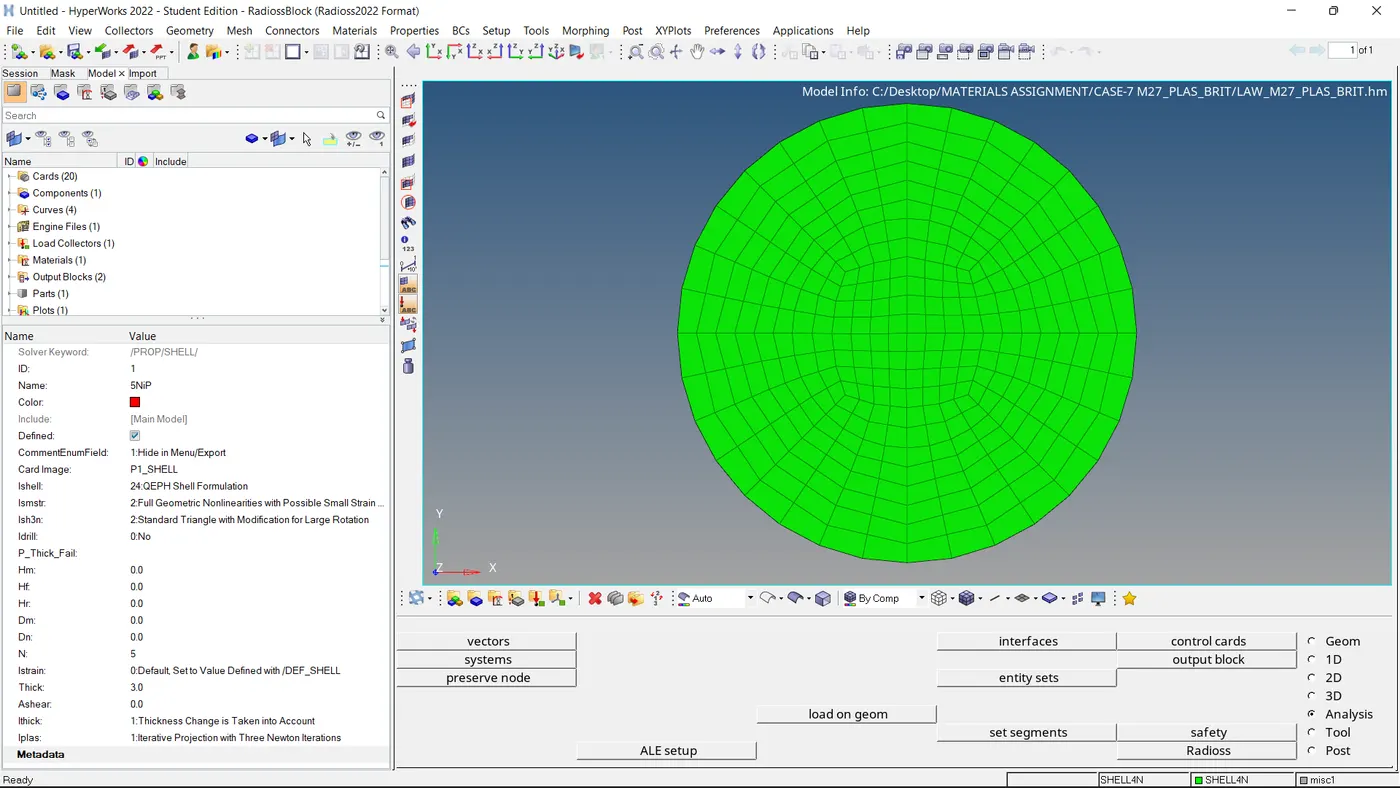
The properties are been updated before simulation.
Step-3:
CYCLE TIME TIME-STEP ELEMENT ERROR I-ENERGY K-ENERGY T K-ENERGY R EXT-WORK MAS.ERR TOTAL MASS MASS ADDED
49506 5.010 0.1004E-03 SHELL 159 0.8% 0.2954E+05 65.00 35.26 0.2940E+05 0.000 9.228 0.000
The energy & mass errors are acceptable so we can plot our results.
Step-4:
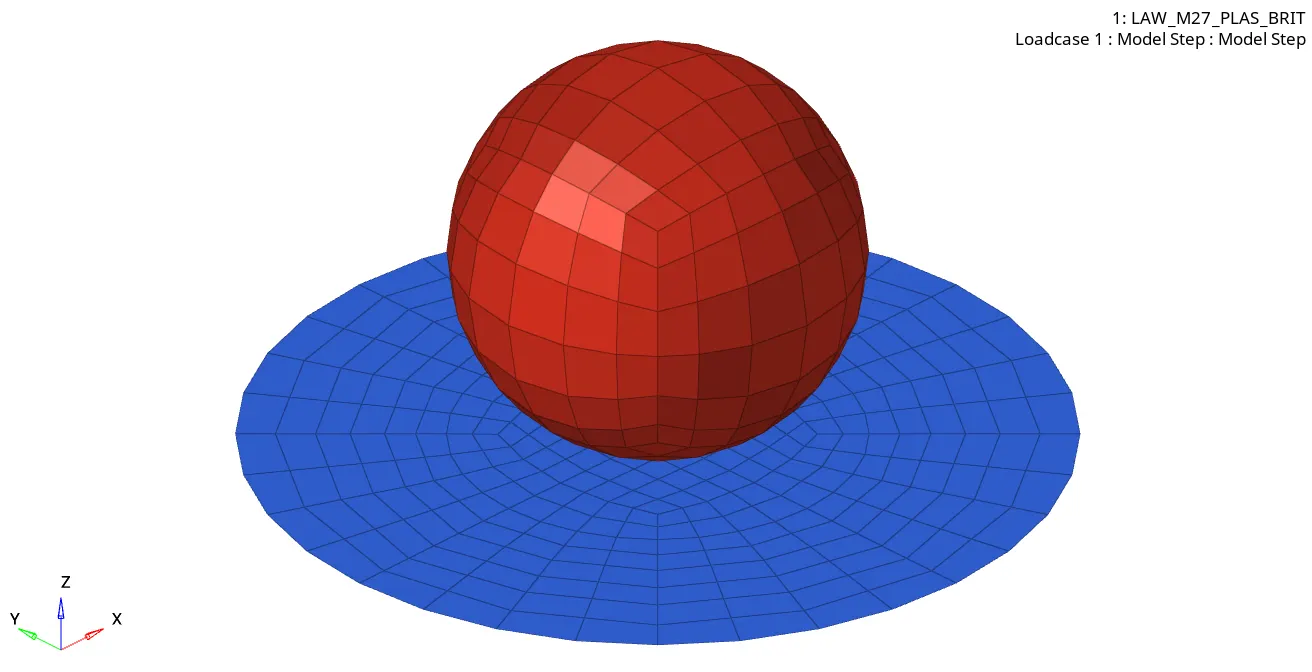
The model was imported into the hyperview to visualize the simulation.
Step-5:
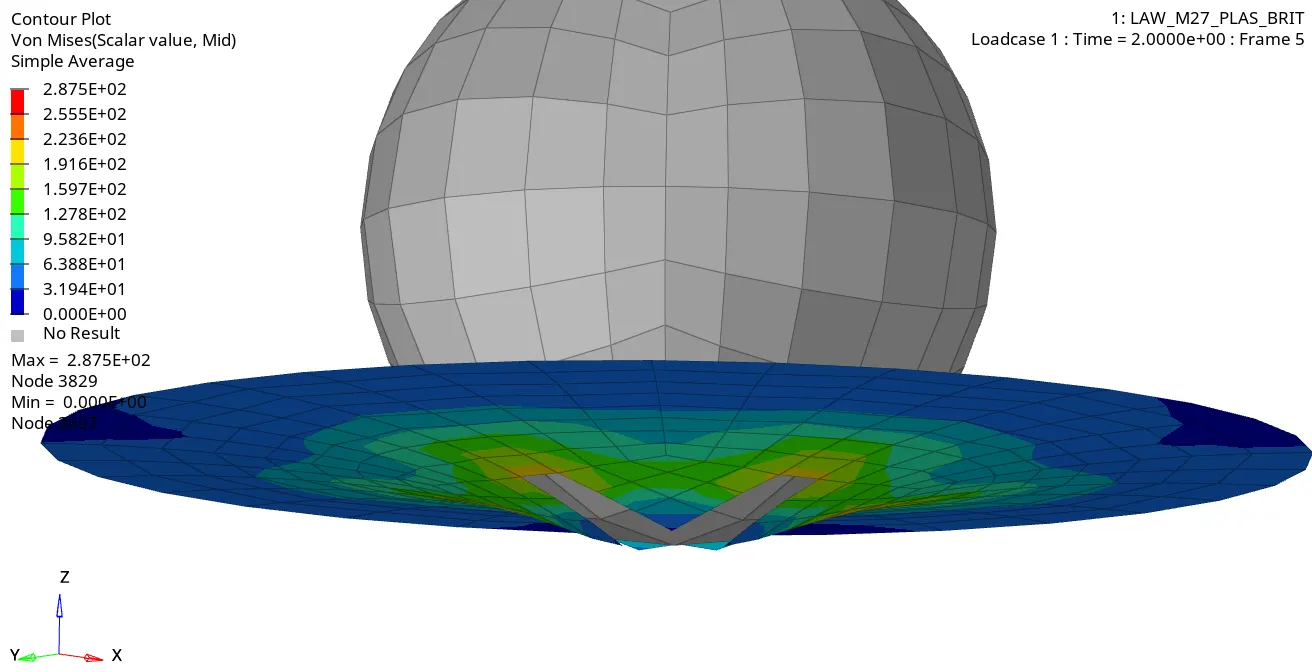
Here the stress values are recorded at around 290 Mpa as the material damage is accounted for prior to failure.
Step-6:
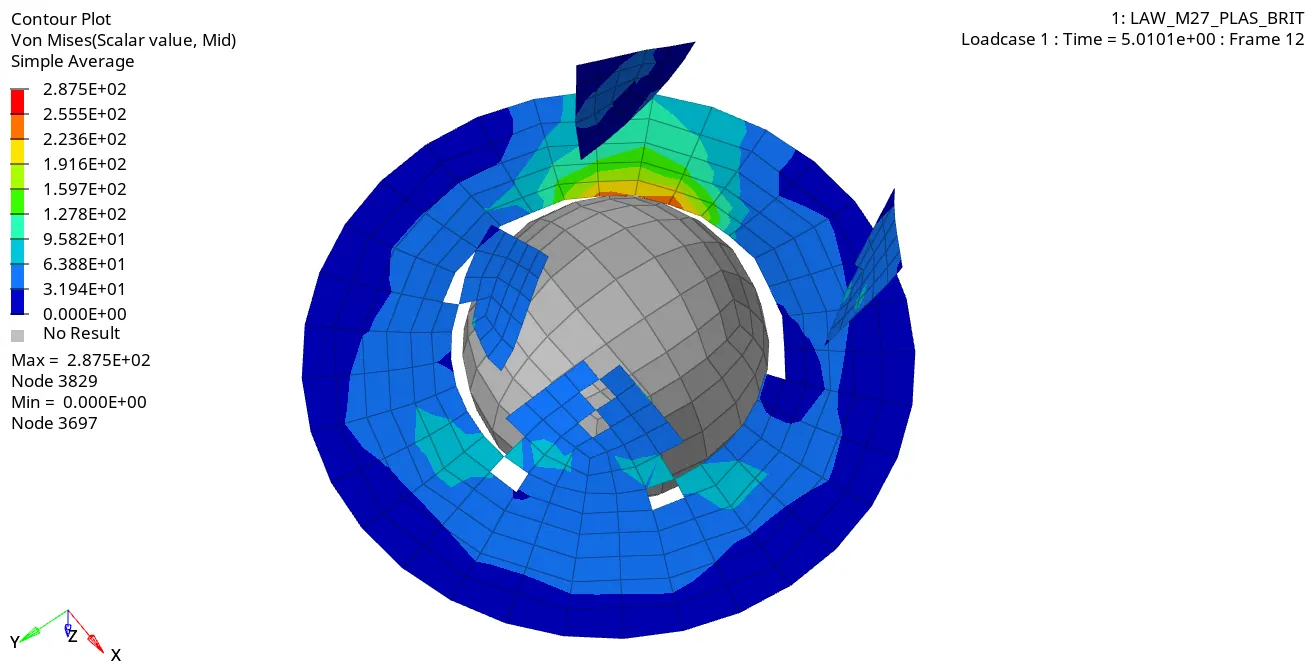
Here in this case even elements lost connectivity in form of energy dissipated but some energy is still there.
Step-7:
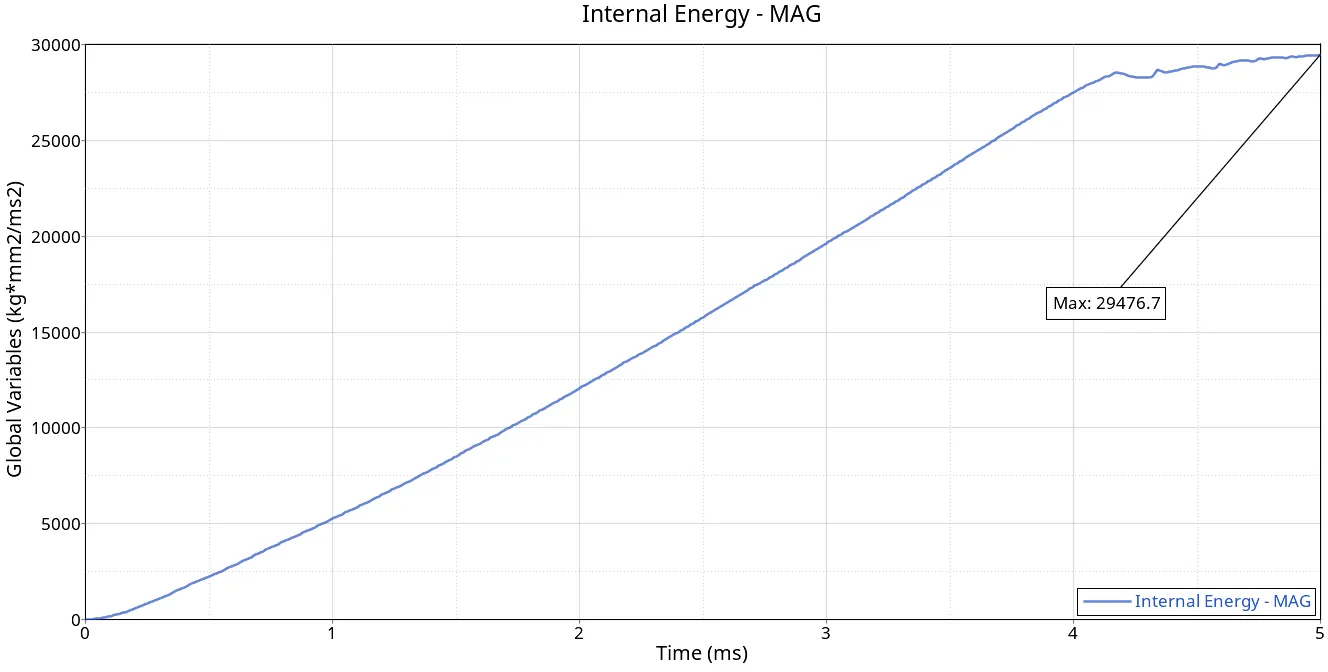
The elements got deformed with linear strain up to around 4 ms with the maximum energy of 29476.7 J is observed and there are elements got lost connectivity in the form of energy dissipation.
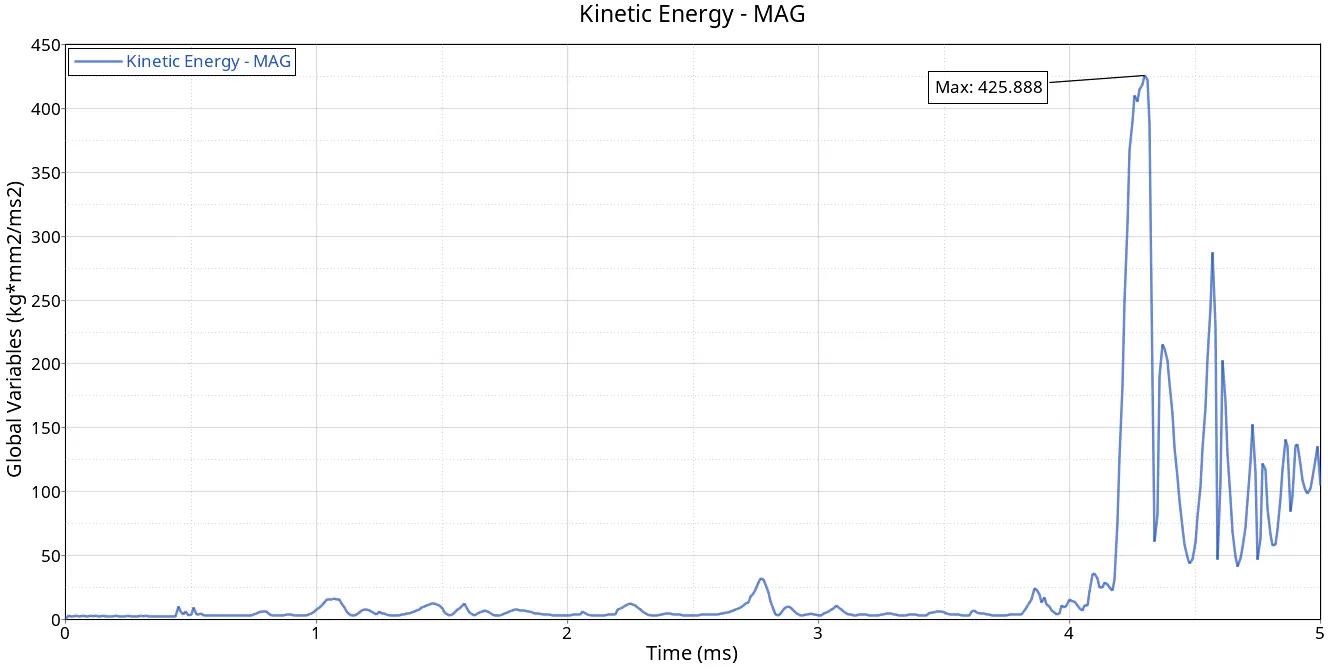
At around 4 ms the ball got fully penetrated, which means the mass is acting fully with maximum velocity.
Contact energy is 0 as no contact of the elements to have frictional forces.
As we expected to have 0 loss of energy in the form of Hourglass energy because we used QEPH in elemental formulation to avoid it.
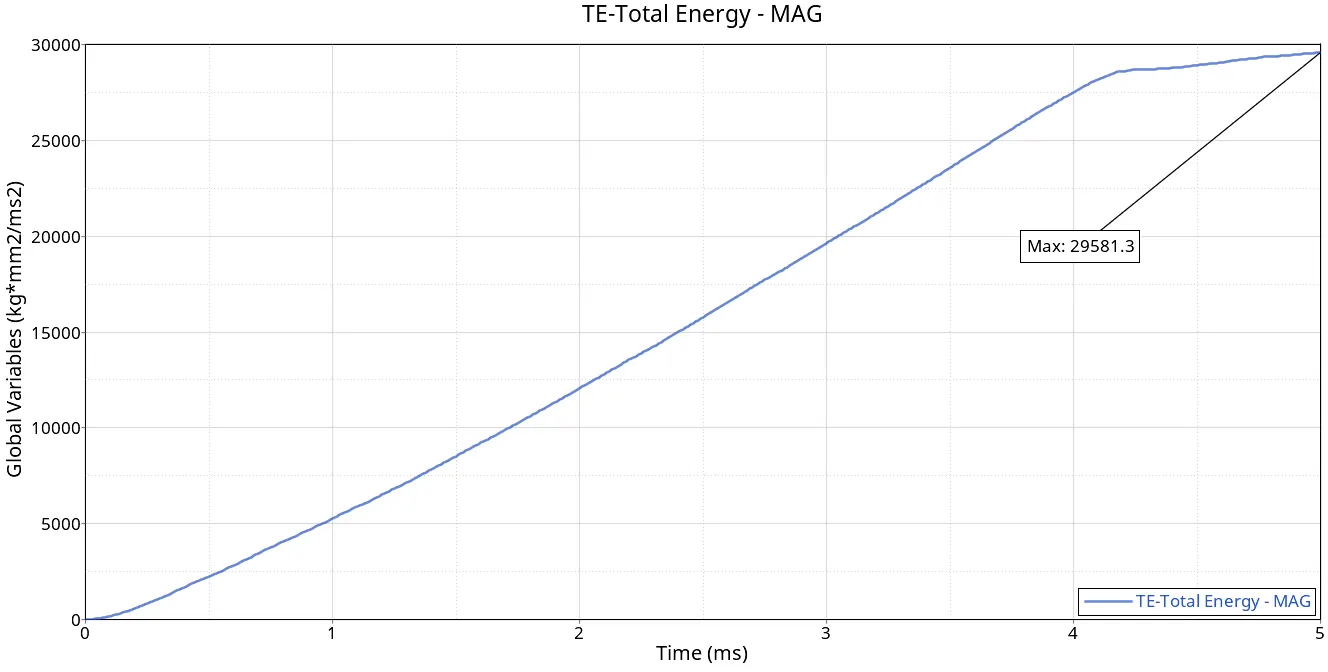
There is only a slight difference in internal and Total energy with a slight increase in total energy.
CONCLUSION:
| Case No | Total No:of cycles | Energy Error | Mass Error | Simulation Time |
| 1 | 49379 | 0.8 % | 0.0 | 66.98 sec |
| 2 | 49216 | 4.1 % | 0.0 | 64.04 sec |
| 3 | 49407 | 0.8 % | 0.0 | 63.89 sec |
| 4 | 48736 | 3.0 % | 0.0 | 63.46 sec |
| 5 | 47968 | 1.3 % | 0.0 | 63.06 sec |
| 6 | 53153 | -1.9 % | 0.0 | 70.77 sec |
| 7 | 49506 | 0.8 % | 0.0 | 66.54 sec |
The best cases for the usage of these material cards in:
Law1_M1_Elast: It is best in the usage of in cases to observe the deformation within the elastic limit of the material. (Applicable for both shell & brick elements)
Law2_M2_Jhonson_cook: It is best in case we want to observe the material deformation in the plastic region. (This law is valid for brick, shell, truss, and beam elements)
Law27_M27_Plas_brit: It is useful in the case of plastic and brittle properties in a material that might imply a balance between ductility and brittleness. (Applicable for shells)
Law36_M36_Plas_Tab: It is also used to observe the deformation in the Plastic region on materials that have different strain rates which are user-defined functions for the work hardening portions. (Applicable for both shell & brick elements)