ADAMS Car - Kingpin Geometry Optimization - Suspension Design
Perform kingpin geometry optimization to achieve the following targets
oCaster angle : ~4.00 deg
oCaster moment arm : ~21.00 mm
oKPI angle : ~13.00 deg
oSteer axis offset (resultant) : ~85.00 mm
oSteer axis longitudinal offset : ~0.00 mm
oScrub radius : ~20.00 mm
Compare these numbers with those obtained before hardpoint tuning and state what the effects of these changes are
Also, explain whether all of these parameters can be controlled independently
These are the baseline values that you need to check.
Your Answers
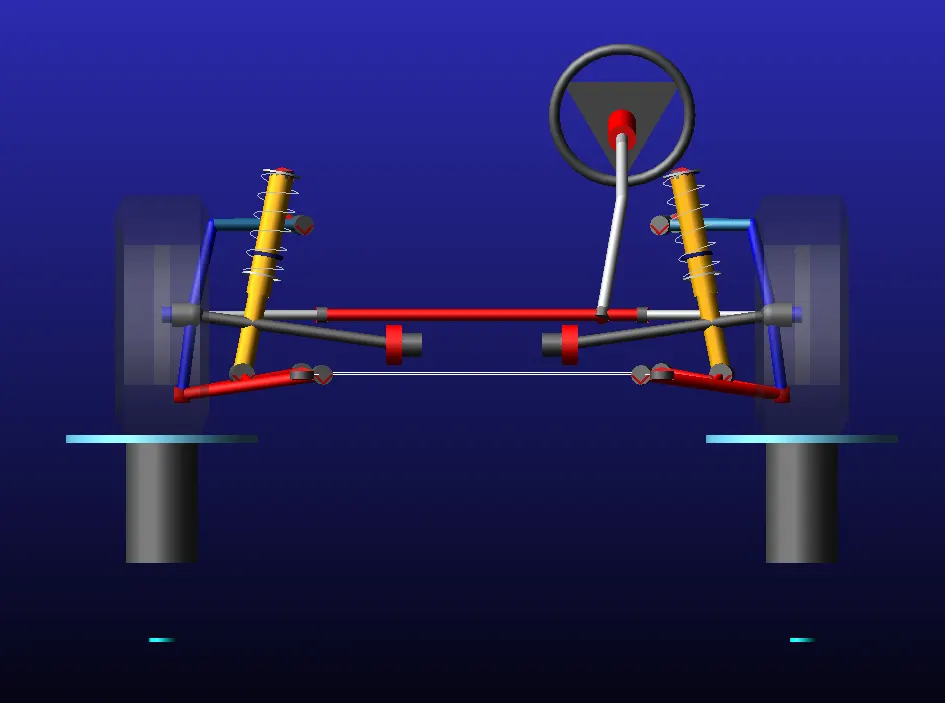
The given geometry of SLA suspension is as follows:
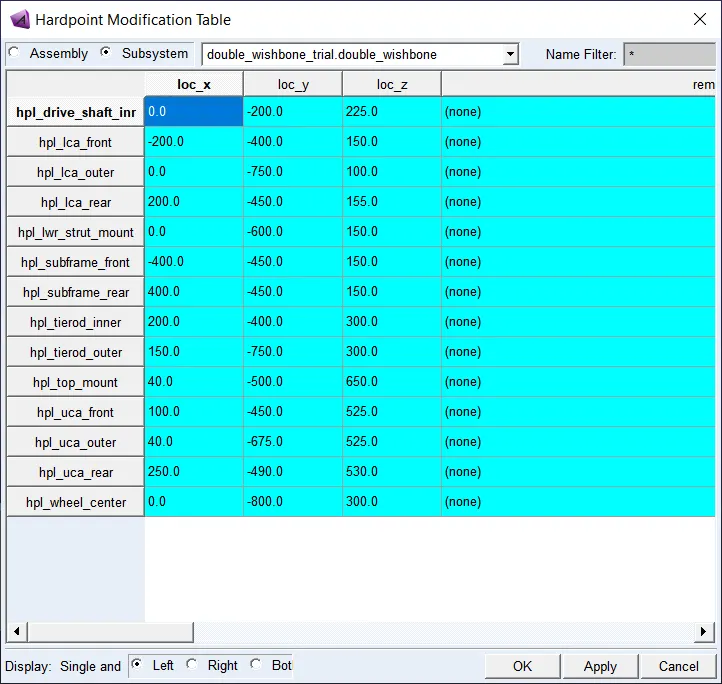
The hardpoints are as follows :
The baseline values of the kingping geometry parameters are listed below against the targets.
| Parameter | Baseline values | Target values |
| Castor angle (deg) | 5.369 | 4.00 |
| Castor moment arm (mm) | 8.58 | 21 |
| KPI angle (deg) | 10.08 | 13 |
| Steer axis offset (resultant) (mm) | 85.774 | 85 |
| Steer axis longitudinal offset (mm) | -18.74 | 0 |
| Scrub radius (mm) | 33.80 | 20 |
Castor Angle
The castor angle is the angle of the imaginary line that intersects the upper and the lower ball joints when viewed from the side view.
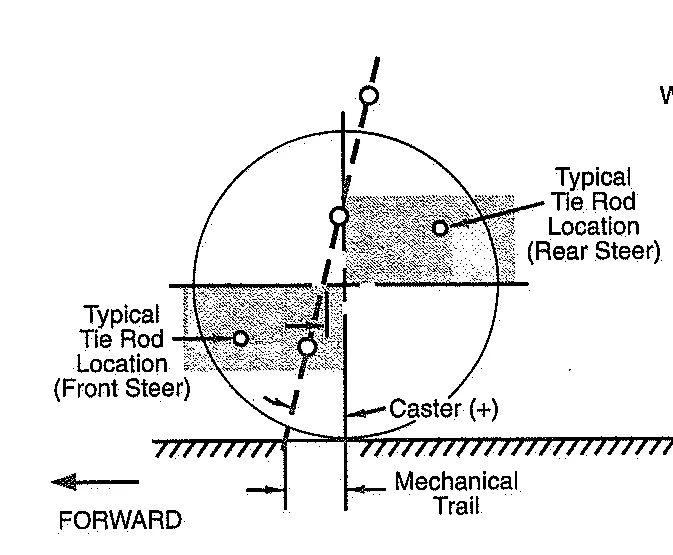
The castor angle is a suspension geometry parameter which affects the steering effort and the straight line stability. The positive castor increases the straight line stability and self-centrering tendency of the vehicle. The higher the castor angle, higher the stability but on the other hand, as the castor increases, the scrub radius increases, causes the steering effort to increase thereby making the steering heavier and less responsive. So, the castor angle has to be positive, but also steerable for the driver with ease.
To modify the castor angle, the upper and the lower control hardpoints have to be modified in the longitudinal axis.
Castor moment arm
The castor moment arm otherwise known as the mechanical trail is the distance between the contact point and the point of intersection of kingpin-axis measured longitudinally at the ground level. The higher the castor moment arm, the higher the aligning moment. This increases the steering resistance and hence it makes the steering heavy. The castor moment arm needs to be positive to increase the straight line stability. On the other hand, too much castor moment arm will swamp out the pneumatic trail. The lower and the upper ball joints can be modified in the longitudinal axis to modify the castor moment arm
KPI angle
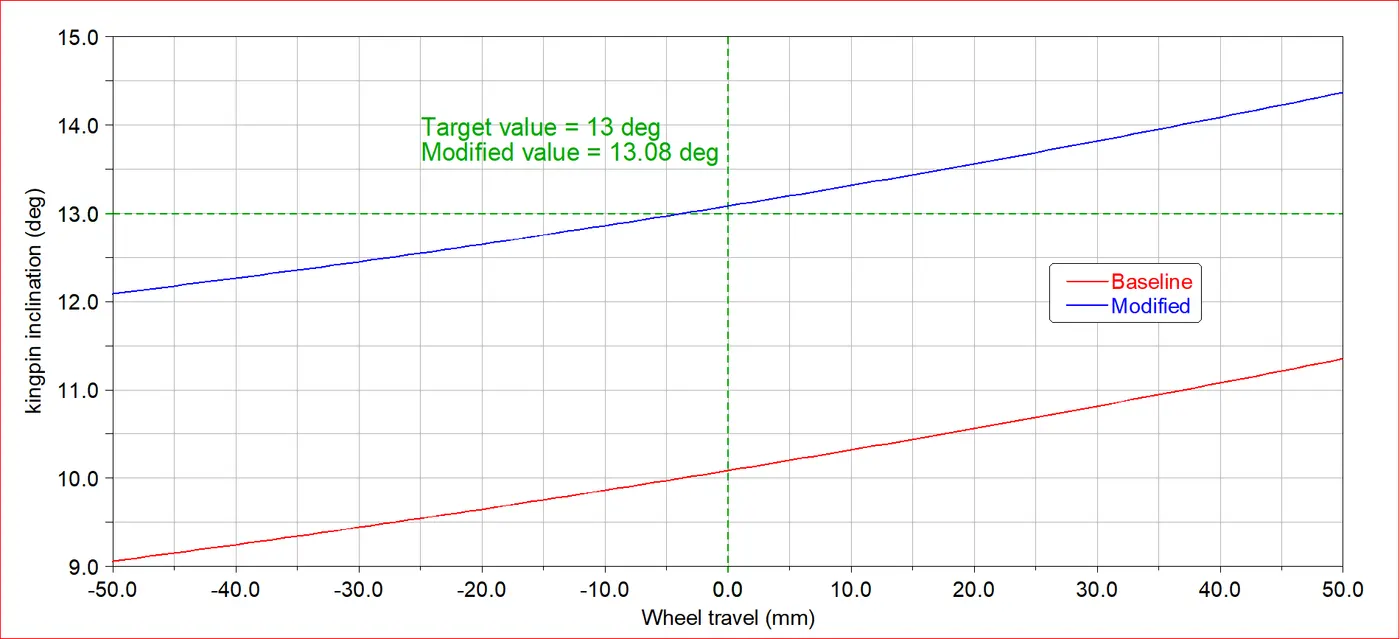
The kingpin inclination is the angle that the kingpin makes with the vertical plane. The kingpin axis is the line joining the upper and the lower ball joints. The following image indicates the kingpin inclination and the scrub radius.
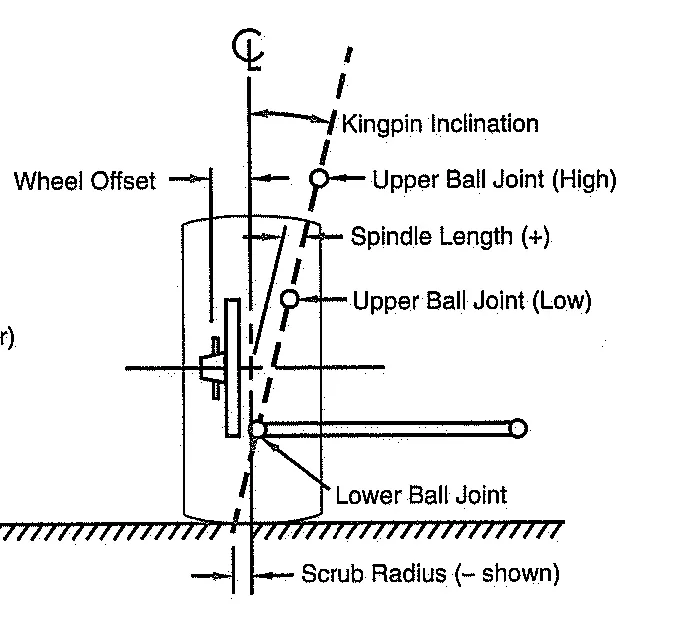
The kingpin- inclination aids in the self-centring of the vehicle. Higher the KPI, more is the self-centering effect. But too much of the kingpin inclination will result in a artificially heavy steering. The lower and the upper ball joints can be modified in the lateral axis, to alter the kingpin-incliantion.
Steering-axis offset (resultant) and longitudinal offset
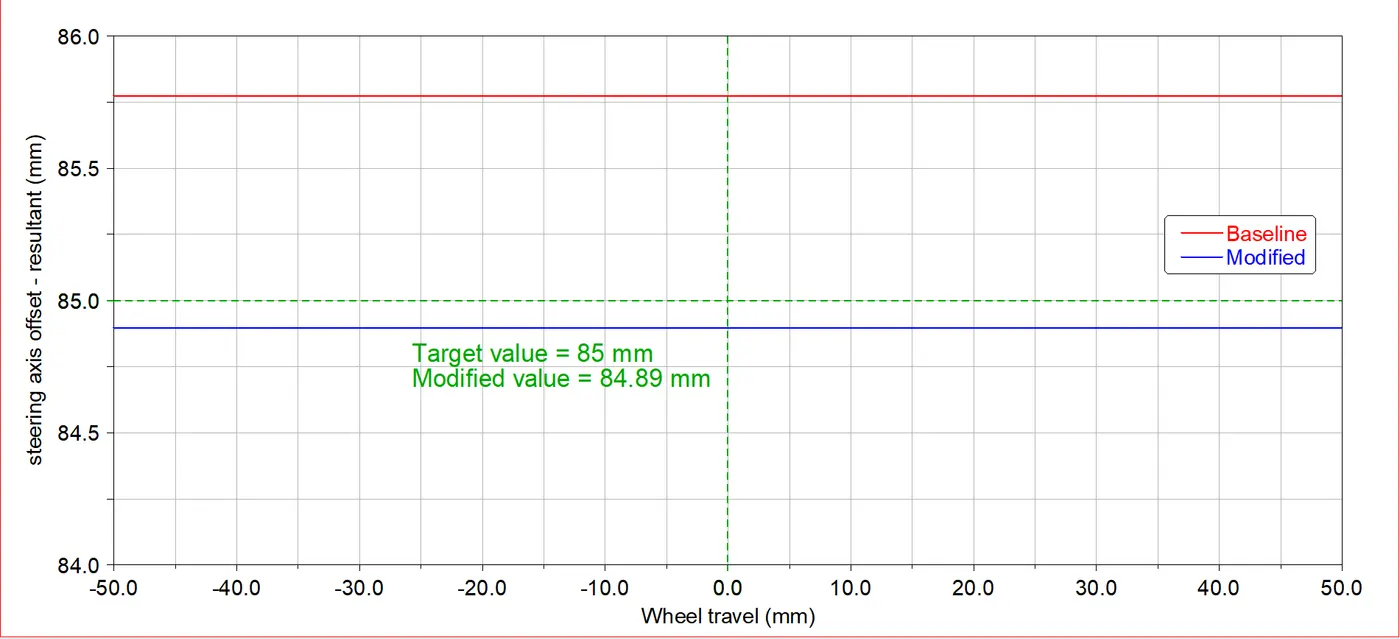
The steering axis is otherwise known as the kingpin axis. The steering axis offset is the shortest distance from the steer axis to the wheel centre. The steer axis offset is measured in the plane perpendicular to the steer axis and passing through the wheel center.
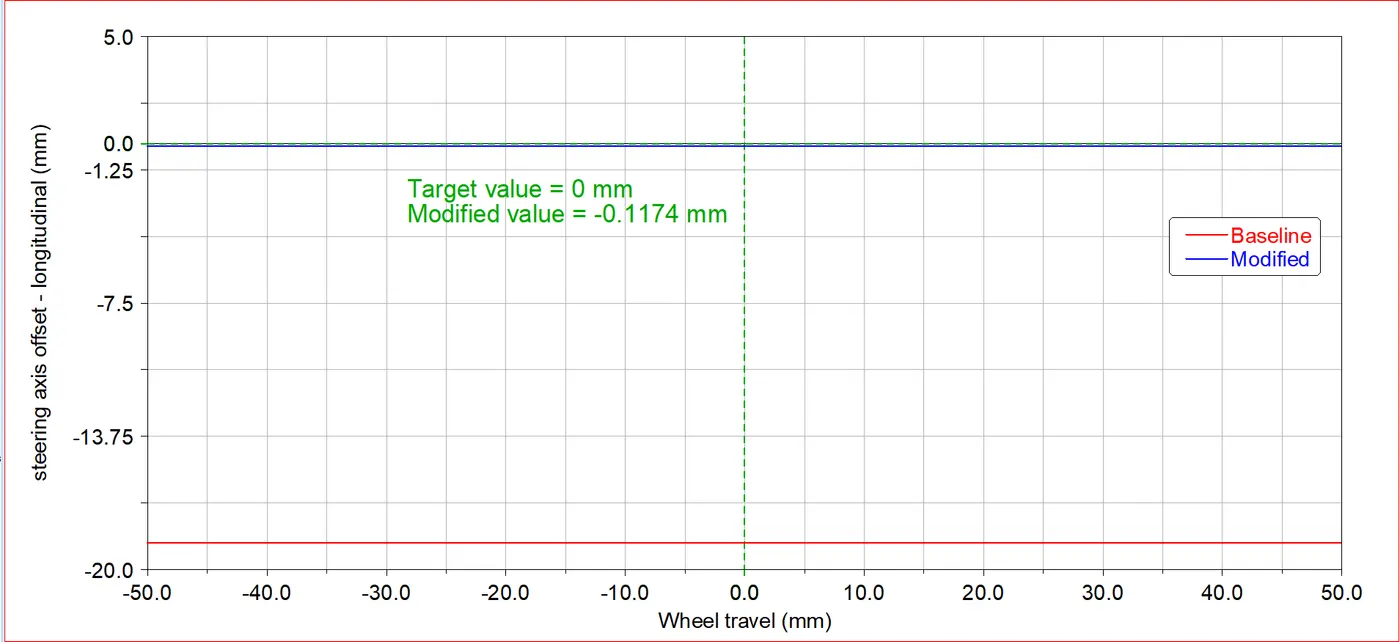
On the other hand, the steer axis offset-longitudinal is the component of the steer axis offset along the intersection of the wheel plane with the plane perpendicular to the steer axis and passing through the wheel centre.
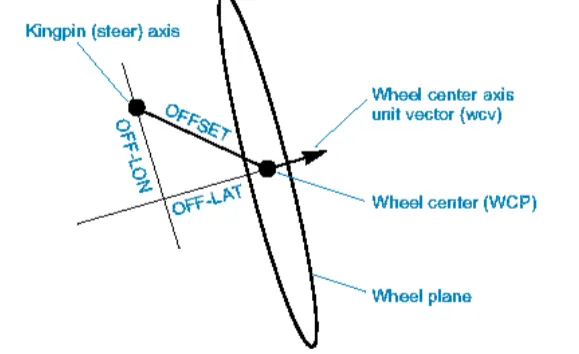
The lower and upper ball joints have to be modified in the longitudinal axis (x-coordinates) to modify the longitudinal offset and the same hardpoints are modified in the lateral direction (y-coordinates) to alter the resultant steering axis offset. Too much lateral offset, produces more torque steer. So generally, its tuned around 60-80mm at ride height. More this offset increase, the torque steer also will increase. The offset transmits the disturbances at the wheel centre.
Scrub Radius
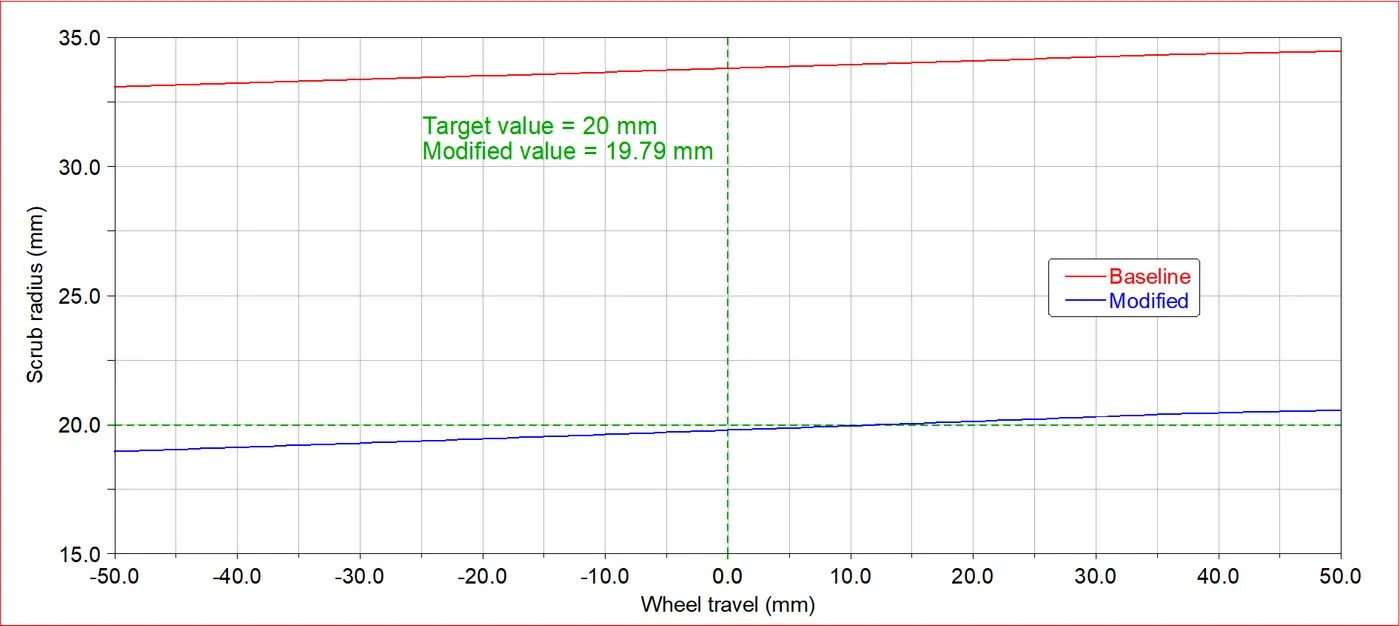
The scrub radius is the distance between the steering axis and the centre of the tire print measured laterally at the ground level. Scrub radius affects the transmission of the road disturbances in general. A negative scrub is usually preffered to produce a stabilizing effect during unequal braking. The scrub radius also affects the dynamic toe changes during acceleration and braking actions. The scrub radius can be modified by changing the upper and lower ball joint hardpoints by modifying it in the lateral direction.
The required kingpin optimization is performed and the end hardpoint table is as follows, the changes in hardpoints have also been highlighted.
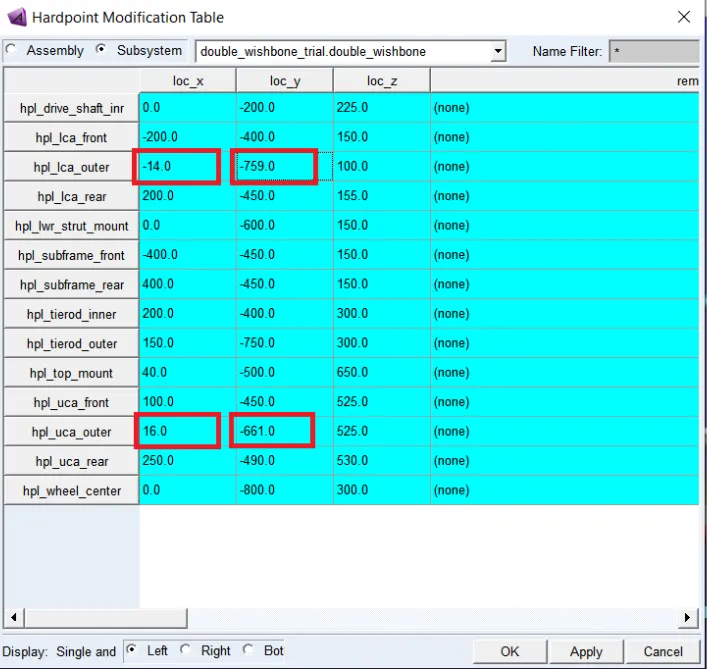
The parameters cannot be controlled independently. The tuning of the upper and lower ball joints laterally and longitudinally modifies these parameters. The list of six parameters can be grouped into 2 groups.
- Castor angle, castor moment arm and kingpin (steering) axis-longitudinal offset are controlled by modifying the upper and lower ball joint hardpoints in the longitudinal axis (X-coordinates).
- Kingpin inclination, Steering axis resultant offset and scrub radius are controlled by modifying the upper and lower ball joint hardpoints in the lateral axis (Y-coordinates).
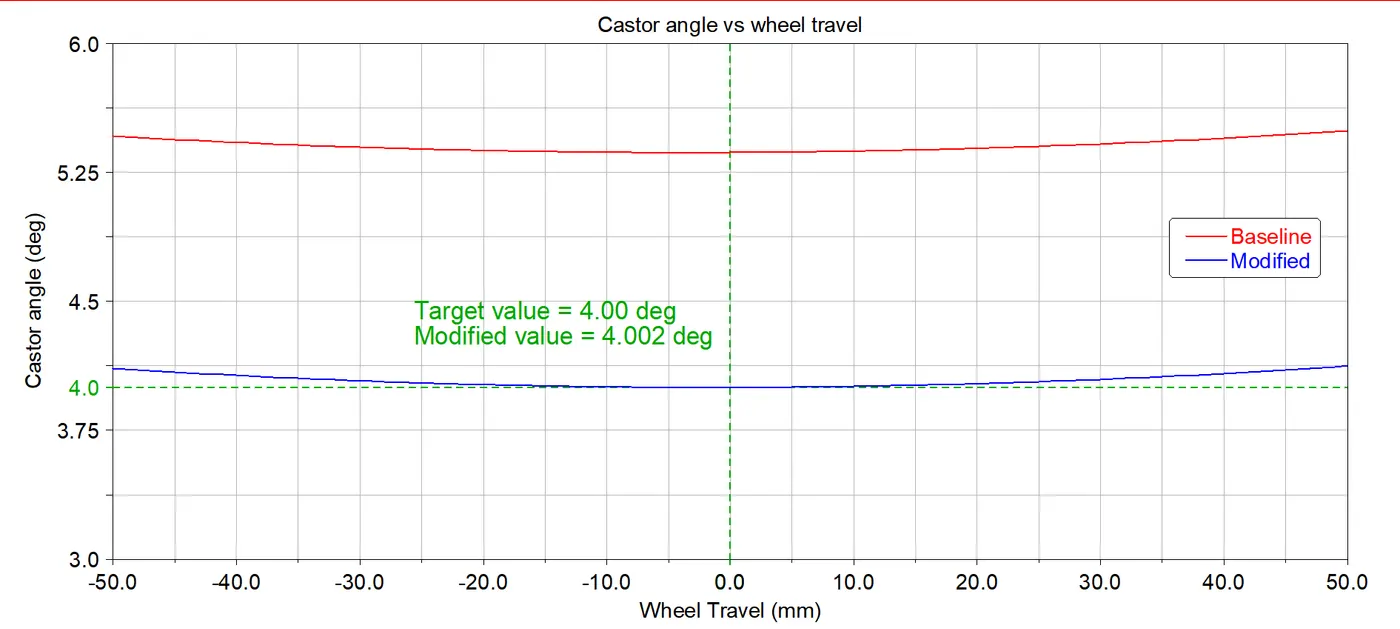
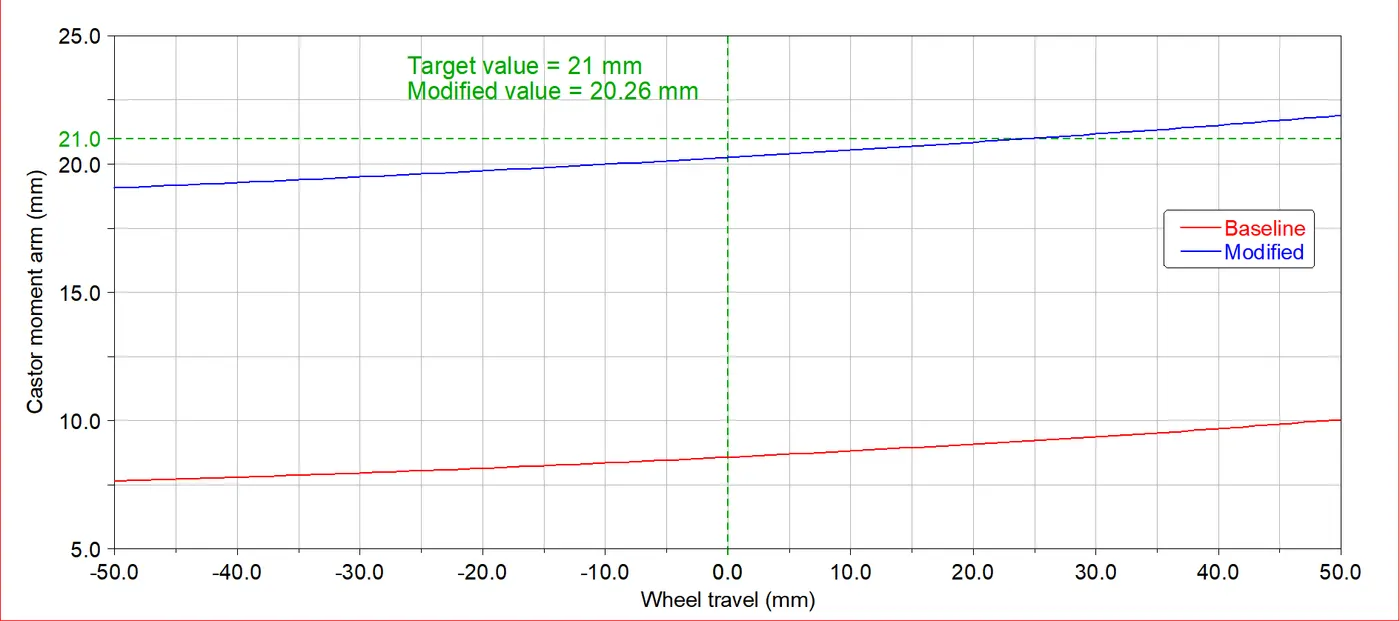
The above mentioned modification is done and the resultant postprocessor plots are as follows :
Castor Angle :
Castor moment arm :
KPI angle :
Steering axis offset - resultant :
Steering axis offset - longitudinal :
Scrub Radius :
The following table consists of the target values and the values to which the geometry was optimized.
| Parameter | Final values | Target values |
| Castor angle (deg) | 4.00 | 4.00 |
| Castor moment arm (mm) | 20.26 | 21 |
| KPI angle (deg) | 13.08 | 13 |
| Steer axis offset (resultant) (mm) | 84.89 | 85 |
| Steer axis longitudinal offset (mm) | -0.117 | 0 |
| Scrub radius (mm) | 19.79 | 20 |