Simulation of EV using ADVISOR Tool
Use ADVISOR tool and simulate the following
1. For EV_defaults_in file, if cargo mass is 500 kg with all other default conditions, can the vehicle travel for 45 km with FTP drive cycle? Conclude your observations.
The vehicle EV_defaults_in is simulated using the ADVISOR tool for a cargo mass of 500kg in a FTP drive cycle scenario. The vehicle selected is a full Electric Vehicle, with only battery as the energy storage component, and a 75KW Electric Motor to produce the drive. The motor drive is directly given to the wheels, with a gear ratio of 1:1. The setup of the ADVISOR tool is as follows :
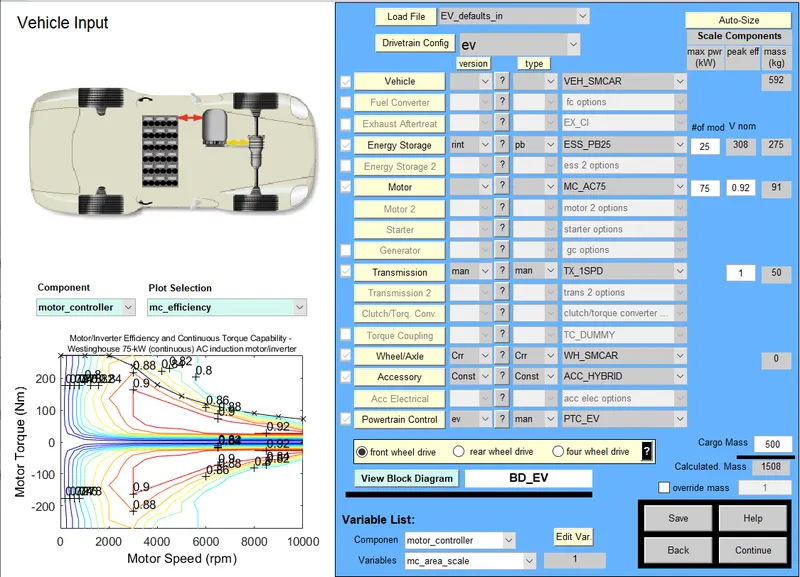
The cargo mass is set at 500kg, which increases the total mass of the vehicle to 1508kg. The distance of a standard FTP drive cycle is 17.77km, inorder to cover the above mentioned distance, the vehicle needs to cover 2 FTP drive cycles, and a distance of around 10 km in the third FTP cycle. 3 FTP drive cycles are hence merged together to evaluate the vehicle range, and the point when the SOC decreases to zero, is noted.
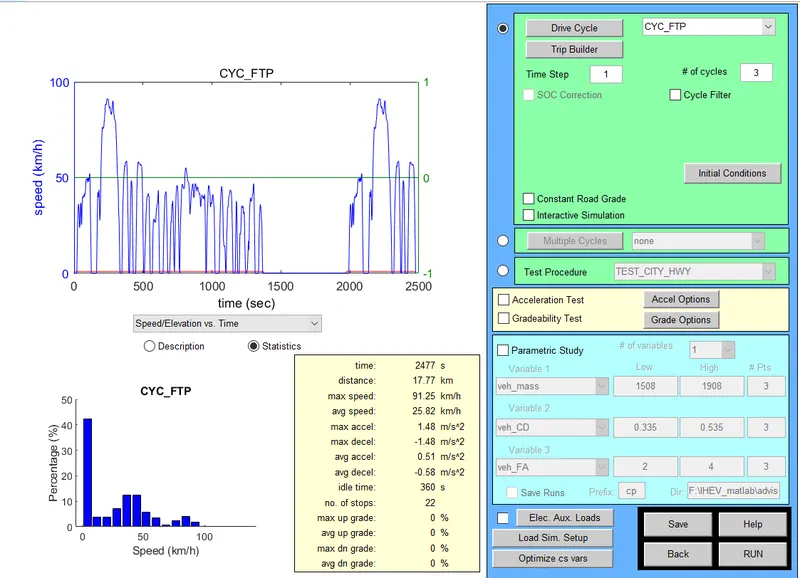
The results are as follows :
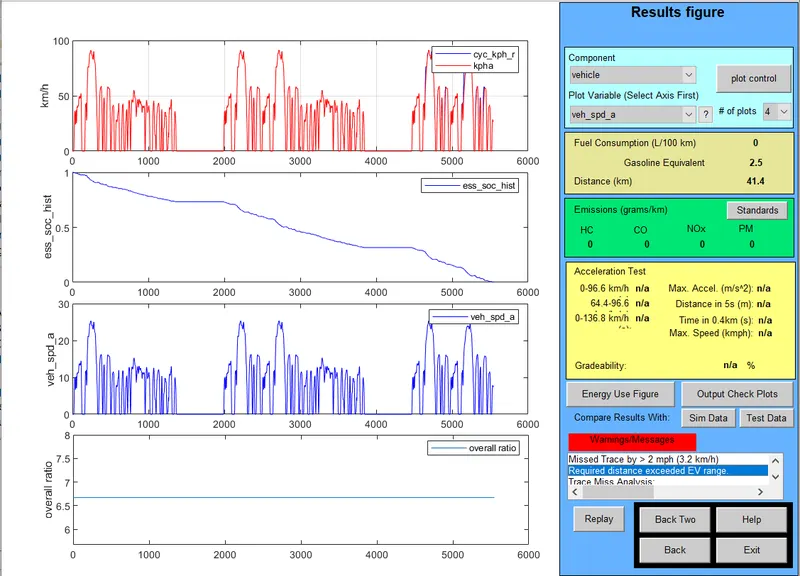
The result page indicates with a warning that the drive cycle exceeded the EV range. The distance covered is given to be 41.4km. Hence, the EV_defaults_in file with a cargo mass of 500 kg does not cover the target range of 45 km. It covers only 41.4km in a FTP drive cycle.
2. In the above case, try changing the battery capacity and repeat the simulation
For this case, the battery capacity is imrove the EV range from 41.4km to the target value of 45km. Currently the battery has 25 modules. Each module is a 12V 26Ah cell. There are two ways to increase the capacity of the battery :
1. Addition of extra modules : In this case the cell capacity of 26Ah is kept constant, and extra modules in added.
2. Increasing the Cell capacity : In this case, the number of modules is kept constant and the individual cell capacity is increased.
Addition of one module increases the capacity by 312Wh. The number of modules is increased one by one, and the corresponding range of the electric vehicle is calculated.
Test run 1 : When the number of modules is 26, the voltage increases from 308V to 321V. Hence the capacity of the battery also increases. The weight of the battery component also increases acccordingly. The simulation results are as follows, which indicates the range has increased from 41.4 km to 42.7km.
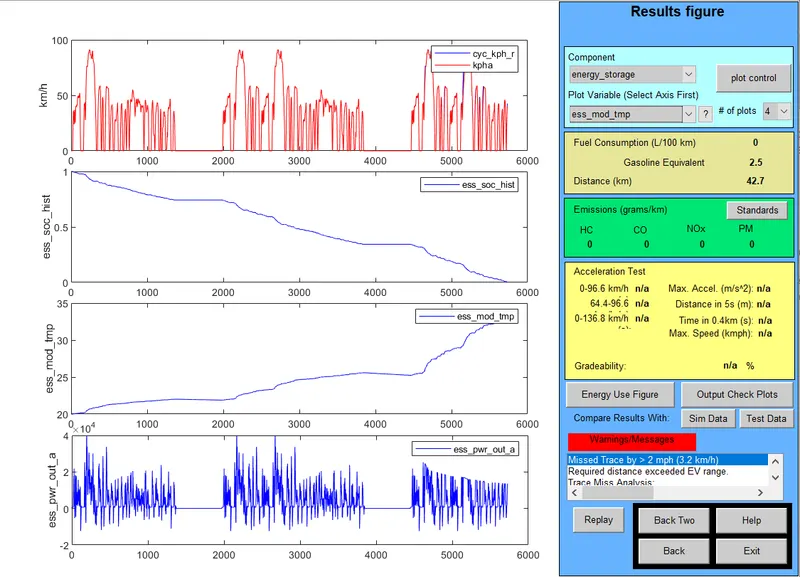
Test run 2 : When the number of modules is 27, the voltage increases to 333V. Hence the capacity of the battery also increases. The simulation results are as follows, which indicates the range has increased to 44.8km.
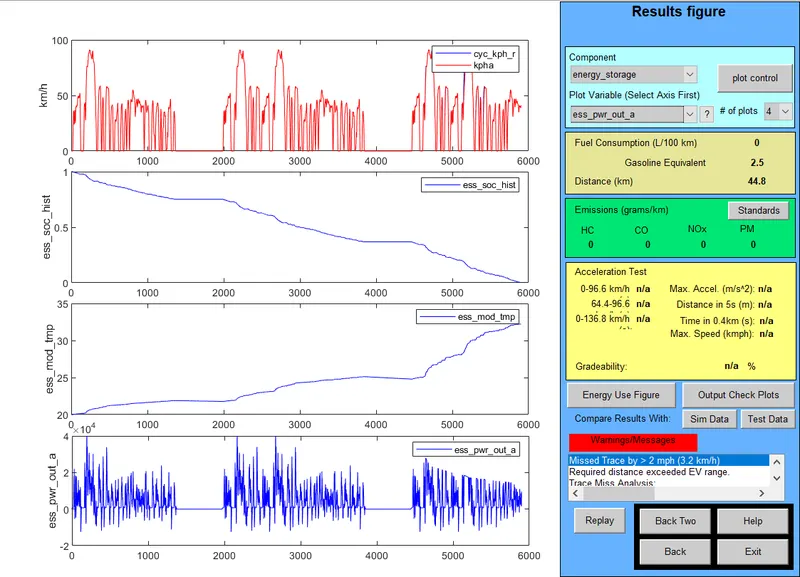
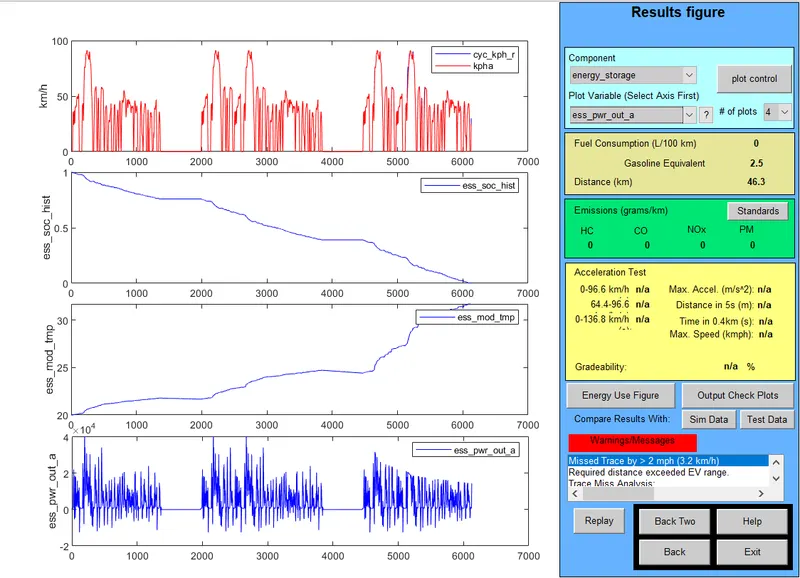
Test run 3 : When the number of modules is 28, the voltage increases to 345V. This increases the range by The simulation results are as follows, which indicates the range has increased to 46.3 km, which is above the target range.
The capacity is increased by varying the Variable ess_cap_scale. It indicates the scaling factor. which means the energy storage capacity is increased by the scaling factor times.
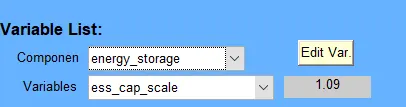
The varaible is modified using the edit variable function.The default cell capacity is 26Ah, now increasing by 1.09 times yields a cell capacity of 28.34Ah. The simulation results is as follows. The EV range is increased from 41.4km to 45.1km which is same as the above indicated result when the number of modules where increased one by one.
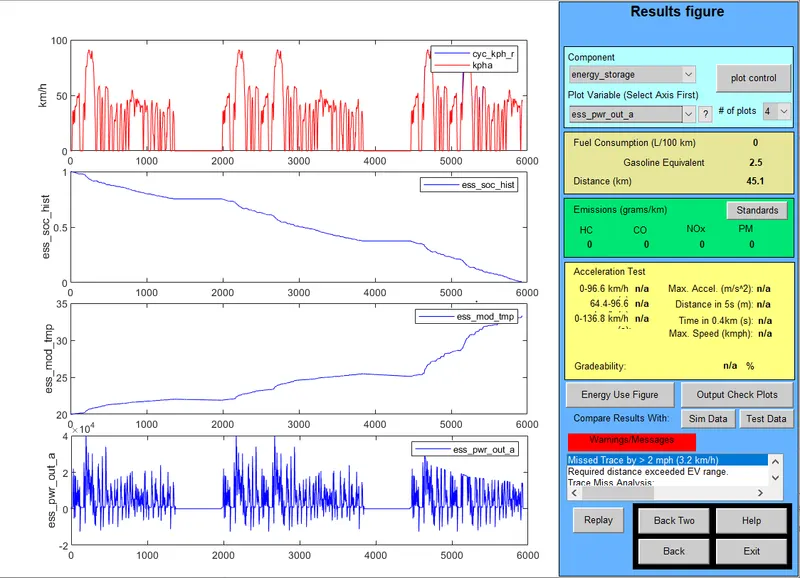
Hence, it can be concluded that two ways to achieve the target range of 45 km is :
- Increasing the number of modules to 28, while each module has a 12V, 26Ah capacity.
- Maintaining the number of modules to 25, while increasing the each module capacity to 12V, 28.34Ah.
3. Perform gradeability test with PRIUS_Jpn_defaults_in file.
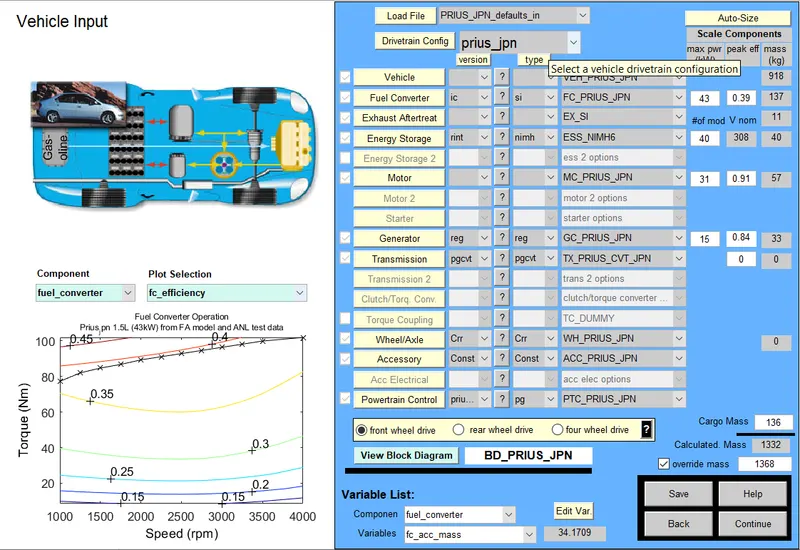
The gradeability test is performed at different speeds, and the corresponding gradeability values are tabulated.
Case 1 : Gradeability test at 15mph (24.1kmph) for 10 second duration.
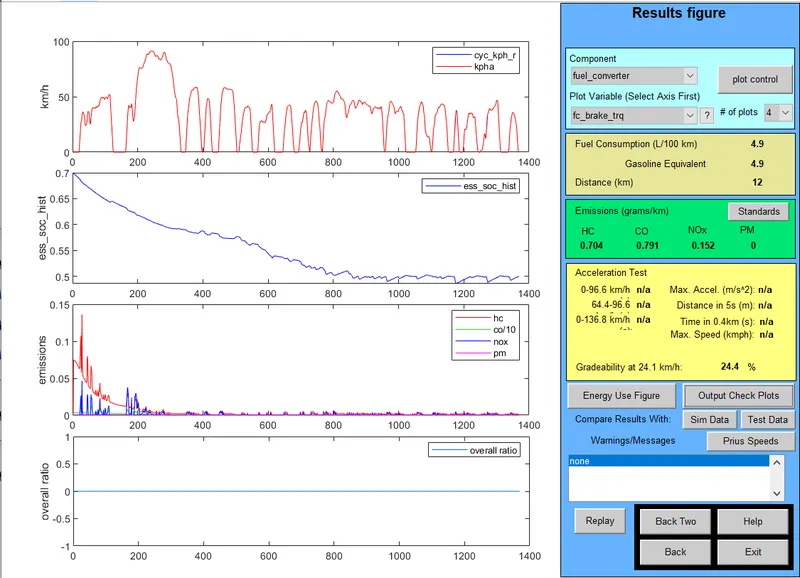
The gradeability at 15mph (24.1 kmph) is 24.4%.
Case 2 : Gradeability test at 25mph (40.2 kmph) for 10 second duration.
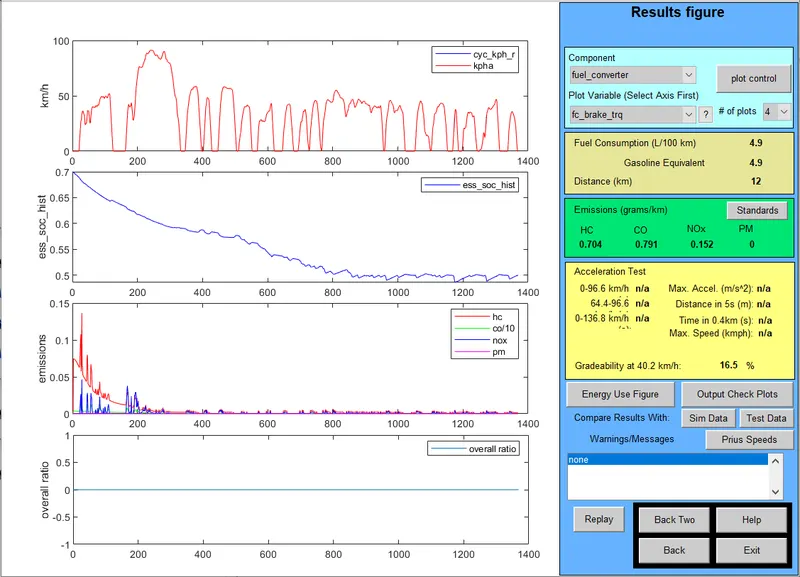
The gradeability at 25mph (40.2 kmph) is 16.5 %.
Case 3 : Gradeability test at 35mph (56.3 kmph) for 10 second duration.
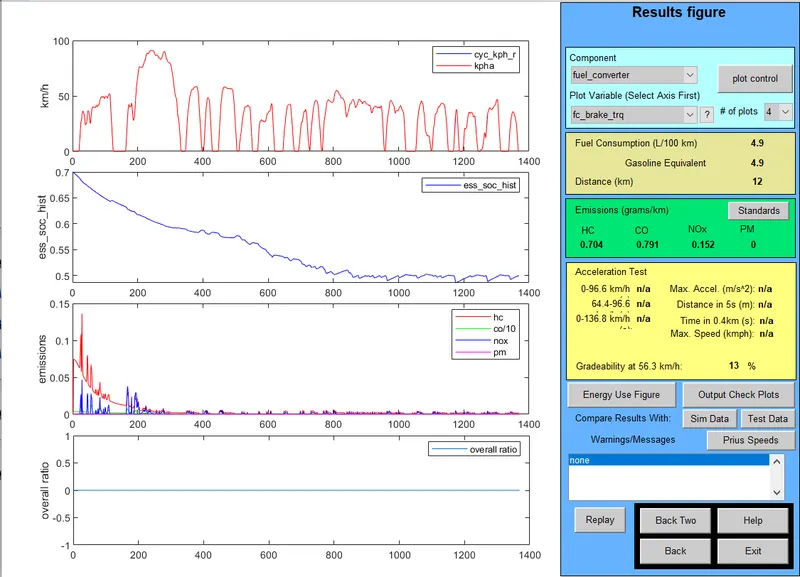
The gradeability at 35mph (56.3 kmph) is 13 %.
Case 4 : Gradeability test at 45mph (72.42 kmph) for 10 second duration.
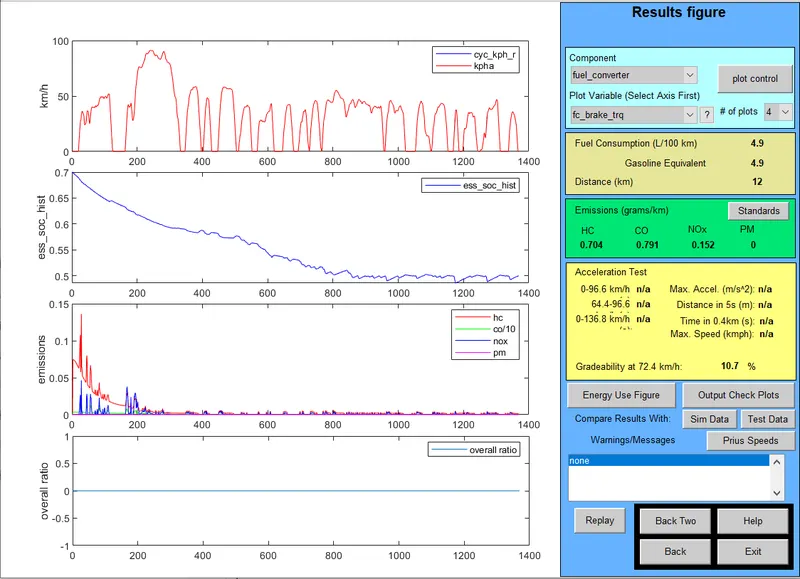
The gradeability at 45mph (72.42 kmph) is 10.7 %.
Case 5 : Gradeability test at 55mph (88.5 kmph) for 10 second duration.
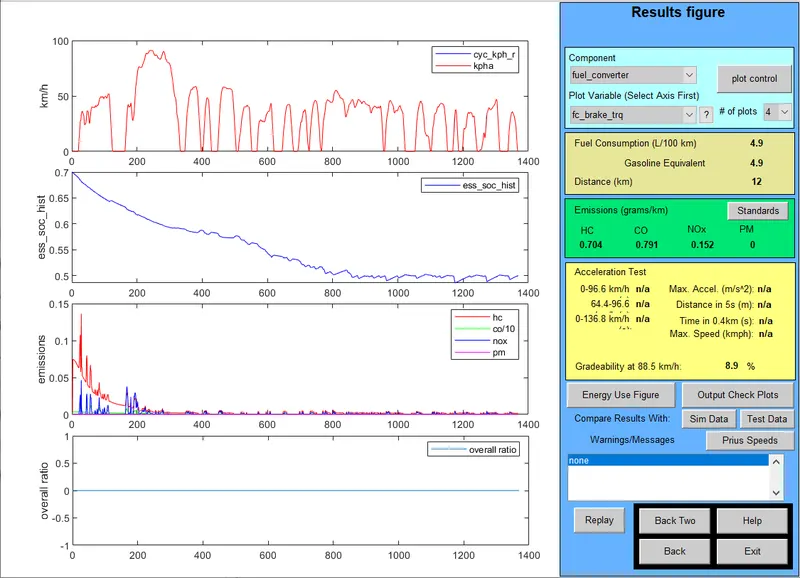
The gradeability at 55mph (88.5 kmph) is 8.9 %.
Results :
| Speed (mph) | Gradeability (%) |
| 15 | 24.4 |
| 25 | 16.5 |
| 35 | 13 |
| 45 | 10.7 |
| 55 | 8.9 |