Week 9 Tension and Torsion test challenge
Tension and Torsion test - Simulation Using
ANSYS Workbench 2020 R2
Thejan Sasilal
OBJECTIVES
For this challenge, you will have to perform the tension and torsion test on the specimen provided below the video corresponding to the challenge.
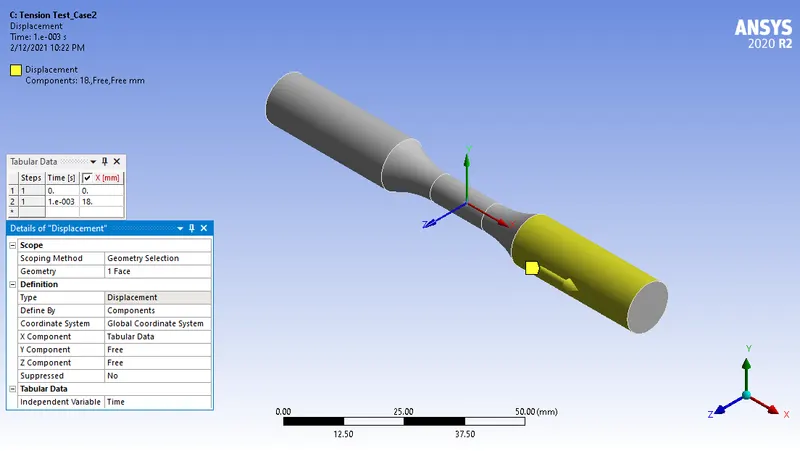
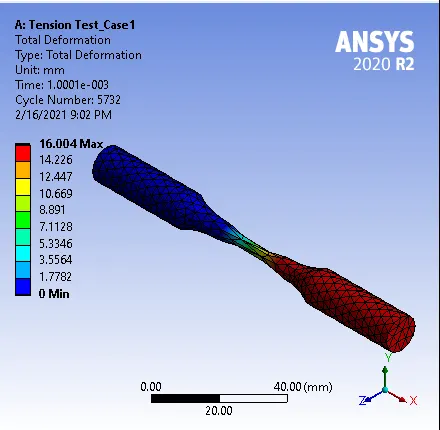
For the tension test, displace one end of the specimen to 18mm while keeping the other fixed. You will need to find out the total deformation, equivalent stress and temperature of the specimen and attach appropriate images to show your results.
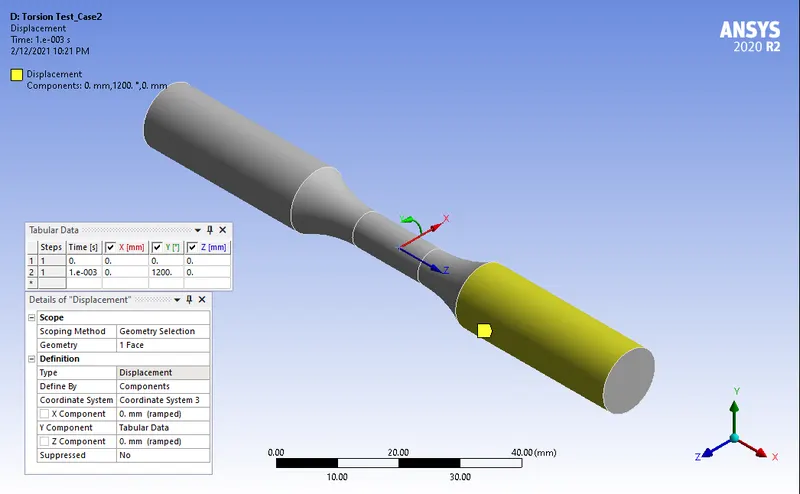
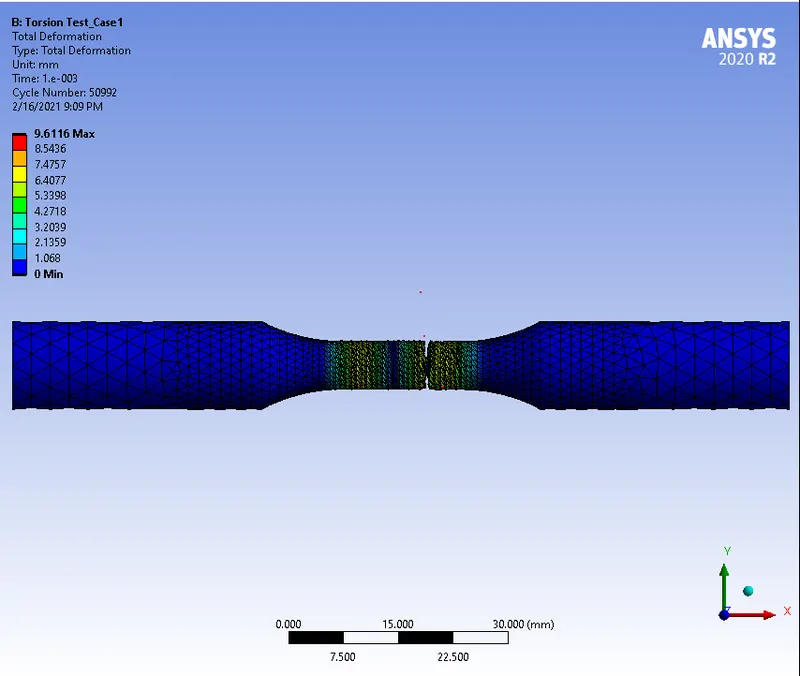
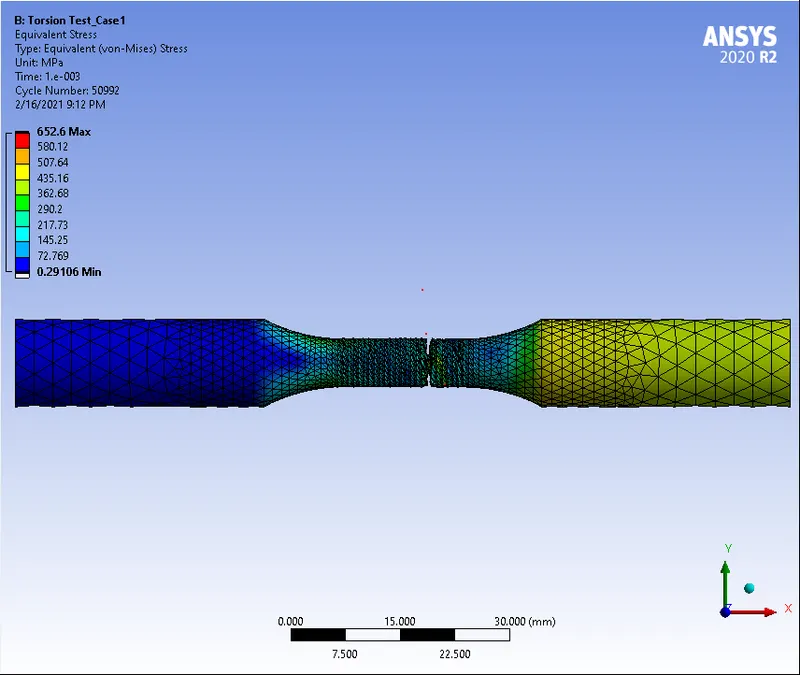
For the torsion test, you will need to displace one end of the specimen to an angle of 1200 degree. Find out the total deformation, equivalent stress and temperature of the specimen and attach images to show your results.
- INTRODUCTION
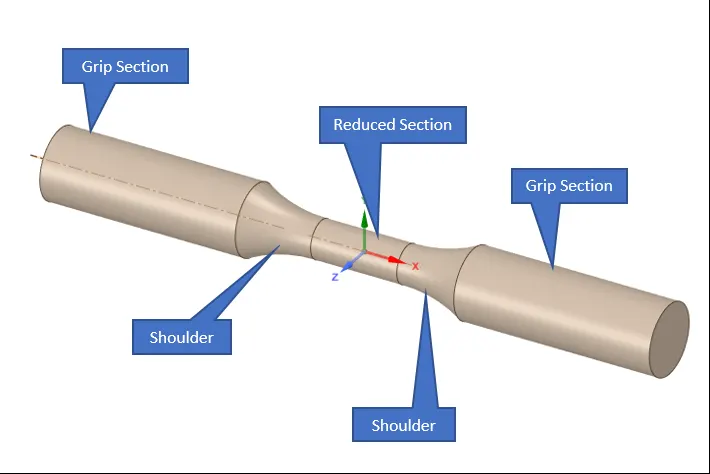
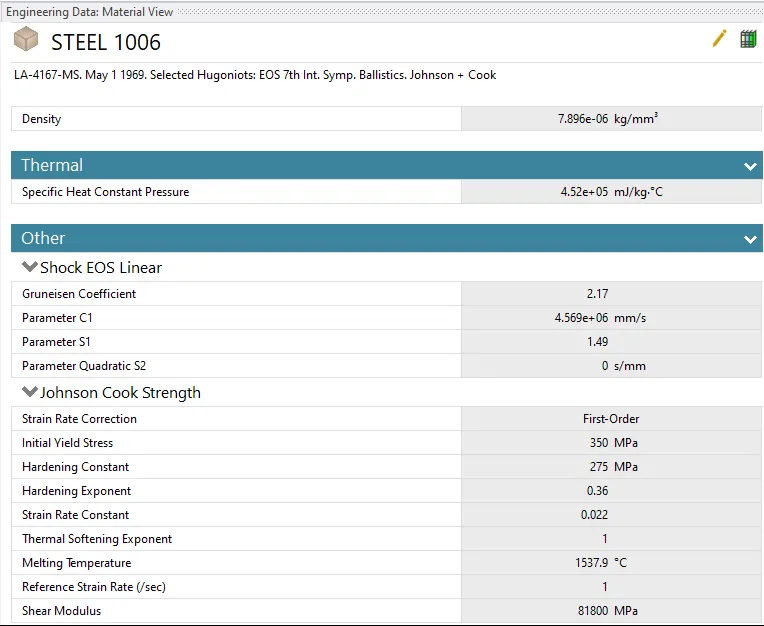
In this challenge, we are simulating the Tension and Torsion test to find out the structural abilities of the Steel 1006 Specimen.
- DESIGN SPECIFICATION
Assign Structural Steel as the materials for each geometry from engineering data.
- STATIC ANALYSIS
Open Mechanical modeler for analysis.
Consider all units are in metric.
Rename geometry as Specimen respectively.
3.1 COORDINATE SYSTEM
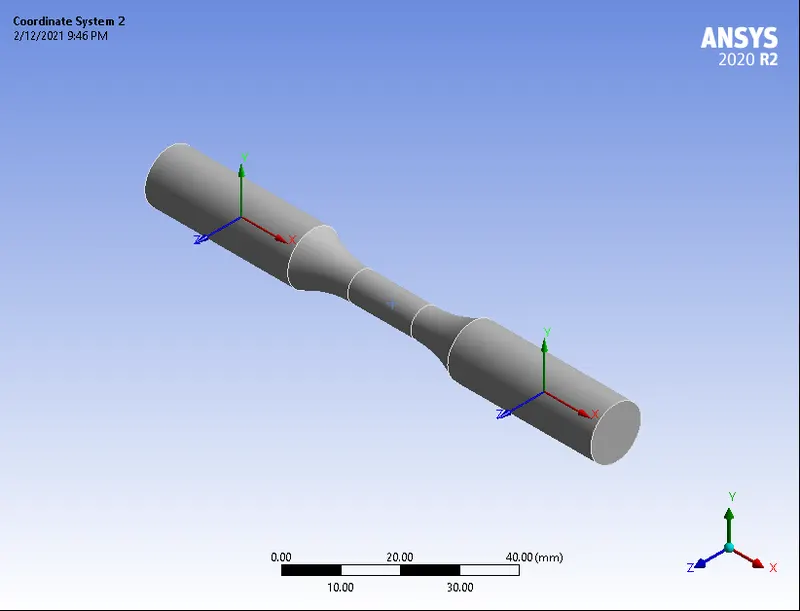
3.1.1. FOR TENSION TEST
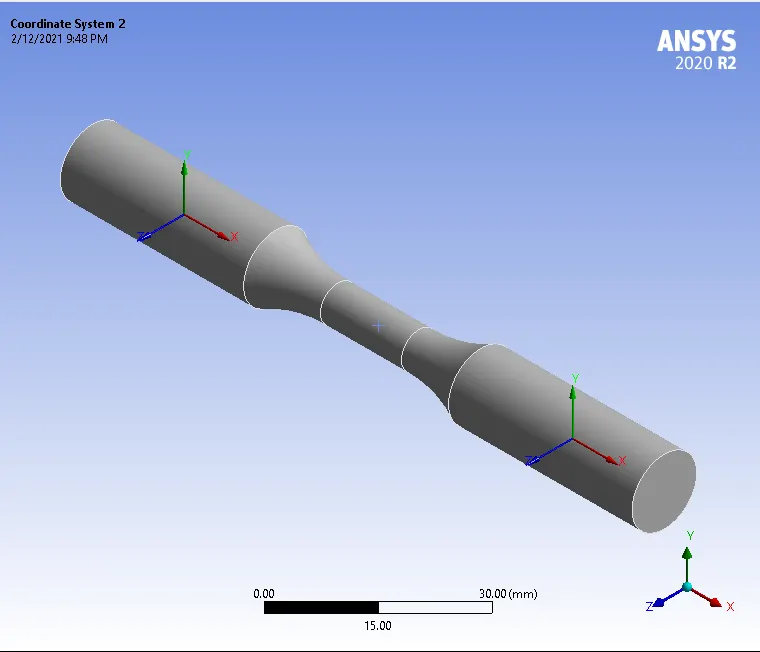
Insert the two coordinate systems for both ends of the geometry as in the picture.
3.1.2. TORSION TEST
- Insert the two coordinate systems for both ends of the geometry as in the picture.
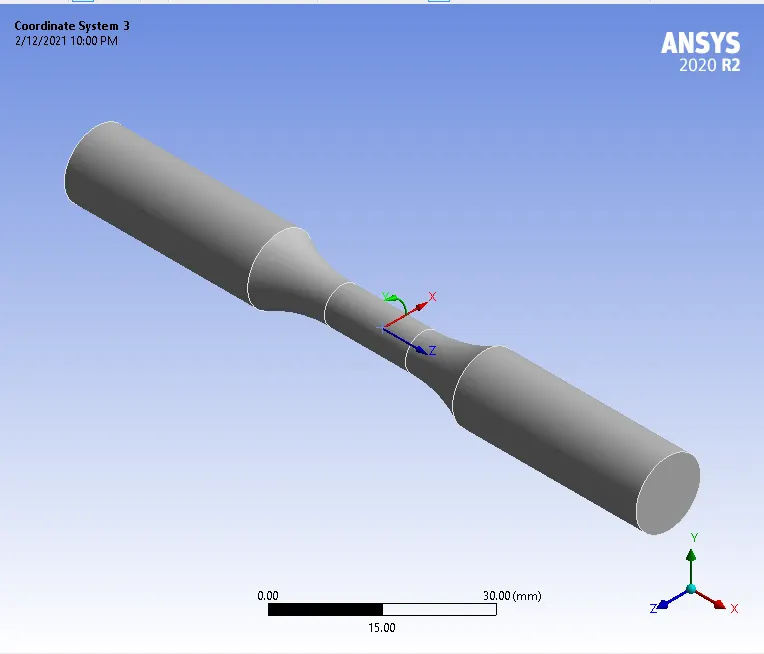
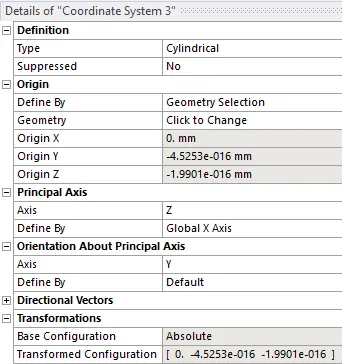
- Insert cylindrical coordinate system for the center of the geometry as in the picture.
3.2 MESH CREATION
3.2.1. FOR TENSION TEST
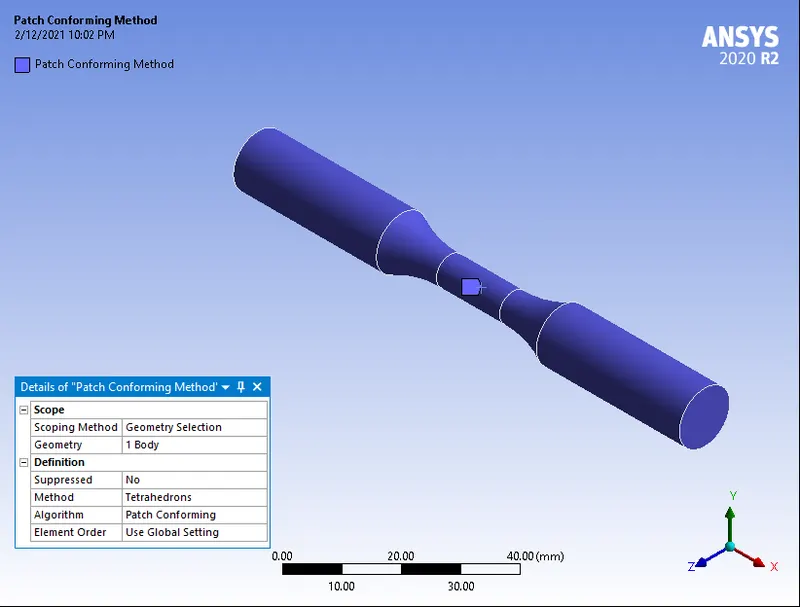
- Insert Method and select Tetrahedrons
- Insert Sizing
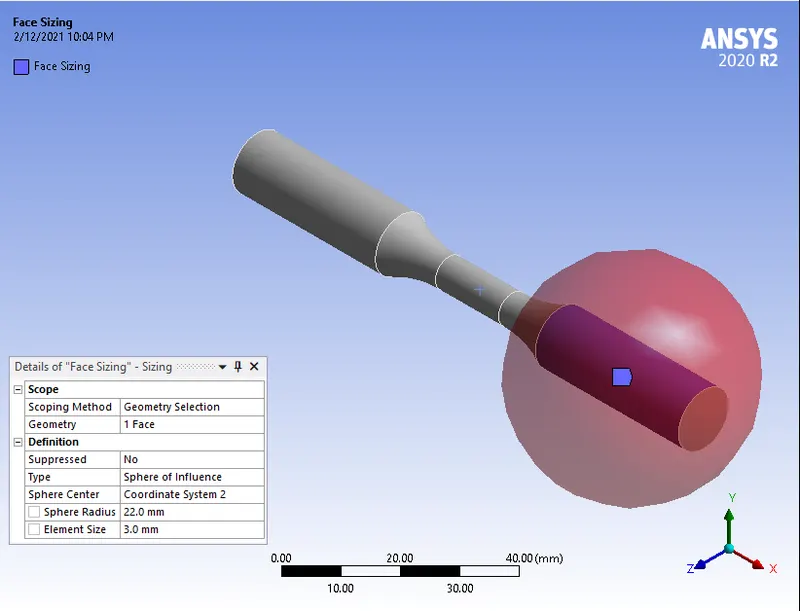
- Insert Sizing
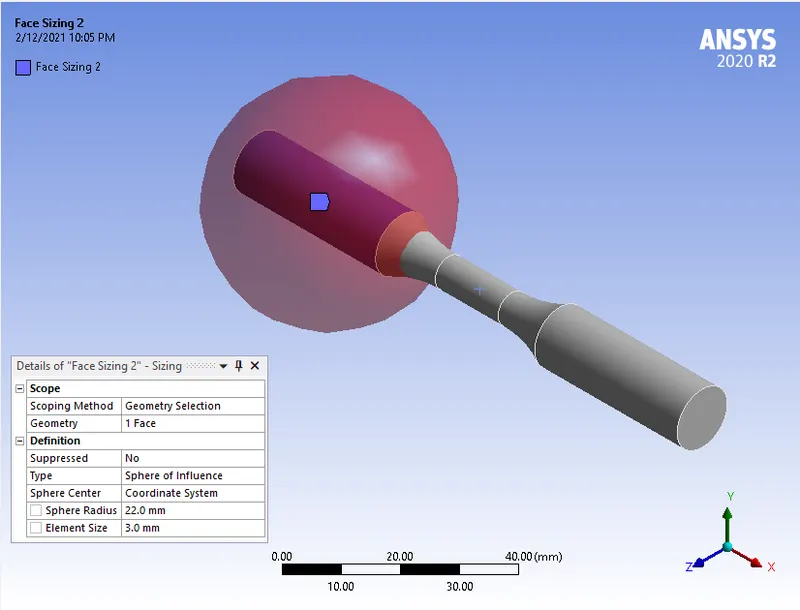
- Generate Mesh
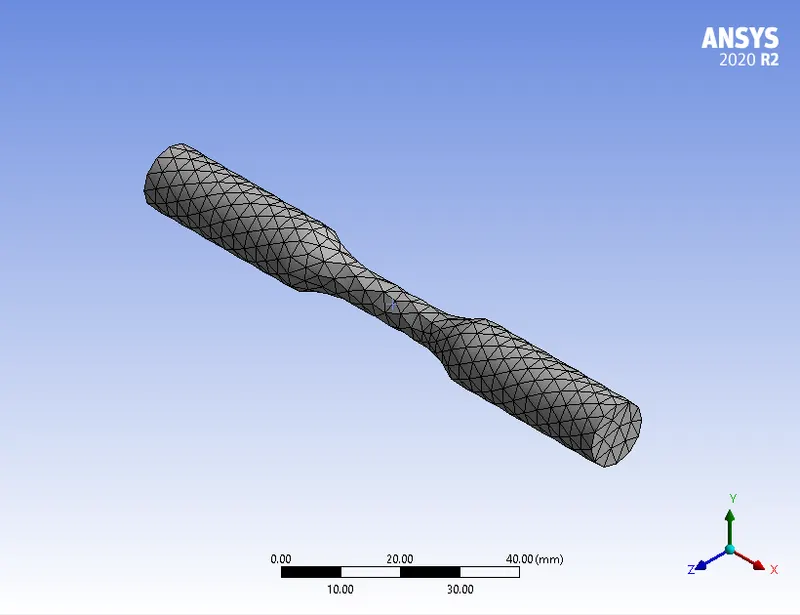
3.2.2. TORSION TEST
- Insert Method and select Tetrahedrons
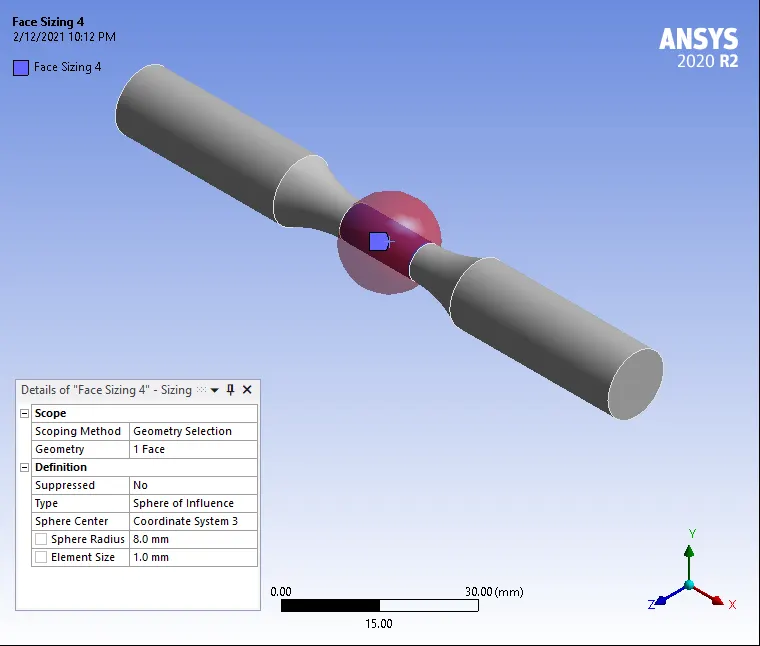
- Insert Face Sizing for the end face of the geometry
- Insert Face Sizing for the end face of the geometry
- Insert Face Sizing for the shoulder face
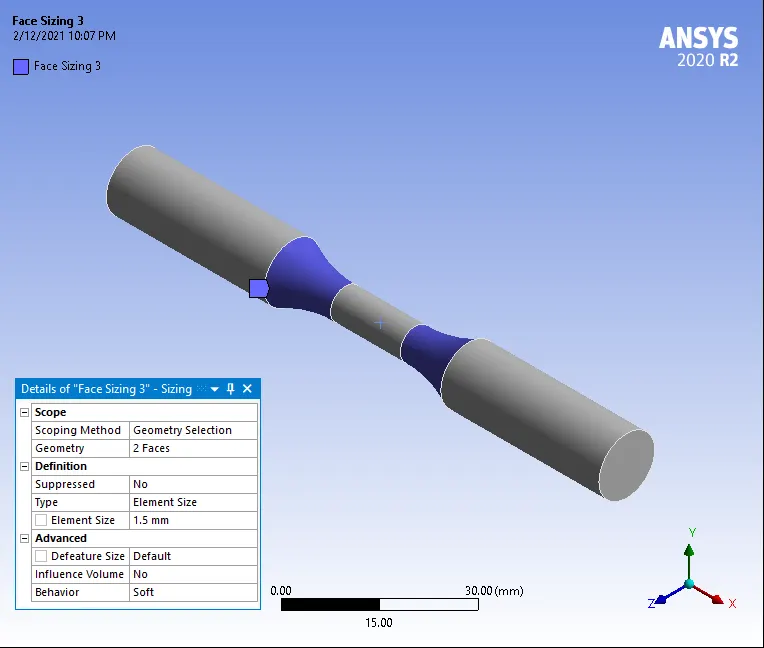
5. Insert Face Sizing for the center face of the geometry
3.3 ANALYSIS SETTINGS
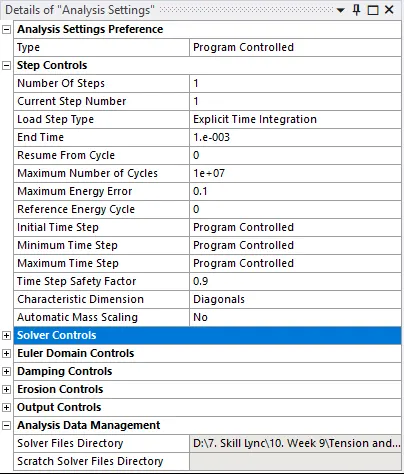
Consider the following as the analysis settings for the tension test and torsion test.
3.4 BOUNDARY CONDITION
3.4.1. FOR TENSION TEST
- Insert Displacement Load
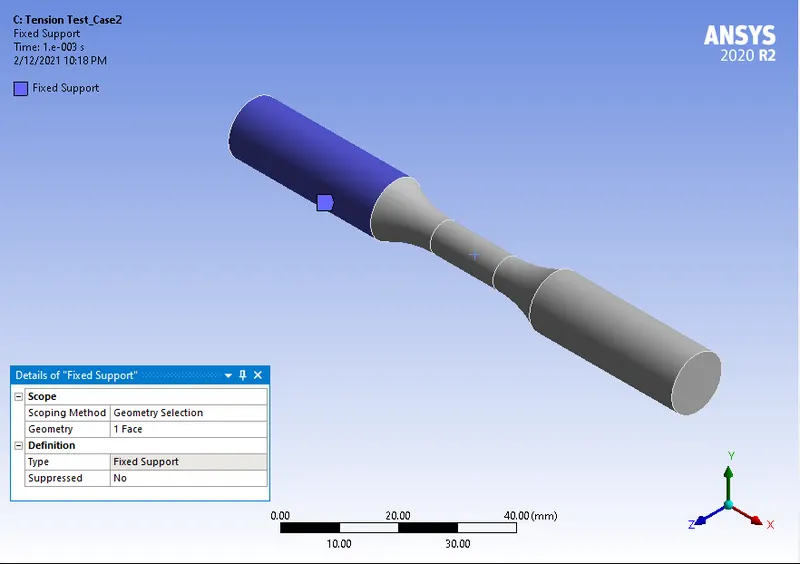
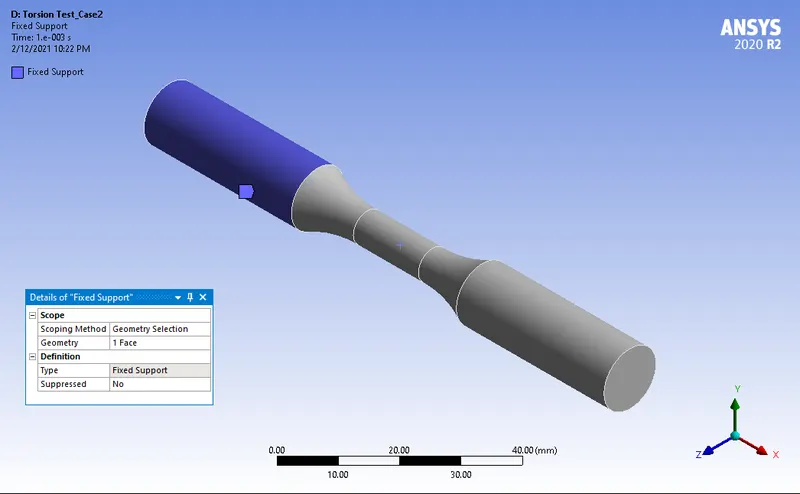
- Insert Fixed Joint
3.4.2. TORSION TEST
- Insert Displacement Load
- Insert Fixed Joint
3.5 SOLUTIONS
|
|
TENSION TEST |
|
|
|
CASE - 1 |
CASE - 2 |
COMPARISON |
|
|
Total deformation |
 |
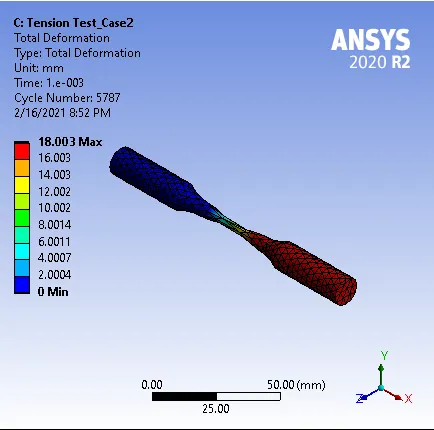 |
Found total deformation same as the displacement load applied. |
|
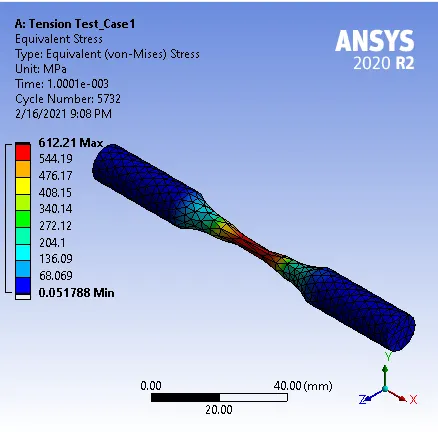
Equivalent stress |
 |
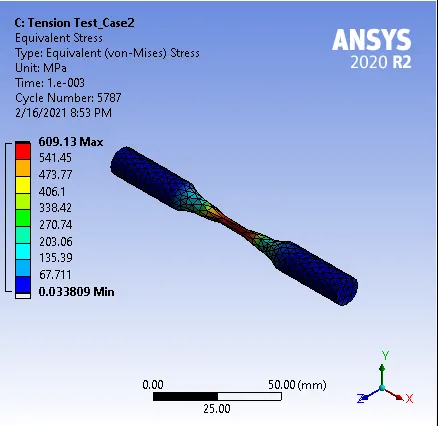 |
As the sample is plastically deformed, there is not significant difference between case 1 and 2 with respect to the difference in displacement load application. |
|
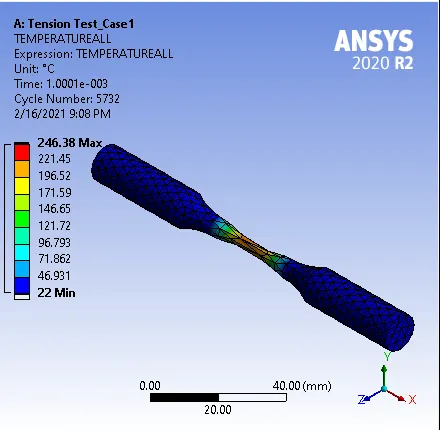
Temperature of the specimen |
 |
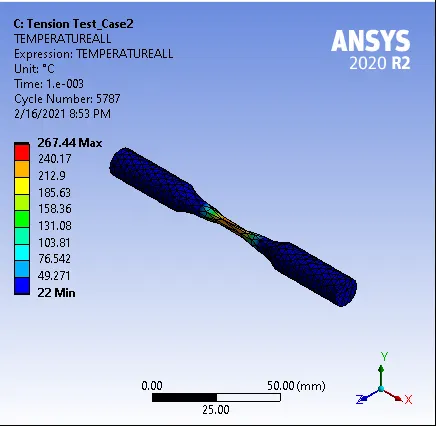 |
As the displacement load is more in case 2, temperature developed is also more in case 2. |
|
|
TORSION TEST |
|
|
|
CASE - 1 |
CASE - 2 |
COMPARISON |
|
|
Total deformation |
 |
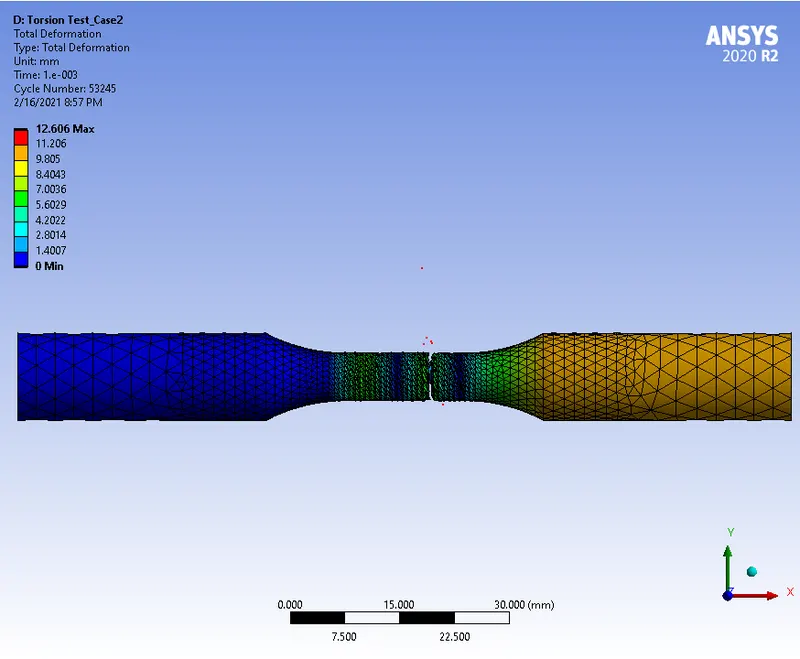 |
Total deformation found for the dust particles produced |
|
Equivalent stress |
 |
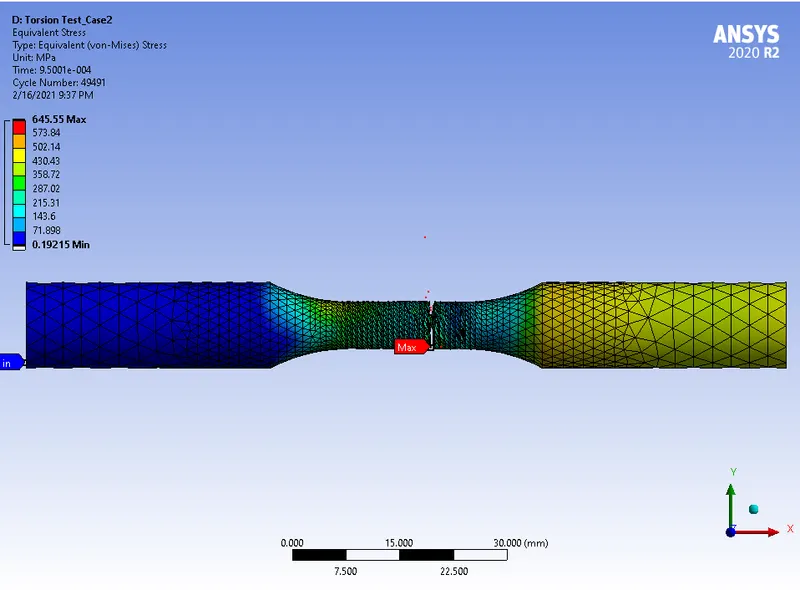 |
As the sample is plastically deformed, there is not significant difference between case 1 and 2 with respect to the difference in displacement load application. |
|
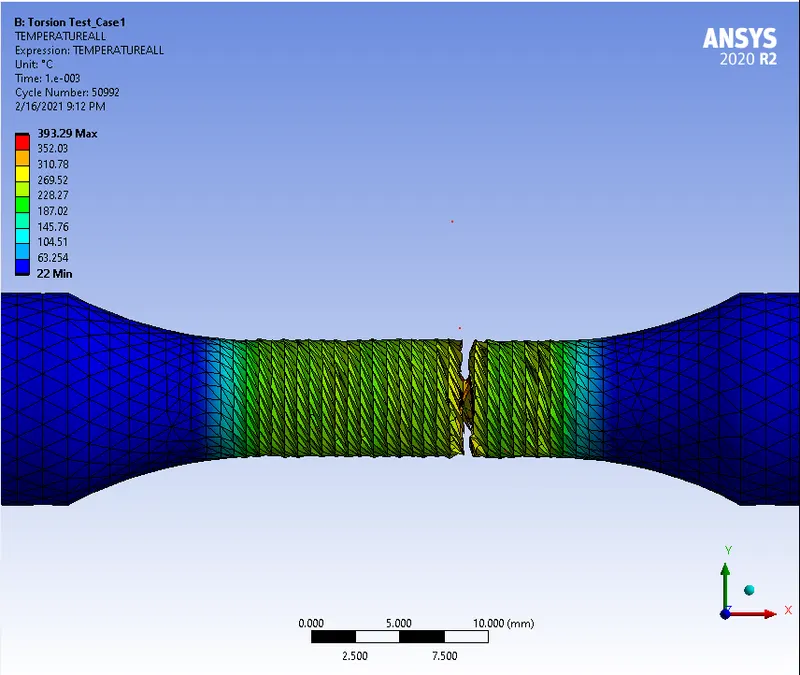
Temperature of the specimen |
 |
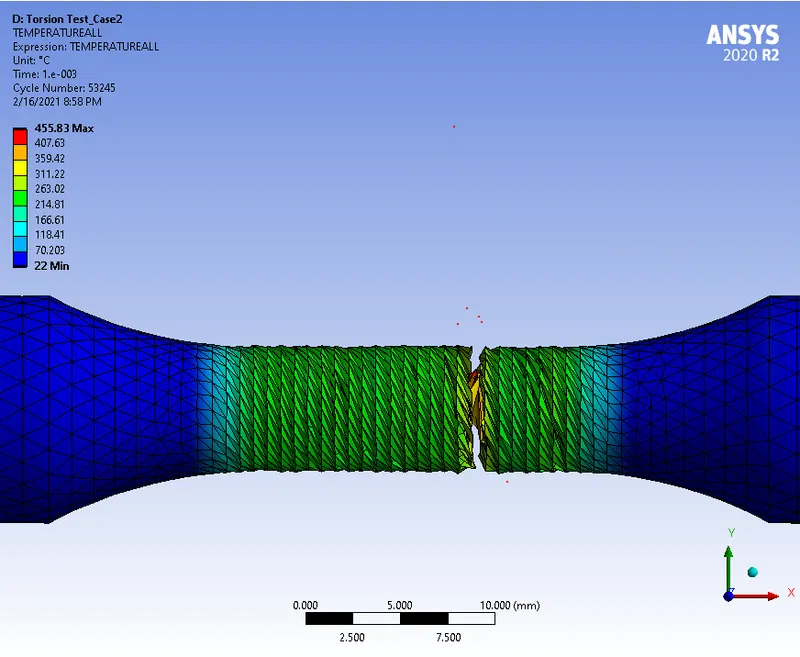 |
As the displacement load is more in case 2, temperature developed is also more in case 2. |
- CONCLUSSION
Simulation of Tension and Torsion Test of Steel 1006 material conducted with Ansys Workbench. From the analysis it is found that when the displacement load increases, temperature developed is high. Both cases it is found that, after plastic deformation, there is no significant change in stress developed.