Week 1 Spur Gear Challenge
Objective 1:
- Case 1:
Using Cast Iron(ductile) as a material, carry out a static structural analysis to find out Equivalent stress, Total deformation and Stress intensity(Learn about what stress intensity is). Find location for possible fracture
- Case 2:
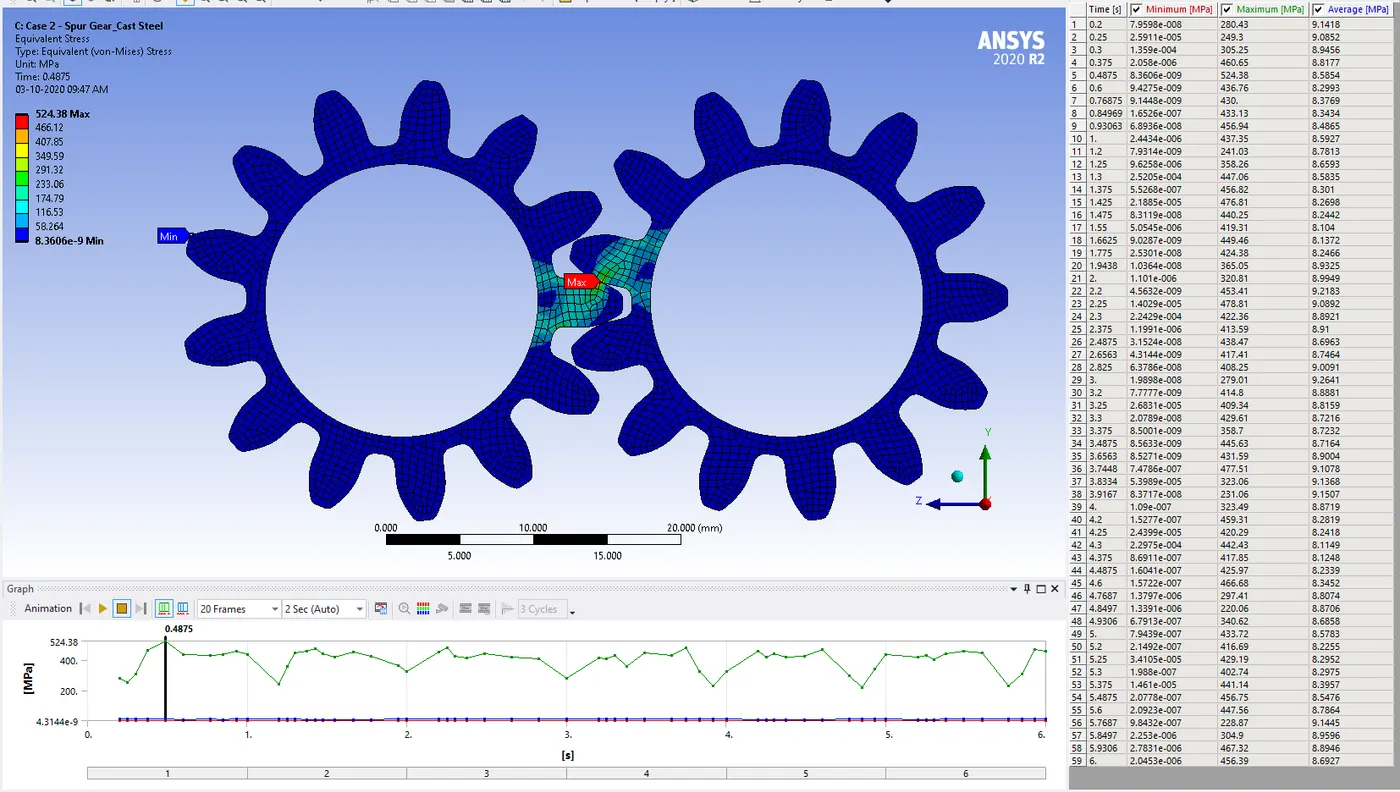
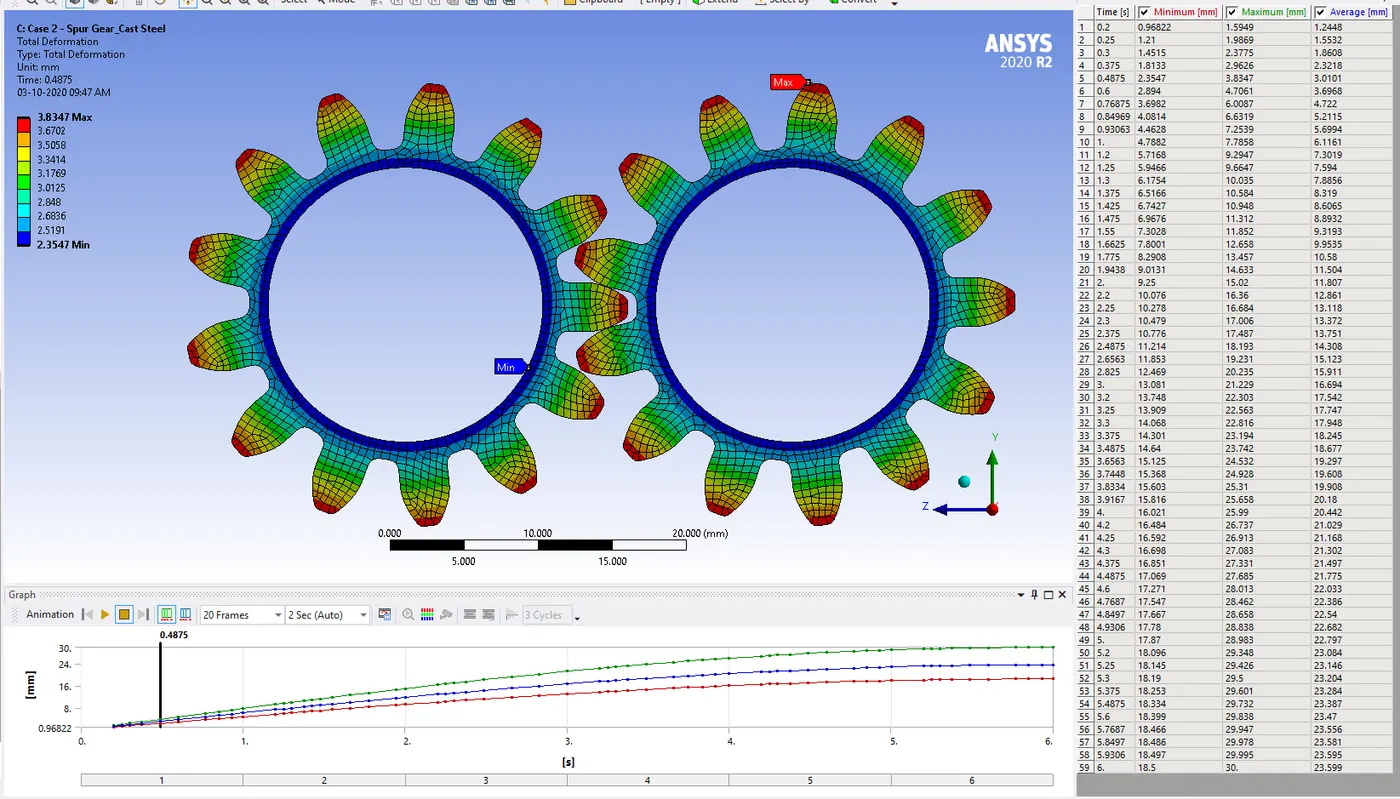
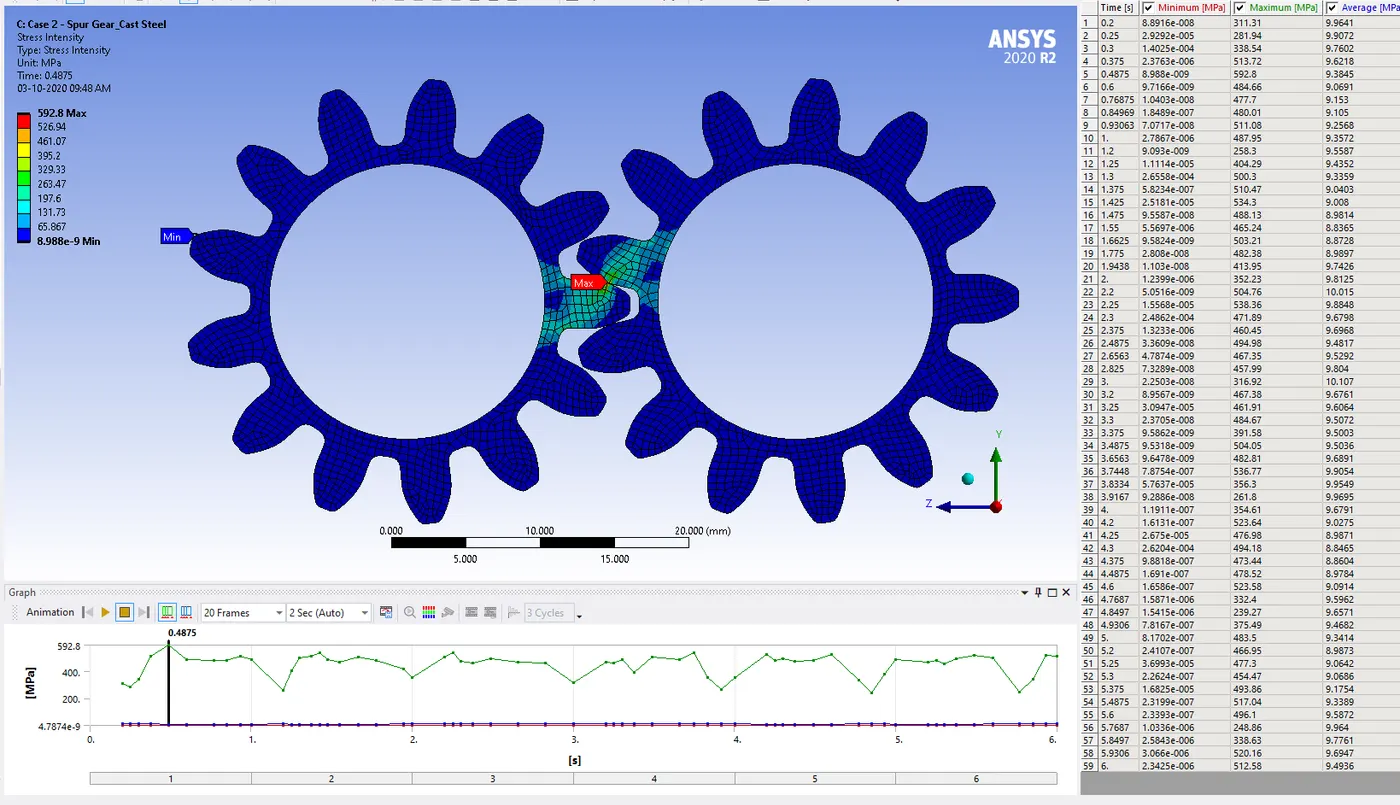
Using Cast Steel as material, perform the same analysis for the results as in Case 1.
- Case 3:
Using Cast Bronze as material, perform the same analysis for the results as in Case 1.
RESULTS
- Case 1:
A) Equivalent stress
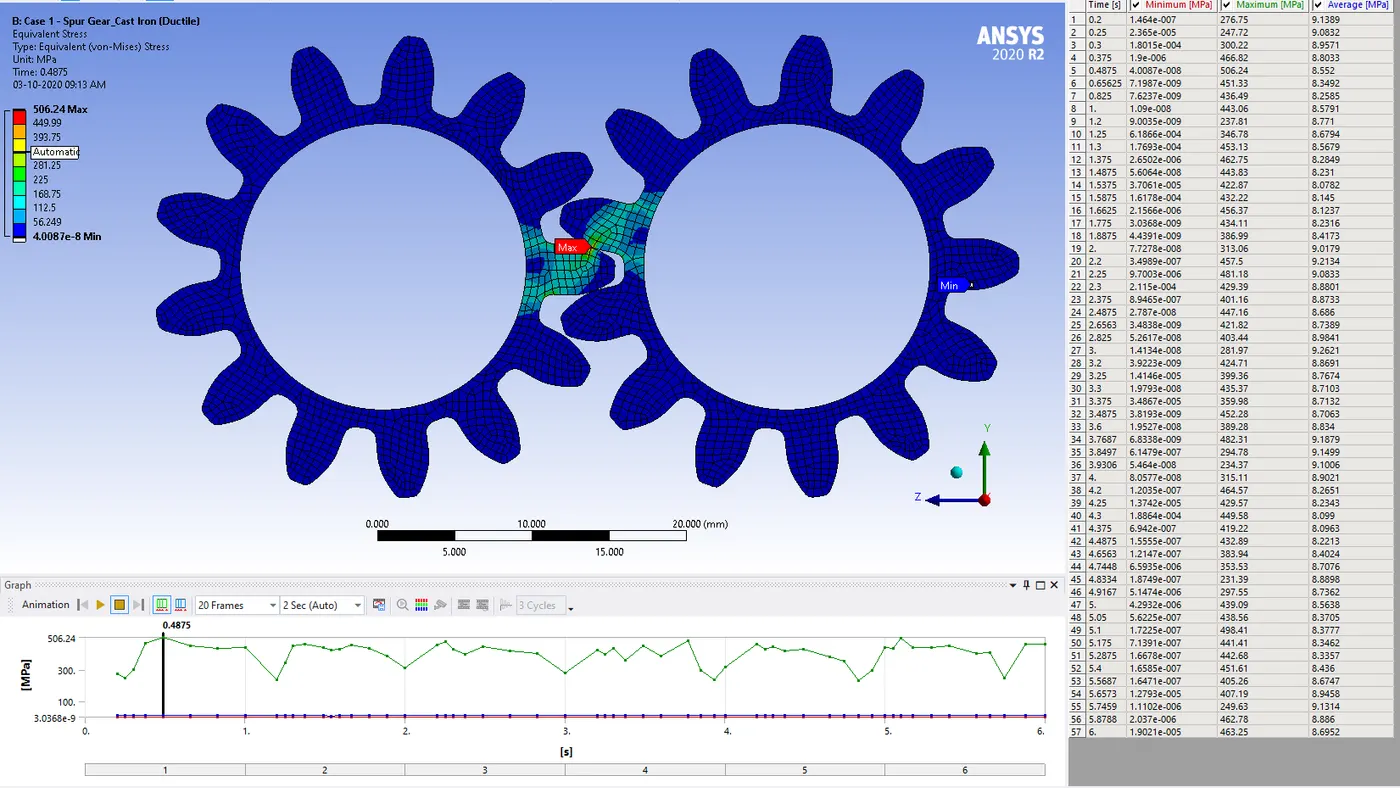
B) Total deformation
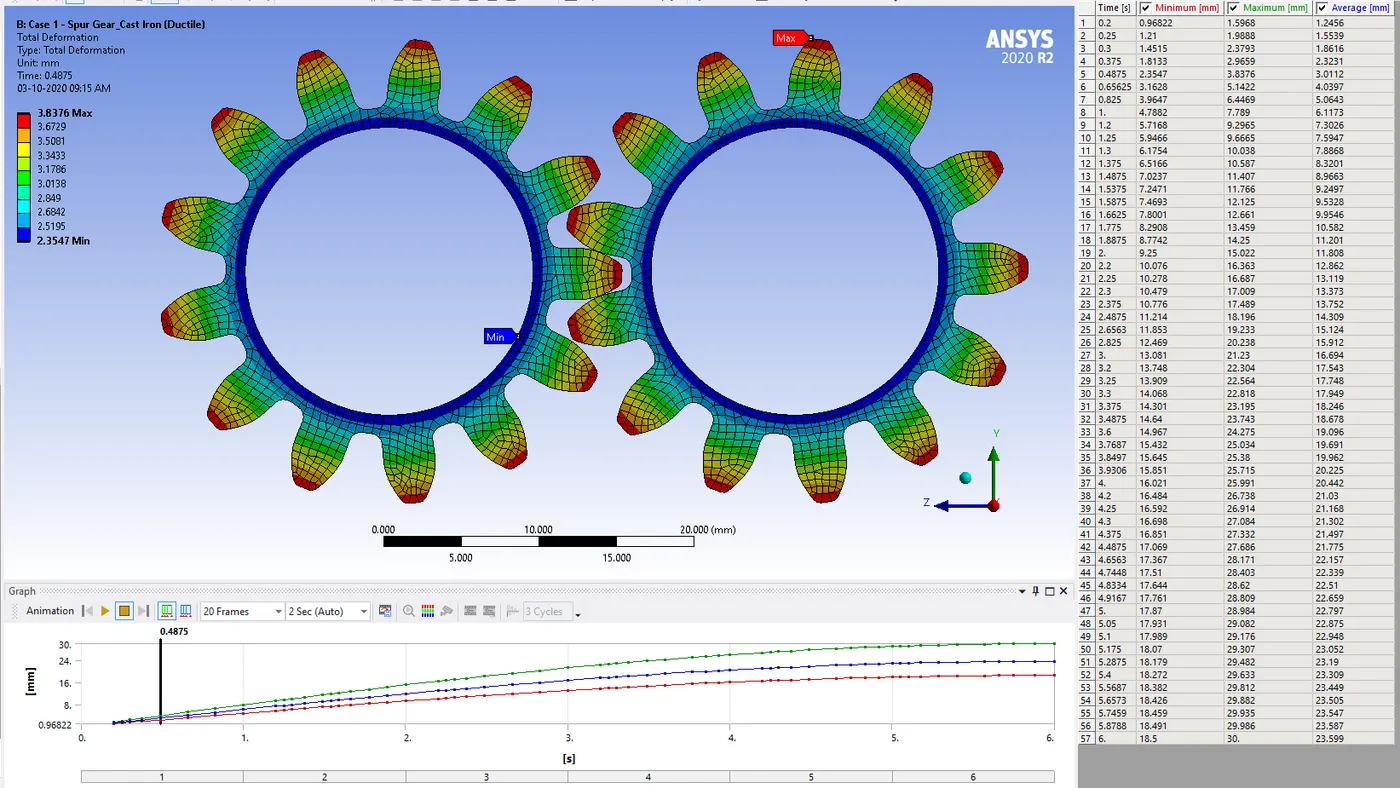
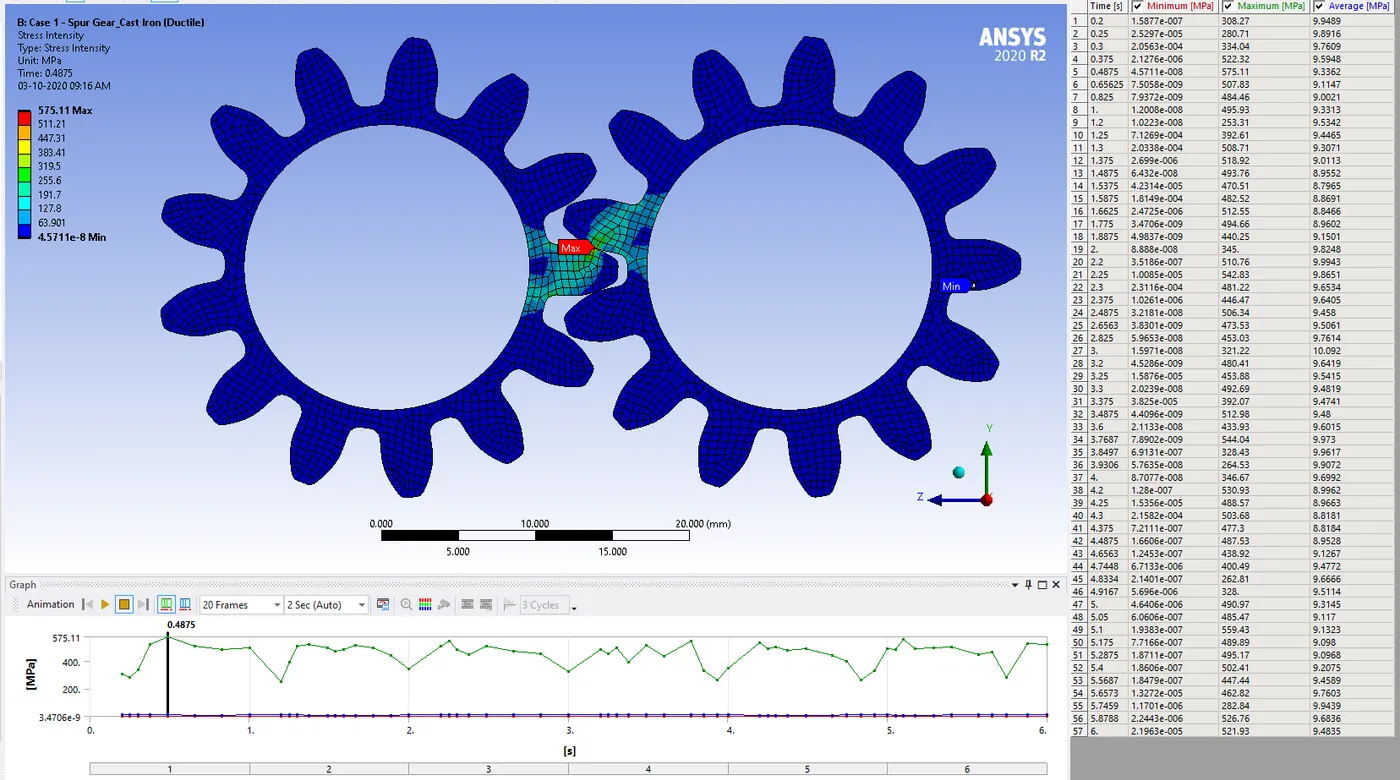
C) Stress intensity
Stress Intensity is defined as the effect of a crack on the stresses in the region around a crack tip. The stress intensity factor, K {displaystyle K}  , is used in fracture mechanics to predict the stress intensity near the tip of a crack or notch caused by a remote load or residual stresses.
The magnitude of K {displaystyle K} depends on specimen geometry, the size and location of the crack or notch, and the magnitude and the distribution of loads on the material. It can be written as: 
where, f ( a / W ) {displaystyle f(a/W)}  is specimen geometry dependent function; crack length : a {displaystyle a}
  ; and the specimen width: W {displaystyle W}
  ; σ {displaystyle sigma }
  is the applied stress.
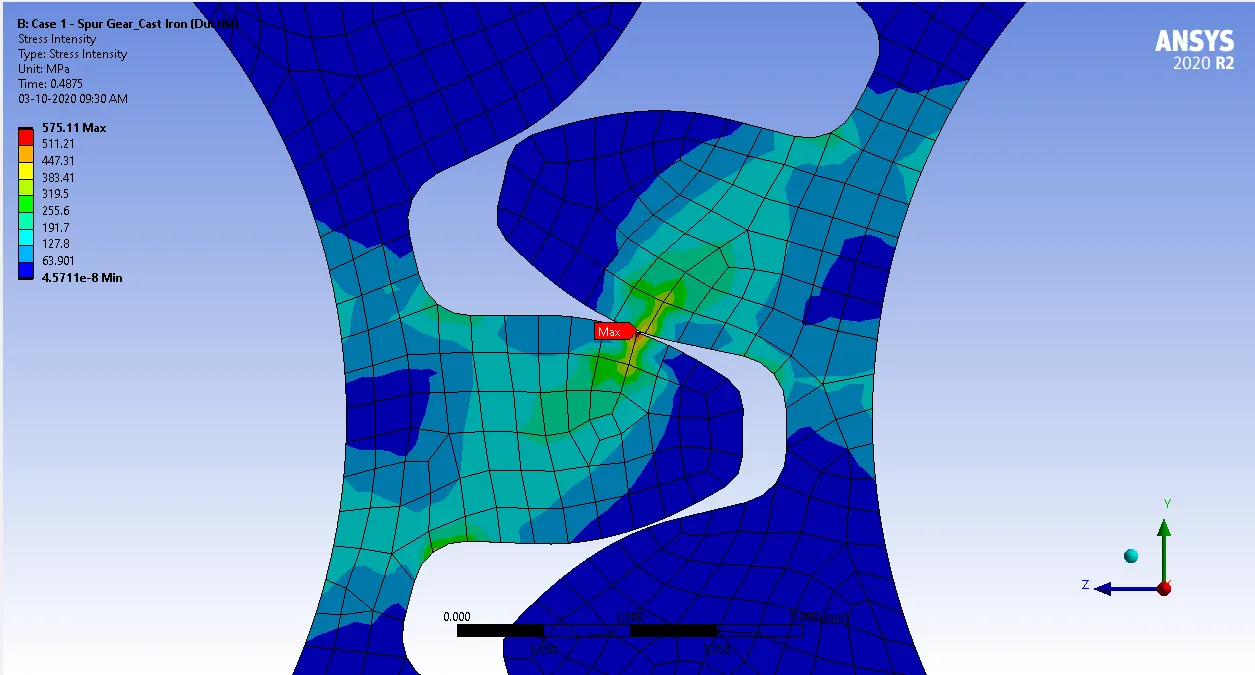
D) location for possible fracture
As per the analysis results, the maximum stress intensity is found on the driven gear (Left side gear) pitch surface element area, hence the chance of fracture will be there.
- Case 2:
A) Equivalent stress
B) Total deformation
C) Stress intensity
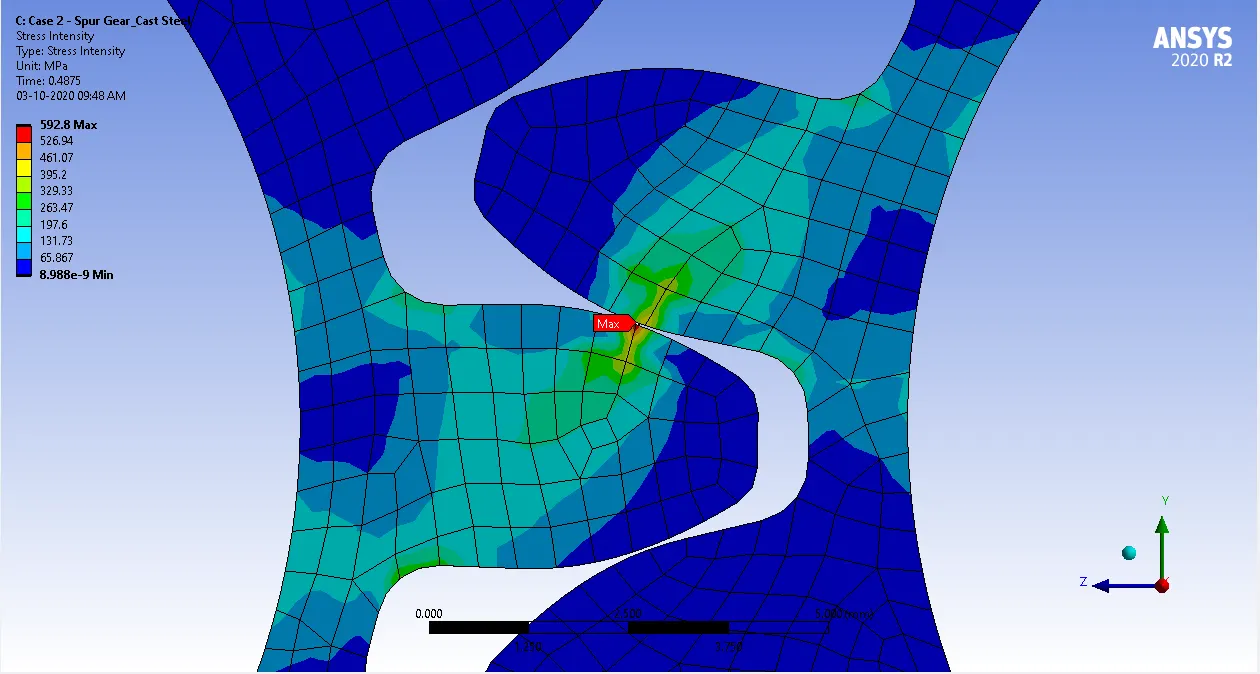
D) location for possible fracture
As per the analysis results,the maximum stress intensity is found on the driven gear (Left side gear) pitch surface element area, hence the chance of fracture will be there.
- Case 3:
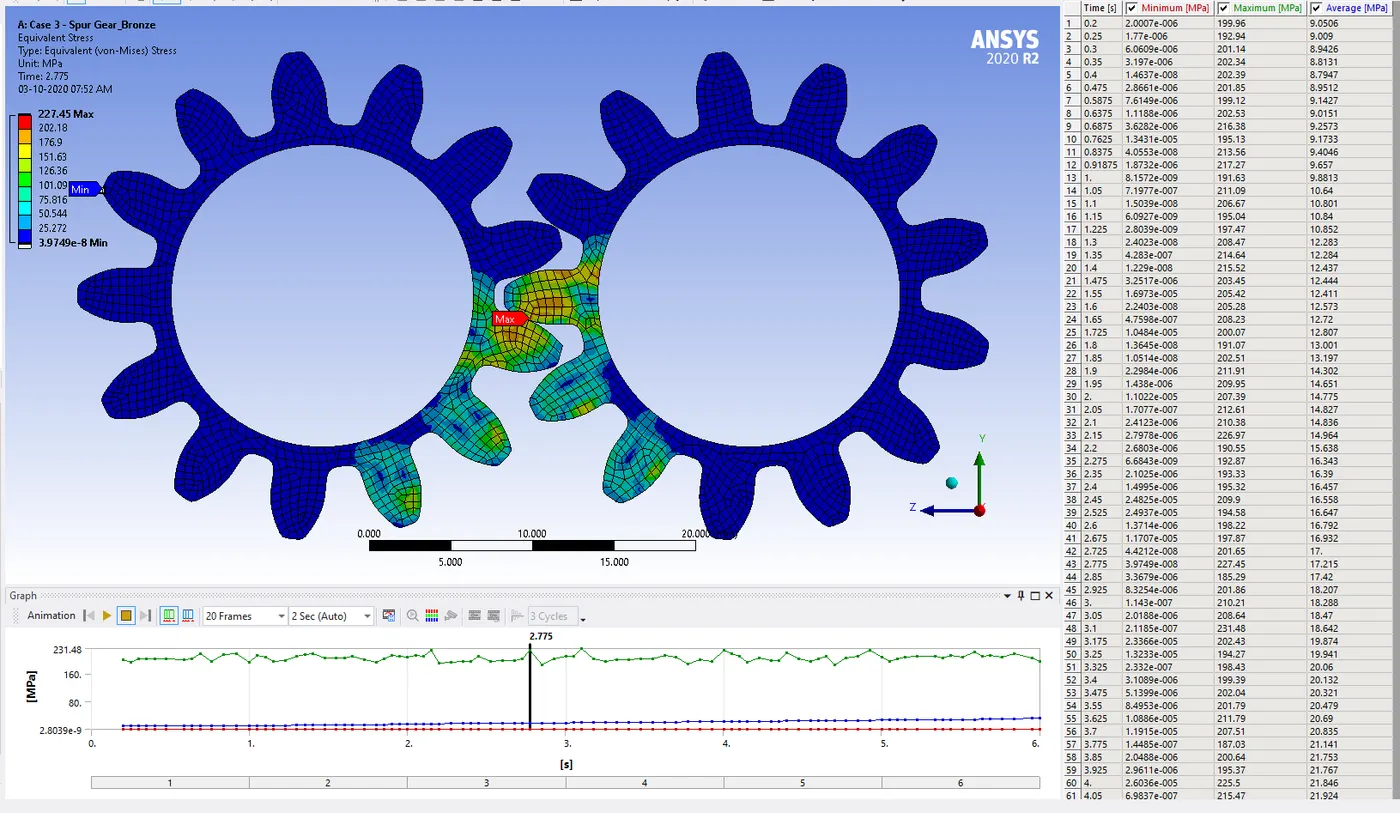
A) Equivalent stress
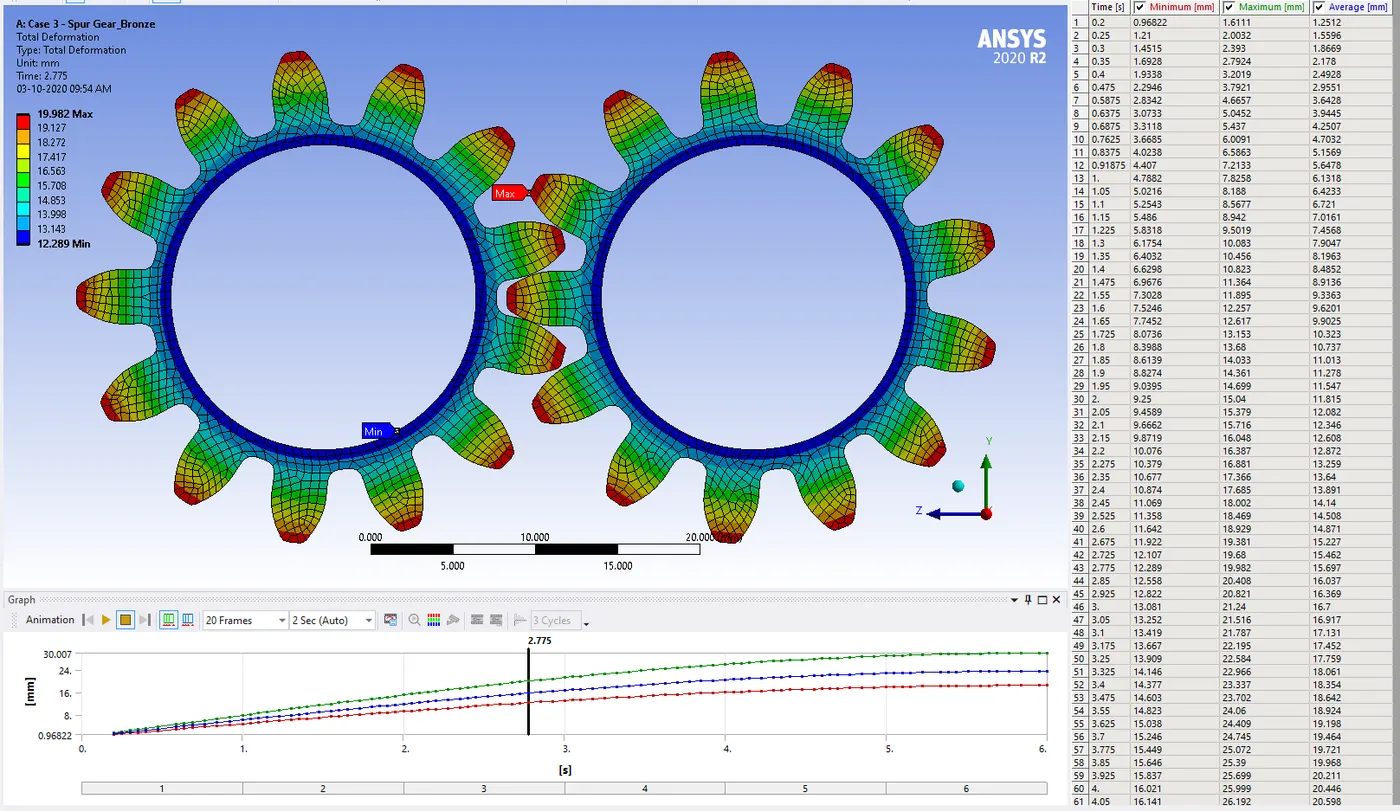
B) Total deformation
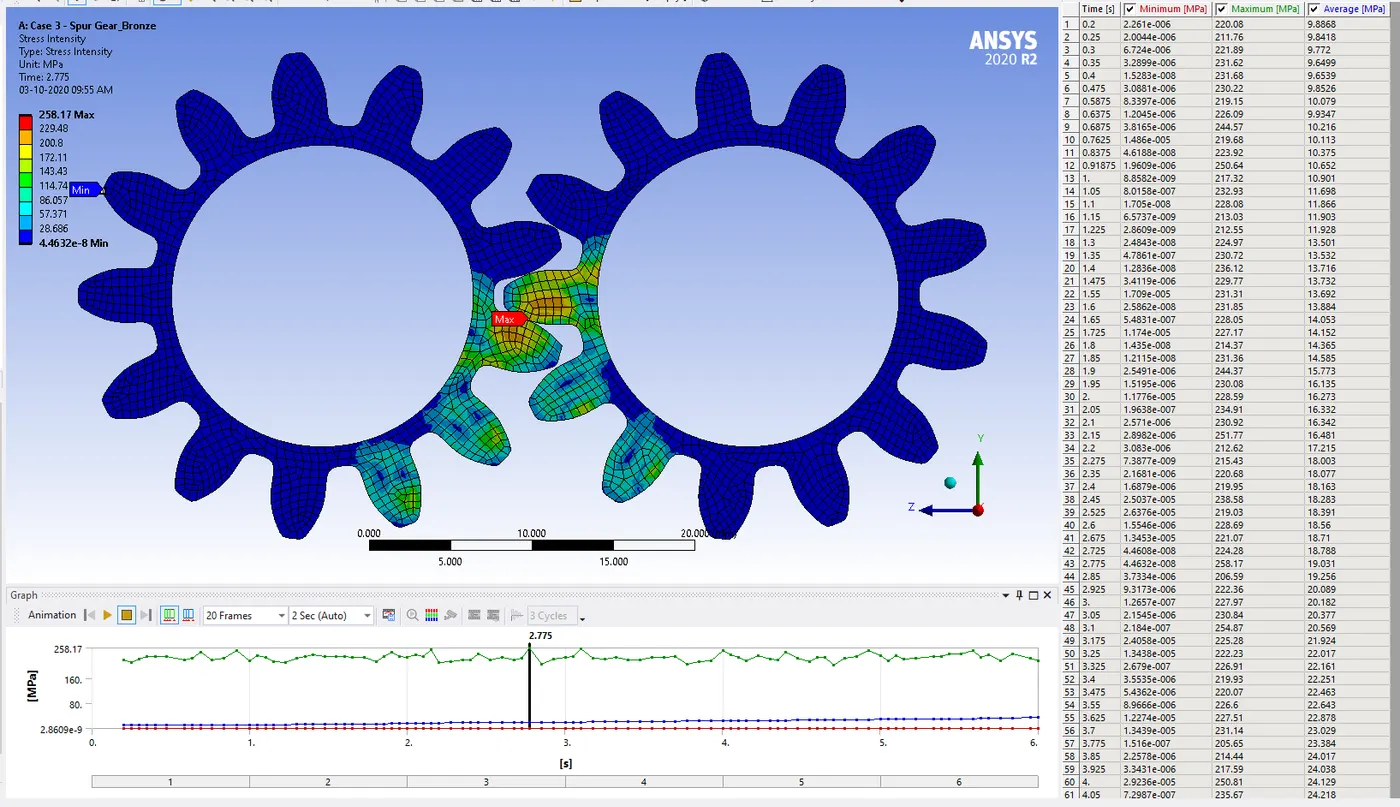
C) Stress intensity
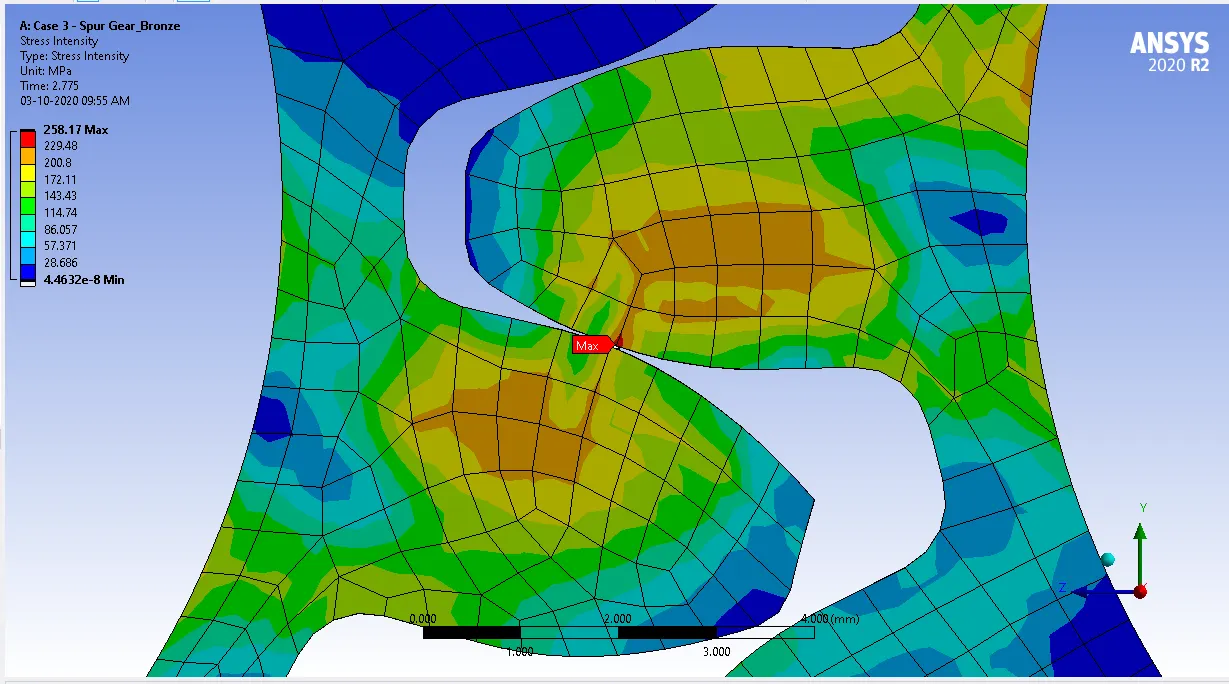
D) location for possible fracture
As per the analysis results, the maximum stress intensity is found on the drive gear (Right side gear) pitch surface element area, hence the chance of fracture will be there.
Objective 2:
Write a detailed report comparing the results of the three cases and conclude which material would you recommend based on these results.
| Parameters | CAST IRON (DUCTILE) | CAST STEEL | CAST BRONZE | |
| Material Properties | Density Kg/M3 | 7130 | 7820 | 8810 |
| Youngs Modulus Pa | 1.71E+11 | 2.03E+11 | 7.997E+10 | |
| Poinssions Ratio | 0.275 | 0.3 | 0.345 | |
| Bulk Modulus Pa | 1.2667E+11 | 1.6917E+11 | 8.5989E+10 | |
| Shear Modulus Pa | 6.7059E+10 | 7.8077E+10 | 2.9729E+10 | |
| Tensile Yeald Strength MPa | 344 | 349 | 179.4 | |
| Tensile Ultimate Strength MPa | 548 | 505 | 316.1 | |
| Analysis Results | Equivalant Stress (Max) Mpa | 506.24 | 524.38 | 227.45 |
| Equivalant Stress (Ave) Mpa | 8.552 | 8.5854 | 17.215 | |
| Total Deformation mm | 30 | 30 | 30.007 | |
| Stress Intensity (max) Mpa | 575.11 | 592.8 | 258.17 | |
| Fracture Element | Driven Gear - Left | Driven Gear - Left | Drive Gear - Right | |
| Summary | Approx cost of material Per Kg | 80 | 150 | 900 |
| Since maximum equivalant stress is less than ultimate tensile strength, this material can be used for this application as it is cheaper also. | Since maximum equivalant stress developed is greater than ultimate tensile strength Cast Steel is not suitable for this application. | As the stress developed is transfering to almost all area of the gear, maximum stress developed is 71% of it's ultimate tensile strength. Hence as a designer perspective this material is best suitable for this application. While considering the cost it is not echonomical. | ||
| Conclussion |
Bronze is best in application but need to consider the echonomy also, hence we can select Cast Iron, as it delivering the performance and also cheaper in cost. |
|||