Week 8 - Universal Joint
Universal Joint - Simulation Using
ANSYS Workbench 2020 R2
Thejan Sasilal
OBJECTIVES
For this challenge, you will have to perform a transient structural analysis on a double universal joint with a spring using three different materials: Structural Steel, Stainless Steel and Titanium alloy(They can all be found in the General Materials section) The three materials must be used on the joint with the springs alone. Use a refined mesh if possible for the academic license. You need to obtain the Equivalent stress and total deformation for all the three cases and compare them. Submit a report regarding the same.
- INTRODUCTION
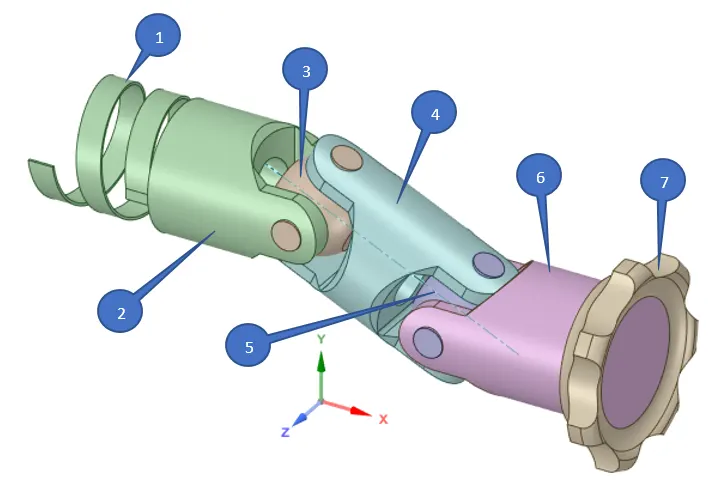
In this challenge, we are simulating the Universal Joint to find out the transient structural abilities of the system.
Parts:
- Spring
- Driven Shaft
- Joint 1
- Connecting Element
- Joint 2
- Drive Shaft
- Drive Gear
- DESIGN SPECIFICATION
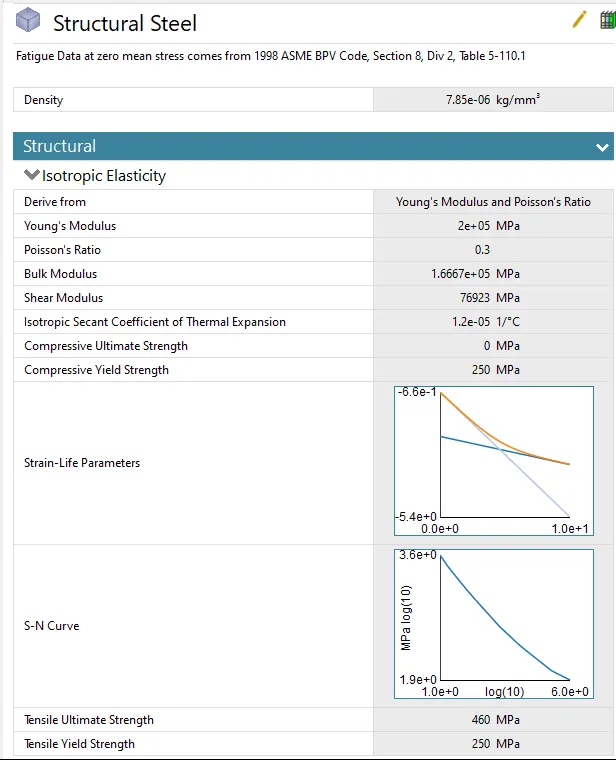
2.1 Case-1
Assign Structural Steel as the materials for each geometry from engineering data.
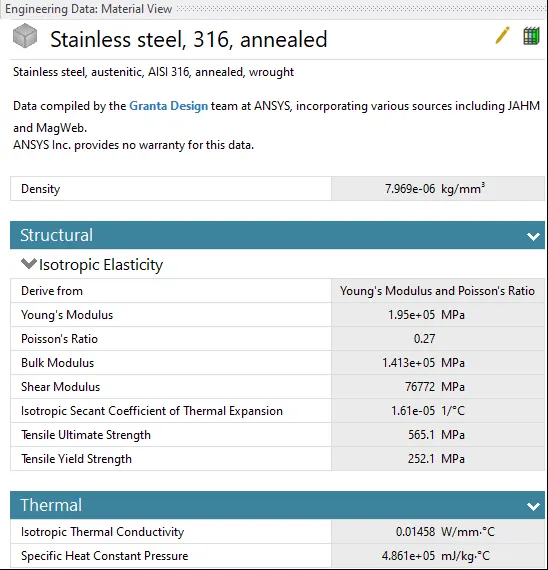
2.2 Case-2
Assign Stainless Steel as the materials for each geometry from engineering data.
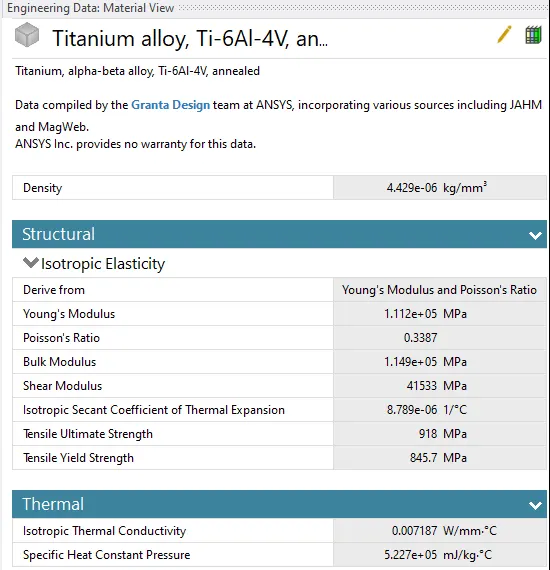
2.3 Case-3
Assign Titanium alloy as the materials for each geometry from engineering data.
- STATIC ANALYSIS
Open Mechanical modeler for analysis.
Consider all units are in metric.
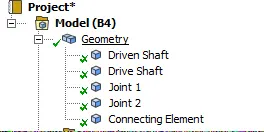
Rename geometry as Driven Shaft, Drive Shaft, Joint 1, Joint 2 & Connecting Element respectively.
3.1 CONNECTIONS
3.1.1 CONTACTS
Delete default contacts
3.1.2 JOINTS
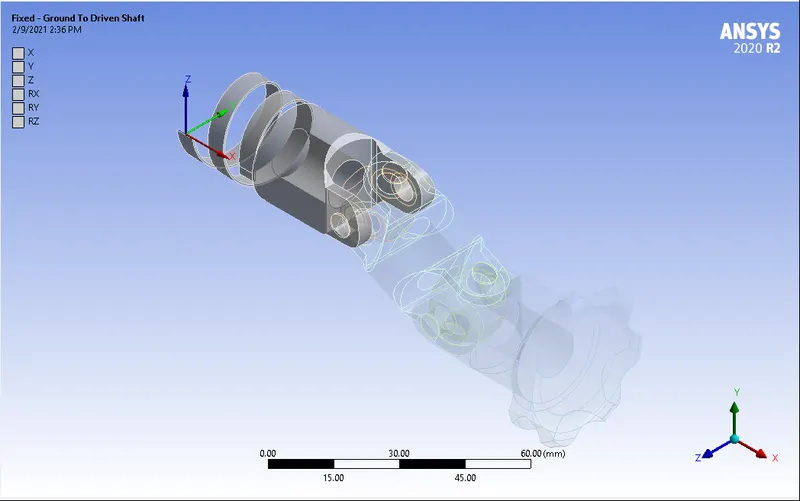
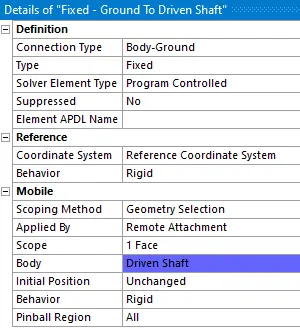
- Fixed - Ground To Driven Shaft (Body-Ground)
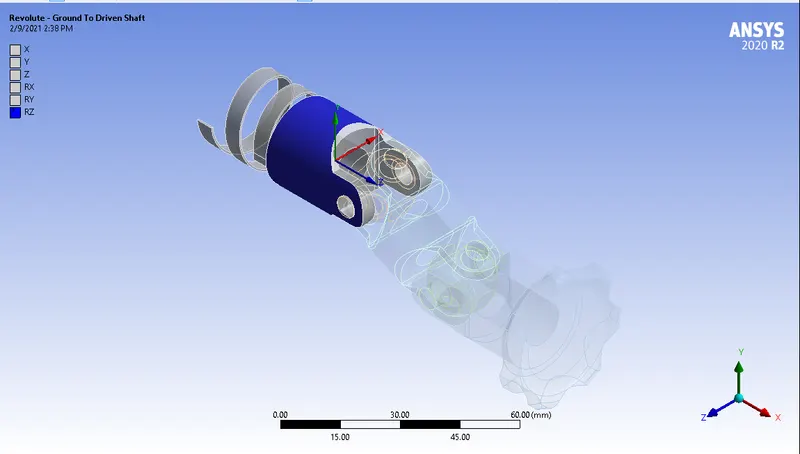
- Revolute - Ground To Driven Shaft (Body-Ground)
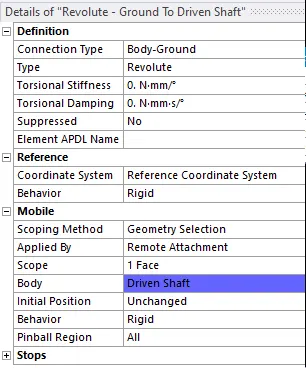
- Revolute - Ground To Drive Shaft (Body-Ground)
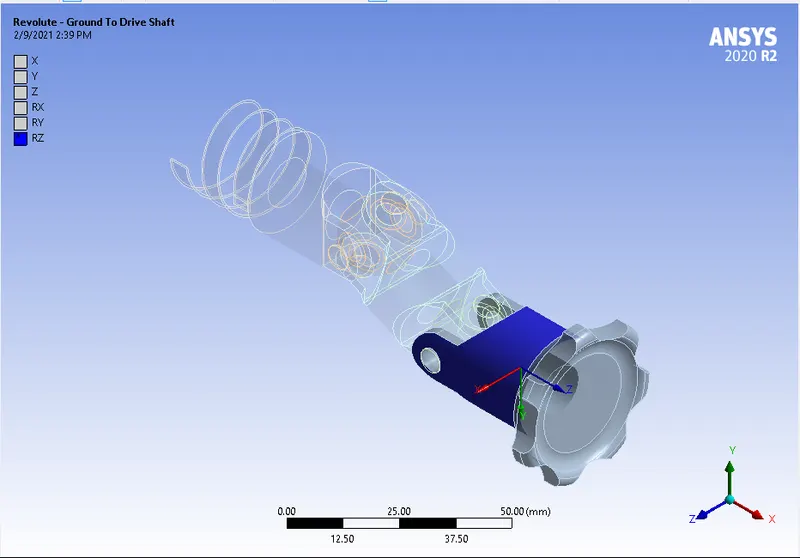
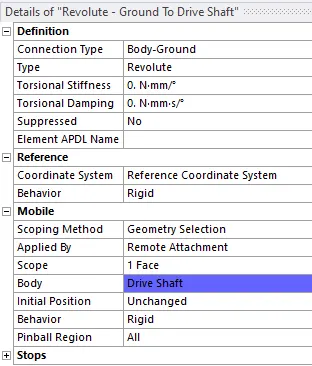
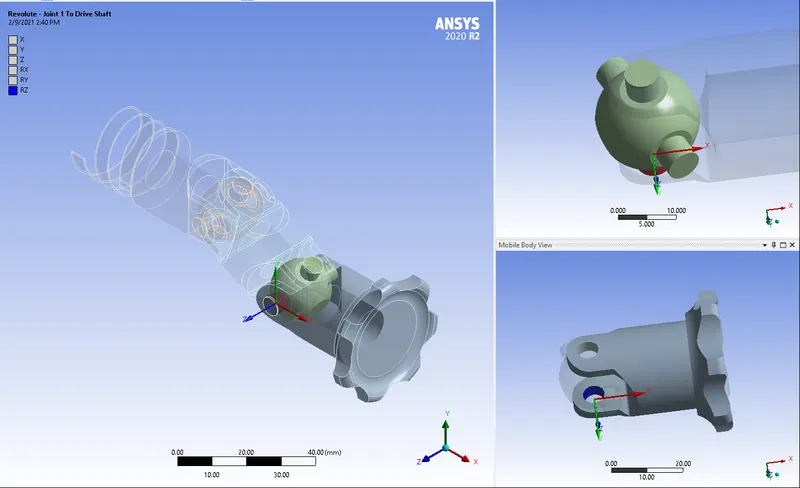
- Revolute - Joint 1 To Drive Shaft (Body-Body)
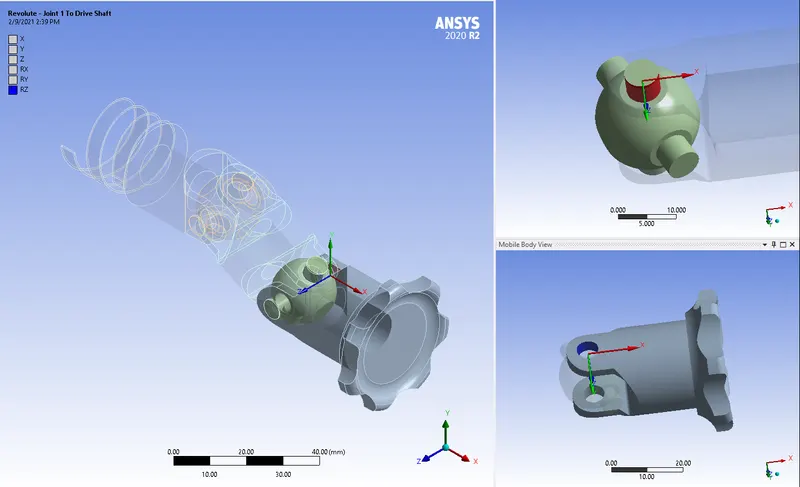
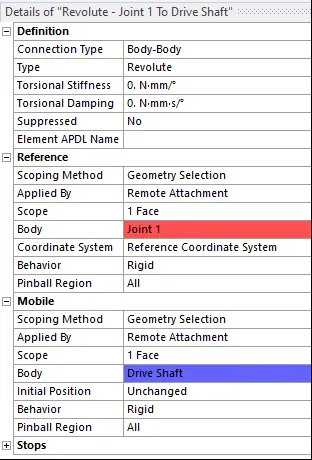
- Revolute - Joint 1 To Drive Shaft (Body-Body)
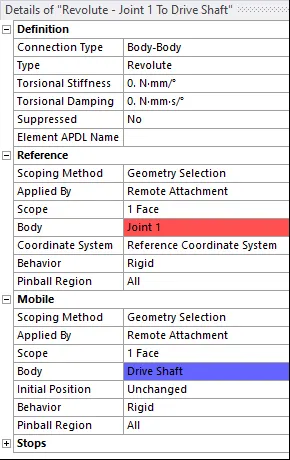
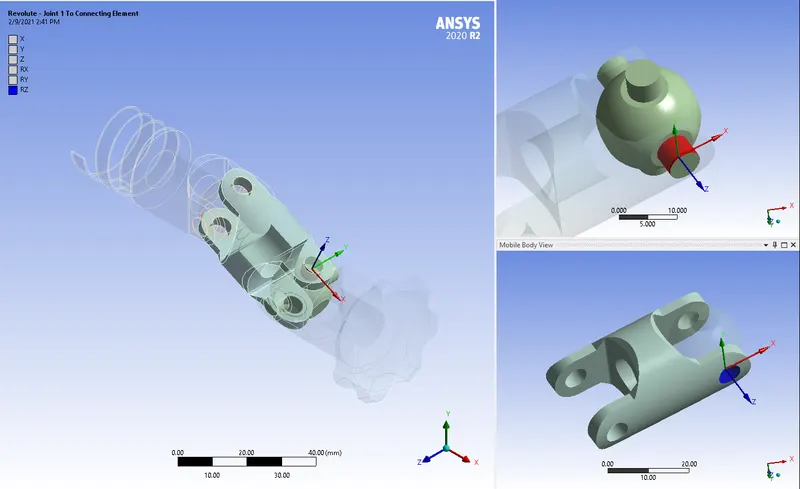
- Revolute - Joint 1 To Connecting Element (Body-Body)
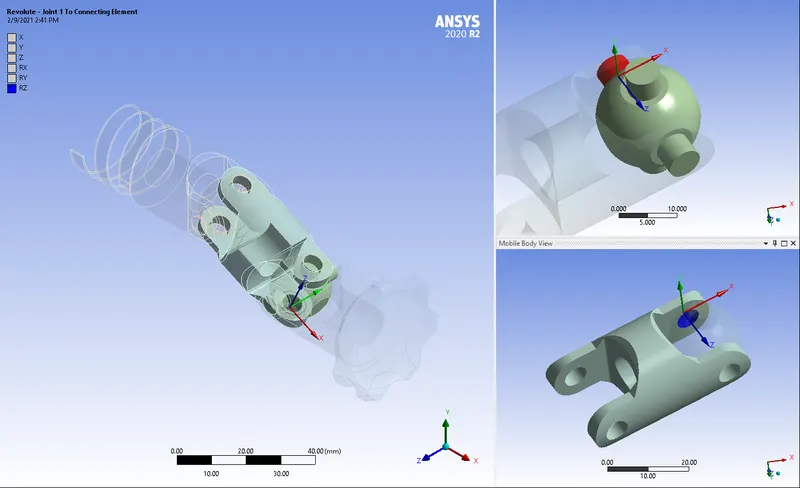
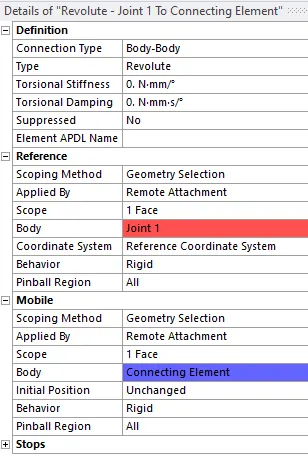
- Revolute - Joint 1 To Connecting Element (Body-Body)
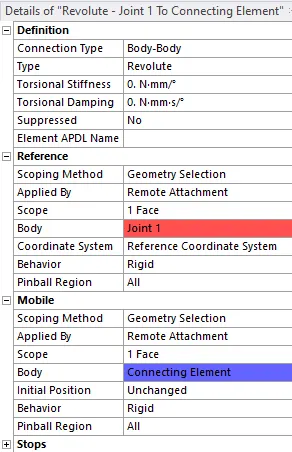
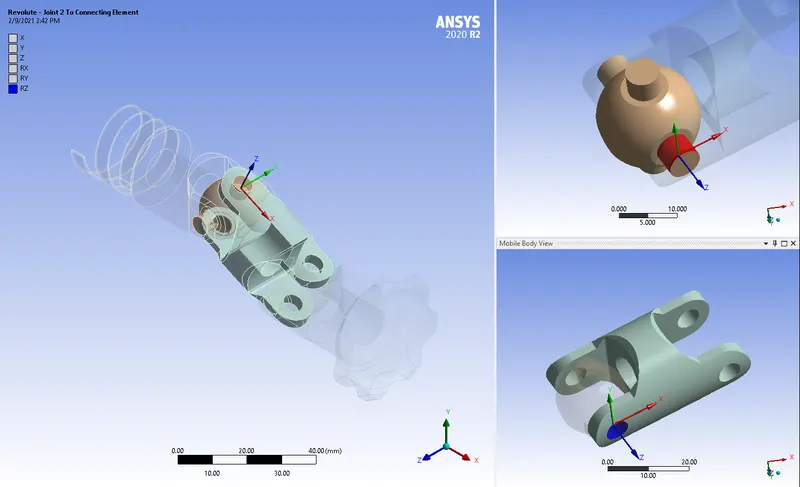
- Revolute - Joint 2 To Connecting Element (Body-Body)
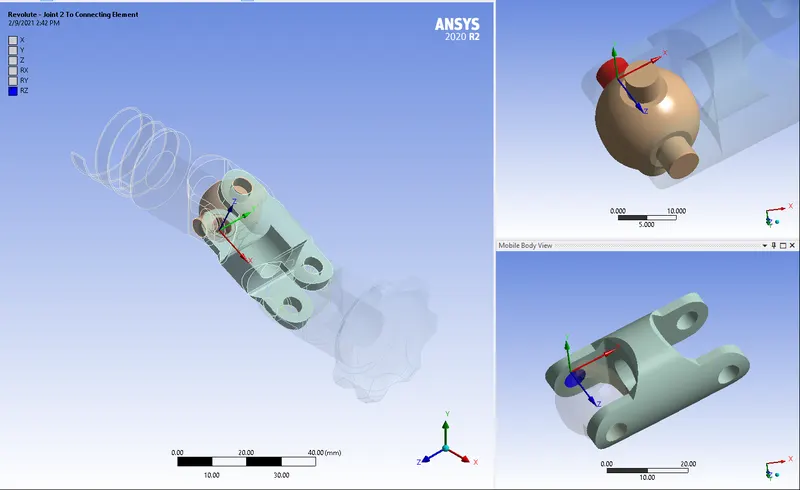
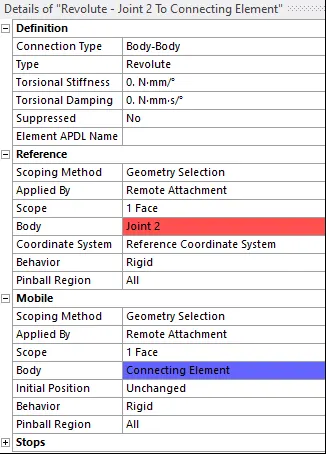
- Revolute - Joint 2 To Connecting Element (Body-Body)
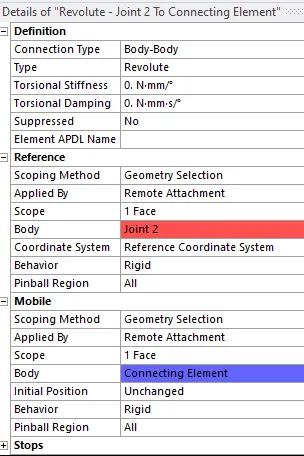
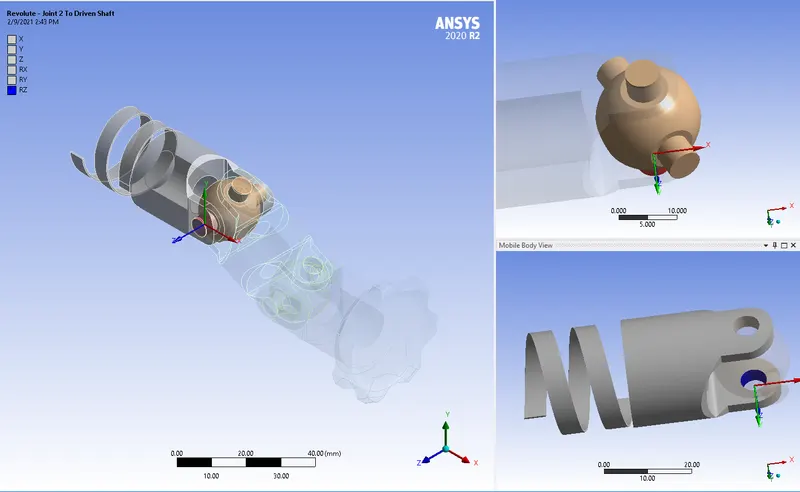
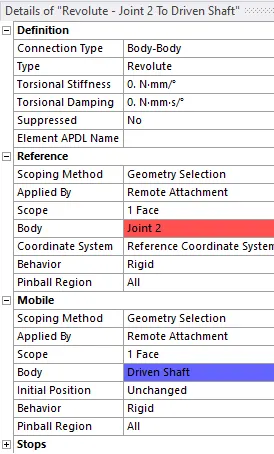
- Revolute - Joint 2 To Driven Shaft (Body-Body)
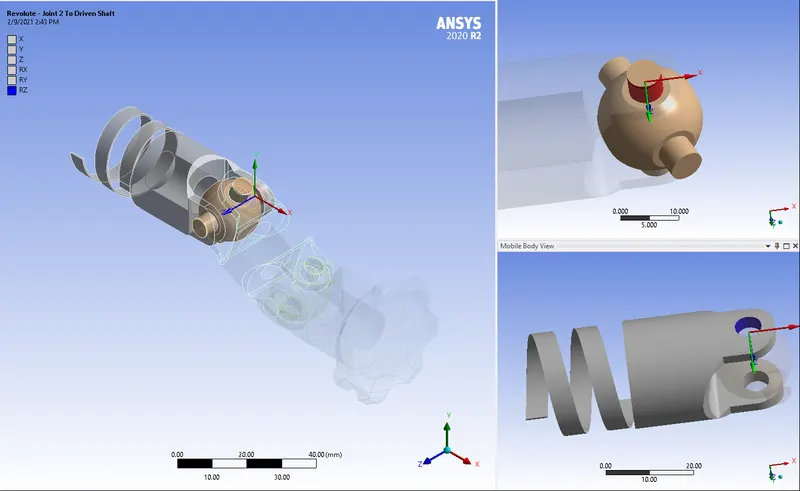
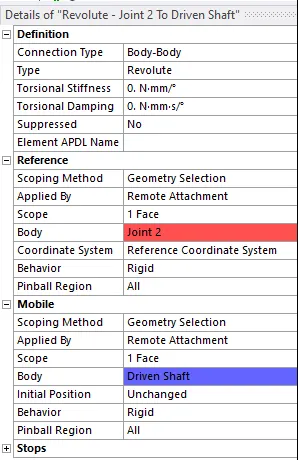
- Revolute - Joint 2 To Driven Shaft (Body-Body)
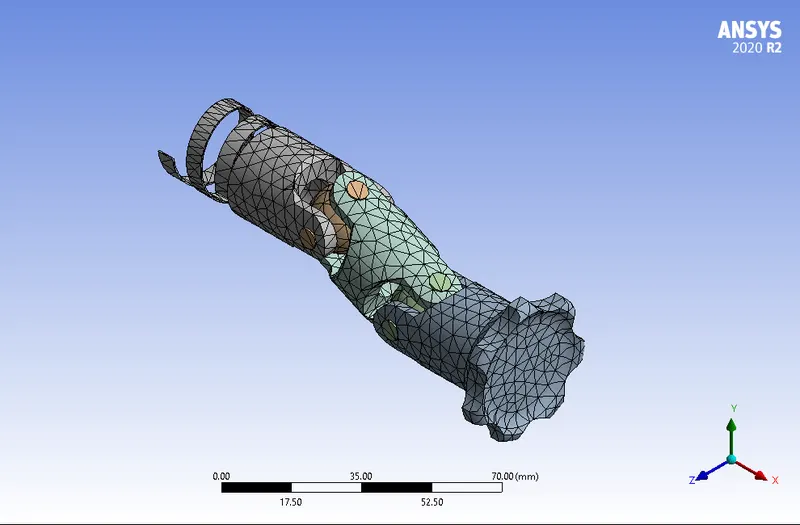
3.2 MESH CREATION
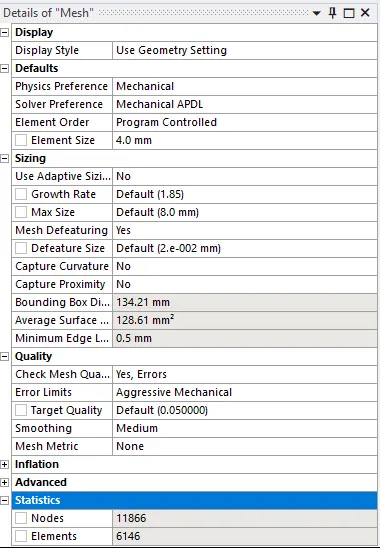
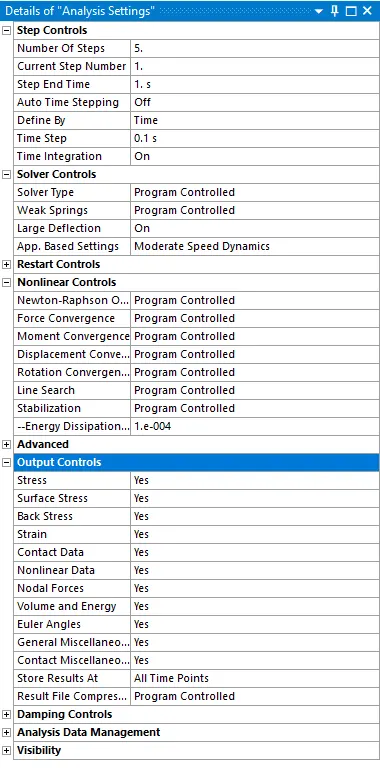
3.3 ANALYSIS SETTINGS
- Consider following as the analysis settings for step-1
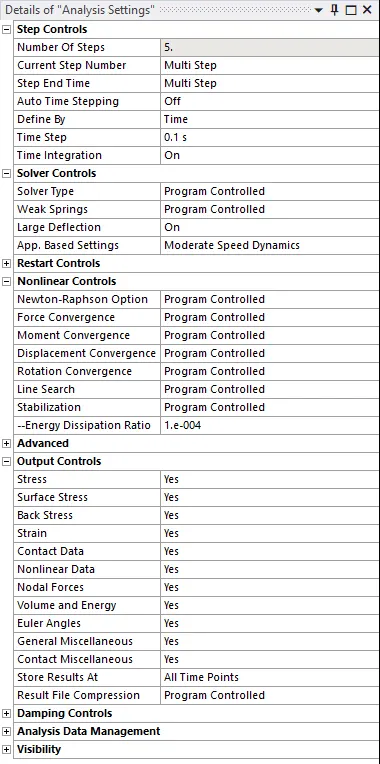
- Consider following as the analysis settings for step-2 to step 5
3.4 BOUNDARY CONDITION
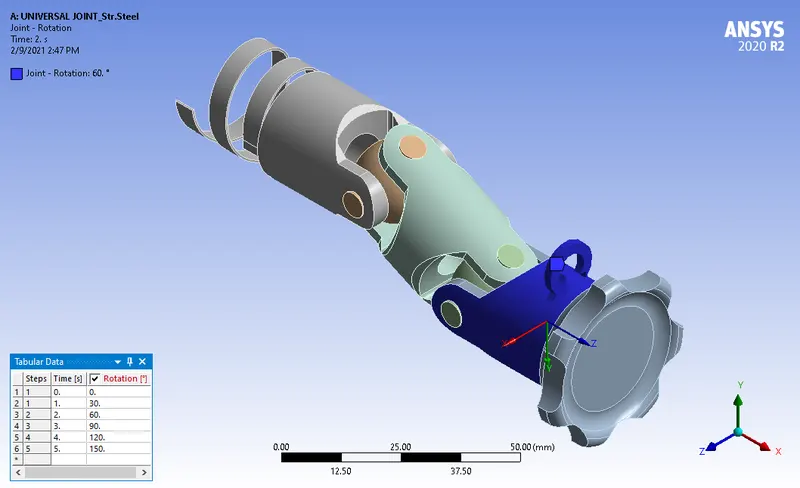
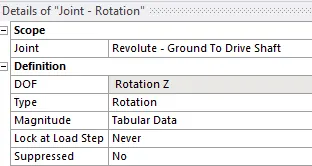
Insert joint load
Select Revolute - Ground To Drive Shaft (Body-Ground) as joint. Consider the rotation as given below.
3.5 SOLUTIONS
|
|
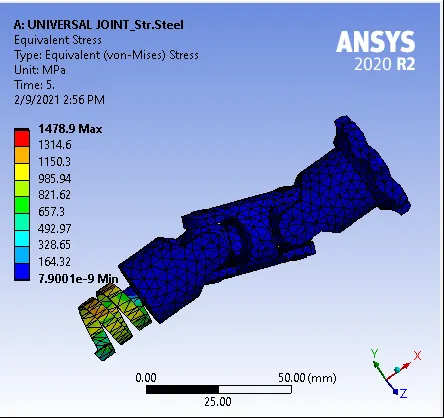
CASE - 1 (Structural Steel) |
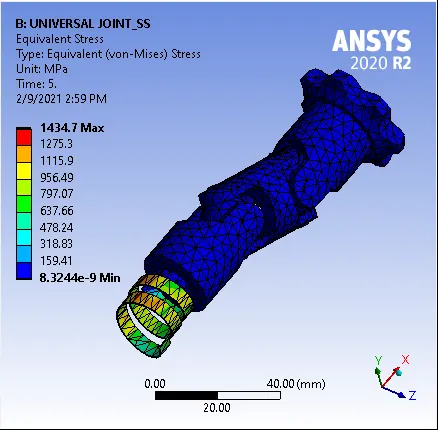
CASE - 2 (Stainless Steel) |
CASE - 3 (Titanium alloy) |
COMPARISON |
|
Equivalent stress |
 |
 |
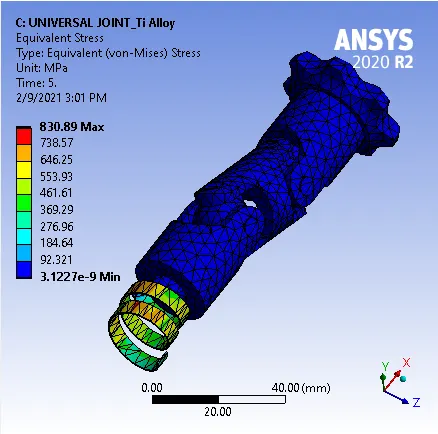 |
Since Structural steel and Stainless Steel are poor in elastic behaviors, both are producing huge stress in the spring which is far more than the ultimate tensile stress. As the Titanium alloy is good in elastic behaviors, it producing stress which is within the yield limit. |
|
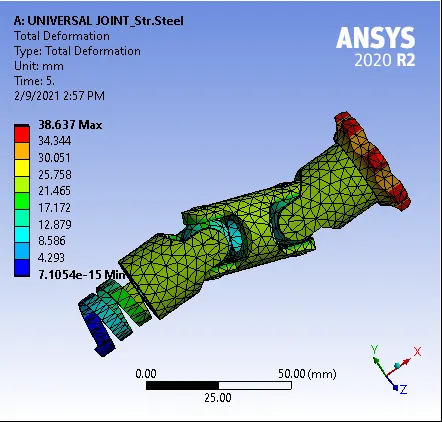
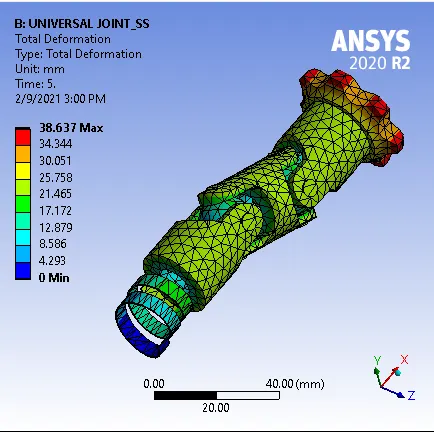
Total deformation |
 |
 |
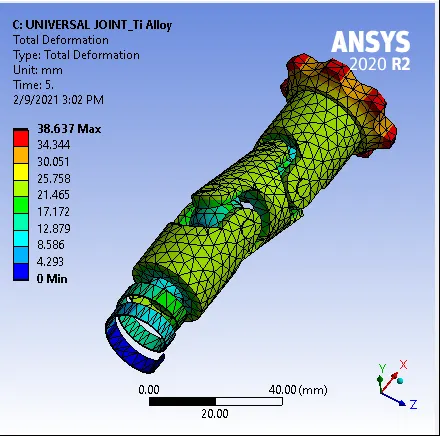 |
Total deformation is same in all the cases |
- CONCLUSSION
Simulation of Universal Joint conducted with Ansys Workbench by considering three different cases of materials. From the analysis it is found that Titanium alloy producing good structural abilities. When rotational load acting on a spring, structural steel and stainless steel produces very high stress than its ultimate stress. Titanium alloy is best suited for this application as the material is producing stress within yield limit under load. Since the Titanium alloy is a very costly metal, it is not economical for general purpose.